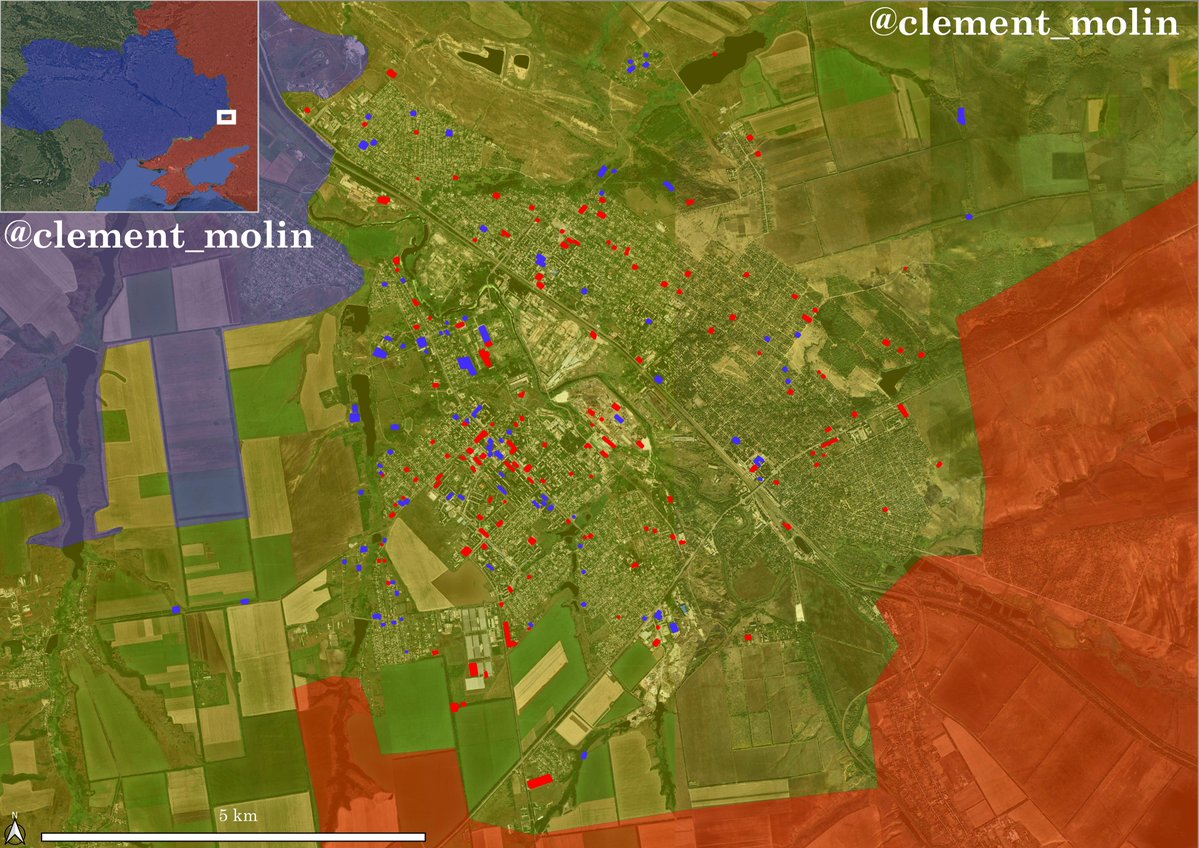
EXCLUSIVE : Ukrainian 🇺🇦 forces managed to push back russian 🇷🇺 artillery in the Pokrovsk'e direction
Meanwhile, Russia is pushing very hard on the Kramatorsk/Sloviansk front as well as in Pokrovsk and Hulialpole.
I mapped 3 000 additional shell impacts :
🧵THREAD🧵1/20 ⬇️
Meanwhile, Russia is pushing very hard on the Kramatorsk/Sloviansk front as well as in Pokrovsk and Hulialpole.
I mapped 3 000 additional shell impacts :
🧵THREAD🧵1/20 ⬇️

After few weeks of counter-attacks, we now have more confirmations of the scale, the means engaged and the progress of ukrainian forces.
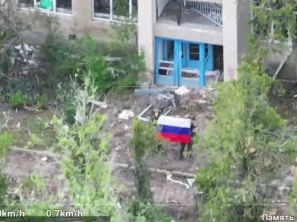
For the first time, they entered a village which was firmly under russian control, Ternove, 8km south of the river.
For the first time, they entered a village which was firmly under russian control, Ternove, 8km south of the river.
https://x.com/moklasen/status/2025276759889899841?s=20
This means Ukraine probably regained control of most of the 2022 defensive line in this sector (obsolete, but the ditch, the barbed wire and the dragon teeths still offer good defense).
We do not have all the confirmations, but with artilley strikes impact, we can nearly be sure
We do not have all the confirmations, but with artilley strikes impact, we can nearly be sure

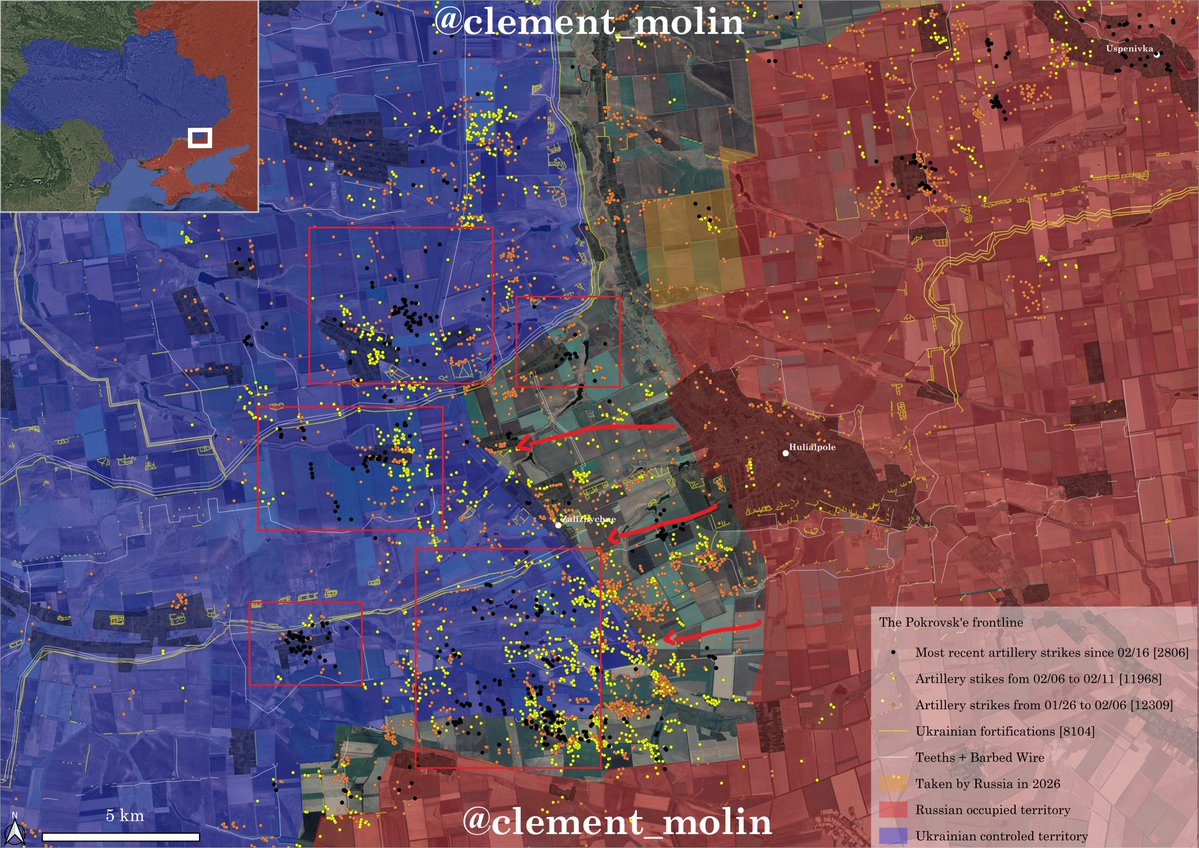
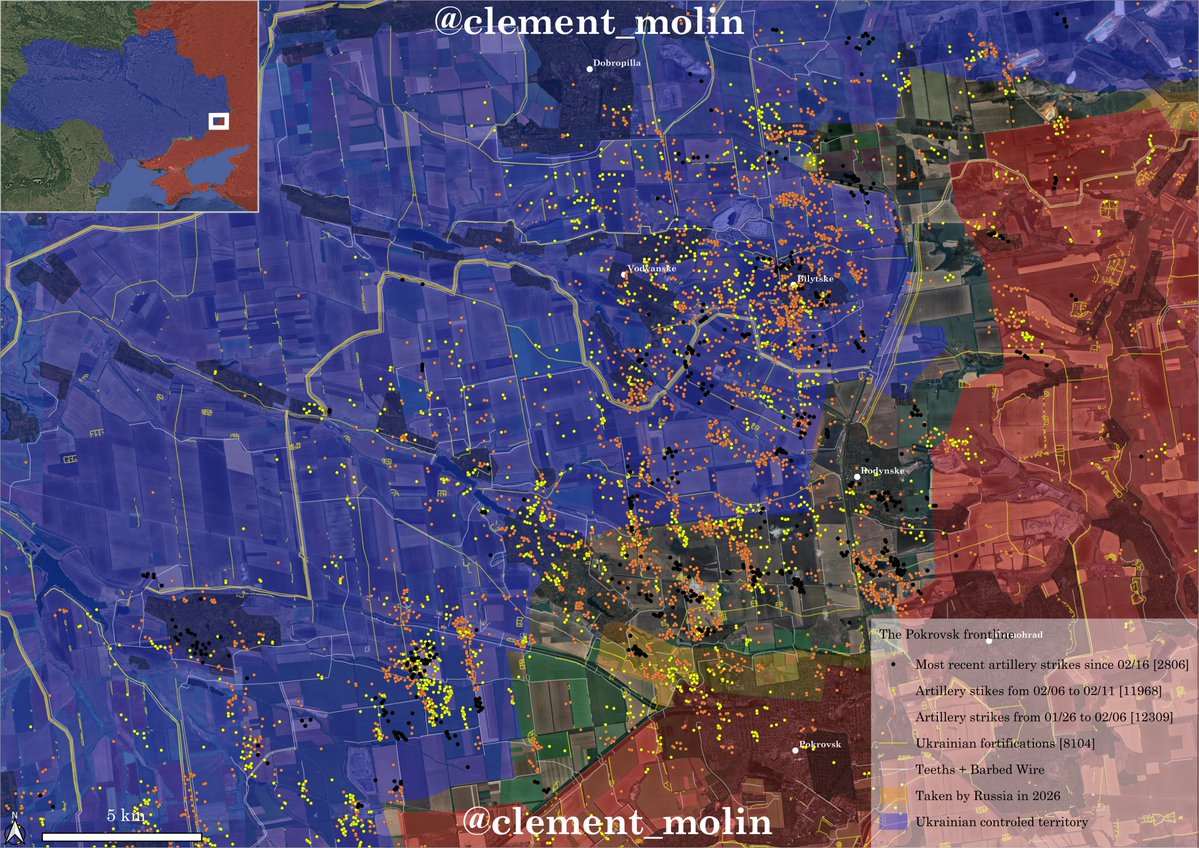
As you can see on this map, with orange being oldest artillery and air strikes impacts from both sides, yellow being more recent and black the last ones from the last few days, ukrainian artillery advanced, russian retreated.
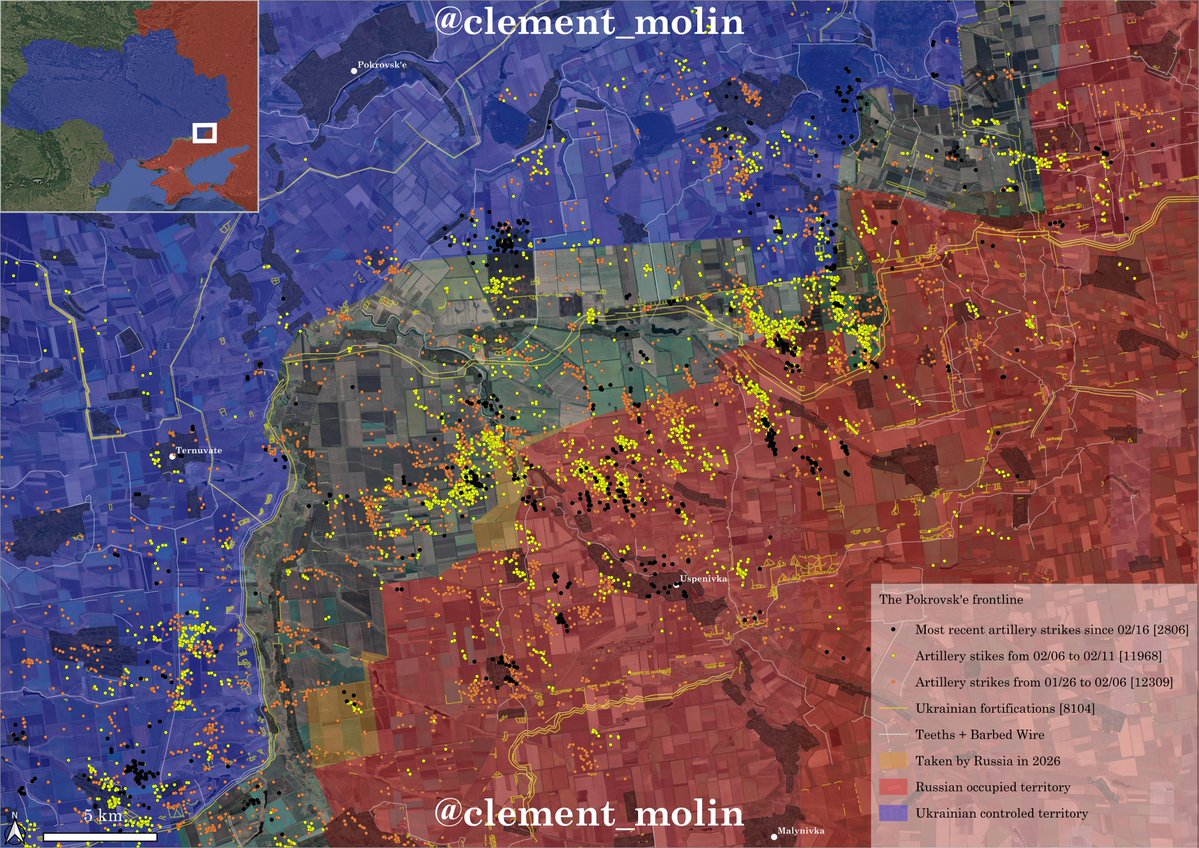
Here is the explanation :
The strikes on the red areas are definitely ukrainian, on the blue area russian and in the middle mixed.
We can see Russia is not striking in the red areas anymore (dots there are mainly airstrikes) which means it was pushed back.
The strikes on the red areas are definitely ukrainian, on the blue area russian and in the middle mixed.
We can see Russia is not striking in the red areas anymore (dots there are mainly airstrikes) which means it was pushed back.
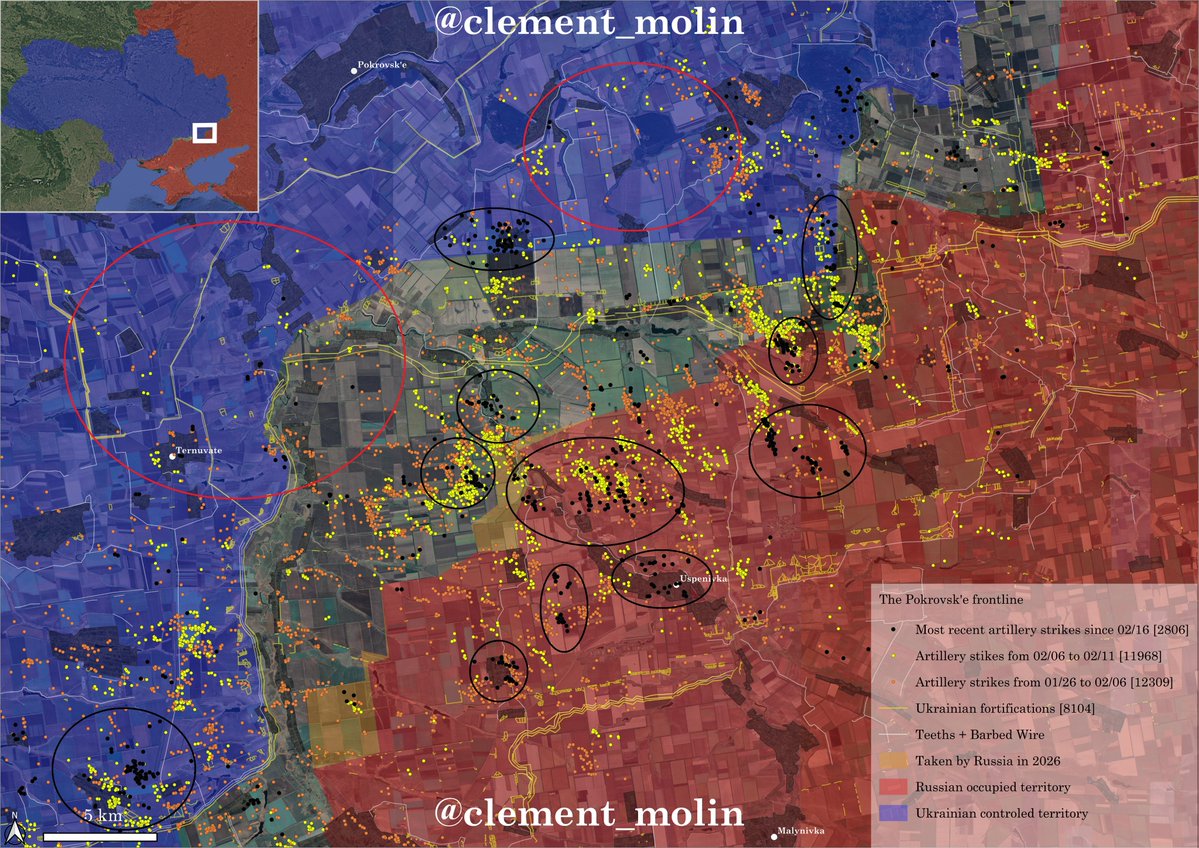
This situation largely benefits Ukraine. Russia lost in 3 weeks at least 4 months of infiltrations far behind the lines.
This will buy time to better Pokrovsk'e defenses, as well as the H15 highway leading to Zaporizhzhia.
Ukraine already is building multiple new defensive lines
This will buy time to better Pokrovsk'e defenses, as well as the H15 highway leading to Zaporizhzhia.
Ukraine already is building multiple new defensive lines
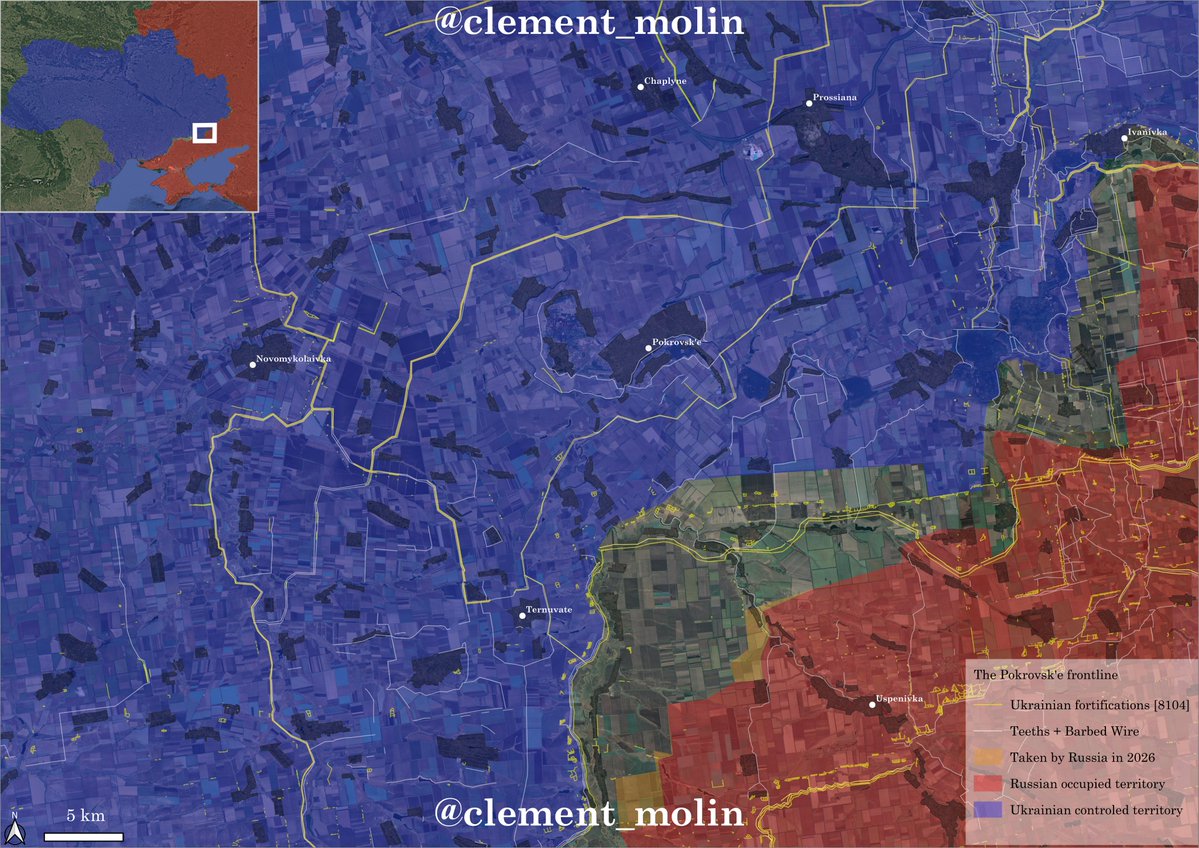
Ukraine could eventually try to reach and hold the white line. At the same time, massive fortification work is ongoing behind (red rectangles are current ditches behing dug and white lines are barbed wire, which are also being expanded daily between lines.

If the current situation is positive for ukrainian forces in the sector, russian forces brought reinforcements and most of the attacks stopped.
Moreover, the situation is degrading elsewhere, in particular around Hulialpole.
Moreover, the situation is degrading elsewhere, in particular around Hulialpole.
https://x.com/WarUnitObserver/status/2024913787325665702?s=20
Russian command is decided to start the battle for Orikhiv as fast as possible, even if they cannot have any success in the Ternuvate and Pokrovs'ke directions.
Russian artillery and airstrike barrages west of Hulialpole are simply massive and clearly not decreasing.
Russian artillery and airstrike barrages west of Hulialpole are simply massive and clearly not decreasing.
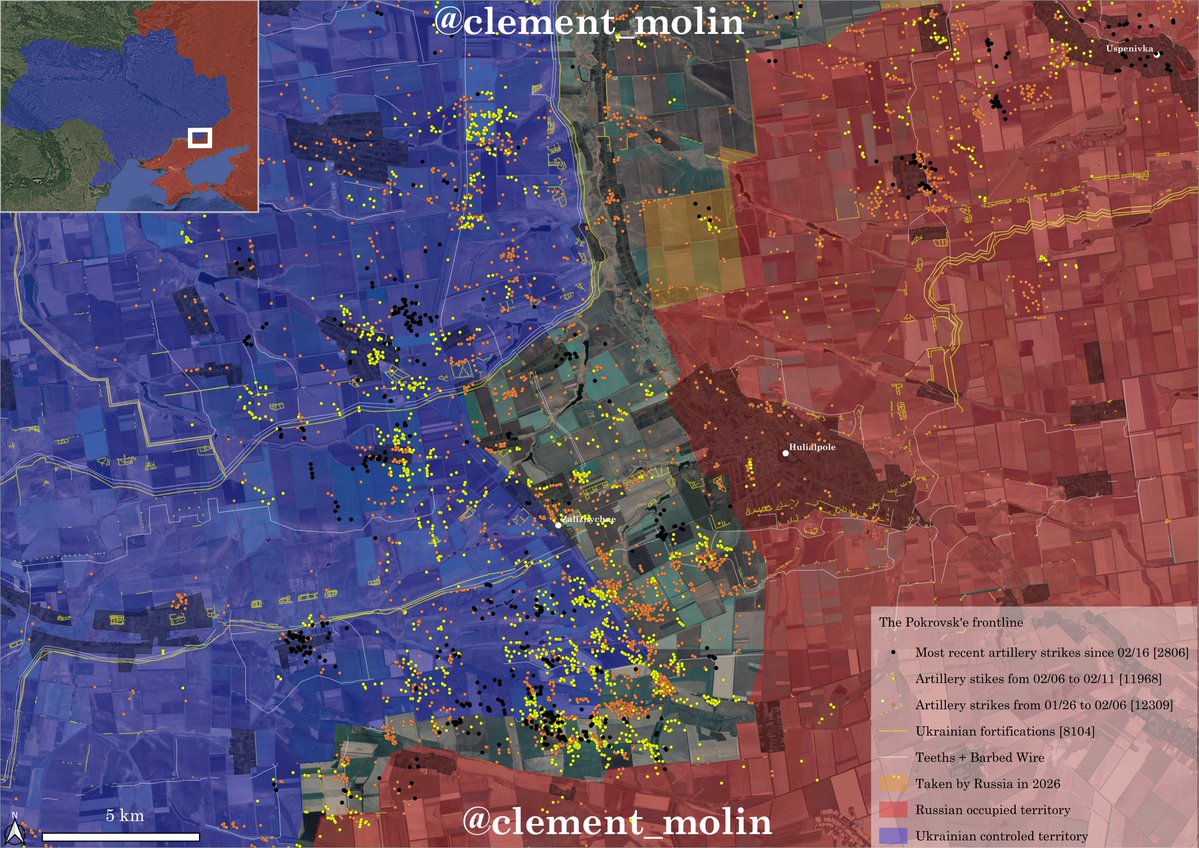
As you can see here, the strikes are going west, following russian offensives. I managed to map around 50 to 100 airstrikes here in the past 5 days (impacts are bigger so I can see the difference, but didn't show it on the map.
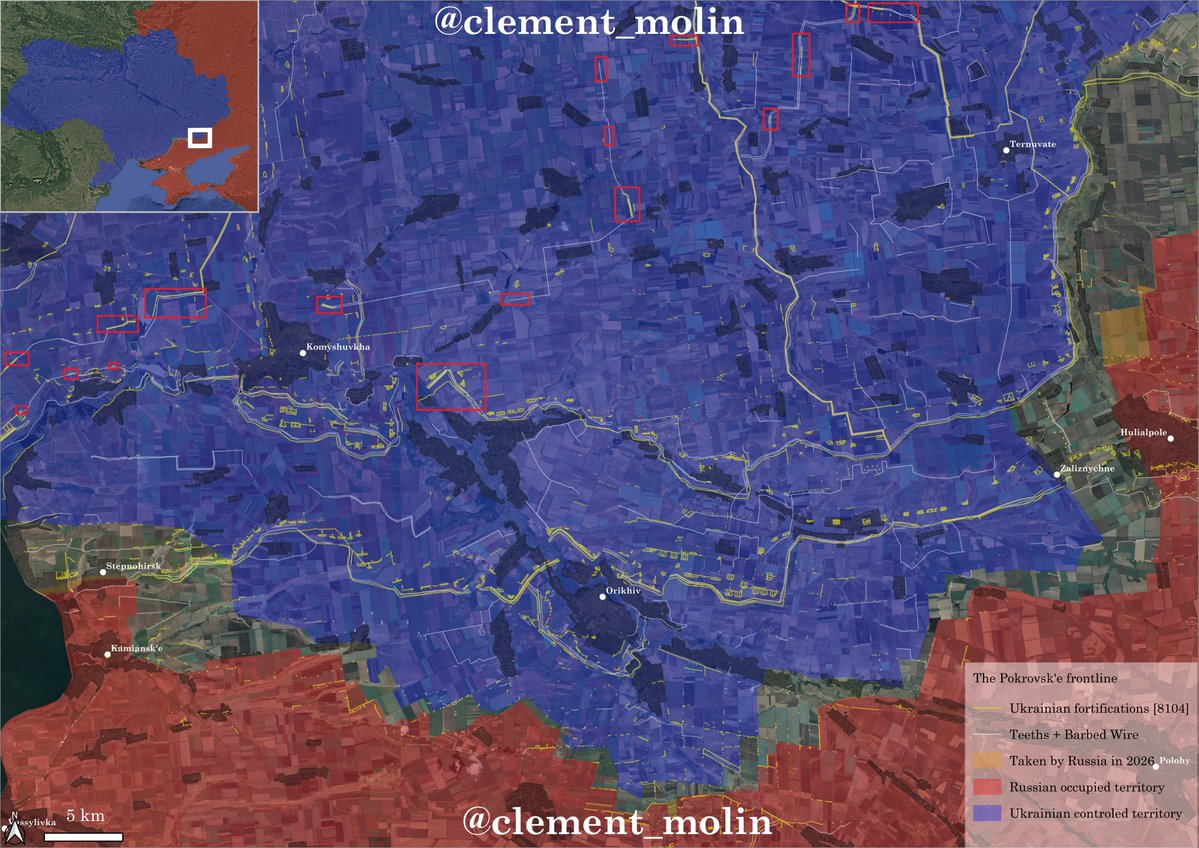
Here too, ukrainians are using the time as much as possible to prepare new fortifications. However, they cannot fortify Orikhiv anymore and are building new lines far behind...
Th e threat of Orikhiv being attacked from the north is incresing.
Th e threat of Orikhiv being attacked from the north is incresing.
Elsewhere, the situation is also getting more complicated near Pokrovsk.
Russian forces are also trying to push behind Pokrovsk, more or less the same way they did after taking Bakhmut to be able to use the city as a supply hub. A lot of strikes here.
Russian forces are also trying to push behind Pokrovsk, more or less the same way they did after taking Bakhmut to be able to use the city as a supply hub. A lot of strikes here.
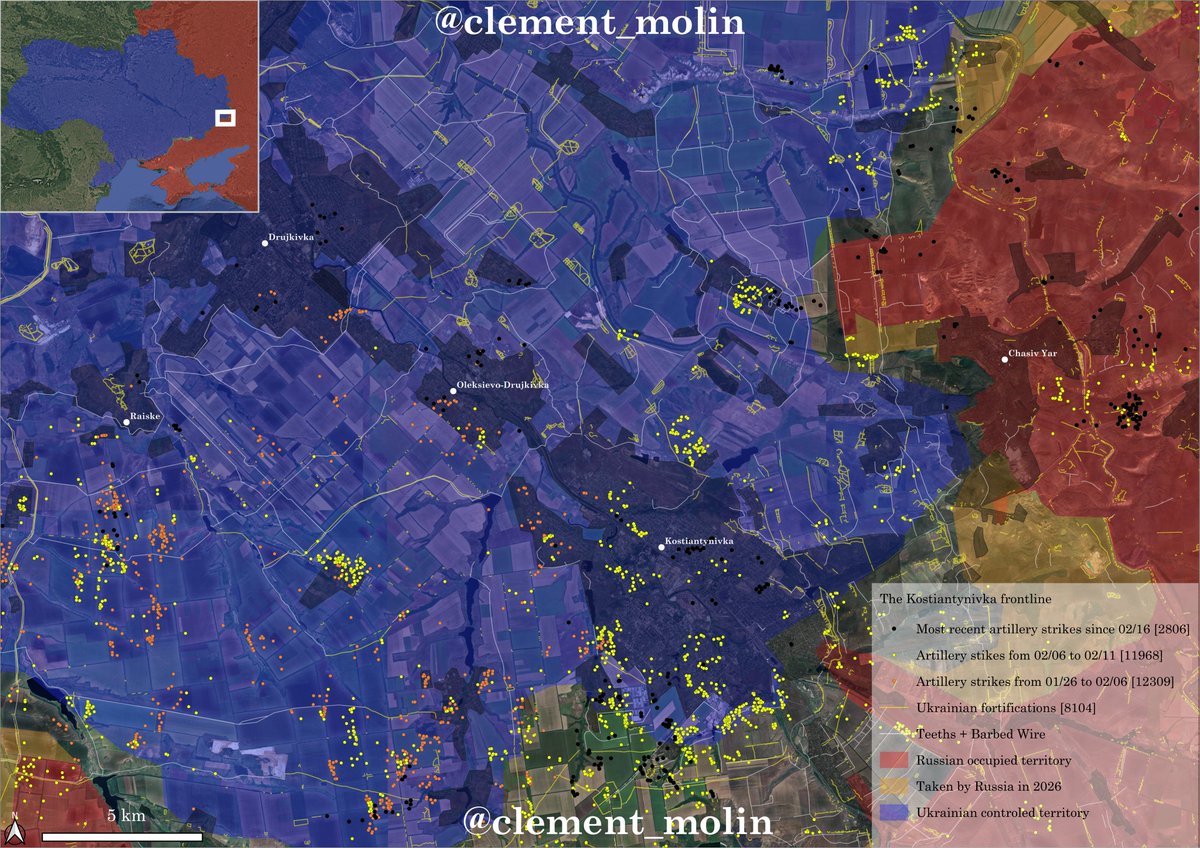
On the Kostiantynivka frontline, the situation remains complicated for ukrainian defenders, that lost most of the positions south of the city.
It probably recently snowed so I didn't find too much impacts. However, more and more airstrikes are falling on Drujkivka, behind.
It probably recently snowed so I didn't find too much impacts. However, more and more airstrikes are falling on Drujkivka, behind.
After the fall of Siversk 3 months ago, the situation significantly worsened on the Sloviansk/Kramatorsk direction.
Russia occupied a number of positions and villages and will soon reach ukrainian defenses.
Russia occupied a number of positions and villages and will soon reach ukrainian defenses.

As you can see on the map, the russians are massively bombing the village of Riznykivka, while they are slowly pushing in the Mykolaivka direction.
With the difficulties on the Kostiantynivka, Chasiv Yar and Dobropilla axes (battles started 6 months, 3 years and 10 months ago) a frontal offensive on Donbas main cities seems to be an option.
With the difficulties on the Kostiantynivka, Chasiv Yar and Dobropilla axes (battles started 6 months, 3 years and 10 months ago) a frontal offensive on Donbas main cities seems to be an option.
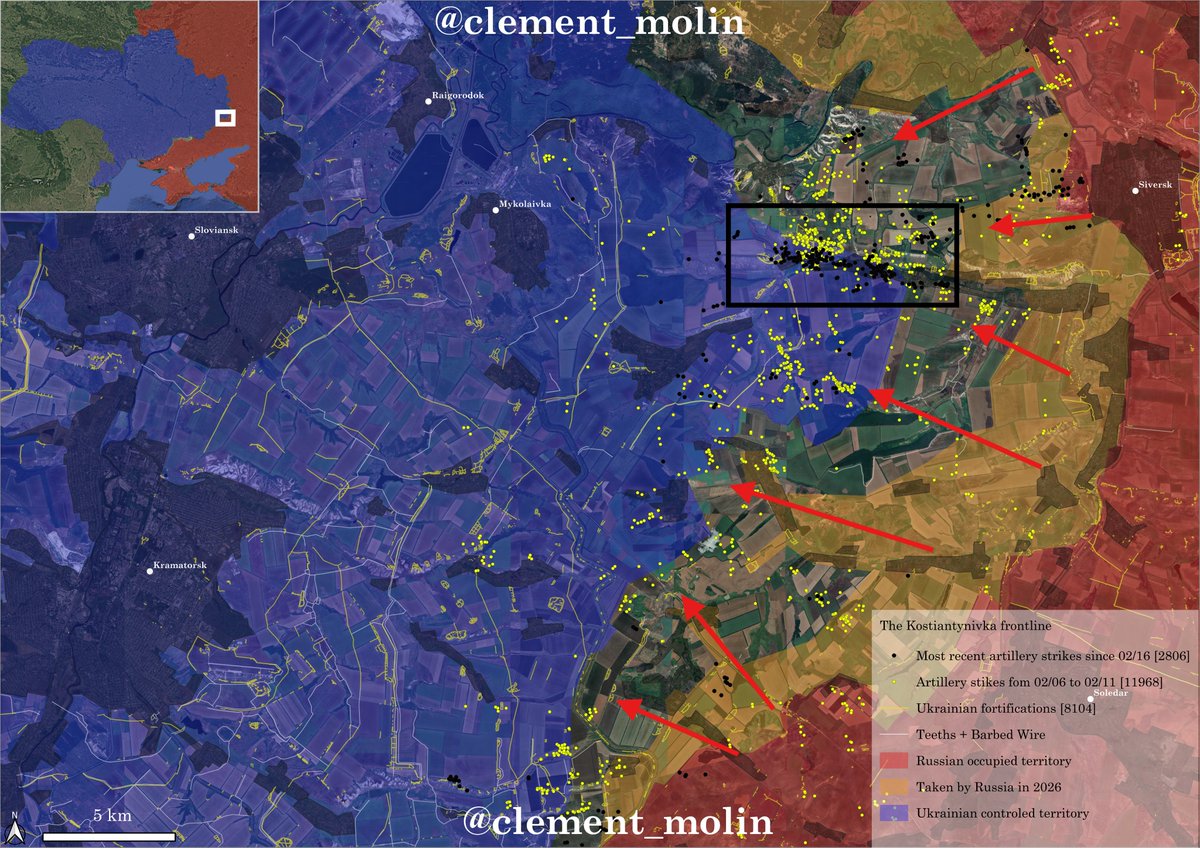
To be clear, I don't believe Russia can take both cities in frontal assault, but they will soon start bombing them more often.
Probably, important battles will be fought for the fortifications east of those. While the battle for the cities will start later.
Probably, important battles will be fought for the fortifications east of those. While the battle for the cities will start later.
Thus, ukrainian forces continue to focus on the preparation of important defensive lines in front, but mainly behind the last remaining Donbas cities.
In red are the new fortifications. The situation here really worsened in february, I will keep an eye on it.
In red are the new fortifications. The situation here really worsened in february, I will keep an eye on it.
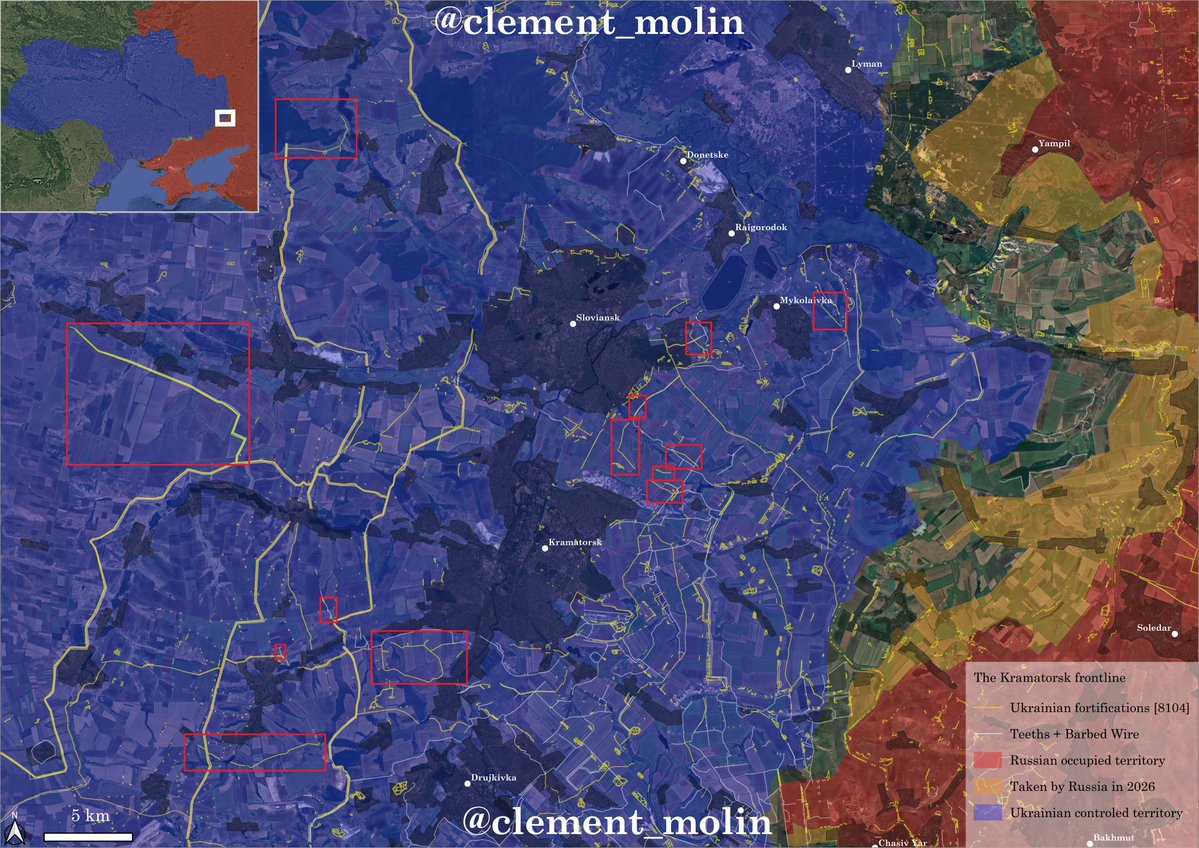
Finally, here in red are the areas where I saw recent fortifications improvements (only anti-vehicle ditches), you can see the trends and the overall changes.
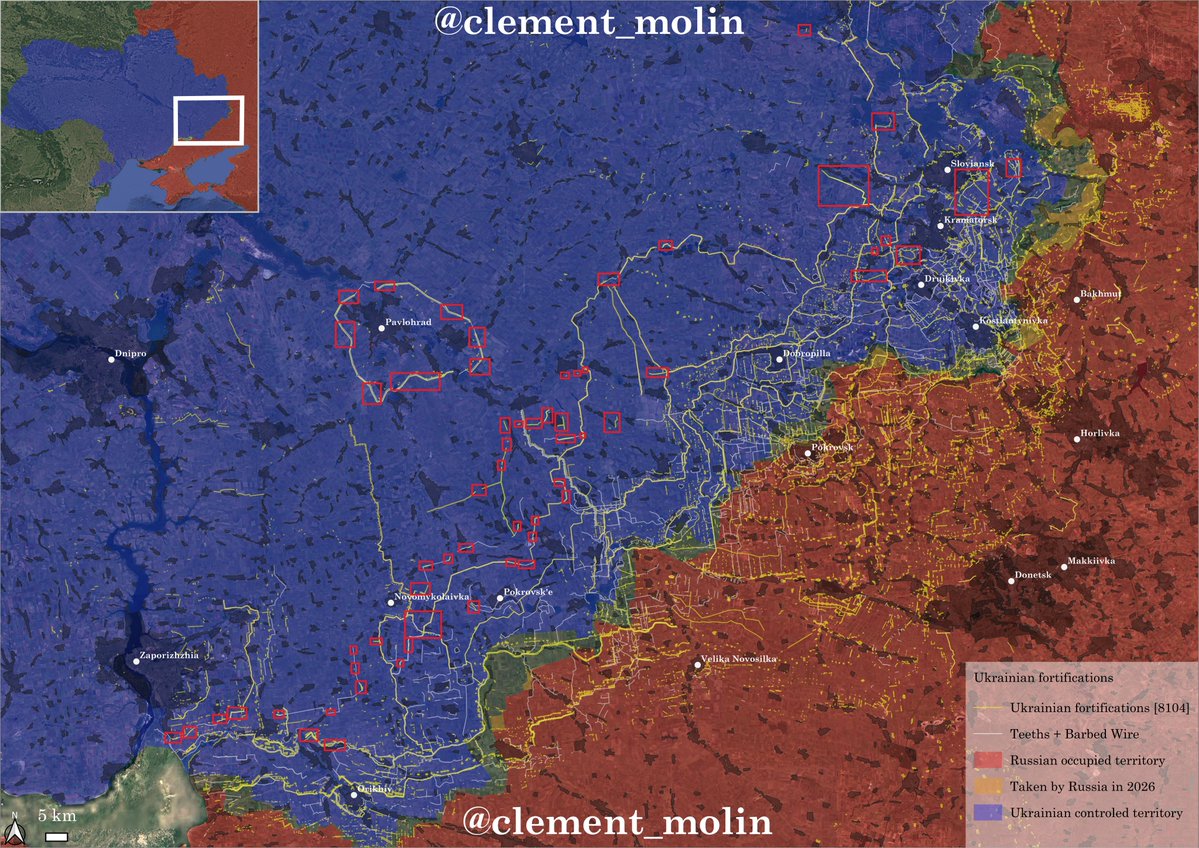
I thought it would be interesting to see the same thing for barbed wire, this time closer to the frontline and in white !
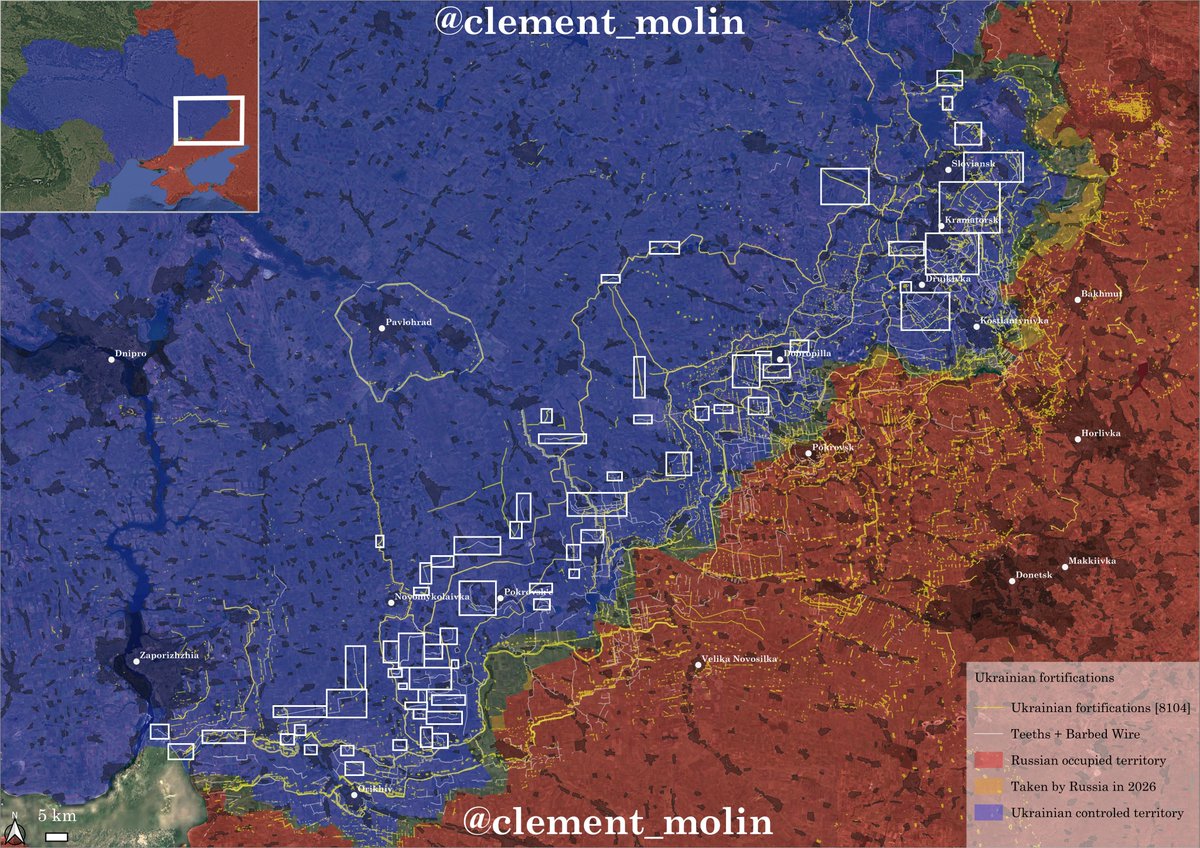
Thanks for following this new thread with a lot of OSINT research stuffs inside !
Make sure to follow my account if you are not yet following !
You can support me here : buymeacoffee.com/clement.molin
Make sure to follow my account if you are not yet following !
You can support me here : buymeacoffee.com/clement.molin
• • •
Missing some Tweet in this thread? You can try to
force a refresh