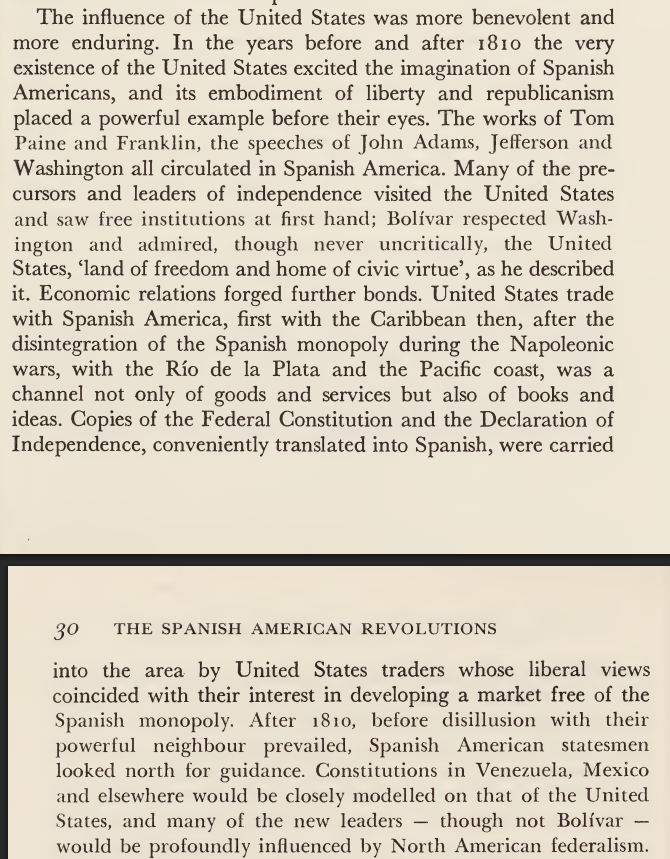
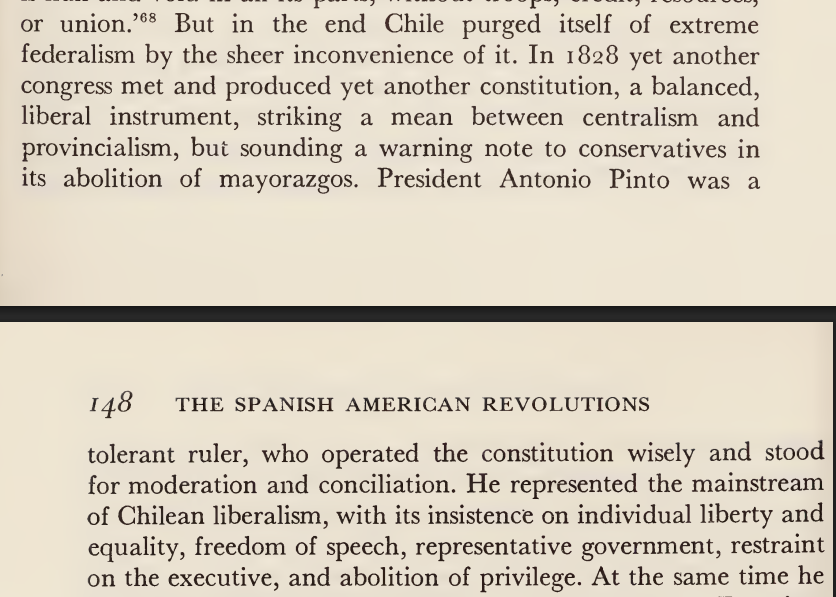
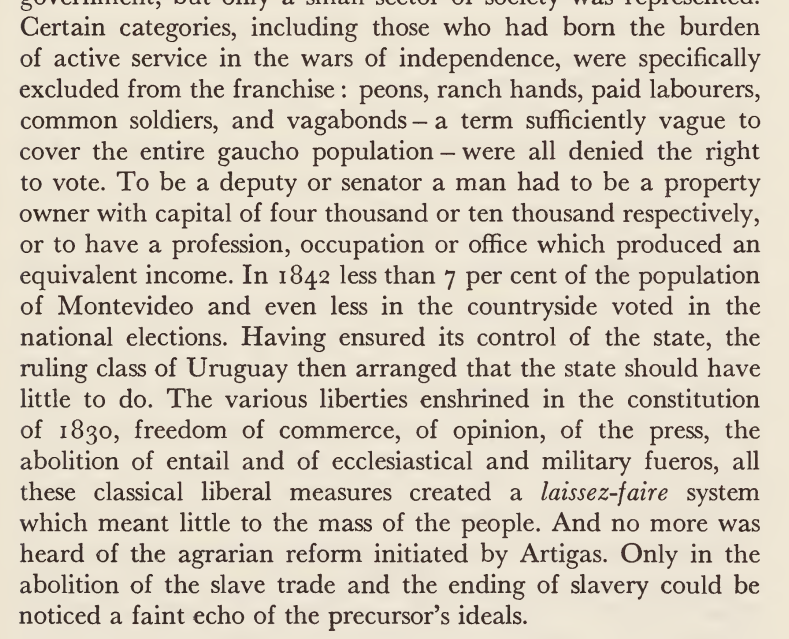
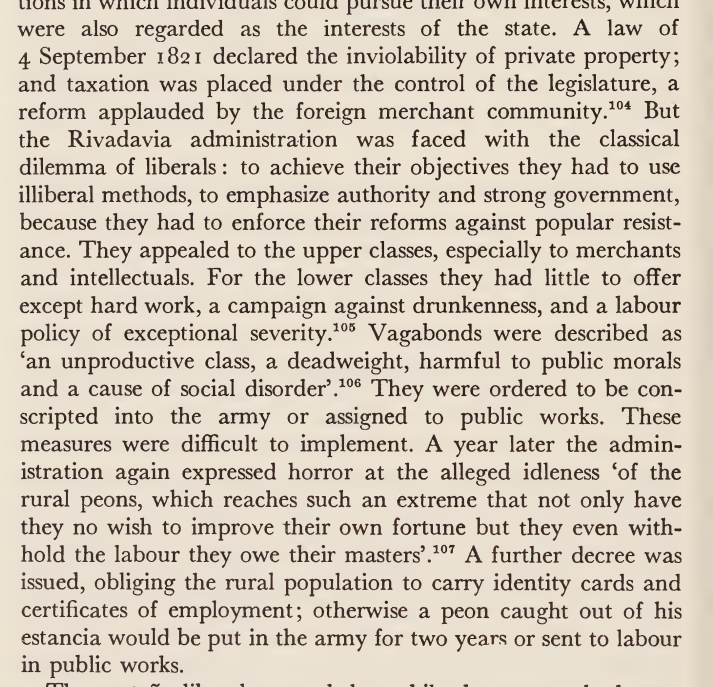
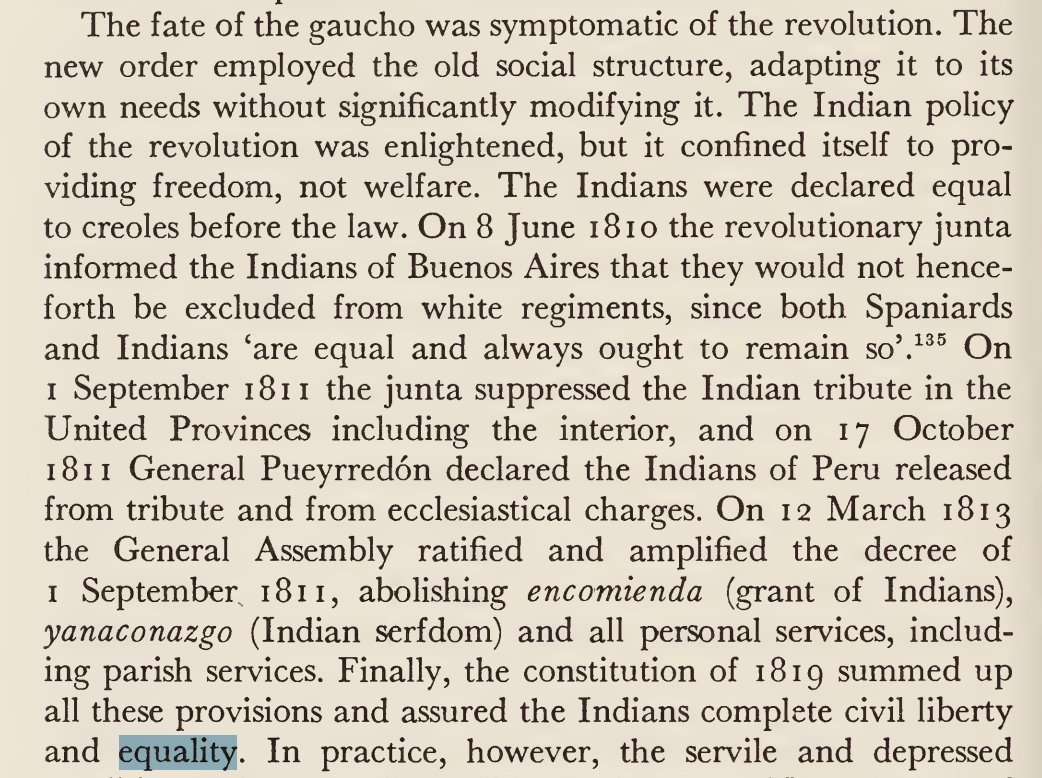
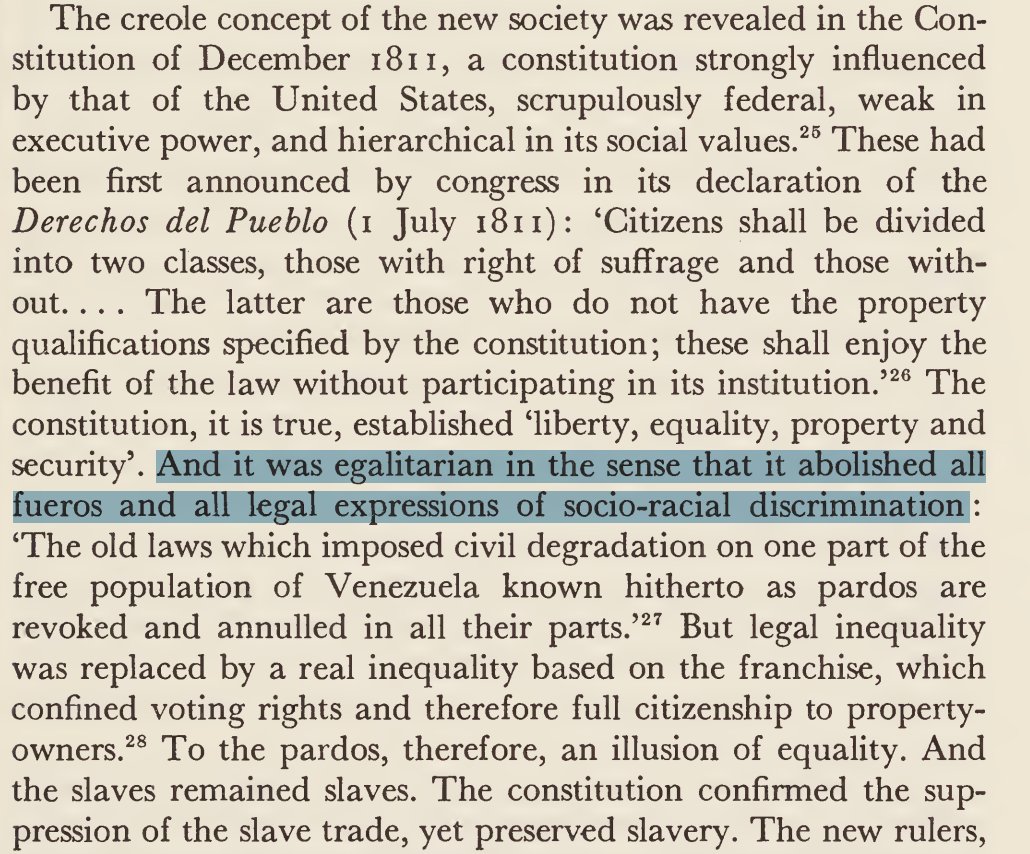
Most Spanish South American countries had very liberal constitutions on independence, guaranteeing property, liberal freedoms like speech and contract, and abolishing the fueros and legal caste/race distinctions, often inspired by but going further than the United States.
Many people claim the US was founded as a [classical] liberal state without racial or ethnic content. This is mostly not true; the US was founded by Whigs (the word liberal was coined around 1800) and had explicit race laws. But it *is* true of most of Latin America.
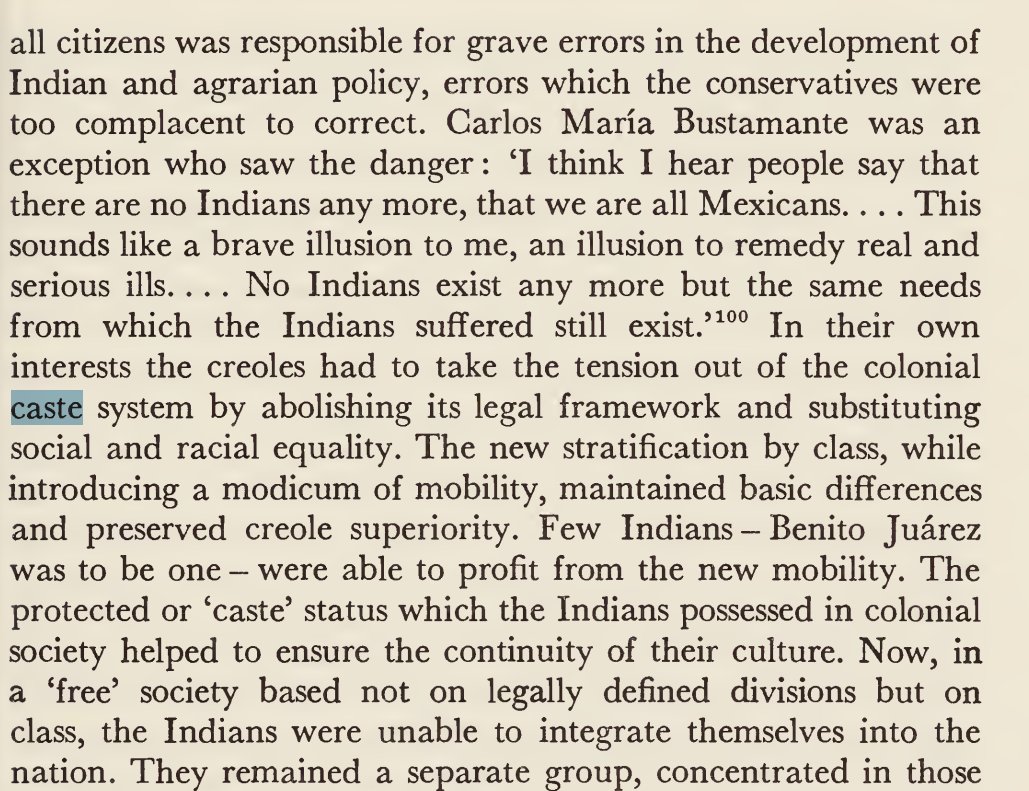
Spanish-American liberals were within the Spanish liberal tradition, much like the Founding Fathers were Whigs. 19th Hispanic century liberalism, politically very successful, is overlooked vs Britain or France. Liberalism won but failed in both Spain and America.
I suspect liberalism's failure in Spain and Spanish America is overlooked by many because most interested in 19th century liberalism are sympathetic towards it (if leftist, as a precursor of socialism and derivatives, otherwise, in and of itself); the failure is embarrassing.
Couple more differences between Spanish America and the US: most of Spanish America abolished slavery without much fuss on independence, and just about every major independence leader from Iturbide to Bolivar to San Martin died in exile, like if Washington had fled to Russia.
• • •
Missing some Tweet in this thread? You can try to
force a refresh

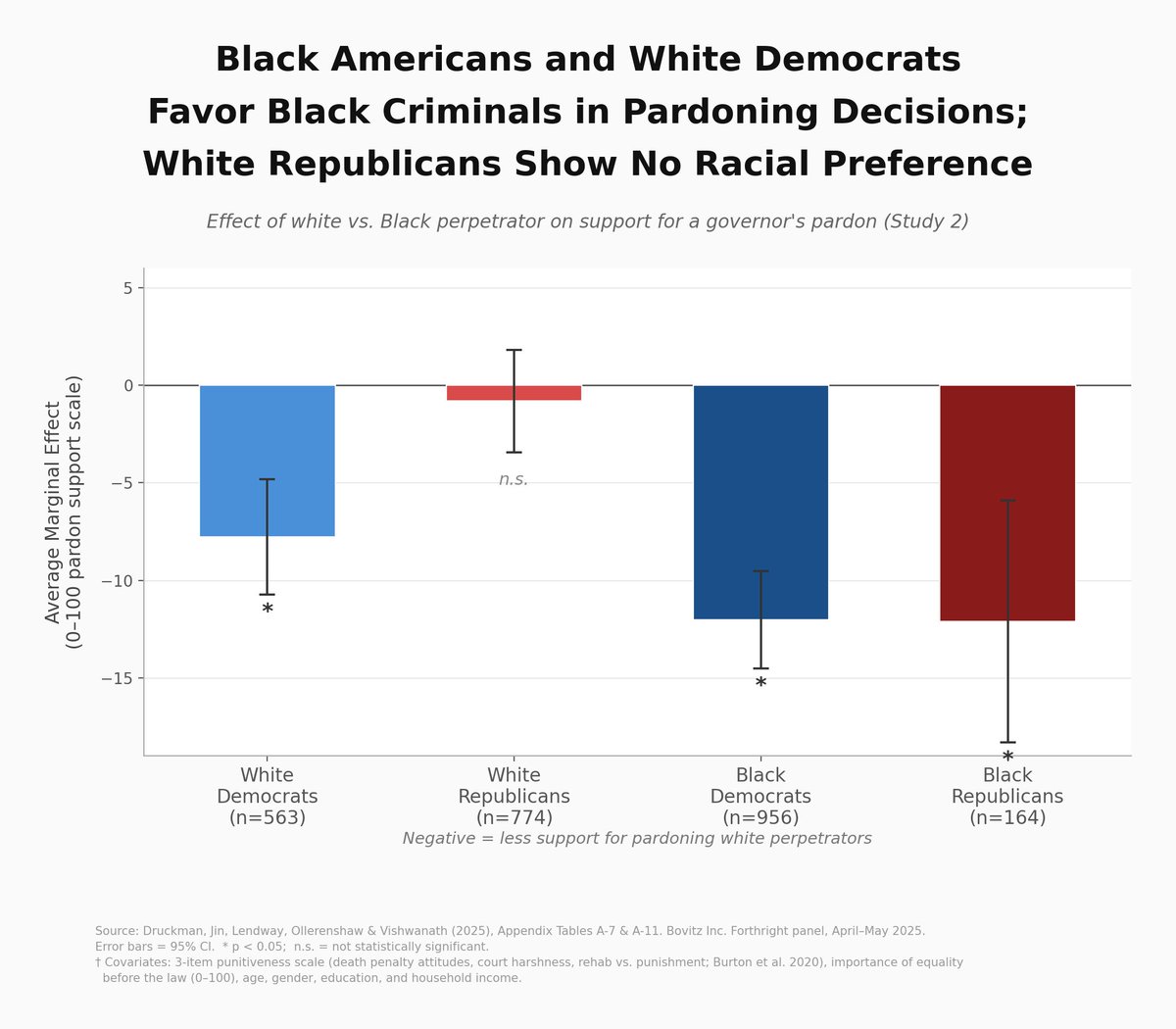
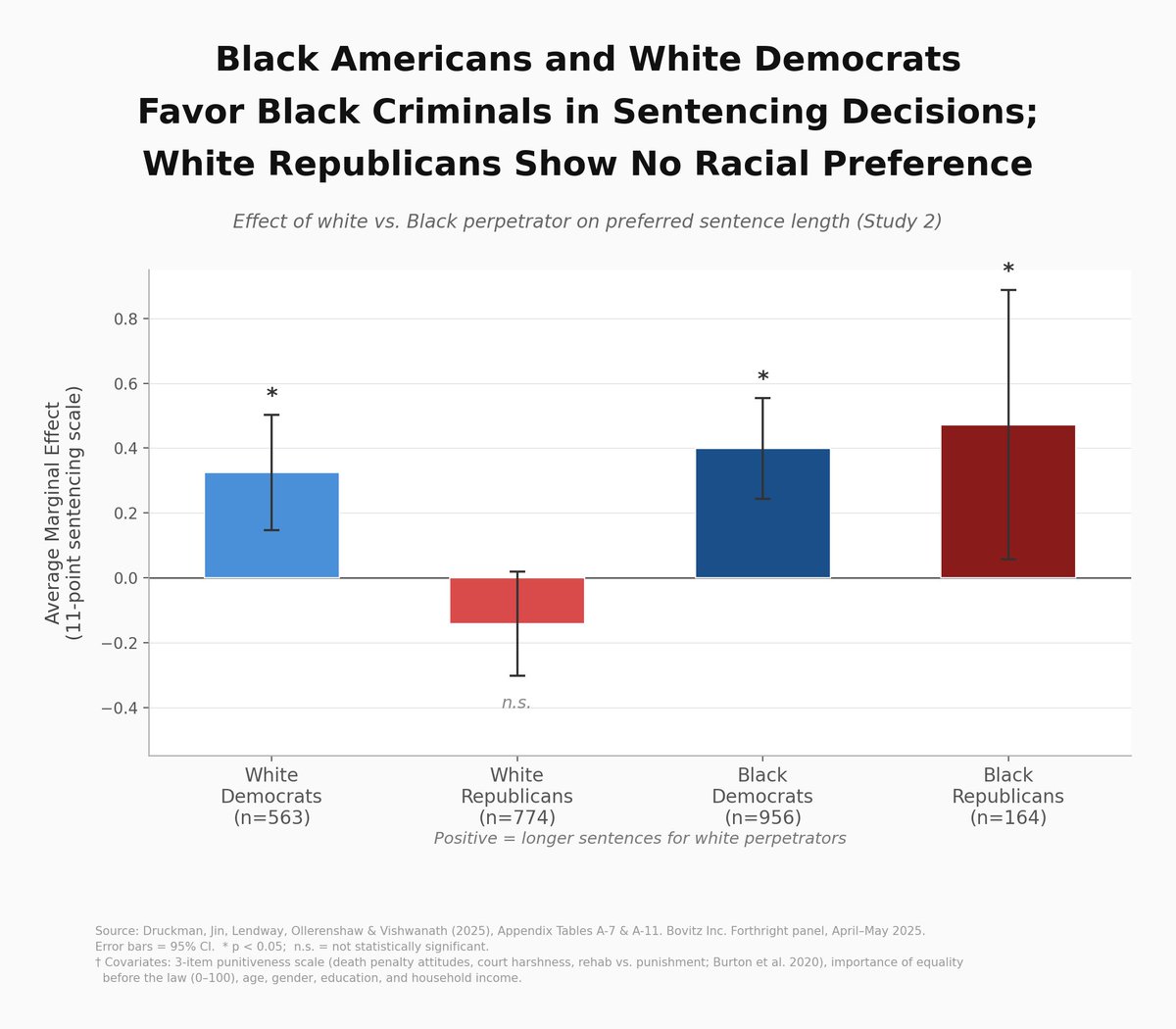
In experimental settings, blacks of both parties and white Democrats favor black criminals over white ones in sentencing and pardoning decisions, while white Republicans have no racial preference.
The same effect shows for sentencing. Of note: black Republicans are basically indistinguishable from black Democrats, in aggregate.
This is driven by racial liberalism (believing things such as anti-black bias being a major problem in the justice system). More racial liberalism => more pro-black bias.
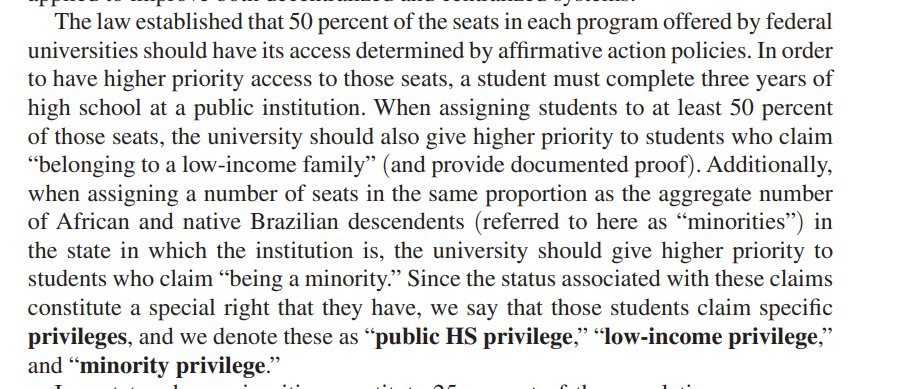
Thread on affirmative action in Brazil. In 2012, Brazil began mandating that 50% of seats in all programs offered by federal universities should be distributed via affirmative action to the following three groups: public school grads, the poor, and blacks/Indians.
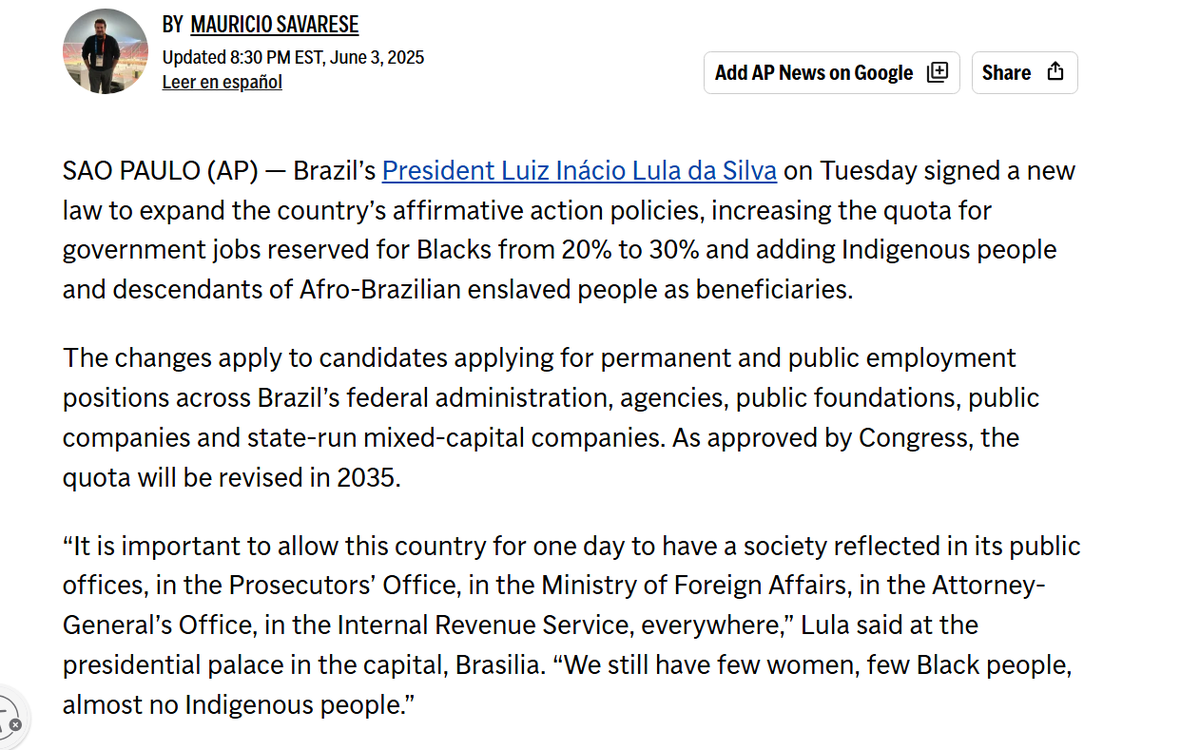
Affirmative action also applies to government jobs in Brazil. 20% were reserved for blacks until 2025 when this was increased to 30%. This applies to all government organizations as well as public companies and mixed-capital state-run companies.
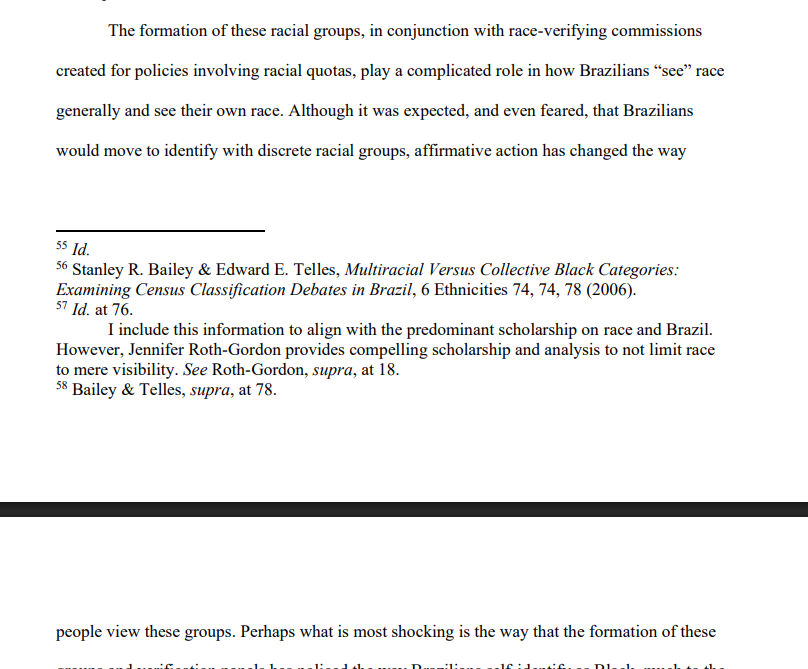
One effect of this has been to make race much more salient in Brazil. For most of the 20th century, Brazil had a reputation for being a post-racial state with little racial conflict. Affirmative action changed this, as there are now concrete racial privileges to be won.
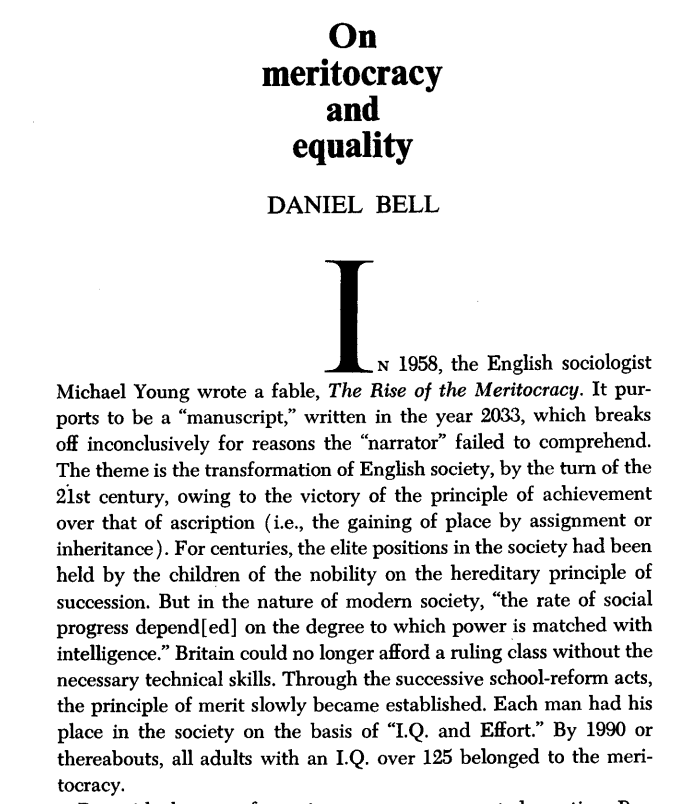
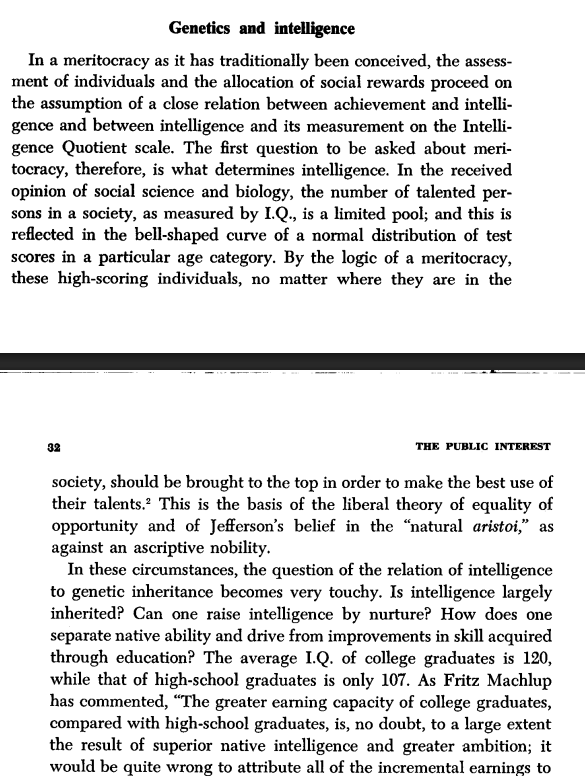
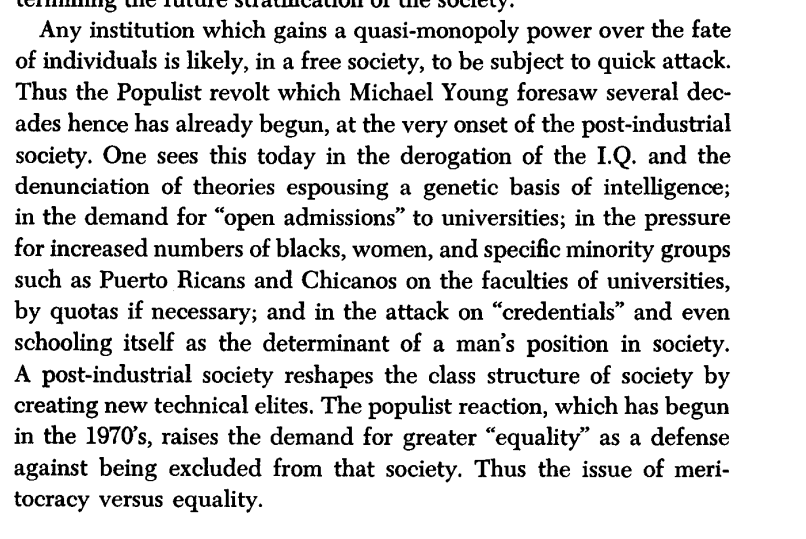
Thread with excerpts from the 1976 essay "On Meritocracy and Equality." I want to clear up some misconceptions around the idea of "meritocracy." The word was initially coined as a *pejorative* in 1958 to describe presently-existing Anglo-American society.
What characterized WWII and postwar Anglo-American society that made the word "meritocracy" appropriate? That talent (as measured by heavily genetic IQ) and technical skill, rather than hereditary privilege or some other mechanism, led to status and wealth.
But by 1976, this had already been successfully attacked and overthrown by the New Left/Civil Rights state, which replaced talent with hereditary privilege (race, sex) as the ideal arbiter of status.
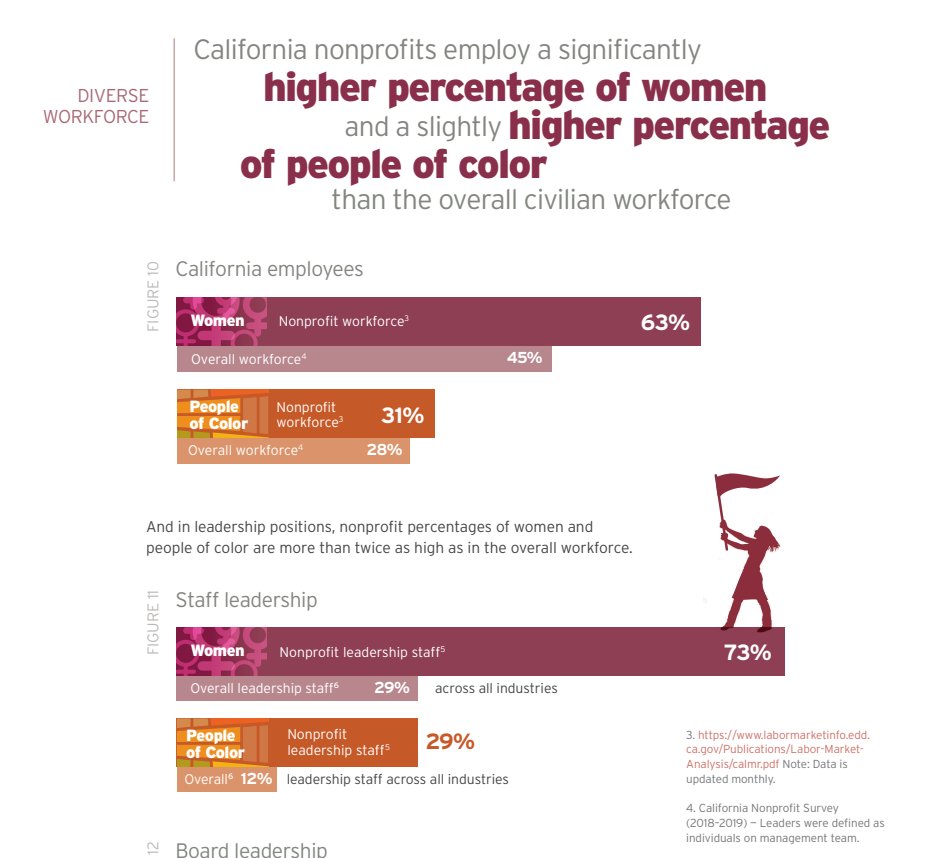
Thread on California NGOs. Who works for and leads California NGOs? Mostly women, who are very starkly overrepresented in nonprofit employment and leadership.
Direct government funding is 30% of nonprofit revenue; the rest is tax-advantaged.
NGOs are effectively para-statal; a huge fraction of government services (eg 32% of Medi-Cal) are administered by them and a large chunk of their revenue is tax revenue. They then lobby the govt for ever more $$$ for their causes.
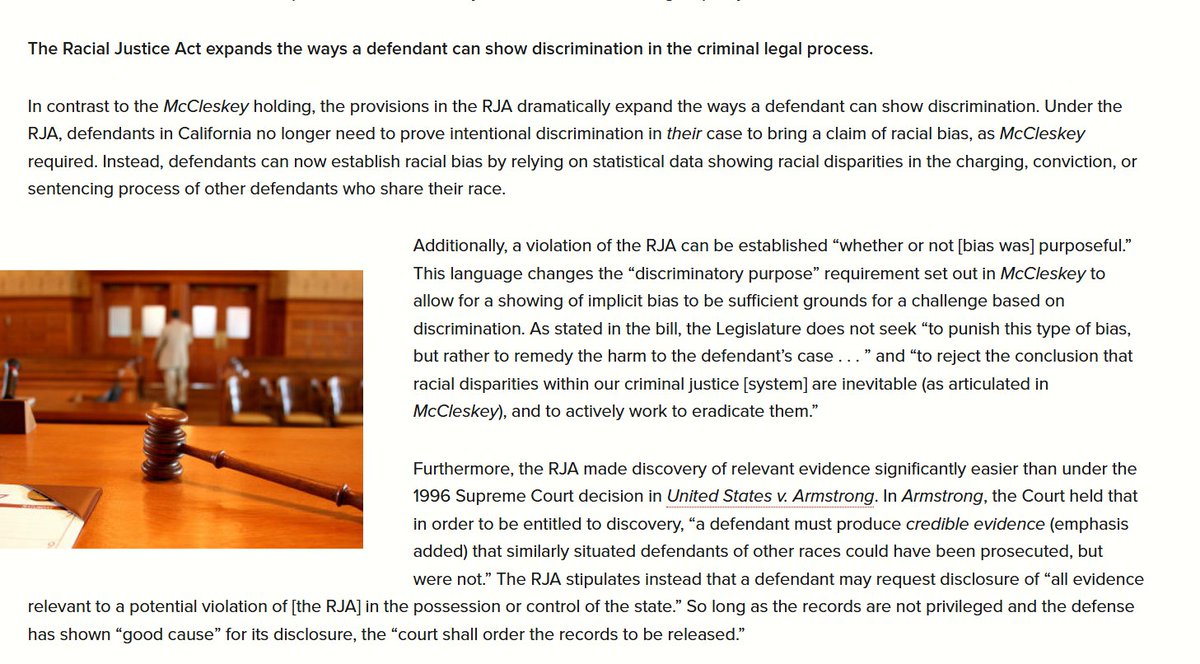
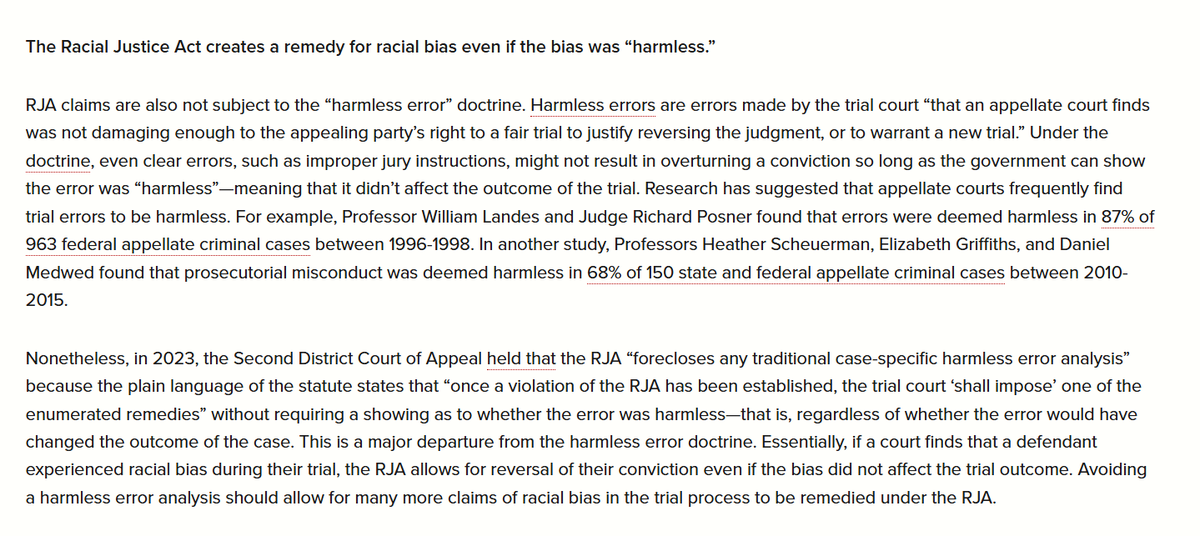
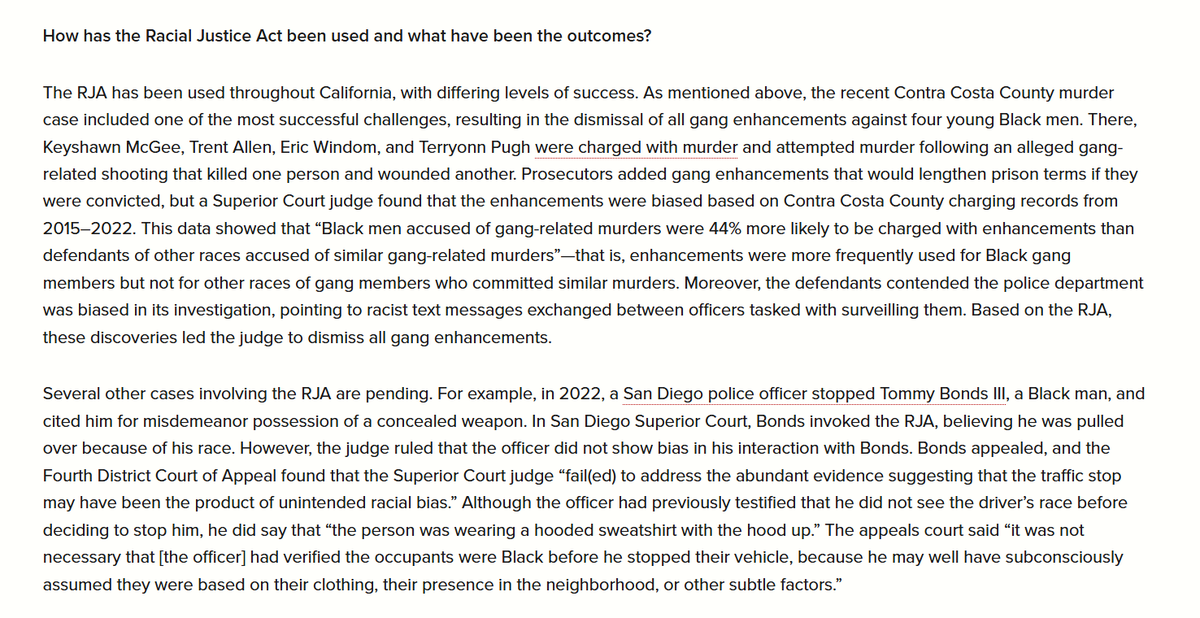
The California Racial Justice Act of 2020 allows defendants (in practice, blacks and Hispanics) to claim racial discrimination and overturn convictions explicitly in the absence of intentional discrimination, off of disparate impact alone.
Supposed discrimination can be used to reverse a judgment even if said "racial bias" is harmless and did not actually impact the decision.
Successes of the racial justice act: getting murderous gang members lower sentences because they are black and blacks are more likely to be charged as gang members [because they are more likely to be gang members].
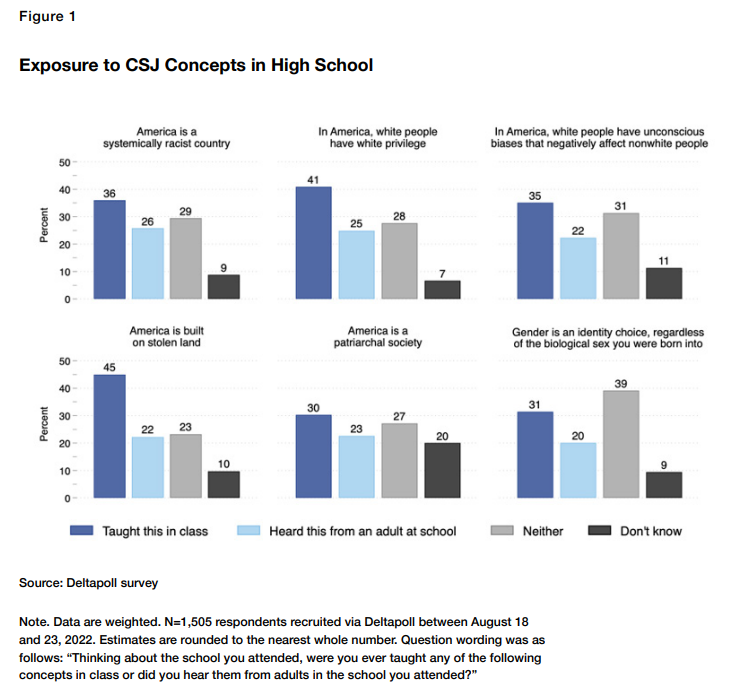
In 2022, 45% of high schoolers polled say they were taught that "America is built on stolen land" in class at school, and another 22% heard it from an adult there.
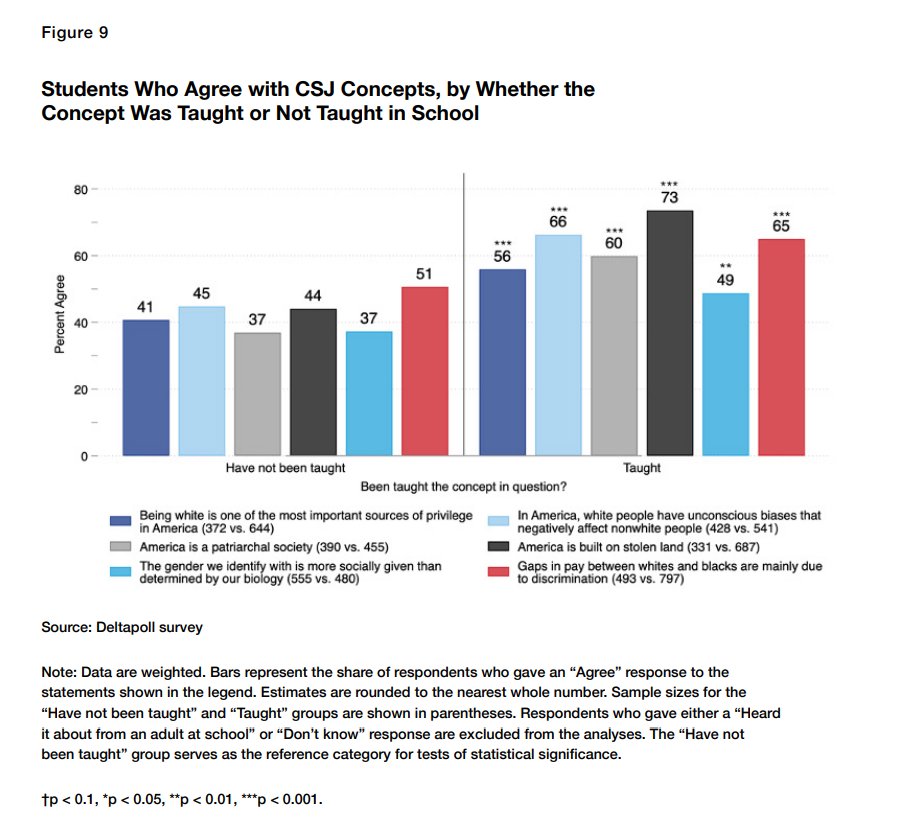
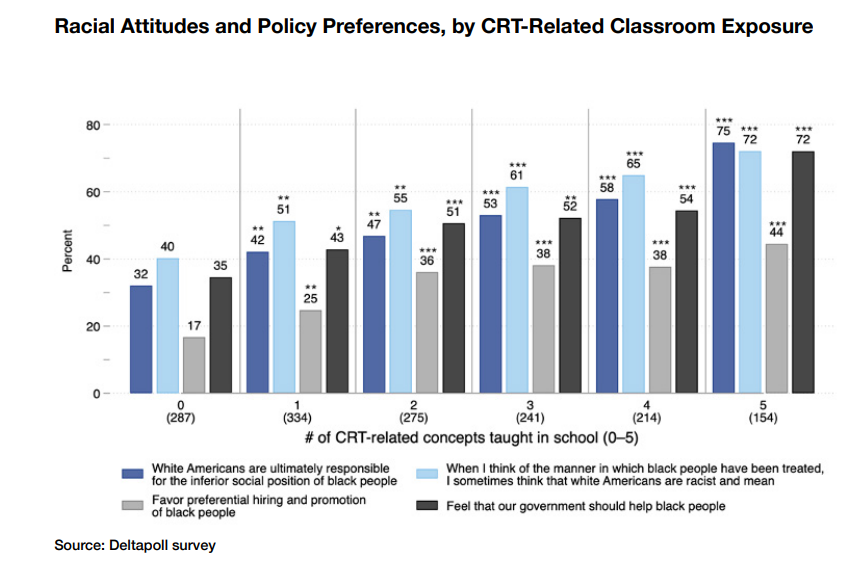
Students taught all of the "critical social justice" (CSJ) concepts were in fact more likely to agree with them; among those taught "America is built on stolen land" 73% agreed.
Among those students taught 5 CSJ concepts, 75% believed whites are responsible for the inferior social position of black people and 44% support preferential hiring and promotion of blacks.