1/ Russians who have never served in the Russian army and have never signed a military contract are nonetheless being rounded up as deserters and sent to their deaths in assault squads. It's the result of an ongoing and still unresolved bureaucratic blunder by Russia's MOD. ⬇️ 
2/ During the war in Donbas, between 2014 and the full-scale Russian invasion of February 2022, thousands of Russian nationalists volunteered to fight for the militias of the Luhansk and Donetsk 'People's Republics'. Many were subsequently discharged.
3/ In December 2022, Russia formally incorporated the Luhansk and Donetsk militias into the Russian Army as part of the annexation of both 'People's Republics'. All current and former members of the militias were reclassified as soldiers of the Russian army.
4/ However, as warblogger Vladislav Zizdok explains, this left many in a "legal trap":
5/ "The essence of the legal trap is that after the start of the Special Military Operation Military Operation, that is, even under the previous Minister of Defence Sergei Shoigu, the DPR and LPR officially became part of Russia, and their armed forces became part of…
6/ …the Russian Armed Forces. At the same time, no new contracts were signed with former militia members—for some reason, it was assumed by default that all the duties of Russian military personnel automatically extended to them.
7/ "However, there was no automatic transfer of rights, payments, and privileges. If anything were to happen, these people would be left alone to deal with their problems."
8/ In practice, this means that legally granted discharges from the LPR and DPR – even for badly wounded men – are no longer being recognised. Soldiers who had been discharged under the L/DPR's regulations are now being treated as deserters from the Russian Army.
10/ A large part of the problem is that the mobilisation and recruitment processes in the L/DPR were chaotic and poorly organised in the first place, with correspondingly poor documentation and adherence to consistent policies:
11/ "First there was chaos with mobilisation in the L/DPR — arbitrariness, lawlessness, and massive consequences. Then there was chaos with mobilisation in Russia itself, when wild, confused conscripts were roaming around the L/DPR not knowing where to attach themselves.
12/ "Everything went in a chain: chaos → arbitrariness → absence of clear procedures for processing and record-keeping → worsening chaos and outright abuse → an attempt to bring it all to a “common denominator,” but not by actually resolving the situation — …
13/ …instead at the expense of disenfranchised mobilised soldiers / volunteers / AWOL servicemen → after which come the lectures about legal norms, while somehow “forgetting” that previously, at the foundational level and in practice, legal norms weren’t just violated —…
14/ …they simply didn’t exist.
And to this day, the state still does not create clear, understandable, workable mechanisms to resolve “Problem-500.” "
And to this day, the state still does not create clear, understandable, workable mechanisms to resolve “Problem-500.” "
15/ Appeals to the authorities have been of little use and there are few mechanisms for preventing former volunteers from being forcibly detained and sent back to fight. They are treated as deserters, for which the usual punishment is to be sent to die in an assault squad.
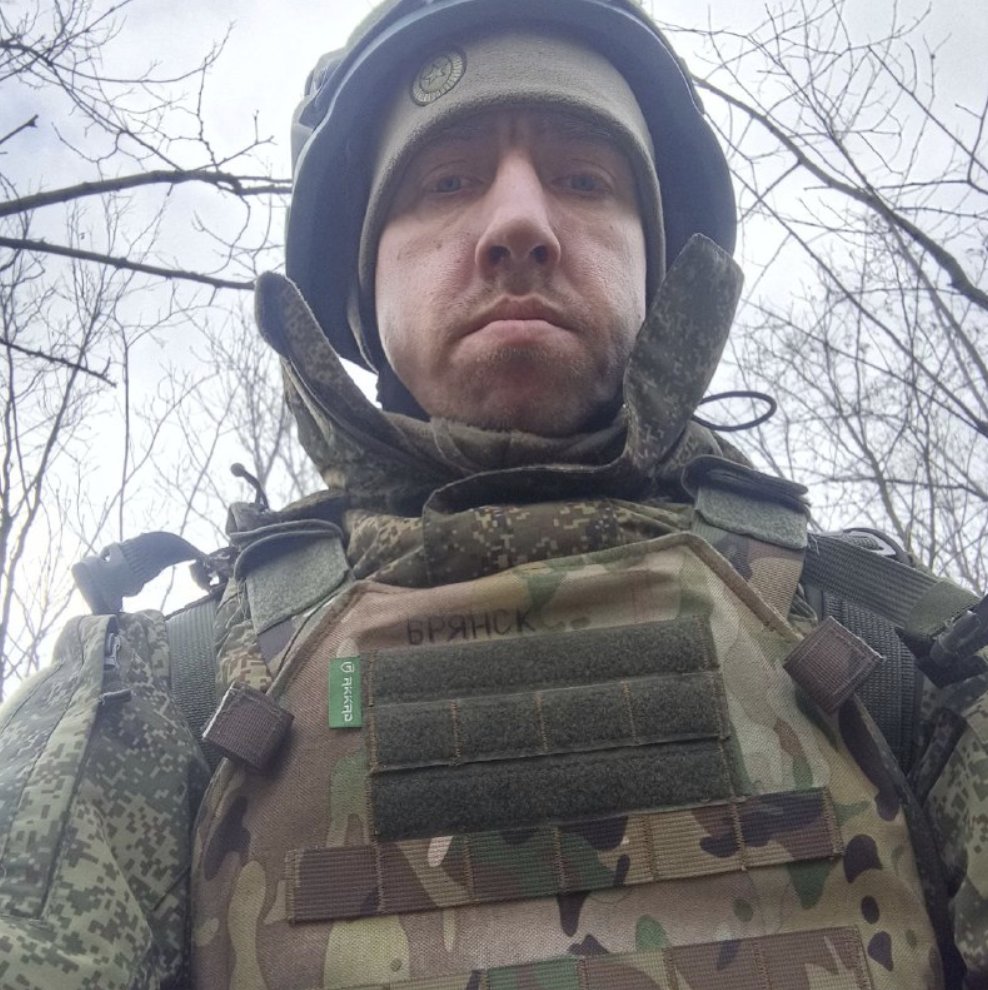
16/ 'Soldiers' Truth' highlights the case of Alexander Sergeyevich Cheprasov, call sign 'Bryansk', who is pictured at the top of this thread. A discharged former volunteer for the Donbas militias, he was arrested at the start of January 2026 as a deserter.
17/ He was taken to a holding place for deserters in Kazan despite explaining that he had "no connection to the Russian Ministry of Defence, was not mobilised because he was not eligible for mobilisation, had not served in the army, had not signed a contract with anyone,…
18/ …and was the guardian of a disabled person (his father, who is completely blind)."
Cheprasov was refused permission to meet with an investigator but was promised that "everything would be sorted out".
Cheprasov was refused permission to meet with an investigator but was promised that "everything would be sorted out".
19/ Instead, on the night of 3 January 2026, he and others were loaded onto buses and taken to Millerovo in the Rostov region. The channel reports that Cheprasov is now listed as missing in action. /end
• • •
Missing some Tweet in this thread? You can try to
force a refresh