Thread with excerpts from Charles Murray's "Losing Ground" (1984), a book on the failure of US welfare and social policy 1950-1980 to achieve its goals. 
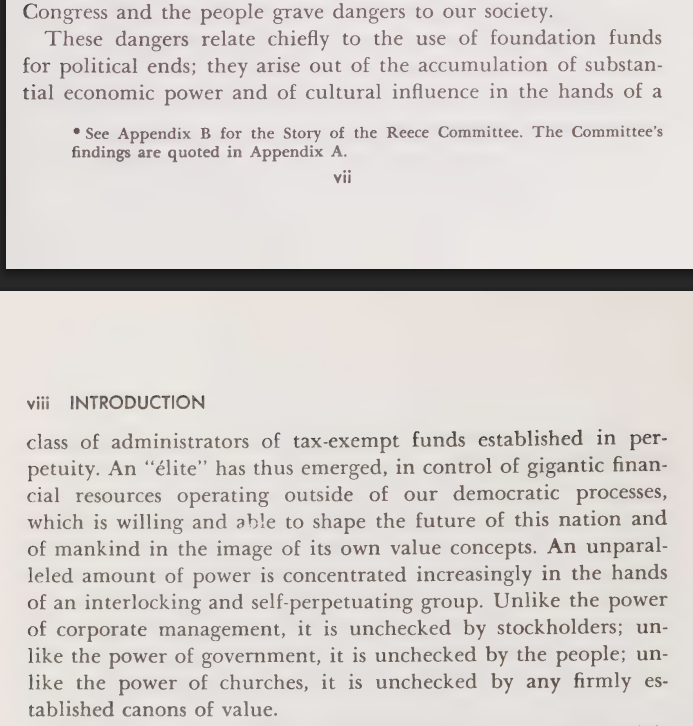
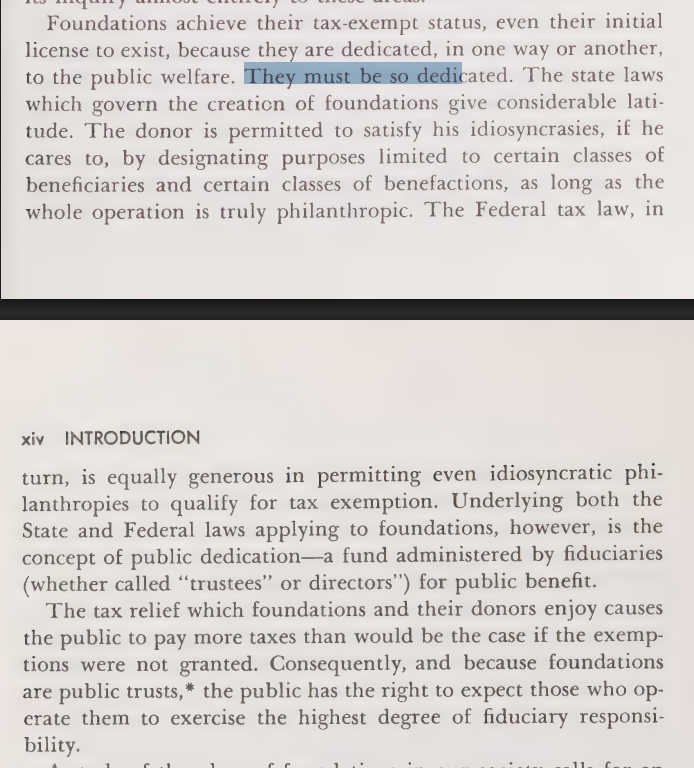
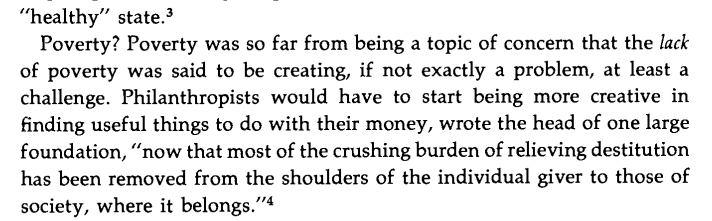
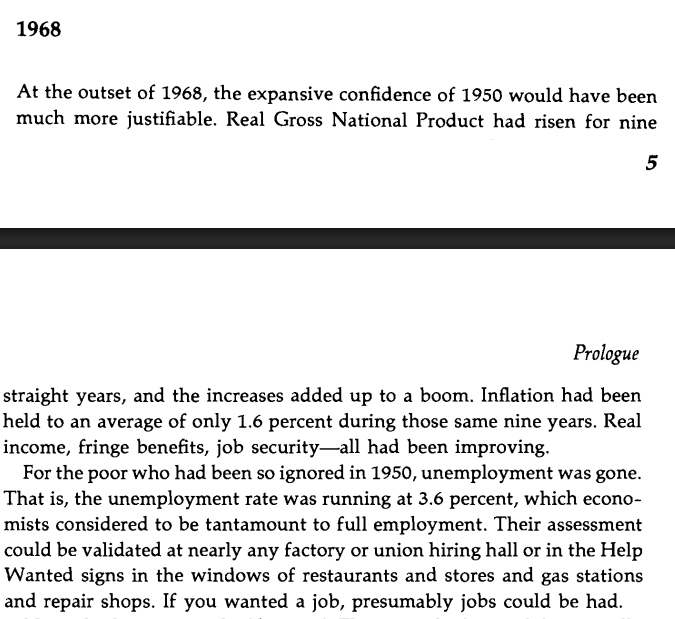
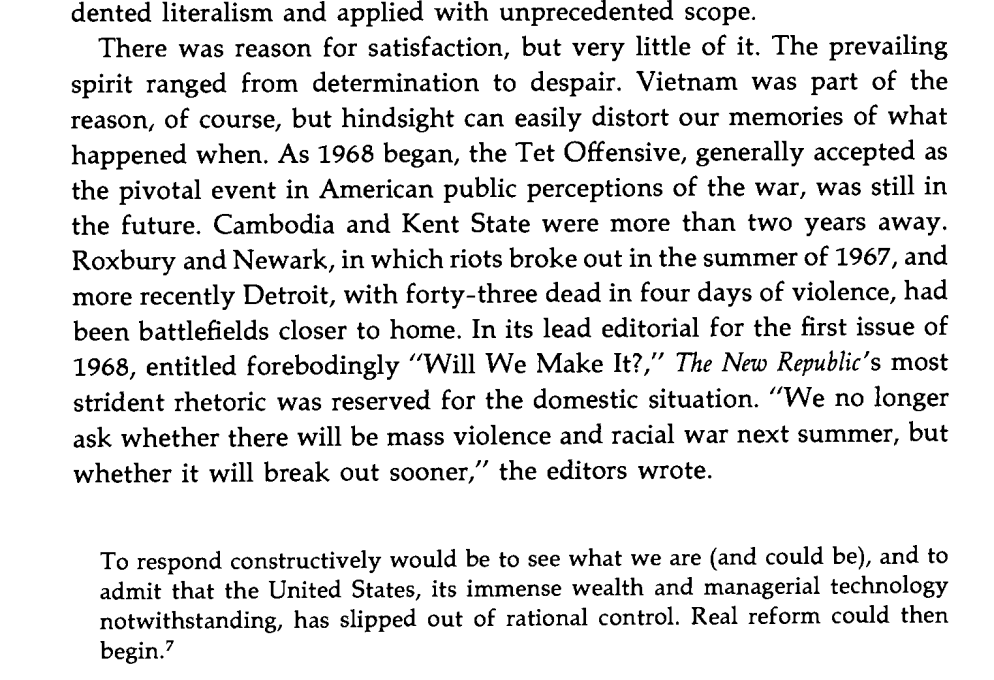
In 1950, poverty was such a non-issue it was causing problems - philanthropists had nothing obvious to do [perhaps the foundations went race communist]. In 1968, after a huge economic boom, mainstream papers predicted imminent race war without massive welfare expansion.
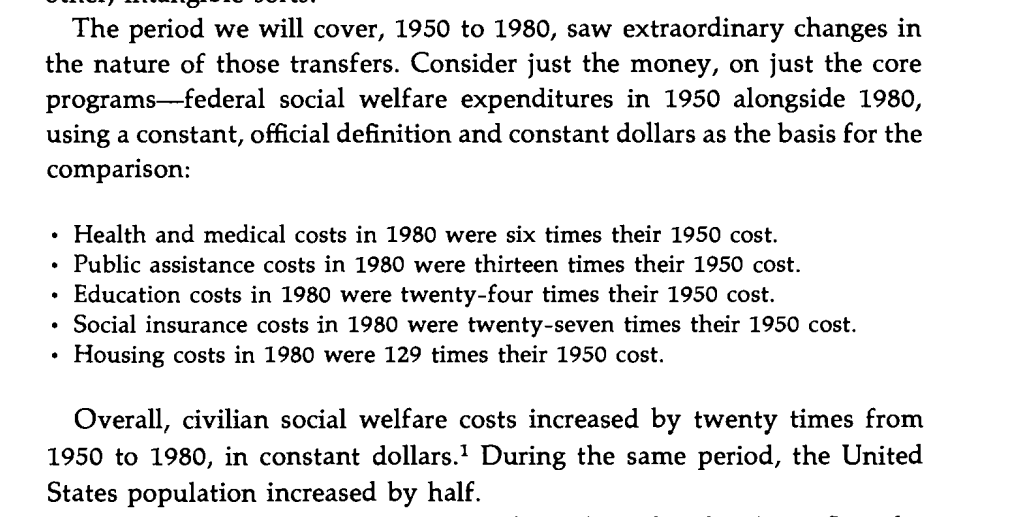
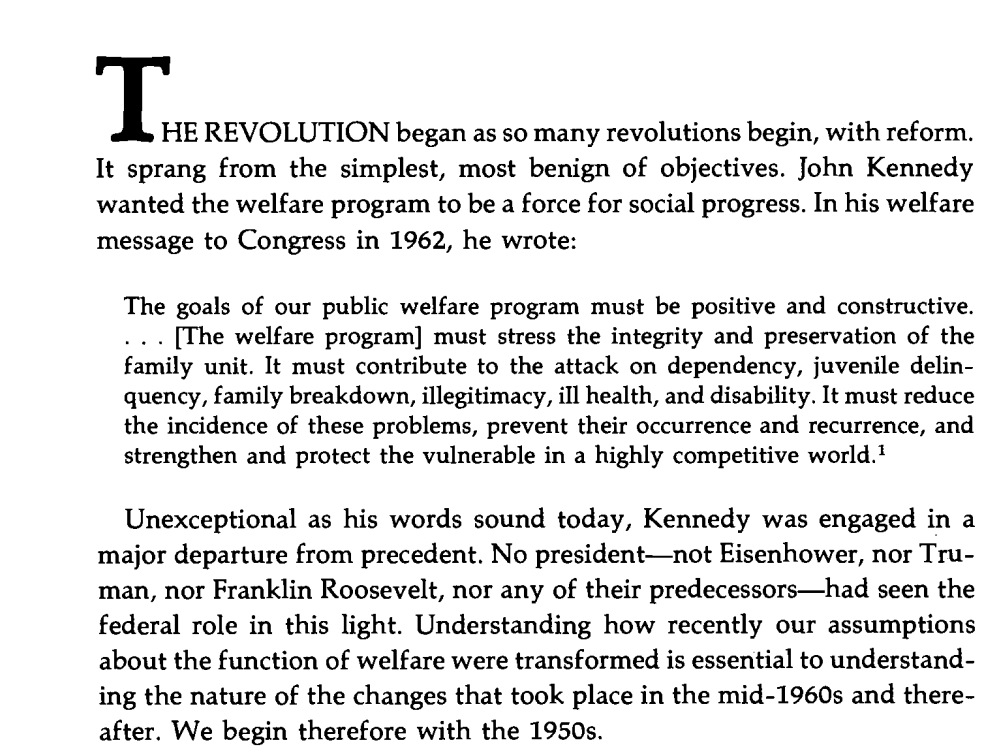
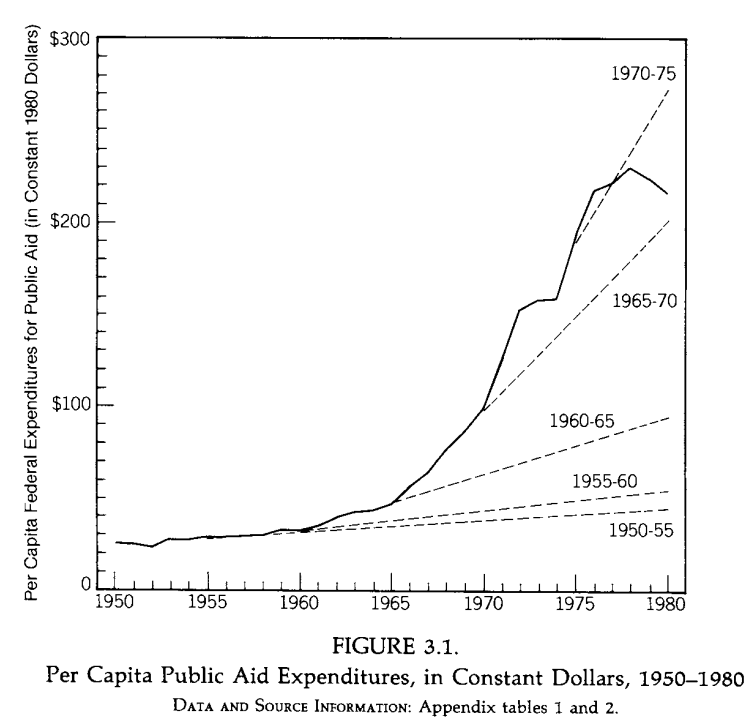
Social welfare expenditures increased by a factor of 20 (!) 1950-1980. The goals, per Kennedy, who initiated this change: preserving the family unit and ending dependency, disability, ill health, and juvenile delinquency.
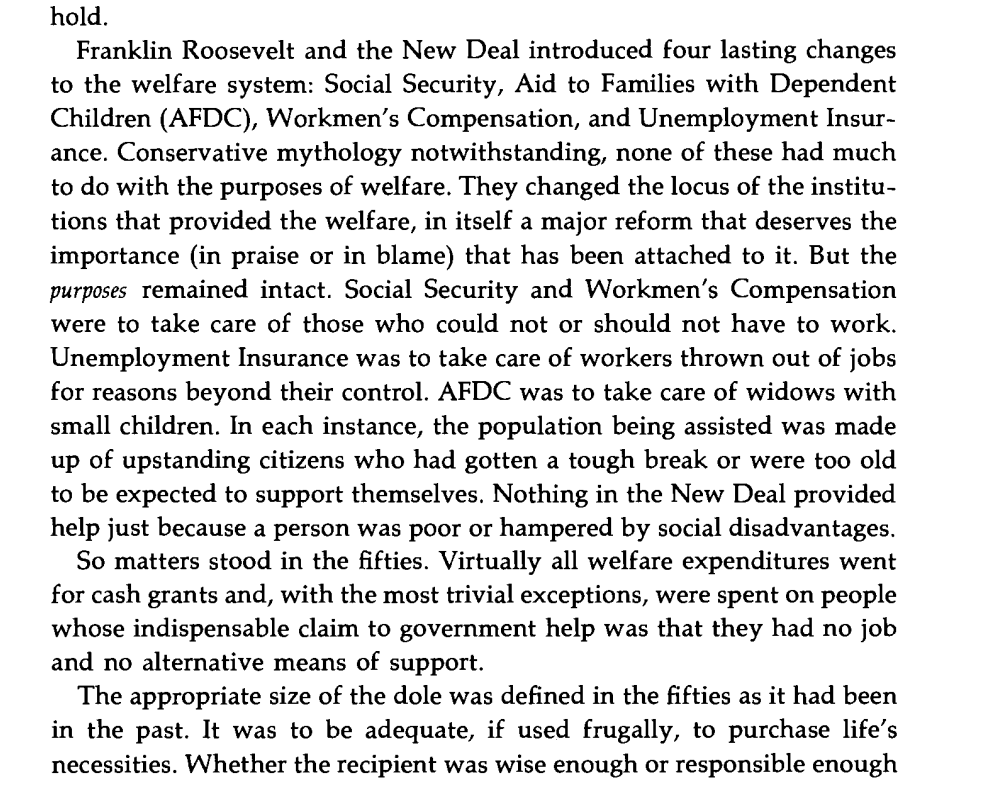
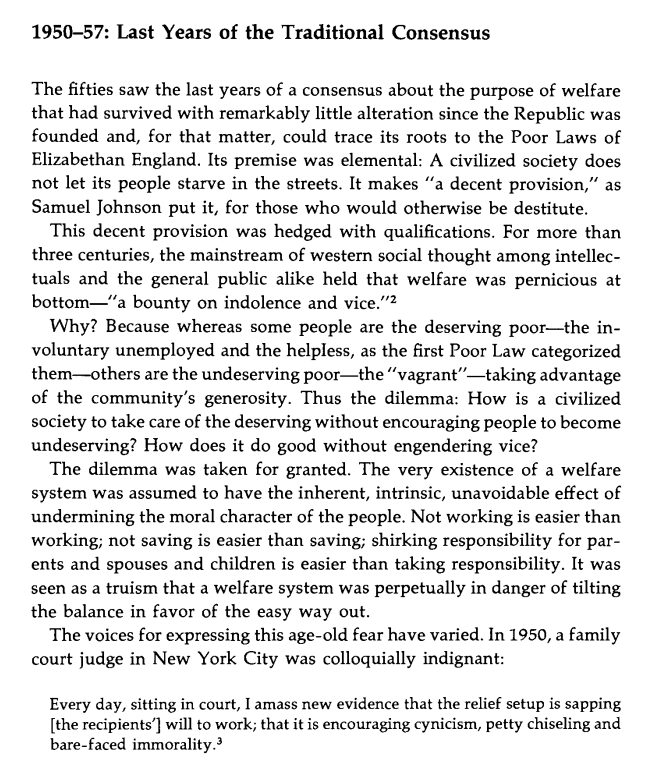
Until 1957, Americans assumed welfare was to prevent the deserving poor (eg elderly, cripples, widows with children) from starving and was intrinsically morally damaging. The New Deal did not change this; it merely changed who was paying to the government.
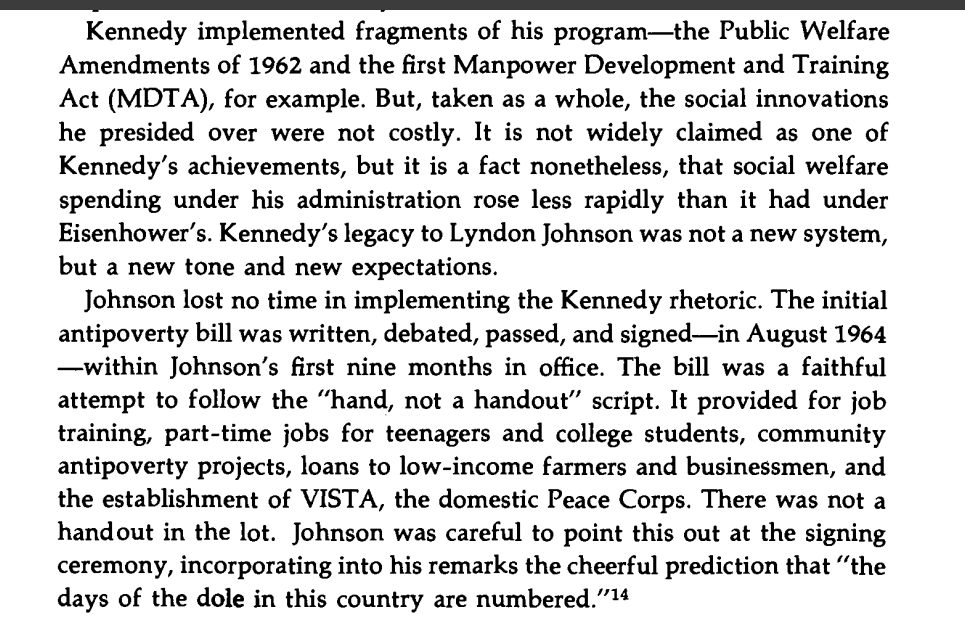
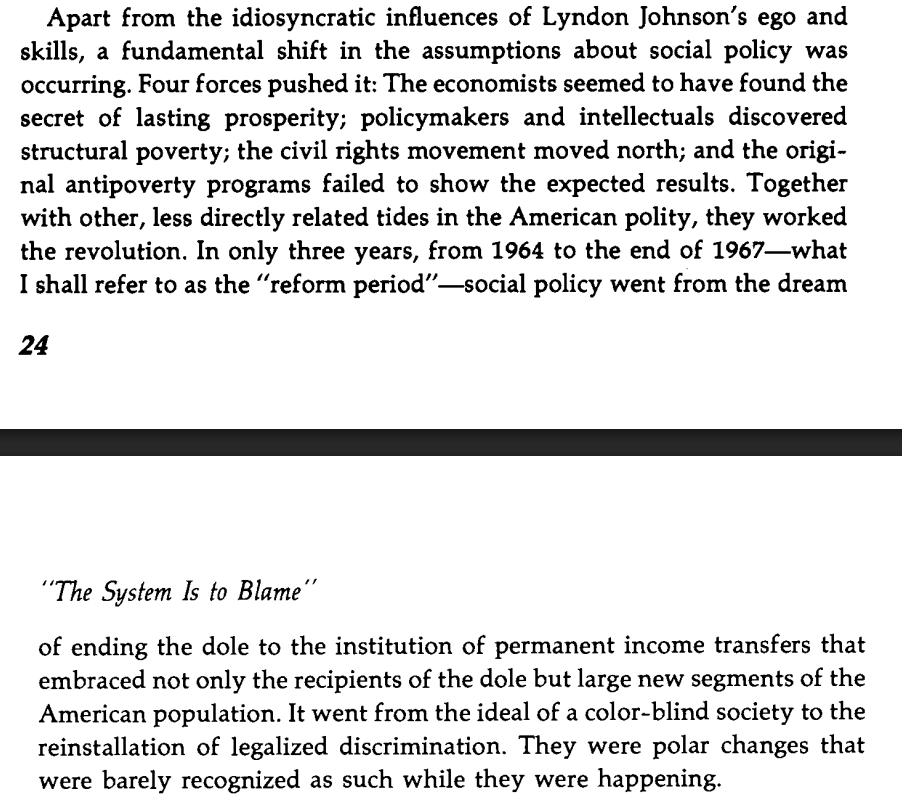
Kennedy himself changed little, but Johnson inherited his moral assumptions and was a far more effective legislator. Both the modern welfare system and the shift from colorblindness to racial privileges occurred 1964-1967.
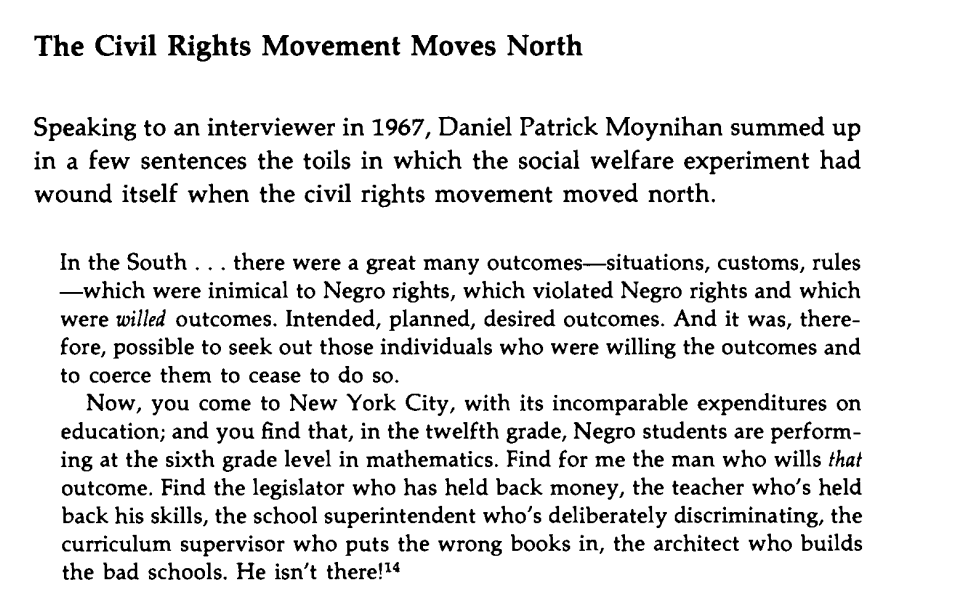
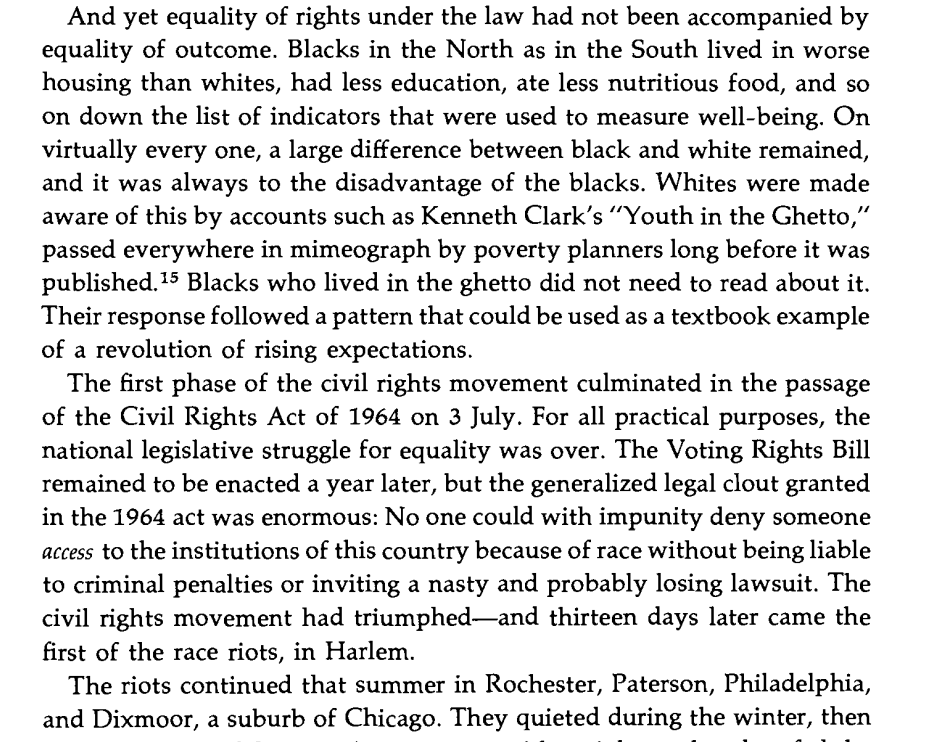
On the Civil Rights movement as it moved north. In the South, there were specific, intentional legal disabilities for blacks. These didn't exist in the north, and were fully abolished nationally with the 1964 CRA. 13 days after the bill was signed, the race riots started.
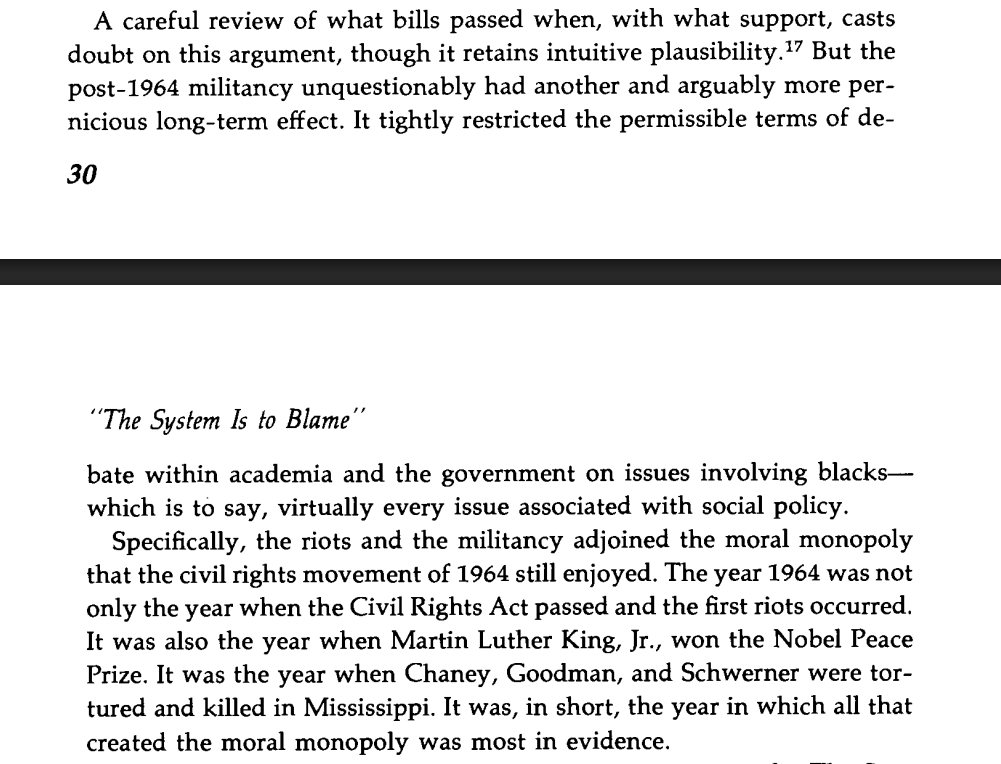
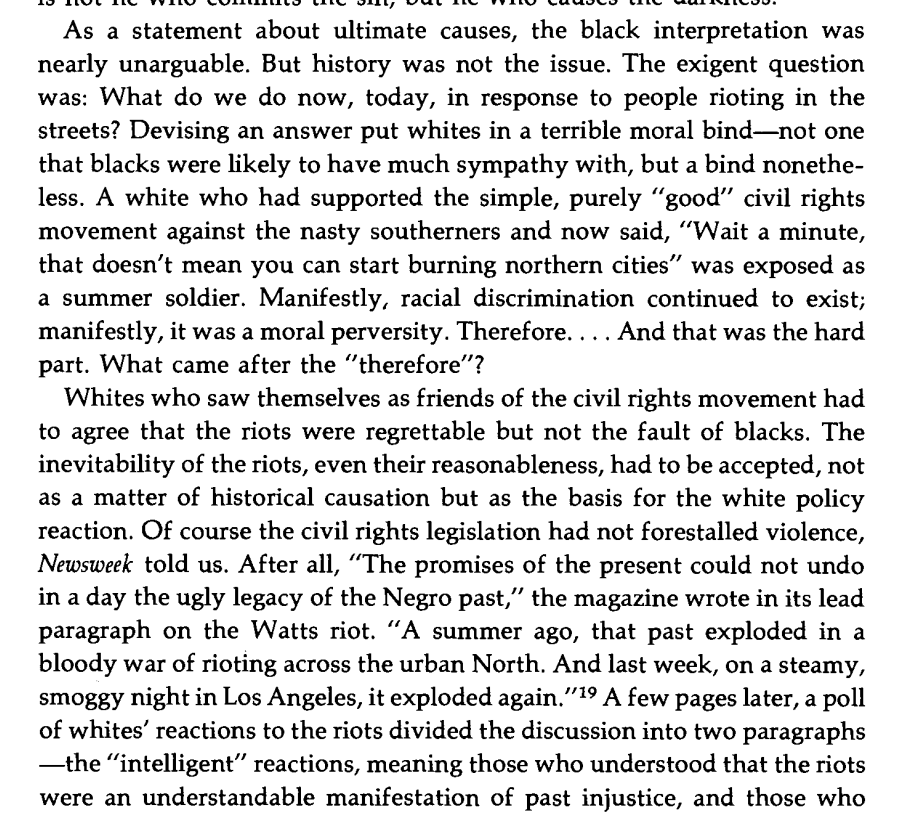
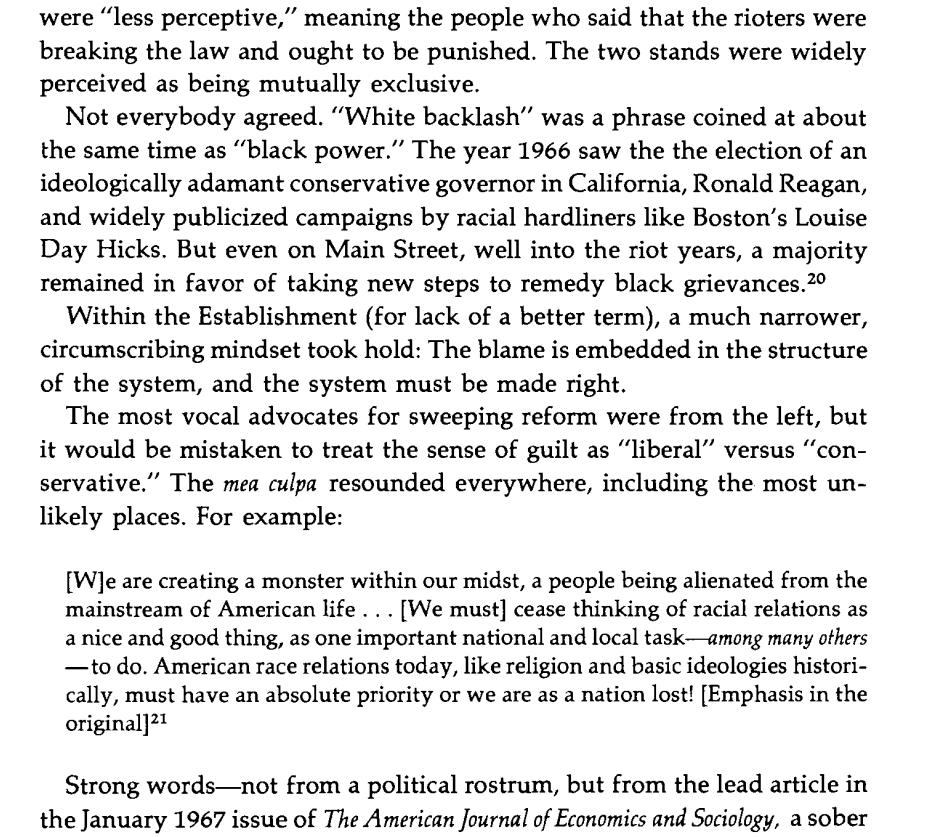
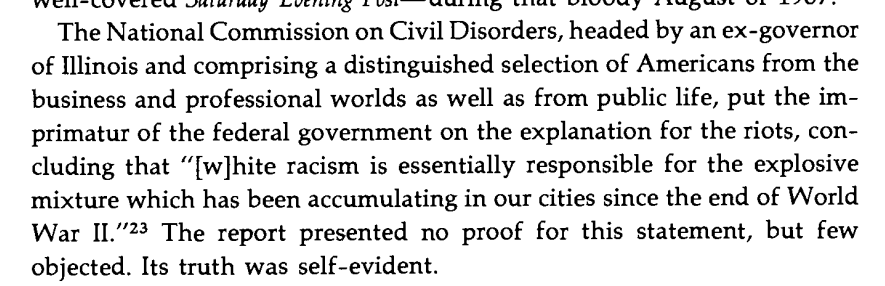
The 1964 race riots piggybacked off the moral monopoly that the Civil Rights movement enjoyed. The riots and destruction of northern cities couldn't be morally questioned, and so were blamed by the establishment on (1) whites and (2) "the System."
The rapid rapid 1964-67 moral shift underlying policy changes was not broad-based, unlike the New Deal. It was confined to the intelligentsia (academia, journalism, publishing, foundations, institutes, research centers in partnership with government.)
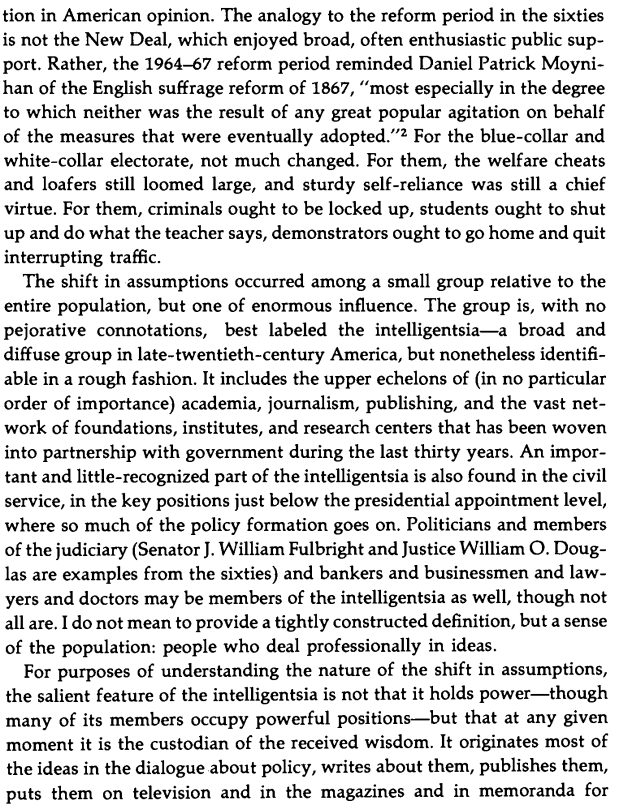
Before 1964, blacks were unique, the only group thought to need specific laws protecting them. After 1964, America was balkanized into many different minorities, each deserving corporate protection as a group. This is a de-modernization and de-liberalization process.
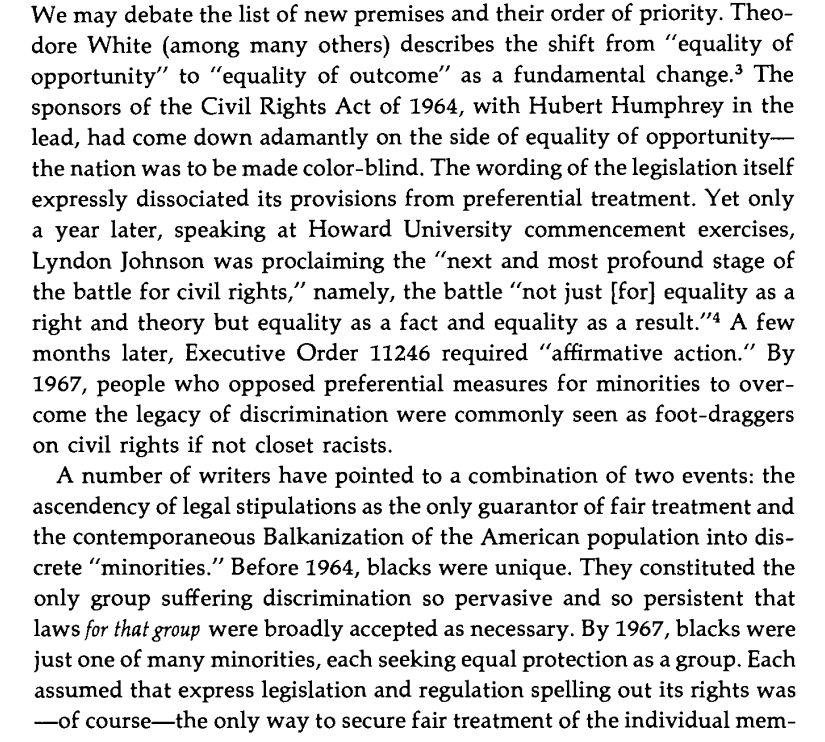
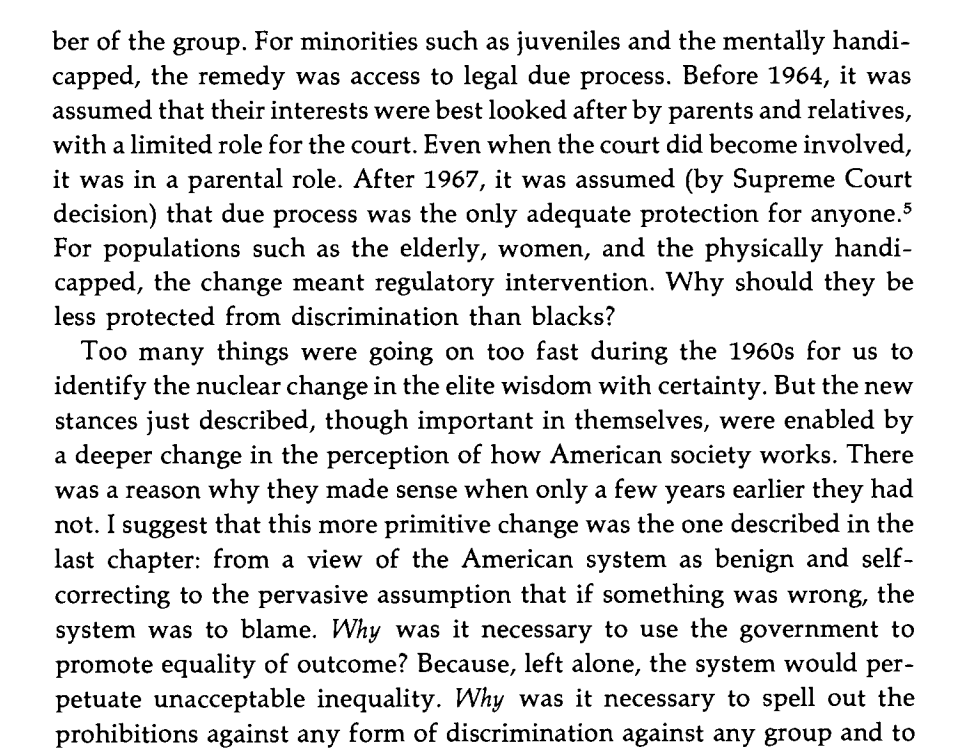
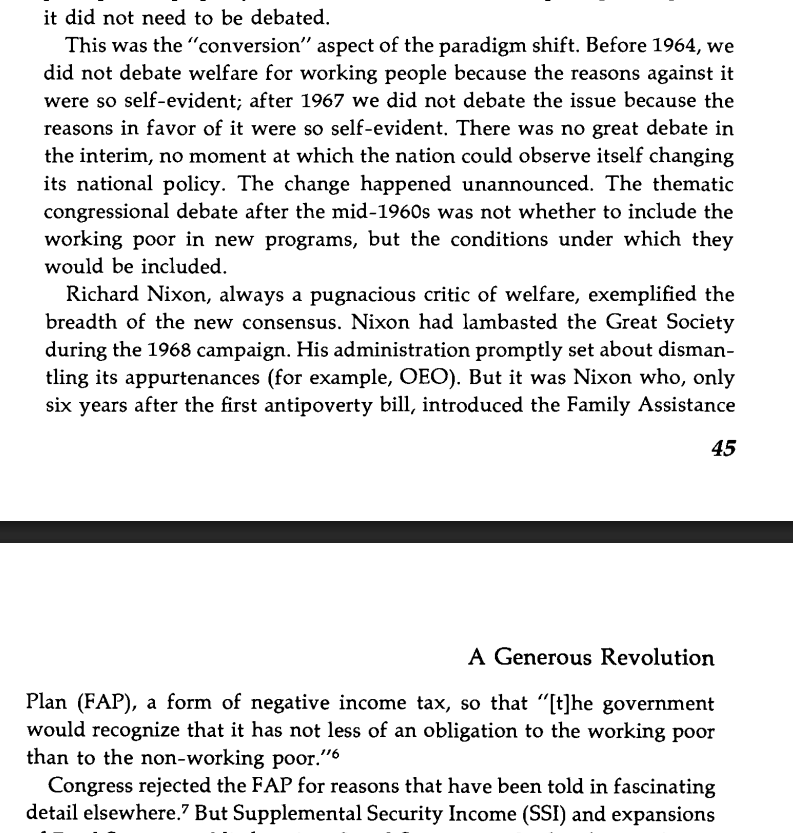
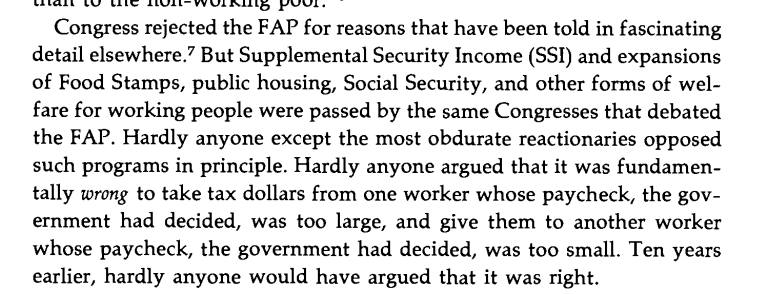
Before 1964, there were effectively zero welfare programs for the employed, the assumption being that if you had a job that paid less than you would like, that was your problem. That assumption changed under Johnson and Nixon; a low-paying job became the system's fault.
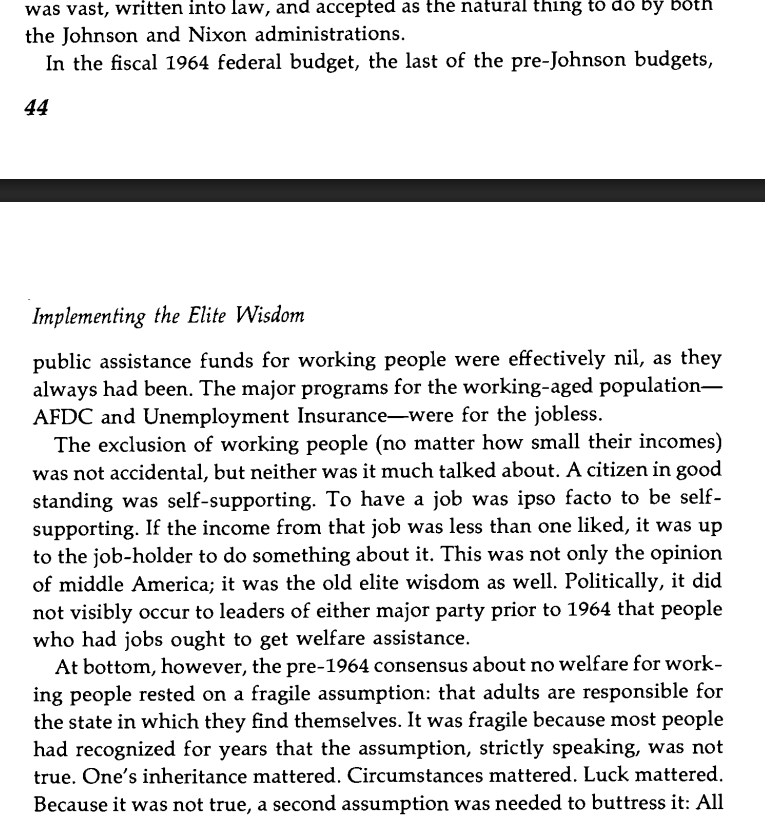
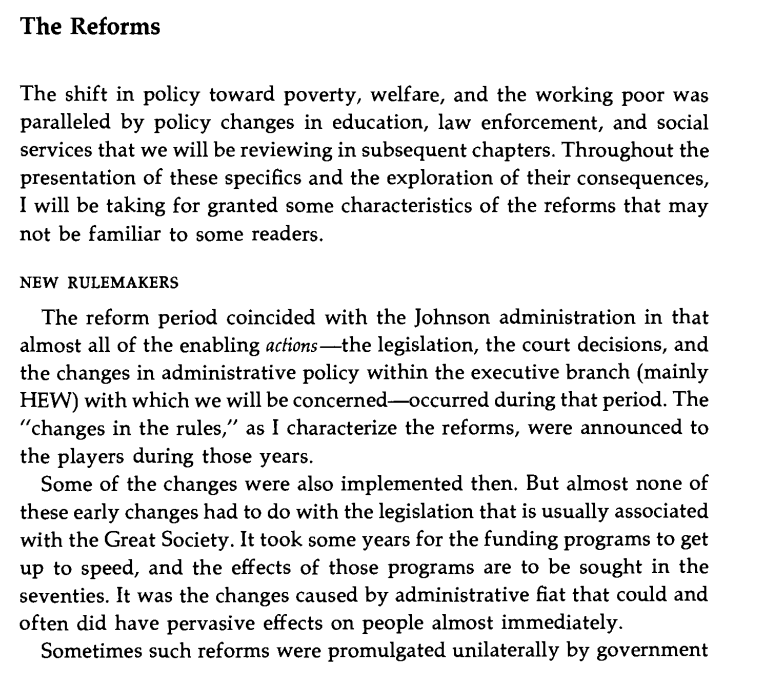
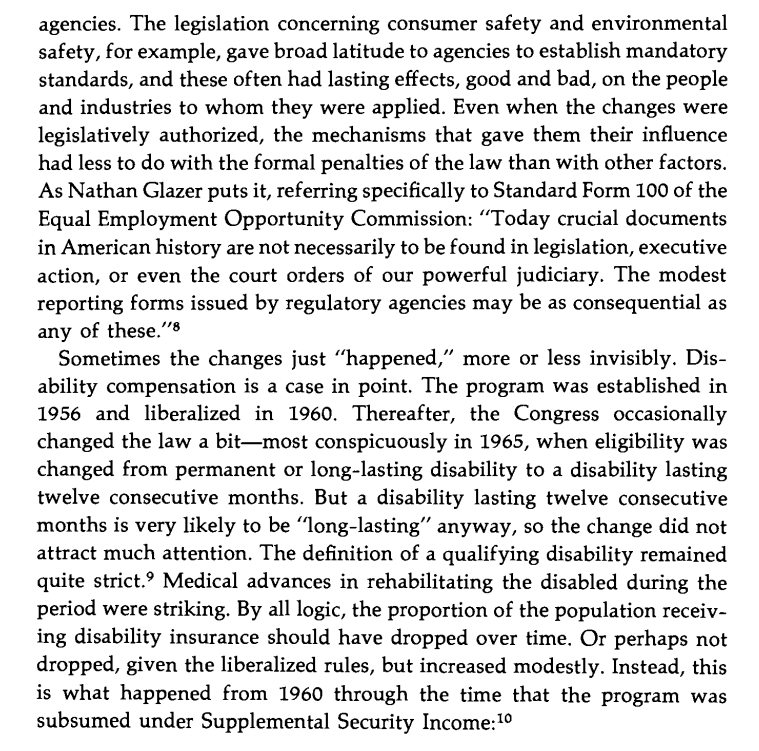
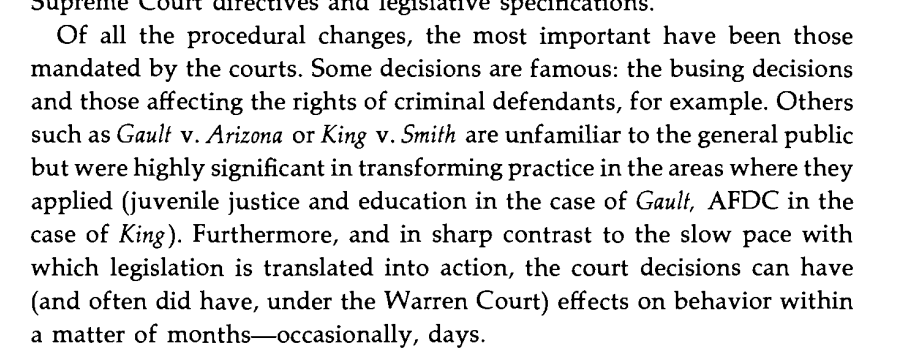
While much Great Society legislation was signed 1964-67, it took time for these to be implemented; most of the immediate changes were purely regulatory and accomplished by administrative fiat, and some were court-ordered.
The most important procedural changes were mandated by courts. Ex: King v Smith (states must provide AFDC to mothers cohabiting with men not the fathers of their children), and Gault vs Arizona (juvenile correction must follow the same procedures as criminal punishment).
Welfare expenditures going parabolic.
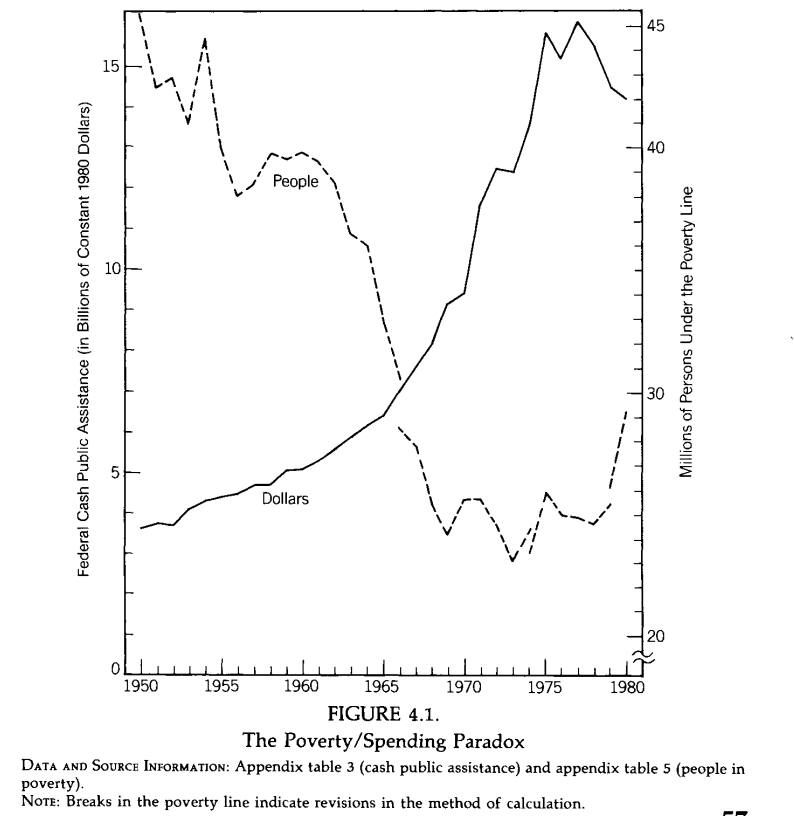
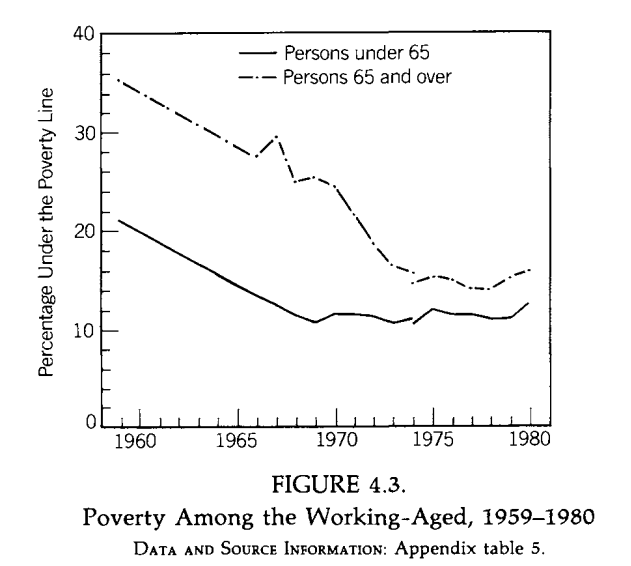
Official poverty, based on cash incomes (including welfare checks), stagnated and rose as Great Society welfare programs kicked in. And this happened sooner and more completely for the working-age than the elderly.
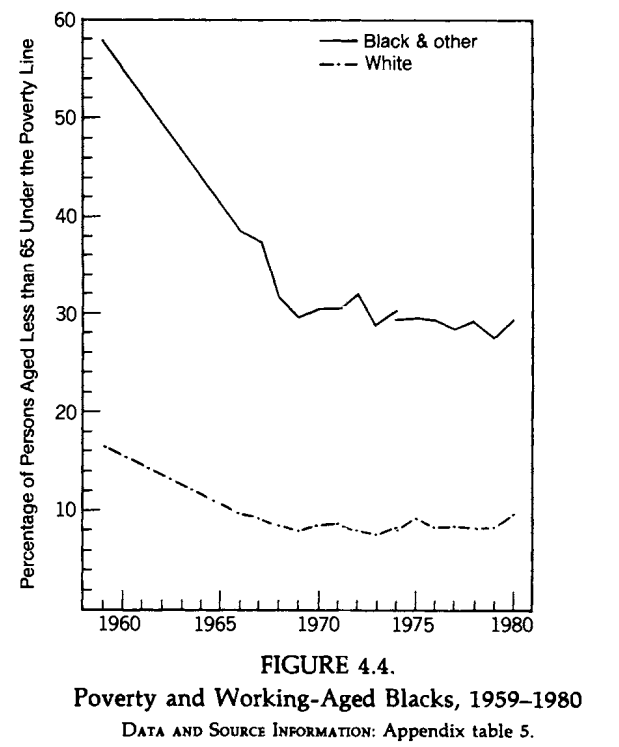
The major impetus for all this was to help blacks, held to be unable to progress in pre-Great Society America for structural reasons and so not responsible for their own state and actions and in need of transfers/privileges. Result: black progress stopped dead in 1969.
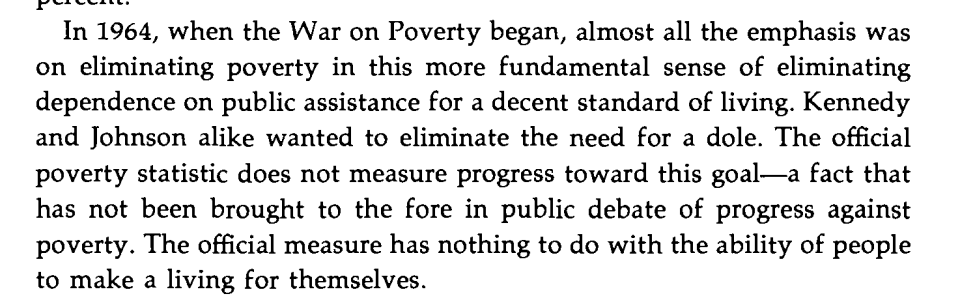
When the War on Poverty/Great Society began, poverty the goal was to end the dole. This objective was changed/redefined to expanding the dole enough to give a decent standard of living no matter what - and failed at that too.
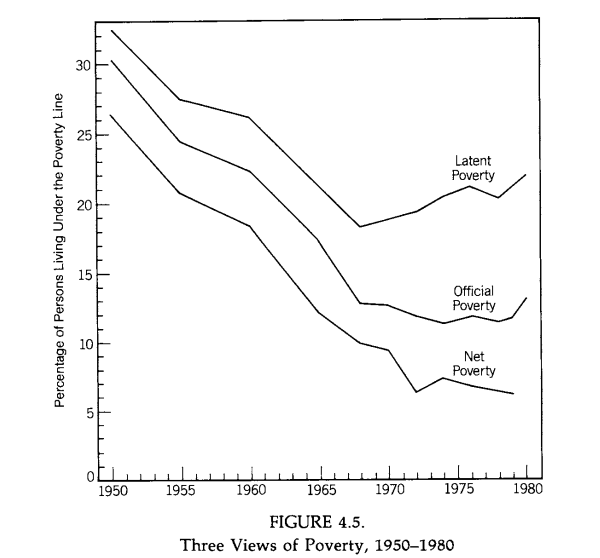
The three views of poverty - ending 'latent poverty', meaning inability to support one's self at a decent standard of living without government assistance, was the initial goal. 'Official poverty' counts cash transfers as income. 'Net poverty' counts in-kind transfers.
The Federal government spent about as much money on jobs programs 1965-80 as it did on the space program 1958-through the Moon Landing. For every 5 16-24 blacks in the labor force, there were 2 in CETA jobs programs (vs 14:1 ratio among whites).
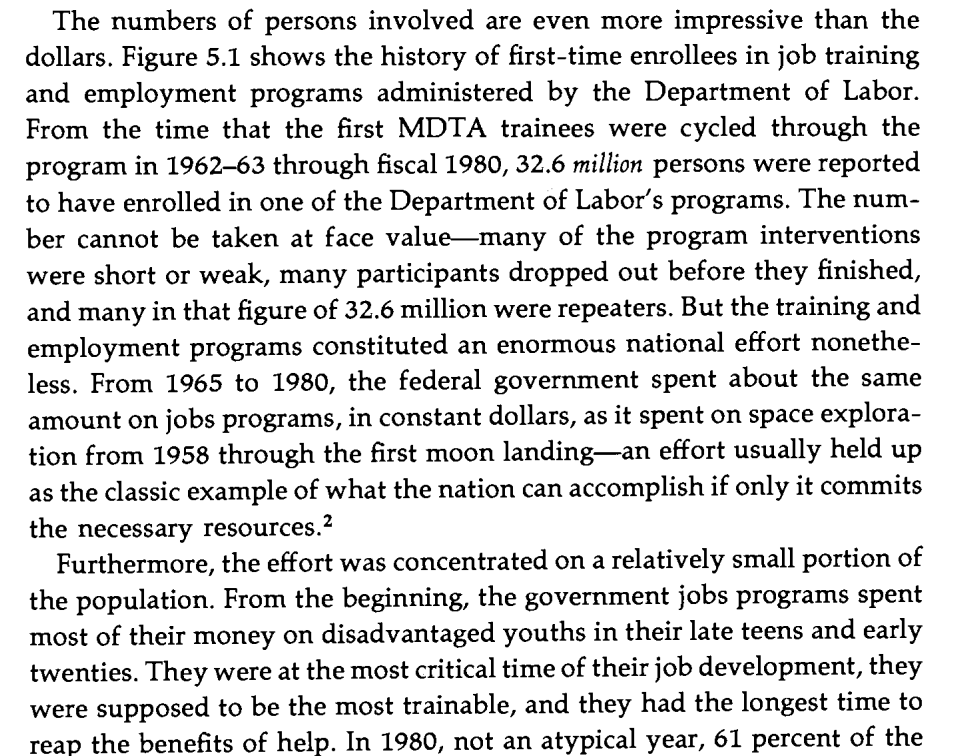
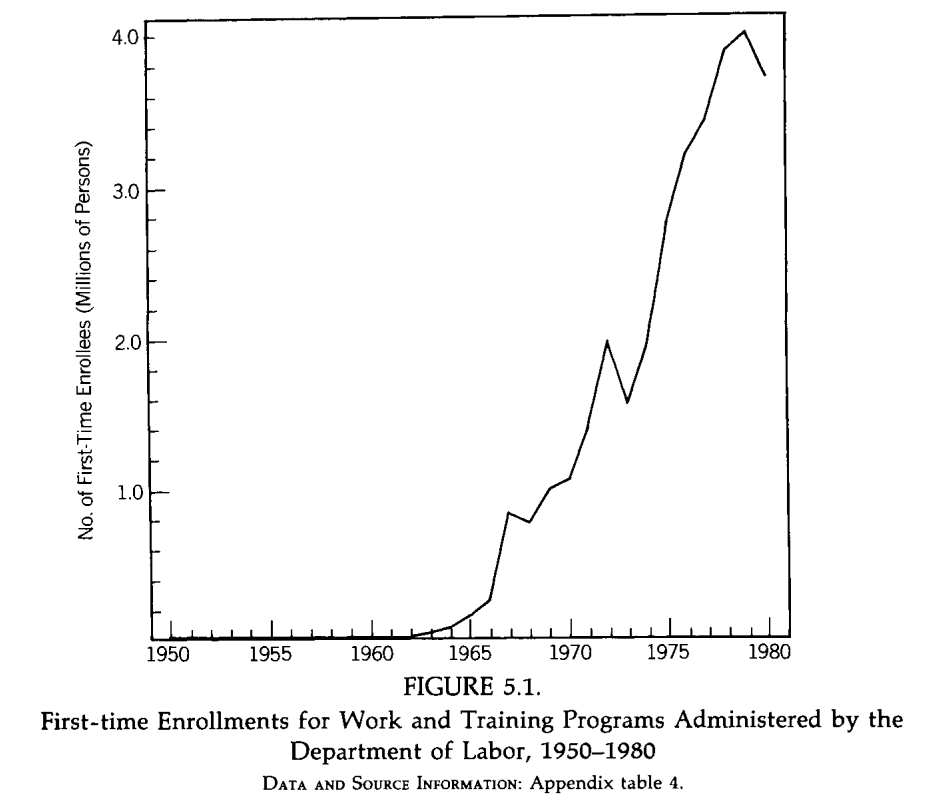
The results of this colossal expenditure on educating and training 16-24 blacks between 1965 and 1980.
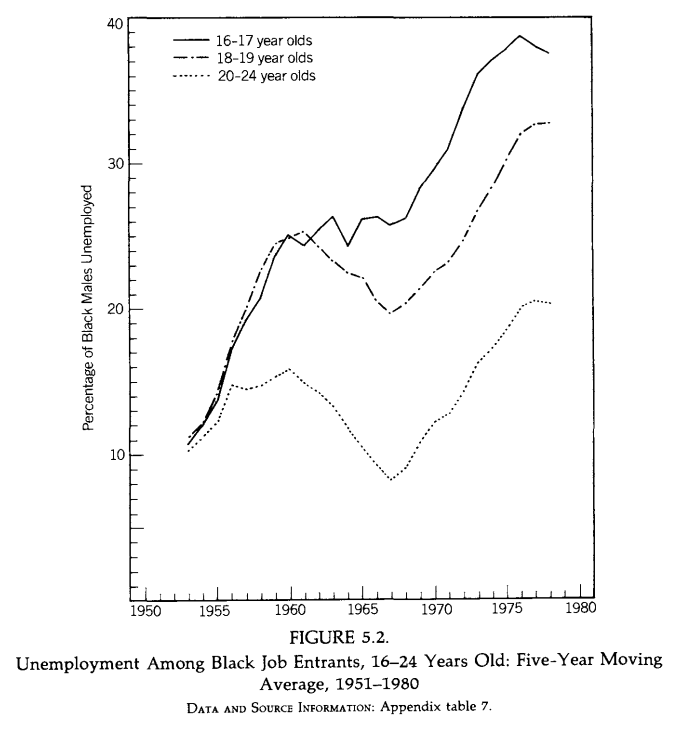
Young black male labor force participation also fell off a cliff both absolutely and relative to whites; this was unprecedented and not predicted.
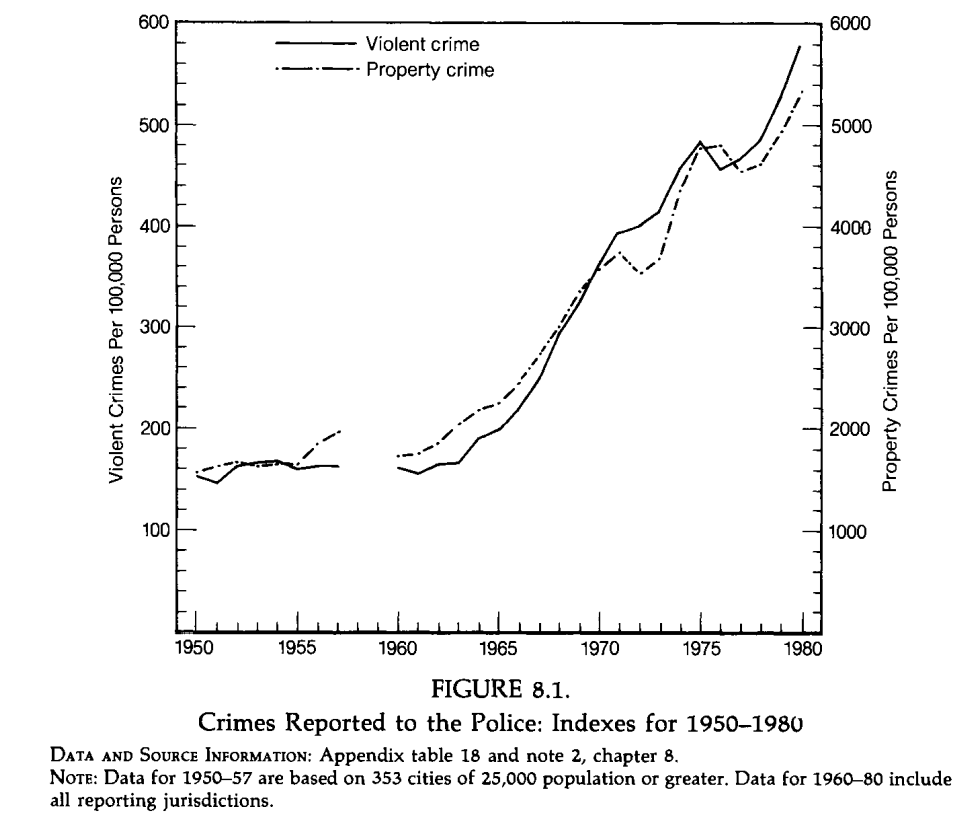
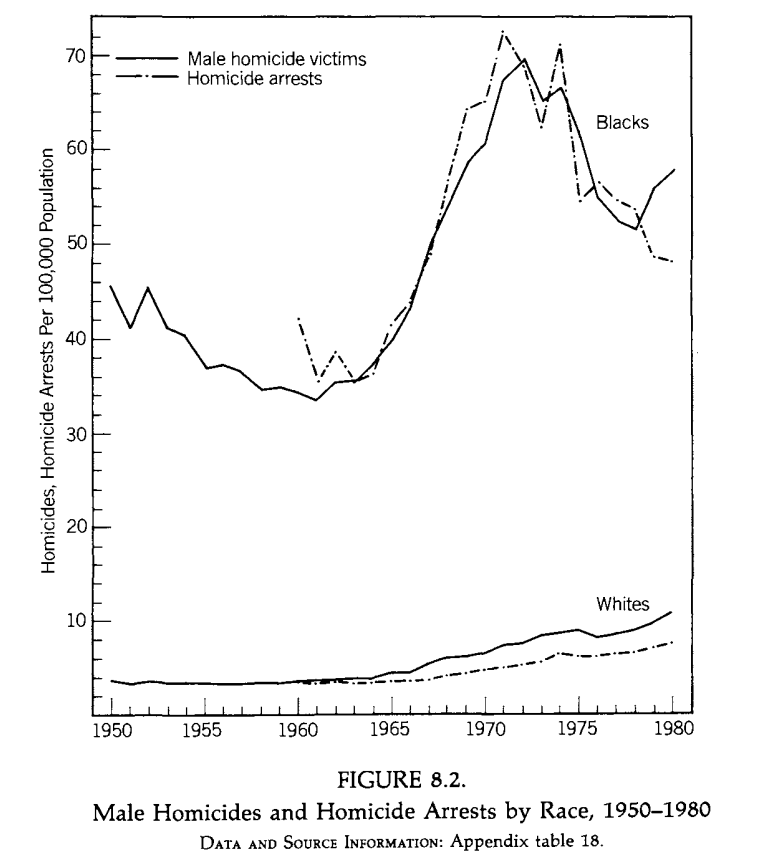
The explosion of reported violence and property crime 1950-1980. Black homicide rates dropped 22% in the 1950s, only to explode after 1965 with the initiation of social programs initially intended to solve violence by attacking "root causes" [lol].
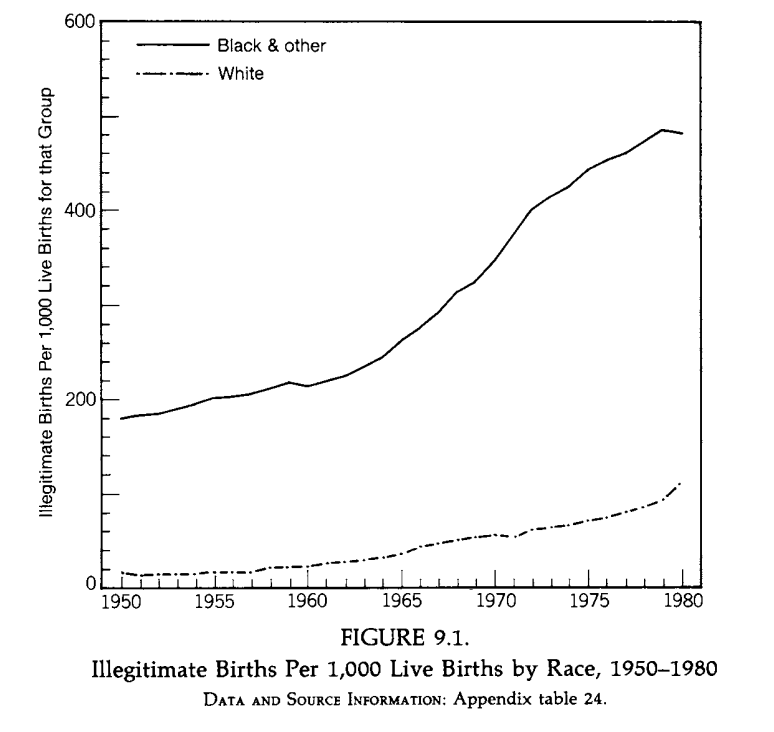
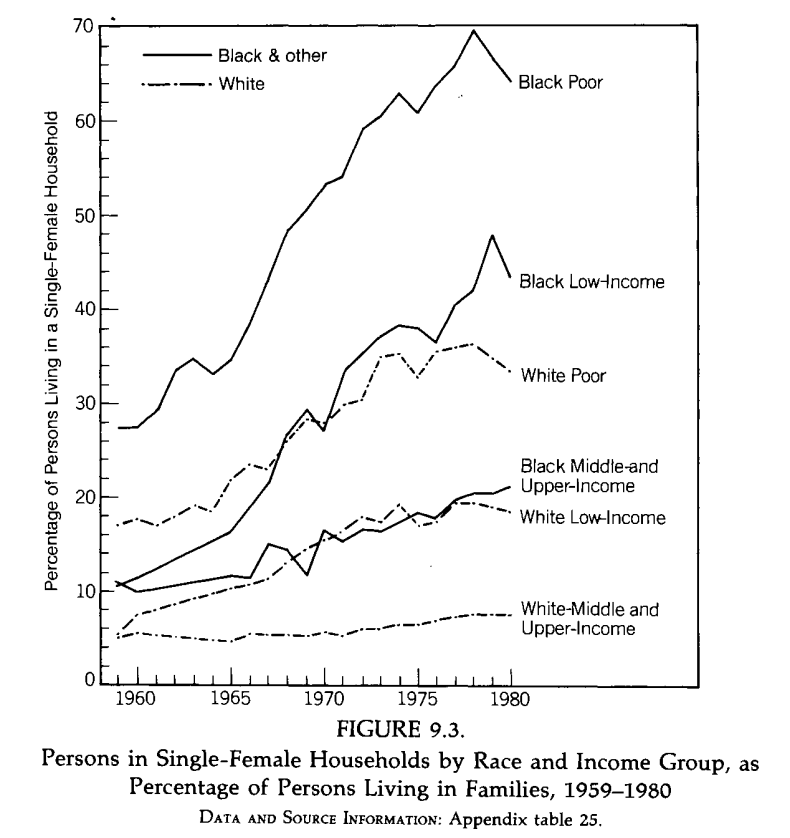
"Virtually every new social program during the reform period included among its justifications that it would stabilize the family." Illegitimate births (left) and single-female households (right).
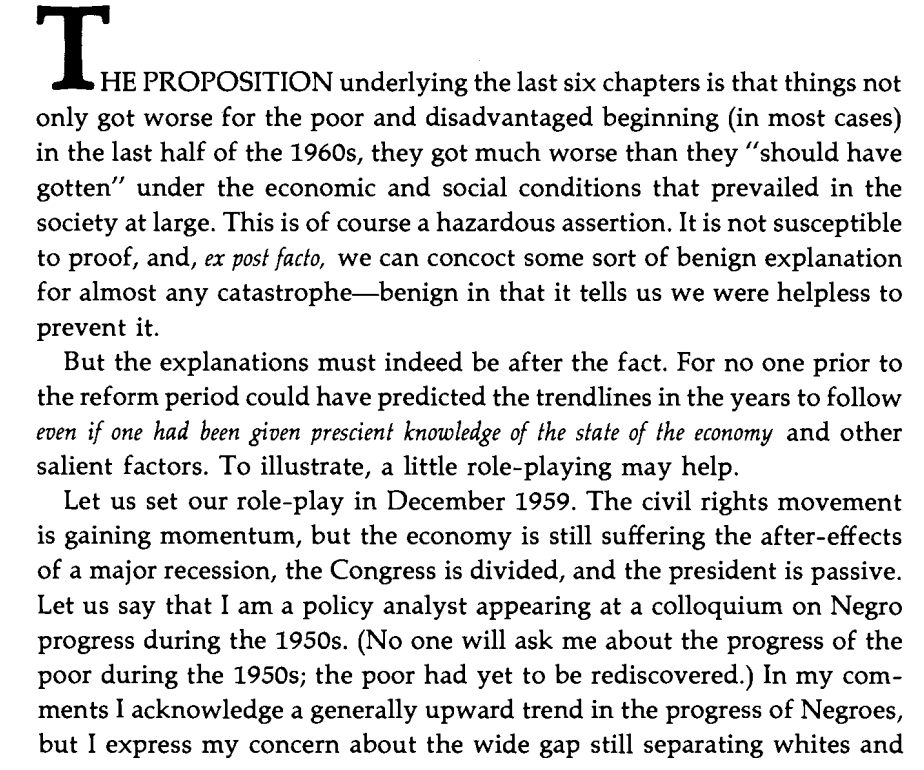
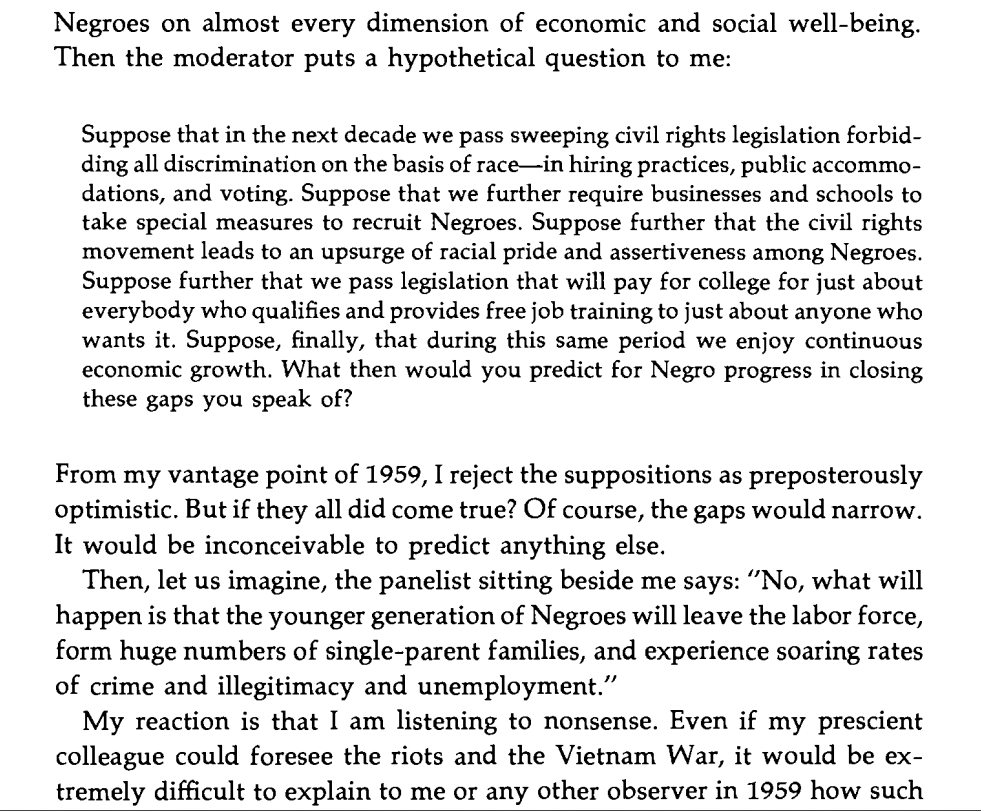
None of these strong negative trends for the poor and/or black were predicted ahead of time. If you told someone in 1959 about the CRA, jobs programs, education funding explosion, affirmative action of the next decade, they'd assume black problems would be quickly solved.
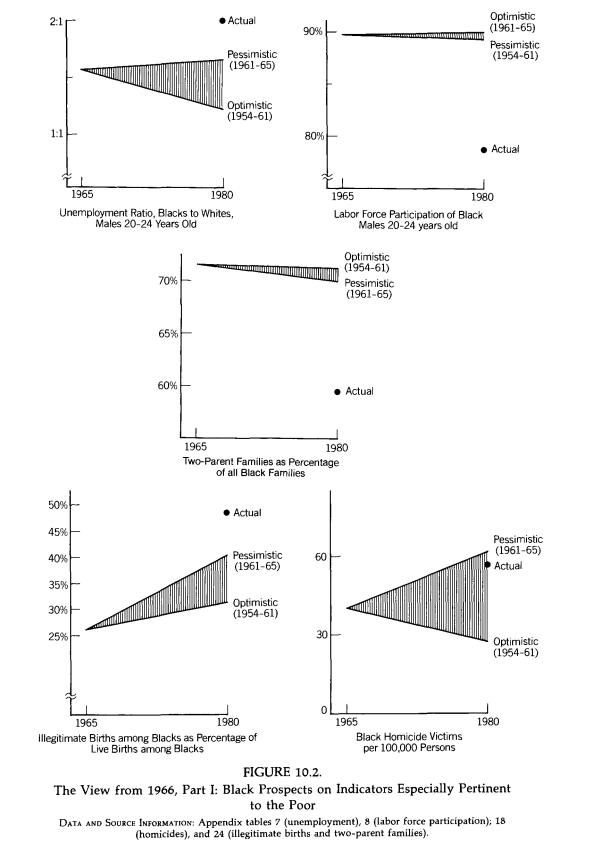
The actual state of poor black America in 1980 was much worse than an observer in 1965 would have predicted based on the 1954-61 or 1961-65 trends.
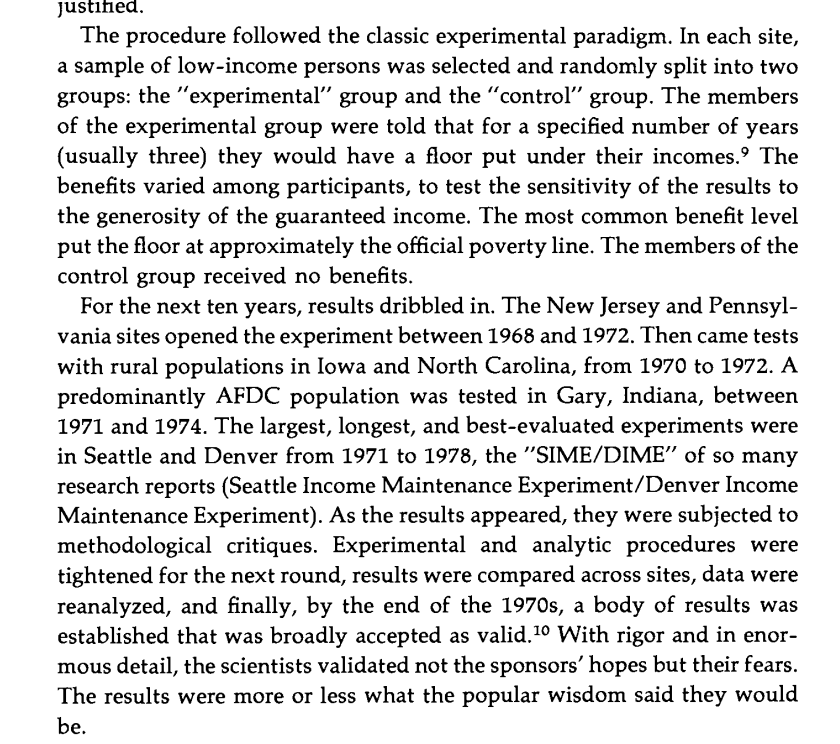
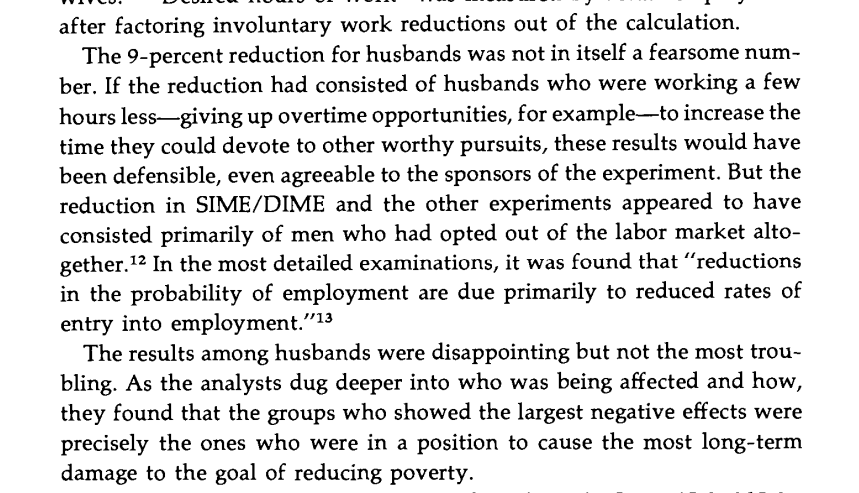
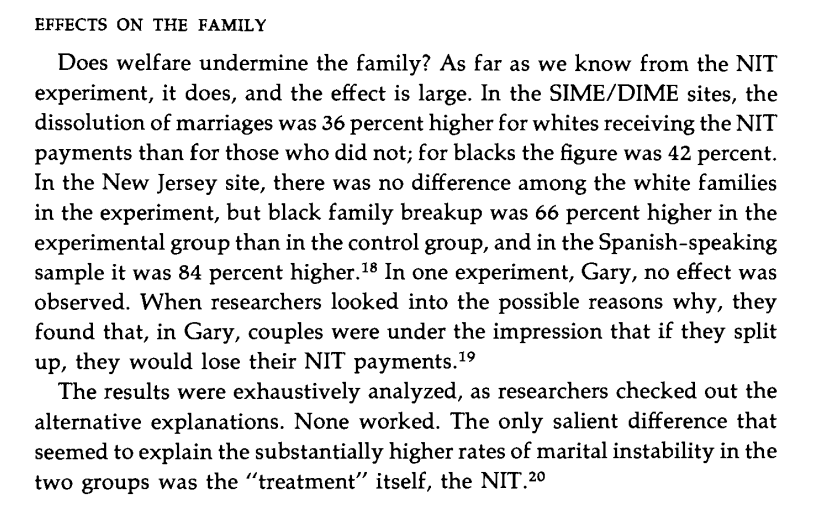
The Negative Income Tax experiment (NIT), an RCT of providing... a negative income tax to floor incomes at the poverty line. Results: less employment, especially among young single men, greatly increased divorce.
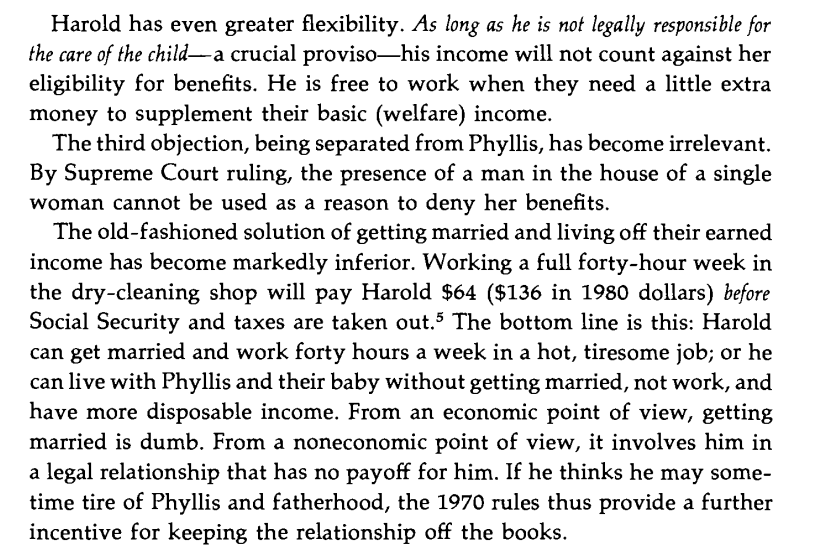
The change in incentives created by the expansion of welfare and Supreme Court rulings for a potential young couple - by 1970 not working or marrying and living off of welfare became a much better choice relative to marriage and a job compared to 10 years earlier.
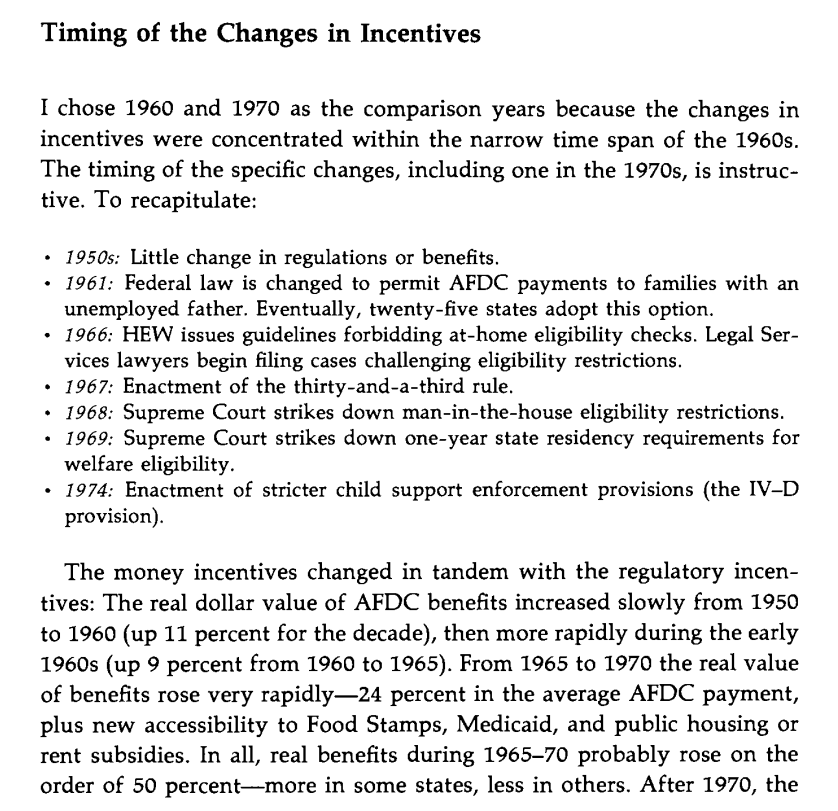
The timeline of major changes. The 1968 strike down of the main-in-the-house eligibility restriction for AFDC was particularly important; it made working economically irrational for lower class men with baby mamas.
Like the collapse in marriage and working among poor young Americans post-Great Society, the spike in crime also has a rational, incentives-based explanation: odds of getting away with it got much better, and risk of imprisonment if caught fell.
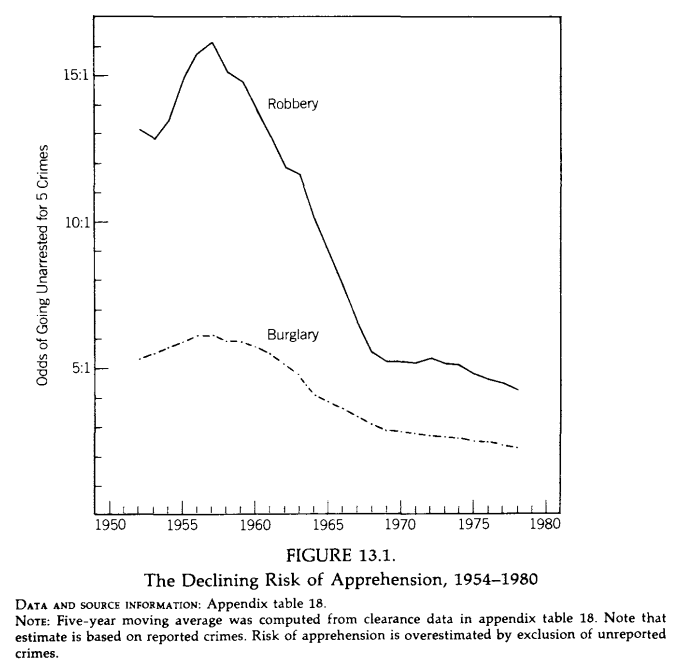
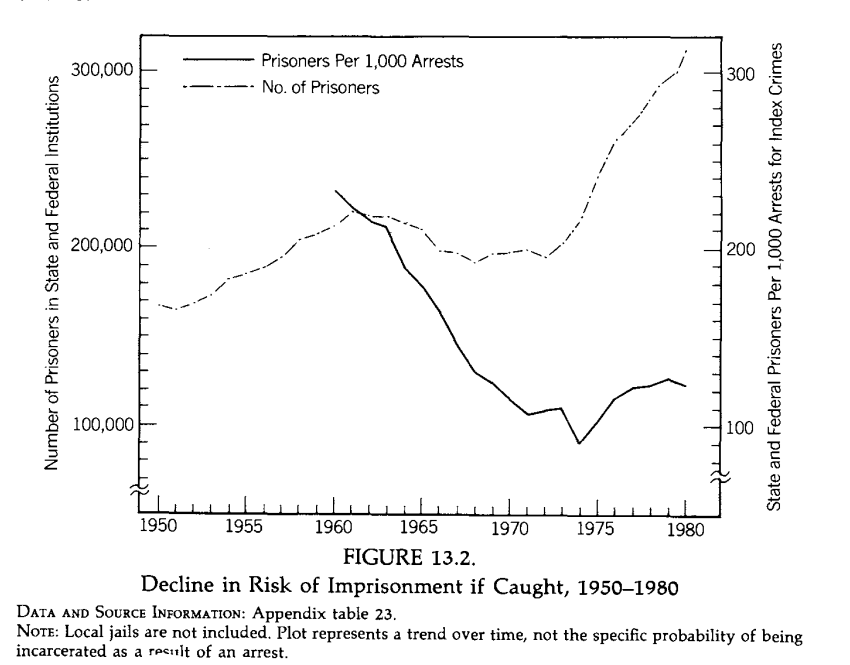
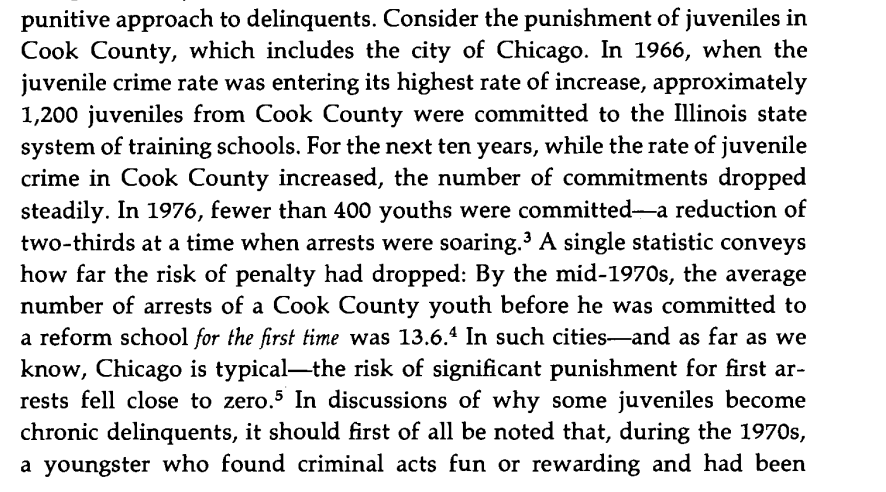
Juvenile delinquency can also be explained rationally - the number of delinquents sent to reform schools collapsed (average number of arrests before being sent in Cook County by the 70s: 13.6 (!)) and juvenile court records starting getting sealed or destroyed at 18.
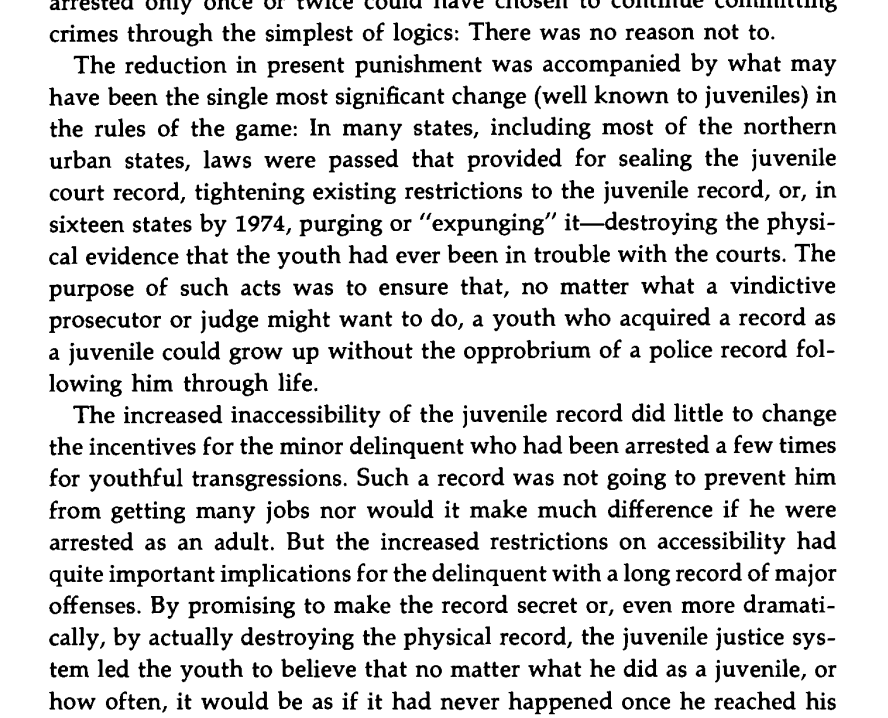
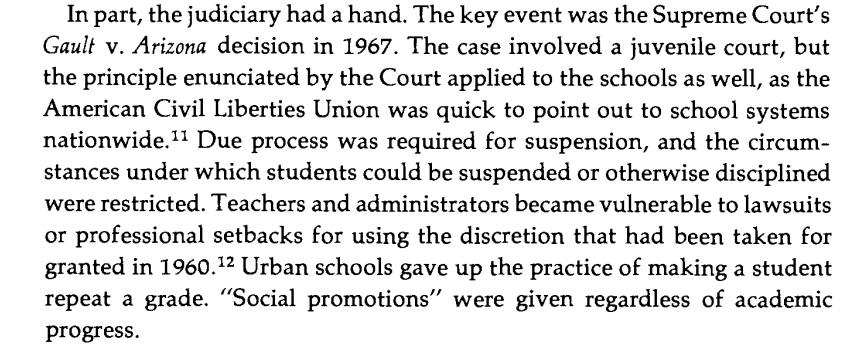
The Supreme Court's Gault v Arizona made traditional school discipline measures such as suspension or holding someone back a grade much more administratively/legally difficult.
• • •
Missing some Tweet in this thread? You can try to
force a refresh