“Think step by step.”
That’s outdated.
OpenAI researchers moved beyond it to something called 'Reasoning Scaffolds.'
It forces structured thinking instead of shallow chains.
Works across every major LLM.
Here’s the format you can copy now:
That’s outdated.
OpenAI researchers moved beyond it to something called 'Reasoning Scaffolds.'
It forces structured thinking instead of shallow chains.
Works across every major LLM.
Here’s the format you can copy now:

First, why "think step by step" fails.
It tells the model to think.
It doesn't tell the model how to think.
You get surface-level reasoning dressed up as depth.
Confident-sounding outputs with zero structural logic underneath.
It tells the model to think.
It doesn't tell the model how to think.
You get surface-level reasoning dressed up as depth.
Confident-sounding outputs with zero structural logic underneath.
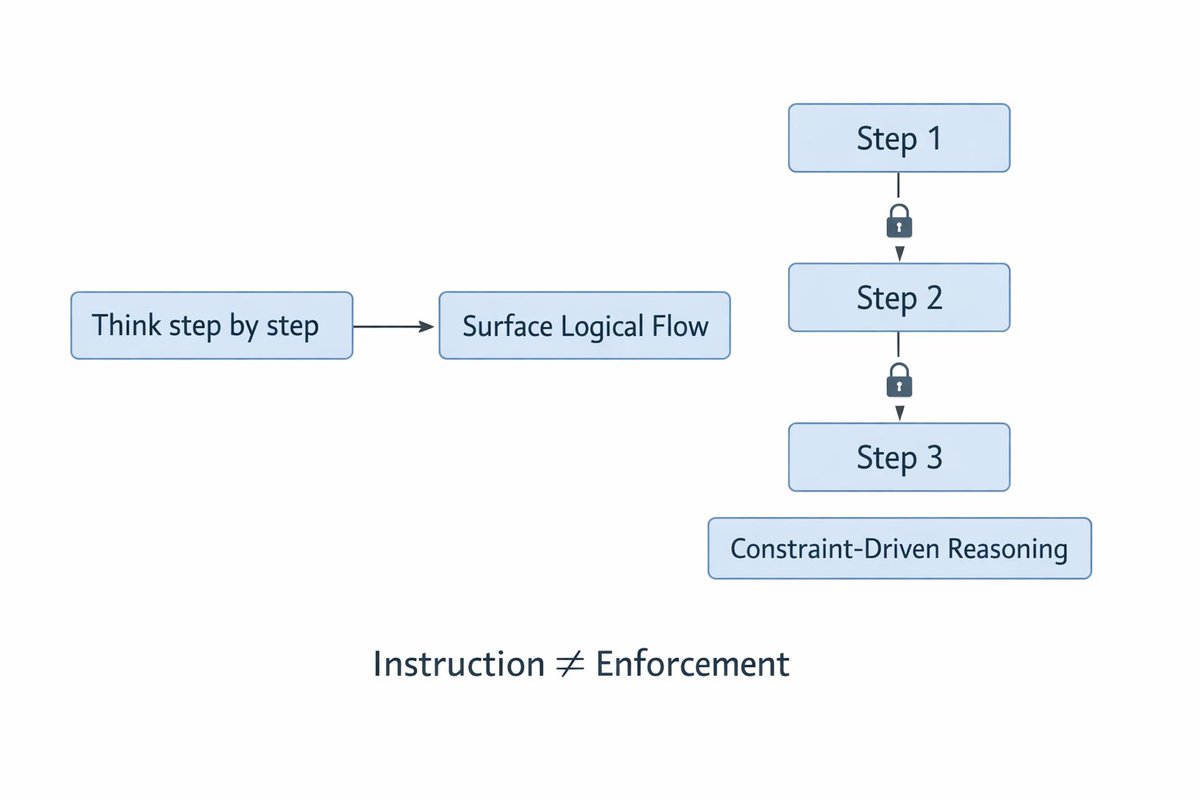
Reasoning Scaffolds fix this by forcing the model through a locked sequence before it answers.
Not "think step by step."
But:
→ Decompose the problem
→ Identify what's known vs. unknown
→ Map dependencies between sub-problems
→ Solve bottom-up
→ Verify against the original question
Every step is required. None are skipped.
Not "think step by step."
But:
→ Decompose the problem
→ Identify what's known vs. unknown
→ Map dependencies between sub-problems
→ Solve bottom-up
→ Verify against the original question
Every step is required. None are skipped.
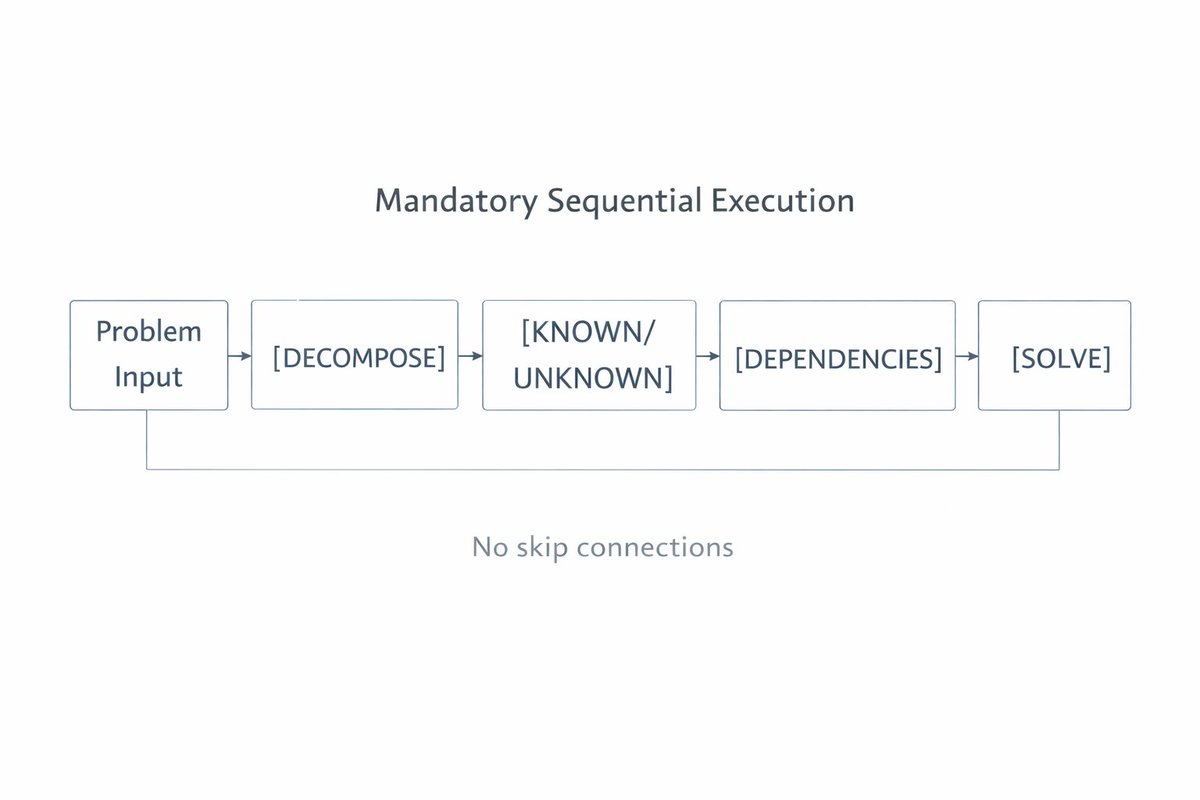
Here's the actual scaffold format you can copy right now:
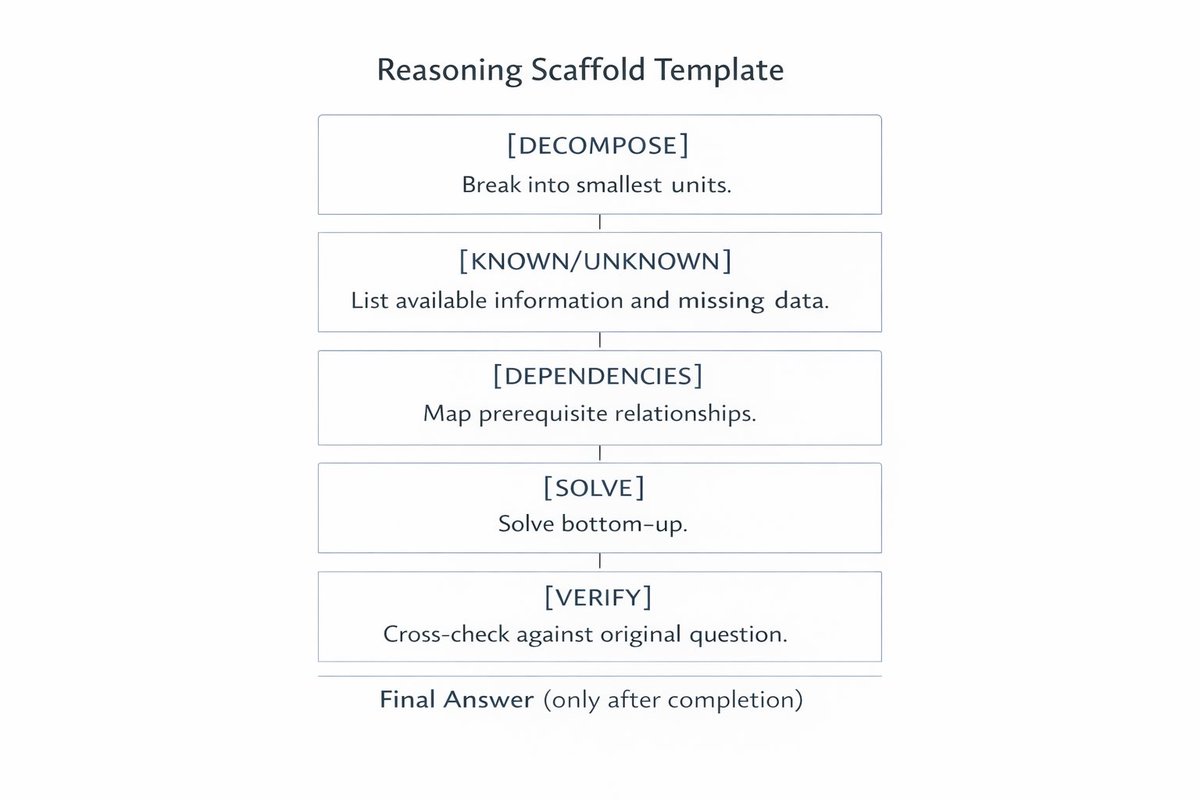
"Before answering, work through this sequence:
[DECOMPOSE]: Break the problem into its smallest parts
[KNOWN/UNKNOWN]: What information do I have? What's missing?
[DEPENDENCIES]: Which parts must be solved before others?
[SOLVE]: Work through each part bottom-up
[VERIFY]: Does my answer actually address the original question?
Only then give your final answer."
"Before answering, work through this sequence:
[DECOMPOSE]: Break the problem into its smallest parts
[KNOWN/UNKNOWN]: What information do I have? What's missing?
[DEPENDENCIES]: Which parts must be solved before others?
[SOLVE]: Work through each part bottom-up
[VERIFY]: Does my answer actually address the original question?
Only then give your final answer."
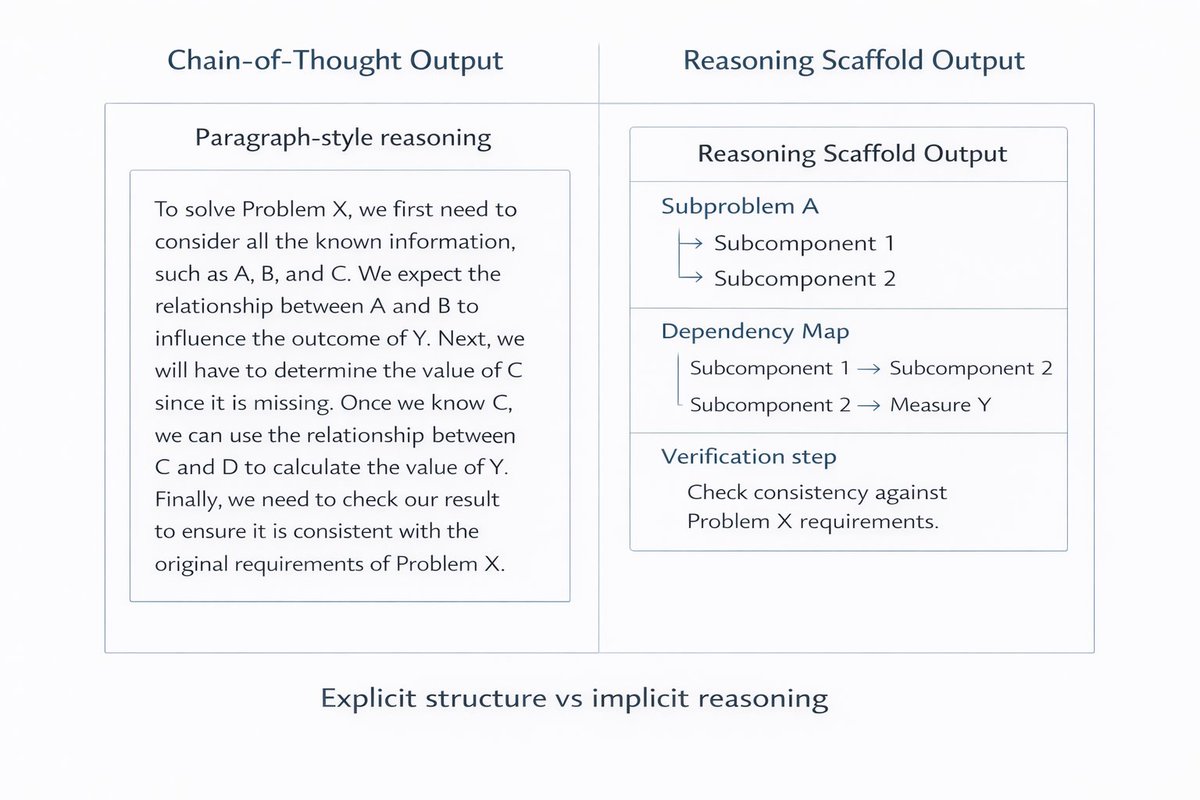
The difference in output quality is not small.
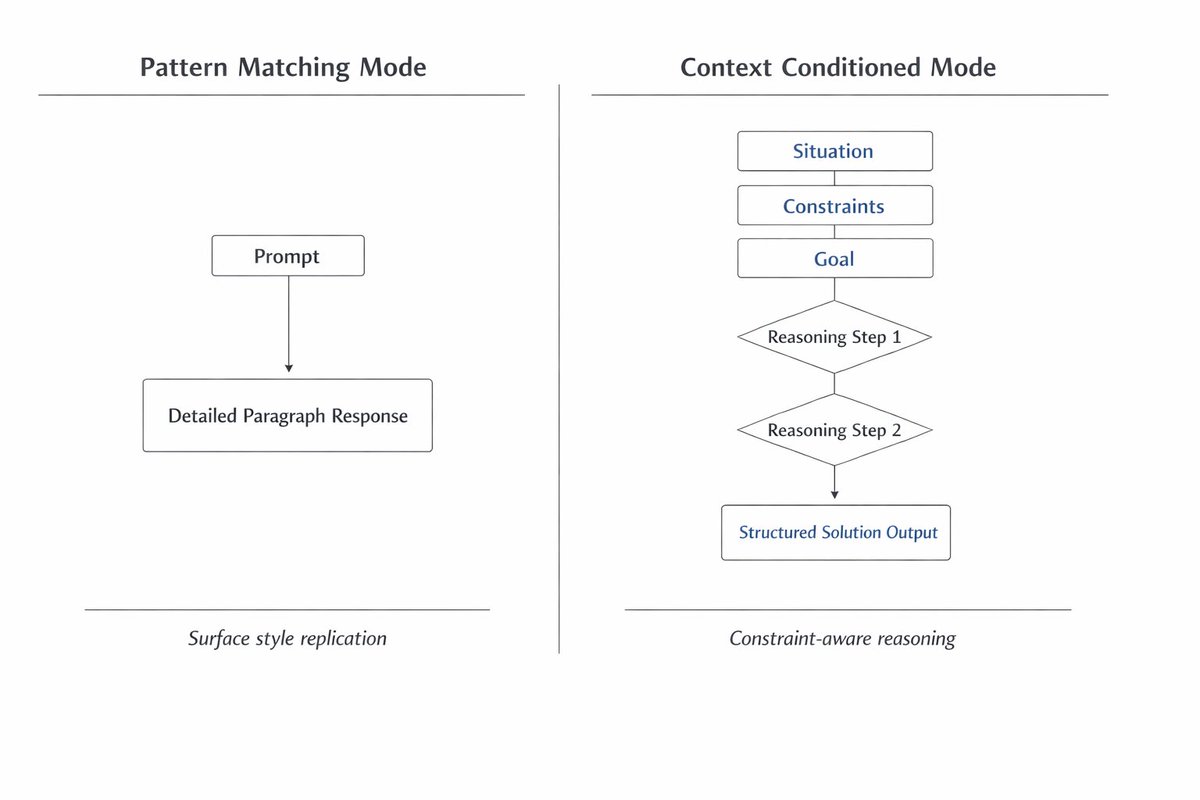
Standard chain-of-thought on complex reasoning tasks: surface pattern matching that sounds logical.
Reasoning Scaffold on the same task: actual dependency mapping, explicit uncertainty, and self-verification.
The model stops pretending to reason and starts actually reasoning.
Standard chain-of-thought on complex reasoning tasks: surface pattern matching that sounds logical.
Reasoning Scaffold on the same task: actual dependency mapping, explicit uncertainty, and self-verification.
The model stops pretending to reason and starts actually reasoning.
Works on GPT, Claude, Gemini, Grok.
Any model with strong instruction following.
The scaffold doesn't rely on model-specific tricks.
It exploits the one thing every frontier LLM has: the ability to follow structured procedures when forced to.
Any model with strong instruction following.
The scaffold doesn't rely on model-specific tricks.
It exploits the one thing every frontier LLM has: the ability to follow structured procedures when forced to.
Where this matters most:
→ Complex multi-step math
→ Legal or contract analysis
→ Technical debugging
→ Business strategy with competing tradeoffs
→ Anything where "sounds right" isn't good enough
If the task has real consequences, use a scaffold.
→ Complex multi-step math
→ Legal or contract analysis
→ Technical debugging
→ Business strategy with competing tradeoffs
→ Anything where "sounds right" isn't good enough
If the task has real consequences, use a scaffold.
Most people are still writing prompts like it's 2023.
"Be concise." "Think step by step." "You are an expert."
The researchers who actually study this moved on.
Structured scaffolds are what's in the internal docs now.
Copy the format. Use it today. The gap between you and everyone else widens every day you don't.
"Be concise." "Think step by step." "You are an expert."
The researchers who actually study this moved on.
Structured scaffolds are what's in the internal docs now.
Copy the format. Use it today. The gap between you and everyone else widens every day you don't.
Your premium AI bundle to 10x your business
→ Prompts for marketing & business
→ Unlimited custom prompts
→ n8n automations
→ Weekly updates
Start your free trial👇
godofprompt.ai/complete-ai-bu…
→ Prompts for marketing & business
→ Unlimited custom prompts
→ n8n automations
→ Weekly updates
Start your free trial👇
godofprompt.ai/complete-ai-bu…
That's a wrap:
I hope you've found this thread helpful.
Follow me @godofprompt for more.
Like/Repost the quote below if you can:
I hope you've found this thread helpful.
Follow me @godofprompt for more.
Like/Repost the quote below if you can:
https://twitter.com/1643695629665722379/status/2026963066618077340
• • •
Missing some Tweet in this thread? You can try to
force a refresh