
Shavua Tov.
Some preliminary thoughts on the news of a joint U.S.-Israel campaign against the Iranian regime.
Some preliminary thoughts on the news of a joint U.S.-Israel campaign against the Iranian regime.
1) What we know:
Targets reported so far include:
-IRGC infrastructure
-Air defense systems
-Weapons depots
-Command and control nodes
-Senior regime-linked figures, including allegedly Supreme Leader of Iran Khamenei
Targets reported so far include:
-IRGC infrastructure
-Air defense systems
-Weapons depots
-Command and control nodes
-Senior regime-linked figures, including allegedly Supreme Leader of Iran Khamenei
2) The Trump admin seems to be claiming that this is because of the Iranian nuclear program and their unwillingness to negotiate. It is true that Iran has a nuclear program and is not serious about negotiating. It's not the real catalyst for this.
The most recent catalyst is Trump began making commitments and escalating down this path when the Iranian regime was facing large protests in January and responding by massacring the Iranian protestors against the regime.
3) What we are not seeing yet:
No credible reports of a U.S. ground invasion force staged in the region akin to an Iraq-type land operation.
Military buildup has been and still is largely air/naval assets, not a ground invasion force ready to cross into Iranian territory.
No credible reports of a U.S. ground invasion force staged in the region akin to an Iraq-type land operation.
Military buildup has been and still is largely air/naval assets, not a ground invasion force ready to cross into Iranian territory.
While some figures in Israel seem to be calling for regime change, public statements from Trump and his admin are still emphasizing degrading capabilities, especially nuclear and missile.
So far, this looks like a calibrated degradational campaign. The system is shaken, but the men with guns still have their guns, they can still hit the streets, and they can still perpetuate the system.
4) What we're not seeing inside Iran yet:
-Security forces fracture
-High profile elite defections to the opposition
-Security forces fracture
-High profile elite defections to the opposition
All of this is fluid. It's just 1 day into what Trump is describing as a campaign that will go on for weeks. Lots can change suddenly.
5) There are important unknowns here.
What happens if the regime rallies?
What happens if it fractures?
Does Trump have any semblance of an exit strategy?
What happens if the regime rallies?
What happens if it fractures?
Does Trump have any semblance of an exit strategy?
Put differently, what is Trump's real objective here?
-Nuclear rollback?
-Missile degradation?
-Restoration of deterrence?
-Regime behavioral change domestically and abroad?
Each requires a tailored strategy. Right now things are very open ended.
-Nuclear rollback?
-Missile degradation?
-Restoration of deterrence?
-Regime behavioral change domestically and abroad?
Each requires a tailored strategy. Right now things are very open ended.
Nobody doubts the U.S. military's capabilities, but there are serious concerns to have about our ability to know when to end a campaign. Afghanistan was not initially a nation-building exercise. Iraq was not supposed to be a prolonged occupation. Wars take on a life of their own.
This campaign may prove disciplined and limited.
It may also reveal, again, how difficult it is for great powers to apply force precisely and then disengage cleanly.
It may also reveal, again, how difficult it is for great powers to apply force precisely and then disengage cleanly.
6) The global implications of this are notable.
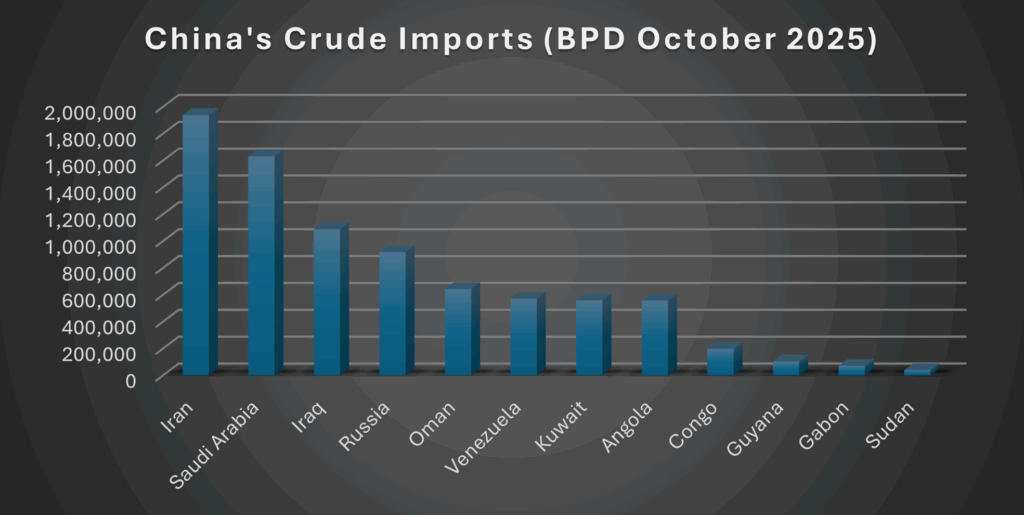
Iran and Venezuela are high on the list of suppliers of oil to China, with Iran being number 1.
What happens if the current regime or a new one starts accounting for American desires?
Iran and Venezuela are high on the list of suppliers of oil to China, with Iran being number 1.
What happens if the current regime or a new one starts accounting for American desires?
Beijing’s Taiwan calculus is built on assumptions about:
-U.S. escalation thresholds
-Alliance cohesion
-Economic weaponization
-Military tempo and sustainment
Every real-world campaign updates those assumptions.
I would not feel good about my goals if I am the Chinese.
-U.S. escalation thresholds
-Alliance cohesion
-Economic weaponization
-Military tempo and sustainment
Every real-world campaign updates those assumptions.
I would not feel good about my goals if I am the Chinese.
The threat of being cut off from Iranian oil as part of a U.S. strategy to deter China has been well known. In the context of this recent campaign, it just became easier for the U.S. to do.
There are other second-order effects that can come out of this campaign. Regime change in Iran to a more pro-Western one would genuinely allow the U.S. to pivot to Asia as the source of funding for most of the militias in the region dries up.
But a lot of things have to go right to see that kind of outcome. We are not there yet. Smarter men than Trump have failed to use force effectively and more importantly win the peace.
More to come.
More to come.
@UnrollHelper unroll for those who want to share with folks not on Twitter.
• • •
Missing some Tweet in this thread? You can try to
force a refresh




