The war on Iran likely brings a new oil price shock and windfall profits.
So, who stands to win?
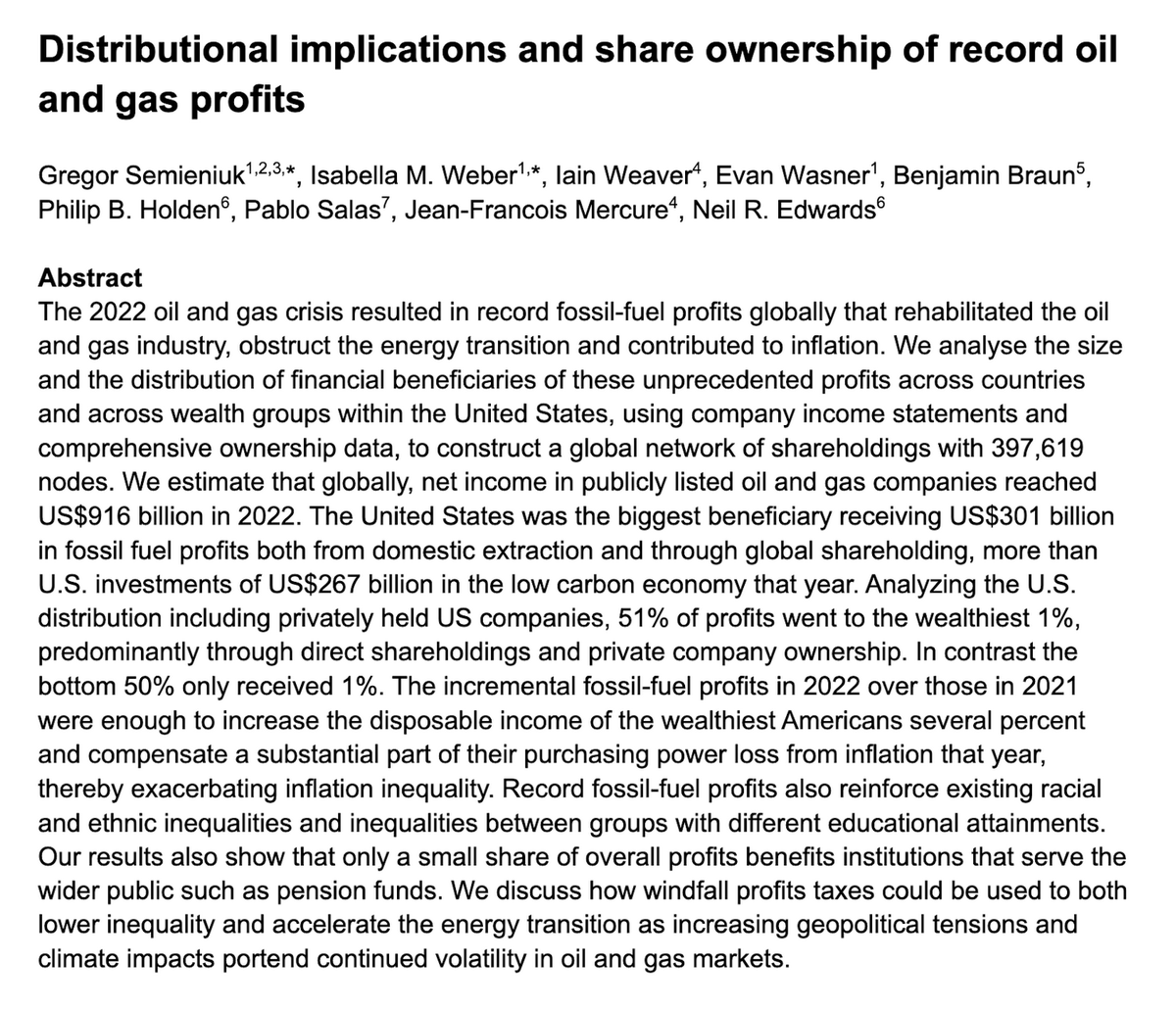
Our research shows: Last time around (2022), the US reaped the largest fossil fuel profits of any country ($377bn). 50% went to the top 1%, only 1% to the bottom 50%. A🧵
Method: We calculated net income from the world's 1,437 listed oil & gas firms, adding all 22,759 US privately held firms. We then assigned these profits via financial system intermediaries to the firms’ ultimate beneficiaries, creating a network of 252,433 nodes. 2/
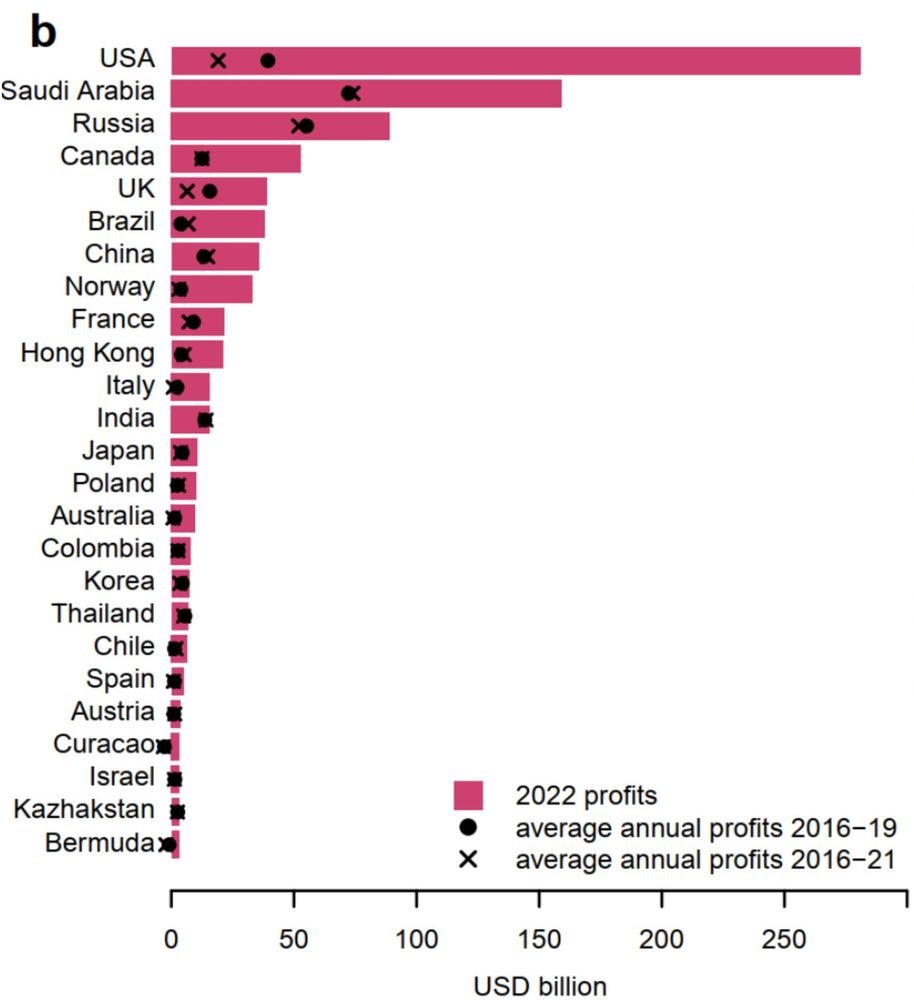
Oil & gas profits were much higher in '22 than in previous years: $916 billion for listed firms globally. A huge windfall for shareholders: U.S. beneficiaries held claims to $301bn—1/3 of the listed total. For comparison: total '22 U.S. low-carbon energy investment was $266 bn.3/
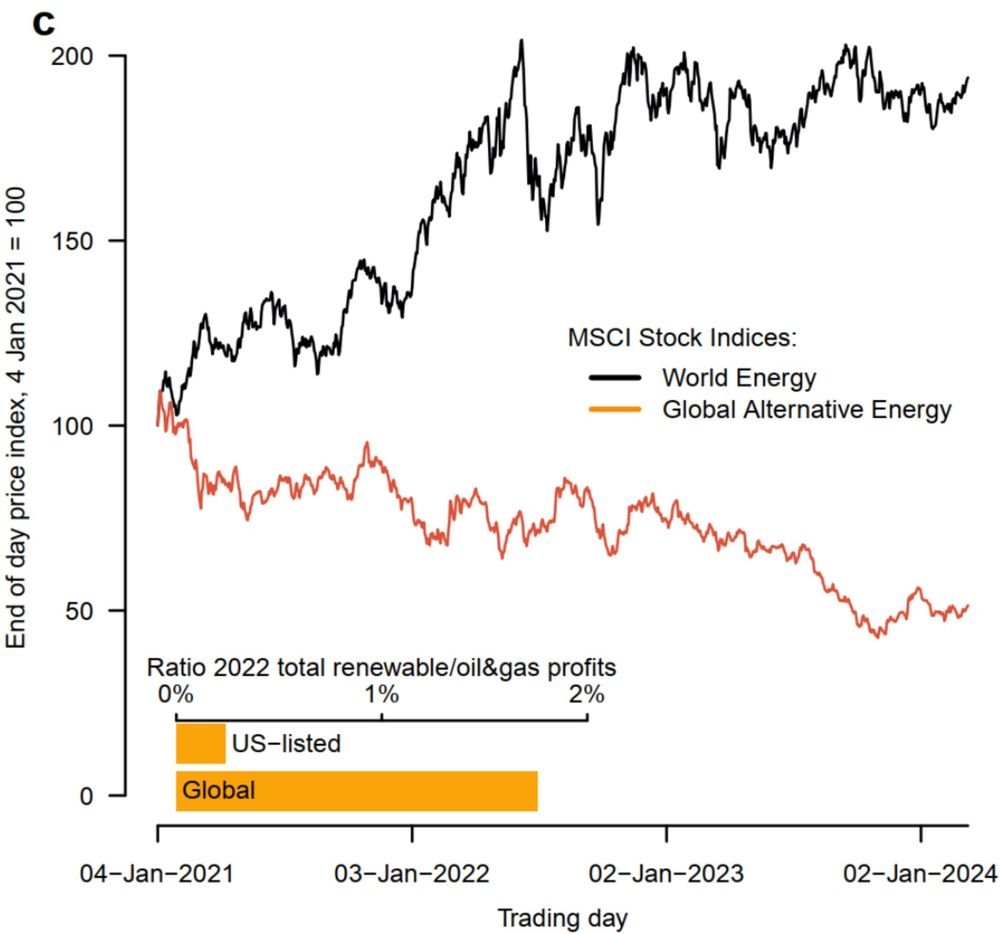
The stock market consequences could not have been starker: The MSCI World Energy Index (ExxonMobil, Chevron, Shell etc) doubled in 2021-2022, while the Global Alternative Energy index (Vestas, First Solar, Orsted etc.) fell by half in 2021-2024. 4/
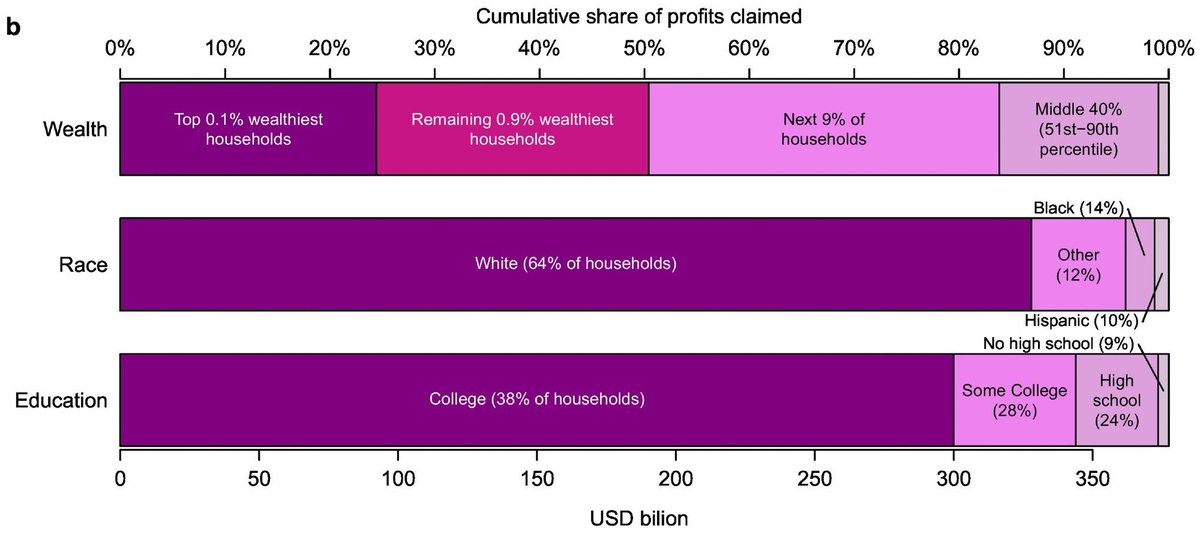
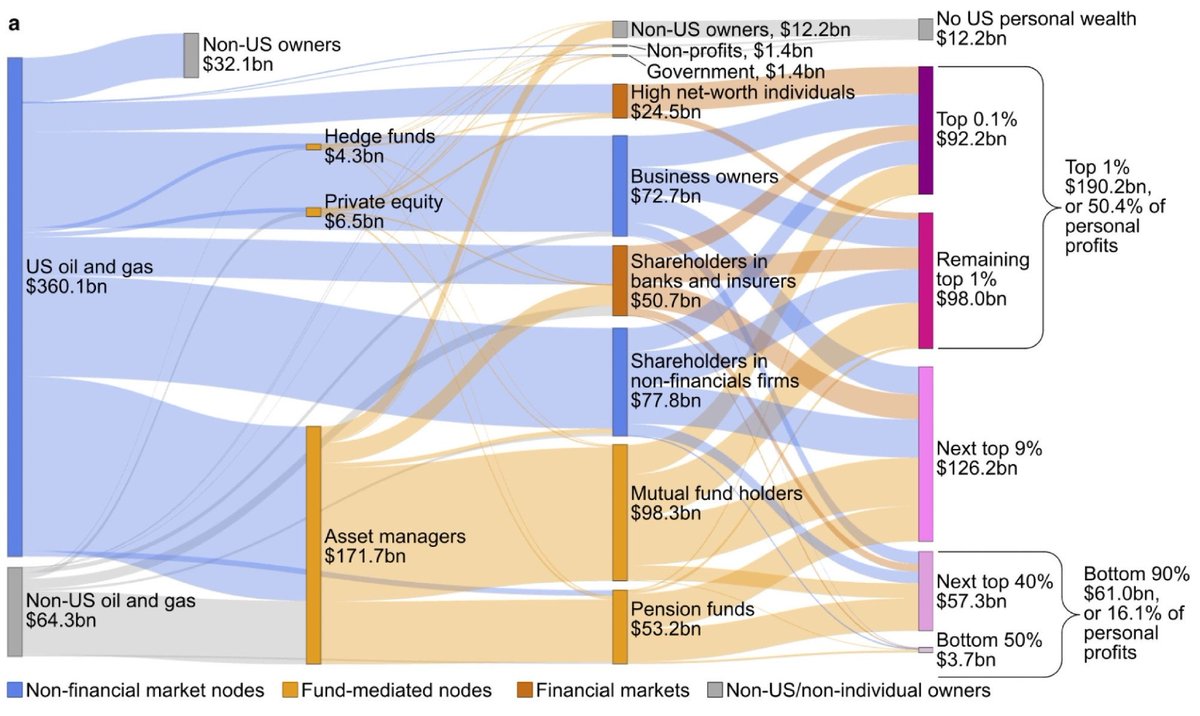
The distribution of profits worsens existing inequalities: 50% of US profit claims are held by the top 1% of wealth owners, and 84% by the top 10%. The bottom half (66 million households) get 1% of the profits, the top 0.1%—a mere 131 thousand households—get 25x more. 5/
Record fossil fuel profits reinforce existing racial & ethnic inequalities. Whites (64% of households) benefit disproportionately with claims on 87% of all profits. Blacks (14% of hholds) have a claim on only 3%, & Hispanics (10% of hholds) a mere 1%, mainly through pensions. 6/
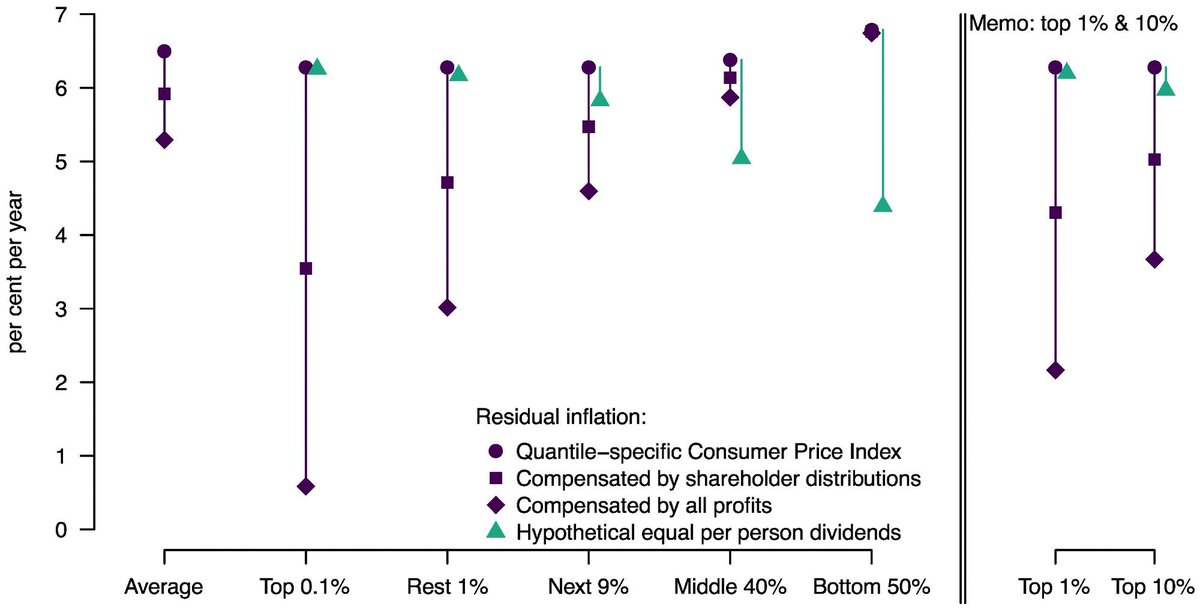
Fossil fuel profits sharply increase inflation inequality. The 2022 increase in fossil fuel profits compensate several percent of 2022 inflation for the richest (triangles and squares), dwarfing differences in inflation due to differing consumption baskets (disks). 7/
Excess profit taxes could contain fossil fuel profits (and perhaps the backing for war?). Revenues could finance investments or alleviate inflation impacts: taxing incremental 2022 US profits as excess could've doubled clean energy investments or paid each US household $1,715. 8/
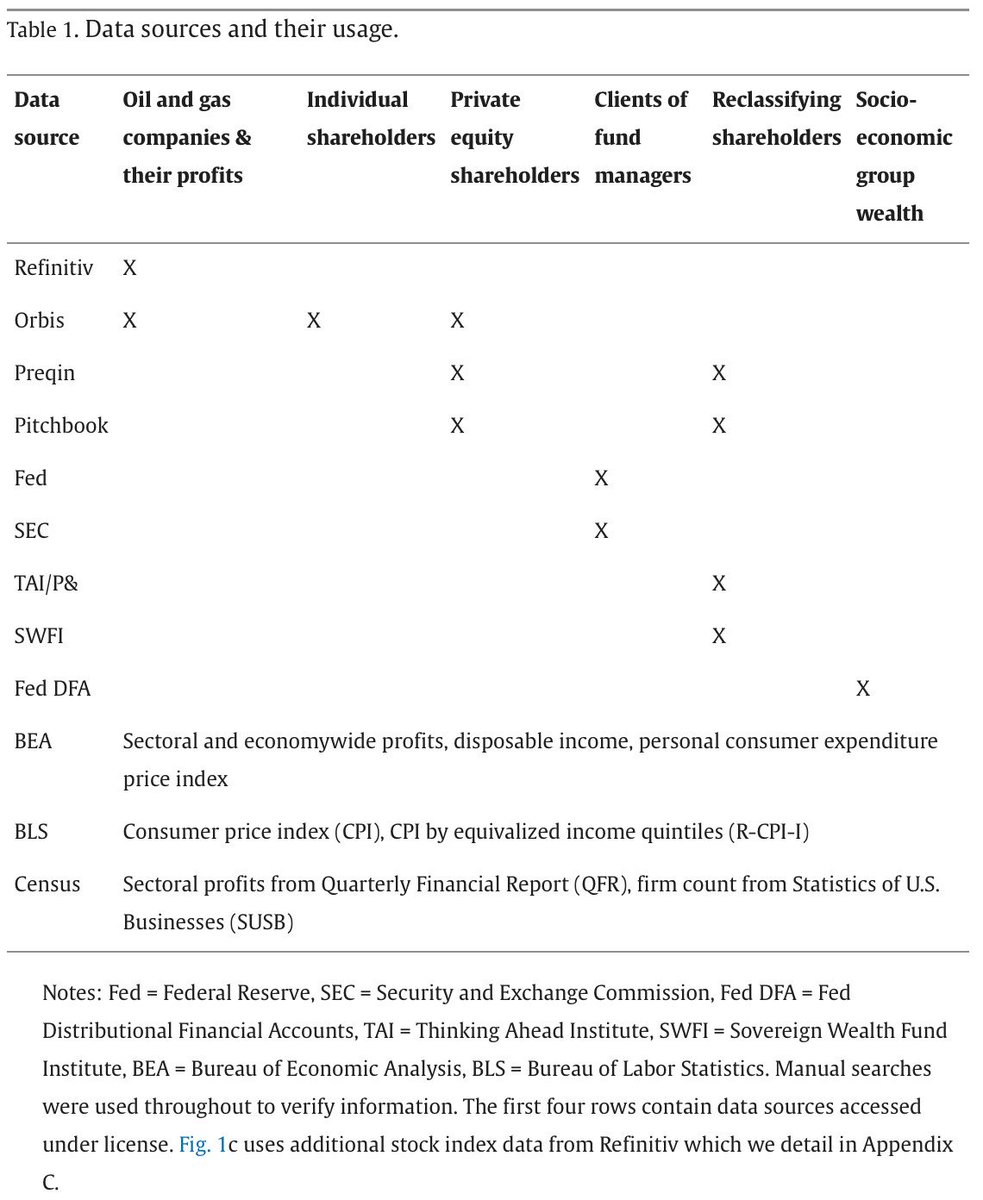
A closer look at our method: We start with global profits, which we then trace to US shareholders. To do this, we used all the data we could get. They’re listed in the first column here, together with what we used them for. 9/
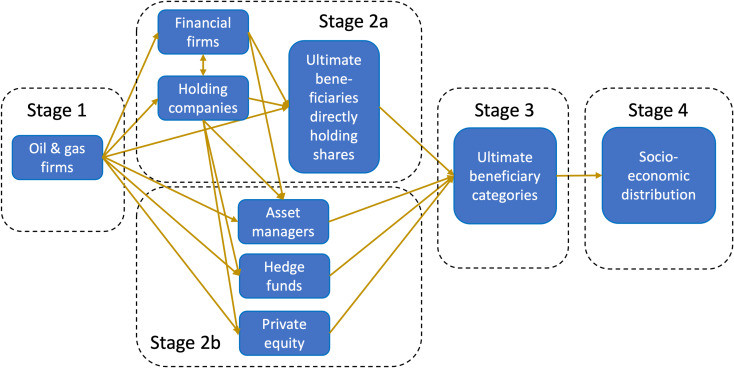
We propagate profits from oil and gas firm to
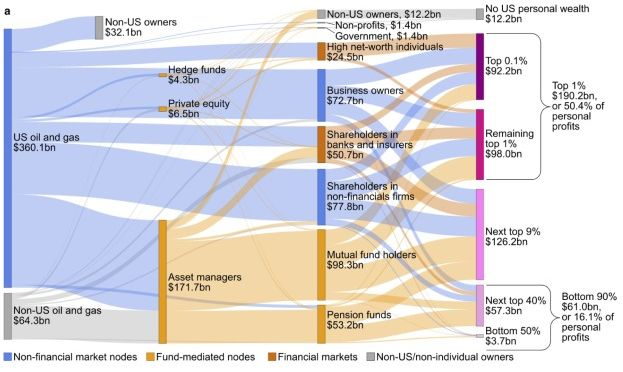
-direct ultimate beneficiaries (holding shares in their own names) and fund managers (holding shares on behalf of others);
-ultimate beneficiaries, e.g. pension funds or business owners;
-socioeconomic distributions 10/
This results in this central Sankey plot that shows the flow of 2022 fossil fuel profits ‘from the well’ to their ultimate U.S. beneficiaries. 11/
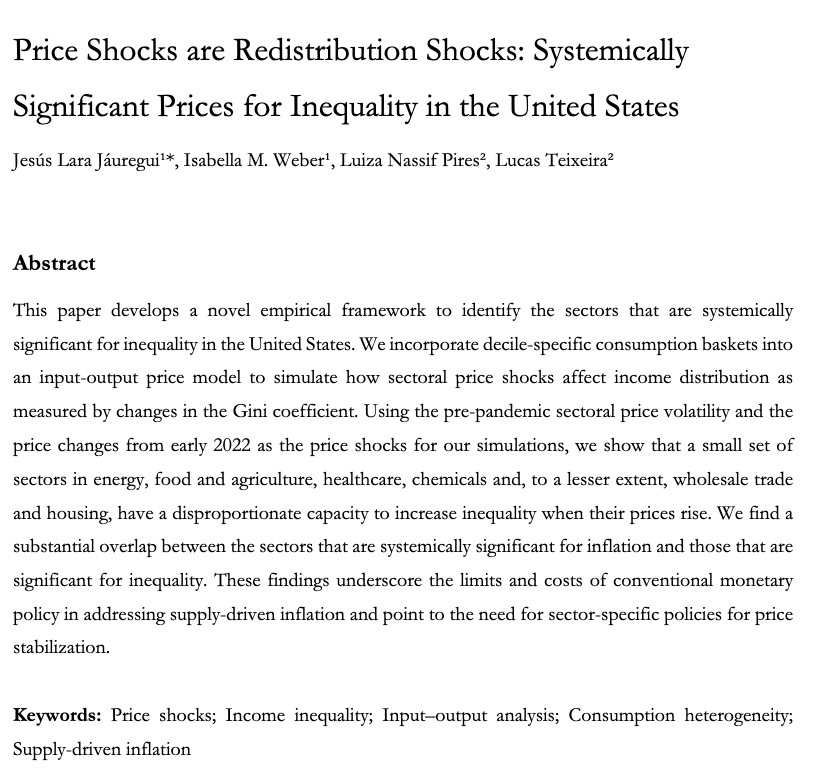
The affordability crisis is an inequality crisis. When prices spike in key sectors, it's not just inflation—it's a massive redistribution shock that hits poor households hardest. In our **new working paper**, we identify the sectors that matter most. A 🧵 scholarworks.umass.edu/entities/publi…
Standard inflation analysis reduces inflation to a single aggregate index. This conceals that inflation is often triggered by price shocks and that consumption baskets differ systematically across income groups, producing unequal inflation burdens. 2/16
Sectoral cost shocks are therefore non-neutral: when relative prices shift unevenly across essential goods, inflation redistributes income, increasing income inequality. 3/16
“My friends, the world is changing. It's not a question of whether that change will come. It's a question of who will change it.” @ZohranKMamdani
People are choosing real alternatives instead of continuity. Mamdani stands for an antifascist economics in the name of the many. 🧵
His program puts affordability first: a rent freeze on stabilized apartments, construction of 200,000 affordable homes, free buses, universal childcare from 6 weeks to 5 years, & city-run grocery stores in food deserts, funded through higher taxes on millionaires & corporations.
Critics dismiss this as “pie-in-the-sky socialism.” But what they truly object to is something more fundamental: the notion that democratic governments should guarantee people’s basic needs, even if that means intervening in markets.
Germany is facing its deepest economic and democratic crisis in decades. Real wages are down, the far right is rising—and the new government has no plan that speaks to the scale of the challenge. A thread 🧵
Germany’s economy has stalled. After six years of stagnation, real GDP growth has plateaued and is almost ten percent below where it should be. The 2022 energy shock triggered the largest one-year drop in real wages since World War II. 2/10
Despite some gains in 2024, real wages are still eight percent below the pre-pandemic trend. Economic insecurity is fueling political extremism. The far-right AfD just finished second in federal elections—and since jumped to the first rank in some polls. 3/10
NEW PAPER: The 2022 fossil fuel price jumps caused an oil and gas profit explosion. We show the US reaped the largest profit increase (USD 275bn) of any country. Big Oil claims this benefits the American people. In fact, 51% went to the richest 1%, only 1% to the bottom 50%. A 🧵
This new working paper has been the outcome of an interdisciplinary collaboration with high powered modelers and wonderful colleagues. @GregorSemieniuk @BJMbraun @JFMercure @PabloSalasB Link:
2/ scholarworks.umass.edu/server/api/cor…
@GregorSemieniuk @BJMbraun @JFMercure @PabloSalasB At the height of the global energy crisis in 2022 that threw people around the world into energy poverty, quarterly net profits in stock market-listed oil and gas companies were at a record globally, peaking in quarter 2. 3/
Economic stabilization used to be part of the disaster preparedness toolbox. It is time we add it back in. Just as it was recognized that some banks were too big to fail after the global financial crisis, we have to recognize that some sectors are “too essential to fail.”
In essential sectors, we need to move from a pure efficiency logic to strategic redundancies. This requires policy interventions.
Ports and other critical infrastructure should have spare capacity and a well-paid work force large enough to ramp up activity when needed. 16/
The Strategic Petroleum Reserve, a publicly owned buffer stock, should be employed systematically to buy when prices collapse & sell when prices explode to avoid price extremes. Buffer stocks can operate in commodity markets like central banks in money markets. 17/
Unemployment weakens governments. Inflation kills. The politically destructive power of inflation had been forgotten. Standard policy tools left us unprepared and fueled inequality. The re-election of Trump should serve as a warning to all democrats.
My first @nytopinion. 1/
In this age of emergencies threats to supply chains are becoming commonplace. Each threat brings the risk of inflation & its power to destabilize governments. If we learned anything from last week’s election, it's that we need new means of protecting our society & democracy. 2/
Among the biggest problems that need fixing: Many business sectors today are dominated by large corporations that can profit from these one-time events. 3/