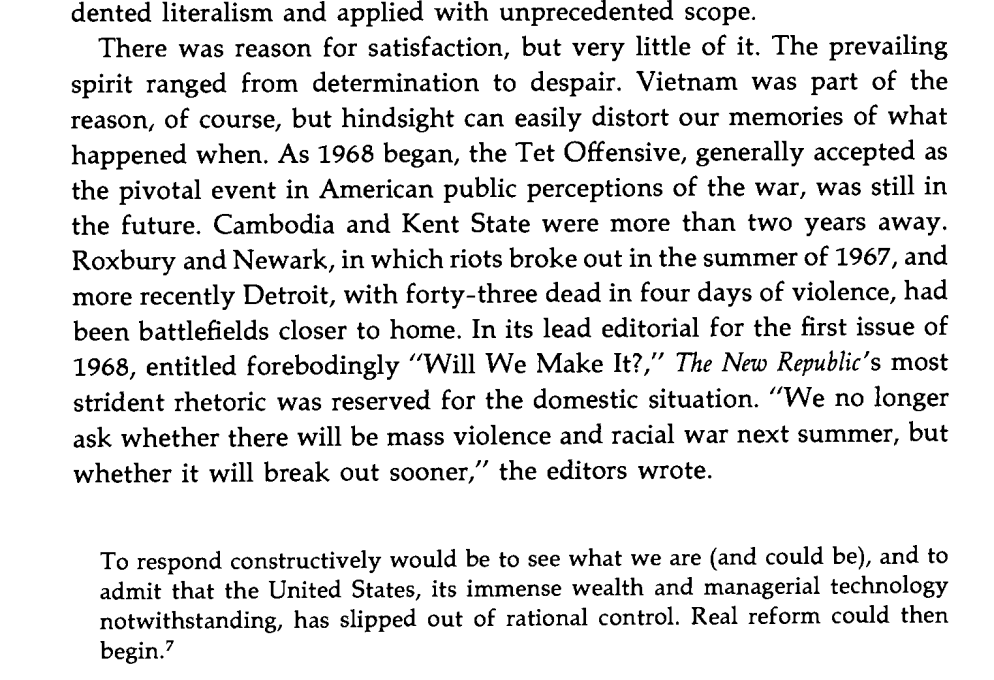
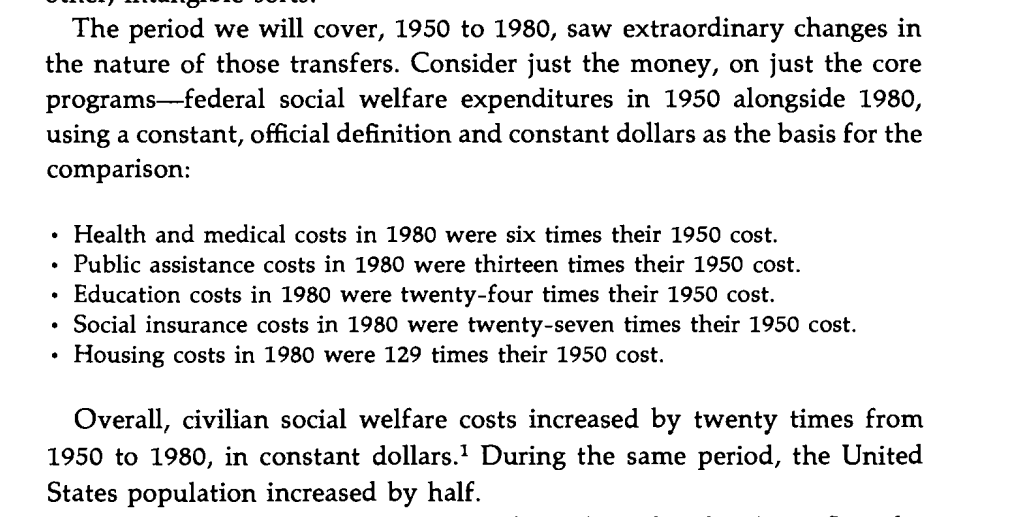
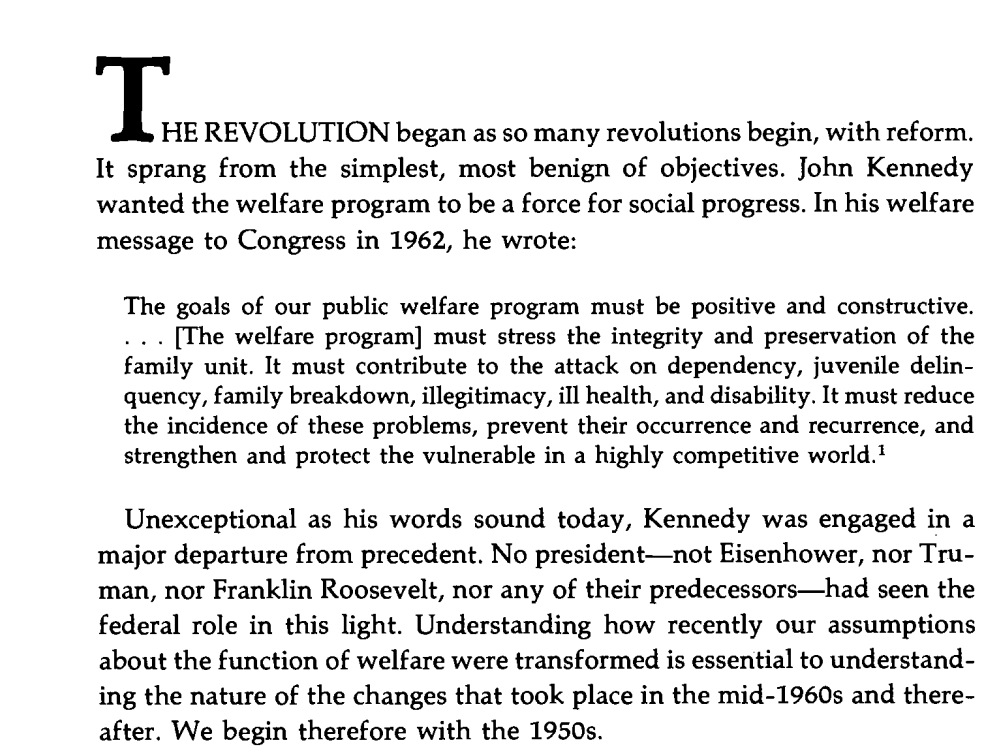
The most important platform to be closed off 2017-2019 was YouTube. Before 2017, YouTube was a very open platform, with easy monetization and almost no moderation of legal content. By the end of 2019, thoughtcrime (anything to the right of Ben Shapiro) was thoroughly purged. 
In March 2017, several news organizations (The Times of London, the Guardian, WSJ) published coordinated articles about ads appearing next to "problematic" content on YouTube. This led to the British government summoning Google to explain and an advertiser boycott.
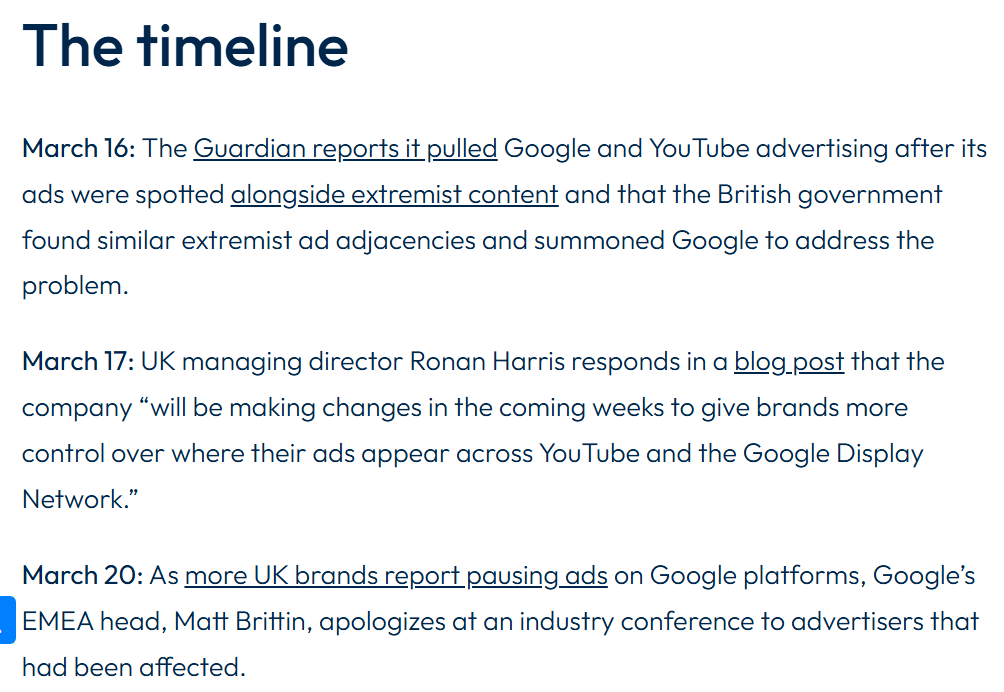
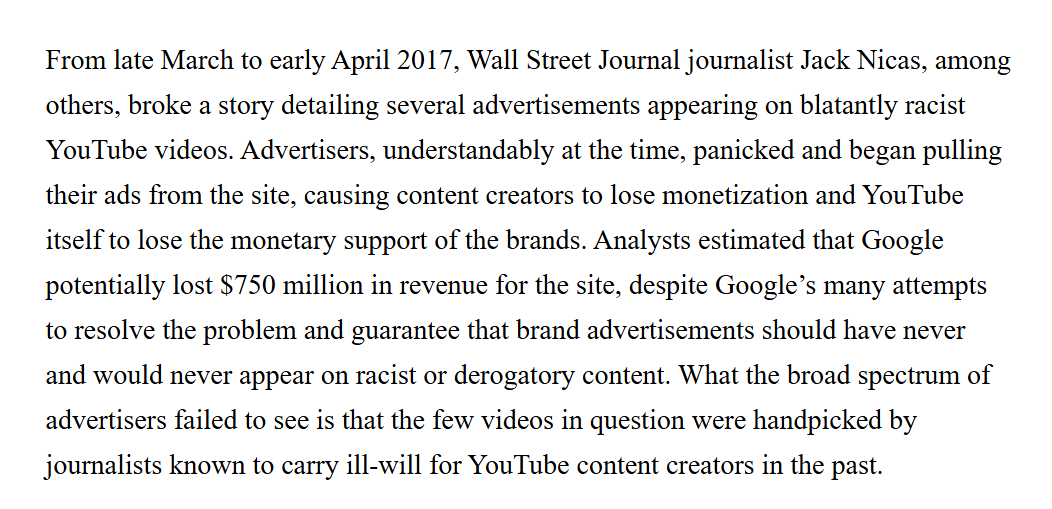
[as an aside, no one sane believes that an ad appearing next to a YouTube video implies the company behind that ad endorses or knows about the content of the video; this was 100% astroturf. No one knew or complained until the news articles hit]
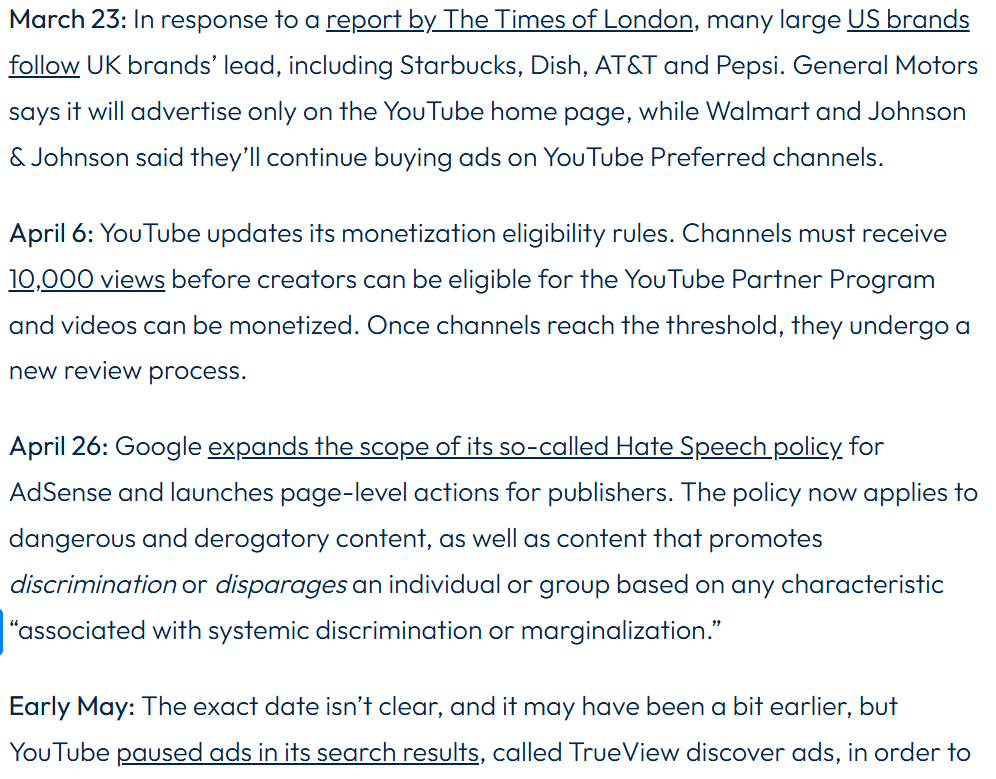
Google then began restricting ads/monetization to large accounts that had been manually reviewed, and greatly expanded the scope of its hate speech policy (for instance, banning insults "associated with marginalization" - no points for guessing who defines that).
YouTube participated in the August 2018 deplatforming of Alex Jones (along with Apple, Facebook, Spotify, LinkedIn, Pinterest, Vimeo, and Twitter), permanently banning from the site. Jones' deplatforming was the start of a slippery slope.
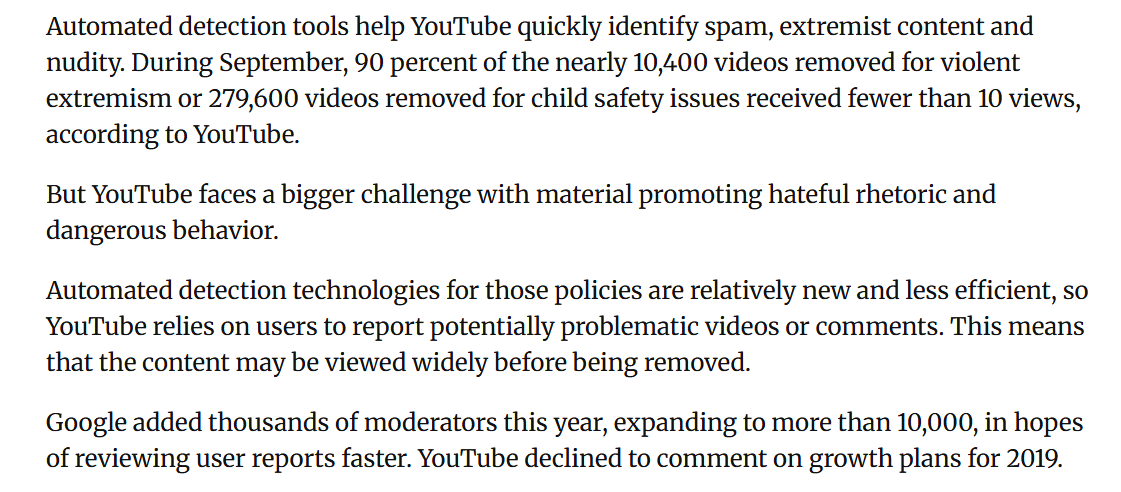
YouTube expanded to more than 10,000 moderators in 2018. More than 90% of removed videos were seen by fewer than ten people.
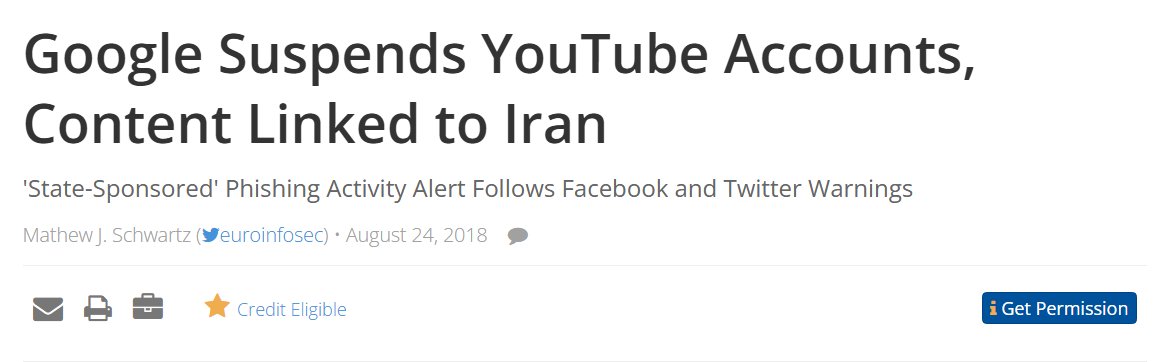
In August 2018, YouTube also began banning state-sponsored content from Russia and Iran. This is less significant from a freedom-of-thought perspective, but I think sets a hard "no later than" date by which US intelligence agencies were getting involved.
In January 2019, Google began algorithmically suppressing "borderline content" meaning content that did not violate their guidelines but they judged could be harmful. Unlike bans, algorithmic suppression is silent and almost impossible to prove or fight.

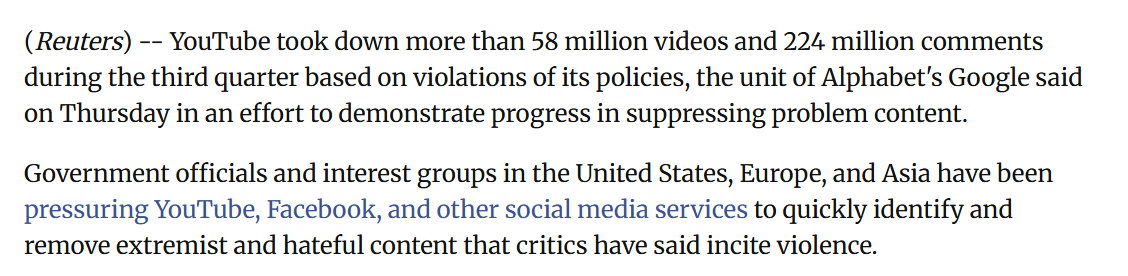
By Dec 2018, Google was removing millions of videos per quarter, though mostly being spam or scams (which I think is justified, otherwise the site is unusable). But around 1% were for political reasons, and this number exploded in 2019 when moderation policy was changed.

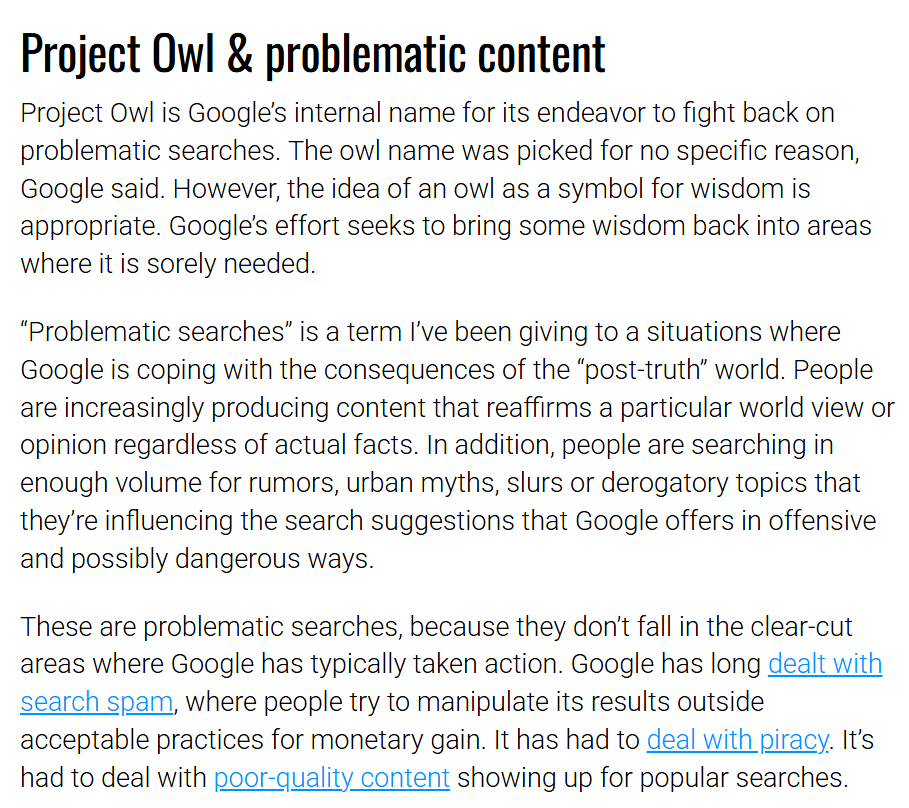
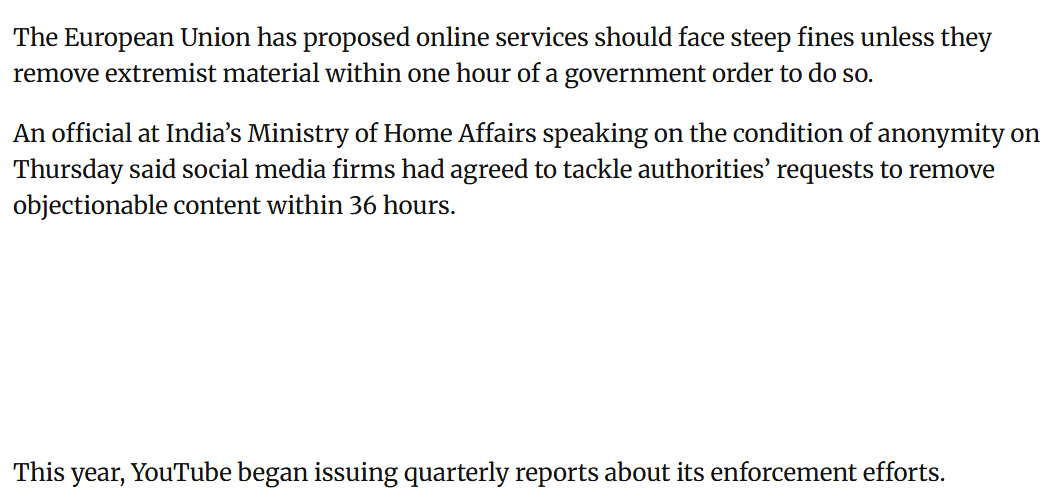
Some of this zeal (more than 58M videos removed in Q3 2018) was to "demonstrate progress in suppressing problem content" to "government officials and interest groups [read: astroturfed NGOs]" who were (and are - see the UK's OSA) keen to control what is on YouTube.
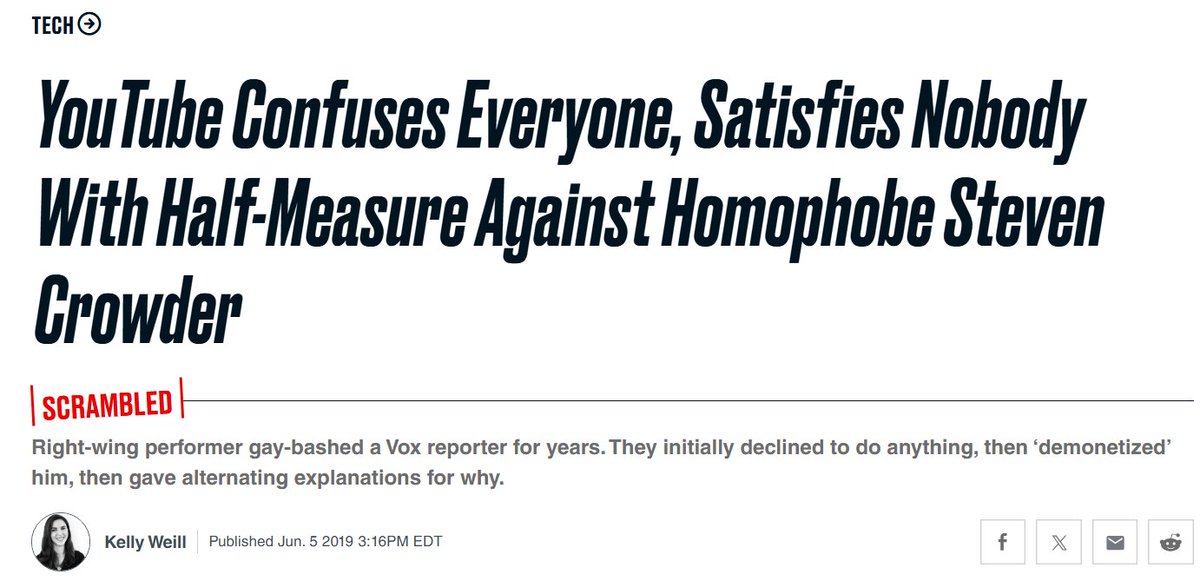
In June 2019, YouTube demonetized and then banned Steven Crowder for calling a Vox journalist an "anchor baby" and a "lisping queer", which they acknowledged did not violate their policies [also note the Daily Beast calling insults "gay bashing," which they are not].
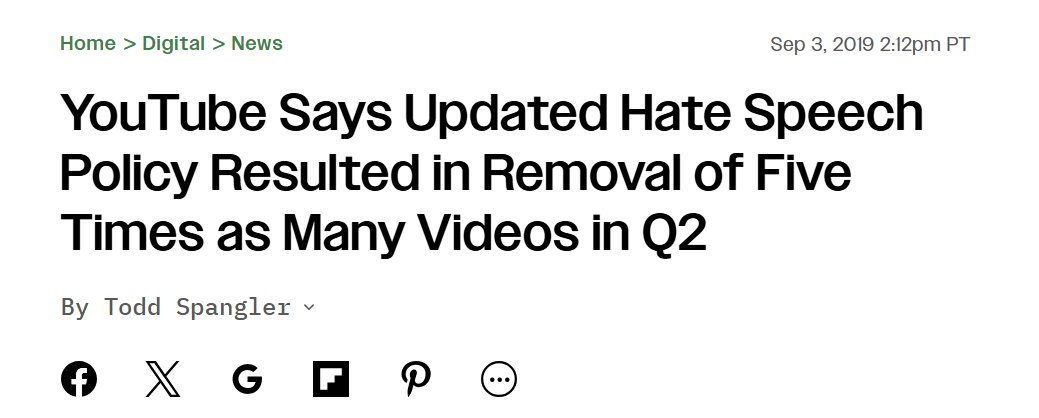
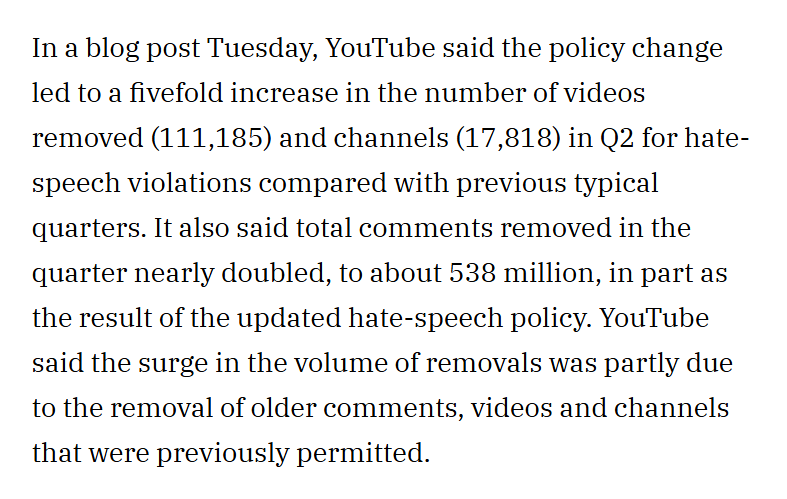
In Q2 2019, Google began "prohibiting videos alleging group superiority" [no prizes for guessing for which groups this was enforced] and as a consequence ramped up suspensions fivefold, banning more than 17,000 channels and deleting more than 100,00 videos and 500M comments.
Google eventually began banning "malicious insults based on protected attributes" [no points for guessing which attributes were protected or what counted as an insult] in December 2019.
In 2016, there was a thriving alt-center/"anti-woke"/anti-feminist ecosystem on YouTube, often connected to the New Atheists. By 2019, almost every major creator was banned, demonetized, or became leftist to survive, replaced by anarchist/Communist "Breadtube."
Since The Youth are illiterate troglodytes, video content served by algorithmic feed is their major source of information, and until TikTok (which has similar policies), YouTube was by far the largest source of this (by orders of magnitude).
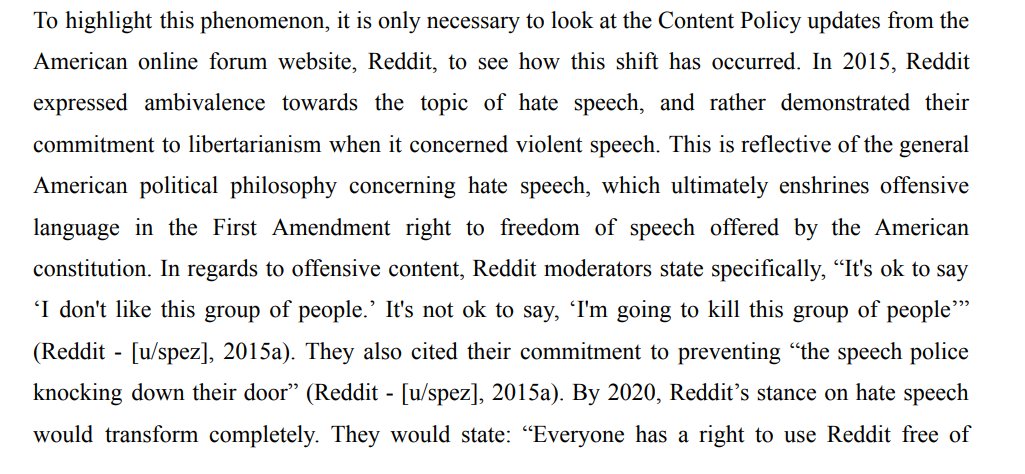
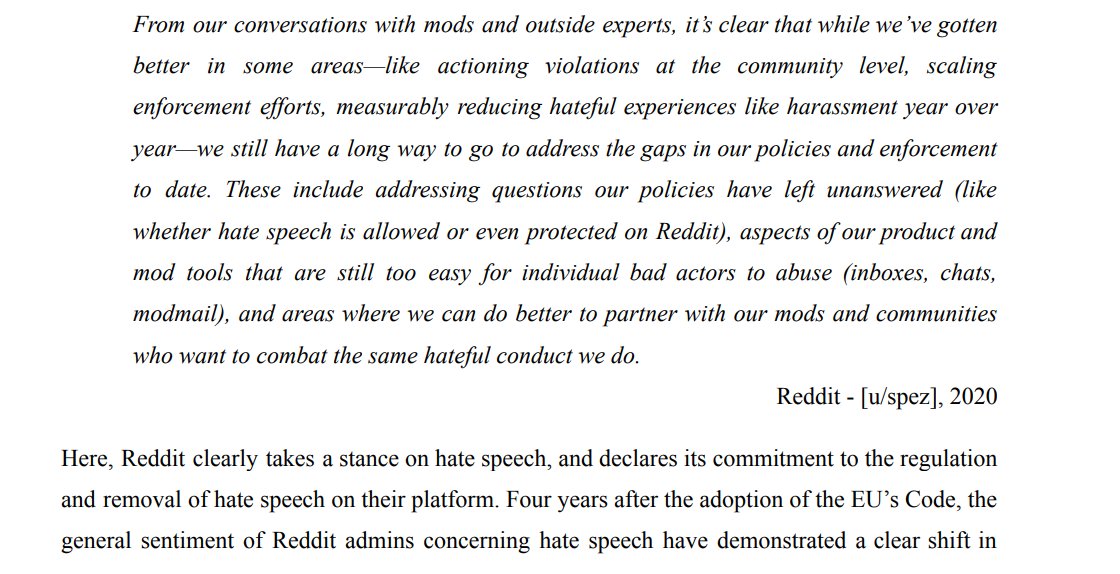
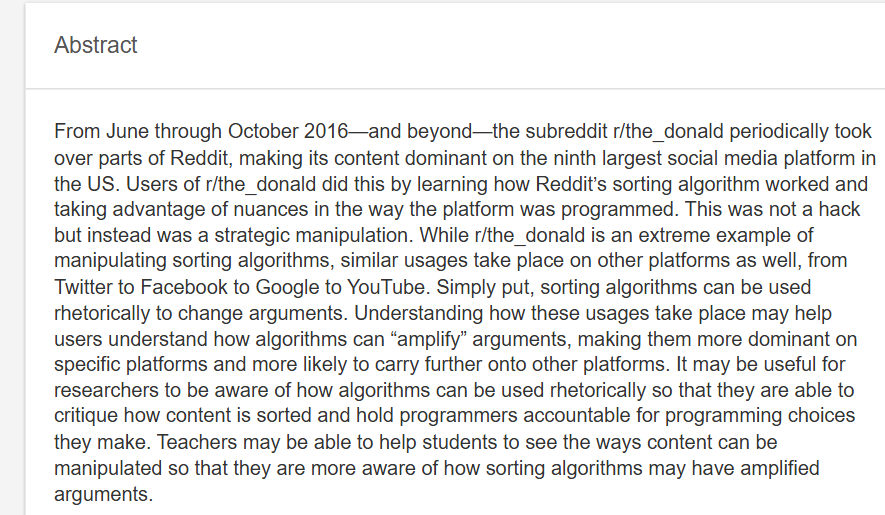
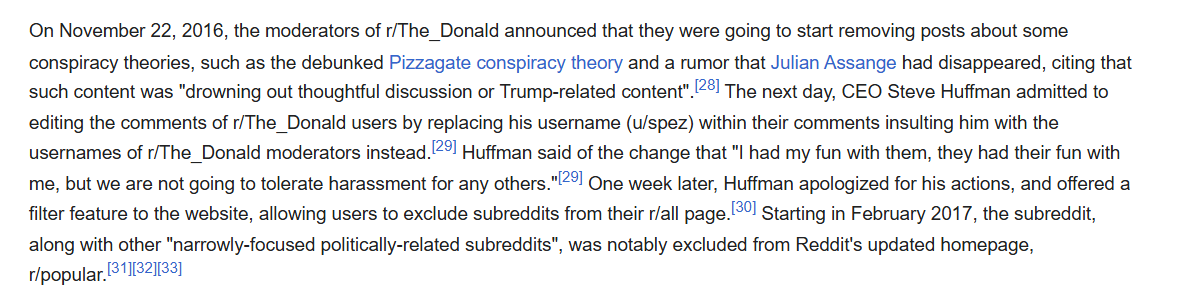
As such, the purging of anti-woke/anti-feminists from YouTube killed any sort of semi-popular intellectual opposition to the Great Awokening under 30. The only site more emblematic of the annihilation of open internet discourse 2017-2019 might be Reddit.
Some sources/links:
variety.com/2019/digital/n…,
thedailybeast.com/youtube-punish…,
publicknowledge.org/public-knowled…,
bankinfosecurity.com/google-youtube…,
ashinaflash.wordpress.com/2017/08/26/the….
martech.org/google-youtube…
variety.com/2019/digital/n…,
thedailybeast.com/youtube-punish…,
publicknowledge.org/public-knowled…,
bankinfosecurity.com/google-youtube…,
ashinaflash.wordpress.com/2017/08/26/the….
martech.org/google-youtube…
• • •
Missing some Tweet in this thread? You can try to
force a refresh