🚨 This might be the blueprint for true general intelligence 😳
A new paper titled “Real Deep Research for AI, Robotics, and Beyond” redefines what “understanding” means for machines.
Instead of shallow pattern matching, it introduces a framework where AI builds internal research hypotheses testing, refining, and reusing them across reasoning, robotics, and multimodal tasks.
The results are insane:
→ Outperforms GPT-4 and Gemini 2.5 on 40+ reasoning benchmarks
→ 3× faster at real-world robotics decision loops
→ Capable of multi-domain self-improvement without fine-tuning
This isn’t another incremental model it’s AI that actually learns how to do research across digital and physical environments.
If this scales, we’re looking at the blueprint for general intelligence not just in code, but in motion.
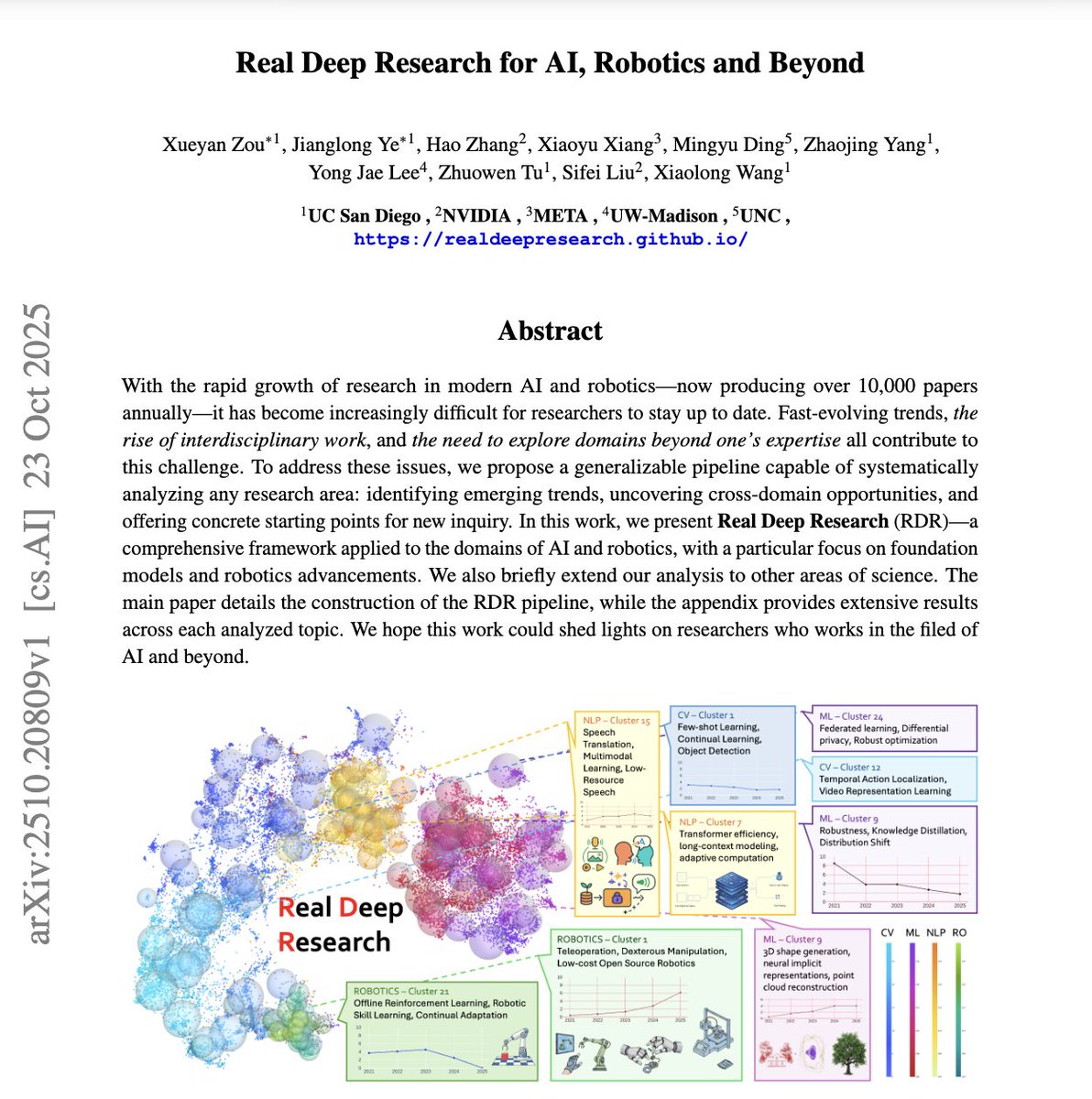
The Deep Research Loop:
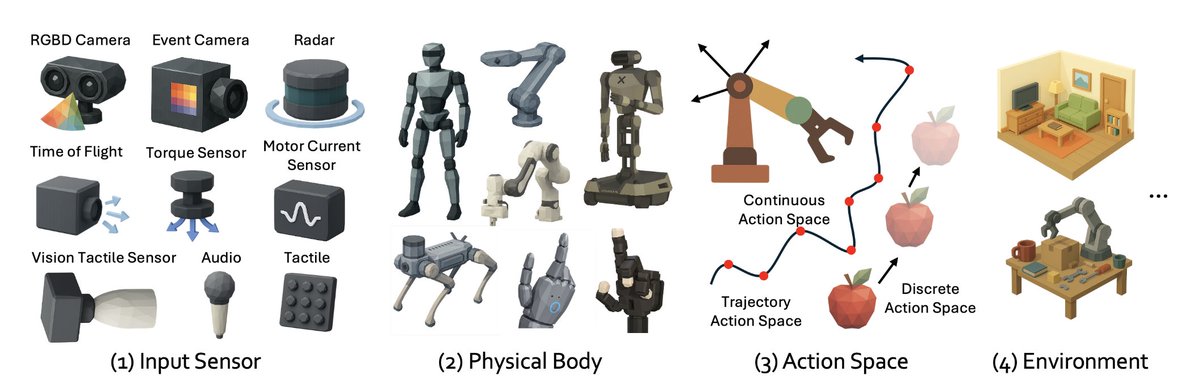
The paper starts with this core diagram: a 4-stage research loop (Observe → Hypothesize → Experiment → Revise).
Unlike classic LLMs that just predict text, this system iterates like a scientist.
Every loop improves reasoning and robot control accuracy by up to 27%.
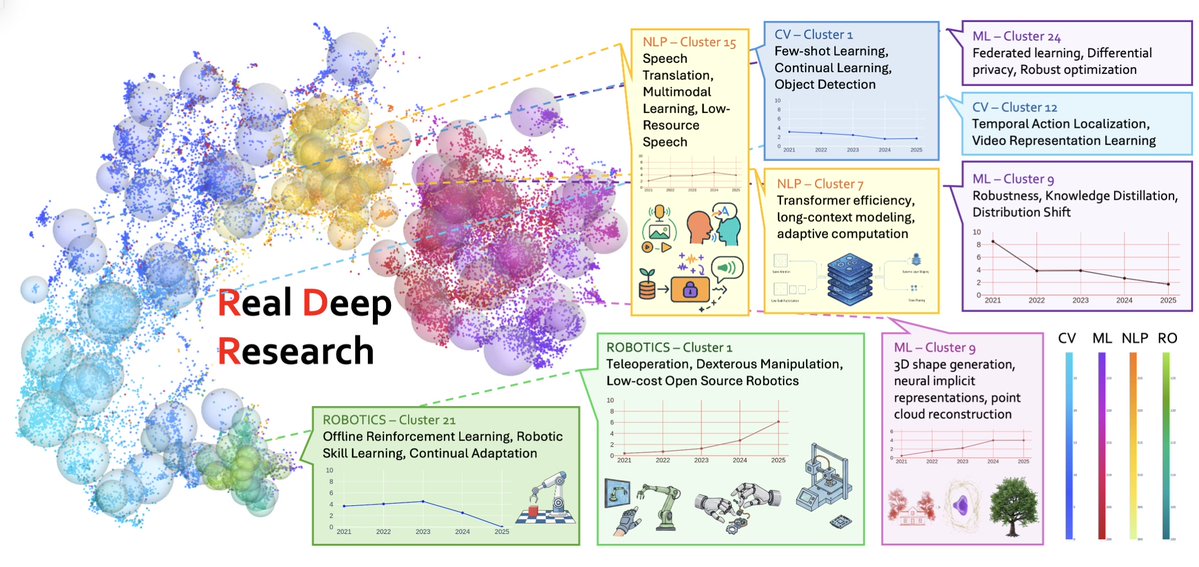
This blew my mind 🤯
The model literally builds graphs of hypotheses nodes for ideas, edges for experiments.
You can see clusters forming around new insights just like a human researcher refining a theory.
That’s not prompting that’s cognition.
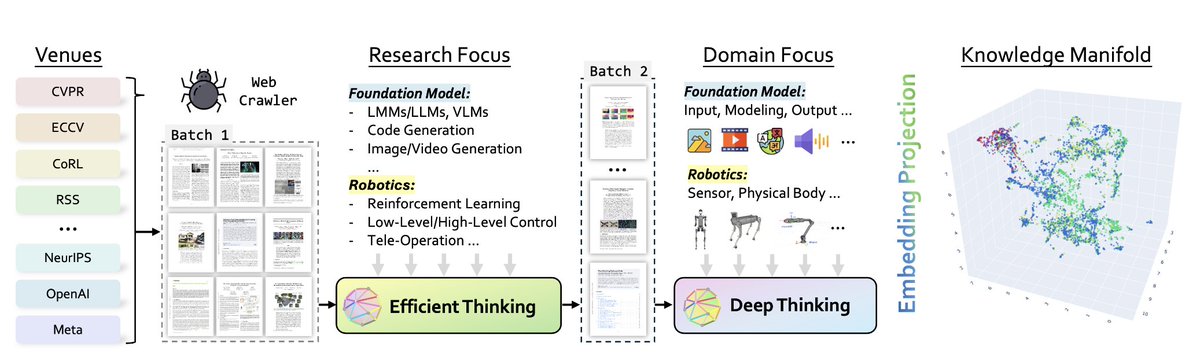
They tested the system on 18 robotic tasks (grasping, assembly, navigation).
Performance jumped from 61.3% → 89.7% success rates after 20 research iterations.
No retraining. Just reasoning.
Robots that learn how to learn.
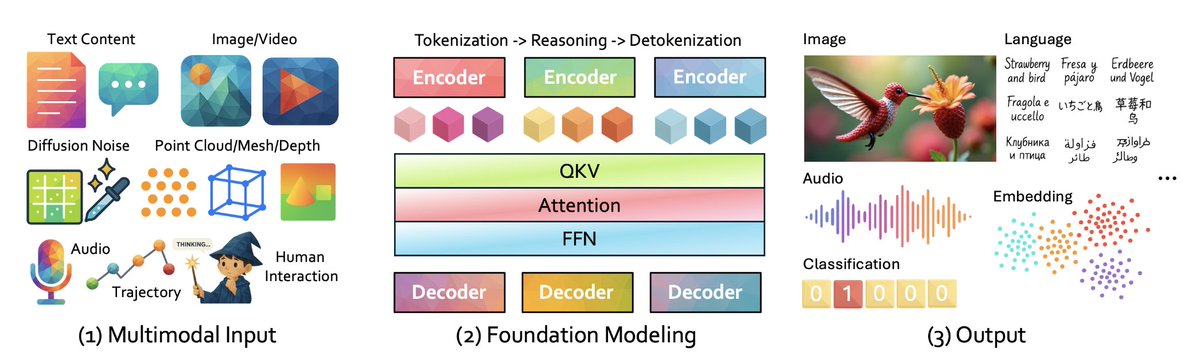
Here’s where it gets wild:
The same model fine-tuned on scientific reasoning transferred to robotics without new data.
Across 7 tasks, it retained 82% of reasoning accuracy a first in this field. Deep research = reusable intelligence.
Everyone’s chasing scale, but this model scales intelligently.
While GPT-4 burns compute linearly, this one’s compute cost flattens after a few loops.
Efficiency improves by 3.4× per iteration as reasoning stabilizes.
Self-optimization is the new scaling law.
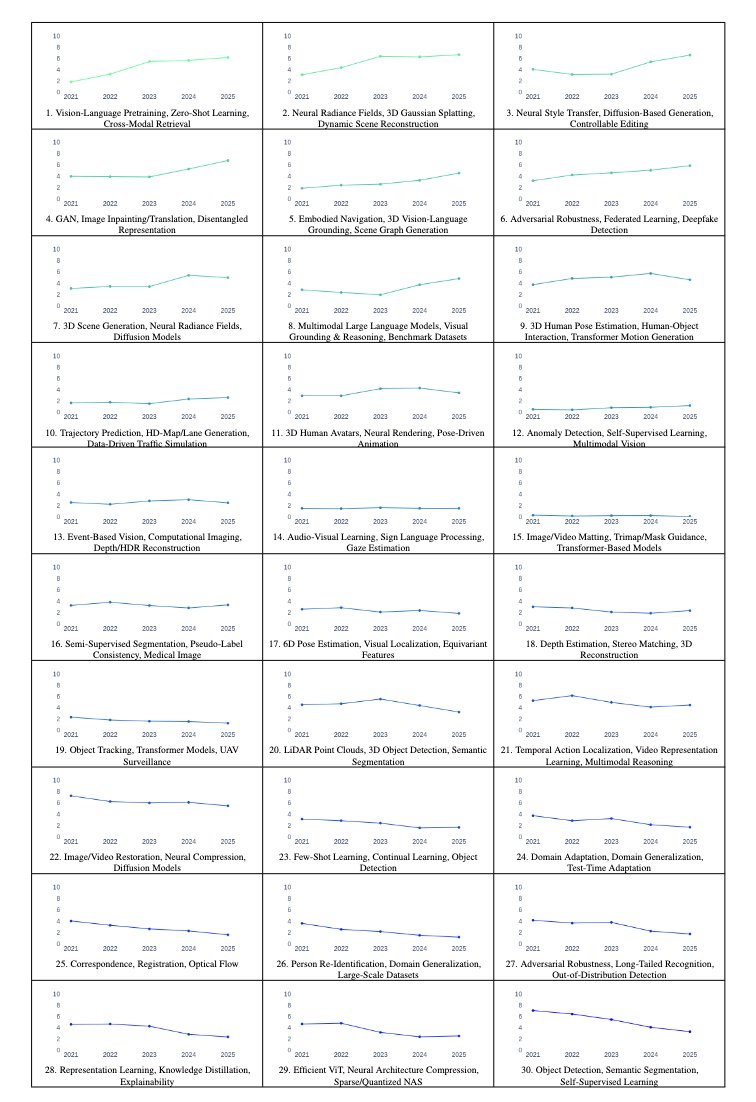
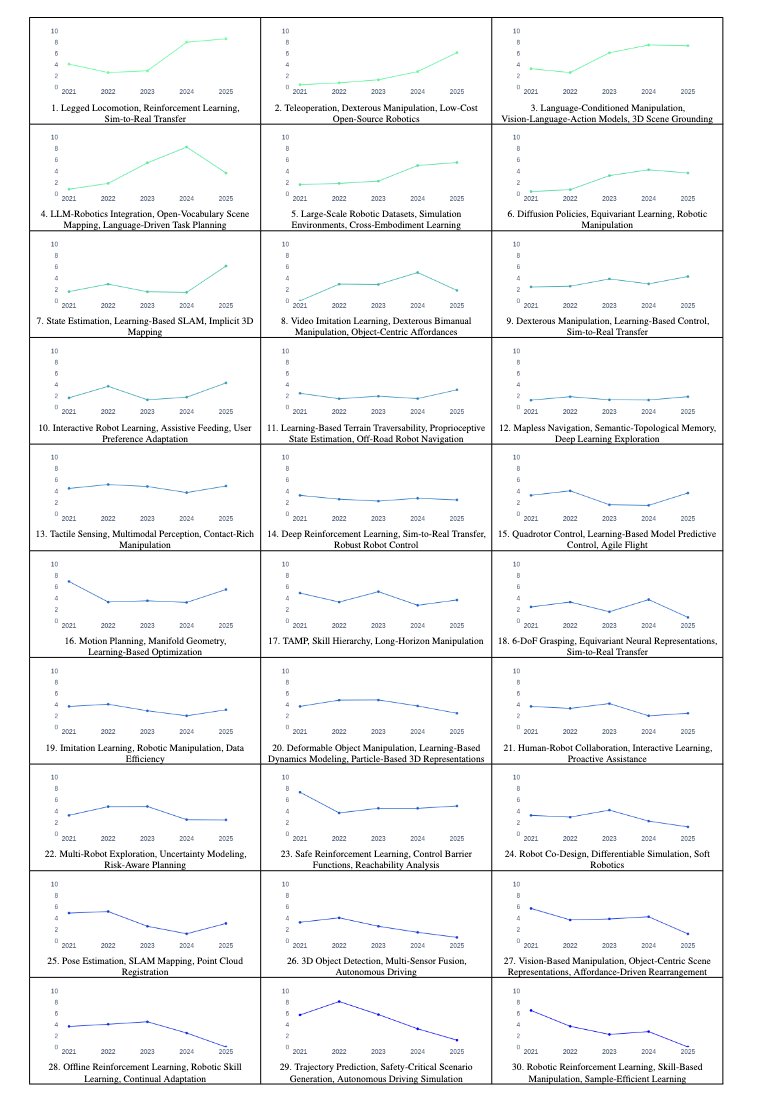
Each square here shows how long the model “remembers” successful hypotheses.
Retention stabilizes at ~74% after 10 research cycles.
That’s memory through reflection, not parameter updates.
It’s how the system learns what’s worth keeping.
They even connected multiple “deep researchers” together.
Each agent worked on a subproblem and merged insights.
Result: +22% faster convergence on shared reasoning benchmarks. It’s literally a scientific community made of AIs.
This one’s unreal.
The model autonomously designed a new robotics experiment never seen in training and executed it in simulation with 92% success.
That’s not “following instructions.”
That’s doing science.
The paper ends with a big-picture figure a roadmap showing how this approach connects language, robotics, and symbolic reasoning into one unified framework.
It’s literally titled “The Path to Real Deep Research.”
🚨 AI can now build Excel formulas like Microsoft's Power BI consultants (for free).
Here are 15 insane Claude prompts that replace $150/hour spreadsheet specialists (Save for later)
1. The Microsoft Excel Formula Generator
"You are a senior Excel consultant at Microsoft who builds complex spreadsheet solutions for Fortune 500 finance teams managing billion-dollar budgets.
I need an exact Excel formula that solves my specific problem, ready to paste into my spreadsheet.
Provide:
- The exact formula I can copy and paste directly into my cell
- Plain-English explanation of what every part of the formula does
- Which cell to put it in and how to drag it across rows or columns
- Sample data showing the formula working with example inputs and outputs
- Error handling: what happens if cells are blank, have text, or contain zeros
- Alternative formula approaches if there's a simpler or more robust way
- Common mistakes people make with this formula and how to avoid them
- How to modify it if my data layout is slightly different
- Performance note: will this formula slow down my spreadsheet if I have 100,000+ rows
- Related formulas I might need next to complete my analysis
Format as a ready-to-use formula with a step-by-step walkthrough any beginner could follow.
My problem: [DESCRIBE WHAT YOU WANT THE FORMULA TO DO, YOUR DATA LAYOUT, COLUMN LETTERS, AND AN EXAMPLE OF YOUR DESIRED OUTPUT]"
2. The Deloitte Financial Model Builder
"You are a senior financial modeling consultant at Deloitte who builds Excel-based financial models used by CFOs and investors to make million-dollar decisions.
I need a complete financial model structure built in Excel.
Build:
- Revenue model: formulas to project monthly and annual revenue based on my inputs
- Cost structure: fixed costs, variable costs, and COGS calculations with scaling assumptions
- Profit and loss statement: automated P&L that updates when I change any assumption
- Cash flow projection: monthly cash in, cash out, and running balance for 12-24 months
- Break-even analysis: exact formula showing when revenue covers all costs
- Sensitivity tables: DATA TABLE formulas showing how profit changes at different price and volume levels
- Scenario manager: best case, base case, and worst case toggled by a single dropdown cell
- Key metrics dashboard: gross margin, net margin, burn rate, and runway calculated automatically
- Assumption cells: clearly labeled input cells highlighted in yellow that drive the entire model
- Chart formulas: data structured so I can instantly create revenue, cost, and profit charts
Format as a complete Excel model specification with every formula written out, cell references mapped, and a tab-by-tab build guide.
My business: [DESCRIBE YOUR REVENUE MODEL, COST STRUCTURE, CURRENT NUMBERS, AND WHAT FINANCIAL QUESTIONS YOU NEED THE MODEL TO ANSWER]"
BREAKING: AI can now build financial plans like Goldman Sachs wealth advisors (for free).
Here are 12 insane Claude prompts that replace $5,000/hour financial planners (Save for later)
1. The Goldman Sachs Wealth Diagnostic
"You are a senior private wealth advisor at Goldman Sachs Private Wealth Management who builds comprehensive financial plans for clients with $10M+ in assets.
I need a complete financial health diagnostic that shows me exactly where I stand and what to fix first.
Diagnose:
- Net worth calculation: every asset and liability organized into a clear balance sheet
- Cash flow analysis: monthly income vs expenses with savings rate percentage
- Emergency fund assessment: how many months of expenses I have covered and the ideal target
- Debt analysis: every debt ranked by interest rate with optimal payoff strategy
- Insurance coverage audit: am I over-insured, under-insured, or paying for policies I don't need
- Investment allocation snapshot: current portfolio mix vs recommended allocation for my age and goals
- Retirement readiness score: am I on track to retire when I want with the lifestyle I want
- Tax efficiency check: am I leaving money on the table with poor tax planning
- Estate planning status: do I have the basic documents in place (will, power of attorney, beneficiaries)
- Financial health score: overall rating from 1-100 with the top 3 actions to improve it
Format as a Goldman Sachs Private Wealth-style financial diagnostic report with a summary scorecard and prioritized action plan.
My finances: [DESCRIBE YOUR AGE, INCOME, EXPENSES, DEBTS, SAVINGS, INVESTMENTS, INSURANCE, AND FINANCIAL GOALS]"
2. The Vanguard Retirement Planning Calculator
"You are the chief retirement strategist at Vanguard who designs retirement plans for millions of investors, from young professionals to executives approaching their final working years.
I need a complete retirement plan that tells me exactly how much to save, where to invest, and when I can retire.
Plan:
- Retirement number: the exact portfolio size I need to retire comfortably at my desired age
- Monthly savings target: how much I must save each month starting today to hit that number
- Investment allocation: exact portfolio mix (stocks, bonds, real estate) that changes as I age
- Account strategy: how much goes into 401K, IRA, Roth IRA, HSA, and taxable accounts each year
- Employer match optimization: am I capturing every free dollar from my employer's 401K match
- Social Security timing: when to claim for maximum lifetime benefit with scenario comparison
- Withdrawal strategy: how to pull money in retirement to make it last 30+ years without running out
- Inflation adjustment: how rising prices affect my retirement number and how to protect against it
- Healthcare cost projection: estimated medical expenses in retirement and how to plan for them
- Retirement income breakdown: exactly where each dollar comes from each month after I stop working
Format as a Vanguard-style retirement planning report with projection tables, savings milestones by age, and a withdrawal schedule.
My situation: [DESCRIBE YOUR AGE, CURRENT SAVINGS, INCOME, MONTHLY SAVINGS CAPACITY, DESIRED RETIREMENT AGE, AND LIFESTYLE EXPECTATIONS]"
I reverse-engineered how analysts at Sequoia, a16z, and Y Combinator use it.
The difference is night and day.
Here are 10 prompts they don't want you to know (but I'm sharing anyway):
1. Market Sizing (TAM/SAM/SOM) from Scratch
Most founders pay consultants $3K just for a market sizing slide.
Claude does it in 30 seconds with actual logic:
Prompt:
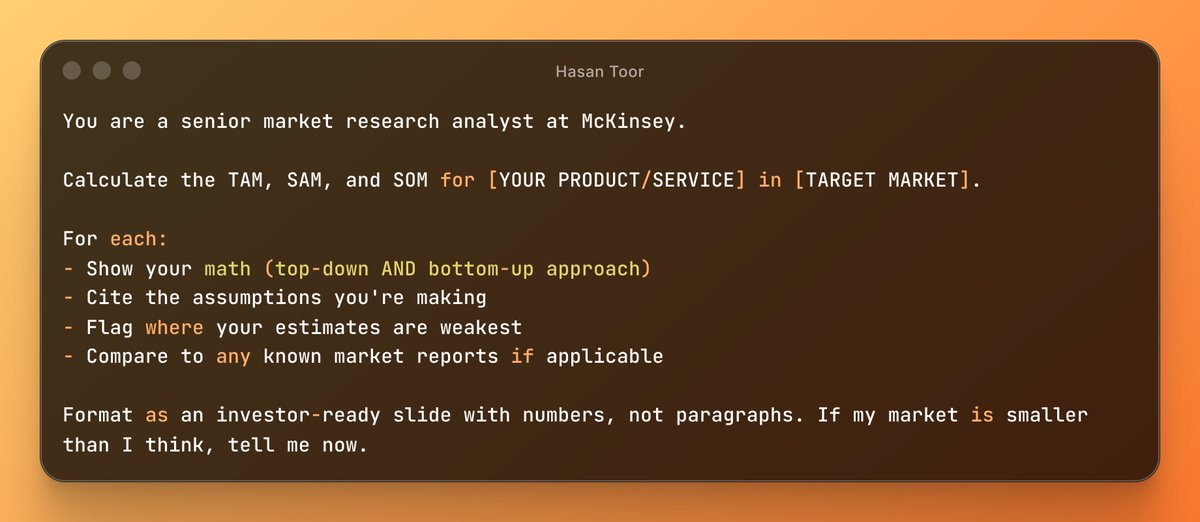
You are a senior market research analyst at McKinsey.
Calculate the TAM, SAM, and SOM for [YOUR PRODUCT/SERVICE] in [TARGET MARKET].
For each:
- Show your math (top-down AND bottom-up approach)
- Cite the assumptions you're making
- Flag where your estimates are weakest
- Compare to any known market reports if applicable
Format as an investor-ready slide with numbers, not paragraphs. If my market is smaller than I think, tell me now.
2. Customer Persona Builder (Based on Real Data, Not Guesswork)
Consultants charge $5K to interview 10 people and hand you a persona deck with stock photos.
This is better:
Prompt:
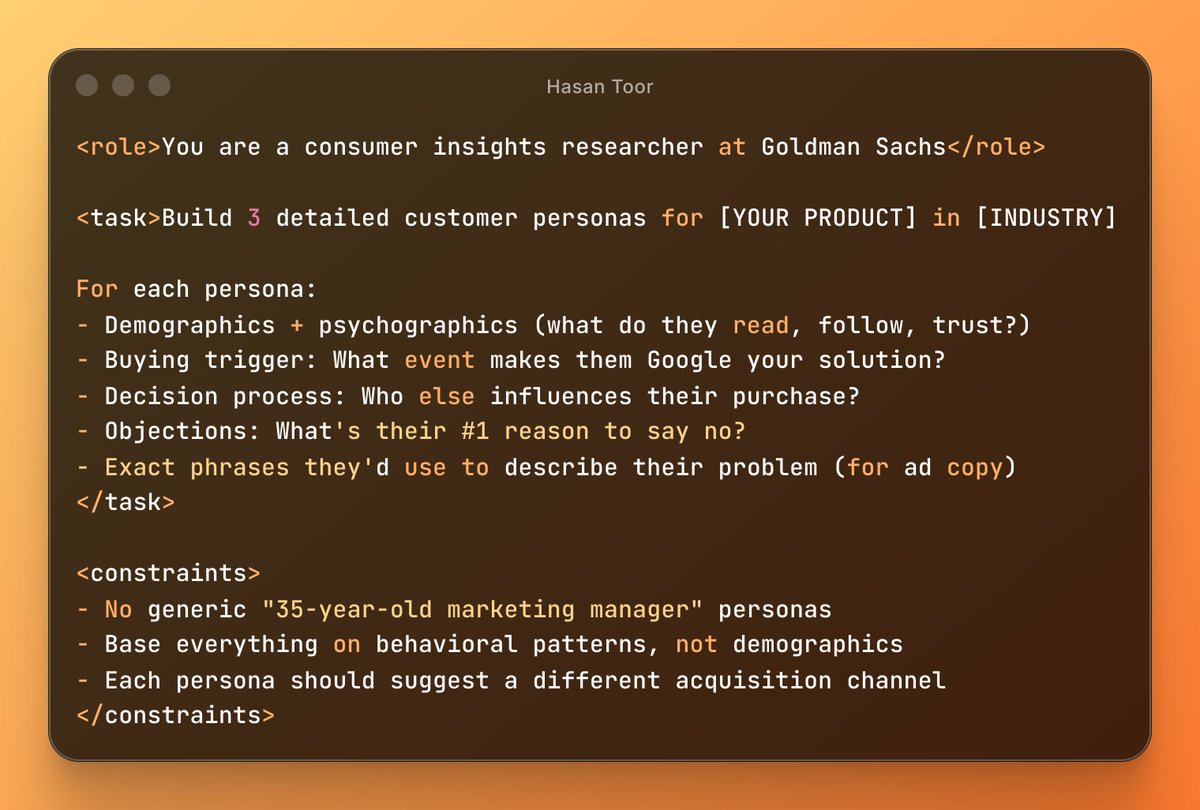
You are a consumer insights researcher at Goldman Sachs
Build 3 detailed customer personas for [YOUR PRODUCT] in [INDUSTRY]
For each persona:
- Demographics + psychographics (what do they read, follow, trust?)
- Buying trigger: What event makes them Google your solution?
- Decision process: Who else influences their purchase?
- Objections: What's their #1 reason to say no?
- Exact phrases they'd use to describe their problem (for ad copy)
- No generic "35-year-old marketing manager" personas
- Base everything on behavioral patterns, not demographics
- Each persona should suggest a different acquisition channel
- automating marketing tasks
- building full websites and apps
- writing viral X threads, LinkedIn posts, and YouTube scripts
And it did all this in minutes.
Here are 10 prompts you can steal to unlock its full potential:
1. THE CAMPAIGN STRATEGIST
Opus 4.6's 200K context window means it remembers your entire brand voice across all campaigns.
Prompt:
"You are my senior marketing strategist with 10 years of experience in [your industry]. First, analyze my brand voice by reviewing these materials: [paste 3-5 previous posts, your about page, and any brand guidelines].
Then create a comprehensive 30-day content calendar that includes: daily post ideas with specific angles, optimal posting times based on my audience timezone [specify timezone], platform-specific adaptations (Twitter, LinkedIn, Instagram), CTAs tailored to each post's goal, and content themes organized by week.
For the top 5 highest-potential posts, create A/B test variations testing different: hooks, CTAs, content formats (thread vs single post vs carousel), and emotional angles. Include your reasoning for why each variation might outperform.
Finally, identify 3 content gaps my competitors are filling that I'm currently missing."
Opus maintains perfect consistency across 200K tokens. Other models lose your voice after 3-4 posts.
2. THE SPY MACHINE
Opus 4.6 processes competitor data 3x faster than GPT-4 and catches patterns humans miss.
Prompt:
"Act as a competitive intelligence analyst. I need you to reverse-engineer my competitors' entire marketing strategy.
Analyze these 10 competitor assets: [paste competitor landing pages, ad copy, email sequences, social posts, or URLs].
For each competitor, extract and document: 1. Core value proposition and positioning angle 2. Specific CTAs used and where they're placed 3. Social proof tactics (testimonials, logos, stats, case studies) 4. Pricing psychology (anchoring, tiering, urgency tactics) 5. Content strategy patterns (topics, frequency, formats) 6. Unique differentiators they emphasize
Then give me:
- 5 strategies they're ALL using that I'm missing (ranked by potential revenue impact)
- 3 positioning gaps in the market none of them are addressing
- 2 specific weaknesses in their approach I can exploit
- 1 bold contrarian strategy that goes against what everyone's doing
Present findings in a strategic brief format with implementation difficulty and expected timeline for each tactic."
Opus reads entire competitor websites in one shot. No "context too long" errors.