Tanvi Ratna Profile picture
Mar 2 16 tweets 4 min read Read on X
Everyone is debating escalation after the Iran strikes. Missiles, retaliation, regime survival. But almost no one is asking the question serious strategists ask first.

Why did this happen NOW?

The answer lies in a full systems transition in US foreign policy. Image
The strike makes less sense as Middle East crisis management and more sense inside a shift underway in US national security thinking. Washington increasingly treats economic systems themselves as security assets that must be defended.
Energy flows, semiconductor inputs, shipping corridors, data infrastructure. These are no longer commercial questions. They determine industrial capacity, inflation stability, and technological leadership. Security policy has quietly merged with economic policy.
Over the past few years the US and its partners have begun aligning around what many now describe as a Pax Silica framework. Not an alliance in the traditional sense, but coordination across technology supply chains, minerals, and advanced industry. Image
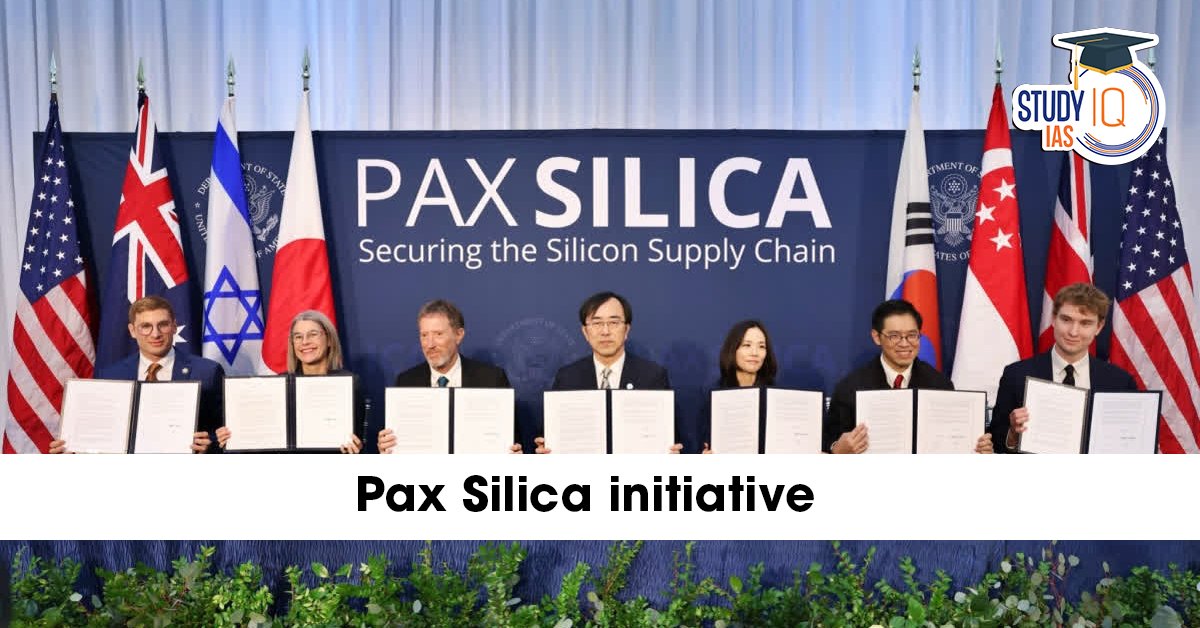
Look closely at who sits inside that emerging system. Japan. South Korea. India. Singapore. Gulf economies. Europe. It isn't just China, but also America's highly industrialized partners whose growth depends on uninterrupted energy imports and stable trade routes.
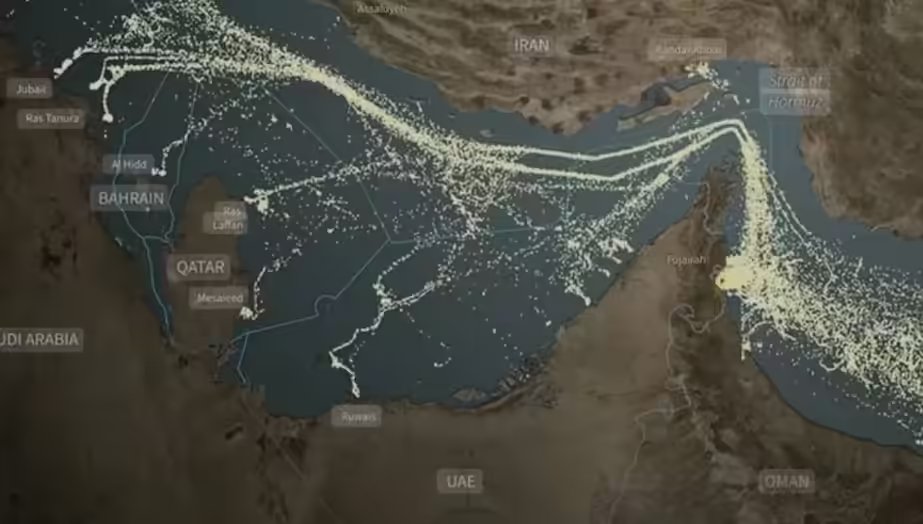
That changes how Hormuz is understood. The issue is not simply oil prices. Disruption there threatens semiconductor fabs, AI compute expansion, manufacturing output, and supply chain reliability across economies now central to US strategy.
At the same time another layer has been forming. The India Middle East Europe Economic Corridor. IMEC attempts to reorganize trade linking Indian production, Gulf energy, and European markets through aligned infrastructure.
IMEC is not just logistics efficiency. It represents a geographic redesign of Eurasian commerce. Physical connectivity backed by political alignment. A system meant to reduce chokepoints under the Belt and Road. I wrote about it earlier wrt Iran
Seen together, IMEC forms the physical backbone while Pax Silica builds the industrial and technological stack above it. Trade, minerals, compute, and energy increasingly moving within one coordinated ecosystem.
Iran sat directly across multiple pressure points within this transition. Maritime energy routes. Regional logistics corridors. Proxy networks capable of introducing instability at precisely the locations new systems depend on most.
This is where timing matters. Entering 2026 Iran faced growing economic strain. Currency depreciation accelerated. Fiscal space narrowed. Sanctions enforcement tightened revenue channels that once sustained external leverage.
Regionally, Iran’s partner networks remained active but increasingly stretched. Sustained military pressure reduced coordination efficiency across theaters. Deterrence still existed, but systemic disruption capacity appeared weaker than before.
Meanwhile allied initiatives were moving from planning into execution. Mineral partnerships expanded. Corridor negotiations advanced. Major subsea cable and AI infrastructure investments began deployment across Asia and the Gulf.
Strategic action often occurs during these transition windows. Not when conflict begins, but when emerging systems become valuable enough to protect and disruption risks temporarily decline. Timing becomes a structural constraint driving military action.
An overlooked constraint sits at the center of this moment. Many Pax Silica partners are energy dependent Asian economies. Prolonged instability in Hormuz does not just raise prices. It threatens the industrial networks now anchoring US aligned technology growth.
Seen through this lens, the Iran strike looks less like escalation and more like system stabilization during transition. It may also open space for Washington’s second move: activating alternative energy supply chains, including Western Hemisphere production. More on that later.

• • •

Missing some Tweet in this thread? You can try to force a refresh

 

Keep Current with Tanvi Ratna

Tanvi Ratna Profile picture

Stay in touch and get notified when new unrolls are available from this author!

Read all threads

This Thread may be Removed Anytime!

PDF

Twitter may remove this content at anytime! Save it as PDF for later use!

Try unrolling a thread yourself!

how to unroll video
  1. Follow @ThreadReaderApp to mention us!

  2. From a Twitter thread mention us with a keyword "unroll"
@threadreaderapp unroll

Practice here first or read more on our help page!

More from @tanvi_ratna

Feb 19
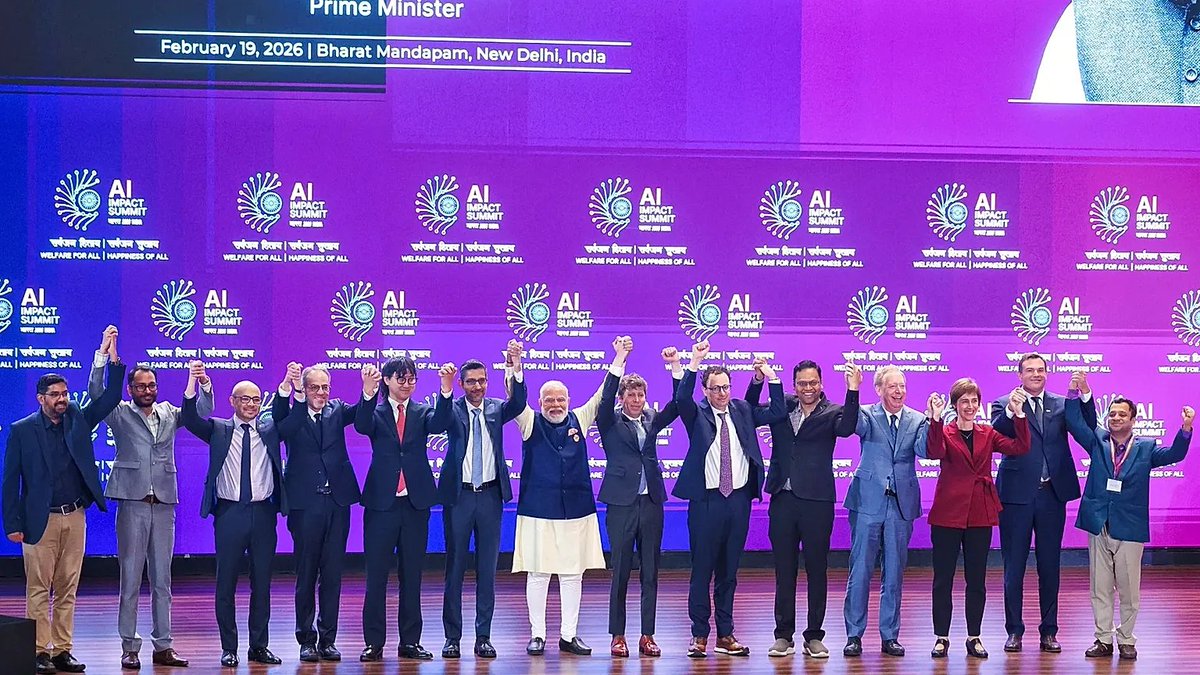
My 48 hrs on the ground for @FoxNews at the #IndiaAIImpactSummit2026

What’s unfolding here is far more significant than stated

- Indian tech has officially arrived on the global AI stage
- Along with a US-India full stack AI partnership with profound global implications
🧵 Image
Senior leaders are present from 50+ countries .

But in tech, only two stories are visibly dominant:
- India’s rapid indigenous AI buildout
- embedded American tech partnerships across the stack

Despite being the "alternative" to American AI, there are ZERO Chinese firms Image
India's DeepSeek moment happened 2 days ago - 1st fully homegrown multimodal, multilingual LLM by @SarvamAI beat Gemini, GPT at India-specific tasks. Their event drew more attendees than the Paris AI Summit!

Indian moonshots tackling everything from compute to LLMs are rising.
Read 15 tweets
Jan 31
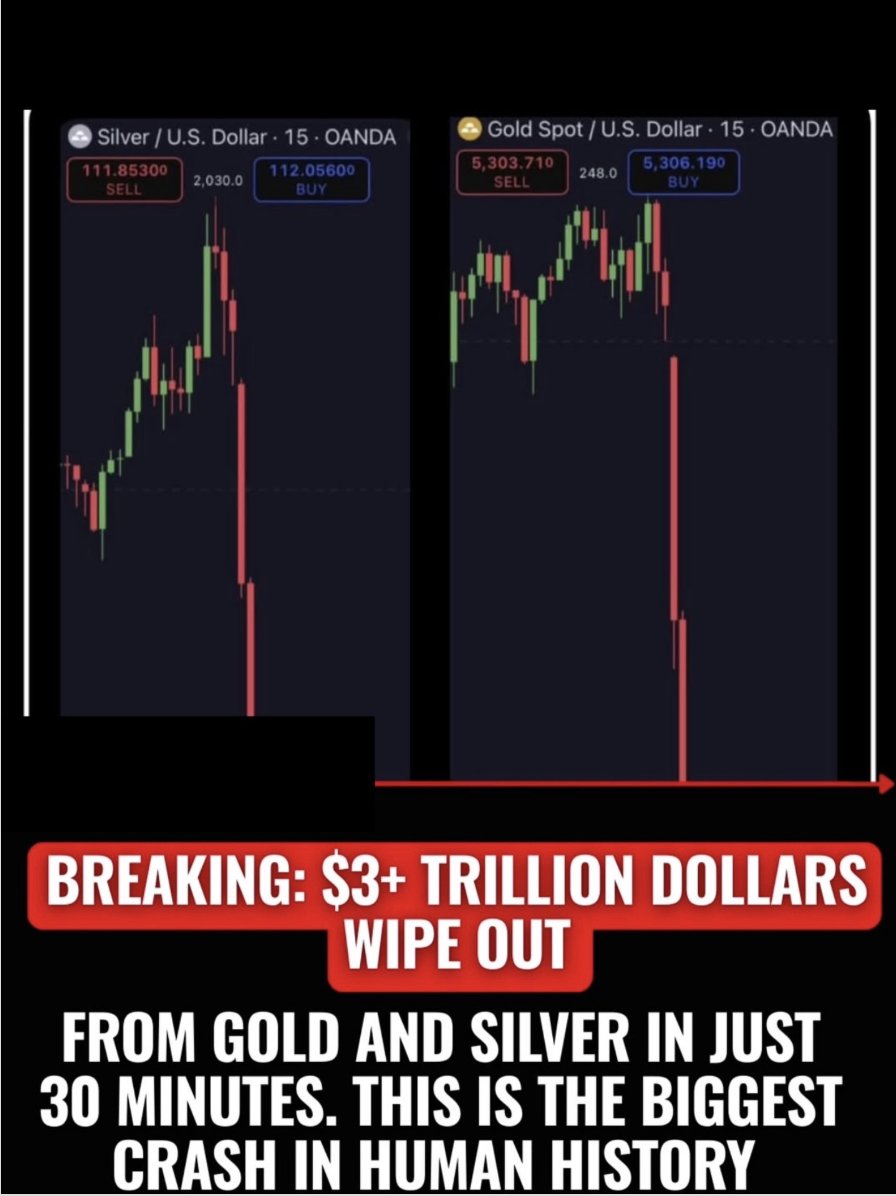
The gold and silver crash wasn’t a coordinated plot by Wall Street or governments.

Kevin Warsh wasn’t the cause — just the match.

As Ray Dalio warned, capital wars are here — and we likely just witnessed one.

The sequence matters. I’ll walk through it 🧵 Image
For decades, global finance ran on one quiet habit:

Japan lent money for free.

Borrow yen at ~0%.
Buy anything else.
Keep the spread.

Hedge funds, pensions, commodities — trillions leaned on this.

Japan was the rich grandmother who never asked for it back.
On Jan 20, that changed.

PM Sanae pushed for fiscal expansion to help the Japanese middle class & strengthen defence.

Long-term yields on the yen jumped.

Cheap yen stopped being cheap.

Suddenly savers could earn real returns & Japan's capital started returning home.
Read 8 tweets
Jan 10
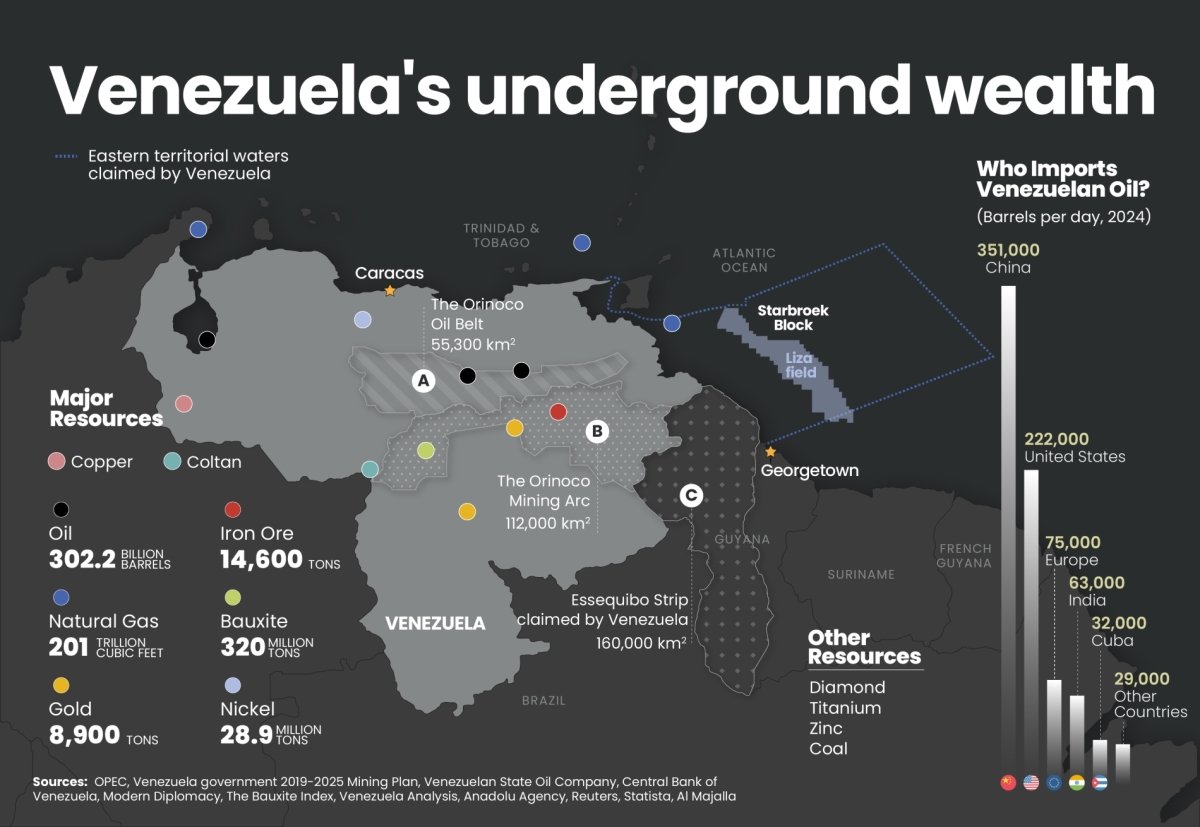
Everyone says Venezuela is about oil, gold, and rare earths

But the math doesn't math. Each burns billions for America and goes nowhere fast

Instead, the true White House strategy seems far more novel. They aren't lying—but it's also not what you think 👇🧵 Image
2/ To understand this better first let's delve into each resource.

To monetize a resource you need: verified geology → secure sites → power/logistics → enforceable contracts → processing/export routes → years of capex.

Venezuela fails that chain across almost everything.
The Venezuela “oil grab” story fails on economics.

Orinoco crude is extra-heavy, closer to oil sands than shale: high lifting costs, diluent blending, specialized refineries. A real ramp to 2–3M bpd needs $100–150B and 5–7 years.

That’s not "loot," more like a capital sink.
Read 10 tweets
Nov 3, 2025
Of all the clips from Trump’s 60 Minutes interview, one stands out for policy:

“We can be bigger, better, stronger just working with [China] rather than knocking them out.”

China was one of Washington’s last bipartisan consensus. Has the view changed? Some signals 👇🧵
Key security think tank - RAND’s October 2025 report surprised many. Once hawkish on China, it now calls for “muted rivalry,” urging engagement over escalation and pressing Taiwan toward restraint. Image
Public sentiment is shifting. The Chicago Council poll from Oct ’25 shows Democrats favor engagement with China while Republicans remain hawkish.

The bipartisan consensus on China as a strategic competitor is fracturing — creating new political room for recalibration. Image
Read 5 tweets
Oct 31, 2025
Everyone’s debating who won the Xi–Trump summit.

But won what? Tariffs? Soybeans? Optics?

The true contest is over future capacity — and the scoreboard isn’t linear.

China plays for throughput.
America plays for time.

Here's the asymmetry that actually matters 🧵 Image
The U.S. controls stacked chokepoints:

EDA software (Synopsys, Cadence)

Lithography (ASML, Applied Materials)

AI chips (Nvidia, AMD, Intel)

If China falls behind in just one, it stalls in the stack.
America then doesn’t just lead — it compounds ahead. Image
China’s leverage is real — but it peaks on use.

-Tariff threats
-Rare-earth dominance
-Embargoes

Each flex accelerates substitution.
Each embargo justifies a new refinery, alliance, or export control.

Power that burns itself to be seen ≠ durable power.
Read 6 tweets
Oct 29, 2025
The U.S. isn’t rebuilding China’s rare-earth empire — it’s leapfrogging it.

Science, finance & alliances are converging into a multi-pronged strategy that could compress decades into years

The membrane story was just the start..🧵 Image
U.S. labs are rewriting the chemistry.

Membranes & protein binders can bypass solvent extraction — and now, proof is scaling:

@ucore (UURAF) has processed 4k tons under a DoD grant and is building a Louisiana plant by 2026

If it works, China’s moat is hit hard Image
The Pentagon isn’t just funding — it’s market-making.

A 10-year price floor & guaranteed offtake for MP Materials turned rare earths into an asset class.

Industrial policy as capital structure — Washington learned from Wall Street. Image
Read 6 tweets

Did Thread Reader help you today?

Support us! We are indie developers!


This site is made by just two indie developers on a laptop doing marketing, support and development! Read more about the story.

Become a Premium Member ($3/month or $30/year) and get exclusive features!

Become Premium

Don't want to be a Premium member but still want to support us?

Make a small donation by buying us coffee ($5) or help with server cost ($10)

Donate via Paypal

Or Donate anonymously using crypto!

Ethereum

0xfe58350B80634f60Fa6Dc149a72b4DFbc17D341E copy

Bitcoin

3ATGMxNzCUFzxpMCHL5sWSt4DVtS8UqXpi copy

Thank you for your support!

Follow Us!

:(