I’ve been off for a week but a Monday is a Monday and noticing must be had so…
#DidYouNotice how recently Arsenal often look worse when they’re winning games?
#DidYouNotice how recently Arsenal often look worse when they’re winning games?
There have been some good examples of this: the game against Man United where Arsenal looked relatively comfortable until they were 1-0 up at which point they immediately looked nervous; the 2-2 draw to Wolves when they gave up a two-goal lead.
But it also happened a little in this weekend’s game against Chelsea where going up 1-0 and then 2-1 both produced stretches where Arsenal looked less confident.
Of course, the psychological aspects of football should never be understated - especially by tactical analysts - but what really fascinates me is the way that psychological pressure also translates into tactical considerations.
That is precisely what I want to talk about today because I think there are tactical reasons for why Arsenal seem to lose a level of control in winning game states. But to get there, we need to talk some tactical theory.
Looking back over the last 15 years of European football, it’s interesting to chart the rise and fall of control as a means of dominating games.
For a long period, it seemed impossible to conceive of a world where the best sides weren’t able to control proceedings in- and out-of-possession.
But more recently what we’re seeing is a relative collapse of the control consensus brought about by opponents doing what they can to prevent this control from happening.
https://x.com/Jon_Mackenzie/status/1993321139154604446?s=20
One of the tools that has played an important role in this shift is man-to-man marking.
With teams refusing to allow their opponents to dictate play with the ball, many sides are much more willing to go man-to-man around the ball to reduce any time and space that a ball carrier might have.
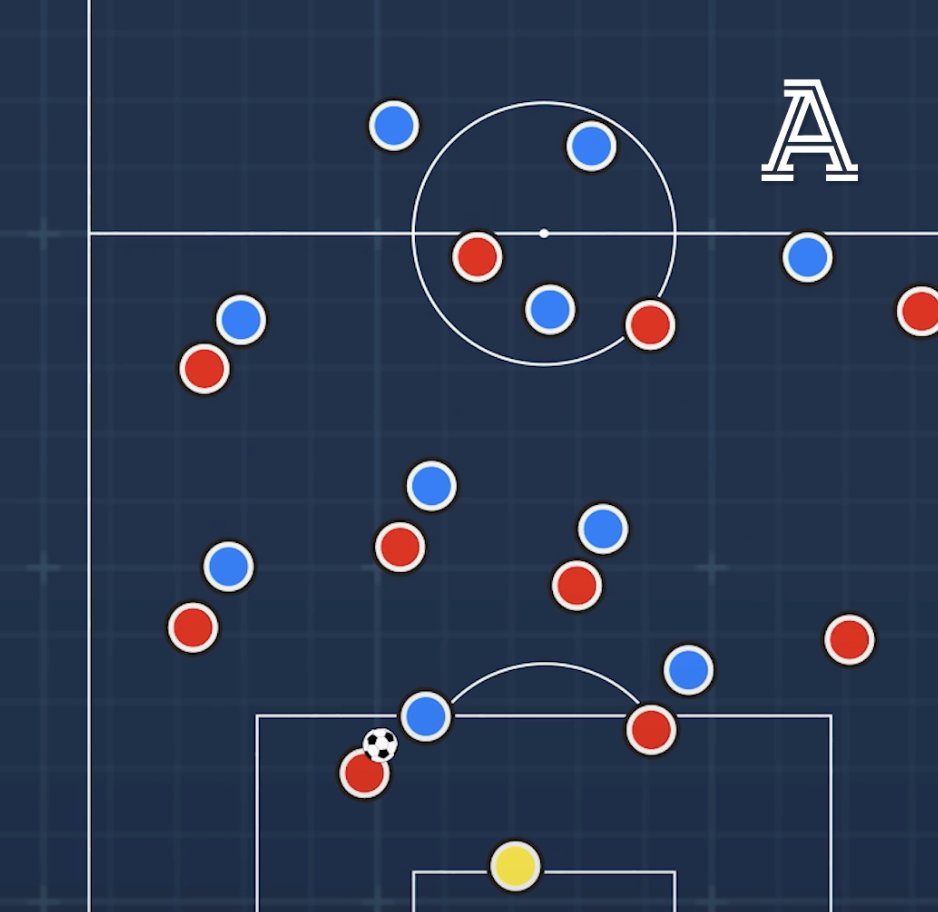
As a result of this, teams find it much harder to control the game through possession but alternative solutions have emerged to counteract this rise of man-marking.
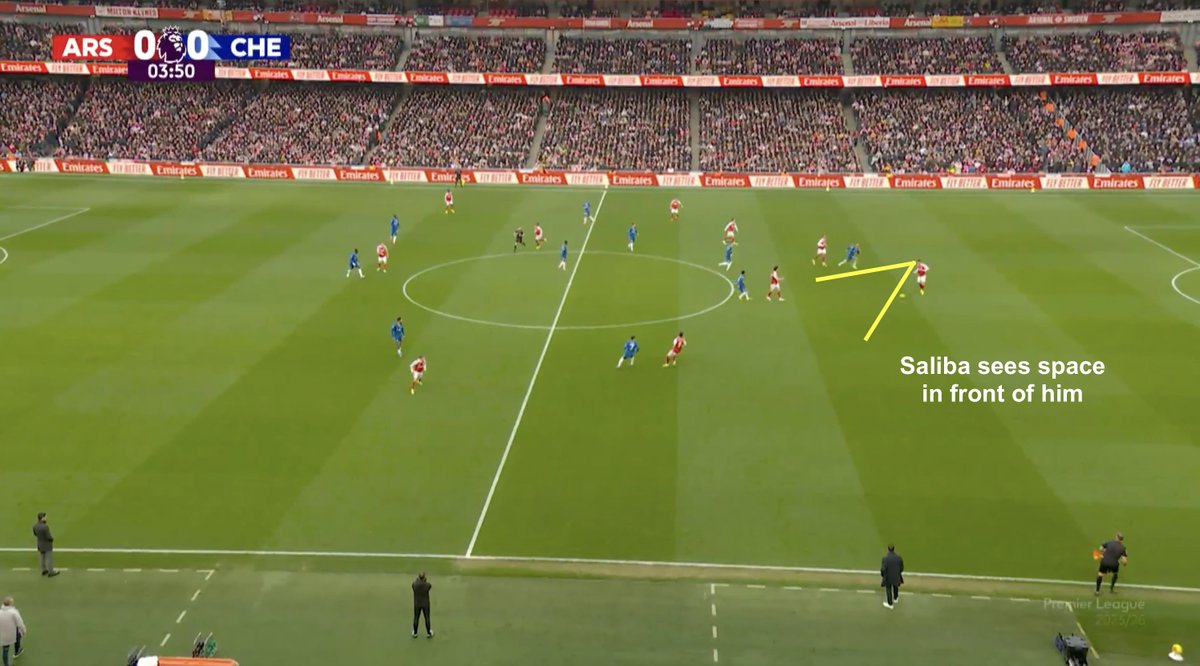
These approaches are focused around the idea of generating “separation” or “distance” from man markers in order to create space in time (that is, the space might only open out momentarily and so exploiting this space will rely on timing).
We saw Arsenal using some of these approaches in the game against Chelsea.
In this example, William Saliba carries the ball into space to create tensions in the Chelsea man-to-man structure:
In this example, William Saliba carries the ball into space to create tensions in the Chelsea man-to-man structure:
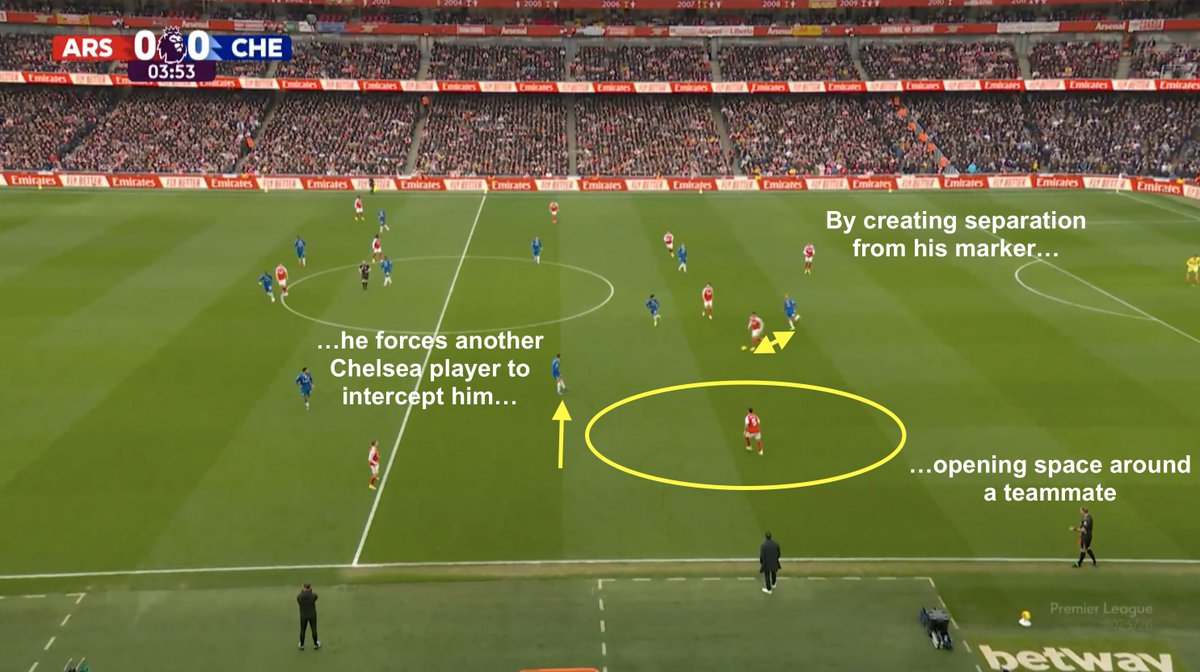
Another way of generating this separation is through players rotating positions; literally shifting around in a bid to gain a yard of space on their marker or maybe to create confusion in their opponent’s defensive structure. Here’s an example sequence from the Chelsea game:
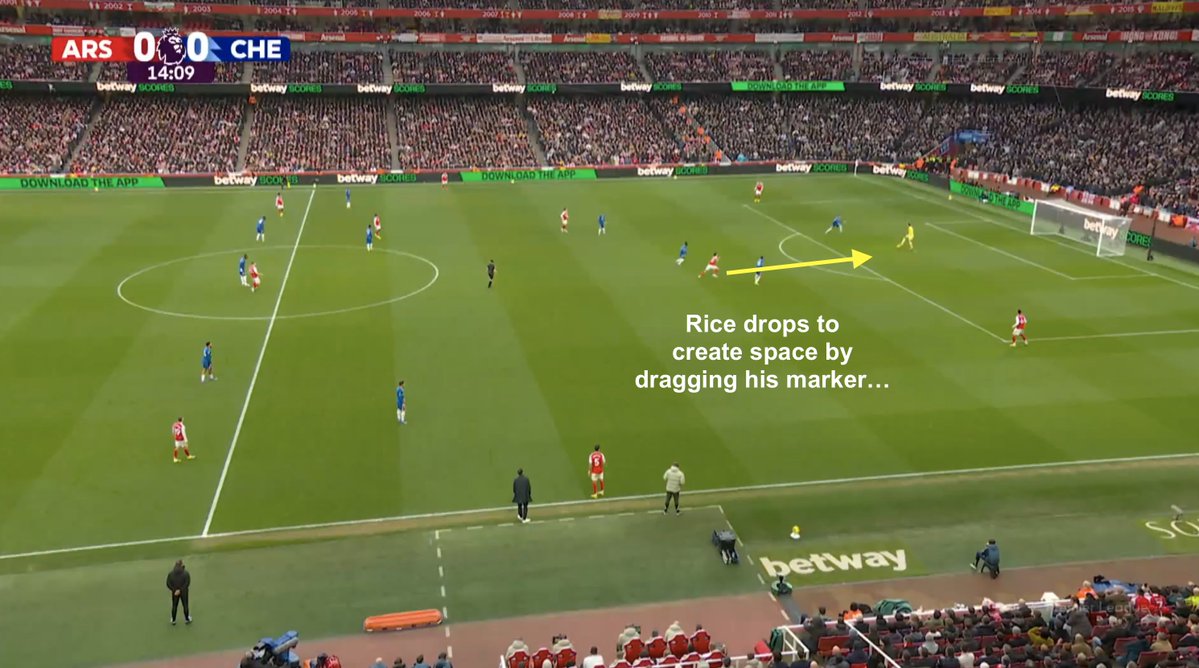
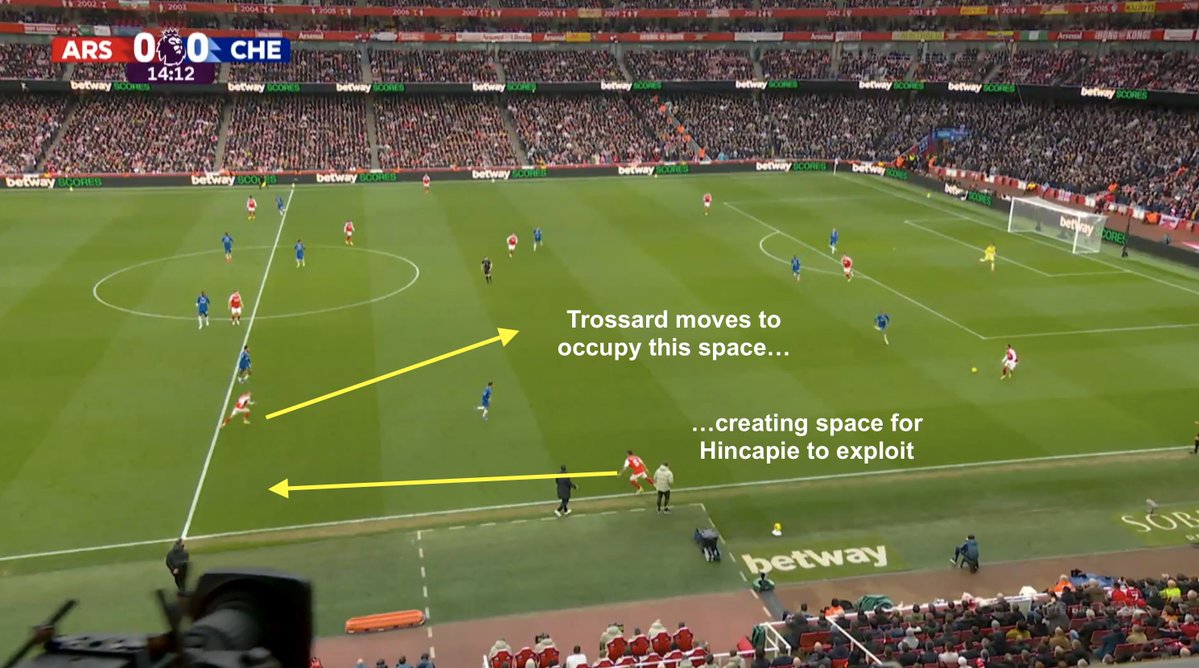
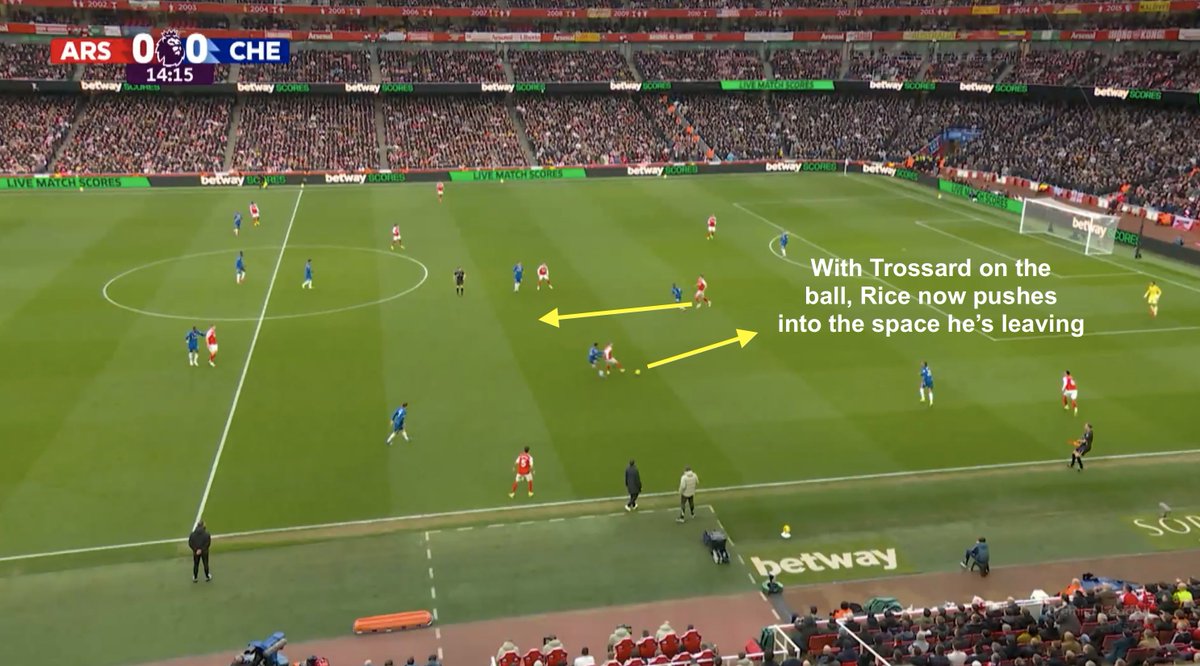
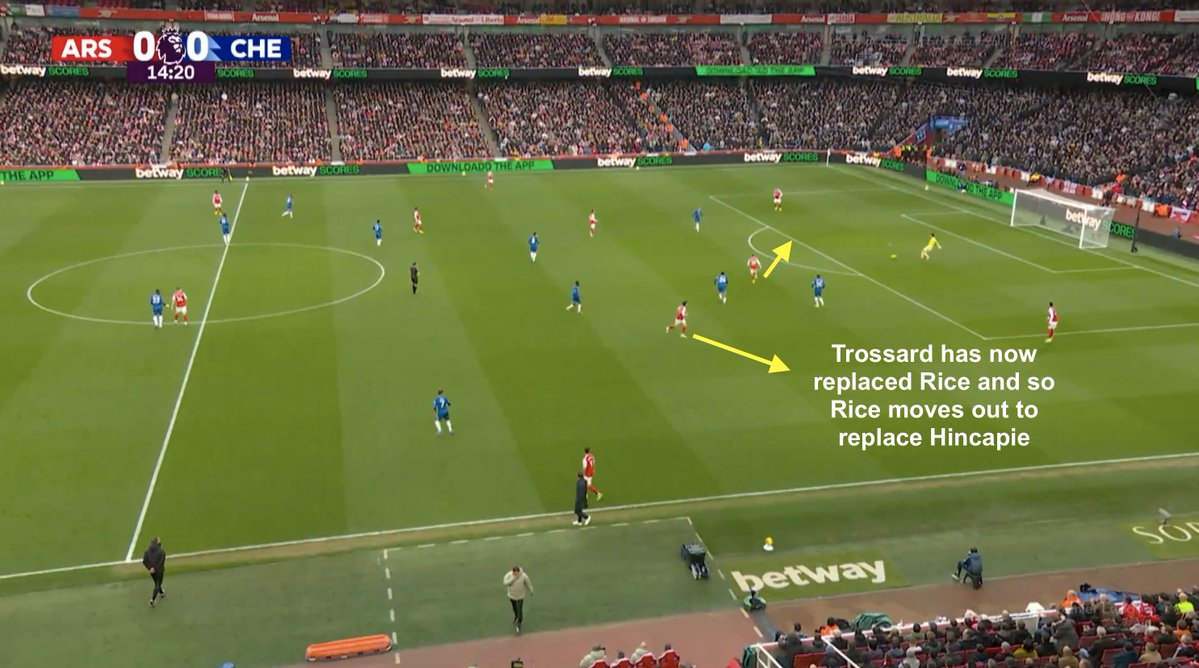
Here's how Arsenal end up:
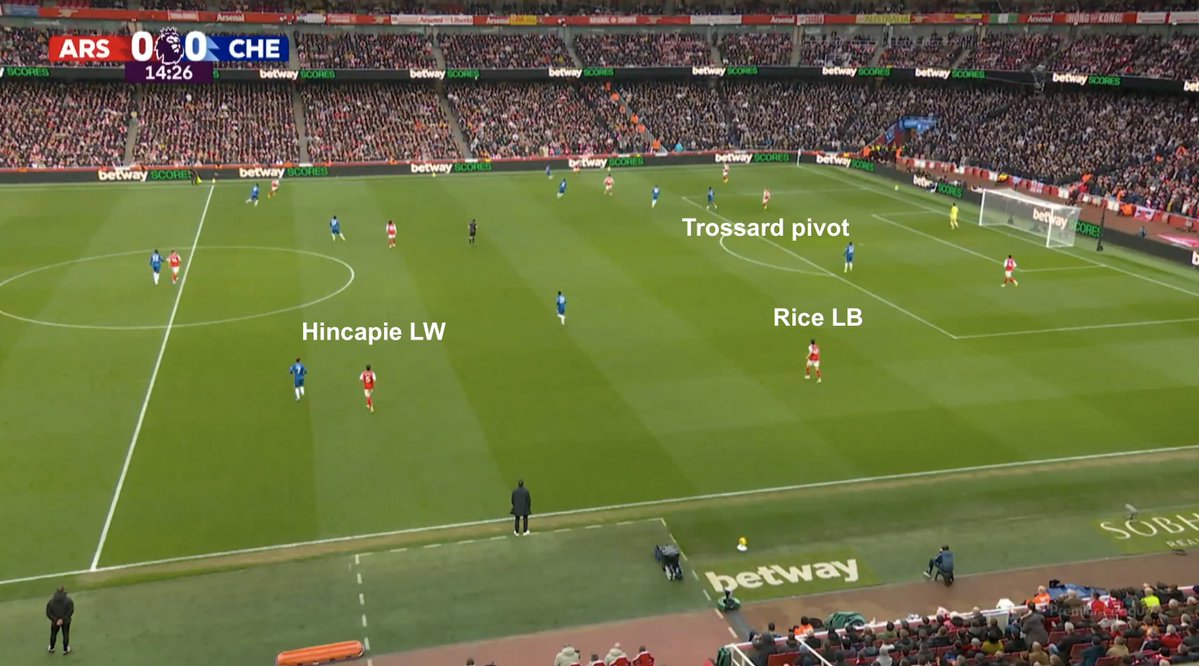
(As a bonus, here’s an example of Hincapie making the universal sign for ‘substitution’ to show Rice they need to switch positions back).
Hopefully this sequence should make it clear why Arsenal are often so good in possession.
In principle, these fluid movements in which the players create space and fill space, generate these moments of space in time that we were talking about which allows them to control the ball even in a man-to-man age.
But there is a potential problem here: while fluidity might be good in possession, it’s much less beneficial out of possession where solid structure is important, esp when it comes to defending around your box. In other words: possessing the ball well in the modern game is RISKY.
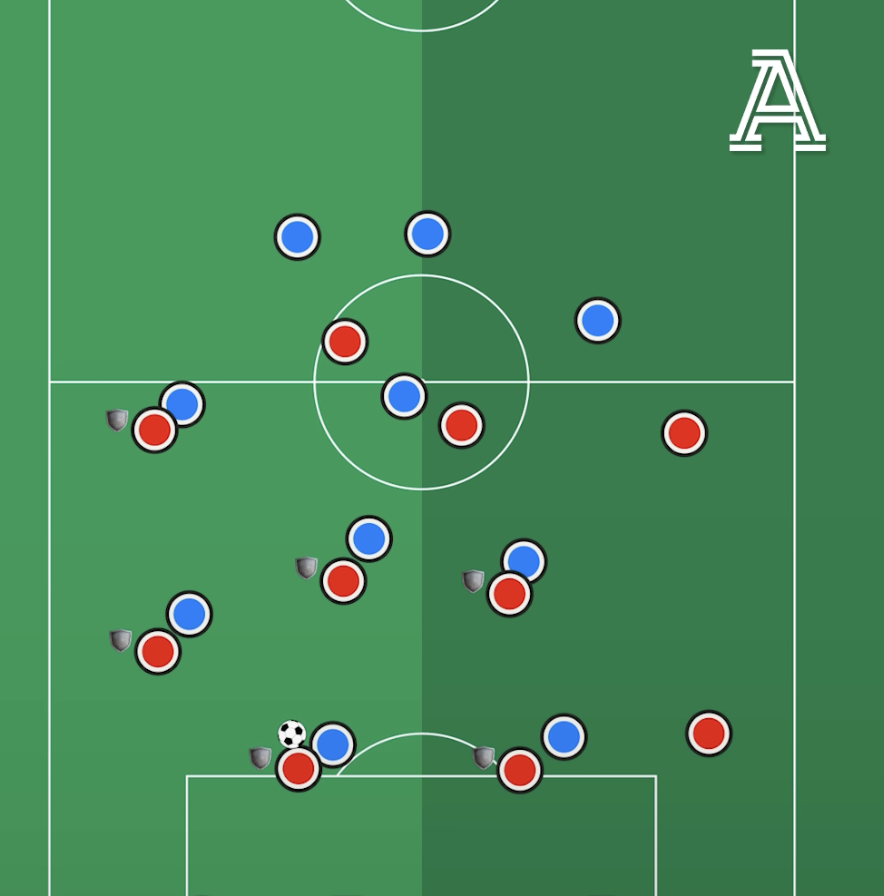
This means that any team who uses rotational concepts in possession will be faced with a question: where is the balance between fluidity in possession (and therefore good possession) and structure out of possession (and therefore good defending)?
Often what will happen is that teams will shift their approach on the basis of game state, which means simply “certain states of the game will require different approaches than others”.
Interestingly, in recent weeks, one of these game state shifts that Arsenal seem to be impacted by is shifting into a winning game state i.e. being ahead in a game.
This makes a degree of sense on the basis of what we've already said. In states where Arsenal are not winning in games, they need to get into winning positions and the best way of achieving this is through possessing the ball well.
Aside: Obvs this is a simplification - there are many reasons to want to possess the ball well inc. from a defensive point of view.
But in this instance, it’s uncontroversial to say that Arsenal need to be winning in games and so, in level game states, they need to make sure they are creating enough to go ahead. End of aside.
Once a team are ahead, though, the situation changes somewhat. Now it’s less imperative that they’re good on the ball and arguably more important for them to be better placed to defend without the ball (or perhaps not as we shall find out).
What’s interesting is that we can see a bit of this in the way Arsenal play vs Chelsea. Once Arsenal go 1-0 up, their in possession play starts to feel less fluid at times and it’s interesting to ask why.
Here’s basically the only sequence where they *are* fluid positionally after going 1-0 up:
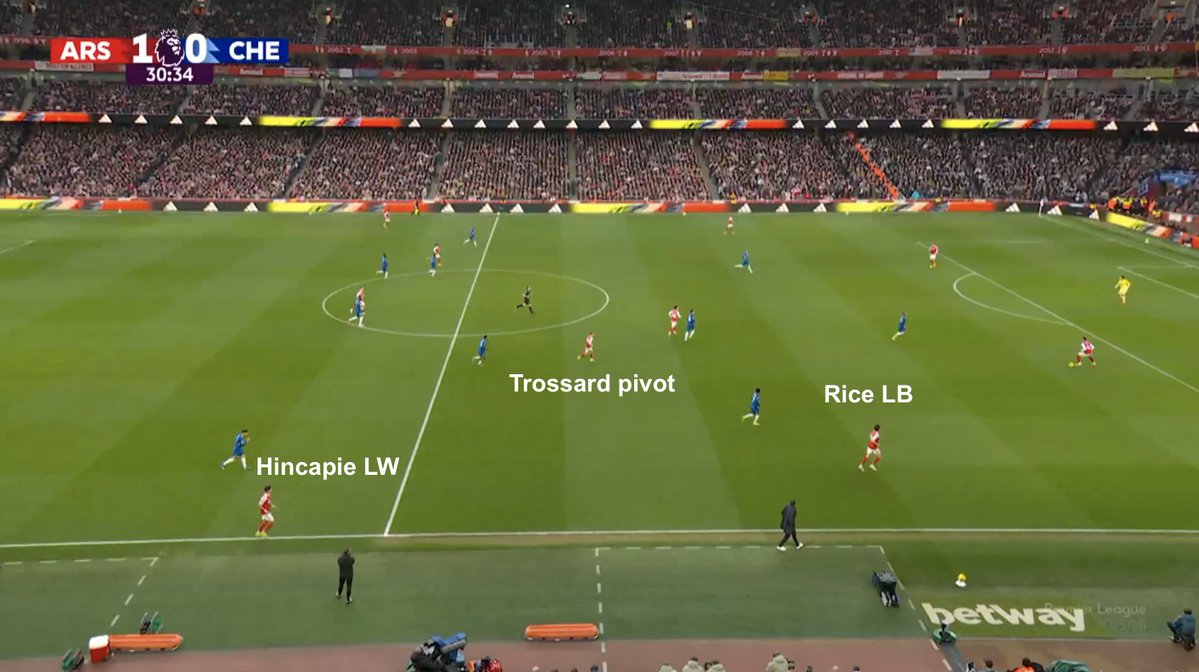
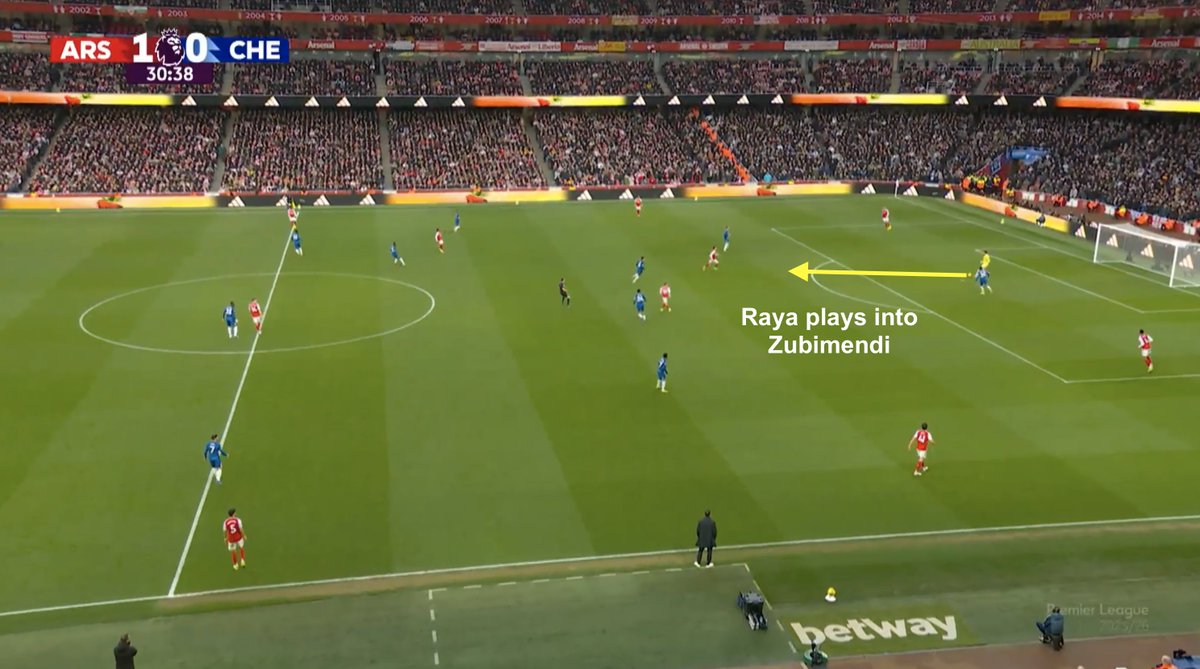
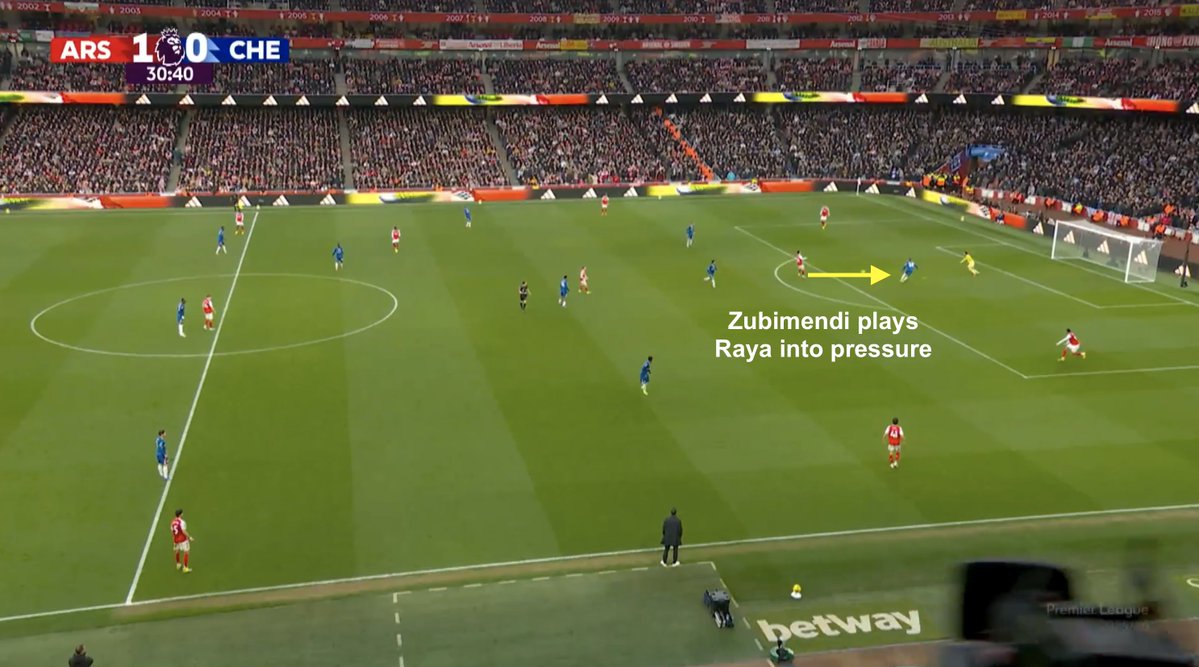
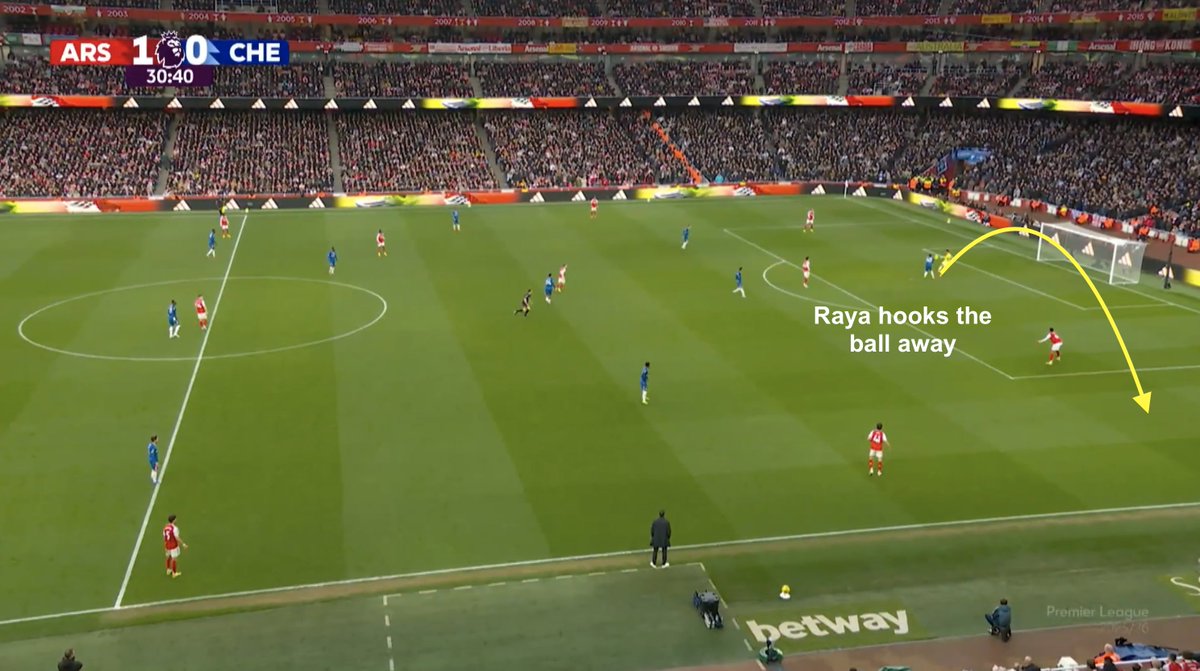
This is interesting because it highlights the tension between the risk of playing fluidly in possession with the risk aversion of not.
Of course, in this instance, the risk comes from attempting to build up vs a man-to-man opponent rather than from the fall out of being more fluid. But this clearly spooked Arsenal who quickly shifted the way they played.
For the rest of the 25 mins of the first half where they were 1-0 up, they were spending much more time controlling the game *without the ball*, looking to keep Chelsea deep in their own half and attacking quickly when they did get the ball back.
In this sense, they were less worried about controlling the ball and more concerned to play directly and counterpress if they lost it.
On my viewing, then, it was clear that Arsenal were giving up possessional control for out of possession control, and this continued into the second half, even when Chelsea were back level.
In the second half, the ball possession seemed much more conservative. Take this example:
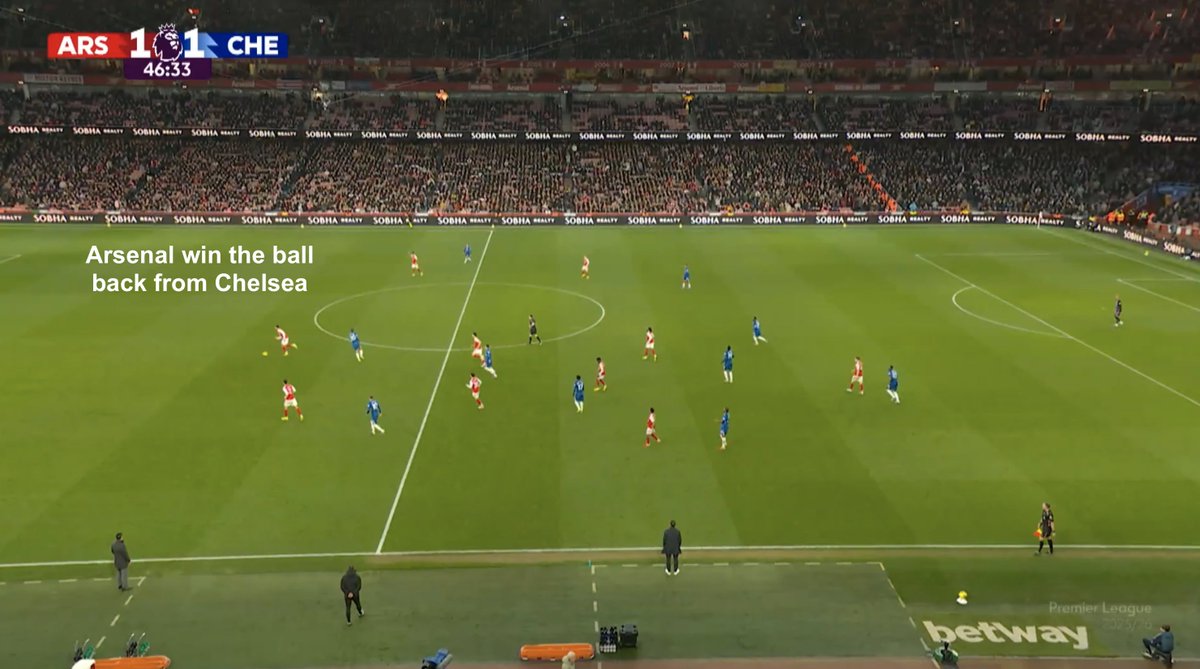
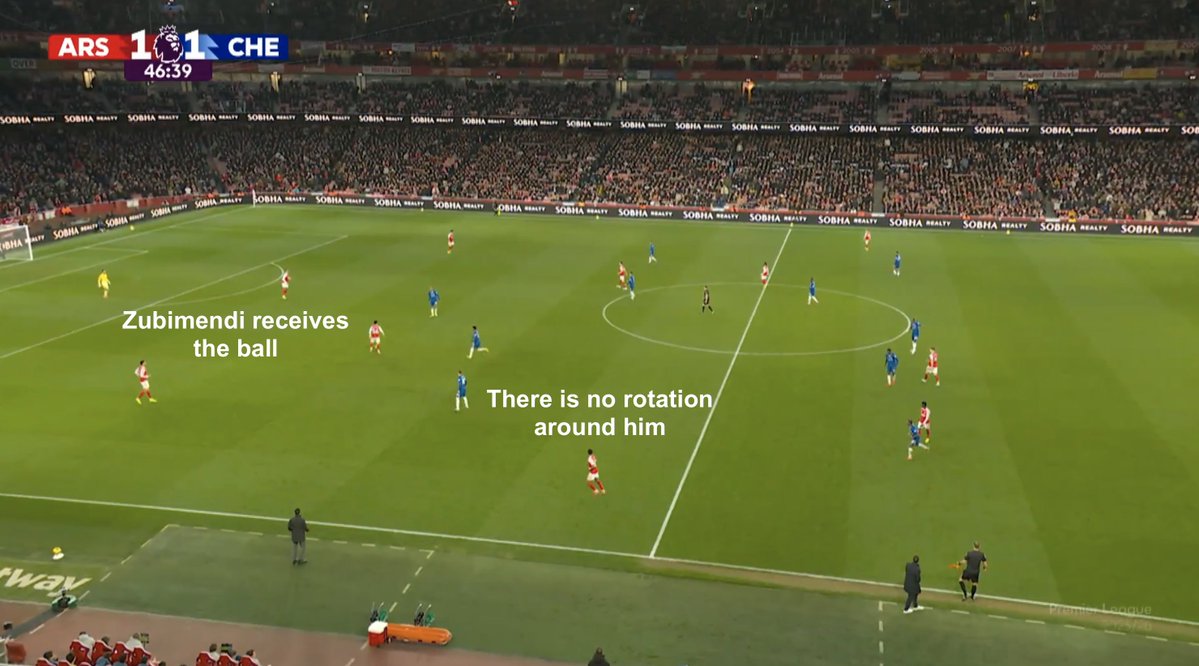
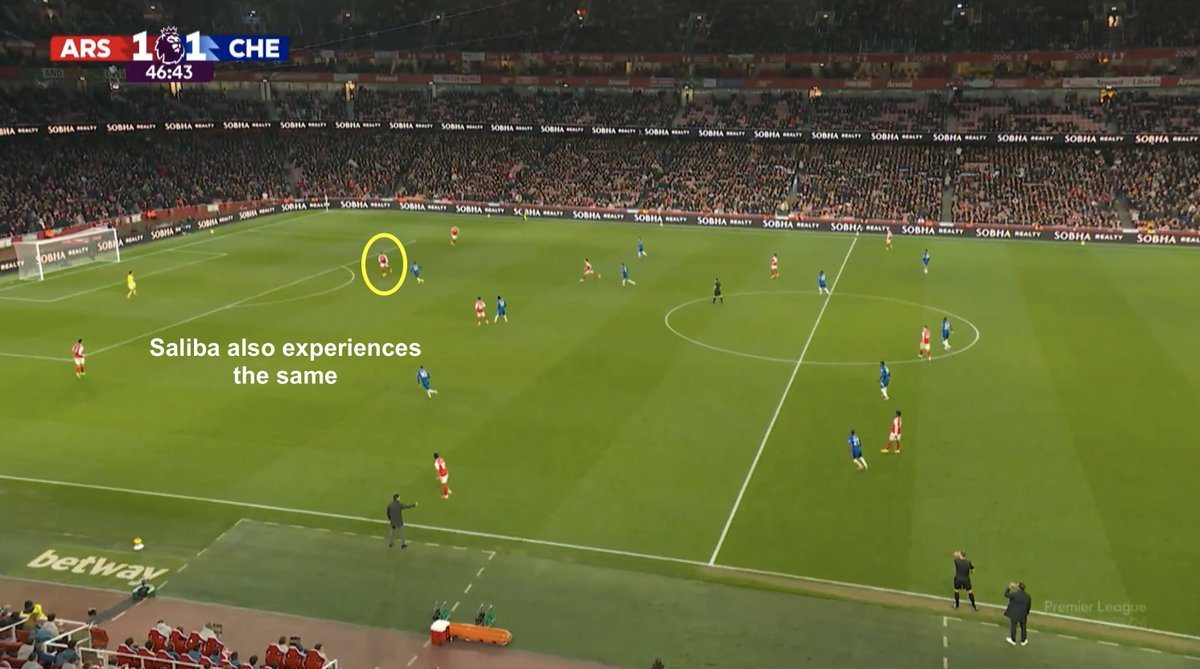
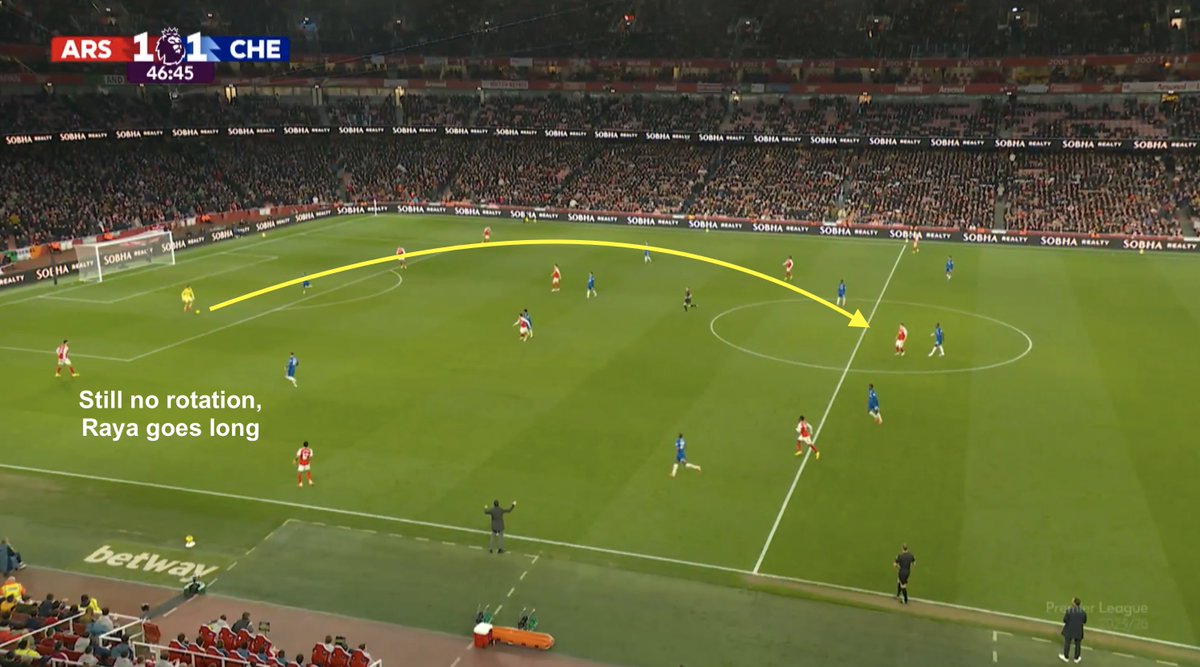
For the most part, it seems as though after half time, Arsenal are less concerned to possess the ball deep and so there is less of an effort to rotate to achieve this deep possession.
This makes sense if you consider that the solution to ball progression in this instance is to go long. And if you go long, you want to make sure your team are well set-up to counterpress.
This means you care more about retaining structure than achieving fluidity within that structure with the risk of the structure collapsing.
We’re back at that conundrum again: do you want to generate control with the ball and risk conceding? Or do you want to prevent the chance of conceding and so reduce in-possession control?
What is interesting to me here is the idea that as time goes by this season, it seems like Arsenal are starting to prioritise out-of-possession control over in-possession control and the result is often not convincing.
Compare the first half numbers vs Wolves with the second half numbers. It's stark, isn't it...
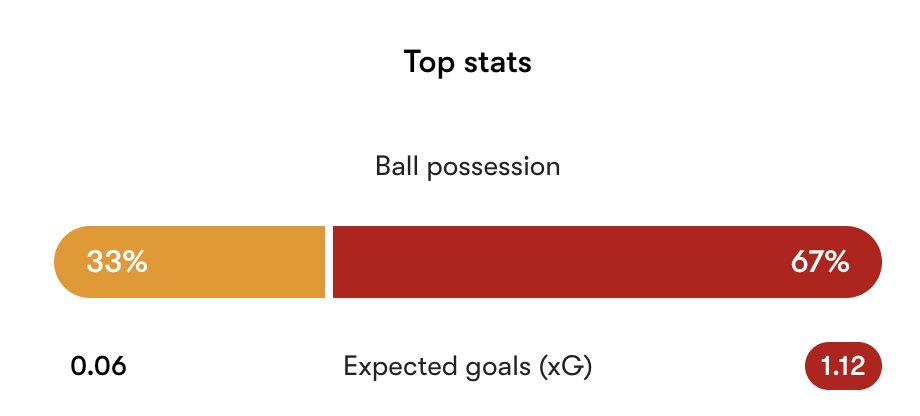
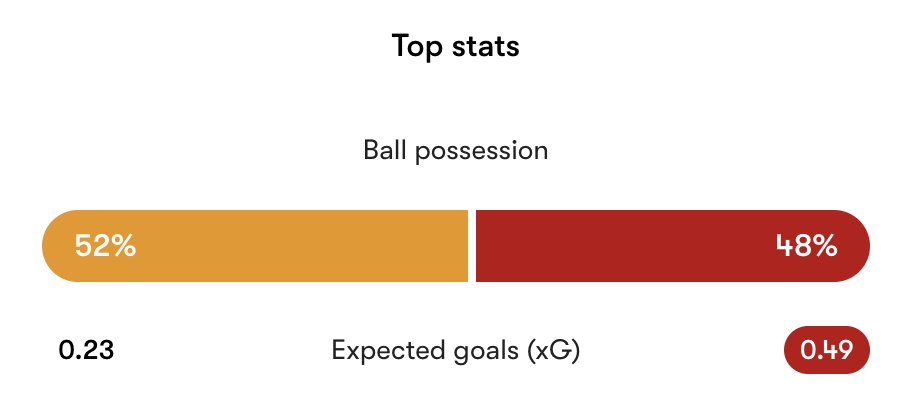
As they approach the finish line this season, the deeper they go into games, the less possession control they seem to have. Versus Chelsea, Chelsea managed to put up more passes with 10 men than Arsenal managed.
So what's going on here? Well it seems to me that Arteta is becoming increasingly wary of the risks involved with possessing the ball well.
As a result, Arsenal, particularly in winning game states, are more likely to prioritise structure over possessional flexibility and the result is that they’re unable to control games and leave themselves open to opponents getting back at them.
Where does this leave us? With the age-old problem - is it better to possess the ball well? Or defend well? Of course, the answer to this question is not mutually exclusive: by possessing the ball well, you can often defend well.
Right now, Arteta seems to be erring on the side of caution and prioritising the defensive side. But counterintuitively, it seems to be making Arsenal worse at defending in games.
By allowing the opposition more of the ball at the end of games, Arsenal are making it easier for them to take the initative, progress the ball easily, and generate dangerous chances which, at +1 game states, is a risky approach. Rewatch inj time vs Chelsea if you don't belive me
So perhaps, if Arsenal are going to finally break their Premier League hoodoo under Arteta, they need to be more brave and look to possess the ball well. And if they do so, they might find it easier to defend with the ball and control these games where they start out so well?
Arteta's Arsenal are often beaten with the stick marked "you want too much control". But the irony is, in recent weeks, the problem is that they're not controlling games enough.
If you like videos and not engaging your brain for more than 60 seconds, try this:
One of my favourite Arsenal analysts, @RohanJivanAFC, has been tweeting about this topic too recently. If you want more in-depth stuff on this, go and check out his content.
• • •
Missing some Tweet in this thread? You can try to
force a refresh