The Perfect Storm: EU Storage Hits 30% Threshold as Qatari Supply Vanishes
Let’s talk about the dramatic situation of EU gas storage, which dropped below 30% the same day Iran struck Ras Laffan and Mesaieed, halting all Qatari LNG production.
🧵
Do coincidences happen in energy geopolitics? I honestly don’t think so. Yesterday, Iranian drones targeted and hit two of the largest facilities for LNG production in the world, paralysing Qatar’s LNG operations and causing exports to cease completely.
The Qatari Ministry of Defence has confirmed the strike, but state authorities are not disclosing the severity of the damage. This suggests we might be at the beginning of a prolonged period of reduced supplies coming from the Middle East’s largest exporter.
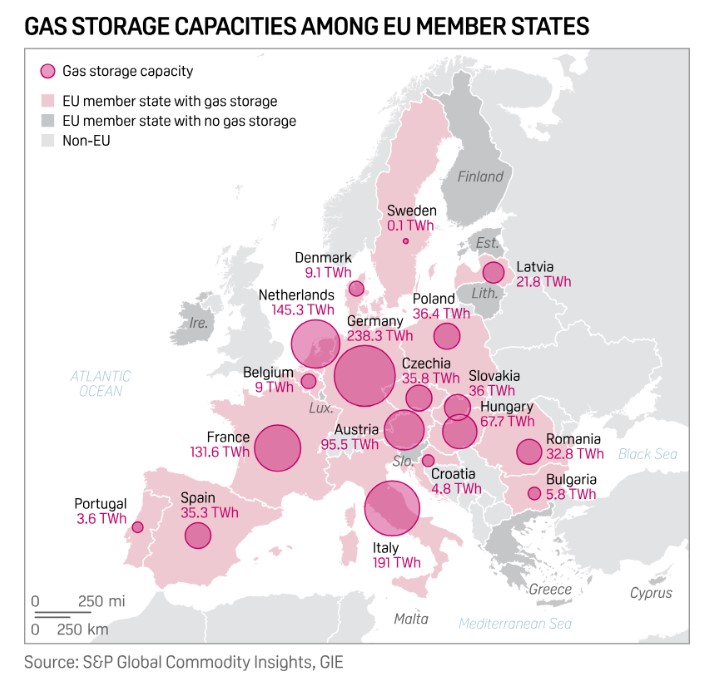
In parallel, EU gas storage levels dropped below the 30% threshold yesterday. This is more than eight percent below last year and just 1.5% above the levels seen on March 1, 2022, only days after Russia invaded Ukraine.
The paradox is that, at that time, the EU was still receiving a large volume of Russian gas exports through various pipelines. Today it is not, and the continent is almost entirely reliant on LNG supplies to balance the market.
This is the very supply that can no longer flow from Qatar. It is no surprise that TTF front-month gas prices—the EU price benchmark—surged by 39.5% yesterday and continue to climb by 37% this morning.
There’s a great deal of irony in the coincidence, but only if you believe that Iran struck Ras Laffan randomly.
🚨 The "Mini-War" in the Gulf isn't over—it’s just hitting a dangerous new phase.
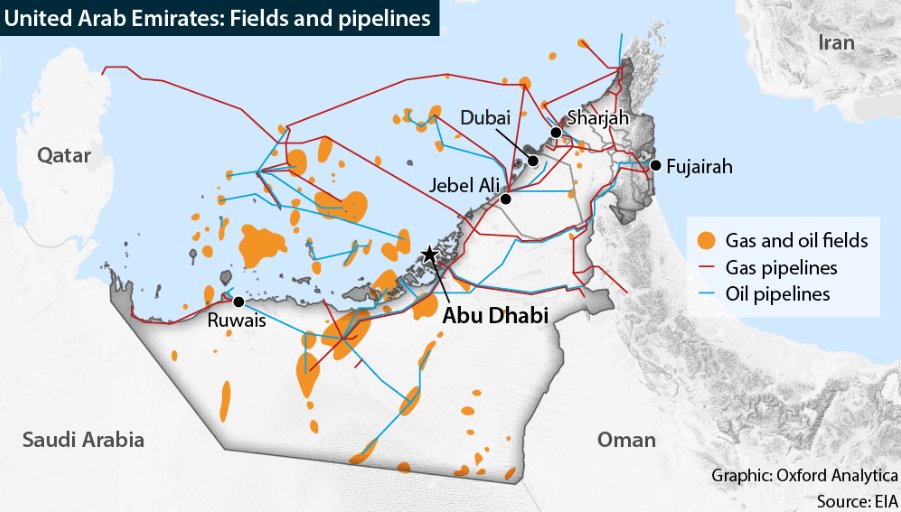
While markets celebrate a "pause," the UAE’s multi-year strategy to bypass the Strait of Hormuz is under direct fire.
A thread on why "Project Freedom" is failing.
🧵 #EnergyGeopolitics #OPEC #Oil
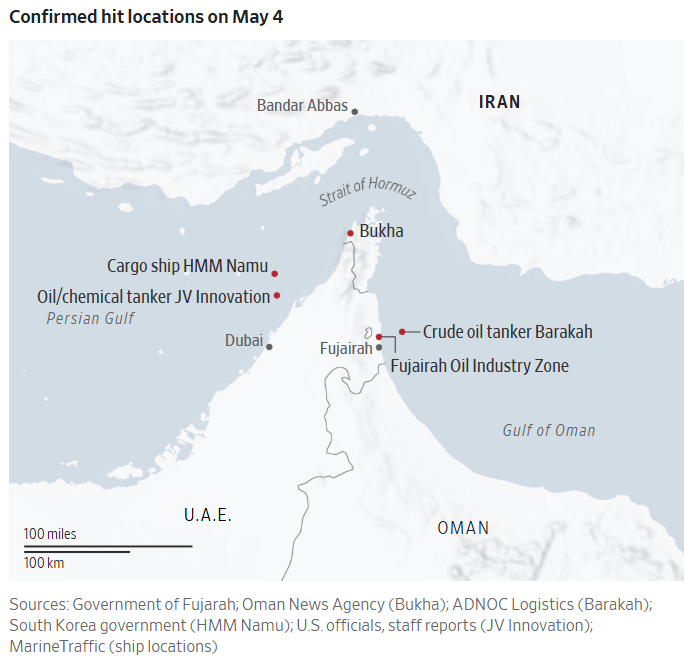
Trump says it’s a “little detour.” Marco Rubio says the war is over. The reality? Thousands of ships are still trapped, and Iran just proved that the UAE’s "fail-safe" Fujairah terminal is well within reach of their drones.
For years, the UAE played a masterful game of "Strategic Hedging"—balancing trade with Iran while hosting U.S. assets. That space is shrinking. Targeting Fujairah isn't just a military strike; it’s a message that hedging is no longer an option.
The map of the collapsing ceasefire in the Strait of Hormuz signals an energy crisis at every turn.
We are nearly 24 hours past the most dramatic moments since the inception of the “ceasefire” between the U.S. and Iran.
🧵
A U.S. Navy convoy reportedly traversed the "red line" imposed by Iran around the Strait of Hormuz to enable two American-flagged vessels—one of them a Maersk vehicle carrier—to navigate through the Strait.
The vessels, along with the military escort supporting them, came under
attack from drones and missiles; these were reportedly intercepted or failed to cause major damage to the deployed units.
However, if this was intended as proof that the U.S. could "liberate" Hormuz without being targeted, the initiative has largely failed.
With thousands of
Russia is set to halt Kazakh oil supplies to Germany, cutting off one critical lifeline for the EU as it seeks alternatives to the volatile Persian Gulf.
Moscow is intensifying its "Grand Oil Game," exploiting glaring EU vulnerabilities in the face of the ongoing Iran crisis.
🧵
According to several industrial sources, the Russian state-owned transport giant Transneft has issued formal notices to both Kazakhstan and Germany regarding "adjustments" to the oil supply schedule.
Following the EU’s ban on Russian crude, Germany significantly increased imports
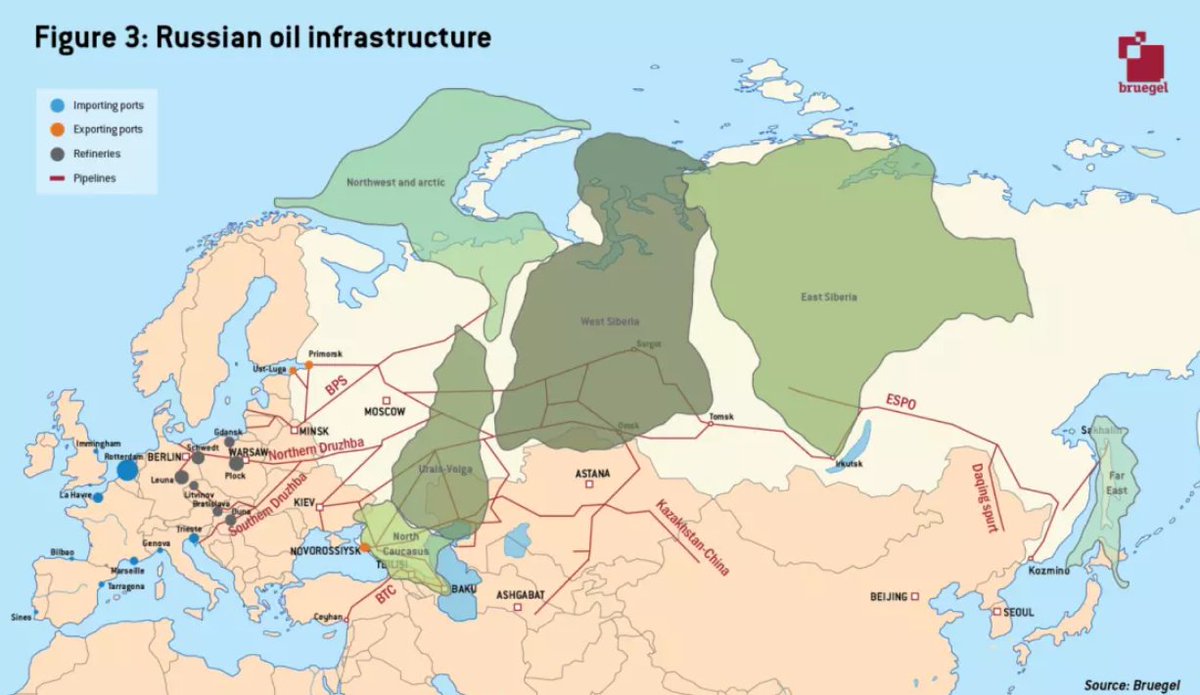
from Kazakhstan to fill the void. However, this oil must transit through the Soviet-era Druzhba pipeline—infrastructure built by Moscow in the 1960s to supply its then-allies in East Germany.
The paradox is stark: to receive Kazakh volumes, the German industrial heartland remains
Kuwait has just declared force majeure on oil exports from the Strait of Hormuz
No more oil or refined products will come from Kuwait, at least for the foreseeable future.
🧵
To confront the disruption created by Iran, which blocked the Strait of Hormuz, the Gulf nation has notified clients around the world that it won’t be able to supply oil.
The state-run Kuwait Petroleum Corp (KPC) has notified customers on Friday invoking a clause included in most
of the oil supply contracts to avoid paying feed for not delivering promised oil.
Tehran has literally put the KPC headquarters on fire and crippled its operations. Repeated drone and missile strikes on times, Kuwaiti infrastructure have caused severe damage, ensuring that oil
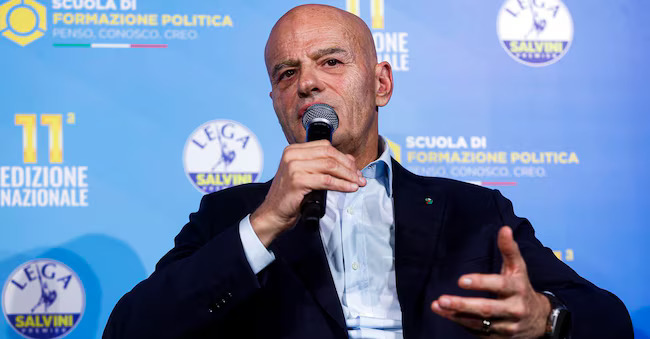
Claudio Descalzi, the head of Italy’s state-backed energy giant Eni, has just made a startling public declaration: Europe must suspend the ban on Russian gas in the face of the looming energy crisis.
Descalzi is the first head of a European Oil & Gas Major to take this stance
🧵
Amid the current energy crisis, he won't likely be the last.
The energy crisis triggered in the Persian Gulf by the U.S.-Israel conflict against Iran is arriving on EU shores, despite policymakers' attempts to mask the reality and avoid accountability.
Last weekend, Descalzi
attended a public event for the youth wing of the League, a right-wing party and key ally in Giorgia Meloni’s government. Taking the stage, he described the current situation as “the most important event in the last 40 years.”
He is quite simply right. The crisis we are
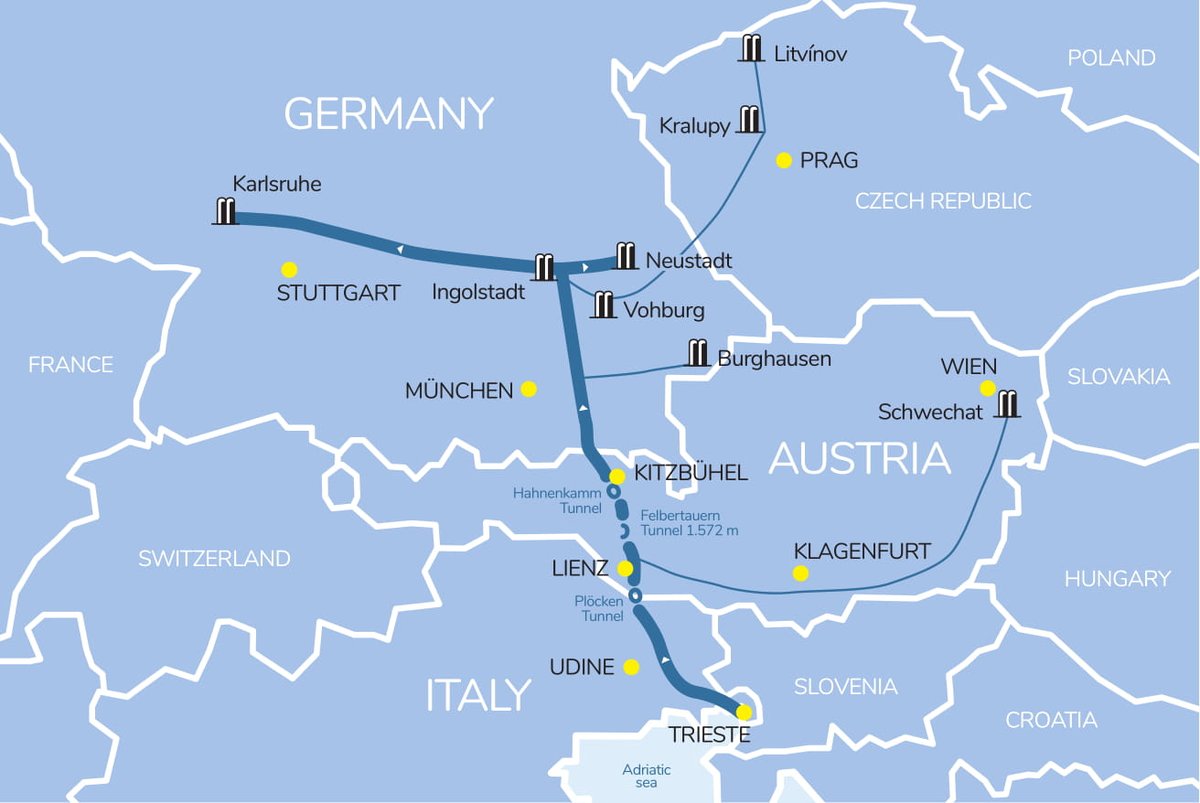
The TAL oil pipeline, connecting Italy, Austria, and Germany, has been sabotaged.
As the world’s attention remains fixed on the Strait of Hormuz and on the high-stakes negotiations beginning in Islamabad, a critical energy artery in Europe has been disabled.
🧵
The Transalpine Pipeline (TAL), which links the Port of Trieste to major refineries in Southern Germany, has been targeted. The most vital of these is the MiRO refinery near Karlsruhe, which alone provides approximately 45% of the primary energy consumption for the state of
Baden-Württemberg. Reports indicate that in late March—roughly 30 days into the conflict between the U.S., Israel, and Iran—electricity supplies from the grid to the Terzo di Tolmezzo pumping station in the Italian Carnia region were severed.
What appears to be a deliberate