1/x Insurance for ships is a complicated matter, and you've probably heard "P&I Club" being mentioned. What is a P&I club? A small🧵 
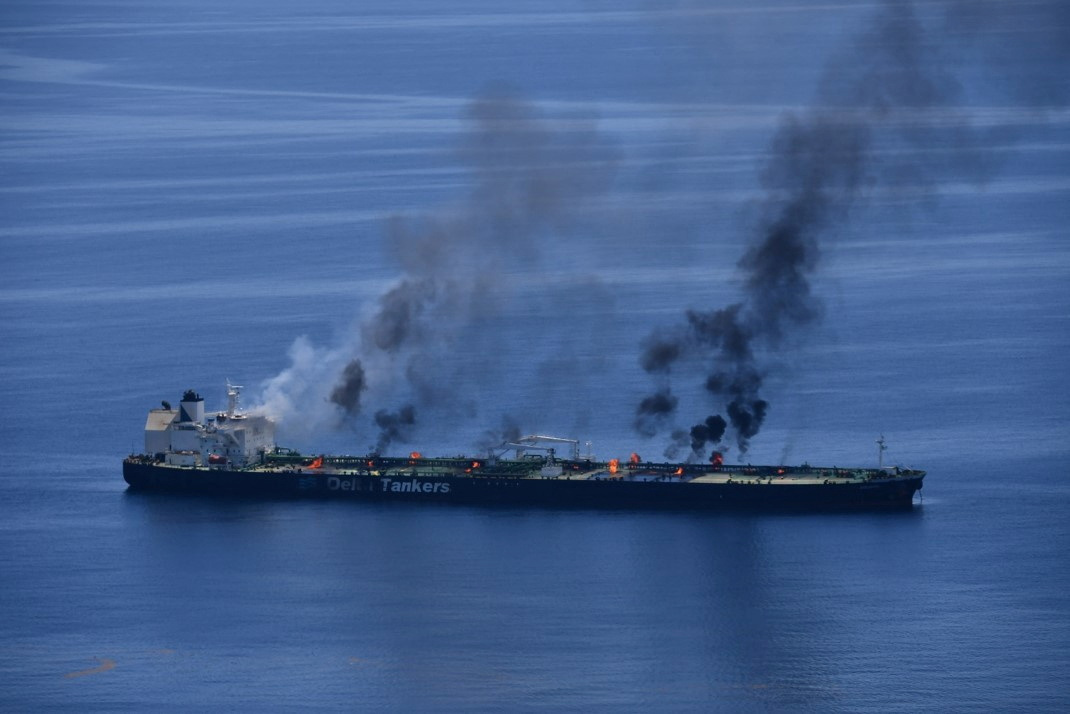
2/x P&I Club stands for Protection & Indemnity Club.
"P" = protection (e.g. certain damage to your own ship).
"I" = indemnity (reimbursement) for third-party liabilities from operating the ship, like injuring crew, damaging cargo, or polluting the sea.
"P" = protection (e.g. certain damage to your own ship).
"I" = indemnity (reimbursement) for third-party liabilities from operating the ship, like injuring crew, damaging cargo, or polluting the sea.
3/x So what is a P&I club? They started in 19th-century UK. Shipowners found regular commercial insurers too pricey, and those policies often ignored cargo damage or crew injuries from normal ship use. Owners were left paying huge claims out-of-pocket.
4/x Solution? They formed "hull clubs", mutual groups where shipowners insured each other. Everyone chipped in fees, shared the risks, and ditched expensive middlemen (commercial insurers). This mutual pooling cut costs and covered the gaps.
5/x Over time (as shipping grew, laws changed, liabilities exploded), these became today's P&I clubs. The core idea remained unchanged: shipowners pool risks together in non-profit mutuals. Members (shipowners) pay an annual "call", basically a premium/contribution.
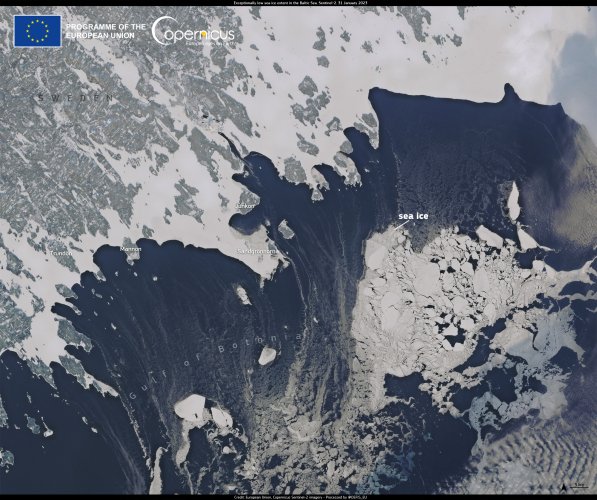
6/x Calls are due February 20. Why that odd date? Old tradition from the Baltic Sea trade: February 20 was roughly when winter ice melted, ports reopened, and sailing ships resumed voyages. So it became the "start" of the maritime insurance year.
7/x A P&I club is run by (and for) the shipowners themselves, true mutual insurance. Strictly non-profit: no shareholders taking profits. If claims in a year exceed collected calls, members pay extra (supplementary call). If claims are low, discounts/returns are possible.
8/x What do P&I clubs cover? Third-party liabilities not in standard hull insurance: crew injury/death, passenger claims, cargo damage/loss, collision damage to other ships, oil spills/pollution cleanup, wreck removal, fines for customs violations, etc. Big stuff!
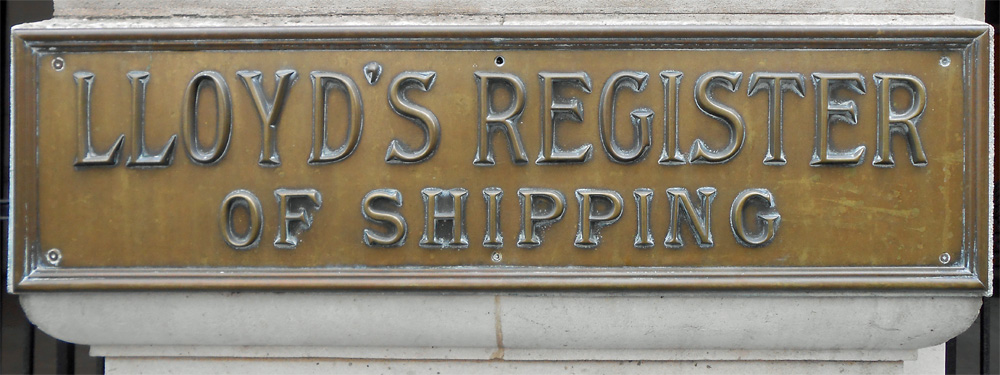
9/x Entry isn't automatic. Ships must be seaworthy, well-maintained, and classed by a society (like Lloyd's Register). Crews need proper training/certificates. Clubs often send surveyors to inspect vessels & operations before accepting (or to monitor existing members).
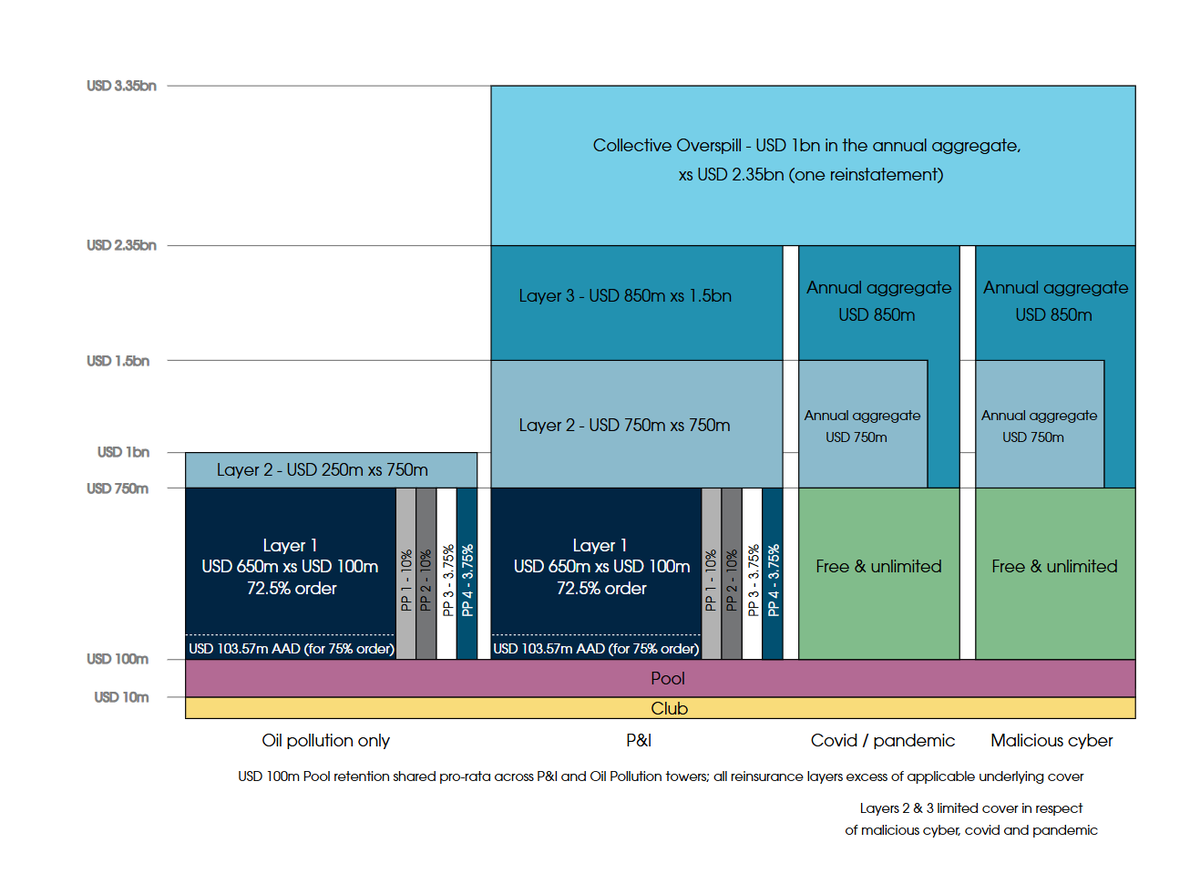
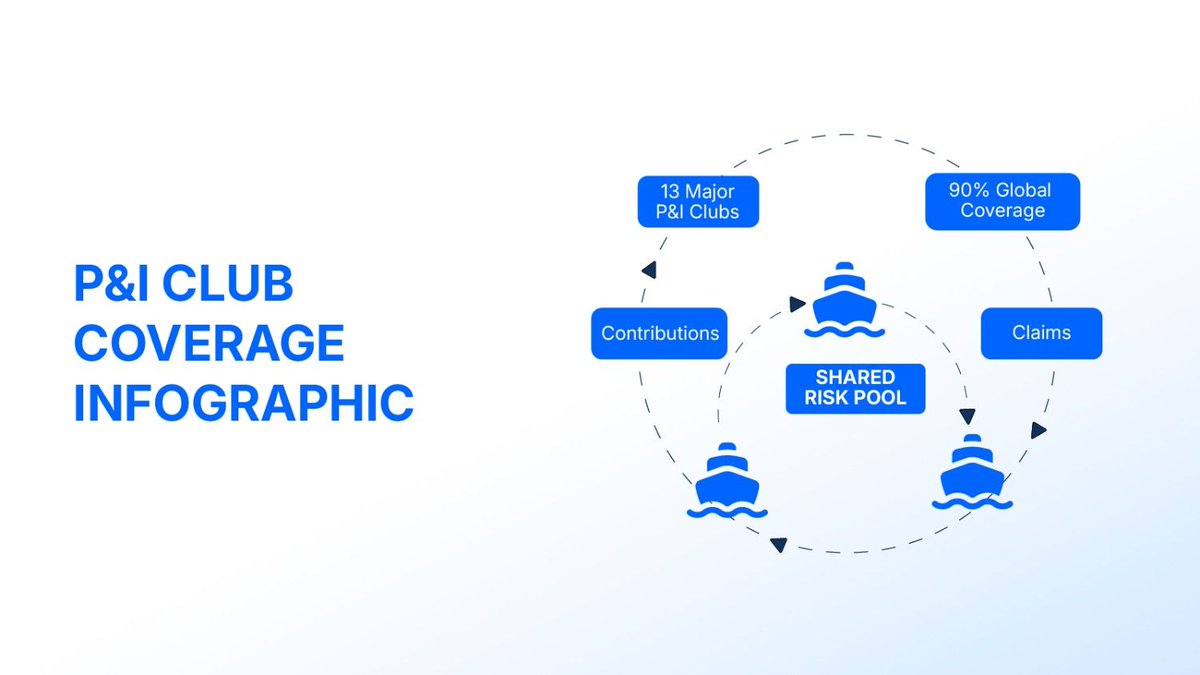
10/x Soon, single claims got too massive for one club (huge pollution disasters). So clubs pooled again: they formed the International Group (IG) of P&I Clubs, the 12 big ones covering +-90% of world tonnage.

12/x In the IG pool: Each club keeps the first $10M USD of any claim (after member's deductible). Anything from $10M to $100M is shared across all 12 clubs ($90M + $10M pool layer). Proportional to each club's tonnage share.
13/x Excess of US $30 million, the Pool is reinsured by the Group captive reinsurance vehicle, Hydra Insurance Company Limited. Hydra is a Bermuda-incorporated Segregated Accounts company in which each of the 12 Group Clubs has its own segregated account (or “cell”).
14/x This segregated cell fences assets and liabilities from those of the company or any of the other Club cells. Hydra covers the upper pool slice ($30M–$100M).
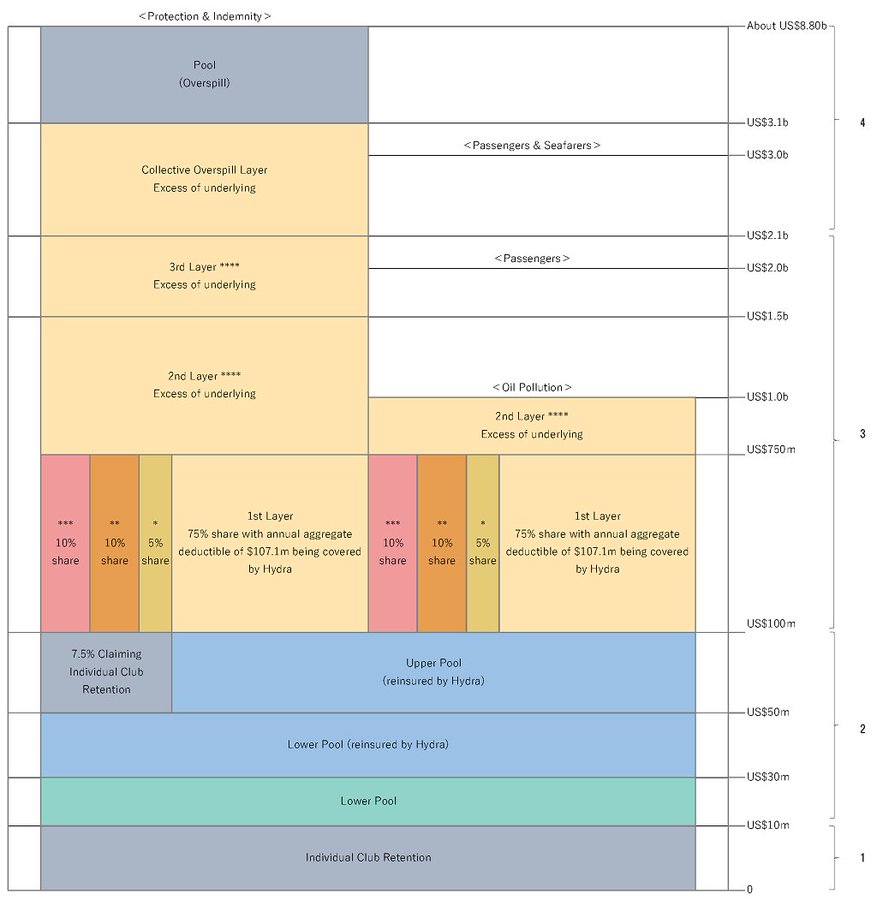
15/x Above $100M? It goes into a tall "tower" of commercial reinsurance: the Group Excess of Loss (GXL) program. For 2026/27, this provides up to $2.25B in three layers (Layer 1: $650M + $100M; Layer 2: $750M + $750M; Layer 3: $850M + $1.5B), bought globally.
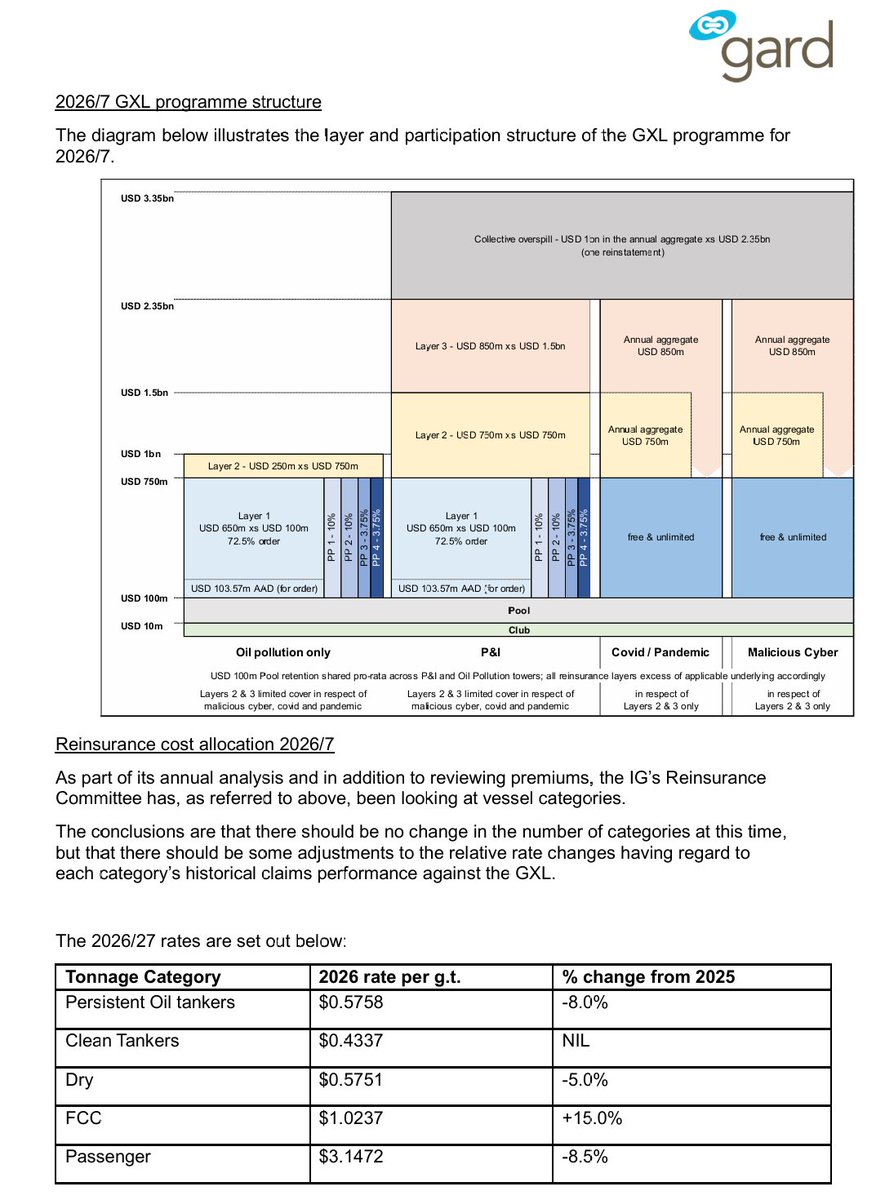
16/x Beyond the GXL tower? There's a final "collective overspill" layer ($1B + the $2.35B ceiling) where clubs share any extreme shortfall. The whole setup spreads mega-risks, so no single owner or club goes bankrupt from one bad claim.
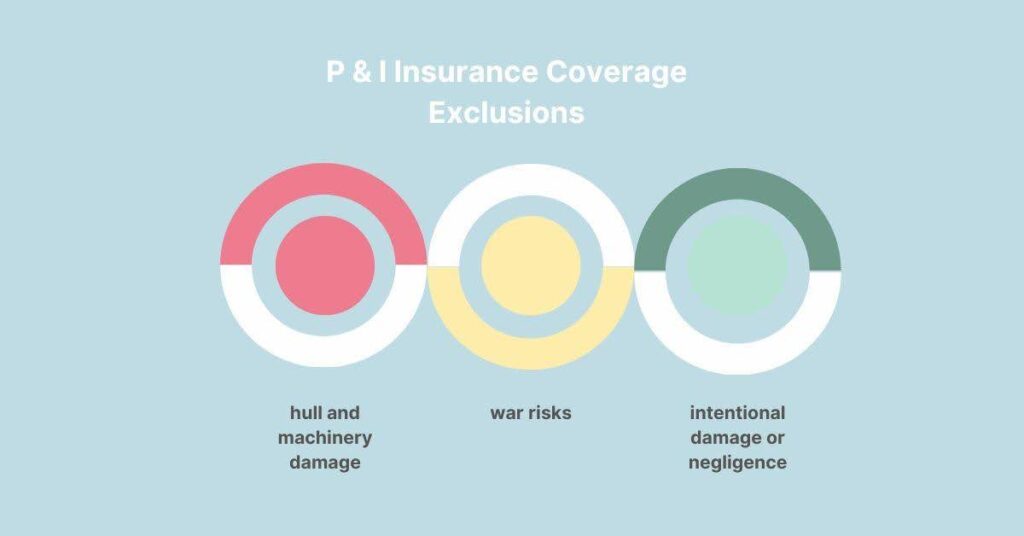
17/x Standard P&I policies do not cover war risks, including war, terrorism, piracy, strikes, and similar events. These risks are covered separately through war risk policies or add-ons, which are typically inexpensive, though premiums can soar in high-risk areas.
18/x War risk cover is often placed through specialist markets (e.g., London) or IG clubs' fixed-premium arms. It's reinsured heavily in a similar layered tower as the main P&I program (pool -> Hydra -> GXL excess layers).
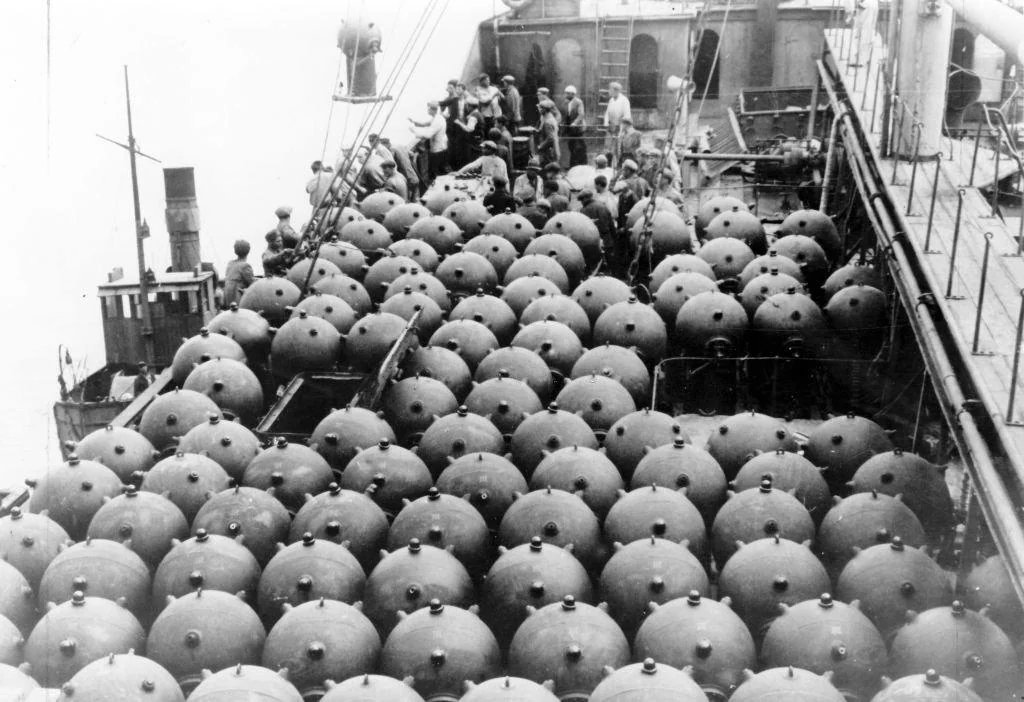
19/x Why separate? War events are unpredictable & potentially massive (e.g., mine strikes, missile hits, blockades). Pooling them with everyday P&I liabilities could bankrupt clubs if a major conflict hits. So war risks are "non-poolable" or specially reinsured.
20/x Clubs issued 72-hour cancellation notices (standard clause) starting March 1–2. Effective midnight GMT March 5, 2026: War risk cover auto-terminated for Iranian waters, Persian/Arabian Gulf, Gulf of Oman, and adjacent areas.
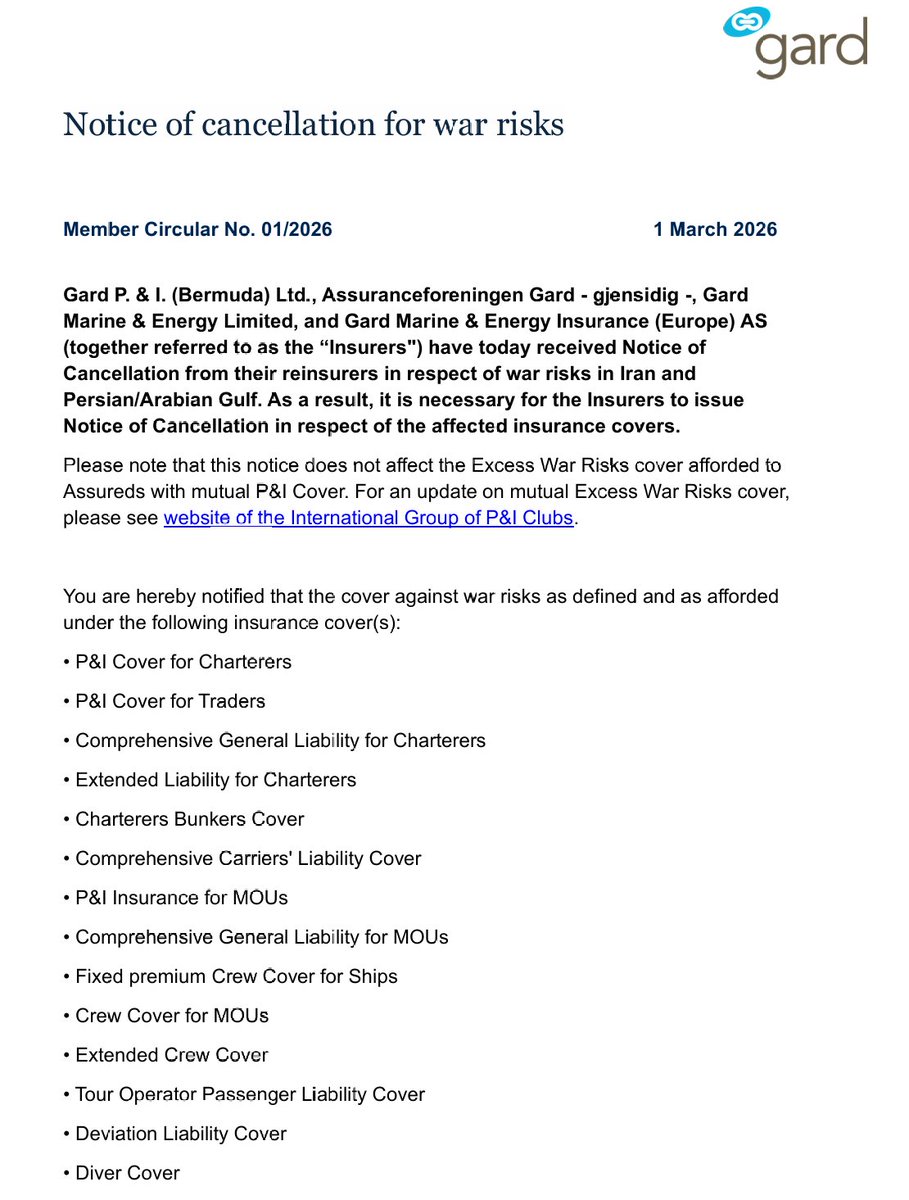
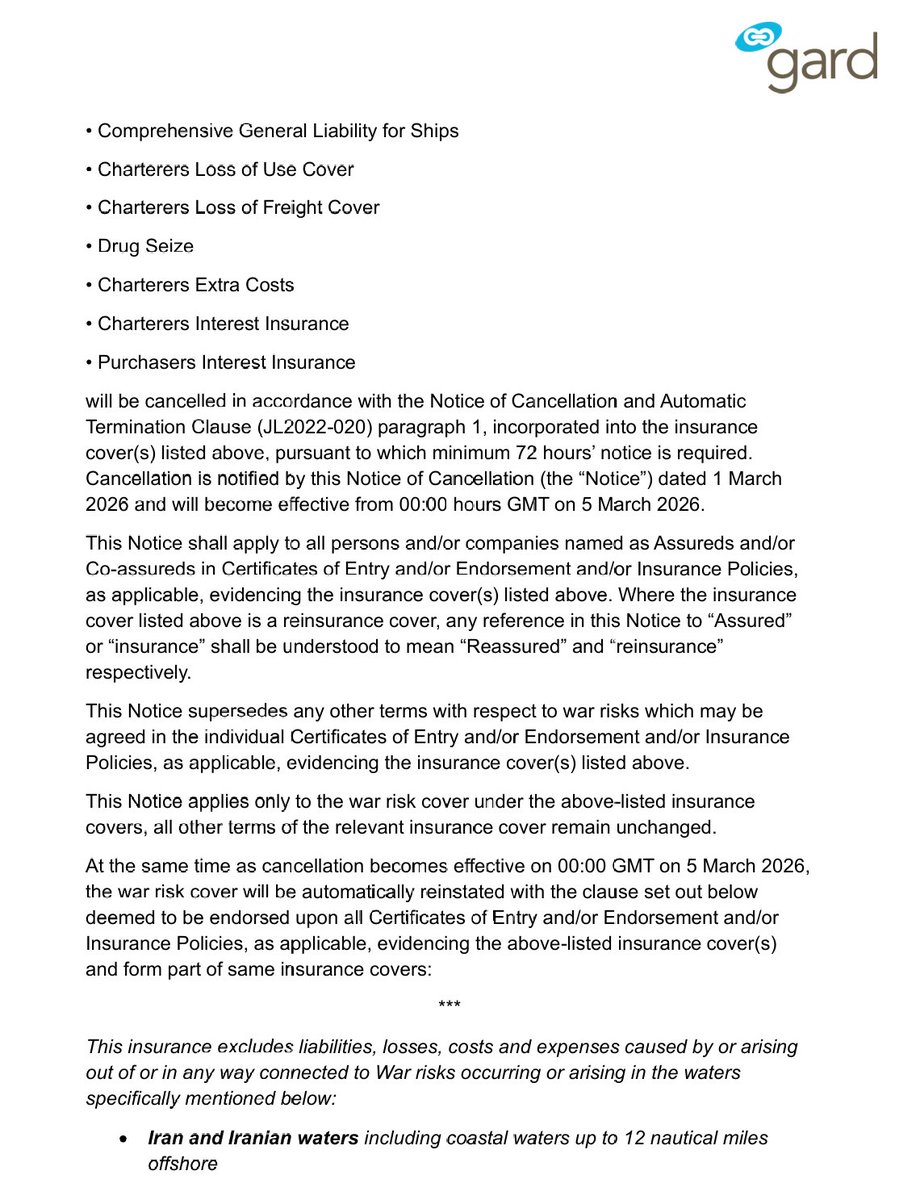
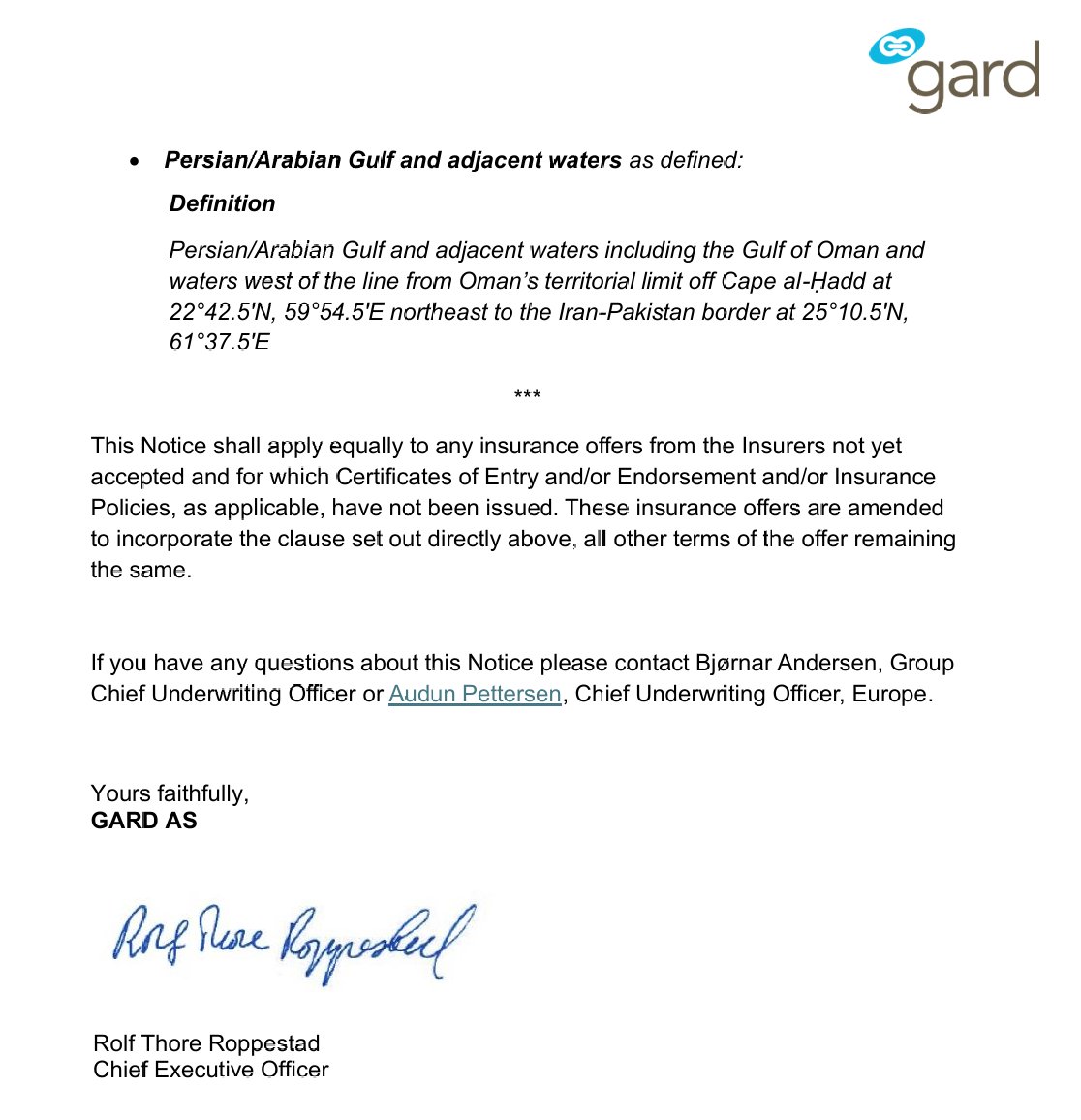
21/x They are now cancelling the primary war risks coverage, specifically the first layer, purchased separately through specialist markets (often based in London_ or via club fixed-premium options. The coverage activates from the first dollar, up to the vessel value or $500M

22/x There is a secondary (excess) war risk coverage that attaches to the first layer (which is NOT cancelled), but if the 1st layer is cancelled, that means that the shipowners have a huge deductible for the value of the 1st layer.
23/x Anyway.. It's all very complicated, but I hope this gives you an idea of what it means when we talk about P&I clubs and War Risk Coverage
24/x And I'm fully aware that Hydra Insurance Company Limited sounds like something from a James Bond movie and that probably somewhere, there's an inactive volcano with a missile inside of it, ready to launch, and destroy the world
• • •
Missing some Tweet in this thread? You can try to
force a refresh