Nick Jikomes Profile picture
Mar 3 1 tweets 1 min read Read on X
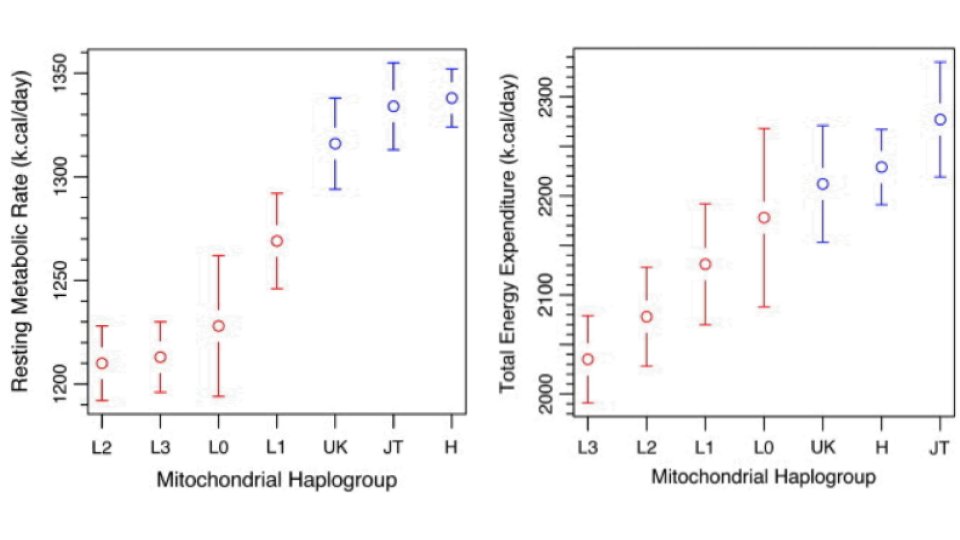
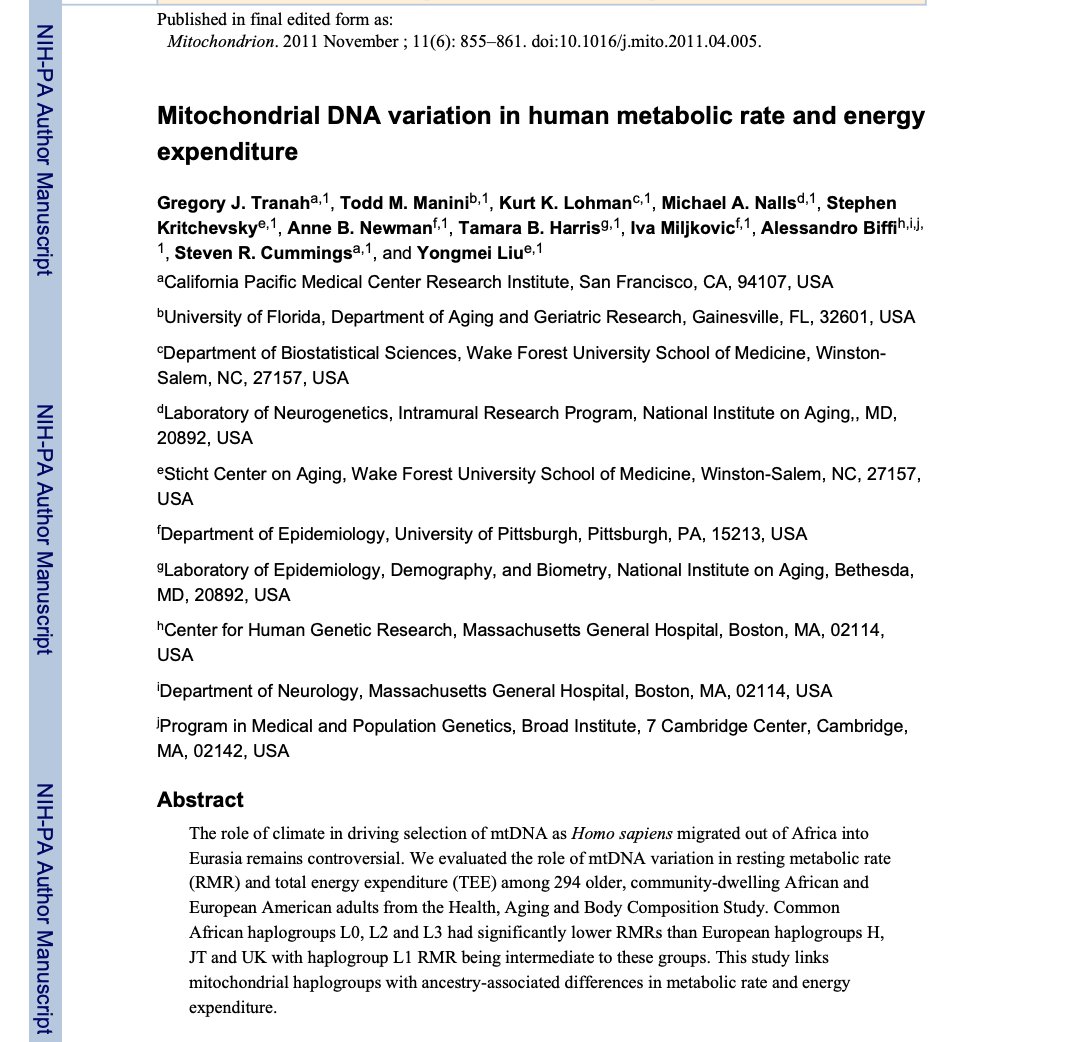
Resting metabolic rate and total energy expenditure tend to differ, on average, across human mitochondrial haplogroups, after adjusting for age, sex, and lean mass.

For example, L haplotypes tend to have lower resting metabolic rate and total energy expenditure compared to UK, JT, and H.

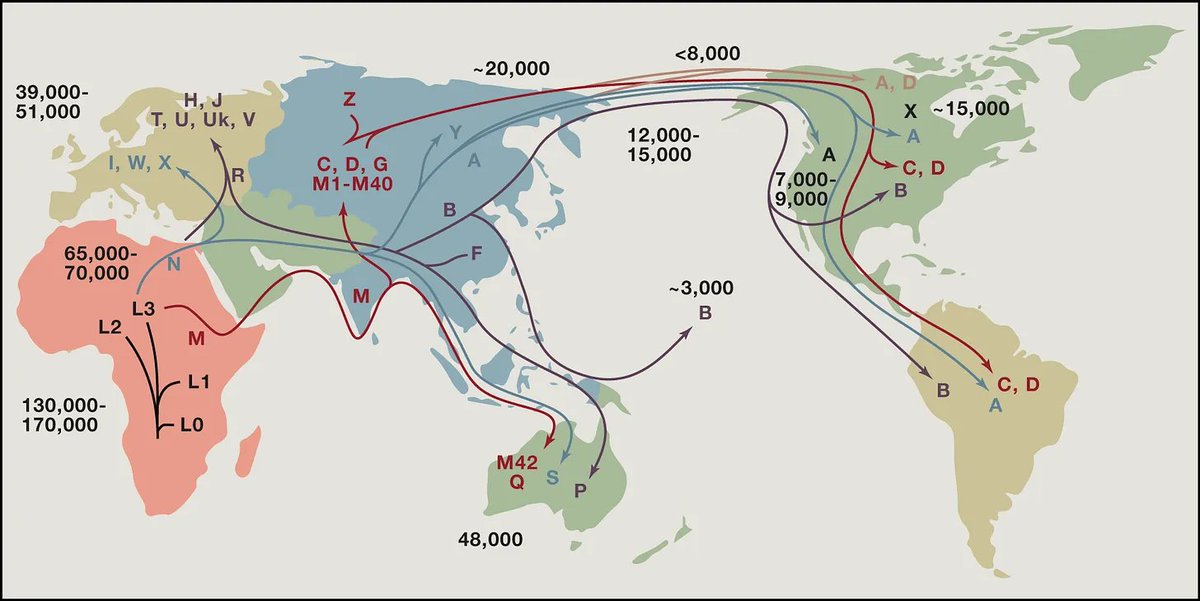
L haplogroups originated in Africa and tend to be more "coupled," which basically means more efficient at ATP synthesis.

UK, H, and JT haplogroups arose in more Northern latitudes (colder climates) and tend to be more uncoupled, i.e. produce more heat.Image
Image
Image

• • •

Missing some Tweet in this thread? You can try to force a refresh

 

Keep Current with Nick Jikomes

Nick Jikomes Profile picture

Stay in touch and get notified when new unrolls are available from this author!

Read all threads

This Thread may be Removed Anytime!

PDF

Twitter may remove this content at anytime! Save it as PDF for later use!

Try unrolling a thread yourself!

how to unroll video
  1. Follow @ThreadReaderApp to mention us!

  2. From a Twitter thread mention us with a keyword "unroll"
@threadreaderapp unroll

Practice here first or read more on our help page!

More from @trikomes

Mar 30
🧵🧵🧵

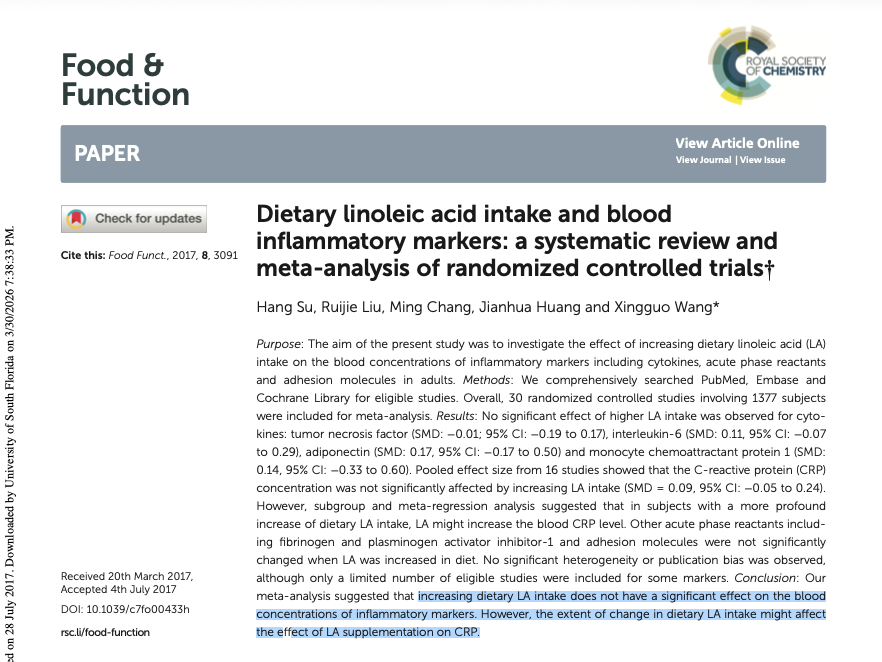
The meta-analysis below is often considered strong evidence that dietary linoleic acid from seed oils does not affect inflammation.

It is a meta-analysis after all, looking at results across many clinical trials, sitting near the top of the "hierarchy of evidence" in biomedicine.

But... instead of taking its results at face-value, what do you find if peek under the hood, and take a look at the underlying trials themselves?

The main conclusion of the meta-analysis is: "increasing dietary LA [linoleic acid] intake does not have a significant effect on the blood concentrations of inflammatory markers."

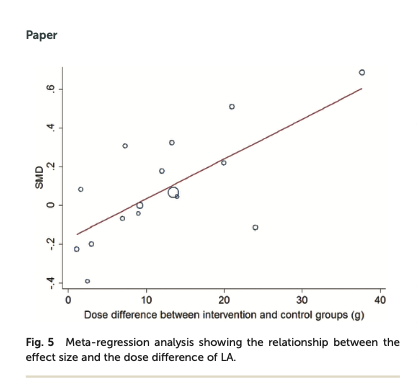
Despite that main conclusion, the meta-regression they performed found a positive association between the change in linoleic acid intake and inflammatory marker CRP.

But I wouldn't take any of those things to the bank, because....

When you look into the individual RCTs cited, you find wildly different patient populations, study designs, experimental manipulations of dietary fats, durations, etc.

Some are not double-blind. Some are funded by corporations like Unilever.

The variability in design and patient populations is astounding, ranging from obese women who may also be smokers to dyslipidemic men or healthy patients, all varying in wildly in average age, from different parts of the world.

Some of the RCTs don't actually manipulate linoleic acid intake across a dose range, but give supplemental omega-3 PUFAs in the form of flax oil or fish oil, with something like corn oil as a placebo. Trials differ in the specific oils used, doses, etc.

The full table of clinical trials can be seen in the last image of this post.

Below in this thread are descriptions of the first three trials I looked at, which were simply the first three listed that lasted 12 weeks or longer.

This is meant to give a basic sense for the variance across trials.

1/5Image
Image
Image
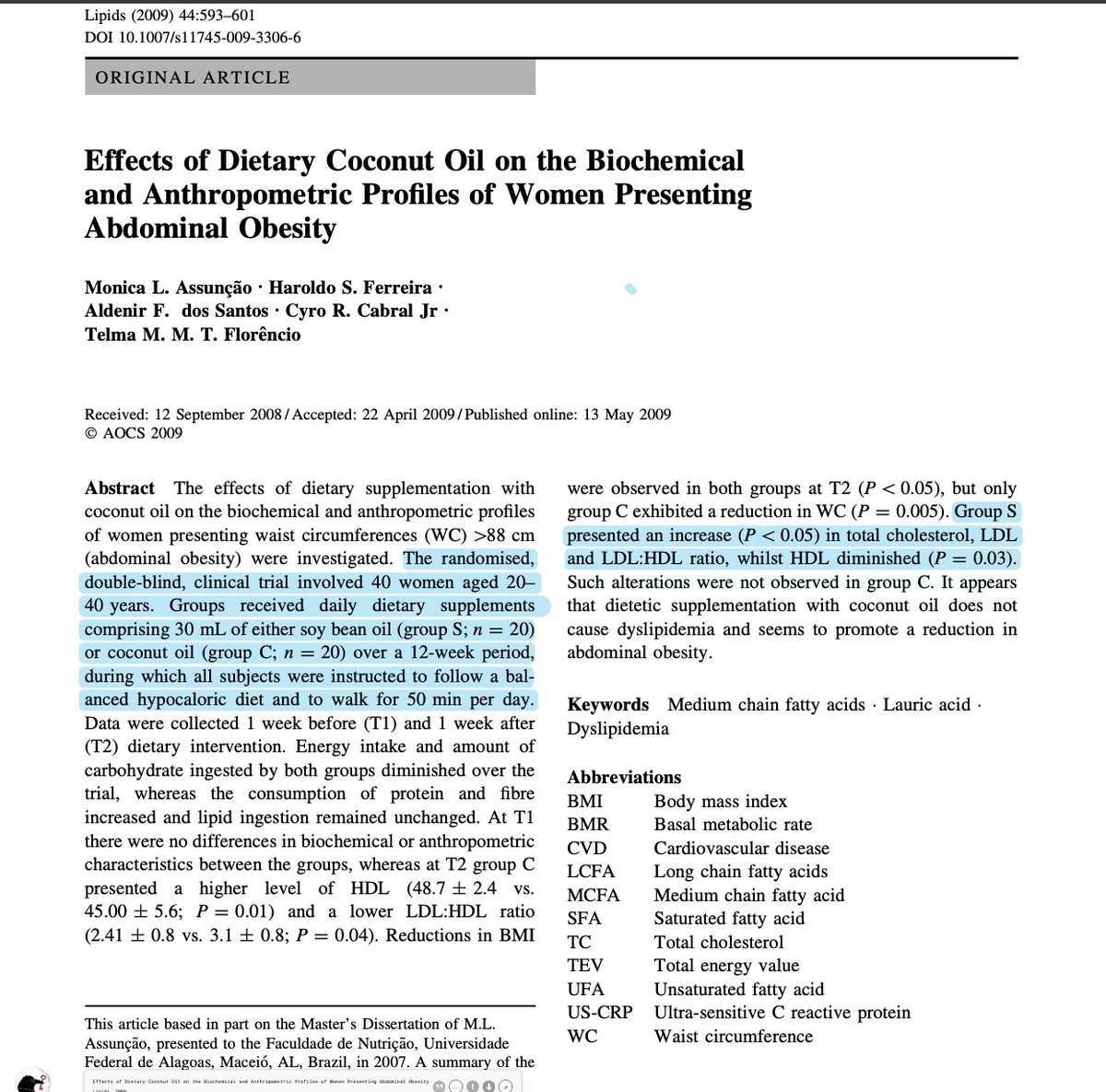
This trial looked at women is abdominal obesity. Half used coconut oil and half used soybean oil, supplemented for 12 weeks and instructed to eat a hypocaloric diet.

The result used in the meta-analysis was changes in CRP.

CRP did NOT significantly change for the soybean oil group or the coconut oil group. It barely budged for SO, but dropped for CO... although the two groups differed at *baseline* for CRP, so 🤷‍♂️🤷‍♂️🤷‍♂️

As usual for many diet studies, the dietary data collections are pretty absurd: "a 24 h dietary recall was applied to subjects for a 3 day period (1 day of which was during a weekend) immediately before and 12 weeks after dietary intervention."

Another weird observation: omega-6s are supposed to decrease total and LDL cholesterol, while saturated fat is supposed to increase LDL.

But...

The soybean oil (seed oil) group saw an INCREASE in total cholesterol, LDL, and LDL:HDL, with a drop in HDL.

Is this a good trial? Should be included as evidence, one way or the other, on whether seed oils (ω-6 PUFAs) affect inflammation in the general population?

Next trial...

2/5Image
Image
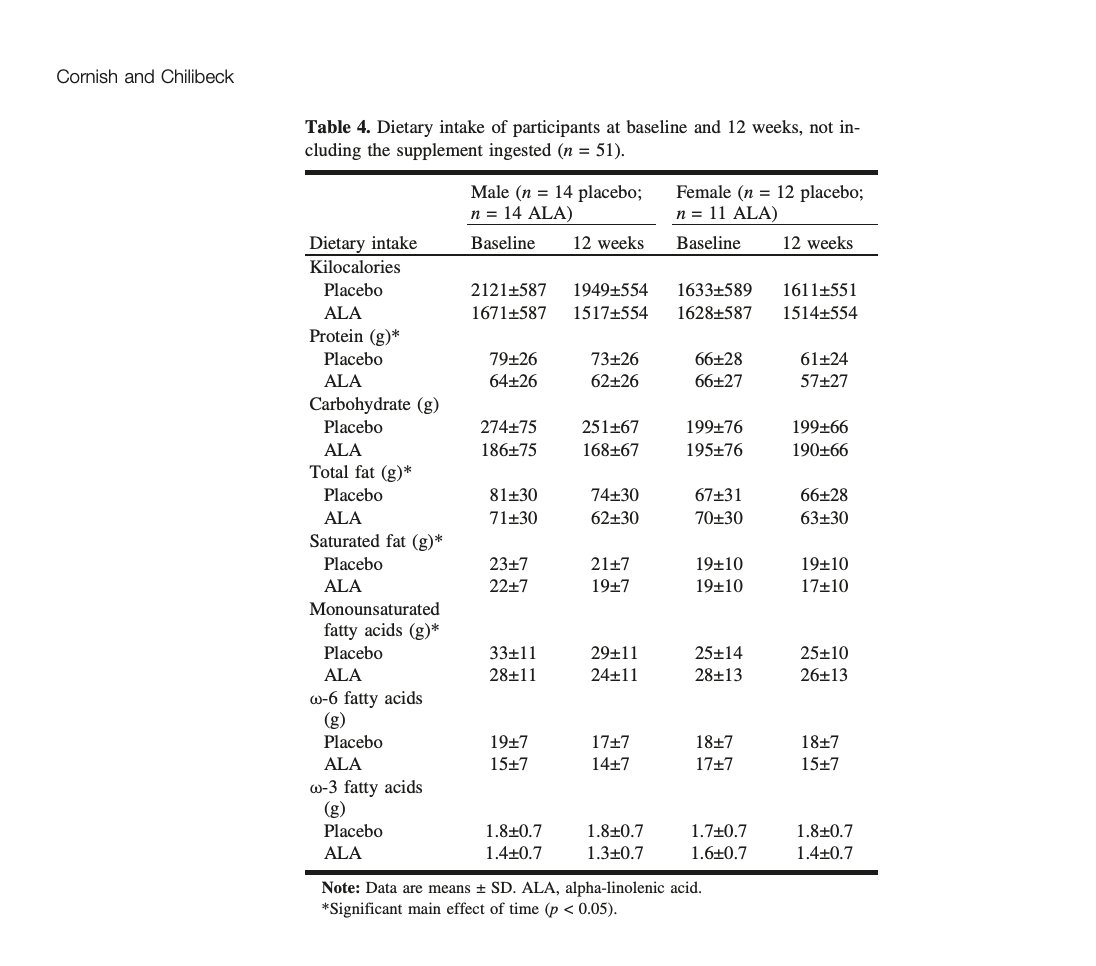
This one have supplemental ALA (an ω-3 PUFA) to adults over age 60 participating in a resistance training program.

It measured different inflammatory markers than the trial above.

The placebo was... corn oil.

Among other problems, the placebo and ALA groups hade baseline dietary differences, so 🤷‍♂️🤷‍♂️🤷‍♂️

The sample sizes were small, and the paper itself describes it's lack of statistical power.

3/5Image
Image
Image
Read 5 tweets
Nov 28, 2025
How has dietary fat consumption, especially as it relates to animal fat, changed over time?

Thanksgiving 🧵

🦃

1/
All of the information snippets in this thread come from this article (link in bio), which goes into much more detail.

2/ Image
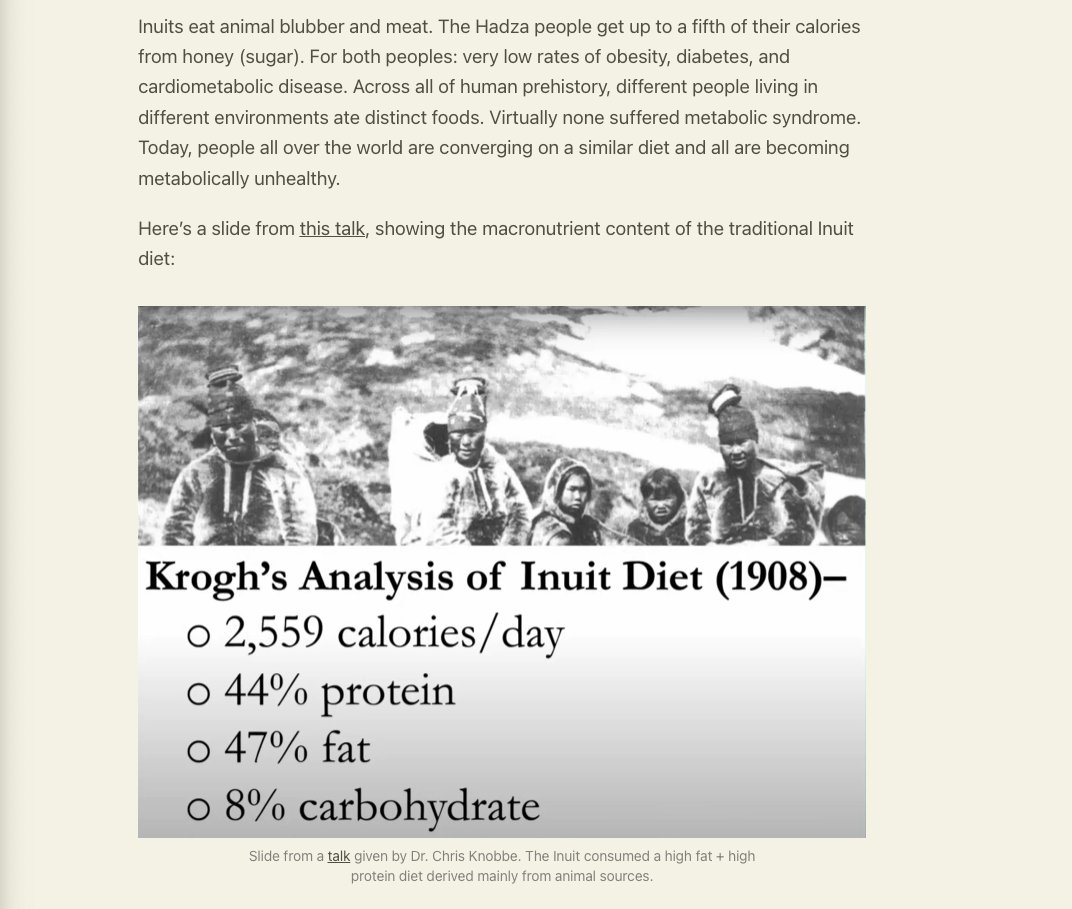
Across the globe and throughout human history, traditional human diets have varied A LOT in their macronutrient composition.

Despite that variation, they all had something in common: the chronic diseases people routinely suffer from today were virtually absent.

Examples:

3/ Image
Image
Read 13 tweets
Dec 11, 2024
🧵A basic summary of this new lipidomics paper linking colon cancer to an imbalance between pro-inflammatory & pro-resolving processes, with a potential connection to seed oils.

More details in an upcoming podcast...

1/
The paper references Virchow, who originally proposed that cancer represents a chronically inflamed, poorly healing wound.

🤔

2/ Image
In the body, there is always some mixture of pro-inflammatory signals and inflammation-resolving signals.

Many of these signals are lipid-based molecules derived from fatty acids.

Examples of pro-inflammatory molecules include prostaglandins and leukotrienes.

3/ Image
Read 19 tweets
Sep 5, 2024
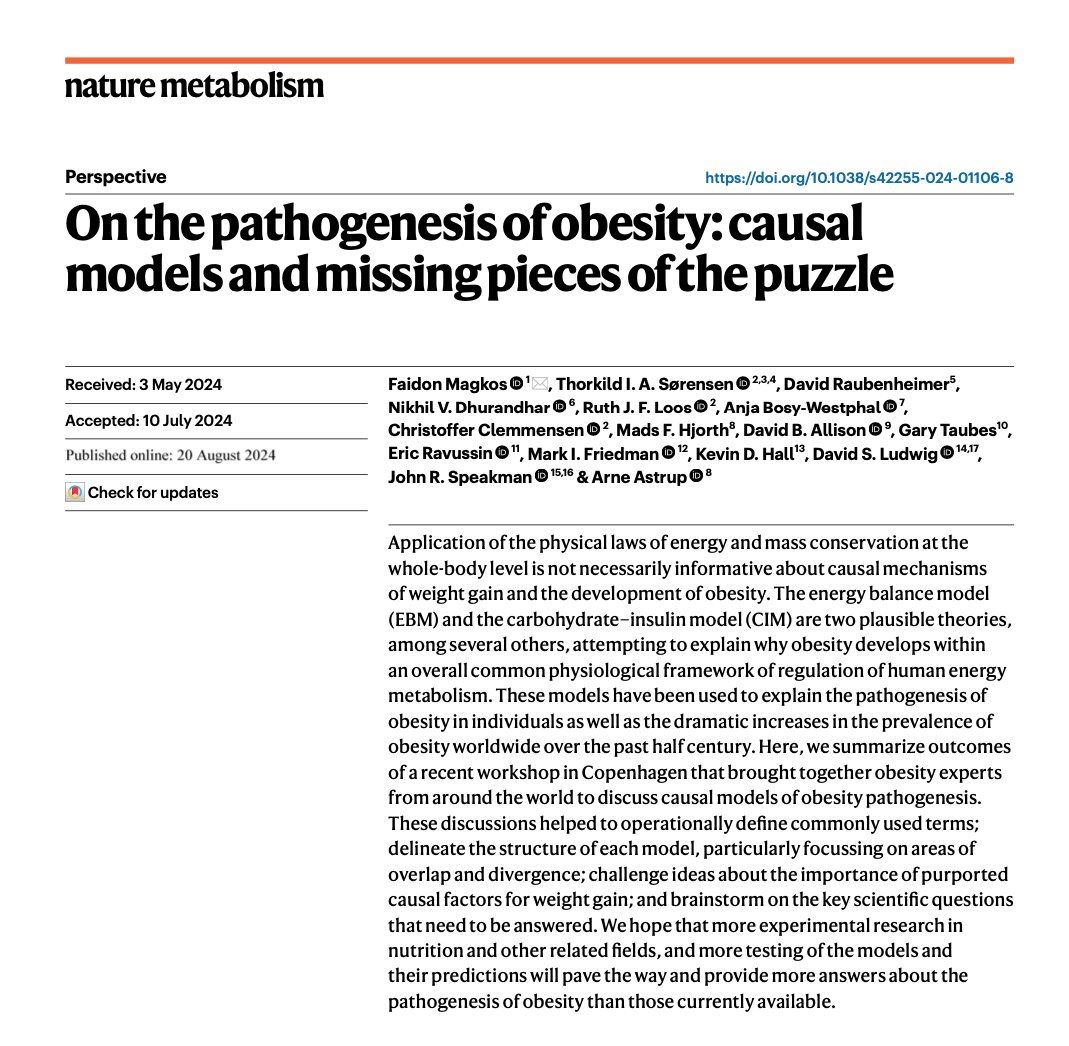
Here's what I'm reading ahead of my conversation with @garytaubes tomorrow.

We will be discussing the causes of obesity, including a compare/contrast of the major scientific models that are out there (e.g. energy balance, carbohydrate-insulin, etc.).

Image
Image
Two views of how obesity arises:

Energy balance:
"obesity is often associated with excessive appetite and food intake. This currently prevailing view holds that excessive fat accumula- tion results because energy intake exceeds energy expenditure.1,2 Excessive food consumption is now considered the primary cause of the imbalance."

vs.

Fuel partitioning:
"individuals appear to accumulate and sustain excessive adiposity even with restricted food intake. This view attributes the fundamental cause of obesity to intrinsic metabolic defects that shift fuel partitioning from pathways for mobilization and oxidation to those for synthesis and storage."Image
Image
Left: Diagram of the fuel partitioning theory of obesity.

Right: Diagram of potential mechanisms of fuel partitioning in the body.
Image
Image
Read 11 tweets
Apr 8, 2024
Fastest downloaded episodes of the podcast so far this year:

#1
"DMT, Serotonin, Inflammation, Psychedelics, and Past, Present & Future of Psychedelic Medicine" with David Nichols & @lab_nichols
#2
"Gut-Brain Communication, Vagus Nerve, Fats & Sugars, Food Addiction, Gut Hormones & Weight Loss Drugs" with Will de Lartigue Image
#3
"Evolution, Language, Domestication, Symbolic Cognition, AI & Large Language Models" with Terrence Deacon Image
Read 5 tweets
Feb 17, 2023
🧵#ScienceBreakdown: "Psychedelics promote neuroplasticity through the activation of intracellular 5-HT2A receptors"

Interesting new paper by @DEOlsonLab, @LinTianPhD, et al. looking at why some serotonin 2A receptor agonists promote neuroplasticity, but others do not.

1/
Various small molecules, from endogenous neurotransmitters like serotonin to tryptamine #psychedelics, activate 5HT2A receptors... and yet they can lead to very different effects.

Getting at why this is was one of the basic motivations for this study.

2/
One idea here is that various compounds have distinct physical/chemical properties, despite all activating 5HT2A receptors.

For example, they differ in fat solubility. Some can cross cell membranes to get *inside* cells, and some can't...

3/
Read 16 tweets

Did Thread Reader help you today?

Support us! We are indie developers!


This site is made by just two indie developers on a laptop doing marketing, support and development! Read more about the story.

Become a Premium Member ($3/month or $30/year) and get exclusive features!

Become Premium

Don't want to be a Premium member but still want to support us?

Make a small donation by buying us coffee ($5) or help with server cost ($10)

Donate via Paypal

Or Donate anonymously using crypto!

Ethereum

0xfe58350B80634f60Fa6Dc149a72b4DFbc17D341E copy

Bitcoin

3ATGMxNzCUFzxpMCHL5sWSt4DVtS8UqXpi copy

Thank you for your support!

Follow Us!

:(