Another thread on the closure of the Internet. Amazon, like other major tech giants, had little content policy beyond "no illegal content, spam or scams/fraud" in 2015 and by 2020 had a well developed censorship infrastructure for both the web store and AWS.
Amazon is particularly important for two reasons: (1) AWS making it, like Google Search, a major Internet chokepoint and (2) 50% book and 80% e-book market share; Amazon banning a book is the closest a non-classified book can really come to being banned in the US.
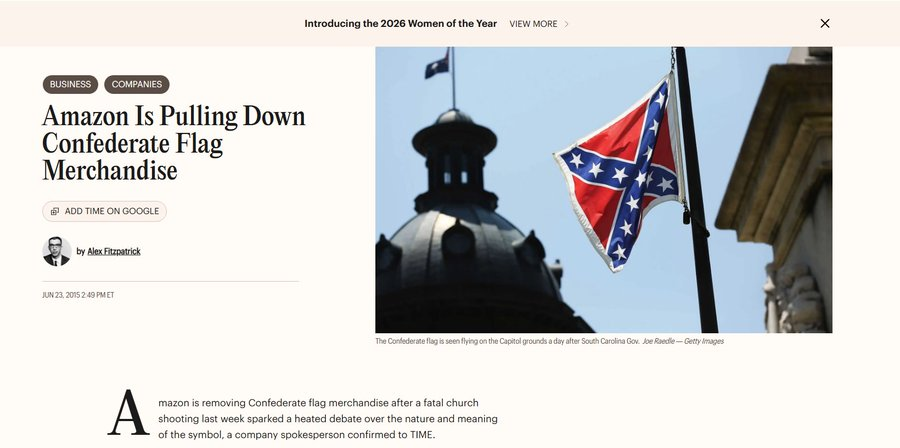
The first cracks in Amazon's neutrality appeared in June 2015, when a media blitz and political pressure campaign (sparked by Dylan Roof) led to Amazon removing all Confederate flag (a completely normal American symbol) merchandise from the site. 
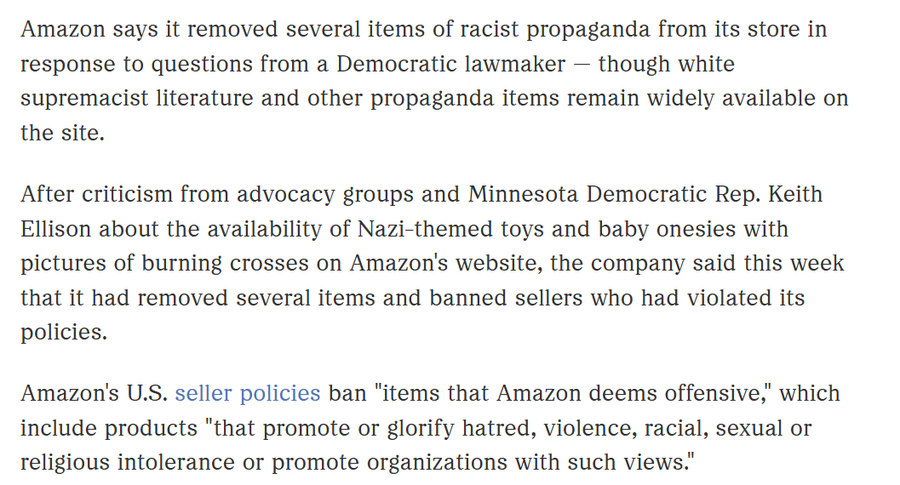
By August 2018, Amazon was banning "items that Amazon deems offensive," in this case Nazi-themed merchandise. Note the direct intervention of a Democratic lawmaker (Keith Ellison) - this was not a purely private endeavor.
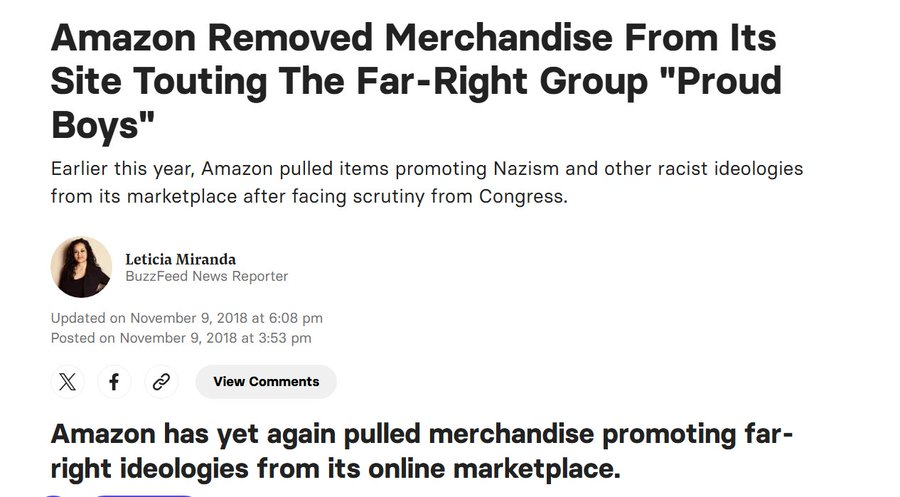
Again in response to Congress, Amazon removed Proud Boys, a civic nationalist patriotic group that semi-regularly fought antifa, memorabilia in 2018 (they would later do the same to QAnon). Needless to say, antifa merch was not pulled.
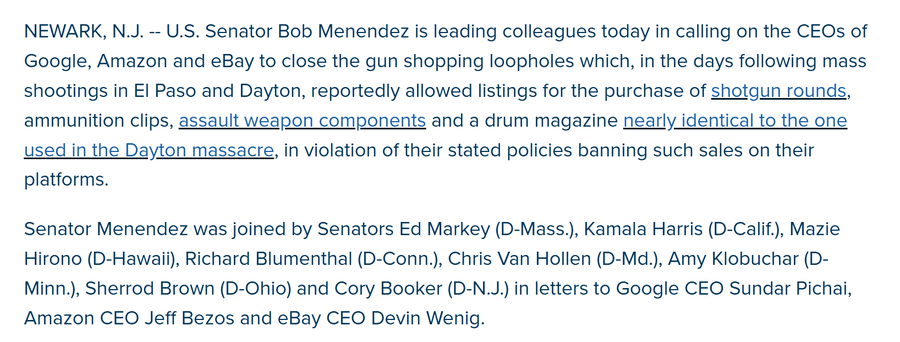
After a threatening letter from nine Democratic lawmakers in 2019, Amazon banned most gun accessories, parts, and ammunition from the site, including basic things like slings and rails.
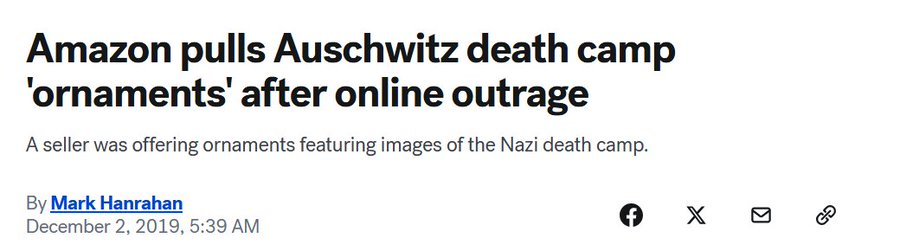
By 2019, Amazon was accustomed to taking listings down in response to news articles [not "online outrage", important distinction], such as innocuous (really) Auschwitz Christmas ornaments (it was part of a series of ornaments themed around Polish cities).
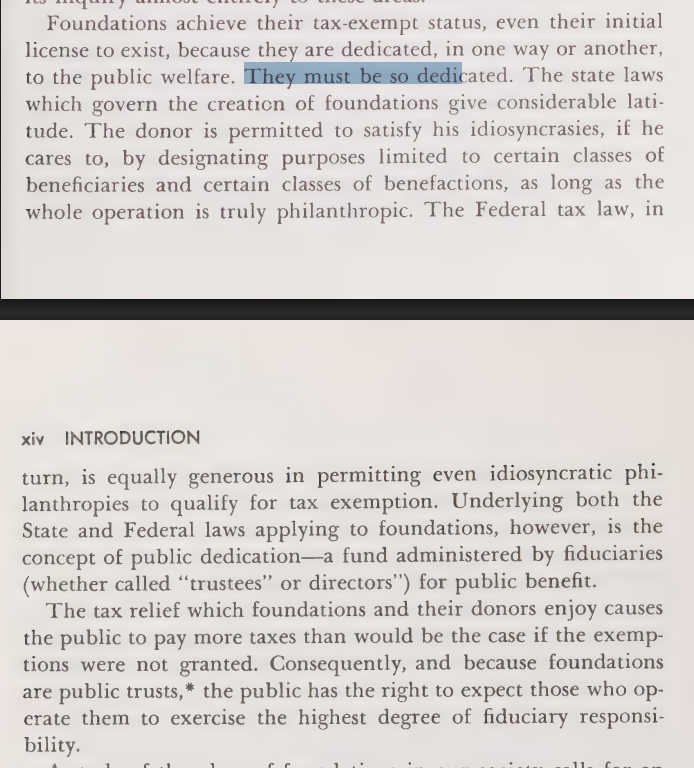
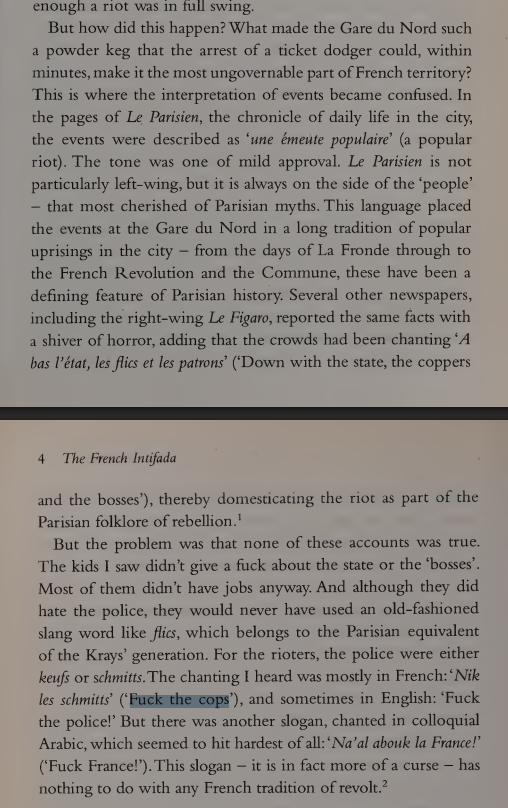
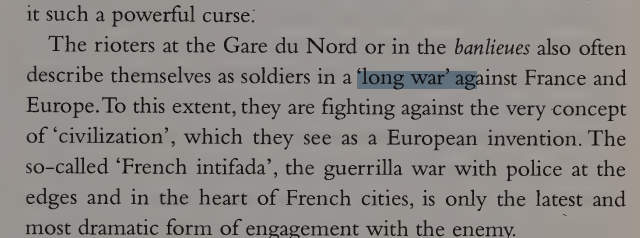
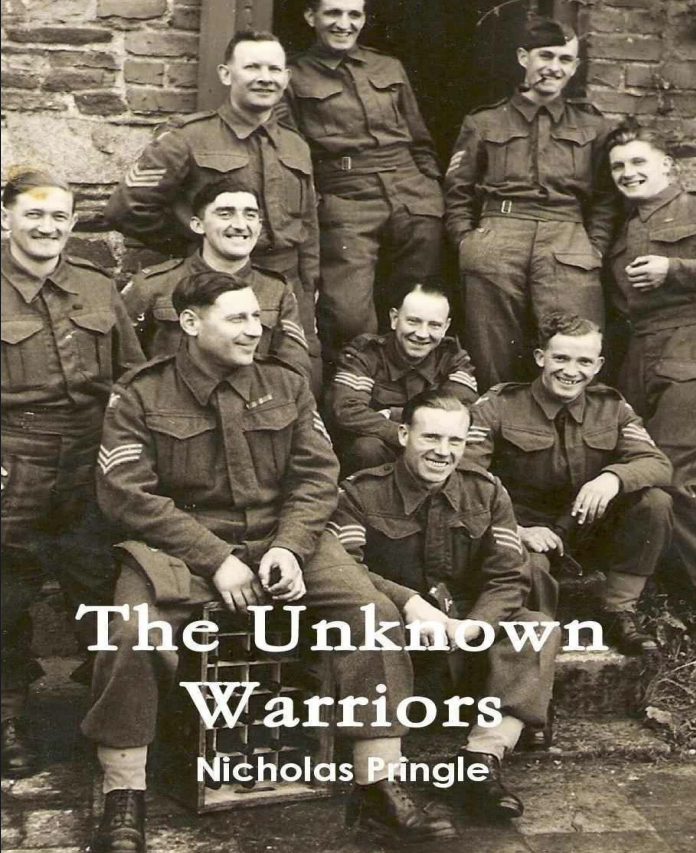
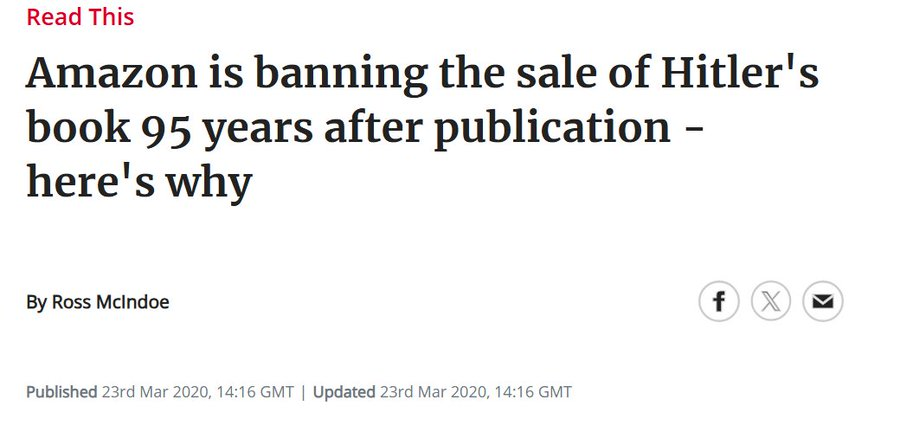
Mein Kampf was removed in 2020. Needless to say "Quotations from Chairman Mao" and "The Wretched of the Earth" were not.
By 2021, even fairly academic and tame criticism of the transgender movement [which barely existed 10 years prior], "When Harry Became Sally" could be banned from Amazon and thus cut off from any mass audience.

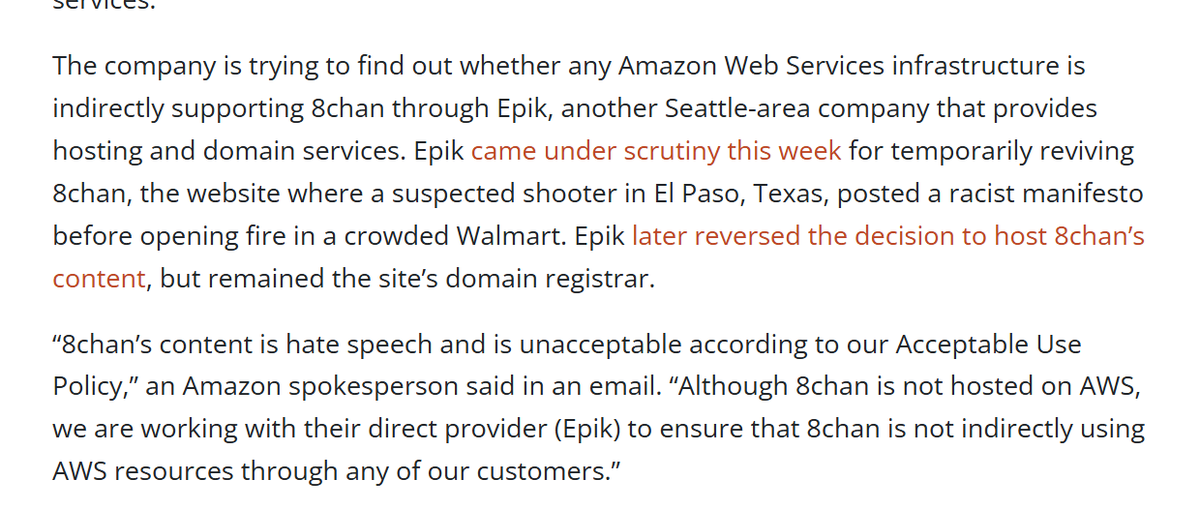
Amazon started going after non-illegal (they kicked wikileaks off in 2010 because wikileaks was illegal) sites using AWS in 2019, by threatening another host provider, Epik, for providing services to 8Chan (which was not hosted on AWS directly).

They did the same with Gab, another right-wing Twitter alternative (which was also banned by Microsoft Azure).
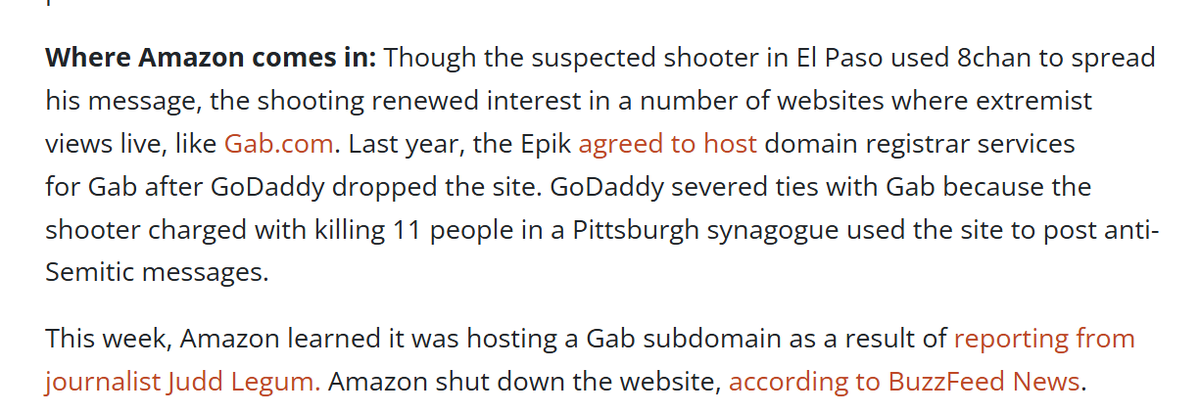
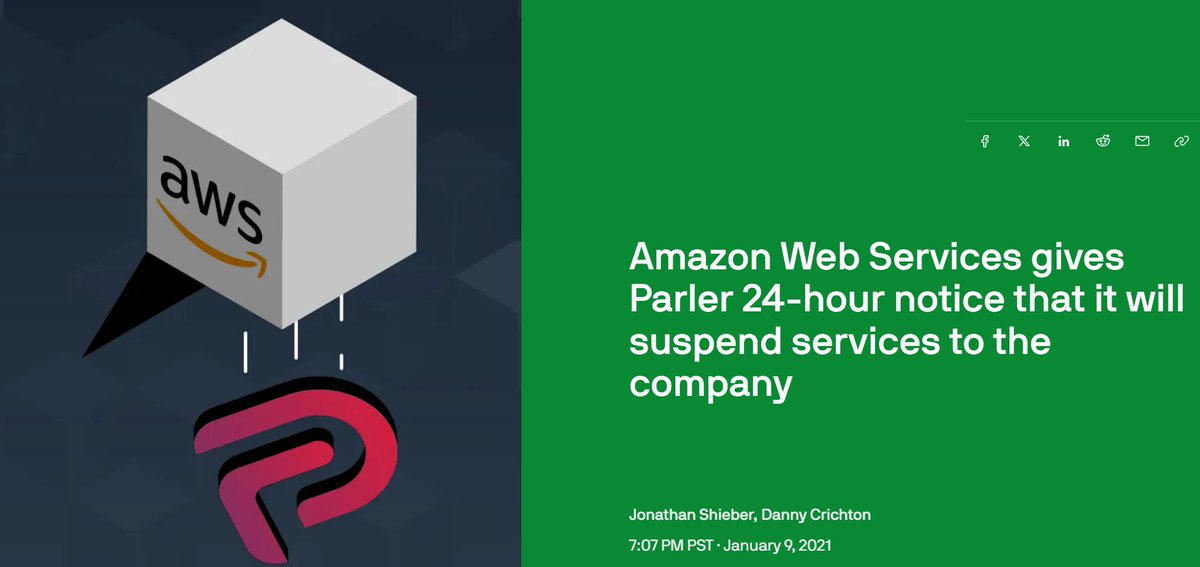
Amazon Web Services was politicized dramatically in 2021 when it kicked Parler, an alternative to Twitter that gained popularity when Trump was banned, from the platform, destroying the app (which was simultaneously banned by both Apple and Google from their app stores).
Not being a social media site, Amazon's moderation/content removal/censorship apparatus is much less noticeable than YouTube or Reddit or Twitter or Facebook, but it was built around the same time (2015-2019) and performed (and performs) similar functions.
I have not touched COVID/lockdown related removals.
Subjectively, one of the big differences between Amazon and Google/YouTube/Reddit was the importance of US Congress; direct threats from Democratic lawmakers precipitated several major steps on the censorship ladder, whereas the EU and UK were more important for the others.
Sources for the excerpts:
geekwire.com/2019/amazon-se…,
techcrunch.com/2021/01/09/ama…,
ncac.org/news/amazon-bo…,
thenation.com/article/econom…,
buzzfeednews.com/article/letici…,
abcnews.com/Technology/ama…,
web.archive.org/web/2020101418…,
scotsman.com/read-this/amaz…,
time.com/3932645/amazon…,
npr.org/2018/08/03/635…
geekwire.com/2019/amazon-se…,
techcrunch.com/2021/01/09/ama…,
ncac.org/news/amazon-bo…,
thenation.com/article/econom…,
buzzfeednews.com/article/letici…,
abcnews.com/Technology/ama…,
web.archive.org/web/2020101418…,
scotsman.com/read-this/amaz…,
time.com/3932645/amazon…,
npr.org/2018/08/03/635…
• • •
Missing some Tweet in this thread? You can try to
force a refresh