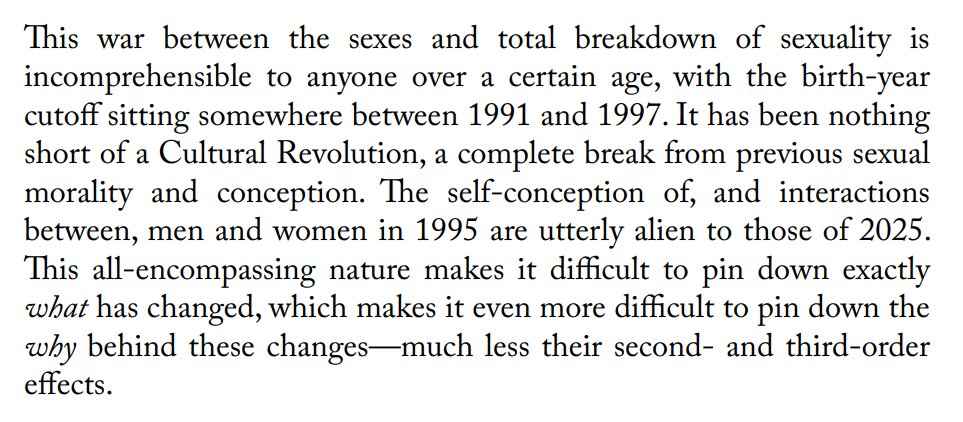
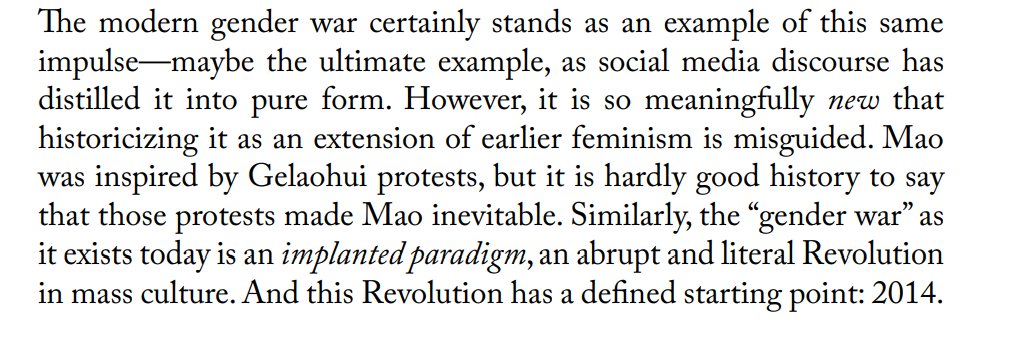
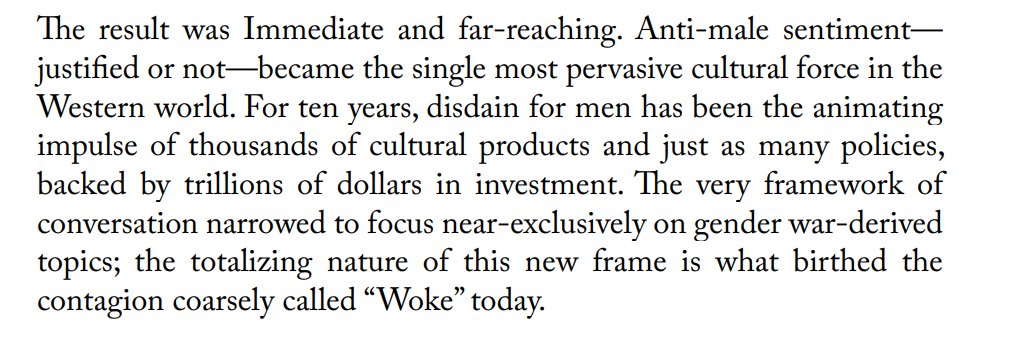
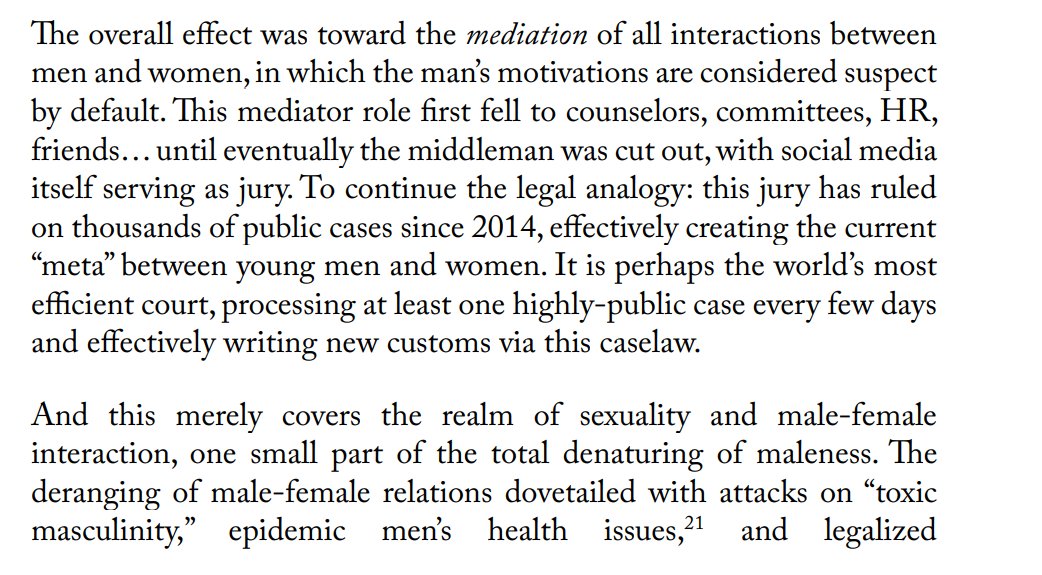
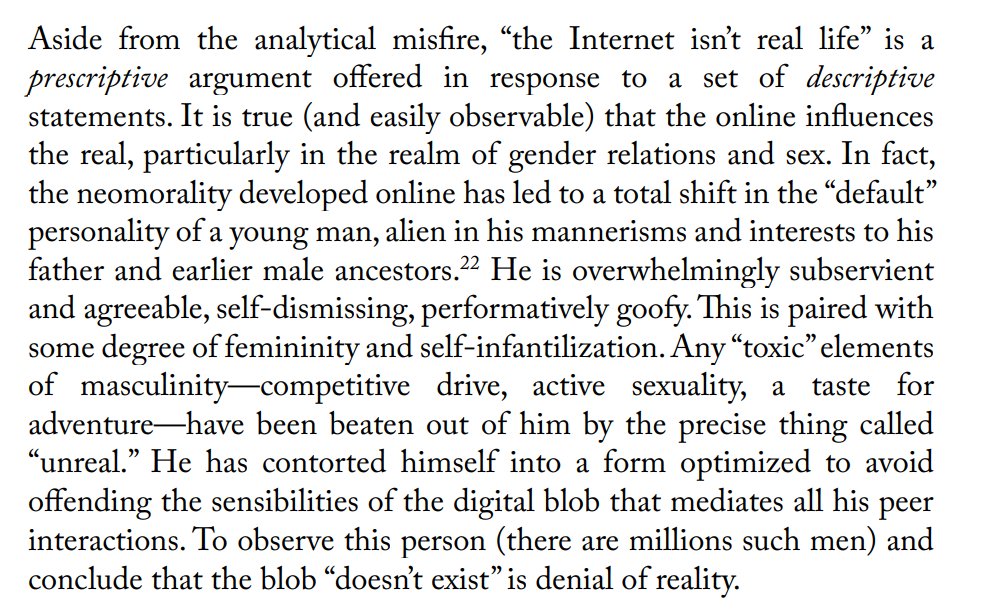
Alaric on 2010s feminism and sexual norms. He sees it as a concrete, sharp break in 2014 alien to anything that came before. which almost overnight made anti-male sentiment the most pervasive cultural force in the Western world.
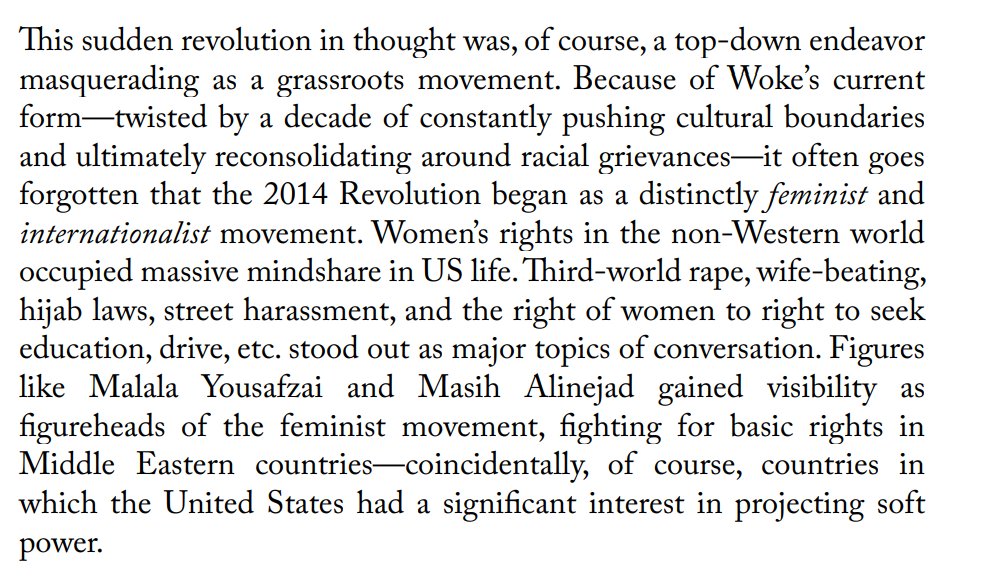
2014 saw a huge top-down feminist media campaign both motivating and caused by government initiatives and international institutions. This was the true start of Woke as a feminist and internationalist movement, before it became more racialist and parochial.
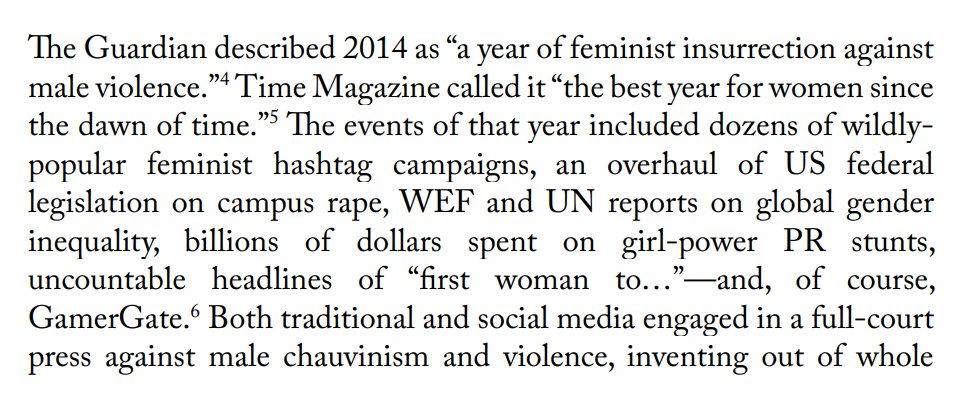
2014 redefined consent and made rape and street harassment, low and falling for decades in the American mainstream, centerpieces of American social consciousness.
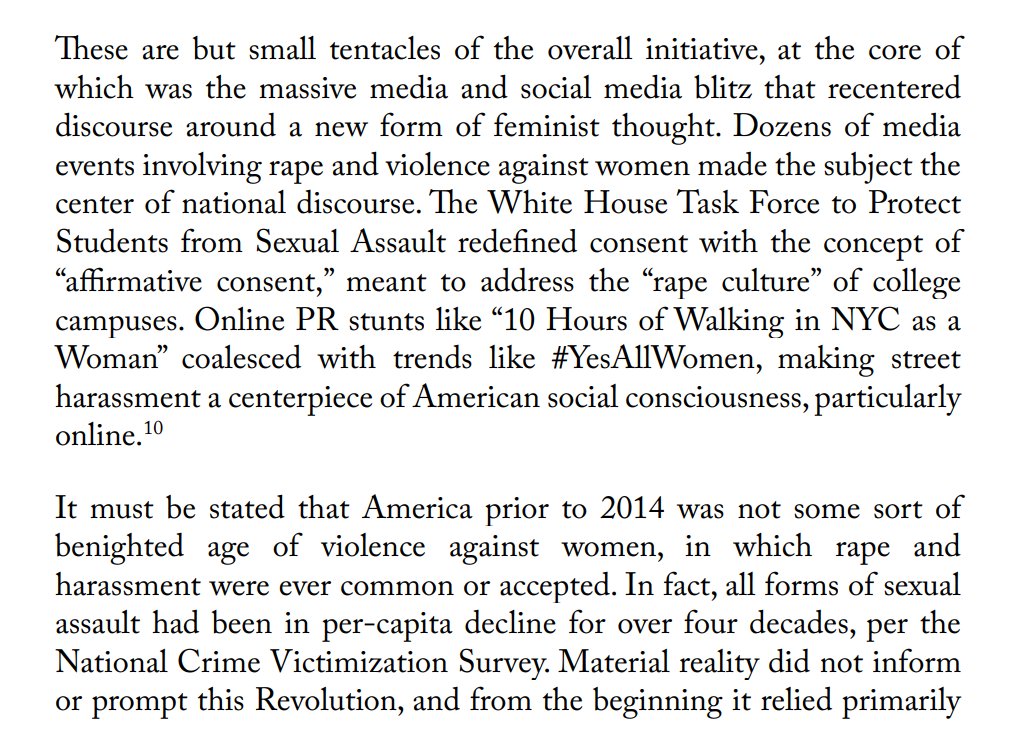
The feminist revolution quickly became very silly (remember manspreading, mansplaining, phallocentrism?).
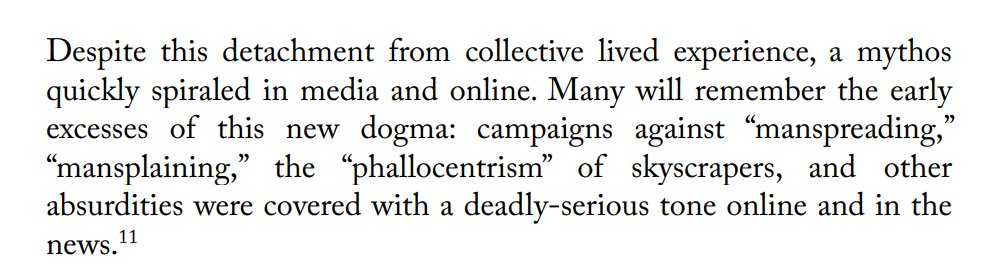
The gender war permanently warped many young adults' ability to interact with the opposite sex (COVID lockdowns hitting in the transition to adulthood made this even worse).
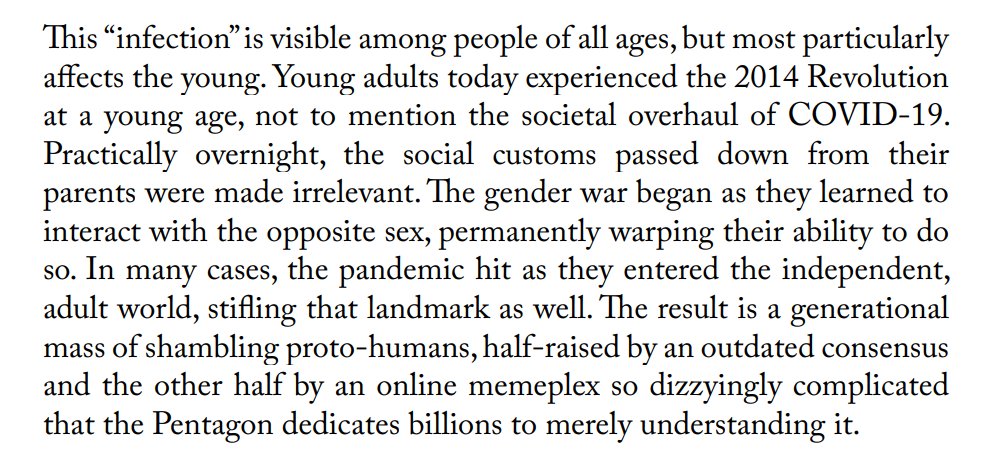
Discourse on the deaths of marriage and dating norms ignores that these were not abandoned but are actively being killed.
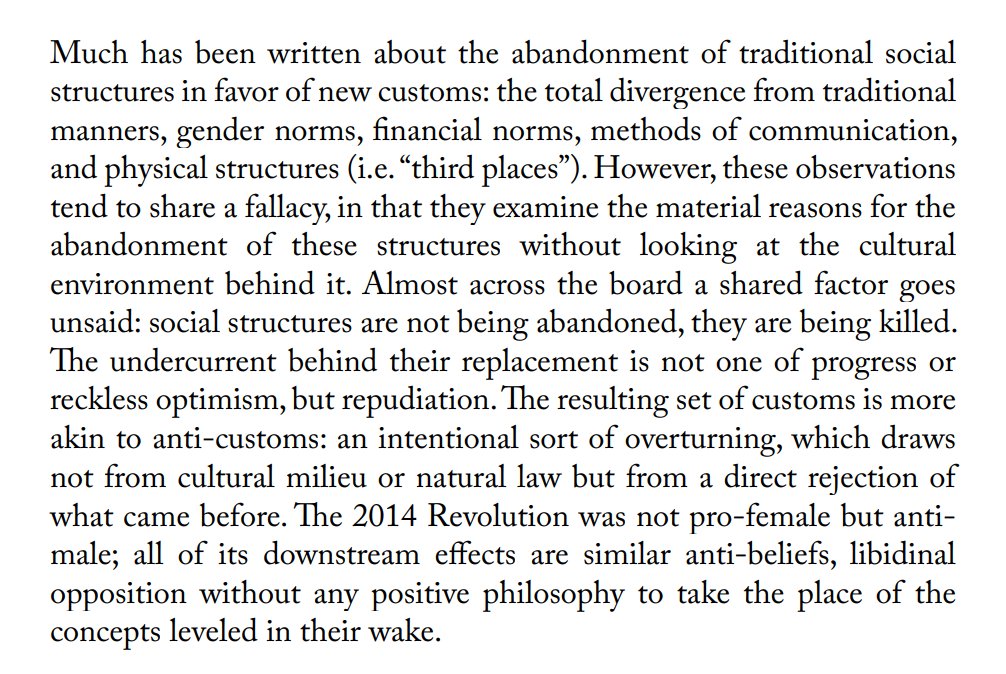
Men have become framed as rapists-by-default; this message is implanted in schools, universities, and workplaces, with the result that men's motives in all interactions with women are considered suspect. To avoid this, many men infantilize and feminize themselves.
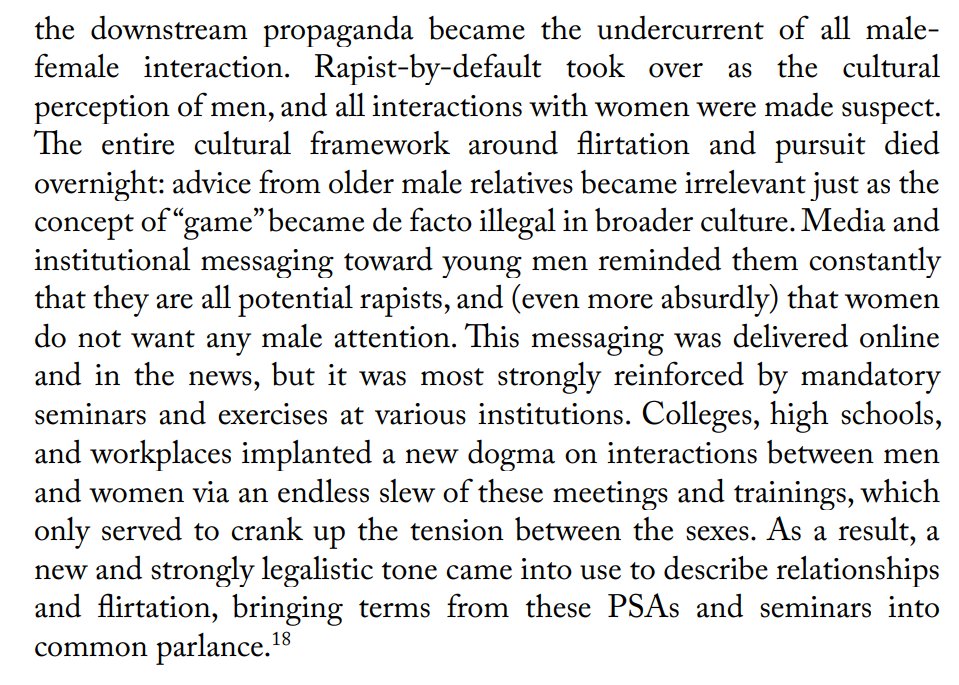
Gender war myths dominate media - types of men (frat bros, musicians, nerds) are defined in terms of expected sexual crimes, and a white knight narrative (sexually aggressive [white] man, innocent girl, outside actor protects girl) became a standard [extremely contrived] trope.
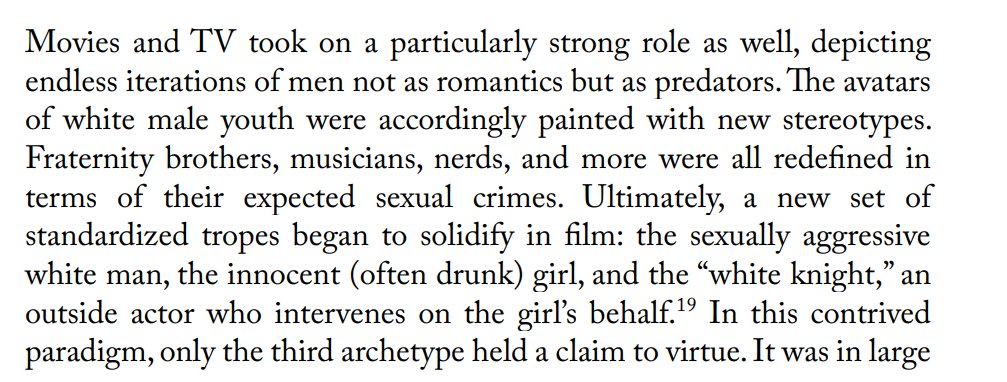
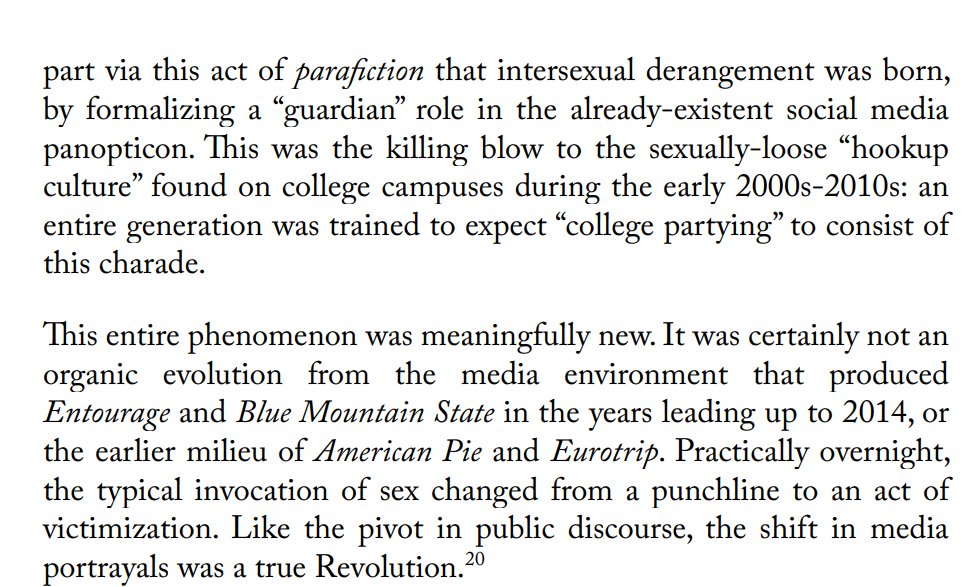
This fictional white knight narrative killed the sexually-loose hookup culture of 2000s college campuses and was completely new, not an organic evolution of pre-2014 American media.
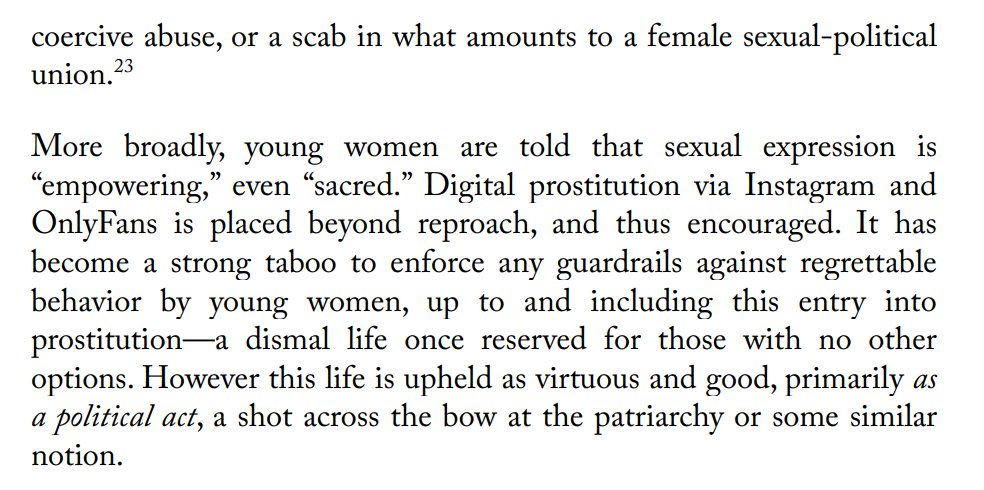
If the post-2014 gender war rendered male sexuality borderline criminal, it did the opposite for female, providing unconditional support for female sexual expression, even prostitution. Sexual desirability became men's chief virtue.
The one bit of female sexuality not celebrated is sincere attraction and love for men; genuine, mutual love between a heterosexual couple went from commonplace to rare in media [cf, Frozen, Modern Family.
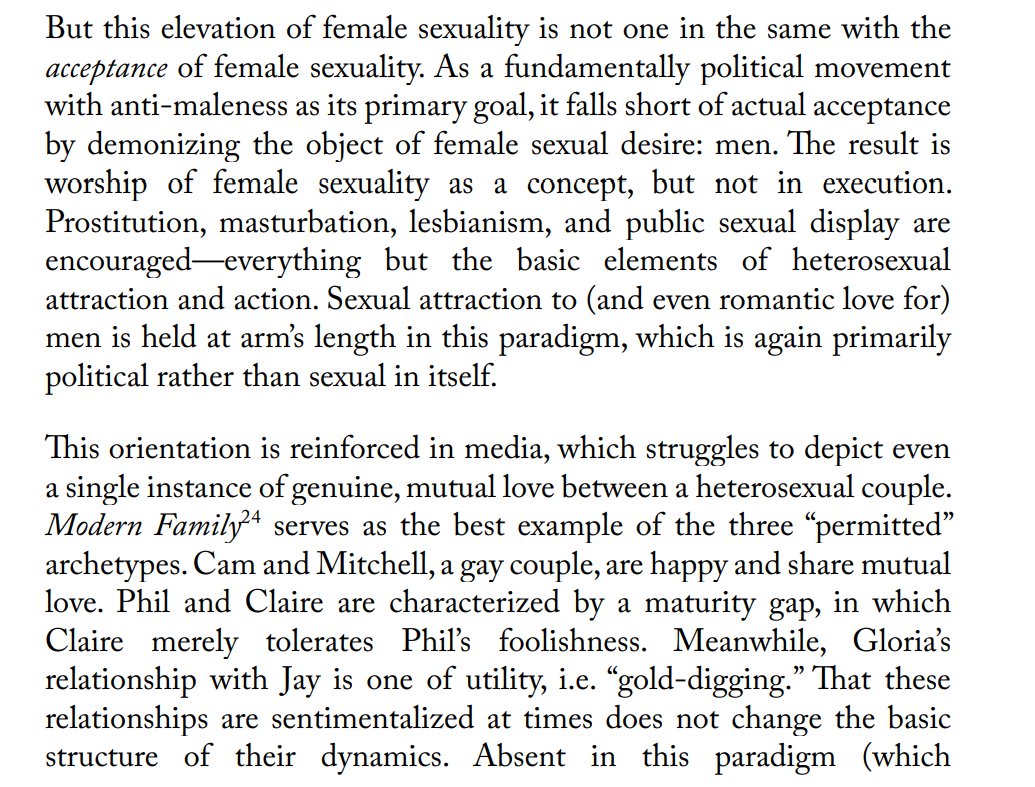
Trying to appeal to men has become taboo for young women, hence the bizarre sexual aposematism of zoomer women.
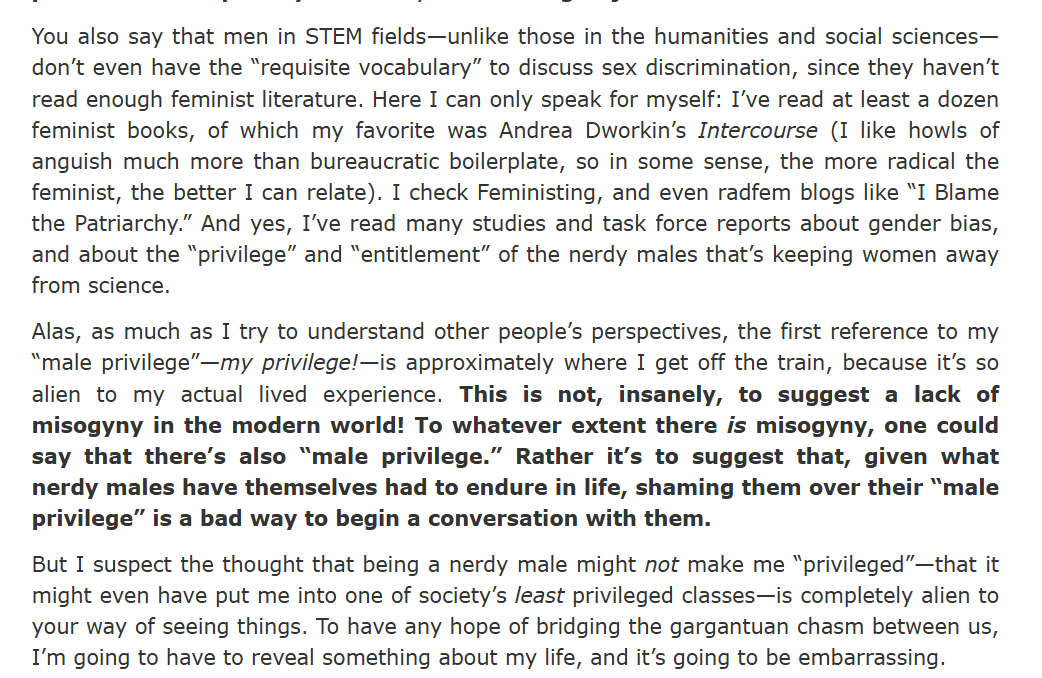
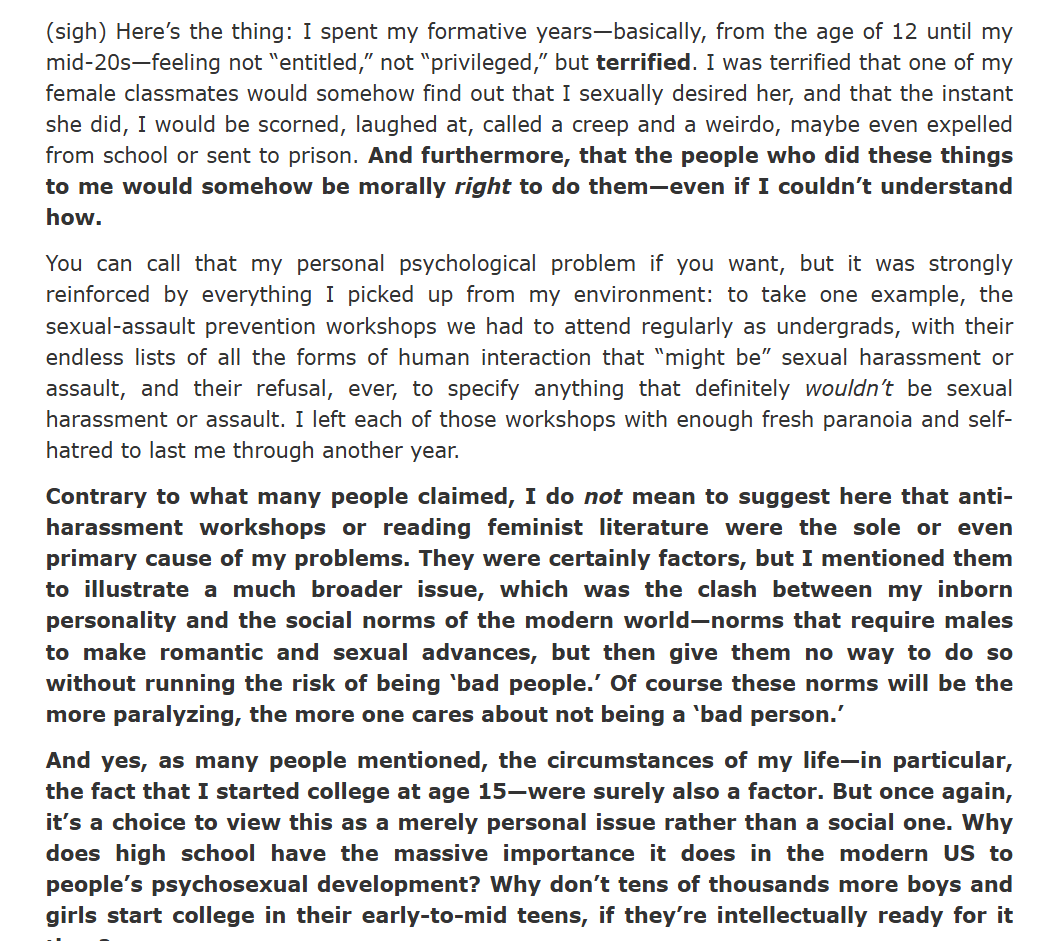
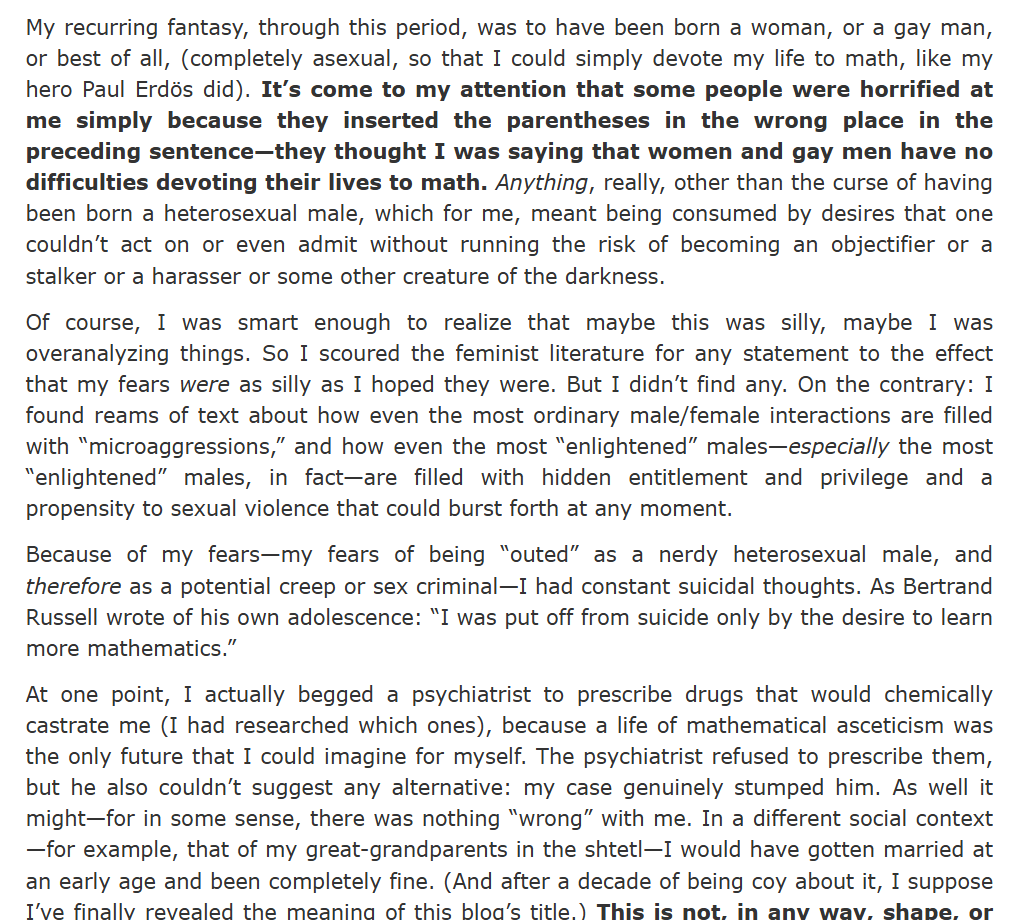
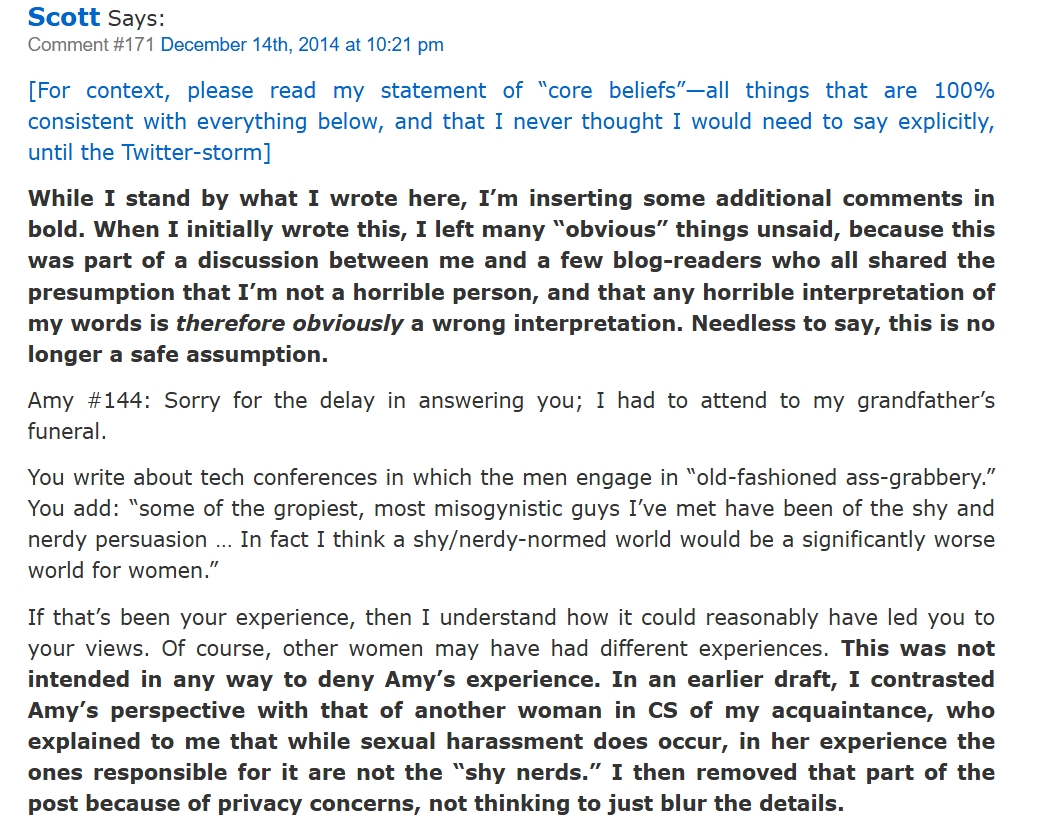
I don't think the 2014 revolution was as unprecedented as Alaric believes; here's Scott Aaronson talking about how he wished he'd been born a woman and tried to castrate himself (in the 90s) out of horror that a woman might realize he found them attractive.
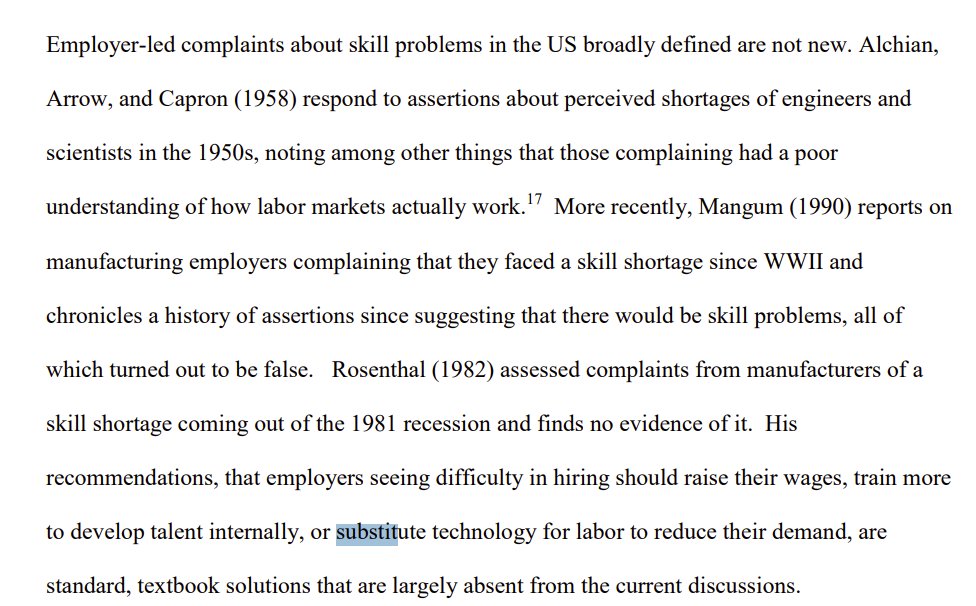
Employers hiring people and then training them in the specific skills they require has declined as a hiring model for decades, in favor of a hiring market where employers look for people who already have those skills.
In the training/internal labor markets model, a company struggling to find specific skills will train promising entry-level employees. In the hiring market model, they can raise wages or otherwise improve conditions. In both, they can also substitute technology for labor.
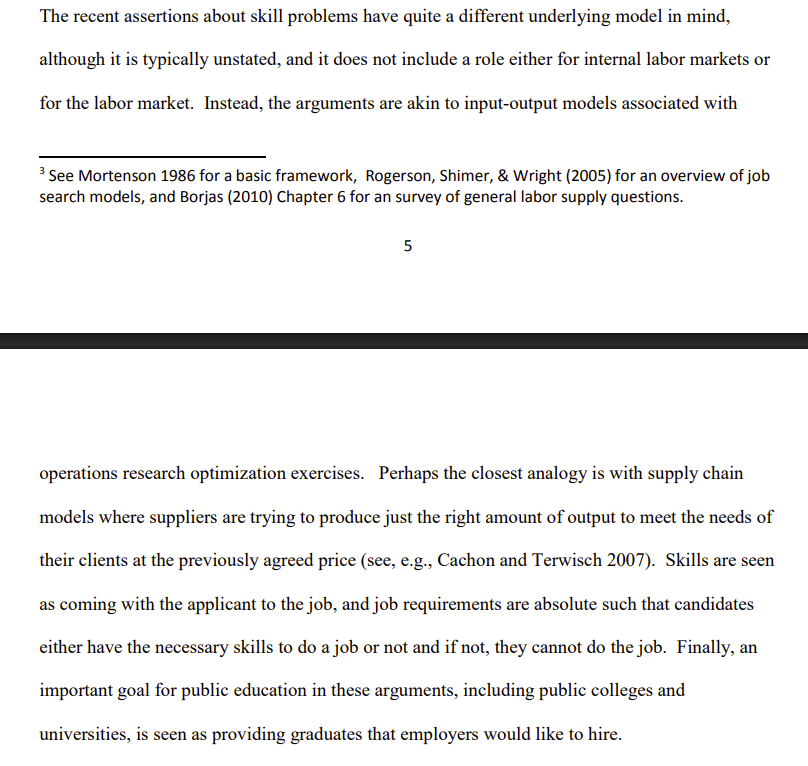
Neither a hiring market nor training model for matching jobs to seekers is compatible with "skill shortages" as a concept, which implicitly assumes skills are fixed and once people with those skills run out employers can do nothing (except through immigration or schooling).
"Fire and Blood: A History of Mexico" (TR Fehrenbach, 1973/1995) thread of threads. Mesoamerican civilization was horrifying and very backwards by Old World standards, but unique.
Excerpts from TR Fehrenbach's "Fire and Blood: A History of Mexico" (1995). The PRI had massively expanded higher education. These universities were entirely 'free'/self-governing and became locuses of left-wing organizing.
In 1968, security forces fired upon a massive student demonstration/riot against the Olympic Games.
By 1970 Mexico had made enormous progress; the national income increased sixfold while the death rate dropped by half. But Mexico was still struggling with foreign-exchange; the govt pursued import-substitution to improve balance-of-payments.
Thread with excerpts from the Partido Nacional Revolucionario (PNR) section of TR Fehrenbach's "Fire and Blood: A History of Mexico" (1995). Calles created the PNR in 1929 to institutionalize the govt and Revolution, creating a Mexican party-state.
The Calles/Obregon governments were corrupt, but never succumbed to paranoia; there was no equivalent to the Soviet or Chinese liquidations of class enemies, the press was free, and the average Mexican had nothing to fear from the govt (Red Terror against the Church aside).
Roughly 19M acres were redistributed through 1933; most land remained with latifundios. But the new latifundios were not like the old ones, they were commercial enterprises rather than social systems. The clerics, army, and latifundistas were all tamed by Calles/Obregon.
Thread with excerpts from TR Fehrenbach's "Fire and Blood: A History of Mexico" (1995), on post-Revolutionary Mexico. To justify land reform, the revolutionaries revived the principle that expropriation was justifiable if the national interests demanded it.
The Constitutionalists defeated the Villistas in battle and assassinated the leader of the last revolutionary faction, Zapata, by treachery.
Carranza, the erstwhile leader of the victorious Constitutionalists, dug his own grave by trying to promote someone other than Obregon to the presidency after him; he was forced to flee the capital, run down, and murdered.
Excerpts from TR Fehrenbach's "Fire and Blood: A History of Mexico" (1973). The Porfiriato gave Mexico a generation of stability and development for the first time since independence. This left Mexico overdue for another civil war: the Mexican Revolution.
One problem was that the Porfirian school system had created a large, literate middle structure (not class). These educated mestizos became dissatisfied due to lack of opportunity; growth was rapid but not rapid enough to absorb them all.
The Revolution kicked off in 1910, when Diaz announced he'd won reelection with 99% of the vote. This kicked off an insurgency in Chihuahua, in the mestizo, frontier north.