🧵Will get lost in geo-political turmoil & its domestic impacts, but the Govt's cohesion plan is imo well pithced & quite bold avoiding usual 'kumbaya' and placing more emphasis on responsibilities/ expectations necessary for a cohesive society than is normal in this type of work
The plan does a good job in identifying the cocktail of factors that have put strain on cohesion - extremism, levels of immigration, foreign actors, but also economic and technological change from deindustrialisation to living/working more online. On top of years of permacrisis 
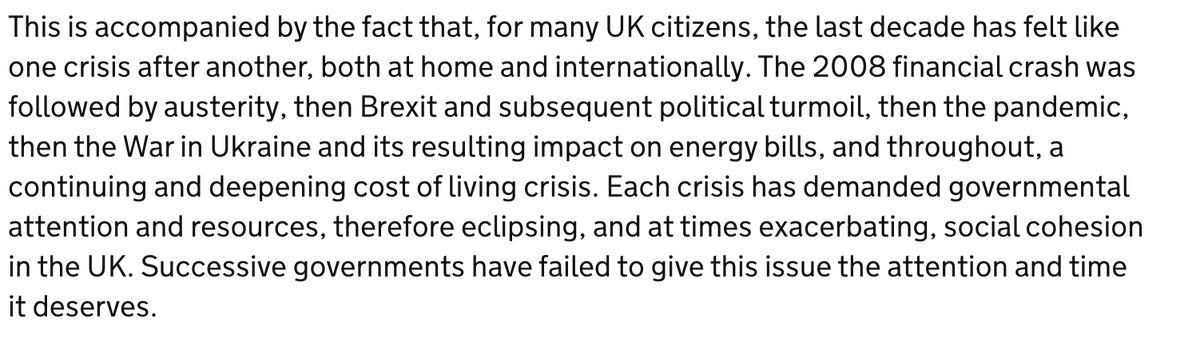
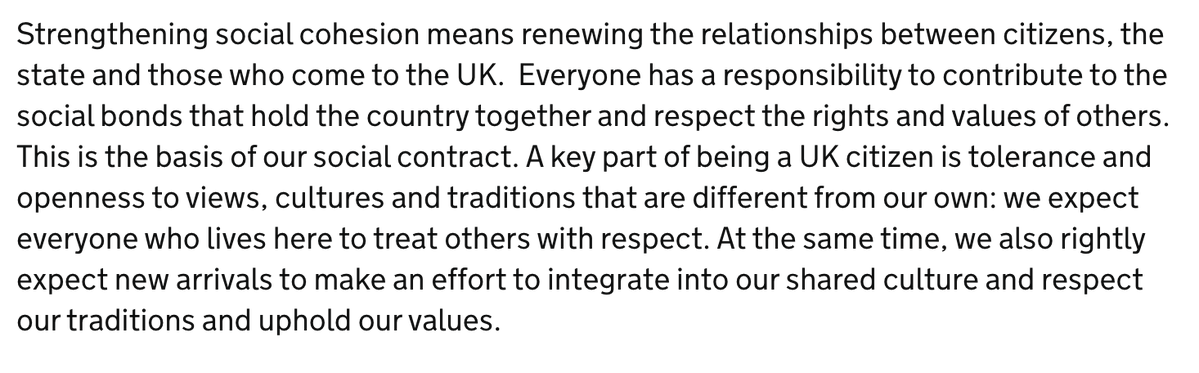
Ditto sections on resetting the social contract i think quite squarely where most of the public are - tolerance/openness to different views and cultures but also some fundamental expectations about integrating into our shared culture, respect for our traditions in values.
The plan recognises lots of people feel they can't speak freely about changes they are seeing in their local communities - our research finds half the public don't feel free to speak about issues like immigration, which in turn often leads to resentment/frustration.

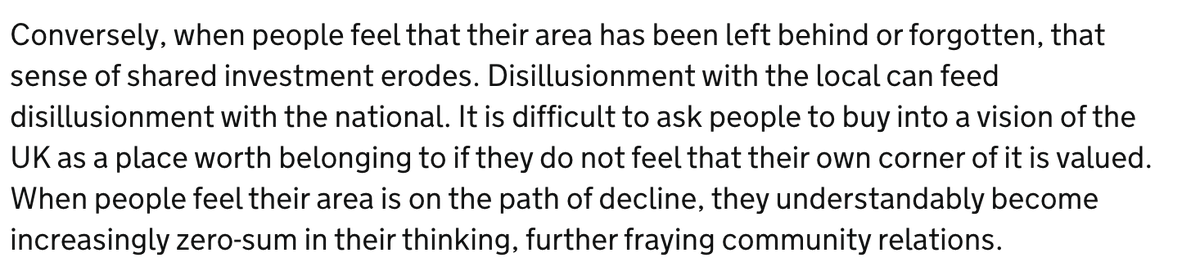
The plan directly ties social cohesion back to pride in place. Again across our research we find one of the biggest drivers of social disconnection and alienation is a sense that people's communities/high streets/parks have been left to decline, without solving that you can't improve cohesion or connection - and there's both real money and levers in the document to address that.
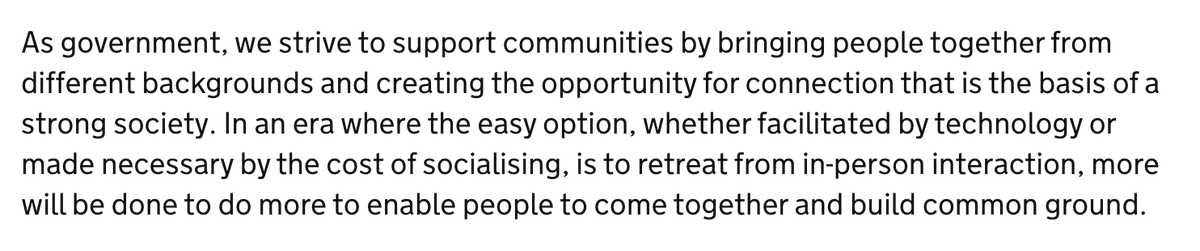
There's also good recognition that because online will often be the easy default you're govt is going to have to be more deliberate about bringing people together - whether through school linking, proper oversight of home education and more support for cultural events/community venues.
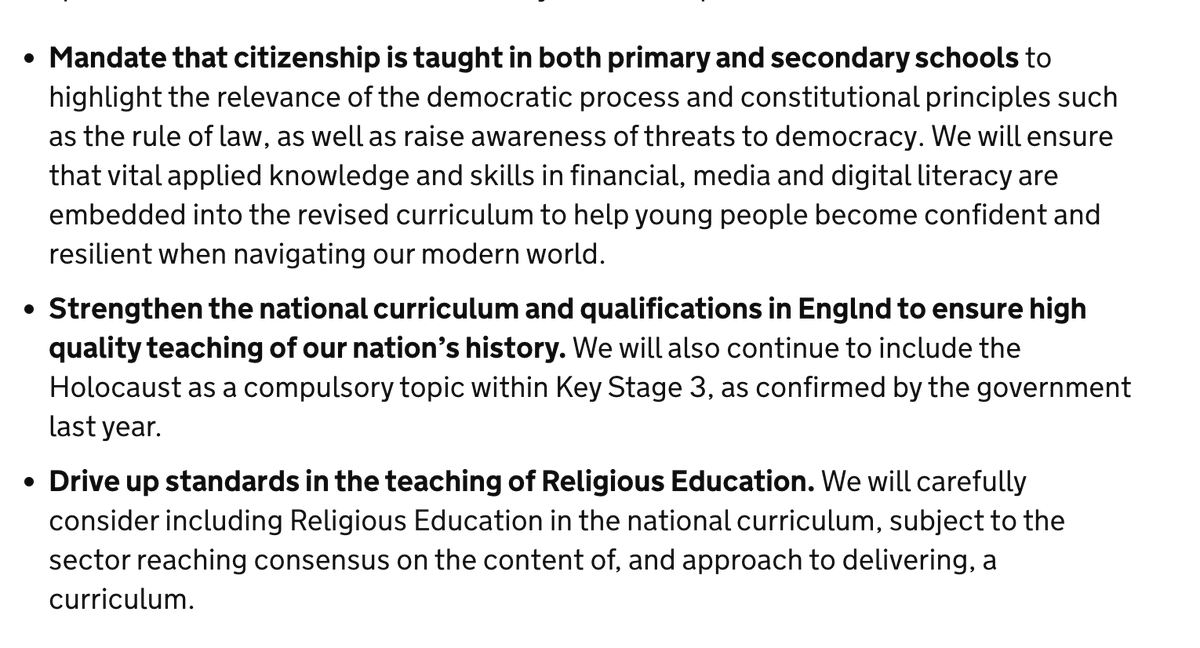
And part of the challenging is we been rubbish at teaching our values, we have nothing (in England) like French or American civics teaching, and our sense of national identity is poorer for it.
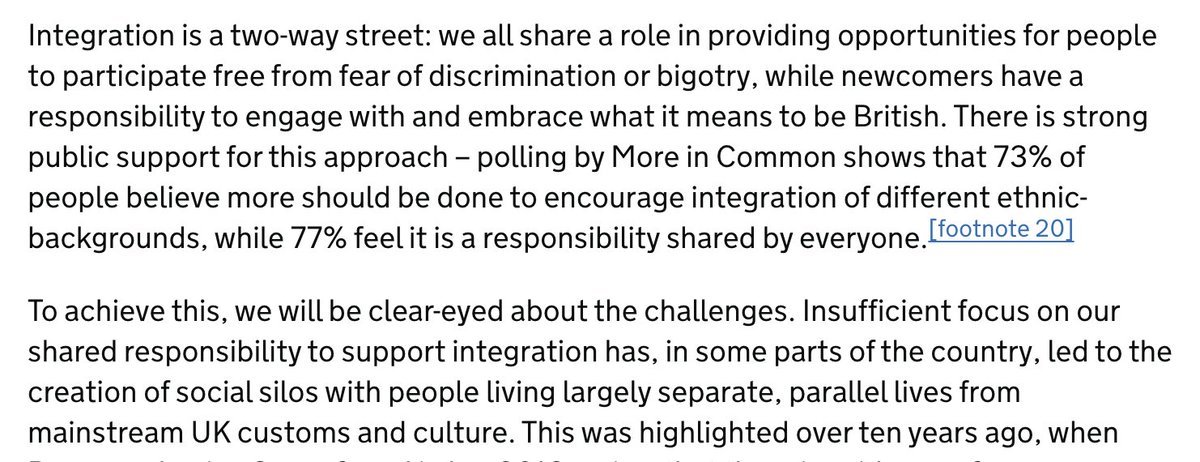
There's good recognition that integration (using some of our research) is a key expectation of the public and that its a two way street - and that there are real risks of social silos and parallel levels unless there is deliberate government action.
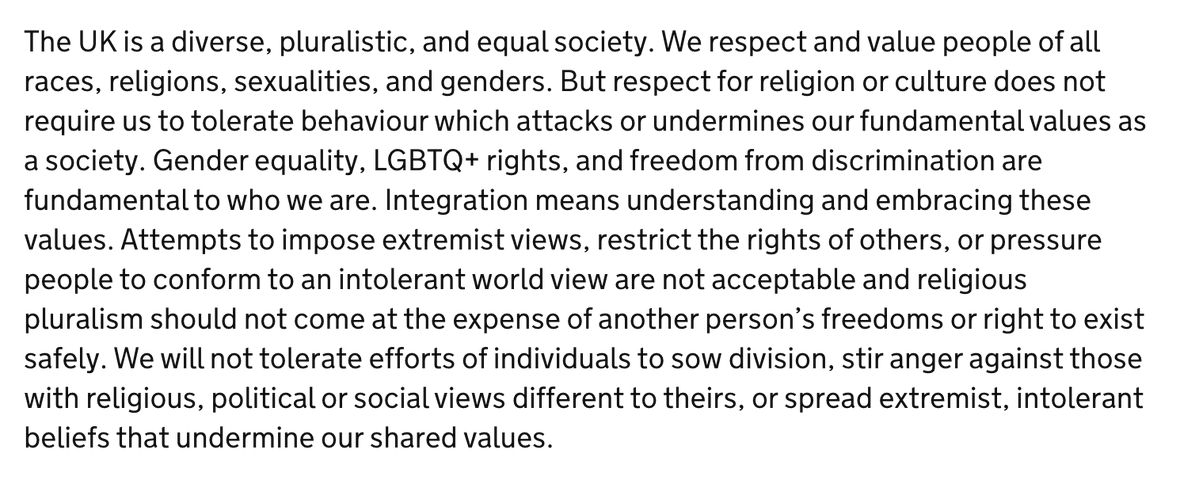
Again I think this section is quite bold/important for a government document, and is where most of the public are: there is space for and should be respect for religious pluralism - but that doesn't mean tolerating attacks on fundamental British values or infringing on hard won rights of others such as gender equality.
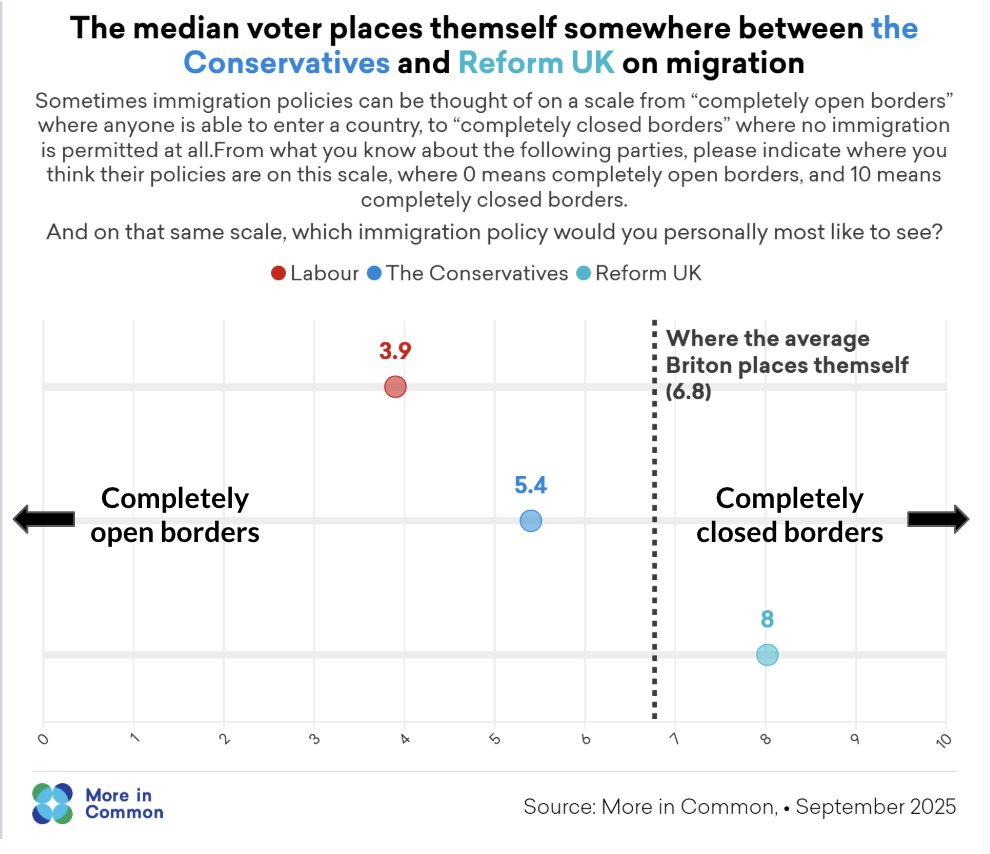
The document directly links levels of immigration that have been too high with problems of social cohesion and places greater expectations on integration - when we've polled people we've found the ability to use/understand english is people's top integration expectation

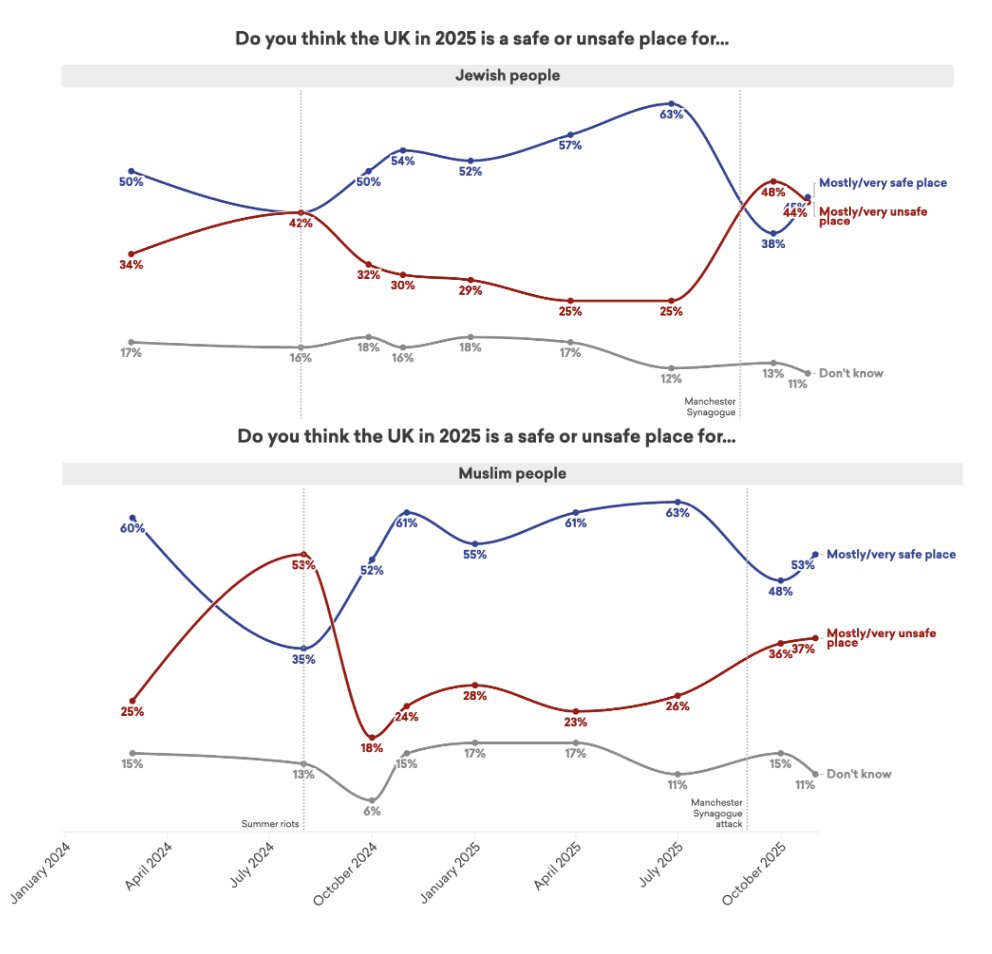
The document focuses on challenging racial/religious discrimination with a particular focus on rising anti-semitism and anti-muslim hostility. Our research at the end of last year found nearly half of Britons think the UK is unsafe for Jewish people and nearly 4 in 10 for Muslims.
On the definition of anti-muslim hostility, which we asked about a definition of islamophobia (a different definition focused more on the religion) Britons were largely indifferent, but on a seperate question about free speech 46% were concerned it would shut down legitimate debate 25% were not.
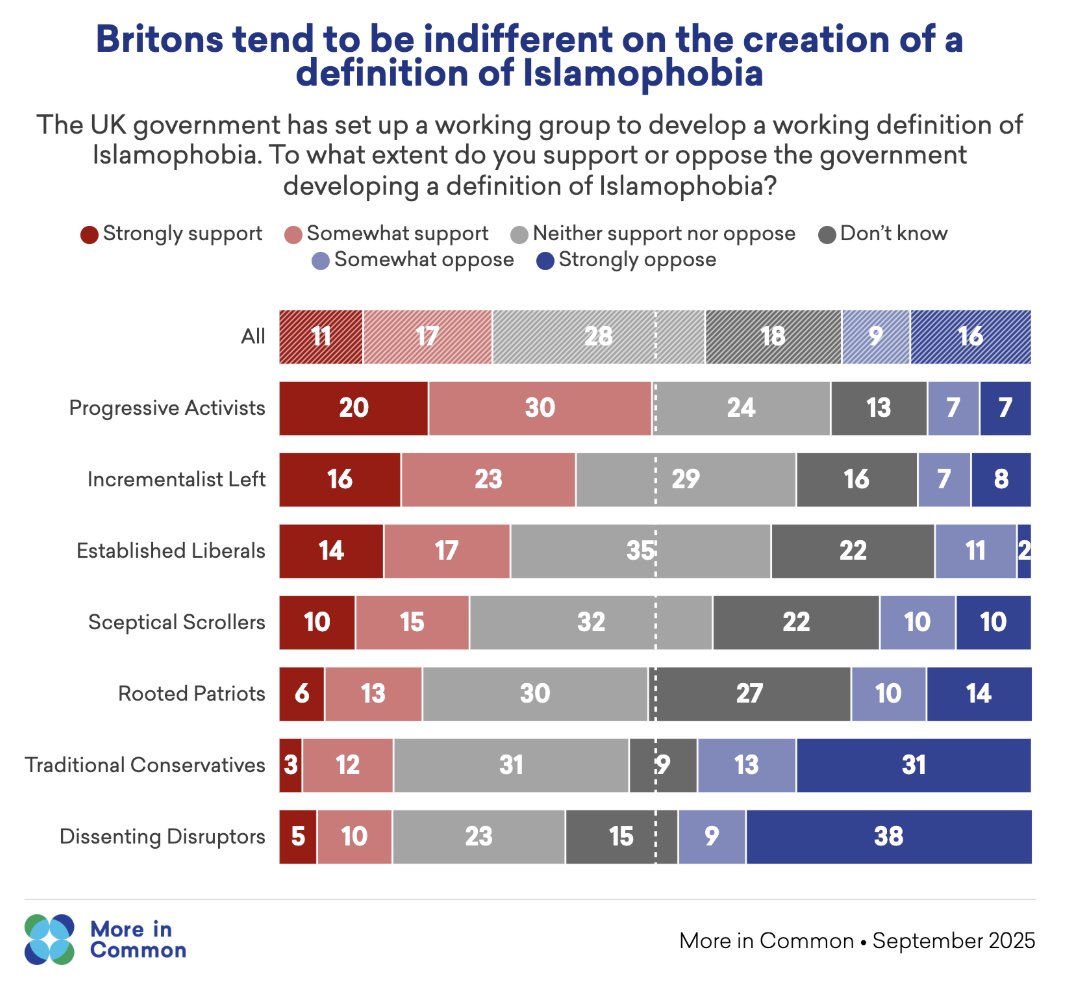
Much of public reception will depend on implementation - showing how the definition works to protect individuals from hate which most Brits would support, rather than seeming to prevent legitimate criticism of religion or specific practices.
The document concludes with an important section on extremism and the responsibilities of government to keep people safe and rights protected from extreme right wing or islamist extremism. Again the focus is most strong on education, which given some of the stuff from university campuses recently again is clearly a public priority.
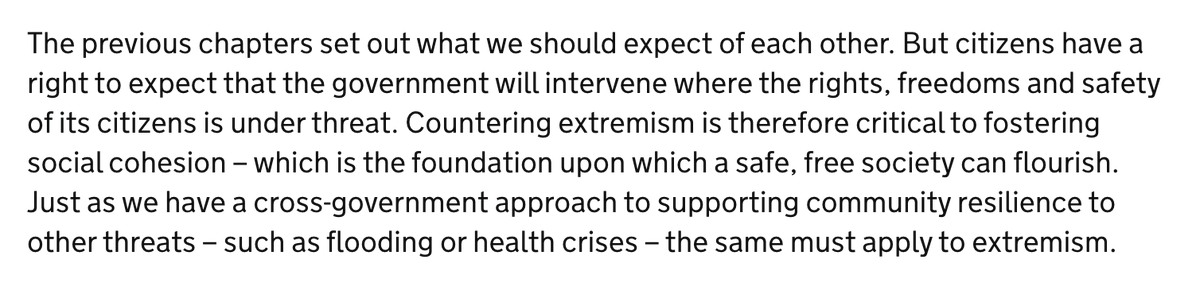
It's good that there will be a task force and updates to the plan. Obviously lots depends on implementation and if this is just words without action its meaningless and work to tackle genuine hate will have to avoid becoming further restrictions on speech/expression, something those on right and left increasingly worry about.

But a focus on resilience, shared expectations, place and tackling hate/extremism is most likely to command public support.F ull plan here gov.uk/government/pub…
• • •
Missing some Tweet in this thread? You can try to
force a refresh