7 warnings your body is living under high cortisol (doctors miss these):
1. You snap at people over nothing
1. You snap at people over nothing
Cortisol keeps your alarm system on high.
This creates:
• Guilt and regret
• Rage over small things
• Distance from people you love
This isn't a character flaw. It's your nervous system treating normal life like an emergency.
This creates:
• Guilt and regret
• Rage over small things
• Distance from people you love
This isn't a character flaw. It's your nervous system treating normal life like an emergency.
2. You can't sleep through the night—even when exhausted
High cortisol keeps you wired at the wrong times.
This creates:
• Awake at 2AM
• Exhausted mornings
• Caffeine dependency
Early warning: your body thinks it's running from danger 24/7.
High cortisol keeps you wired at the wrong times.
This creates:
• Awake at 2AM
• Exhausted mornings
• Caffeine dependency
Early warning: your body thinks it's running from danger 24/7.

3. Stubborn belly fat that won't budge
Cortisol slows your metabolism to survival mode.
This creates:
• Low energy
• Cold hands and feet
• Weight gain around the middle
No matter how clean you eat.
Once your engine shuts down to "conserve energy," nothing else works.
Cortisol slows your metabolism to survival mode.
This creates:
• Low energy
• Cold hands and feet
• Weight gain around the middle
No matter how clean you eat.
Once your engine shuts down to "conserve energy," nothing else works.
4. Your gut is a mess
High cortisol shuts down digestion.
This creates:
• Bloating after every meal
• Food sensitivities
• Chronic inflammation
Your body can't digest when it thinks it's under attack.
Once digestion breaks, where does it spread?
High cortisol shuts down digestion.
This creates:
• Bloating after every meal
• Food sensitivities
• Chronic inflammation
Your body can't digest when it thinks it's under attack.
Once digestion breaks, where does it spread?
5. Your heart races out of nowhere
High cortisol forces your heart to run on stress hormones 24/7.
This creates:
• Blood pressure spikes
• Racing heart for no reason
• Chest tightness that scares you
Your heart isn't built to sprint all day.
It never gets a break—until it's forced to take one...
High cortisol forces your heart to run on stress hormones 24/7.
This creates:
• Blood pressure spikes
• Racing heart for no reason
• Chest tightness that scares you
Your heart isn't built to sprint all day.
It never gets a break—until it's forced to take one...
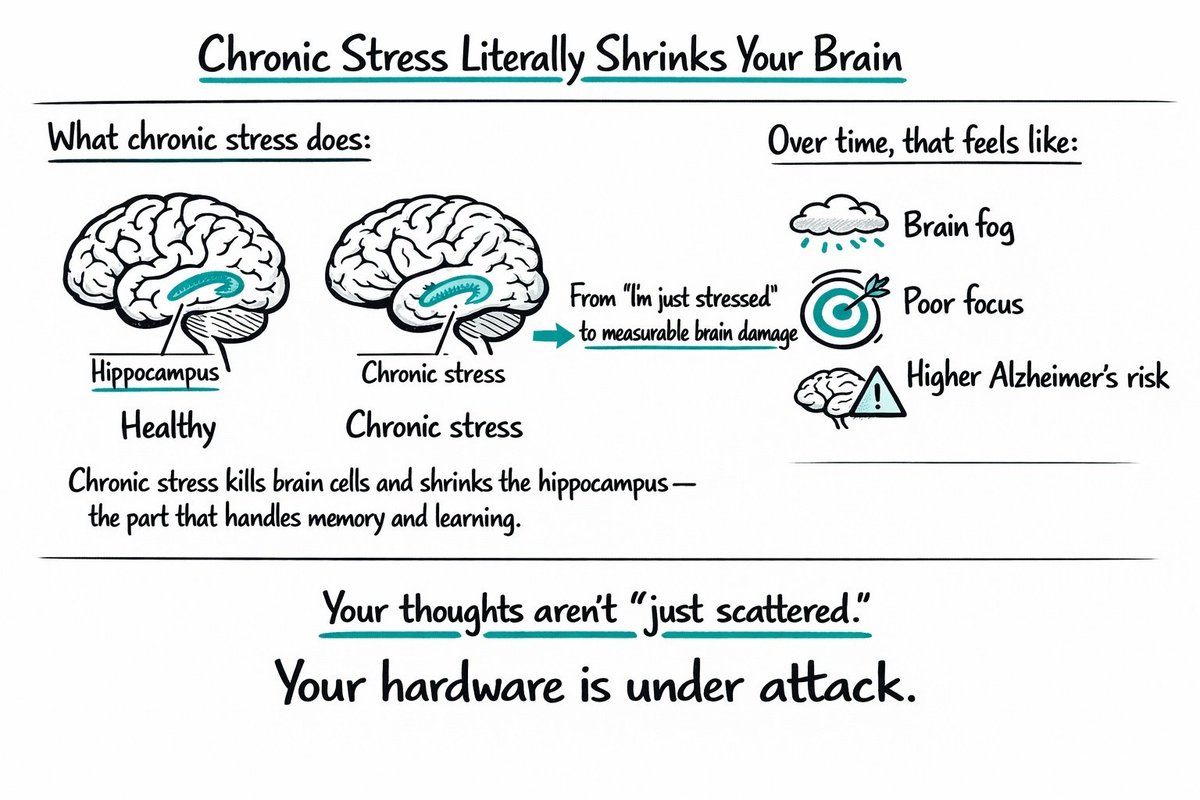
6. Brain fog and memory problems
High cortisol kills brain cells.
This creates:
• Can't focus
• Forget conversations
• Make poor decisions
Your thoughts aren't "just scattered." Your hardware is under attack.
When this becomes normal, what else is dying?
High cortisol kills brain cells.
This creates:
• Can't focus
• Forget conversations
• Make poor decisions
Your thoughts aren't "just scattered." Your hardware is under attack.
When this becomes normal, what else is dying?
7. You're aging faster than you should
Cortisol damages your DNA and shortens telomeres.
This creates:
• Looking older than your age
• Wrinkles and gray hair appearing early
• Higher cancer risk
Stress doesn't just ruin your day. It speeds up how fast you age.
Cortisol damages your DNA and shortens telomeres.
This creates:
• Looking older than your age
• Wrinkles and gray hair appearing early
• Higher cancer risk
Stress doesn't just ruin your day. It speeds up how fast you age.
When these warnings are ignored:
• Heart issues → heart disease
• Sleep problems → Alzheimer's
• DNA damage → cancer risk
Warning signs don't stay stable. They compound into crisis.
Here's what happens if you ignore them for another year...
• Heart issues → heart disease
• Sleep problems → Alzheimer's
• DNA damage → cancer risk
Warning signs don't stay stable. They compound into crisis.
Here's what happens if you ignore them for another year...
If you're seeing even one of these warning signs, don't wait until it's a crisis.
Free workshop Mar 12, 8:30pm ET: reverse chronic stress at the root so you can sleep, think clearly, and have energy again.
🎟️ go.matthewlabosco.com/workshop-l6-xp…
Free workshop Mar 12, 8:30pm ET: reverse chronic stress at the root so you can sleep, think clearly, and have energy again.
🎟️ go.matthewlabosco.com/workshop-l6-xp…
Most stress "solutions" don't address the warnings:
• Meditation = pause button
• Breathwork = temporary relief
• Self-care = weekend off
They help briefly. They don't reset the control panel sending threat signals 24/7.
That's why the warnings keep coming back.
• Meditation = pause button
• Breathwork = temporary relief
• Self-care = weekend off
They help briefly. They don't reset the control panel sending threat signals 24/7.
That's why the warnings keep coming back.
You're not "bad at managing stress."
You have high cortisol stuck in survival mode.
Until you reset the system, warnings compound:
• Sleep gets worse
• Weight harder to lose
• Brain fog intensifies
Each year, the bill gets higher.
You have high cortisol stuck in survival mode.
Until you reset the system, warnings compound:
• Sleep gets worse
• Weight harder to lose
• Brain fog intensifies
Each year, the bill gets higher.
I've spent 20+ years helping high performers who ignored these warnings until:
• They were days from divorce
• They couldn't sleep without medication
• Doctors found "problems" in bloodwork
Their turning point wasn't one more hack. It was resetting their nervous system at the root.
• They were days from divorce
• They couldn't sleep without medication
• Doctors found "problems" in bloodwork
Their turning point wasn't one more hack. It was resetting their nervous system at the root.

You can't meditate or supplement your way out of a nervous system stuck in survival mode.
Free workshop Mar 12, 8:30pm ET: the 5 patterns keeping you stuck + what actually resets your system at the root.
🎟️ go.matthewlabosco.com/workshop-l6-xp…
Free workshop Mar 12, 8:30pm ET: the 5 patterns keeping you stuck + what actually resets your system at the root.
🎟️ go.matthewlabosco.com/workshop-l6-xp…
If you recognized even one warning, don't ignore them another year.
Register for the workshop.
Follow @matthew_labosco for daily tools to retrain your nervous system and reverse these warnings at the root.
Register for the workshop.
Follow @matthew_labosco for daily tools to retrain your nervous system and reverse these warnings at the root.
• • •
Missing some Tweet in this thread? You can try to
force a refresh