Matthew LaBosco Profile picture
Nervous system specialist helping high-performing executives end chronic stress by retraining the nervous system to rest, recover, and perform again.
May 19 12 tweets 4 min read
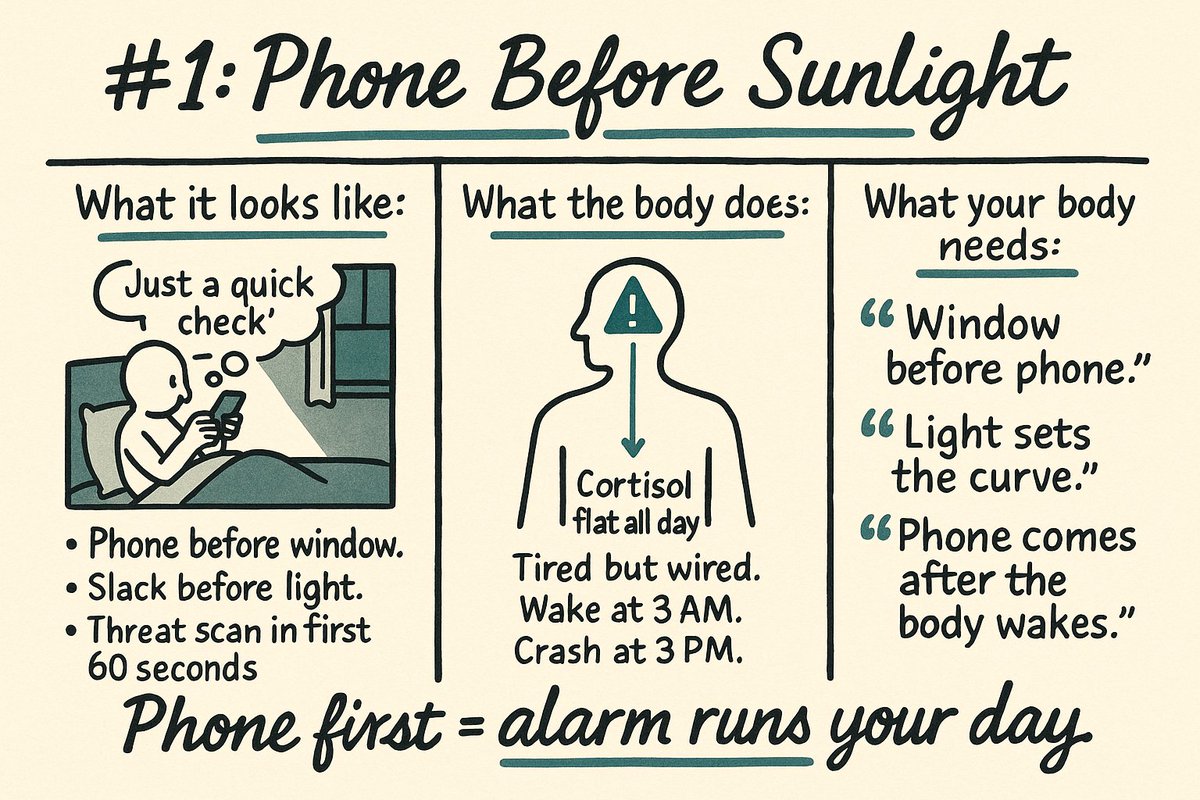
You spend 8 hours in bed every night, but still wake up exhausted.

Magnesium, melatonin, even ashwagandha don't help...Here's what's really going on:

1. Waking at 3-4 AM. Your eyes snap open. Mind instantly ON. Racing thoughts you can't shut off.

This isn't insomnia. Cortisol naturally peaks between 2-4 AM.

When your baseline is already high, that peak hits like a startle response.

You wake to your own alarm system. Image
May 19 14 tweets 5 min read
The most dangerous condition doctors never test for is;

High cortisol.

It quietly drives belly fat, broken sleep, brain fog, and burnout — even in people who "eat clean."

Here are 8 ways to fix it (without medication):

1. Check your jaw on waking. Image Touch your jaw right now. Feel that tension?

Most people have been clenching for years without realizing.

It's the most reliable physical sign of stuck cortisol — your jaw braces 24/7, even in sleep.

If yours is tight: you're running survival physiology. Image
May 18 12 tweets 4 min read
The only 5 things worth doing if you can't sleep through the night (and why each one works):

1. Strict caffeine cutoff at noon. Caffeine has a 6-hour half-life.

The coffee at 2 PM is still blocking adenosine at midnight.

Cortisol stays elevated. Sleep depth crashes. You wake at 3 AM and can't fall back asleep.

Cut it off at noon. Sleep depth changes within 3 nights.
May 17 17 tweets 6 min read
High cortisol shaves 7 years off your life.

It wrecks deep sleep, accelerates skin aging, and erases short-term memory.

Here are 10 cheat codes to lower cortisol according to science:

1. Strict caffeine cutoff at noon Image
Image
Caffeine has a 6-hour half-life.

A 2 PM coffee means 25% is still in your system at midnight — blocking adenosine, spiking cortisol, fragmenting deep sleep.

Cut it off at noon. Your sleep depth changes within 3 nights.
May 15 14 tweets 5 min read
You spend 8 hours in bed every night, but still wake up exhausted.

Coffee, magnesium, even meditation don't help…Here's what's really going on:

1. Waking at 3-4 AM. Your eyes snap open. Mind instantly ON. Racing thoughts you can't shut off.

This isn't insomnia. Cortisol naturally peaks between 2-4 AM.

When your baseline is already high, that peak hits like a startle response.

You wake to your own alarm system. Image
May 15 17 tweets 6 min read
High cortisol shaves 7 years off your life — and most adults are running it.

It wrecks deep sleep, ages your skin, fragments memory, and locks belly fat in survival mode.

Here are 10 cheat codes to lower cortisol according to science:

1. Strict caffeine cutoff at noon Image
Image
Caffeine has a 6-hour half-life.

A 2 PM coffee means 25% is still in your system at midnight — blocking adenosine, spiking cortisol, fragmenting deep sleep.

Cut it off at noon. Your sleep depth changes within 3 nights.
May 14 14 tweets 5 min read
High cortisol is the real reason your belly fat won't budge.

If I wanted to lose cortisol belly fat without dieting, these are the 8 things I would do every day to fix it:

1. Strict caffeine cutoff at noon Image Caffeine’s half-life is ~5–7 hours.

That 3 PM coffee may still be affecting your sleep at midnight.

Less deep sleep = more stress on the body, worse recovery, and often harder fat loss.

Try cutting caffeine at noon for a week and watch what happens to your sleep.
May 14 14 tweets 5 min read
Everyone knows you should "just meditate" to lower cortisol.

But most people don't know these 8 unconventional yet powerful tips to lower cortisol: 🧵

1. Hum for 60 seconds Image
Image
Humming may look silly.

But slow vocal humming can help shift your body toward a calmer parasympathetic state through breath, vibration, and prolonged exhalation.

Sometimes the nervous system responds faster to physiology than to thought alone.
May 11 19 tweets 6 min read
Robert Sapolsky is a Stanford neuroscientist who proved chronic stress is the silent killer doctors ignore.

On Chris Williamson's podcast, he revealed 10 "normal" habits you do every day that wreck your sleep, mood, and nervous system:

1) Replay conversations in your head Sapolsky's exact words: "ruminating about that weird thing you said to a teacher 15 years ago."

Your brain doesn't know the conversation isn't happening right now. It triggers the same cortisol surge as the original threat.

Notice it. Name it. Redirect.
May 8 17 tweets 6 min read
Dr. Stephen Porges is the neuroscientist who created polyvagal theory after 50 years studying the autonomic nervous system.

Polyvagal theory reveals 10 signals your nervous system is stuck in chronic threat mode (& you don't realize it):

1) Voice tight all day. Image Your vagus nerve controls the muscles of your larynx.

When it's strong, your voice has natural prosody — rises, falls, softness.

When it's weak, your voice flattens and tightens. Friends say you "sound stressed" even on quiet days.

You're not "just tired." You're cut off. Image
May 5 17 tweets 6 min read
High cortisol shaves 7 years off your life.

It wrecks deep sleep, accelerates skin aging, and erases short-term memory.

Here are 10 cheat codes to lower cortisol according to science:

1. Strict caffeine cutoff at noon Image
Image
Caffeine has a 6-hour half-life.

A 2 PM coffee means 25% is still in your system at midnight — blocking adenosine, spiking cortisol, fragmenting deep sleep.

Cut it off at noon. Your sleep depth changes within 3 nights.
May 5 14 tweets 5 min read
7 signs your body is flooded with cortisol (& you don't realize it):

1. Random muscle twitches. A muscle in your eyelid flutters for days. A finger jumps. Your calf cramps when you stand up.

Doctors blame magnesium deficiency.

The real cause: cortisol depletes magnesium faster than you can replace it.

Your body is leaking signals. Image
May 4 14 tweets 5 min read
20+ years coaching high performers taught me ONE thing:

Chronic stress doesn't just exhaust you. It rewires your nervous system to never feel safe again.

Here are the 7 things that actually reset it:

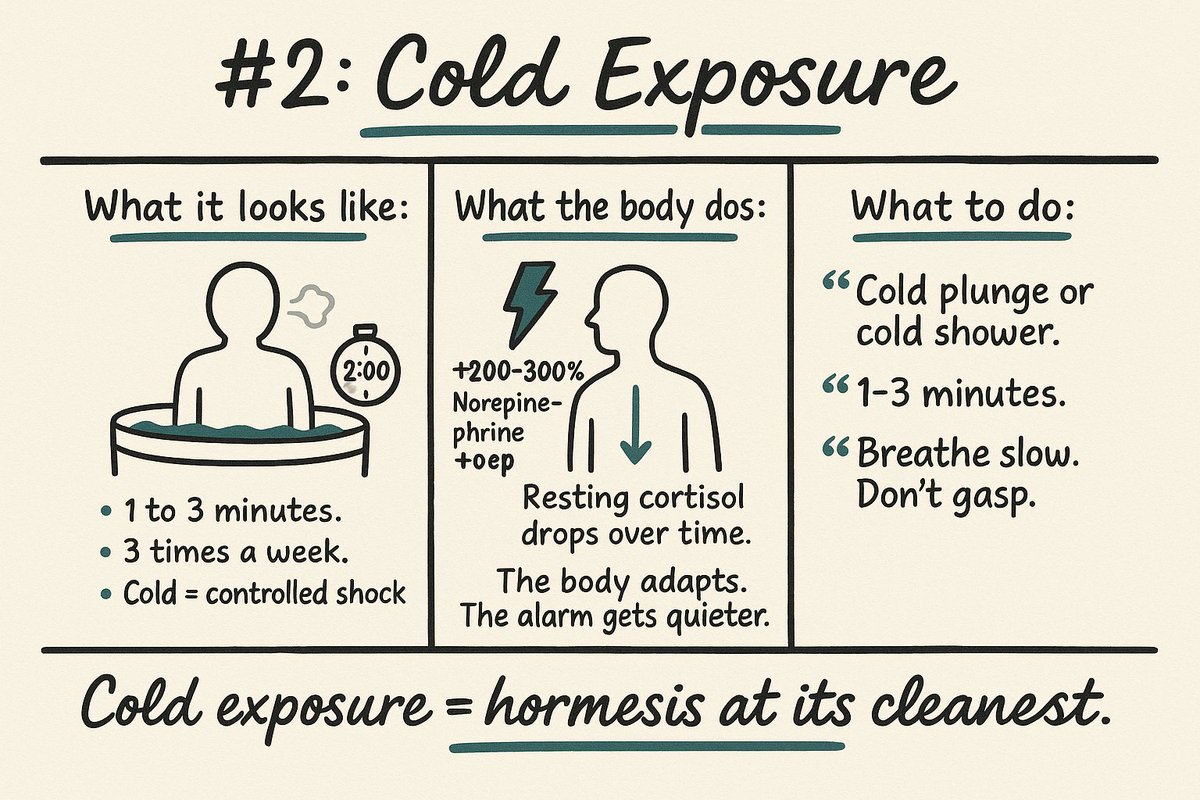
1. Cold water on your face. Image 30 seconds. Wash your face. Splash cold water. That's it.

It triggers the dive reflex — instantly slows your heart rate and switches your nervous system out of fight-or-flight.

Free. 30 seconds. No supplement comes close to this speed.
Apr 29 17 tweets 6 min read
Gabor Maté is a Canadian physician who proved chronic stress is the silent driver of disease doctors keep missing.

On Diary of a CEO, he revealed 10 "normal" habits you do every day that wreck your sleep, mood, and nervous system:

1) Saying yes when your gut says no Maté's exact words: "When people don't know how to say no, the body will say no for them in the form of illness."

Every "yes" you didn't mean is your nervous system filing another threat.

Your body is keeping score.

But what people don't realize about habit #2...
Apr 28 14 tweets 5 min read
Alia Crum is a Stanford psychologist who proved stress isn't killing you — your beliefs about it are.

On Huberman Lab, she revealed 7 "normal" habits that wreck your sleep, mood, and nervous system:

1) Trying to "manage" your stress. Crum: "Coping with stress implies fighting against it."

Every time you "manage" stress, you reinforce the belief that stress is the enemy.

Your nervous system gets the signal: "We are under attack."

That's not management. That's amplification.
Apr 27 15 tweets 5 min read
7 signs your body is flooded with cortisol (& you don't realize it):

1. Waking at 3-4 AM. Your eyes snap open. Mind racing. Thoughts you can't shut off.

This isn't insomnia. It's cortisol spiking at the wrong time of day.

Chronic stress flips your hormone clock, your body thinks 3 AM is morning.

But sign #2 makes everything worse... Image
Apr 26 19 tweets 6 min read
Robert Sapolsky is a Stanford neuroscientist who proved chronic stress is the silent killer doctors ignore.

On Chris Williamson's podcast, he revealed 10 "normal" habits you do every day that wreck your sleep, mood, and nervous system:

1) Replay conversations in your head Sapolsky's exact words: "ruminating about that weird thing you said to a teacher 15 years ago."

Your brain doesn't know the conversation isn't happening right now. It triggers the same cortisol surge as the original threat.

Notice it. Name it. Redirect.
Apr 25 13 tweets 4 min read
The man who heals what medicine can't:

Dr. Gabor Maté.

This 80-year-old physician says true healing comes from nervous system regulation, not drugs or meditation.

Here are his 7 forgotten laws for ending chronic stress at the root: 🧵 Image 1. Don’t just ask what. Ask why.

When I felt anxious, I stopped asking:
“How do I get rid of this?”

I started asking:
“Why is my system sounding the alarm?”

Treat the feeling as data, not a defect.

That’s how you find the loop instead of muting symptoms.
Apr 24 13 tweets 5 min read
Andrew Huberman just dropped a 2‑hour masterclass on cortisol — your body’s main stress hormone.

High cortisol = burnout, faster aging, weight gain, memory loss, heart disease, Alzheimer’s.

Here’s a 7‑step protocol to fix your cortisol (backed by science):🧵 Image
Image
Step 1: Understand cortisol

Cortisol isn’t “bad.”

You need it to wake up, think clearly, and respond to challenges.

The problem is:
• Too much
• At the wrong time
• For too long

That’s the chronic stress pattern that quietly wrecks your health.
Apr 23 13 tweets 4 min read
If I wanted to reverse chronic stress without medication, these are the 7 ways to reset your nervous system:

1. Walk without your phone or music (20 min) Most people can't do this.

Your nervous system never gets a break from stimulation.

Silent walking = your brain finally processing stress instead of suppressing it.

Try it today. Notice how hard it is.
Apr 18 13 tweets 5 min read
Being stuck in chronic stress is killing you faster than smoking.

3 AM wakeups, weight gain, digestive issues, brain fog.

Here are 7 ways to reset your nervous system and actually calm down (share this with someone you care about) 🧵 Image
Image
1. Walk without your phone or music (20 min)

Most people can't do this.

Your nervous system never gets a break from stimulation.

Silent walking = your brain finally processing stress instead of suppressing it.

Try it today. Notice how hard it is.