
Last year, we invested in @Monumental_Labs.
They use AI and robotics to reduce the cost of stone fabrication by 90%.
Construction tech is our game and while I think what they are doing with art and sculpture fab is amazing, the bull case for ML imo was doing building scale construction with stone. Essentially, reviving a dormant material type for type I construction to compete directly with steel and concrete.
Before investing, I had to answer a question that's been nagging me for years: exactly when and why did we stop building with natural materials like stone? Where did beauty in our built environment go to die?
It's mostly always been an economic story.
They use AI and robotics to reduce the cost of stone fabrication by 90%.
Construction tech is our game and while I think what they are doing with art and sculpture fab is amazing, the bull case for ML imo was doing building scale construction with stone. Essentially, reviving a dormant material type for type I construction to compete directly with steel and concrete.
Before investing, I had to answer a question that's been nagging me for years: exactly when and why did we stop building with natural materials like stone? Where did beauty in our built environment go to die?
It's mostly always been an economic story.

1/ Beauty = Depth
In Celtic tradition, “thin places” describe landscapes that feel spiritually charged or unusually present. Buildings can feel that way, too, but paradoxically, only when their edges have thickness. Today, that’s increasingly rare.
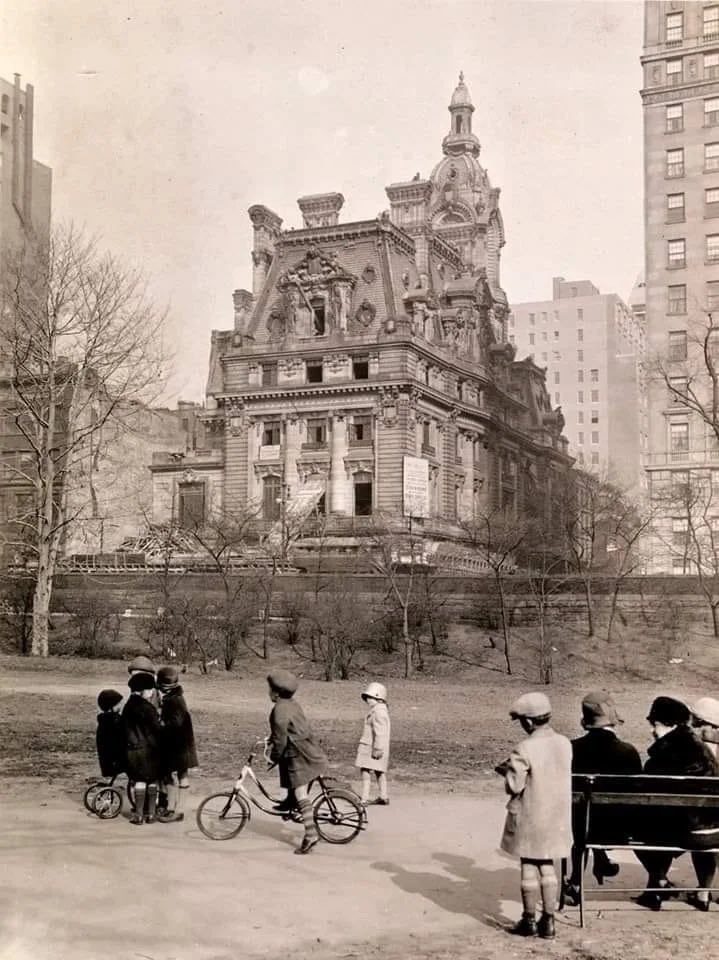
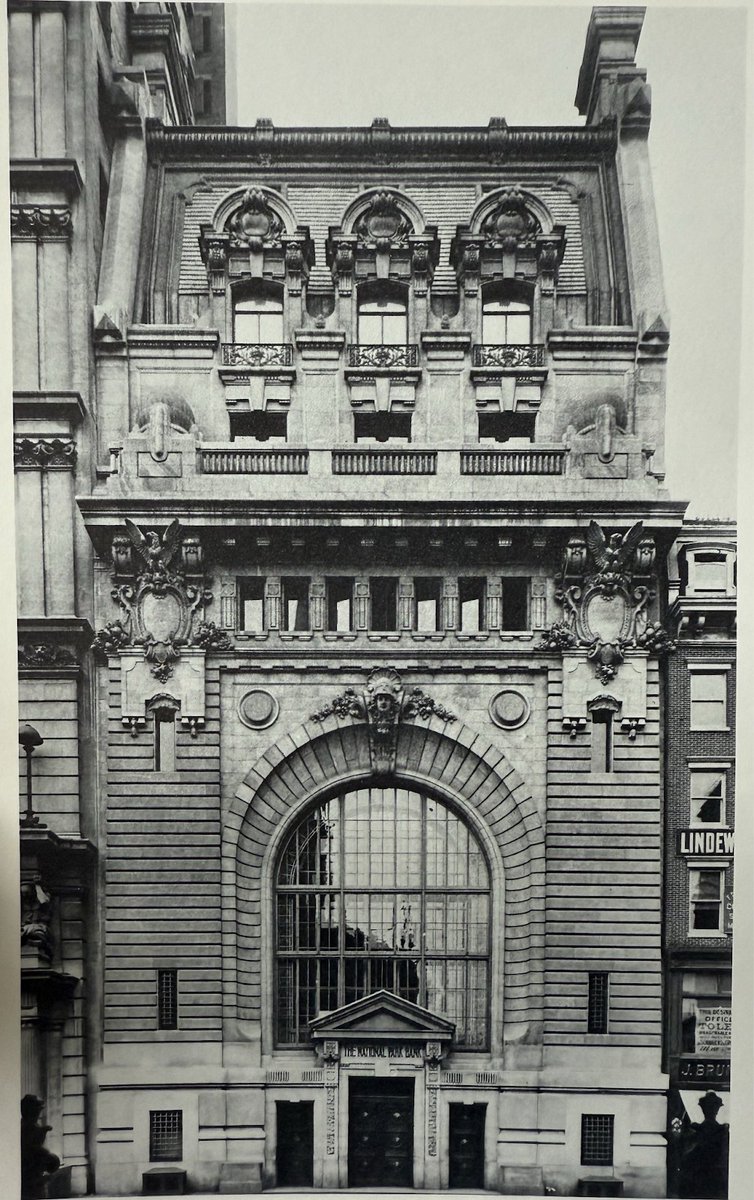
Picture any civil building in NYC from 1910, even a working-class tenement, it had more depth and 'presence' than most luxury towers going up today.
John Ruskin said no building is truly great without "mighty masses” and added that any young architect should learn to “think in shadow."
It wasn't expensive to build this way by the standards of its time. So what happened?
In Celtic tradition, “thin places” describe landscapes that feel spiritually charged or unusually present. Buildings can feel that way, too, but paradoxically, only when their edges have thickness. Today, that’s increasingly rare.
Picture any civil building in NYC from 1910, even a working-class tenement, it had more depth and 'presence' than most luxury towers going up today.
John Ruskin said no building is truly great without "mighty masses” and added that any young architect should learn to “think in shadow."
It wasn't expensive to build this way by the standards of its time. So what happened?
2/ Separation of Structure and Skin
For most of construction history, depth and ornament were embedded in the act of construction itself through its structural material (brick and stone commonly).
Steel and concrete changed that structural logic. Buildings could span wider and rise higher without sacrificing valuable floor space.
As labor and materials costs rose, the bond between structure and skin was broken. Ornament ceased to be embedded and became discretionary.
For most of construction history, depth and ornament were embedded in the act of construction itself through its structural material (brick and stone commonly).
Steel and concrete changed that structural logic. Buildings could span wider and rise higher without sacrificing valuable floor space.
As labor and materials costs rose, the bond between structure and skin was broken. Ornament ceased to be embedded and became discretionary.
3/ Ideology
After World War II, the International Style became dominant in commercial architecture worldwide. Austerity was not a compromise but a virtue. Flatness, repetition, and exposed structure were framed as honest function.
Moreover, ornament has an inherent cost problem: labor. Stone carving and masonry requires skill, apprenticeship, and time. Wars decimated skilled workforces in Europe.
The gap between industrially produced goods and handcrafted goods widened -- a textbook example of Baumol’s cost disease, where labor-intensive work grows more expensive over time.
For developers and their capital partners, this was a convenient ideology. An ideology that treated ornament as excess provided cover for what budgets already demanded: fewer trades, less detail, and faster delivery.
We got this.
After World War II, the International Style became dominant in commercial architecture worldwide. Austerity was not a compromise but a virtue. Flatness, repetition, and exposed structure were framed as honest function.
Moreover, ornament has an inherent cost problem: labor. Stone carving and masonry requires skill, apprenticeship, and time. Wars decimated skilled workforces in Europe.
The gap between industrially produced goods and handcrafted goods widened -- a textbook example of Baumol’s cost disease, where labor-intensive work grows more expensive over time.
For developers and their capital partners, this was a convenient ideology. An ideology that treated ornament as excess provided cover for what budgets already demanded: fewer trades, less detail, and faster delivery.
We got this.


4/ Economics
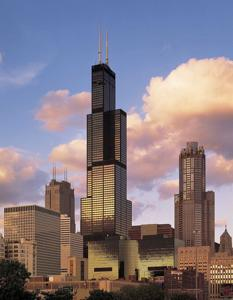
For half a century, US real estate has been the gold standard of assets. It’s leverageable, collateralized, durable, and accepted.
When a building becomes a financial product wrapped around a construction process and a regulatory regime, its design and material choices often conflict with the short-term hold periods embedded in modern capital structures.
As developer @bobbyfijan often points out, developers operate inside financial systems that demand fast, modelable returns: 7- to 10-year fund cycles, rigid IRR hurdles, and compensation schemes tied to these short term milestones.
Beauty, durability, and long-term design simply don’t pencil under those horizons.
x.com/bobbyfijan/sta…
For half a century, US real estate has been the gold standard of assets. It’s leverageable, collateralized, durable, and accepted.
When a building becomes a financial product wrapped around a construction process and a regulatory regime, its design and material choices often conflict with the short-term hold periods embedded in modern capital structures.
As developer @bobbyfijan often points out, developers operate inside financial systems that demand fast, modelable returns: 7- to 10-year fund cycles, rigid IRR hurdles, and compensation schemes tied to these short term milestones.
Beauty, durability, and long-term design simply don’t pencil under those horizons.
x.com/bobbyfijan/sta…

5/ How to Make Beauty Affordable
If thinness is the equilibrium, what breaks it?
That brings us to @Monumental_Labs.
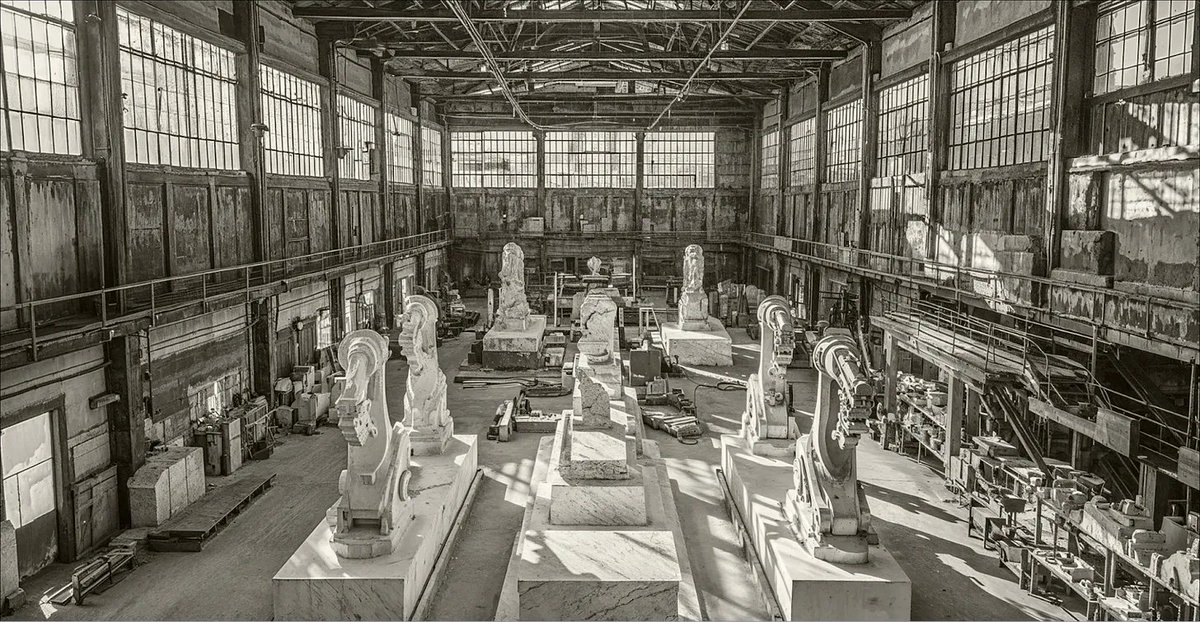
When you remove the impossibly high labor cost and move building fabrication into a controlled factory, digitize it, and automate it end-to-end...the cost structure can change dramatically. Like > 90% on fabrication.
Every piece of stone can be cut, milled, labeled, checked, pre-tensioned with its reinforced material, and packed for installation. On-site assembly becomes dramatically simpler and programmatic.
If thinness is the equilibrium, what breaks it?
That brings us to @Monumental_Labs.
When you remove the impossibly high labor cost and move building fabrication into a controlled factory, digitize it, and automate it end-to-end...the cost structure can change dramatically. Like > 90% on fabrication.
Every piece of stone can be cut, milled, labeled, checked, pre-tensioned with its reinforced material, and packed for installation. On-site assembly becomes dramatically simpler and programmatic.
6/ Reinforced Stone Buildings
In 2020, “Stone Tower” was a theoretical cost study from Webb Yates and Groupwork in which they modeled a notional 30-story office tower in the UK and found that pre-tensioned stone reinforced with CLT or steel could be cost-competitive with conventional steel and concrete buildings.
The constraint identified in that study was not structural viability but fabrication.
Eventually, this concept got funded and built. GROUPWORK’s 15 Clerkenwell Close in London proved the concept is buildable. It’s a six-story mid-rise in which the stone walls are load-bearing rather than cladding. A modern take on stone buildings. Just as important, the cost structure beat out steel and concrete.
In 2020, “Stone Tower” was a theoretical cost study from Webb Yates and Groupwork in which they modeled a notional 30-story office tower in the UK and found that pre-tensioned stone reinforced with CLT or steel could be cost-competitive with conventional steel and concrete buildings.
The constraint identified in that study was not structural viability but fabrication.
Eventually, this concept got funded and built. GROUPWORK’s 15 Clerkenwell Close in London proved the concept is buildable. It’s a six-story mid-rise in which the stone walls are load-bearing rather than cladding. A modern take on stone buildings. Just as important, the cost structure beat out steel and concrete.

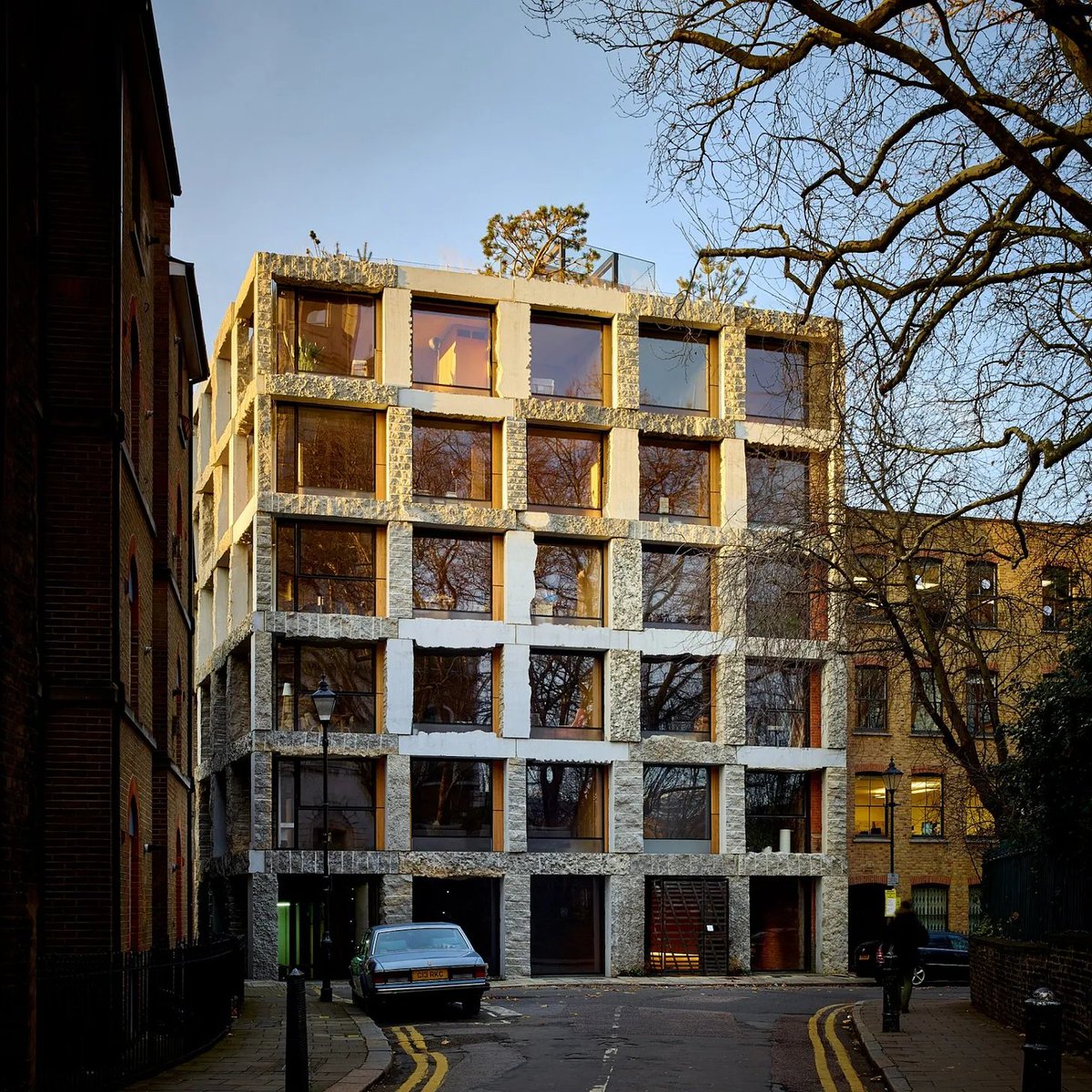
Right now, most builders and architects face a constrained menu. Structural materials that produce thickness are priced as exceptions rather than defaults. If fabrication and installation costs fall, that constraint changes.
Which suggests its a tooling problem. And tooling problems can get solved.
When our built environment doesn’t inspire, the world suffers. This is not a call to legislate taste. It is a call to expand choice.
Which suggests its a tooling problem. And tooling problems can get solved.
When our built environment doesn’t inspire, the world suffers. This is not a call to legislate taste. It is a call to expand choice.
• • •
Missing some Tweet in this thread? You can try to
force a refresh




