1/ Russia is having increasing problems using drones in the Kherson area, due to improved Ukrainian electronic warfare and drone strikes against Russian forces. Ukraine is reported to have devised an ingenious approach to deploy fibre-optic drones across the Dnipro river. ⬇️
2/ Since Russian forces retreated across the Dnipro in November 2022, control of the river's banks and its many islands has been contested by both sides.
3/ Russian forces have, notoriously, used drones to mount what has been called a 'human safari' in the city of Kherson. The Russian warblogger 'UAV developer' says that Russia is facing increasing difficulty in doing this due to Ukraine's countermeasures:
4/ "Over time, the Ukrainians have secured the area so well that off-the-shelf UAVs can’t fly there at all; at the same time, they’ve scattered beacons throughout the area and have their own local navigation system.
5/ "They have Starlink. They have Silvus [mesh radios] and [L3Harris Falcon radios]. Combined with the coordinated work of FPV [drone] reconnaissance and electronic warfare teams, this allows them to deploy radio-controlled drones deep into our rear and operate them effectively.
6/ "We, on the other hand, generally can’t fly as far as Kherson. The problem with fibre-optic drones on the river is that the current breaks the fibre. Therefore, operating with fibre across the river is difficult for both sides."
7/ The Ukrainians have reportedly found a couple of ingenious solutions. One is to use uncrewed surface vessels (USVs) to ferry supplies and drones to Ukrainian troops on the river islands; this video shows one USV being destroyed by a Russian FPV drone.
8/ The other is to transport fibre-optic drones across the river, carried on Starlink-equipped heavy drones, which are then used as relay points for the fibre-optic drones without risking the cable dropping into the river:
9/ "Combined with Starlink, this creates dangerous loitering drones: fibre-optic drones can stay active for days, unlike radio-controlled ones, where the battery drains on the video transmitter within hours." /end
1/ The Russian government is blocking Telegram to destroy the Russian people's social connections, says former high-level government advisor German Klimenko. The frank admission has caused outrage among Russian commentators. ⬇️
2/ In an interview with 'Parliamentary Gazette', Klimenko says: "The primary function of any messenger is to create social connections. Therefore, to stop people from using a messenger, these connections must be destroyed."
3/ "In 2018, when Telegram first clashed with [communications regular] Roskomnadzor, the latter managed to knock out about 10 percent of social connections: let's say, I have a thousand contacts in the messenger, 100 stopped working, and 900 remained.
1/ Russia's block on Telegram, crackdown on VPNs and mobile Internet shutdowns are threatening to destroy the 'People's Military-Industrial Complex' – a vast ecosystem of volunteer and start-up efforts that manufactures and supplies the army with drones and other equipment. ⬇️
2/ The 'People's VPK', as it's known in Russia, has grown from garage workshops to well-organised industrial chains linking enthuasists, serving and ex-military personnel, and start-up companies to produce a wide variety of essential equipment for the Russian army.
3/ They supply many things that the Russian MOD and the slow and expensive state-directed military industrial complex does not: drones, signal repeaters, masts, armour plates, charging stations, sighting devices, electronic warfare equipment, and so on.
1/ The blocking of Telegram by the Russian government is a disaster for huge numbers of Russian businesses and citizens, who have now lost a key means of advertising and income. The Russian government's preferred app, MAX, lacks the features that made Telegram so essential. ⬇️
2/ Russian commentators are warning that two recent developments – Telegram's blocking by the state and the decision by two regulatory bodies that all advertising on it is retrospectively illegal – threaten to cause devastating economic harm.
3/ Telegram, which was developed by Russian entrepreneur Pavel Durov, is almost universally used by Russians. It has become an essential business tool, with virtually every company in Russia advertising on it and many running their own channels for customers.
1/ The Russian army is recruiting incontinent, brain-damaged men who are incapable of fighting and are literally having to be carried around. A Russian warblogger protests the waste of resources that this represents. ⬇️
2/ Anastasia Kashevarova, a journalist and warblogger who has campaigned for the rights of Russian troops, highlights the ongoing problem of so-called "black recruiters" who recruit sick people into the army to meet arbitrary quotas and steal their recruitment bonuses.
3/ This is a widespread issue on which she has written before. Thousands of medically unfit men, many with infectious diseases like HIV and hepatitis, have been recruited. Some have been discharged, but many have ended up on the front lines.
1/ Iran intends to leverage its stranglehold on the Strait of Hormuz to force the US and Gulf Arab states to accept an agreement in which Iran has set "appropriate political and security conditions", in which its security is guaranteed and US bases in the region are closed. ⬇️
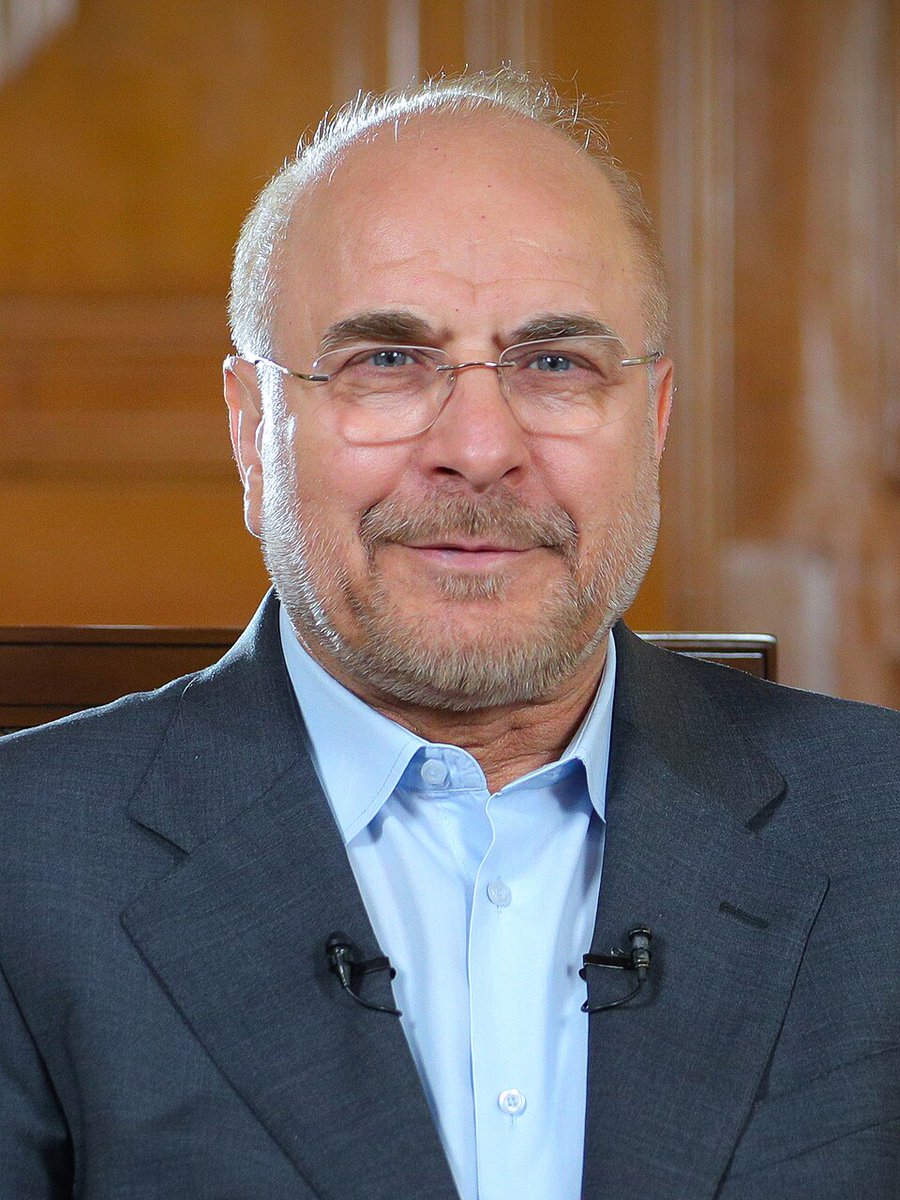
2/ Mohammad Bagher Ghalibaf, the Speaker of the Parliament of Iran, has told the London-based Arabic newspaper The New Arab (Al-Araby al-Jadeed) that Iran will keep fighting and "will not return to the conditions that prevailed before the war."
3/ He says that a ceasefire agreement will not be acceptable without guarantees "that war will not resume, not if it gives the enemy an opportunity to fix its problems, such as the destruction of its radars or the shortage of interceptor missiles,…
1/ Russia's entire strategy towards the 'Global South' is on the edge of collapse, admits the Russian writer and politician Yevgeny 'Zakhar' Prilepin. He complains that Russia's ambitious projects abroad have turned out to be little more than a bluff. ⬇️
2/ Prilepin, who represents a national-conservative perspective, writes:
"There's some extremely sad news coming out of Cuba: immersed in darkness, this country has begun negotiations with the United States.
We may be losing Cuba too."
3/ "We have to admit that the pivot to the Global South, which was the talk of all the Russian television channels just a year and a half ago, has failed.