
Vitaly has very good points here on where the russian 🇷🇺 offensive will happen this year in Ukraine 🇺🇦
I agree 100% with his conclusions and I also gathered a lot of data during the last 2 weeks (not publicly) that are showing the same thing.
🧵THREAD🧵1/14 ⬇️
I agree 100% with his conclusions and I also gathered a lot of data during the last 2 weeks (not publicly) that are showing the same thing.
🧵THREAD🧵1/14 ⬇️
https://twitter.com/M0nstas/status/2033297884582461696
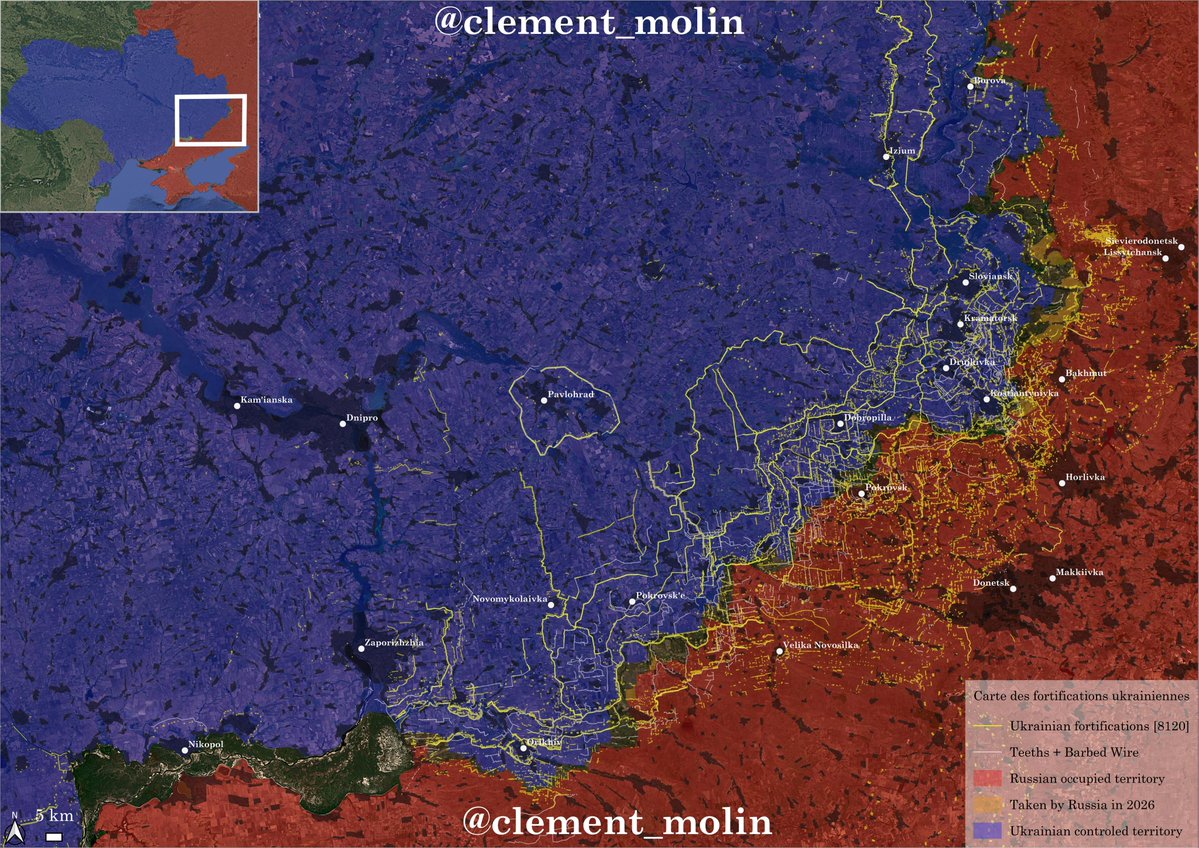
I analysed the last two years of russian units deployments on the frontlines.
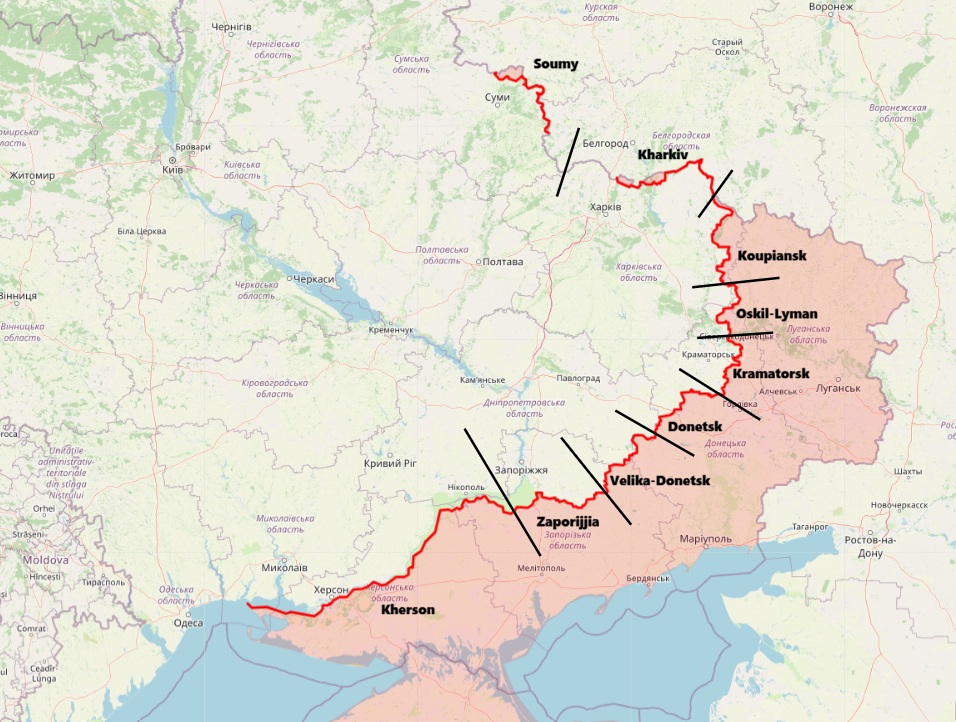
Here are the localisation of the russian brigades and divisions in the last two years in the frontline areas I cut (Could do that with the 6 grouping as well). You can see the frontline trends.
Here are the localisation of the russian brigades and divisions in the last two years in the frontline areas I cut (Could do that with the 6 grouping as well). You can see the frontline trends.
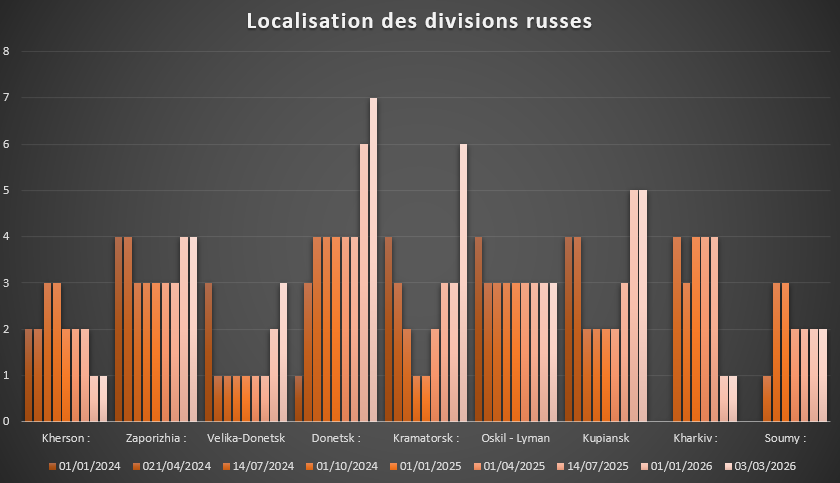
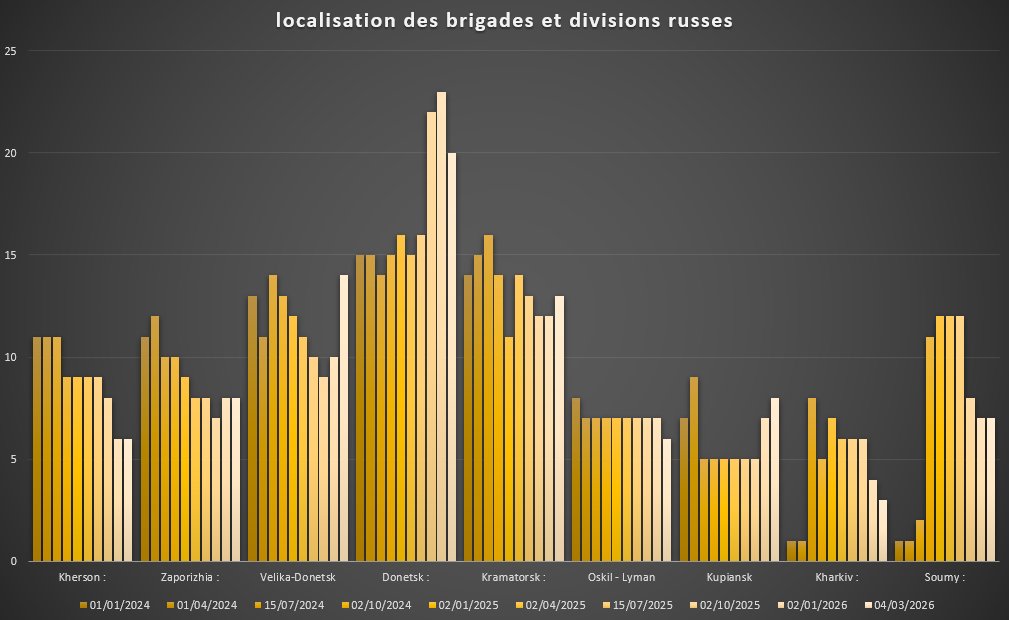

Here you have the current localisation of russian brigades and divisions on the frontline.
These are good informations to keep in mind.
These are good informations to keep in mind.
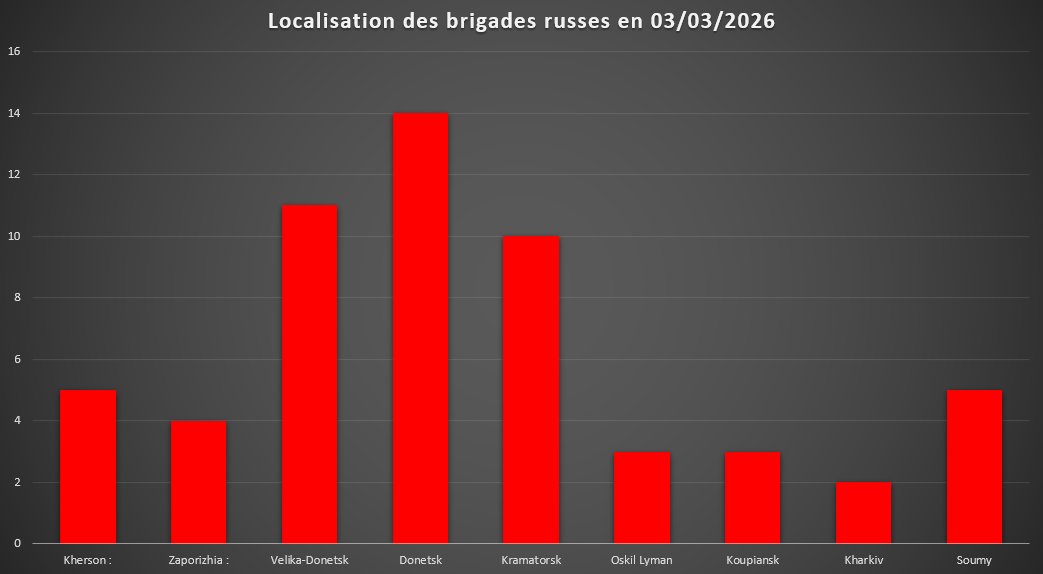
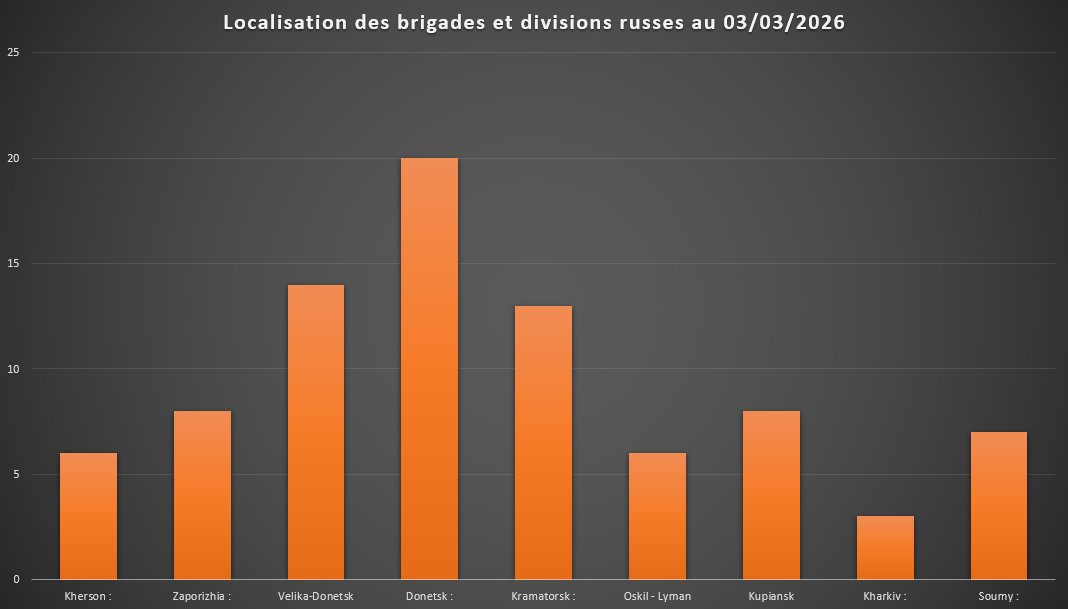
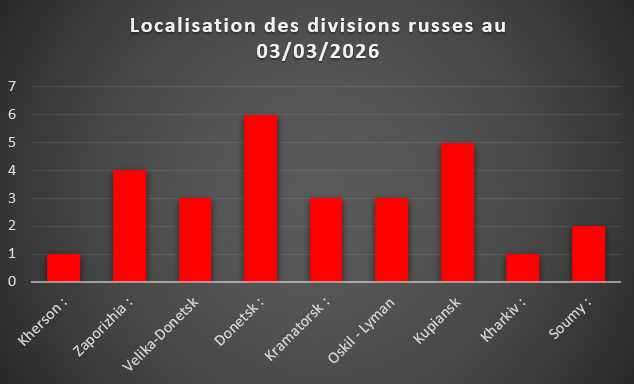
To understand, here are the russian army and army corps, as well as divisions and brigades disposition on the frontlines.
You can see the concentration between Hulialpole and the Donets River. Maps from @UAControlMap
You can see the concentration between Hulialpole and the Donets River. Maps from @UAControlMap


In total, 47 brigades and divisions are positionned between Hulialpole to the Donets, for only 35 others elsewhere.
I did the same for the ukrainians, with a difference between brigades and maneuver brigades (mech, mot, assault...).
I did the same for the ukrainians, with a difference between brigades and maneuver brigades (mech, mot, assault...).
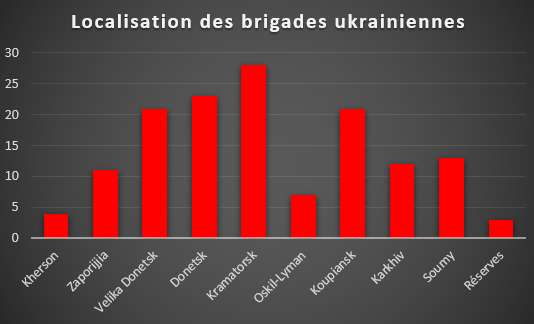
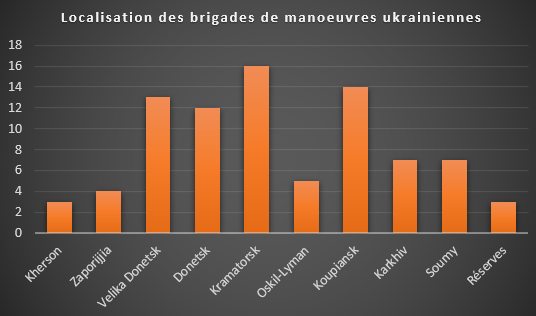
In total, there are 18 russian brigades and 8 divisions from Pokrovsk to Lyman (Kramatorsk front), there are as well 15 brigades and 6 divisions on the Zaporizhzhia front.
Ukraine has 26 (10) brigades on the Zaporizhzhia direction, as well as 44 (22) on the Kramatorsk front.
Ukraine has 26 (10) brigades on the Zaporizhzhia direction, as well as 44 (22) on the Kramatorsk front.

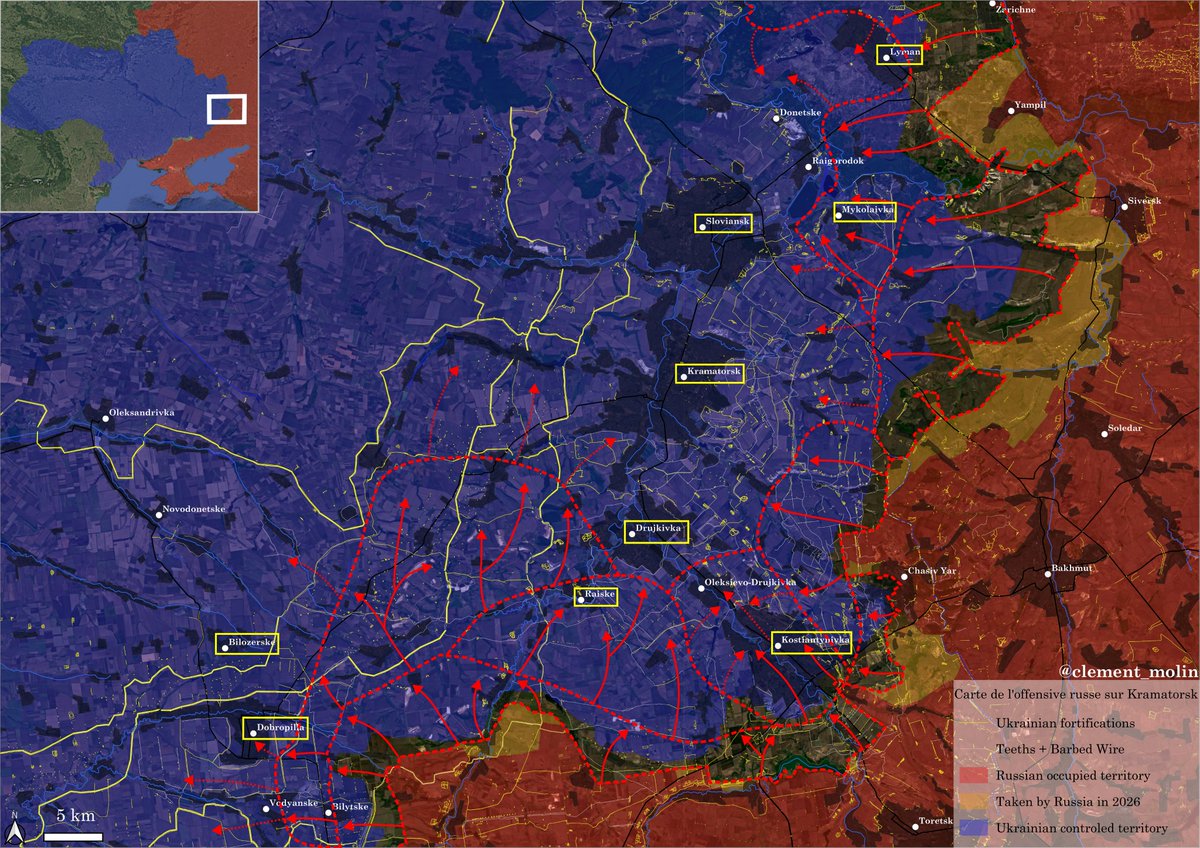
I believe Russia's main objective for 2026 is to prepare the battle for Kramatorsk-Sloviansk, this preparation started long ago :
Spring 2022 : Volnovakha/Popasna/Sievirodonetsk
2023 : Bakhmut
2024 : Donetsk/South Donetsk
2025 : Pokrovsk
2026 : Kostiantynivka/Drujkivka
Spring 2022 : Volnovakha/Popasna/Sievirodonetsk
2023 : Bakhmut
2024 : Donetsk/South Donetsk
2025 : Pokrovsk
2026 : Kostiantynivka/Drujkivka
The main offensive already started months ago with the push around Siversk which fell during the winter. The russians are currently pushing on the Mykolaivka and Dobropilla frontlines, but the main push will happen later.
For this reason, russian forces will need to secure the control over Lyman and Kostiantynivka, as well as possibly Dobropilla.
I bet the main push will happen on the Raiske area. Ukrainians are prepared, they dug 3 defensive lines, the main vulnerability of which are the paralell approch. I believe russian forces will assault the eastern side of Kramatorsk and Sloviansk, but they may face big difficulties near Chasiv Yar and along the Canal, which they still have difficulties to cross in the Chasiv Yar area.
For this reason, russian forces will need to secure the control over Lyman and Kostiantynivka, as well as possibly Dobropilla.
I bet the main push will happen on the Raiske area. Ukrainians are prepared, they dug 3 defensive lines, the main vulnerability of which are the paralell approch. I believe russian forces will assault the eastern side of Kramatorsk and Sloviansk, but they may face big difficulties near Chasiv Yar and along the Canal, which they still have difficulties to cross in the Chasiv Yar area.
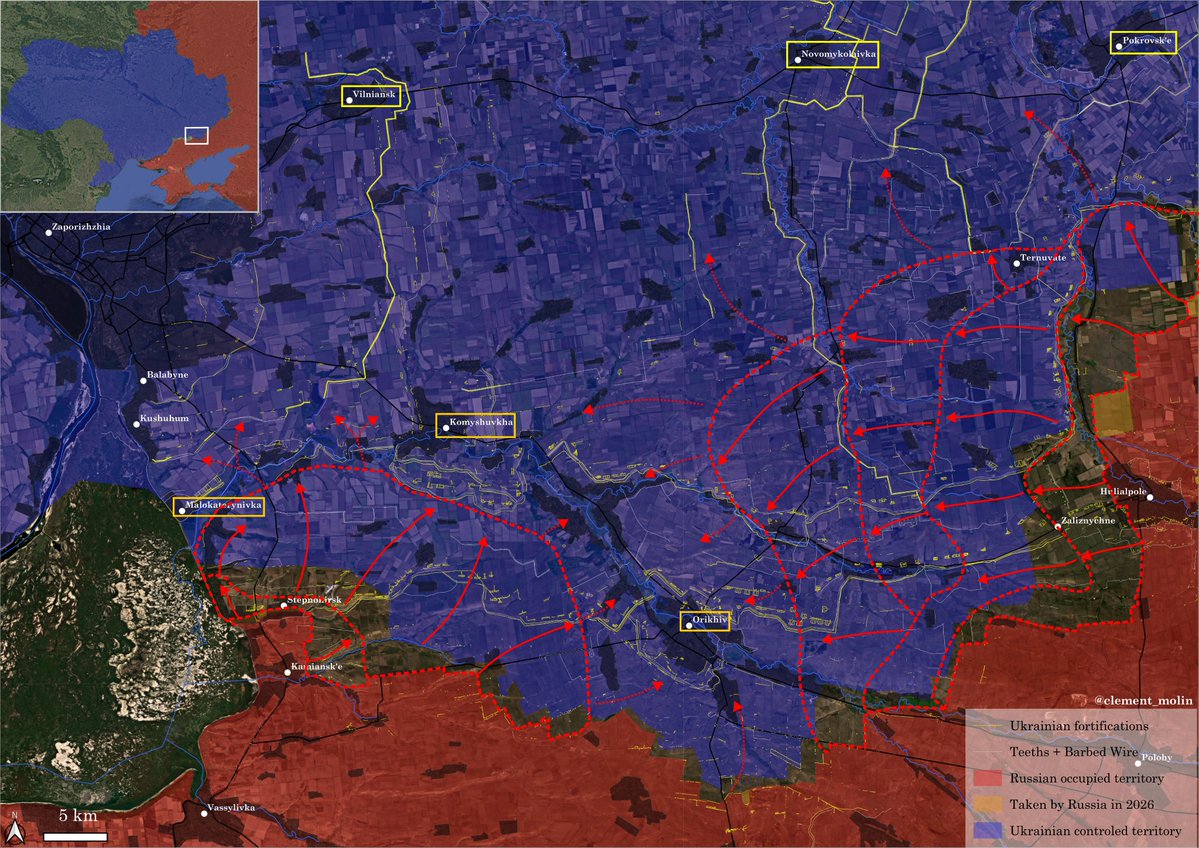
In my opinion the secondary offensive axis is the Zaporizhzhia direction. We saw earlier the indicators showing that. The main point is to be fast before Ukraine can dig in, but the recent counter-attacks on the Pokrovsk'e area have slowed down the russian momentum, which are endangered on their northern flank while they are pushing west.
The main axis will be from Hulialpole to Orikhiv, which remains the main ukrainian stronghold in the region. Russian forces will have to take first the high ground around Ternuvate and therefore be forced to push again to the north to secure their northern flank. The push will probably be from two axis, with the 58th army (Dniepr Grouping) pushing near the Dnipro and the 29th, 5th, 35th, 36 and 68th army on the eastern side (Eastern Grouping).
The main axis will be from Hulialpole to Orikhiv, which remains the main ukrainian stronghold in the region. Russian forces will have to take first the high ground around Ternuvate and therefore be forced to push again to the north to secure their northern flank. The push will probably be from two axis, with the 58th army (Dniepr Grouping) pushing near the Dnipro and the 29th, 5th, 35th, 36 and 68th army on the eastern side (Eastern Grouping).
The main "diversion" battle will probably happen on the Oskil front. Russian units need to threaten the Izium-Sloviansk road or eventually cross the Siverski Donets river, which will be possible only after the fall of Lyman.
I believe ukrainian 3rd army corps will soon try to push from Borova to Lyman to reopen the way to the city and secure the northern approch of Sloviansk, even if this kind of operation will remain difficult.
Kupiansk will remain a secondary frontline.
I believe ukrainian 3rd army corps will soon try to push from Borova to Lyman to reopen the way to the city and secure the northern approch of Sloviansk, even if this kind of operation will remain difficult.
Kupiansk will remain a secondary frontline.

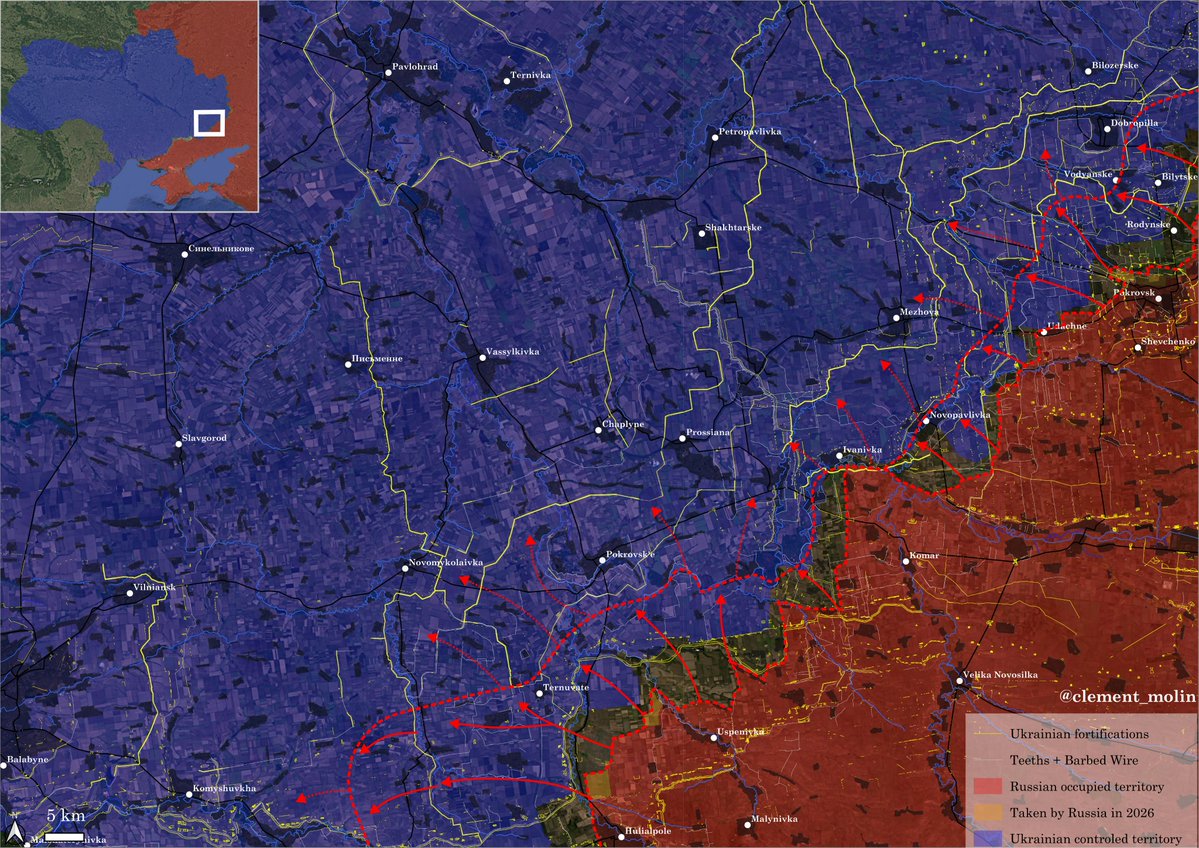
Another interesting area is the Pavlohrad direction. This one is largely weaker and secondary for now, there is possibilities of small scale offensive in the sector and that's here that the ukrainiens obtained local victories in February.
I believe russian forces can be vulnerable in the area, especially because they feel safe behind the Vovocha river, they don't have a lot of logistics (few roads, few villages) and there are a lot of small rivers. The more the ukrainians use their advantage here and the less Zaporizhzhia will be threatened.
I believe russian forces can be vulnerable in the area, especially because they feel safe behind the Vovocha river, they don't have a lot of logistics (few roads, few villages) and there are a lot of small rivers. The more the ukrainians use their advantage here and the less Zaporizhzhia will be threatened.
Additionnal offensive actions will probably take place in the Kharkiv area, especially around Vovchansk and Veliky Burluk. The objective will be to fix a certain number of ukrainian forces in the area.

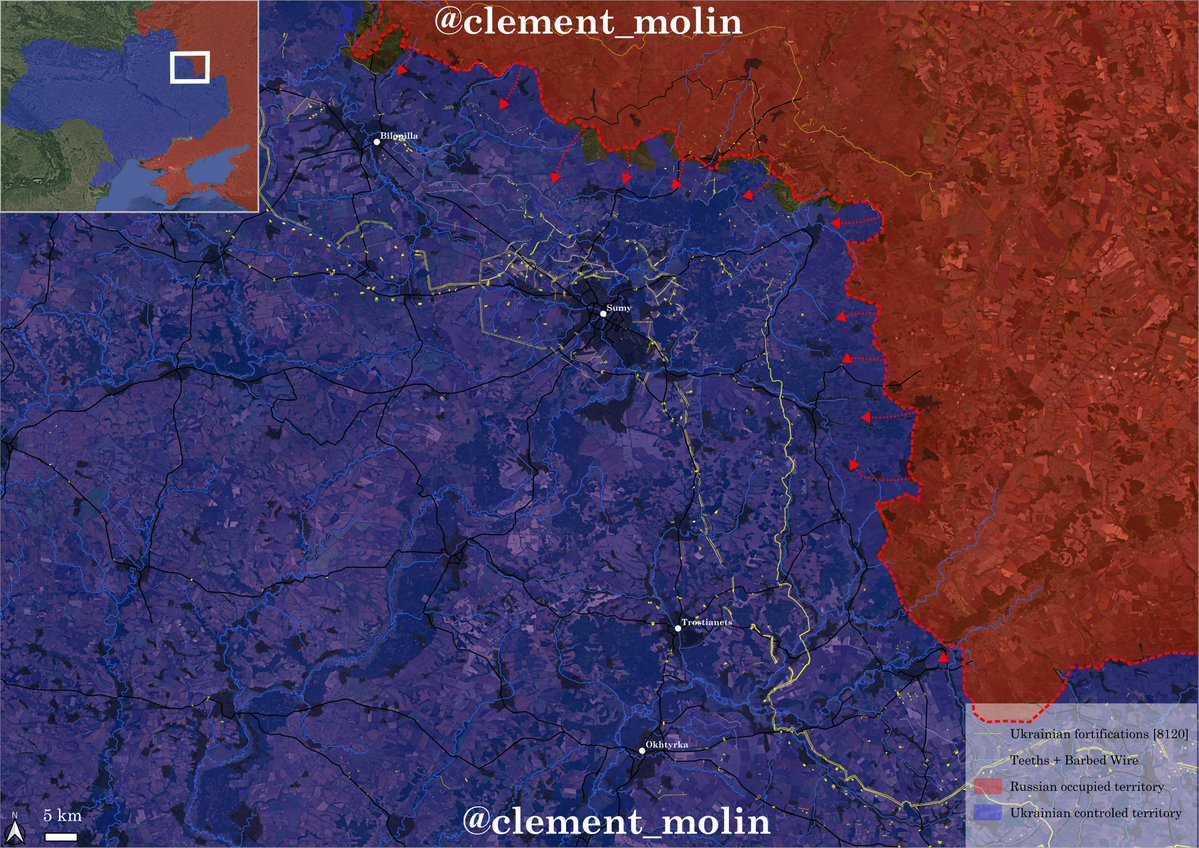
Same will happen in Sumy, with multiple cross border actions already taking place, with this russian objective to create a buffer area.
What happens this year in Ukraine will depend on Ukraine's defense management. If Russian drones are kept far away, a solution is found to the challenge posed by Russian FAB strikes, and Ukrainian fortifications prove effective, the year could be better than expected for Ukraine.
The key is to conserve resources while forcing the Russian military into mistakes (for example, a frontal assault against a well-prepared section of the New Donbass Line).
Thanks for following !
The key is to conserve resources while forcing the Russian military into mistakes (for example, a frontal assault against a well-prepared section of the New Donbass Line).
Thanks for following !
• • •
Missing some Tweet in this thread? You can try to
force a refresh






