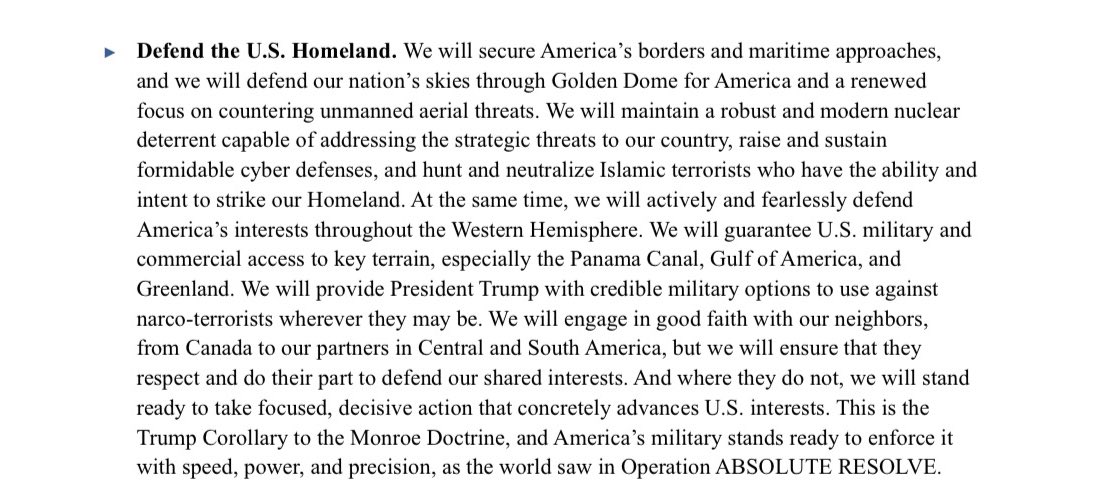
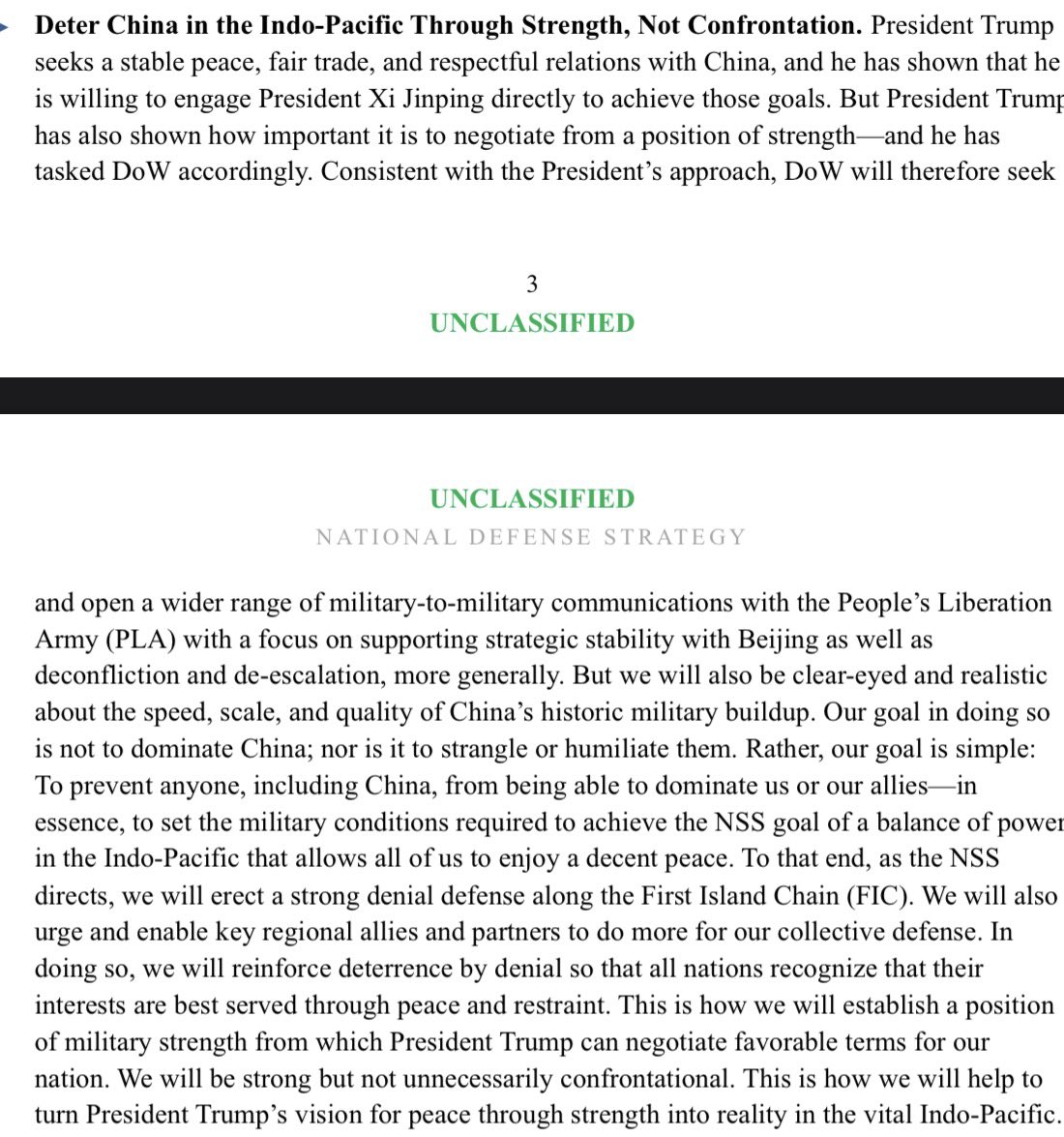
Let's unpack this..
What if the White House has no intention of reopening the Strait of Hormuz?
What if this war is really about ships & tariffs?
I had a long discussion with senior DOE official yesterday on background. I can’t share any details but it’s clear everyone’s Strait of Hormuz calculus is wrong.
We need to go back to the drawing boards.
That's it. That's the tweet. Now a hypothetical 🧵 with my personal thoughts.
What if the White House has no intention of reopening the Strait of Hormuz?
What if this war is really about ships & tariffs?
I had a long discussion with senior DOE official yesterday on background. I can’t share any details but it’s clear everyone’s Strait of Hormuz calculus is wrong.
We need to go back to the drawing boards.
That's it. That's the tweet. Now a hypothetical 🧵 with my personal thoughts.
https://x.com/johnkonrad/status/2034251231334457819
Background on the Hormuz Crisis
You can skip this long section but know this: THIS IS ALL ABOUT SHIPS, SHIPS, SHIPS... and the US Navy giving them permission to pass.
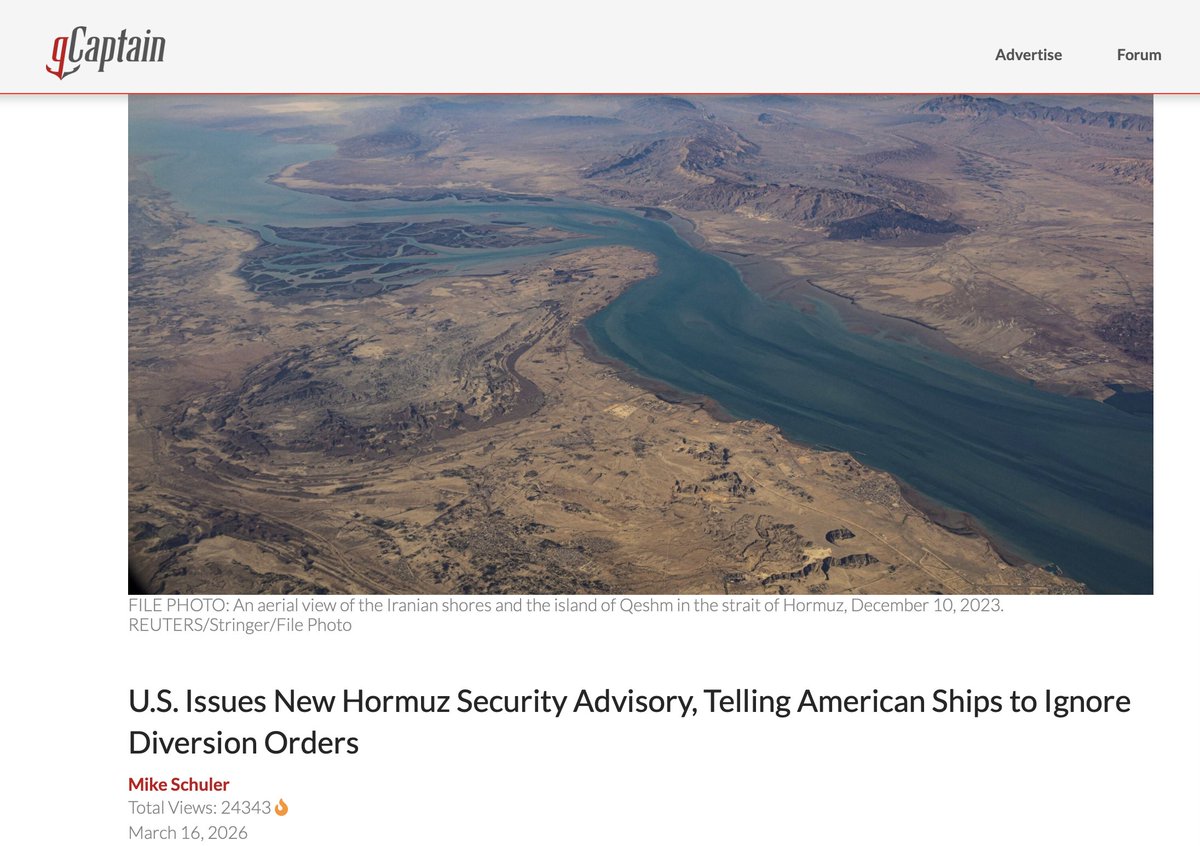
The Strait of Hormuz is twenty-one miles wide. Two shipping channels, each two miles across, separated by a two-mile buffer. The normal traffic separation scheme runs through Iranian territorial waters, past the islands of Qeshm and Larak, where the IRGC has radar stations, missile batteries, and fast-attack craft bases overlooking every transit.
Twenty million barrels of oil and petroleum products flow through this gap every day. One-fifth of global consumption. There is no alternative. Saudi Arabia’s East-West Pipeline to Yanbu and the UAE’s pipeline to Fujairah can handle maybe 5 million barrels combined. The math doesn’t work. The bottleneck is not political. It’s geological and hydrographic.
When those seven P&I clubs belonging to the International Group issued 72-hour cancellation notices for war risk coverage in the Persian Gulf, they didn’t just raise costs. They made transit impossible.
Here’s why.
P&I clubs insure roughly 90% of the world’s ocean-going tonnage. Without their coverage, ships can’t sail. Port authorities won’t let them dock. Banks won’t finance the cargo. Charterers won’t book the vessel. The entire system, from loading berth to discharge terminal, is underwritten by a chain of contracts that begins with a club in London, Oslo, or Tokyo.
When the clubs pulled war risk extensions on March 5, that chain broke. Not for a few ships. For the global fleet.
War risk premiums jumped from 0.25% to 1% of hull value, renewable every seven days. VLCC charter rates quadrupled to nearly $800,000 per day. Over 1,000 vessels are now trapped in the Persian Gulf, burning charter costs with nowhere to go. By March 3, only four ships crossed the Strait, down from a seven-day average of seventy-seven.
This is the part almost nobody in the media understands. Every TV analyst is talking about minesweepers and carrier strike groups. The binding constraint on Hormuz in the first week was not a minefield. It was spreadsheet in London.
Then Trump did something remarkable.
He ordered the U.S. International Development Finance Corporation to create a $20 billion maritime reinsurance facility, with Chubb as lead underwriter, making the United States government the insurer of last resort for Gulf shipping.
A sovereign nation has positioned itself as the backstop for war risk insurance on the world’s most critical maritime chokepoint. The DFC facility, coordinated with CENTCOM and Treasury, offers hull, machinery, and cargo coverage on a rolling basis to eligible vessels.
The United States now controls the on/off switch for the Strait of Hormuz. Not through naval firepower. Through insurance.
But here’s the tell.
The DFC facility covers hull, machinery, and cargo. It does not cover P&I liability: pollution, crew injury, third-party claims. Moody’s flagged this immediately. Without liability cover, most shipowners still won’t sail. The facility is deliberately incomplete.
If the White House wanted the Strait fully open tomorrow, it could expand the DFC facility to cover P&I liability with one directive. It hasn’t.
That gap is not an oversight. It’s a strike price on an option the administration is choosing not to exercise. Yet.
But now that insurance is mostly settled the ships still aren't sailing. Why?
That insurance isn't backed by the DFC, it's backed by a green light from the US Navy. A green light that hasn't appeared.
Read the latest @DOTMARAD Navy warning carefully: U.S.-flagged, owned, or crewed commercial vessels that are operating in these areas should maintain a minimum standoff of 30 nautical miles from U.S. military vessels to reduce the risk of being mistaken as a threat
They can't pass without Naval ships stepping aside to let them through.
You can skip this long section but know this: THIS IS ALL ABOUT SHIPS, SHIPS, SHIPS... and the US Navy giving them permission to pass.
The Strait of Hormuz is twenty-one miles wide. Two shipping channels, each two miles across, separated by a two-mile buffer. The normal traffic separation scheme runs through Iranian territorial waters, past the islands of Qeshm and Larak, where the IRGC has radar stations, missile batteries, and fast-attack craft bases overlooking every transit.
Twenty million barrels of oil and petroleum products flow through this gap every day. One-fifth of global consumption. There is no alternative. Saudi Arabia’s East-West Pipeline to Yanbu and the UAE’s pipeline to Fujairah can handle maybe 5 million barrels combined. The math doesn’t work. The bottleneck is not political. It’s geological and hydrographic.
When those seven P&I clubs belonging to the International Group issued 72-hour cancellation notices for war risk coverage in the Persian Gulf, they didn’t just raise costs. They made transit impossible.
Here’s why.
P&I clubs insure roughly 90% of the world’s ocean-going tonnage. Without their coverage, ships can’t sail. Port authorities won’t let them dock. Banks won’t finance the cargo. Charterers won’t book the vessel. The entire system, from loading berth to discharge terminal, is underwritten by a chain of contracts that begins with a club in London, Oslo, or Tokyo.
When the clubs pulled war risk extensions on March 5, that chain broke. Not for a few ships. For the global fleet.
War risk premiums jumped from 0.25% to 1% of hull value, renewable every seven days. VLCC charter rates quadrupled to nearly $800,000 per day. Over 1,000 vessels are now trapped in the Persian Gulf, burning charter costs with nowhere to go. By March 3, only four ships crossed the Strait, down from a seven-day average of seventy-seven.
This is the part almost nobody in the media understands. Every TV analyst is talking about minesweepers and carrier strike groups. The binding constraint on Hormuz in the first week was not a minefield. It was spreadsheet in London.
Then Trump did something remarkable.
He ordered the U.S. International Development Finance Corporation to create a $20 billion maritime reinsurance facility, with Chubb as lead underwriter, making the United States government the insurer of last resort for Gulf shipping.
A sovereign nation has positioned itself as the backstop for war risk insurance on the world’s most critical maritime chokepoint. The DFC facility, coordinated with CENTCOM and Treasury, offers hull, machinery, and cargo coverage on a rolling basis to eligible vessels.
The United States now controls the on/off switch for the Strait of Hormuz. Not through naval firepower. Through insurance.
But here’s the tell.
The DFC facility covers hull, machinery, and cargo. It does not cover P&I liability: pollution, crew injury, third-party claims. Moody’s flagged this immediately. Without liability cover, most shipowners still won’t sail. The facility is deliberately incomplete.
If the White House wanted the Strait fully open tomorrow, it could expand the DFC facility to cover P&I liability with one directive. It hasn’t.
That gap is not an oversight. It’s a strike price on an option the administration is choosing not to exercise. Yet.
But now that insurance is mostly settled the ships still aren't sailing. Why?
That insurance isn't backed by the DFC, it's backed by a green light from the US Navy. A green light that hasn't appeared.
Read the latest @DOTMARAD Navy warning carefully: U.S.-flagged, owned, or crewed commercial vessels that are operating in these areas should maintain a minimum standoff of 30 nautical miles from U.S. military vessels to reduce the risk of being mistaken as a threat
They can't pass without Naval ships stepping aside to let them through.
What was clear from the DOE conversation: Europe is going to have to figure this out themselves. And the White House is not sprinting to help.
I was hesitant to post this earlier today but the latest truth social posts confirms some of my suspisions.
so here goes...
I was hesitant to post this earlier today but the latest truth social posts confirms some of my suspisions.
so here goes...
Trump, the person if not the whole administration, cares deeply about restoring American maritime might.
He came into office determined to restore American maritime power. He assembled the greatest collection of maritime minds in key government positions since Nixon.
He put Mike Waltz, creator of the SHIPS for America Act, as head of his National Security Council.
He created a Maritime Office in the White House.
He appointed maritime advocates to key positions throughout his administration.
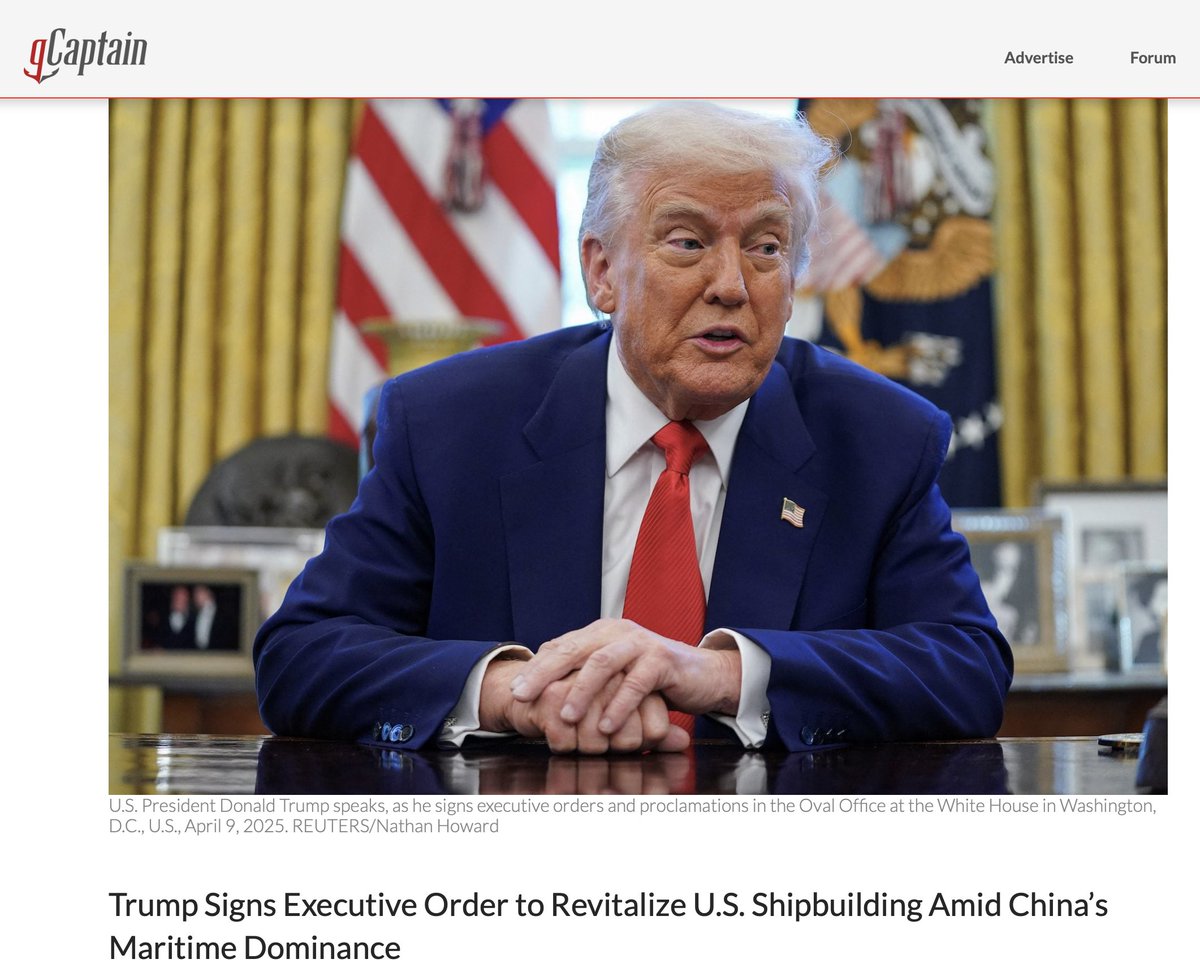
He signed a sweeping Maritime Executive Order in April 2025 that directed a Maritime Action Plan across Defense, State, Transportation, and Homeland Security.
He started laser focusing on securing chokepoints: Panama, the Red Sea, Suez, the Greenland-UK Gap. He launched investigations into Gibraltar and Spain.
He created USTR actions to tariff Chinese-built and operated ships. He called CMA CGM’s CEO Rodolphe Saadé to the Oval Office and secured a $20 billion commitment.
He invited me, the owner of the world’s largest shipping news website, to the White House multiple times and got me a Pentagon press credential.
The ambition was real.
He came into office determined to restore American maritime power. He assembled the greatest collection of maritime minds in key government positions since Nixon.
He put Mike Waltz, creator of the SHIPS for America Act, as head of his National Security Council.
He created a Maritime Office in the White House.
He appointed maritime advocates to key positions throughout his administration.
He signed a sweeping Maritime Executive Order in April 2025 that directed a Maritime Action Plan across Defense, State, Transportation, and Homeland Security.
He started laser focusing on securing chokepoints: Panama, the Red Sea, Suez, the Greenland-UK Gap. He launched investigations into Gibraltar and Spain.
He created USTR actions to tariff Chinese-built and operated ships. He called CMA CGM’s CEO Rodolphe Saadé to the Oval Office and secured a $20 billion commitment.
He invited me, the owner of the world’s largest shipping news website, to the White House multiple times and got me a Pentagon press credential.
The ambition was real.
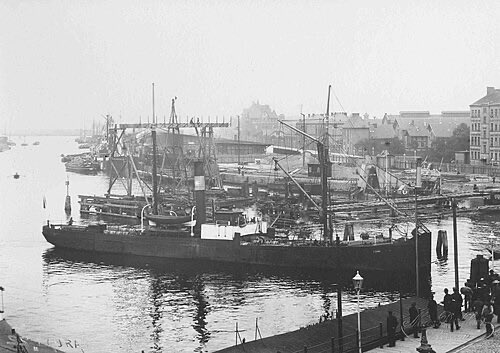
So was the pushback.
Shipowners lined up outside USTR to protest the China shipping tariffs. Almost every economist on the planet lined up against the maritime tariff proposals.
The entire US tech sector asked for China consesions and what did China want in return? A pause to USTR.
Then Signalgate. Media leaked a private convesation about attacking the Houthis and reopening the Red Sea.
The operation was stunned. Signalgate forced a reorganization. Waltz was moved to the UN. The Maritime Office was downsized. The NSC was gutted. That was the moment every maritime initiative began to stall.
What collapsed: Panama did not follow through on free transits for US ships. CMA CGM’s $20 billion commitment fell through; the company ordered vessels from China and India instead. Congress stalled on the SHIPS Act.
The UK used Chagos Islands, including Diego Garcia, to Mauritius, to get a sweetheart trade deal putting a critical naval base at risk. Key Navy appointees were slow-rolled or blocked in the Senate.
Then it came to a head at the @IMOHQ in London. In April 2025, 63 countries voted to approve the Net-Zero Framework, a global carbon pricing mechanism on every ship over 5,000 tons.
What did Trump negotators ask for? That American's tiny fleet of Merchant Ships be exept. Europe Refused claiming American maritime insterests are now irrelevant and we don't have the leverage or votes.
The U.S. walked out. In October, at the adoption vote, Trump called it a “Global Green New Scam Tax on Shipping.” The State Department threatened sanctions against any country that voted yes. 57 countries voted to delay.
The UN Carbon Tax on ships wasn't sunk entirely but it was dead in the water.
Shipowners lined up outside USTR to protest the China shipping tariffs. Almost every economist on the planet lined up against the maritime tariff proposals.
The entire US tech sector asked for China consesions and what did China want in return? A pause to USTR.
Then Signalgate. Media leaked a private convesation about attacking the Houthis and reopening the Red Sea.
The operation was stunned. Signalgate forced a reorganization. Waltz was moved to the UN. The Maritime Office was downsized. The NSC was gutted. That was the moment every maritime initiative began to stall.
What collapsed: Panama did not follow through on free transits for US ships. CMA CGM’s $20 billion commitment fell through; the company ordered vessels from China and India instead. Congress stalled on the SHIPS Act.
The UK used Chagos Islands, including Diego Garcia, to Mauritius, to get a sweetheart trade deal putting a critical naval base at risk. Key Navy appointees were slow-rolled or blocked in the Senate.
Then it came to a head at the @IMOHQ in London. In April 2025, 63 countries voted to approve the Net-Zero Framework, a global carbon pricing mechanism on every ship over 5,000 tons.
What did Trump negotators ask for? That American's tiny fleet of Merchant Ships be exept. Europe Refused claiming American maritime insterests are now irrelevant and we don't have the leverage or votes.
The U.S. walked out. In October, at the adoption vote, Trump called it a “Global Green New Scam Tax on Shipping.” The State Department threatened sanctions against any country that voted yes. 57 countries voted to delay.
The UN Carbon Tax on ships wasn't sunk entirely but it was dead in the water.
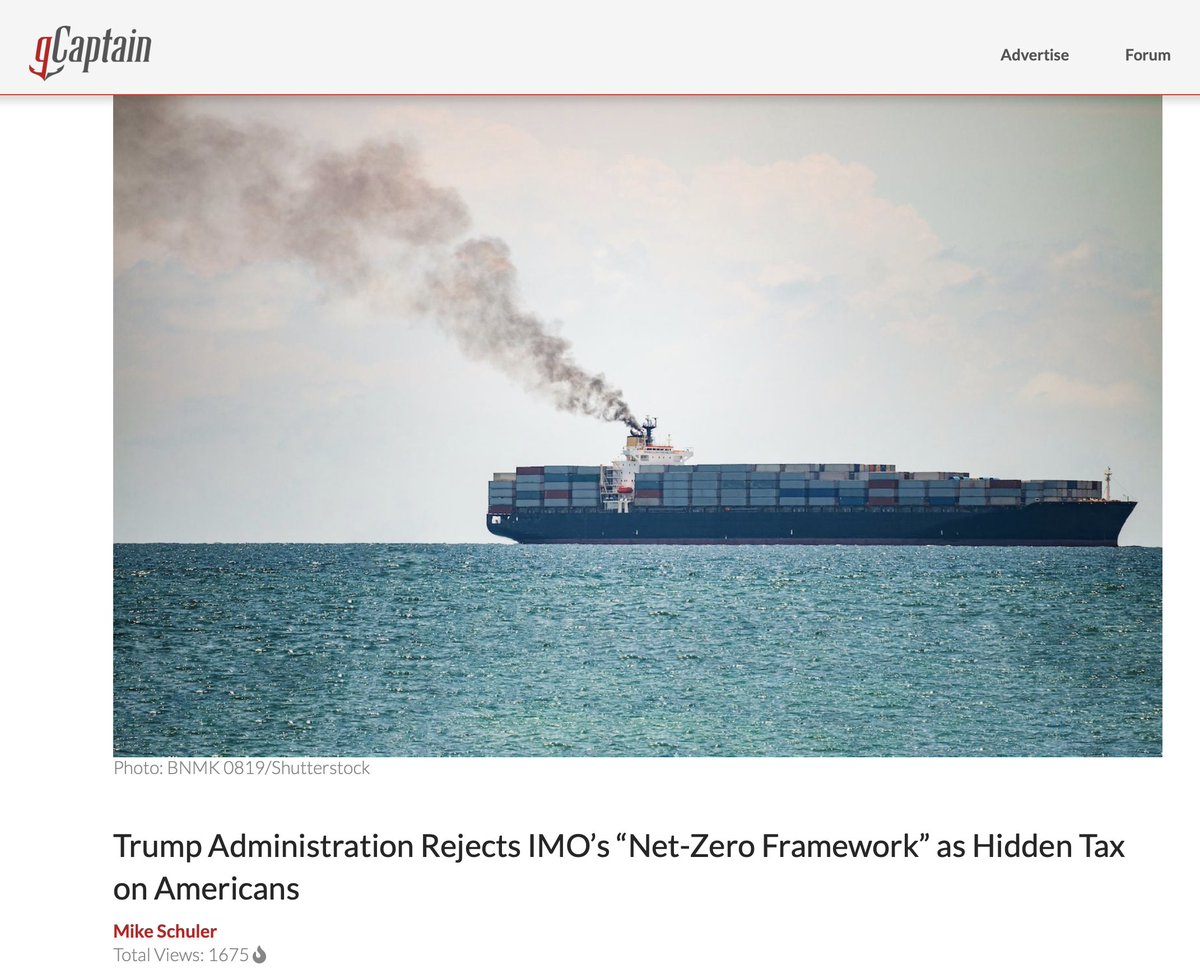
IMO was a phyric victory, we stopped the Carbon Tax but did not get exemptions for US ships and the White House began losing the wider war with the City of London
First Greenland. Then two bigger losses.
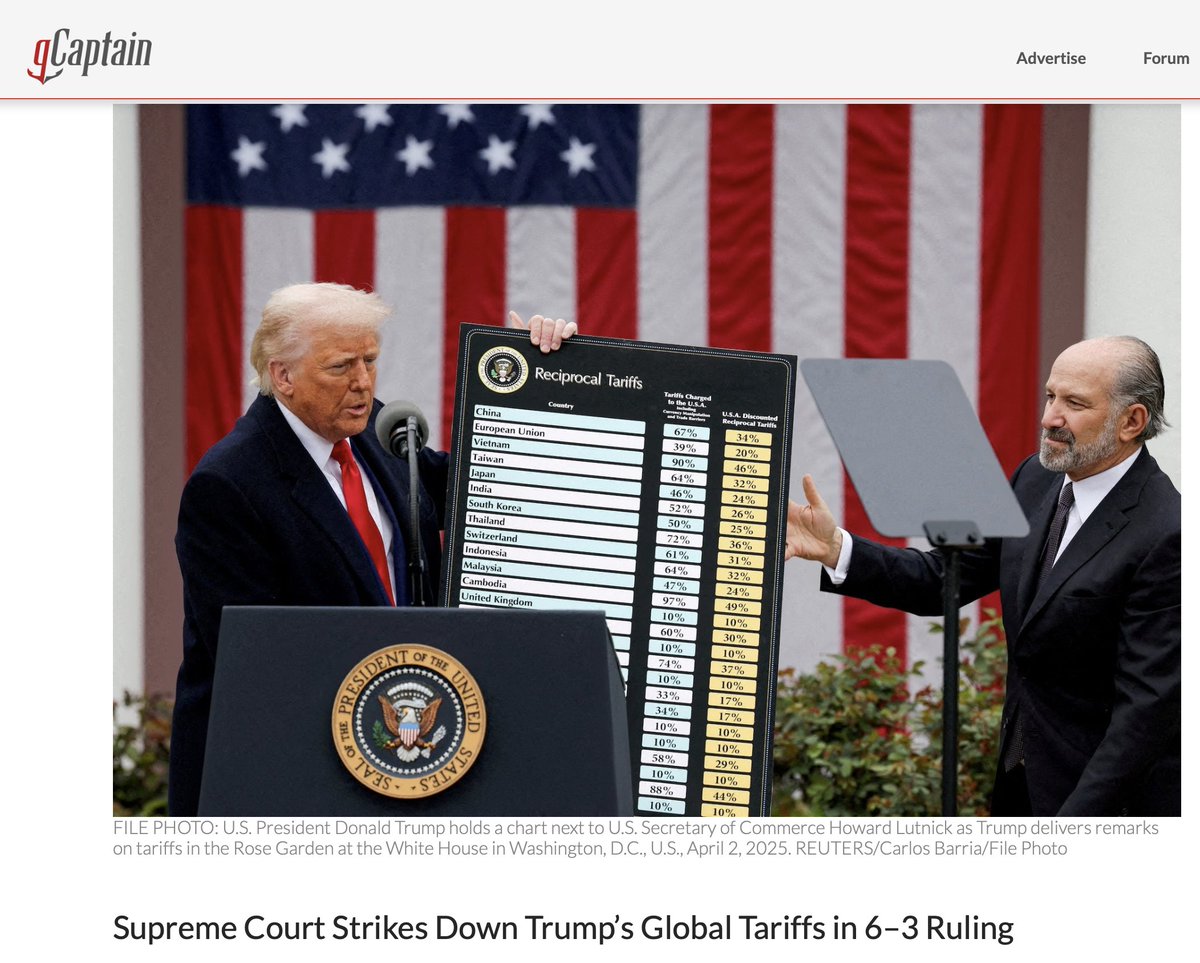
On February 20, the Supreme Court dealt Trump his biggest blow. In a 6-3 ruling, SCOTUS held that IEEPA does not authorize the President to impose tariffs, invalidating the “Liberation Day” reciprocal tariffs and the China/Canada/Mexico trafficking tariffs.
An estimated $160 billion in tariff revenue, gone. Trump imposed 15% global tariffs under Section 122, but those are capped at 150 days and require Congressional extension.
His most powerful tariff tool was taken away by the courts. If you can’t tariff your way to compliance, you need another form of leverage.
This was a huge hit for MAGA
First Greenland. Then two bigger losses.
On February 20, the Supreme Court dealt Trump his biggest blow. In a 6-3 ruling, SCOTUS held that IEEPA does not authorize the President to impose tariffs, invalidating the “Liberation Day” reciprocal tariffs and the China/Canada/Mexico trafficking tariffs.
An estimated $160 billion in tariff revenue, gone. Trump imposed 15% global tariffs under Section 122, but those are capped at 150 days and require Congressional extension.
His most powerful tariff tool was taken away by the courts. If you can’t tariff your way to compliance, you need another form of leverage.
This was a huge hit for MAGA
And there was an even bigger loss that didn't make headlines but I'm told hit trump personally and it reveals how the military academia and think tank establishment, which gets significant funding and support from Europe, fights back.
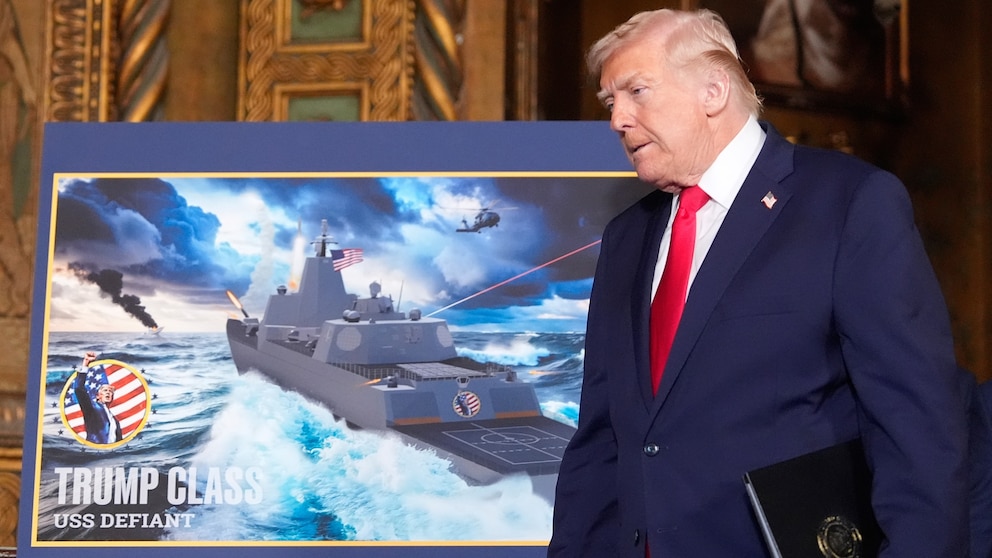
In December, Trump announced the Golden Fleet initiative at Mar-a-Lago: a new class of Trump-class battleships, 30,000-40,000 tons, armed with hypersonic missiles, railguns, lasers, and nuclear cruise missiles. The USS Defiant.
A ship he designed with @SECNAV to hold chokepoints like Hormuz.
Twenty to twenty-five hulls. The most ambitious surface combatant program since World War II.
Within 72 hours, the national security think tank world lined up to kill it. CSIS published a piece titled “The Golden Fleet’s Battleship Will Never Sail,” estimating $9 billion per hull, predicting cancellation before the first ship hits water.
The Foundation for Defense of Democracies called it a waste. Retired admirals said the Navy should buy small distributed platforms instead. Every defense analyst in Washington competed to be quoted saying it was impossible.
The military industrial establishment, with the help from allied think tanks and colleges, lined up to piss on the plans.
The same establishment that can’t build a frigate on time, that delivered the Constellation class years late before canceling it, that produced three Zumwalts instead of thirty, that has presided over the smallest Navy since World War I, lined up overnight to explain why America can’t build big ships anymore.
The same people who have no plan to close the destroyer gap that is right now undermining convoy escort operations in the Gulf.
The think tanks didn’t offer an alternative. They offered learned helplessness. And that helplessness is the context in which Hormuz is now playing out.
And the tariff decision took away a huge source of revenue to fund it without congress... which won't even vote on the bipartisan SHIPs Act.
In December, Trump announced the Golden Fleet initiative at Mar-a-Lago: a new class of Trump-class battleships, 30,000-40,000 tons, armed with hypersonic missiles, railguns, lasers, and nuclear cruise missiles. The USS Defiant.
A ship he designed with @SECNAV to hold chokepoints like Hormuz.
Twenty to twenty-five hulls. The most ambitious surface combatant program since World War II.
Within 72 hours, the national security think tank world lined up to kill it. CSIS published a piece titled “The Golden Fleet’s Battleship Will Never Sail,” estimating $9 billion per hull, predicting cancellation before the first ship hits water.
The Foundation for Defense of Democracies called it a waste. Retired admirals said the Navy should buy small distributed platforms instead. Every defense analyst in Washington competed to be quoted saying it was impossible.
The military industrial establishment, with the help from allied think tanks and colleges, lined up to piss on the plans.
The same establishment that can’t build a frigate on time, that delivered the Constellation class years late before canceling it, that produced three Zumwalts instead of thirty, that has presided over the smallest Navy since World War I, lined up overnight to explain why America can’t build big ships anymore.
The same people who have no plan to close the destroyer gap that is right now undermining convoy escort operations in the Gulf.
The think tanks didn’t offer an alternative. They offered learned helplessness. And that helplessness is the context in which Hormuz is now playing out.
And the tariff decision took away a huge source of revenue to fund it without congress... which won't even vote on the bipartisan SHIPs Act.
Now connect the dots.
Strike Iran, and Europe either bends or goes dark in an energy crisis.
The European shipping community and political establishment has spent the last year dismissing, undermining and mocking every Trump maritime initiative.
They scoffed at the USTR tariffs. They laughed at the SHIPS Act. They blocked the IMO exemptions. They refused to take American maritime policy seriously.
Now their energy supply runs through an insurance facility controlled by Washington.
"Let their navies figure it out." Except everyone knows they can’t. European naval forces are too small, too slow, and too poorly equipped for sustained convoy escort operations through a contested strait.
While the MSM is busy spinning Europe's failure to participate as a vote against the war... the smart players all know they aren't sending warships because they can't.
All the European navies combined couldn't send more than three ships at a time to defend the Red Sea and an entire German Task Force sailed around Africa to avoid it.
Eventually Europe will have to capitulate to get the U.S. Navy, and the U.S. insurance backstop, to fully reopen the Strait.
And what does “capitulate” look like? The IMO carbon tax. Greenland. Tariff concessions. The SHIPS Act. Every maritime policy priority that Europe and China have been blocking for the past year.
Strike Iran, and Europe either bends or goes dark in an energy crisis.
The European shipping community and political establishment has spent the last year dismissing, undermining and mocking every Trump maritime initiative.
They scoffed at the USTR tariffs. They laughed at the SHIPS Act. They blocked the IMO exemptions. They refused to take American maritime policy seriously.
Now their energy supply runs through an insurance facility controlled by Washington.
"Let their navies figure it out." Except everyone knows they can’t. European naval forces are too small, too slow, and too poorly equipped for sustained convoy escort operations through a contested strait.
While the MSM is busy spinning Europe's failure to participate as a vote against the war... the smart players all know they aren't sending warships because they can't.
All the European navies combined couldn't send more than three ships at a time to defend the Red Sea and an entire German Task Force sailed around Africa to avoid it.
Eventually Europe will have to capitulate to get the U.S. Navy, and the U.S. insurance backstop, to fully reopen the Strait.
And what does “capitulate” look like? The IMO carbon tax. Greenland. Tariff concessions. The SHIPS Act. Every maritime policy priority that Europe and China have been blocking for the past year.
Why hasn't Trump mentioned this plan? Why hasn't anyone else in the administration? Because nearly every maritime advocate he appointed who has spoken out has been sidelined by the swamp.
https://x.com/johnkonrad/status/2032143918226129118?s=20
There’s a historical precedent that shapens this hypothesis...
The last time the U.S. Navy escorted tankers through Hormuz was Operation Earnest Will during the Iran-Iraq Tanker War in 1987-88. Foreign tankers that wanted U.S. Navy protection had to reflag into the U.S. registry.
Kuwaiti supertankers flew the American flag to get American escorts.
Trump has already said the Navy will escort ships through Hormuz “if necessary.” If the same reflagging requirement applies, every European and Asian tanker that wants a U.S. escort would need to fly the American flag.
Think about what that means for the SHIPS Act, the Jones Act, the U.S. flag fleet, and CMA CGM’s unfulfilled promise to triple its U.S.-flag vessels. Hormuz becomes the forcing function for everything Trump’s maritime agenda couldn’t achieve through legislation or diplomacy.
Meanwhile, Iran is selectively letting ships through. Turkish, Indian, Chinese, and some Saudi tankers have been permitted to transit via Iranian territorial waters. About 18 tankers, mostly Chinese, have done so according to Lloyd’s. Western-allied ships are blocked.
The “closure” is really a sorting mechanism. Iran decides who trades and who doesn’t. Unless the U.S. Navy reopens it for everyone. On America’s terms.
BAckground by @mercoglianos: gcaptain.com/the-tanker-war…
The last time the U.S. Navy escorted tankers through Hormuz was Operation Earnest Will during the Iran-Iraq Tanker War in 1987-88. Foreign tankers that wanted U.S. Navy protection had to reflag into the U.S. registry.
Kuwaiti supertankers flew the American flag to get American escorts.
Trump has already said the Navy will escort ships through Hormuz “if necessary.” If the same reflagging requirement applies, every European and Asian tanker that wants a U.S. escort would need to fly the American flag.
Think about what that means for the SHIPS Act, the Jones Act, the U.S. flag fleet, and CMA CGM’s unfulfilled promise to triple its U.S.-flag vessels. Hormuz becomes the forcing function for everything Trump’s maritime agenda couldn’t achieve through legislation or diplomacy.
Meanwhile, Iran is selectively letting ships through. Turkish, Indian, Chinese, and some Saudi tankers have been permitted to transit via Iranian territorial waters. About 18 tankers, mostly Chinese, have done so according to Lloyd’s. Western-allied ships are blocked.
The “closure” is really a sorting mechanism. Iran decides who trades and who doesn’t. Unless the U.S. Navy reopens it for everyone. On America’s terms.
BAckground by @mercoglianos: gcaptain.com/the-tanker-war…
Now the domestic calculus.
While TV oil analysts focus on the global price of oil, the real experts in Houston are watching something different: the fracturing of the global energy market.
The real threat is not $200 oil. It’s cheap energy in export nations and ruinous energy costs in places far from reserves.
One global price only works if there’s a surplus of tankers to arbitrage differentials. Before the Iran strikes, that surplus was razor-thin. Now, with supertankers stuck in the Gulf, it’s gone.
Brent is at $106 today. WTI is under $100. But domestically, diesel is stabilizing and natural gas prices are falling as LNG that would normally be exported stays trapped at home. Today Trump issued a 60-day Jones Act waiver and opened Venezuelan oil sales to U.S. companies via a new Treasury license for PDVSA. These are exactly the moves you’d make if you were trying to drive U.S. prices down while the global market fractures.
Tankers charge by the day, so long-haul routes become comparatively more expensive. Venezuelan crude on short Gulf runs becomes far cheaper for U.S. refiners than Middle Eastern crude routed around the Cape of Good Hope for European or Asian buyers.
While TV oil analysts focus on the global price of oil, the real experts in Houston are watching something different: the fracturing of the global energy market.
The real threat is not $200 oil. It’s cheap energy in export nations and ruinous energy costs in places far from reserves.
One global price only works if there’s a surplus of tankers to arbitrage differentials. Before the Iran strikes, that surplus was razor-thin. Now, with supertankers stuck in the Gulf, it’s gone.
Brent is at $106 today. WTI is under $100. But domestically, diesel is stabilizing and natural gas prices are falling as LNG that would normally be exported stays trapped at home. Today Trump issued a 60-day Jones Act waiver and opened Venezuelan oil sales to U.S. companies via a new Treasury license for PDVSA. These are exactly the moves you’d make if you were trying to drive U.S. prices down while the global market fractures.
Tankers charge by the day, so long-haul routes become comparatively more expensive. Venezuelan crude on short Gulf runs becomes far cheaper for U.S. refiners than Middle Eastern crude routed around the Cape of Good Hope for European or Asian buyers.
Look at who benefits. And who doesn’t object.
The three most powerful industry lobbies in the U.S. are tech, Wall Street, and energy.
Tech gets cheaper LNG for data centers.
Wall Street gets volatility and panic to extract trading profits.
Oil and gas is usually protective of Hormuz because they trade internationally. But U.S. companies were just given Venezuela. BP was allowed back into the Gulf. Shell's favorite piolitician, Mark Rutte, is Trump's biggest fan in Europe.
The three most powerful industry lobbies in the U.S. are tech, Wall Street, and energy.
Tech gets cheaper LNG for data centers.
Wall Street gets volatility and panic to extract trading profits.
Oil and gas is usually protective of Hormuz because they trade internationally. But U.S. companies were just given Venezuela. BP was allowed back into the Gulf. Shell's favorite piolitician, Mark Rutte, is Trump's biggest fan in Europe.
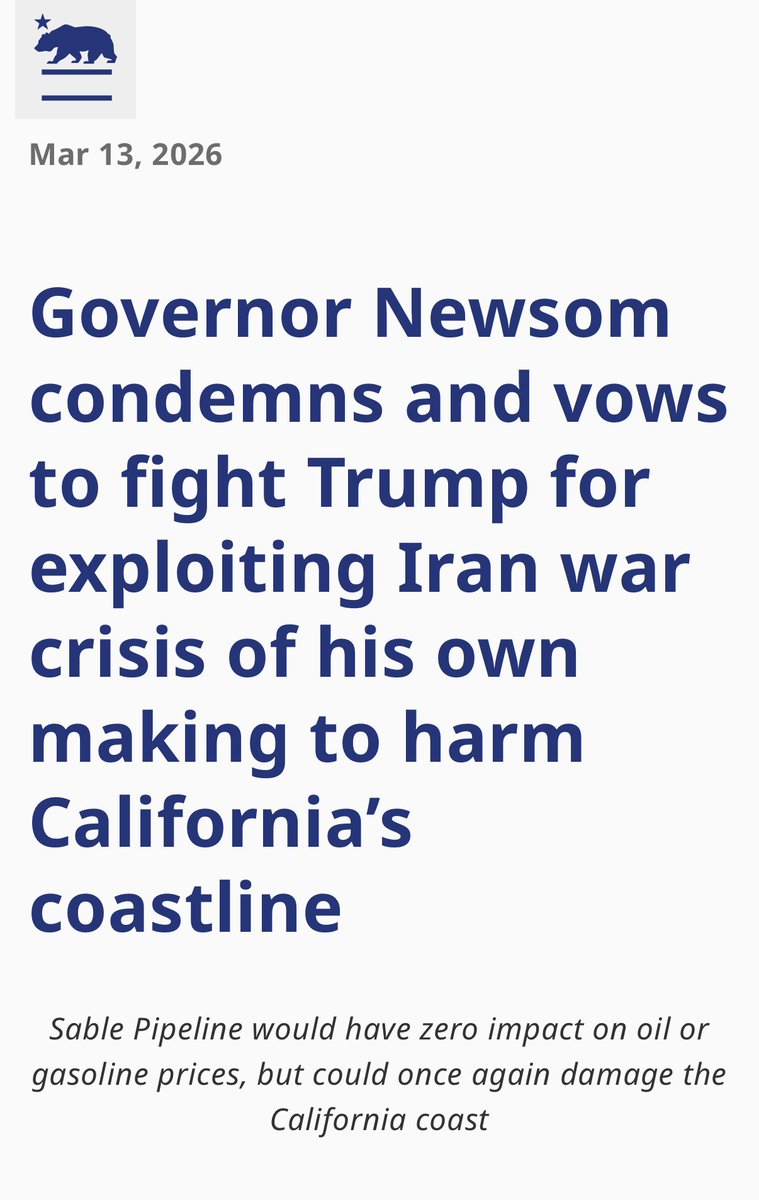
Meanwhile, California has been closing refineries and blocking pipelines, forcing gasoline imports from South Korea. Imports on ships with dayrates that are skyrocketing.
New England imports LNG and diesel by ship. If Hormuz stays closed, prices skyrocket in those states. Deep blue states.
Gavin Newsom is leading the 2028 polls. He won’t win if his constituents turn on him over gas prices his own refinery closure policies helped create.
Red state energy costs fall. Blue state costs rise. Europe capitulates on major policy disputes between now and the midterms.
gov.ca.gov/2026/03/13/gov…
New England imports LNG and diesel by ship. If Hormuz stays closed, prices skyrocket in those states. Deep blue states.
Gavin Newsom is leading the 2028 polls. He won’t win if his constituents turn on him over gas prices his own refinery closure policies helped create.
Red state energy costs fall. Blue state costs rise. Europe capitulates on major policy disputes between now and the midterms.
gov.ca.gov/2026/03/13/gov…
I want to be transparent: this political analysis is speculative. The relationship between energy prices and voting behavior has a lot of fragile links.
But the directional logic is clear, and I’d bet the White House sees it.
But the directional logic is clear, and I’d bet the White House sees it.
When I ran this hypothesis by a European maritime and naval expert I've trusted for years he had just one question...
Aren’t Americans angry about the war?
Turn on European news, open X, read MSM, and you’d think most Americans are irate.
The truth? In my town in Massachusetts, where Trump protests happen constantly, I haven’t seen one about Iran. Sitting in coffee shops, nobody’s talking about it. I called over a dozen friends around the country last week. They all said the same thing: Americans don’t care as much as European media thinks we do. Diesel is stabilizing. Gas isn’t $10. Life goes on.
Aren’t Americans angry about the war?
Turn on European news, open X, read MSM, and you’d think most Americans are irate.
The truth? In my town in Massachusetts, where Trump protests happen constantly, I haven’t seen one about Iran. Sitting in coffee shops, nobody’s talking about it. I called over a dozen friends around the country last week. They all said the same thing: Americans don’t care as much as European media thinks we do. Diesel is stabilizing. Gas isn’t $10. Life goes on.
But besides Trump's tweet let's look at the evidence: look what the Navy is doing. Or rather, not doing.
The U.S. Navy is in no rush to solve this problem. They are methodically, deliberately, taking their time. Army battalions are not mobilizing. The Marines called in from Japan are slow-steaming across the Pacific; it could be weeks until they’re ready. Minesweepers are still far from the battle space. Carriers are slowly rotating, not surging.
They are working to reopen the Strait but do not appear to be in any hurry. Someone at the top told them to take their time. That signal has to be coming from the White House.
And now you understand why. The longer the Strait stays closed, the more the leverage builds.
Every day, 1,000 trapped vessels burn charter costs. Every day, European energy dependence deepens.
Every day, the DFC reinsurance facility becomes more central to the global shipping system. Every day, the case for concessions on tariffs, the IMO, Greenland, and the SHIPS Act becomes harder for Europe to refuse.
And what does the Navy get for playing along? Support for battleships and stronger allies willing to spend money building their own destroyers when it becomes clear to the world how weak their navies have become.
The U.S. Navy is in no rush to solve this problem. They are methodically, deliberately, taking their time. Army battalions are not mobilizing. The Marines called in from Japan are slow-steaming across the Pacific; it could be weeks until they’re ready. Minesweepers are still far from the battle space. Carriers are slowly rotating, not surging.
They are working to reopen the Strait but do not appear to be in any hurry. Someone at the top told them to take their time. That signal has to be coming from the White House.
And now you understand why. The longer the Strait stays closed, the more the leverage builds.
Every day, 1,000 trapped vessels burn charter costs. Every day, European energy dependence deepens.
Every day, the DFC reinsurance facility becomes more central to the global shipping system. Every day, the case for concessions on tariffs, the IMO, Greenland, and the SHIPS Act becomes harder for Europe to refuse.
And what does the Navy get for playing along? Support for battleships and stronger allies willing to spend money building their own destroyers when it becomes clear to the world how weak their navies have become.
I want to be clear about what I’m arguing and what I’m not.
I am not arguing that Trump planned this from the beginning. The P&I club withdrawal was a cascading system failure that no central planner could have predicted or orchestrated. What I am arguing is that the administration has, whether by design or adaptation, assembled the tools to exploit this moment.
The DFC facility is the option. The incomplete P&I coverage is the strike price. The Jones Act waiver and Venezuela sanctions easing are hedge positions. The Navy’s deliberate pace is time decay working in America’s favor.
The strongest version of this thesis is not “Trump is playing 4D chess.” It’s that the administration holds more options than anyone realizes, and the insurance mechanism, not the Navy, is the real lever of power.
The man who launched the SHIPS Act, tariffed Chinese shipping, killed the IMO carbon tax vote, brought CMA CGM to the Oval Office, signed the most ambitious Maritime Executive Order in decades, and then made the U.S. government the insurer of last resort for the world’s most important shipping lane does not lack a maritime strategy.
I am not arguing that Trump planned this from the beginning. The P&I club withdrawal was a cascading system failure that no central planner could have predicted or orchestrated. What I am arguing is that the administration has, whether by design or adaptation, assembled the tools to exploit this moment.
The DFC facility is the option. The incomplete P&I coverage is the strike price. The Jones Act waiver and Venezuela sanctions easing are hedge positions. The Navy’s deliberate pace is time decay working in America’s favor.
The strongest version of this thesis is not “Trump is playing 4D chess.” It’s that the administration holds more options than anyone realizes, and the insurance mechanism, not the Navy, is the real lever of power.
The man who launched the SHIPS Act, tariffed Chinese shipping, killed the IMO carbon tax vote, brought CMA CGM to the Oval Office, signed the most ambitious Maritime Executive Order in decades, and then made the U.S. government the insurer of last resort for the world’s most important shipping lane does not lack a maritime strategy.
Another version of this scenario is apathy... America just doesn't care about ships or how long it takes to reopen Hormuz or what happens to Europe as a result.
This version might infuriate Europeans but it was American Apathy over shipping that Europeans encoraged and exploited to corner the industry and keep control in London.
If American maritime apathy is the cause for the Navy taking their sweet time then... isn't it Europe's fault for encoraging it?
This version might infuriate Europeans but it was American Apathy over shipping that Europeans encoraged and exploited to corner the industry and keep control in London.
If American maritime apathy is the cause for the Navy taking their sweet time then... isn't it Europe's fault for encoraging it?
The biggest pushback on the Iran Strikes among Democrats and the Mainstream Press is the qeuestion: What's The Endgame?
He has one. But maybe he just can’t say it out loud.
Maybe he won't say... Because the endgame is leverage. And you don’t announce leverage. You apply it.
He has one. But maybe he just can’t say it out loud.
Maybe he won't say... Because the endgame is leverage. And you don’t announce leverage. You apply it.
But PLEASE go look at the evidence. Go formulate your own hypothesis. Test yours. Test mine.
This is an X thread abaout a hypothesis written by an America ship captain who supports Trump.... not the ground truth.
An American captain with an adgenda: getting Europe to wake up to the growing importance of 🇺🇸 maritime interests.
This is an X thread abaout a hypothesis written by an America ship captain who supports Trump.... not the ground truth.
An American captain with an adgenda: getting Europe to wake up to the growing importance of 🇺🇸 maritime interests.
@gCaptain And here’s the best book documenting how Europe leveraged America’s maritime apathy the last 50 years
amzn.to/40F3YTu
amzn.to/40F3YTu
• • •
Missing some Tweet in this thread? You can try to
force a refresh