🥤We often associate alcohol with health risks, but recent studies have shed light on another culprit: sugary sodas like Coca-Cola. Chinese scientists have warned that the sugar content in Coke may be more damaging to the liver than alcohol. This is a reminder of how sugar affects our body, contributing to conditions such as fatty liver disease and insulin resistance.
While alcohol is widely known to cause liver damage, we may overlook the long-term effects of sugar-laden beverages. Regular consumption of soda can lead to an accumulation of fat in the liver, impairing its ability to function properly. The alarming reality is that many people are consuming soda without understanding the risks it poses.
It’s crucial to be mindful of the beverages we choose to consume. Opting for water, herbal teas, or naturally sweetened drinks can significantly reduce the strain on our liver and overall health. The path to a healthier body starts with small, conscious choices. 🍃

• • •
Missing some Tweet in this thread? You can try to
force a refresh

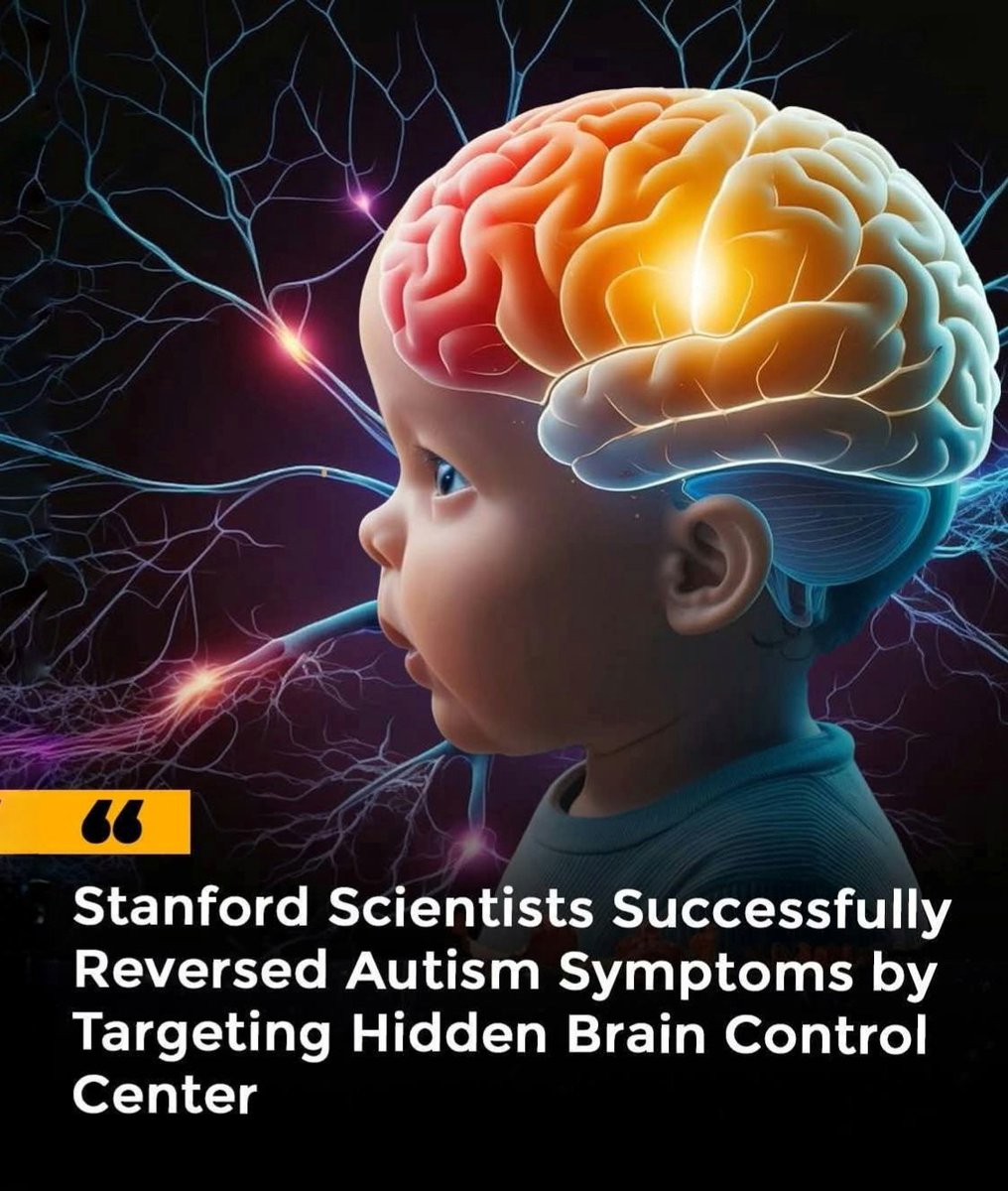
🚨 Stanford Medicine researchers have reversed autism-like behaviors in mice by calming hyperactivity in the brain’s reticular thalamic nucleus, a sensory “gatekeeper” long overlooked in autism research. Using a seizure drug and neuromodulation, the team restored normal behavior.
The study also links autism and epilepsy through shared brain circuitry, offering hope for targeted future therapies.
Stanford Medicine researchers have uncovered a key mechanism underlying autism-like behaviors in mice by studying the reticular thalamic nucleus (RT) — a small but crucial brain region that acts as a sensory “gatekeeper” between the thalamus and the cortex. Using mice lacking the Cntnap2 gene, a well-established model for autism spectrum disorder (ASD), the team found that neurons in the RT showed excessive electrical activity, including elevated burst firing, increased T-type calcium currents, and over-responsiveness to sensory inputs such as light or touch. Behaviorally, these mice displayed traits mirroring human ASD symptoms — hyperactivity, repetitive grooming, social withdrawal, and increased seizure susceptibility.
To correct these abnormalities, researchers used two approaches. First, they administered Z944, a T-type calcium channel blocker currently being tested for epilepsy, which successfully calmed RT hyperactivity and restored normal behaviors. Second, through a chemogenetic neuromodulation technique known as DREADD, they selectively suppressed RT neuron activity using engineered receptors activated by a designer drug — again reversing autism-like behaviors. Strikingly, when they artificially activated RT neurons in healthy mice, it induced similar ASD-like traits, confirming a causal link.
The findings suggest that hyperexcitability in the RT, rather than cortical dysfunction alone, may drive core features of autism. The overlap between autism and epilepsy may stem from this shared thalamic circuitry, as both conditions involve abnormal electrical rhythms in the brain. Researchers propose that the RT could serve as a promising new therapeutic target for ASD, especially for patients who experience sensory overload and seizures.
However, the study was conducted in mice using a single genetic model, so it may not fully represent all forms of autism. Further research — including long-term and randomized clinical trials in humans — is needed to determine whether these results can safely and effectively translate to human therapy.
🧠 New research suggests that conditions like autism and schizophrenia may start developing before birth. Scientists examined nearly 1,000 donated human brains and tracked when key chemical tags on DNA — known as methylation marks — changed in the brain’s cortex. They found that most of these changes happen prenatally, especially during the early weeks of pregnancy.
These DNA changes are critical because they help brain cells specialize, connect and form networks — and some of the affected genes are linked to autism and schizophrenia. The findings suggest that the “window” for what can influence brain development is even earlier than we thought.
This gives us a new perspective on how and when such neurodevelopmental conditions may begin, and it highlights the importance of studying prenatal brain development as we look for ways to understand and potentially intervene.
#Neuroscience #Autism #sciencenews
Most of what shapes our brain may begin before we’re even born.
Researchers from the Lieber Institute for Brain Development and their collaborators analyzed DNA from nearly 1,000 human brain samples, covering both prenatal and postnatal stages. They focused on DNA methylation — tiny chemical tags that control which genes are switched on or off.
What they discovered is remarkable:
👉 The majority of DNA methylation changes happen before birth, especially during early pregnancy when brain cells are first forming.
👉 These changes differ across specific cell types in the cortex — the part of the brain responsible for memory, reasoning, and emotions.
👉 Some of the genes showing early methylation changes are strongly linked to autism and schizophrenia, suggesting that the biological roots of these conditions start developing in the womb.
In simple words, the study shows that the foundations for complex mental functions — and even the risk of certain psychiatric conditions — are built much earlier than we ever imagined. It emphasizes how crucial the prenatal environment is for lifelong brain health and opens a new window for understanding — and perhaps one day preventing — disorders like autism and schizophrenia.