My recent Interview
1- t.co/TzuDZn03Lt your analysis of the Strait of Hormuz, you argue that Iran’s geographic and military positioning makes the strait almost impenetrable in the current configuration. From a purely military standpoint, what are the specific capabilities, missiles, mines, drones or terrain advantages, that give Iran such leverage over this chokepoint?
The first point to highlight is the local geography and how effectively Iran exploits it. If you look at a photo of the Strait of Hormuz from the Iranian side, you’ll see the strait is flanked by mountains.
Coupled with this, bathymetric data shows an average depth of 50–70 meters. This makes large vessels and submarines highly vulnerable, while favoring Iranian midget submarines, fast attack crafts (FACs), mines, USVs, and UUVs.
The Iranian arsenal is tailor-made for this type of warfare: ambushing enemies in the strait using midget subs, missile-armed fast boats, surface drones, undersea drones, and anti-ship missiles. Specifically regarding underwater drones, we are talking about modern assets up to 8 meters long, powered by lithium batteries and featuring high-stealth capabilities, such as the Azhdar.
In the last five years alone, the Persians have commissioned between 250 and 300 fast boats equipped with missiles ranging from 25 to 300 km, such as the Ghadir missiles found on modern Zulfiqar-class boats.
Furthermore, Iran appears to have already mined the strait, leaving only a narrow corridor close to its own territory, rendering any transiting vessel extremely vulnerable. Many of these missile and drone positions are housed in 'mini-bunkers' embedded within the mountain ranges flanking the strait. Imagine everything described above supported by aerial drones and anti-ship missiles.
To top it off, in January 2026, the IRGCN revealed a network of undersea missile tunnels and coastal bases designed to deploy fast boats and naval drones from protected shelters.
I do not believe any commander would force entry into that strait.
2 - t.co/spHUGxxMr9 suggest that Iran has been able to dictate the tempo of the conflict while continuing to export oil and influence global markets. Do you believe Tehran is deliberately managing escalation to weaponize uncertainty in energy markets without triggering a full closure of Hormuz?
Yes, and they do so strategically, planning for a protracted war of attrition. With market volatility and surging oil prices, Iran is ramping up political pressure on Trump, who is also facing pushback from Gulf nations suffering billions in losses and a stifled energy industry.
Companies like QatarEnergy have completely halted LNG production, Aramco is operating at half capacity, and Abu Dhabi’s ADNOC has significantly scaled back operations. This is not to mention Big Tech and the financial sector, which have also reduced their footprint in the Gulf following Iranian threats.
The Persians are waging an asymmetric war of external and internal politico-economic pressure against their adversaries, to the point where their success is becoming evident. They are managing the generated chaos, biding their time to announce the closure of the other strategic chokepoint, Bab el-Mandeb, via the Houthis.
1- t.co/TzuDZn03Lt your analysis of the Strait of Hormuz, you argue that Iran’s geographic and military positioning makes the strait almost impenetrable in the current configuration. From a purely military standpoint, what are the specific capabilities, missiles, mines, drones or terrain advantages, that give Iran such leverage over this chokepoint?
The first point to highlight is the local geography and how effectively Iran exploits it. If you look at a photo of the Strait of Hormuz from the Iranian side, you’ll see the strait is flanked by mountains.
Coupled with this, bathymetric data shows an average depth of 50–70 meters. This makes large vessels and submarines highly vulnerable, while favoring Iranian midget submarines, fast attack crafts (FACs), mines, USVs, and UUVs.
The Iranian arsenal is tailor-made for this type of warfare: ambushing enemies in the strait using midget subs, missile-armed fast boats, surface drones, undersea drones, and anti-ship missiles. Specifically regarding underwater drones, we are talking about modern assets up to 8 meters long, powered by lithium batteries and featuring high-stealth capabilities, such as the Azhdar.
In the last five years alone, the Persians have commissioned between 250 and 300 fast boats equipped with missiles ranging from 25 to 300 km, such as the Ghadir missiles found on modern Zulfiqar-class boats.
Furthermore, Iran appears to have already mined the strait, leaving only a narrow corridor close to its own territory, rendering any transiting vessel extremely vulnerable. Many of these missile and drone positions are housed in 'mini-bunkers' embedded within the mountain ranges flanking the strait. Imagine everything described above supported by aerial drones and anti-ship missiles.
To top it off, in January 2026, the IRGCN revealed a network of undersea missile tunnels and coastal bases designed to deploy fast boats and naval drones from protected shelters.
I do not believe any commander would force entry into that strait.
2 - t.co/spHUGxxMr9 suggest that Iran has been able to dictate the tempo of the conflict while continuing to export oil and influence global markets. Do you believe Tehran is deliberately managing escalation to weaponize uncertainty in energy markets without triggering a full closure of Hormuz?
Yes, and they do so strategically, planning for a protracted war of attrition. With market volatility and surging oil prices, Iran is ramping up political pressure on Trump, who is also facing pushback from Gulf nations suffering billions in losses and a stifled energy industry.
Companies like QatarEnergy have completely halted LNG production, Aramco is operating at half capacity, and Abu Dhabi’s ADNOC has significantly scaled back operations. This is not to mention Big Tech and the financial sector, which have also reduced their footprint in the Gulf following Iranian threats.
The Persians are waging an asymmetric war of external and internal politico-economic pressure against their adversaries, to the point where their success is becoming evident. They are managing the generated chaos, biding their time to announce the closure of the other strategic chokepoint, Bab el-Mandeb, via the Houthis.
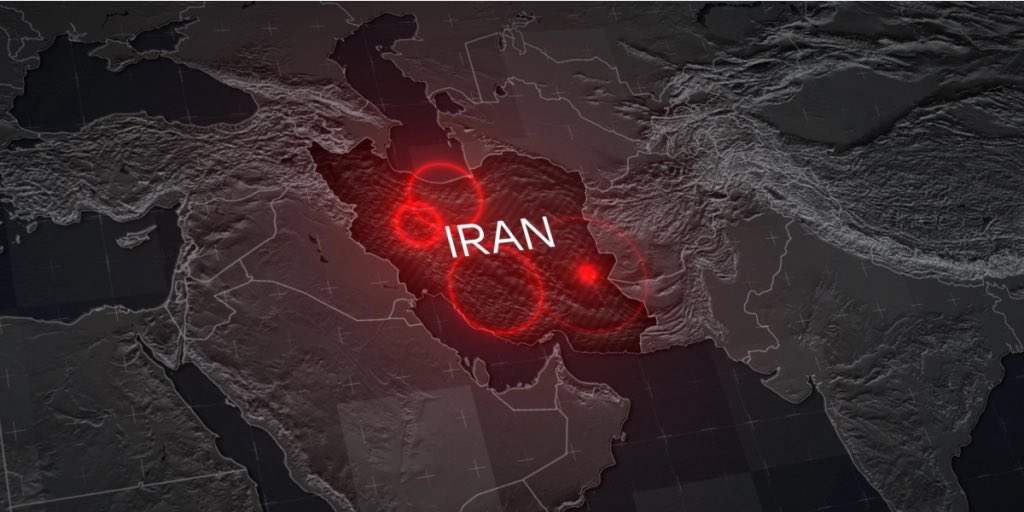
t.co/IBgUC6qxHl referenced the U.S. military exercise Millennium Challenge 2002 and the tactics used by Paul Van Riper’s “Red Team.” To what extent do you think the Iranian military doctrine today is directly inspired by that kind of asymmetric warfare model?
The Iranian Armed Forces were forged for this very conflict. Today, Iran does not operate medium or long-range radars, lacks intact airbases, and its military is deployed in highly fragmented and camouflaged formations across the territory.
How does Iran operate?
Aircraft take off and land from improvised hangars and airstrips hidden within mountain bases, which also house the bulk of their military hardware. Iran downs drones using its 358 loitering surface-to-air missile, which offers high mobility via small trucks, alongside short-range air defense units (SHORAD) like the Tor-M1 and Dezful. These are deployed selectively, signaling a strategy for a protracted war.
By keeping radars offline, Iran allows the US-Israel coalition to establish air superiority, which I assume is expected within Iranian war planning,focusing on preventing this from escalating into total air supremacy.
Another striking feature of the Iranian asymmetric model is the decentralization of C2 (Command and Control), enabling faster and more resilient response actions against any 'decapitation' strikes.
This model creates a checkmate for the coalition; the US Navy was built to project power through large surface vessels. Against Iran, the US fleet is forced to rely primarily on Tomahawks, stationed at least 700km off the coast, leaving F-18s without the necessary range to strike Iran's central cities.
4. Several Gulf states appear increasingly uncertain about Washington’s security guarantees. Based on what you are observing, do you think the war is accelerating a strategic shift in the region toward China as an alternative security and economic partner?
The region's major powers are already customers of the Chinese arms market, with the exception of Bahrain. Saudi Arabia has elevated its relationship to a Comprehensive Strategic Partnership and has not only purchased Chinese missiles but also secured a technology transfer agreement with Beijing in this sector.
The UAE operates a vast fleet of Chinese drones, and its leading defense conglomerate, EDGE Group, maintains cooperation agreements with China's Norinco. While I believe the U.S. will remain the dominant power in the region, these nations will increasingly turn to the Chinese as a deterrent against Iran.
The Gulf states have long been a 'honeypot' for the Western defense industry. For instance, Qatar paid over $330 million per unit for the F-15QA Ababil in 2017, while Kuwait paid a similar price for each Eurofighter Typhoon in 2016.
However, as the war broke out, the U.S. not only prioritized Israel but also failed to adequately protect its own bases within these countries, calling into question the entire model of reliance on American security guarantees.
The Iranian Armed Forces were forged for this very conflict. Today, Iran does not operate medium or long-range radars, lacks intact airbases, and its military is deployed in highly fragmented and camouflaged formations across the territory.
How does Iran operate?
Aircraft take off and land from improvised hangars and airstrips hidden within mountain bases, which also house the bulk of their military hardware. Iran downs drones using its 358 loitering surface-to-air missile, which offers high mobility via small trucks, alongside short-range air defense units (SHORAD) like the Tor-M1 and Dezful. These are deployed selectively, signaling a strategy for a protracted war.
By keeping radars offline, Iran allows the US-Israel coalition to establish air superiority, which I assume is expected within Iranian war planning,focusing on preventing this from escalating into total air supremacy.
Another striking feature of the Iranian asymmetric model is the decentralization of C2 (Command and Control), enabling faster and more resilient response actions against any 'decapitation' strikes.
This model creates a checkmate for the coalition; the US Navy was built to project power through large surface vessels. Against Iran, the US fleet is forced to rely primarily on Tomahawks, stationed at least 700km off the coast, leaving F-18s without the necessary range to strike Iran's central cities.
4. Several Gulf states appear increasingly uncertain about Washington’s security guarantees. Based on what you are observing, do you think the war is accelerating a strategic shift in the region toward China as an alternative security and economic partner?
The region's major powers are already customers of the Chinese arms market, with the exception of Bahrain. Saudi Arabia has elevated its relationship to a Comprehensive Strategic Partnership and has not only purchased Chinese missiles but also secured a technology transfer agreement with Beijing in this sector.
The UAE operates a vast fleet of Chinese drones, and its leading defense conglomerate, EDGE Group, maintains cooperation agreements with China's Norinco. While I believe the U.S. will remain the dominant power in the region, these nations will increasingly turn to the Chinese as a deterrent against Iran.
The Gulf states have long been a 'honeypot' for the Western defense industry. For instance, Qatar paid over $330 million per unit for the F-15QA Ababil in 2017, while Kuwait paid a similar price for each Eurofighter Typhoon in 2016.
However, as the war broke out, the U.S. not only prioritized Israel but also failed to adequately protect its own bases within these countries, calling into question the entire model of reliance on American security guarantees.
5. If the United States and its allies were to attempt to forcibly open the Strait of Hormuz with a naval coalition, what would realistically happen in the first 48 hours of such an operation?
We will likely see heavy bombardment of the Strait's mountains to suppress Iranian firing positions, but also widespread panic at sea, with commanders retreating and ships sinking. This is the scenario I foresee; I find it hard to believe any commander would risk their vessel in that strait, especially without total air dominance or submarine support. Iran maintains a A2/AD (Anti-Access/Area Denial) capability over the Strait of Hormuz.
6 - t.co/dZKoALWBjS mention that Iran’s short-range anti-ship missile capacity remains largely intact. How vulnerable are Western naval assets in the Gulf to this type of saturation attack using drones, missiles and fast boats?
Large ships are completely vulnerable. It’s not just the West; any large vessel is now susceptible to drone swarms paired with anti-ship missiles (AShMs), a reality made clear by the war in Ukraine.
This saturation quickly depletes defensive batteries. Even upgraded EW systems like the AN/SLQ-32 have only partial effectiveness; since they rely on homing jamming, they have little to no effect on modern drones and missiles equipped with EO/IR seekers or real-time mid-course guidance.
However, the real threat comes from UUVs (Unmanned Underwater Vehicles), which are difficult to detect and highly effective in swarms, especially near the coast.
The Iranian naval arsenal is incredibly diverse and lethal at these ranges, beyond UUVs, Iran also operates supercavitating torpedoes capable of reaching speeds of 360 km/h.
We will likely see heavy bombardment of the Strait's mountains to suppress Iranian firing positions, but also widespread panic at sea, with commanders retreating and ships sinking. This is the scenario I foresee; I find it hard to believe any commander would risk their vessel in that strait, especially without total air dominance or submarine support. Iran maintains a A2/AD (Anti-Access/Area Denial) capability over the Strait of Hormuz.
6 - t.co/dZKoALWBjS mention that Iran’s short-range anti-ship missile capacity remains largely intact. How vulnerable are Western naval assets in the Gulf to this type of saturation attack using drones, missiles and fast boats?
Large ships are completely vulnerable. It’s not just the West; any large vessel is now susceptible to drone swarms paired with anti-ship missiles (AShMs), a reality made clear by the war in Ukraine.
This saturation quickly depletes defensive batteries. Even upgraded EW systems like the AN/SLQ-32 have only partial effectiveness; since they rely on homing jamming, they have little to no effect on modern drones and missiles equipped with EO/IR seekers or real-time mid-course guidance.
However, the real threat comes from UUVs (Unmanned Underwater Vehicles), which are difficult to detect and highly effective in swarms, especially near the coast.
The Iranian naval arsenal is incredibly diverse and lethal at these ranges, beyond UUVs, Iran also operates supercavitating torpedoes capable of reaching speeds of 360 km/h.
7. Finally, if this confrontation continues without a decisive military outcome, what long-term geopolitical consequences do you expect for the global balance of power, particularly regarding China’s role in the Middle East and the credibility of American deterrence?
This war has discarded decades of American efforts to sell a security 'umbrella' that failed to withstand its first real test. Beyond shifting the balance of power, it will lead Americans to question how a $1 trillion budget is being spent if they cannot win a war against a country that has been under sanctions for several years.
The Chinese had the opportunity to learn by monitoring and recording this conflict using high-altitude drones and LEO satellites. This was the great American loss in this war: exposing critical parts of its modern air and naval doctrines, which are now thoroughly documented.
The Chinese will gain more ground, but they will have to 'walk on eggshells' in their relationship with Iran and the Gulf states. I believe they can learn from the Russians, who have long been balancing their ties between Israel and Iran.
This war reinforces what we witnessed in Ukraine: asymmetric warfare represents a genuine threat to great powers.
This war has discarded decades of American efforts to sell a security 'umbrella' that failed to withstand its first real test. Beyond shifting the balance of power, it will lead Americans to question how a $1 trillion budget is being spent if they cannot win a war against a country that has been under sanctions for several years.
The Chinese had the opportunity to learn by monitoring and recording this conflict using high-altitude drones and LEO satellites. This was the great American loss in this war: exposing critical parts of its modern air and naval doctrines, which are now thoroughly documented.
The Chinese will gain more ground, but they will have to 'walk on eggshells' in their relationship with Iran and the Gulf states. I believe they can learn from the Russians, who have long been balancing their ties between Israel and Iran.
This war reinforces what we witnessed in Ukraine: asymmetric warfare represents a genuine threat to great powers.
• • •
Missing some Tweet in this thread? You can try to
force a refresh