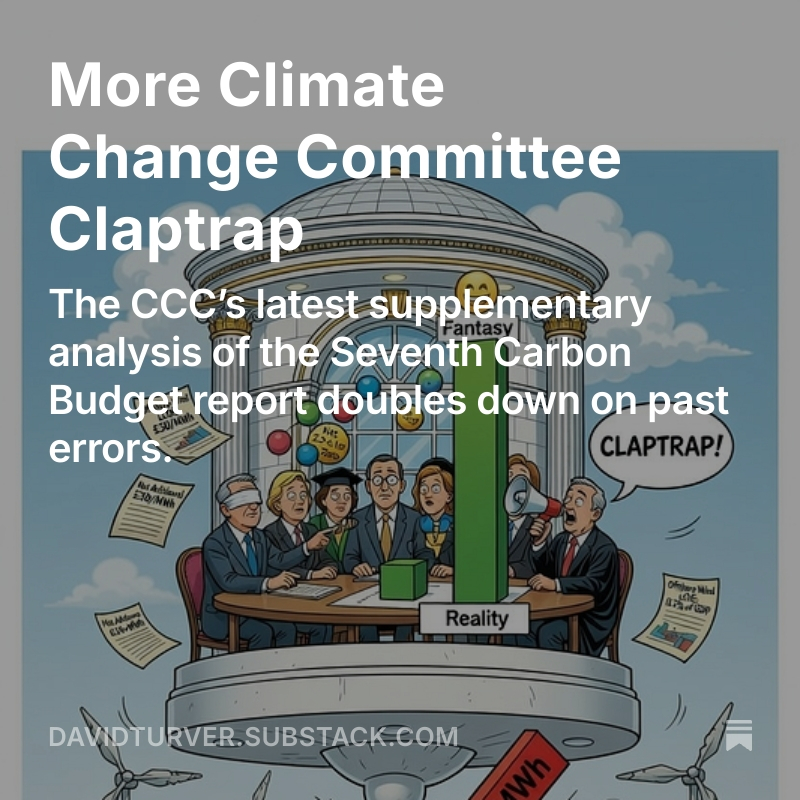
The CCC recently dropped a supplementary analysis of their 7th Carbon Budget, doubling down on past errors. They claim Net Zero costs less than the 2022 fossil fuel price spike & delivers a "net benefit" to society. Let's dismantle the ivory tower claptrap. A thread (1/13)
They also claim achieving Net Zero is “more cost-effective” than continued reliance on fossil fuels in all scenarios (2/13)
To support this, they’ve added “co-impacts” — cleaner air, warmer homes, active travel, “healthier diets” and carbon savings. Sounds impressive… until you examine the numbers and assumptions. (3/13)
Their whole analysis compares their “Balanced Pathway” to a “no further action” baseline. What’s missing? Any scenario that unwinds Net Zero mandates, scraps EV/heat pump subsidies, ends renewables subsidies, restarts North Sea drilling or lifts the fracking ban (4/13)
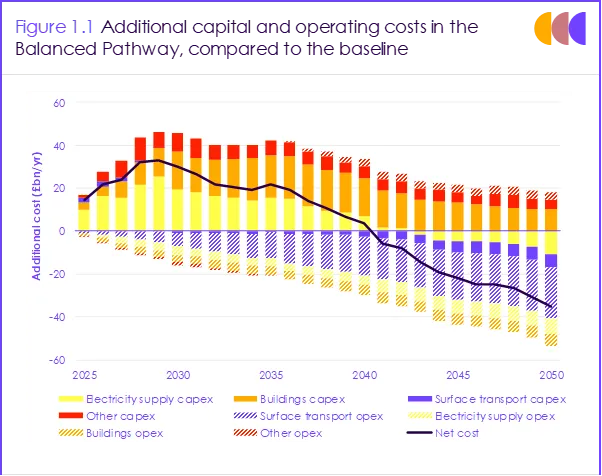
Sensible, affordable energy policy is simply beyond their imagination. The biggest flaw? Wildly optimistic renewable electricity costs. They assume prices far below real auction results — AR7 prices ~2.5X higher for offshore wind & roughly double for solar. (5/13)
Most of their claimed “savings” come from EVs running on this supposedly cheap renewable electricity instead of petrol. If electricity isn’t as cheap as they assume, those operating cost savings disappear (6/13)
Their EV cost-parity forecasts (2026-28) have already failed. A basic VW ID.3 is still 23-35% more expensive than a comparable petrol Golf — even after subsidies (7/13)
CCC relies on Levelised Cost of Energy (LCOE) models using low Green Book discount rates (3.5%) instead of real-world hurdle rates (7.6–11.4%). They ignore commercial risks and the fact that renewables only get built because of heavy subsidies and higher CfD strike prices (8/13)
New “co-benefits” are weak. Air quality was already improving fast before Net Zero — NOx and particulates are well below 2029 targets. Further cuts will be smaller and harder. Walking in the rain and swapping steak for insects as “healthier”? Debatable at best (9/13)
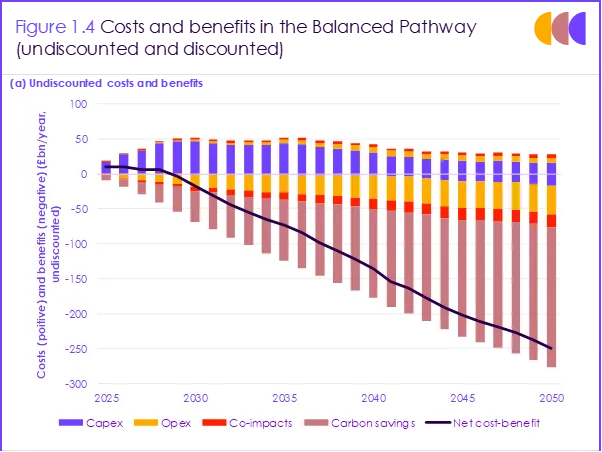
Their star number: £2.7 trillion (undiscounted) in “carbon savings” to 2050. They achieve this by using absurdly high carbon prices (£281/t rising to £409/t) to justify measures that would otherwise be uneconomic. They're claiming to save a number they simply made up. (10/13)
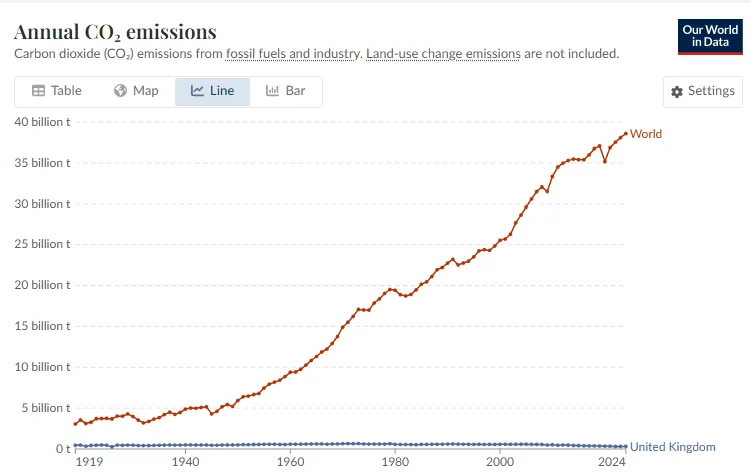
These supposed benefits assume massive global action — yet global emissions are still rising (up more in 2024 than the UK’s entire annual total). The UK is only ~0.8% of global emissions. Our efforts are a rounding error (11/13)
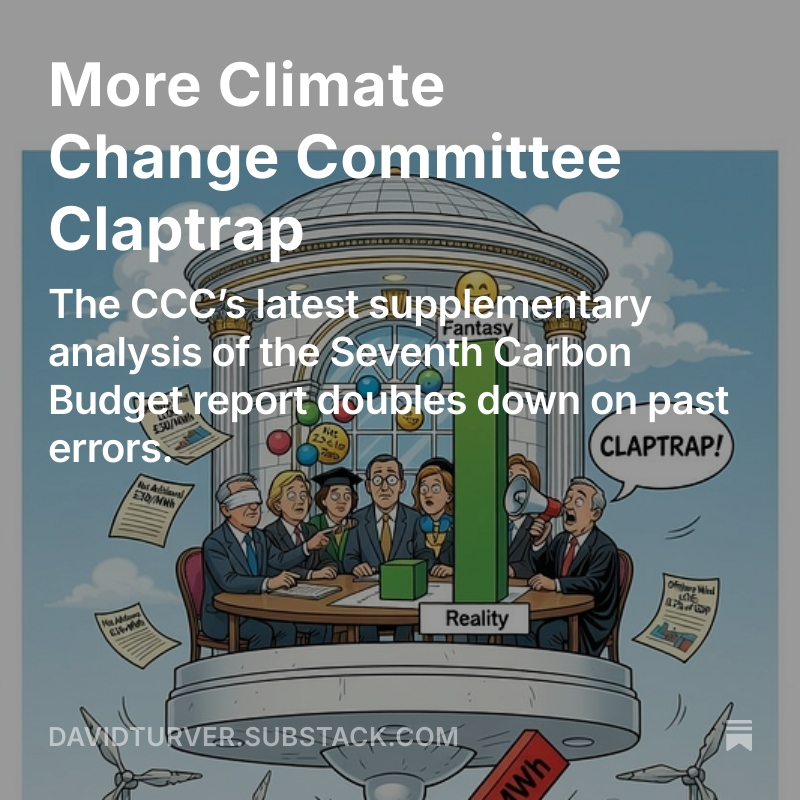
Conclusion: The CCC’s Seventh Carbon Budget is claptrap built on fake renewable costs, fictional savings, weak co-benefits & phantom global carbon savings. When Parliament debates CB7 later this year, it should be rejected outright. Time for a realistic energy policy. (12/13)
If you enjoyed this thread please like and share. You can sign up for free to read the full article on the link below (13/13) davidturver.substack.com/p/more-climate…
Hi @threadreaderapp unroll please.
• • •
Missing some Tweet in this thread? You can try to
force a refresh

New deep dive: "Octopus Smoke and Mirrors" exposes what's really going on behind the hype at Octopus, the UK's biggest energy supplier. Spoiler: a lot of valuation puffery, restated accounts and marketing flim-flam. A thread (1/10)
Recap: Last year I asked if we'd hit "Peak Pink Octopus" after news of spinning off Kraken (their tech platform) at £10bn, valuing the whole group at £15bn. It smelled like hype before a sale which was borne out by the actual valuation of ~£6.7bn. (2/10)
Now the latest FY2025 accounts for Octopus Energy Group Limited show it fell into losses again. Investors were not on hand to provide more funding. Instead they sought to monetise their investment by demerging Kraken (3/10)
🚨New article alert: "Net Zero is the Road to Serfdom" – UK’s rush to Net Zero is futile virtue signalling, hiking energy costs, and tanking the economy. Inspired by Hayek's warnings on central planning, we’re on the Road to Serfdom. A thread (1/11) #NetZero #UKEnergy
Labour MPs boast about "secure" renewables & wind power, while Starmer signs us up to stricter EU Net Zero rules. But govt control of energy is leading to energy austerity & poor economic performance. How far down the road to serfdom are we? (2/11)
Energy Prices: UK industrial electricity tops the developed world at 26.63p/kWh – 3.5x Canada's cheapest. Domestic prices 2.4x US levels. Gas fares better but still 6x Canada for industry. Nothing to brag about – it's crippling us! (3/11)
There's a lot going on today, but nevertheless it's important to understand what happened in the latest Ofgem price cap. Labour's fairground shell game of shuffling of subsidy costs cannot hide the increasing costs of renewables. A thread 🧵(1/n)
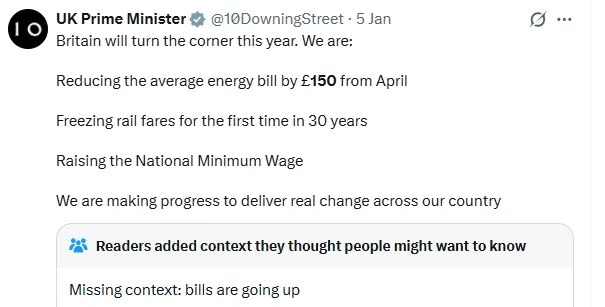
First up, Labour promised a £300 cut in bills at the election. They also claimed they would reduce bills by £150 in April, but the reality is a reduction of just £117. So both Labour's promises were lies (2/n)
We can see in the detail that wholesale gas and electricity prices fell in the latest price cap. This led to q cut of about £19 in direct fuel costs for electricity and £44 for gas (3/n)
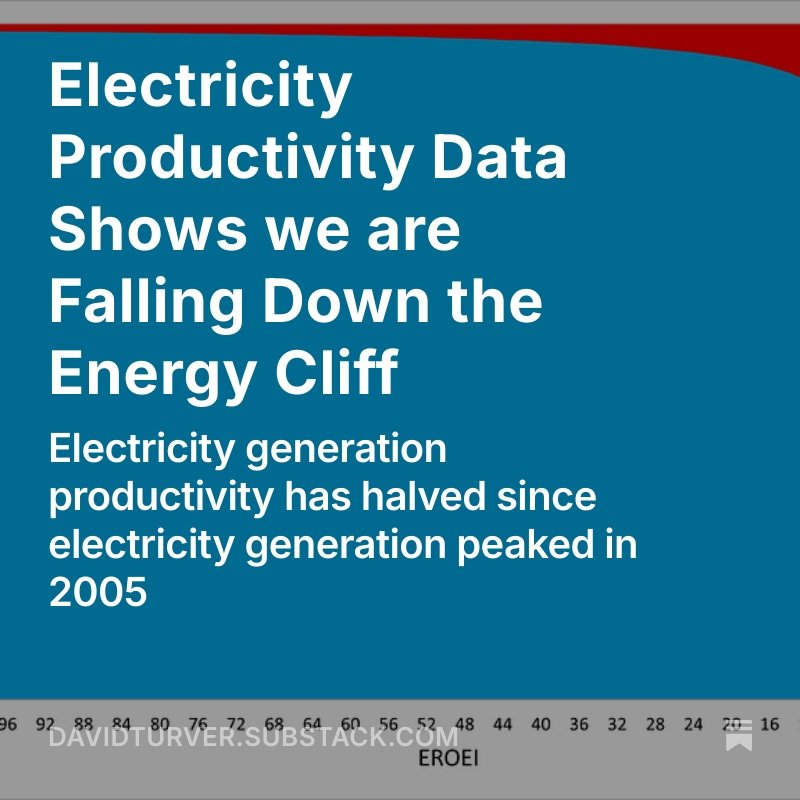
The productivity of the electricity generation sector has halved since generation peaked in 2005. Renewables are dragging us over the energy cliff. A thread (1/n)
Over the past few weeks the government has released the results of the AR7 and AR7a renewables auctions and celebrated the creation of up to 17,000 jobs. But more jobs in electricity generation is not a goodie thing - akin to digging holes and filling them in again (2/n)
Looked at in terms of Gross Value Added (GVA), electricity generation productivity looks superficially good. Even though hours worked has soared, GVA/hour has gone up. But this is only tracking high energy prices (3/n)
The results of the AR7a renewables auction expose government lies about the cost of renewables and net zero. A thread 🧵(1/n) (link to full article in bio)
AR7a awarded contracts for 4.9GW of new solar at a clearing price of £68/MWh (in 2025 prices), 1.3GW of onshore wind at £75/MWh and a further 21MW of tidal stream capacity. (2/n)
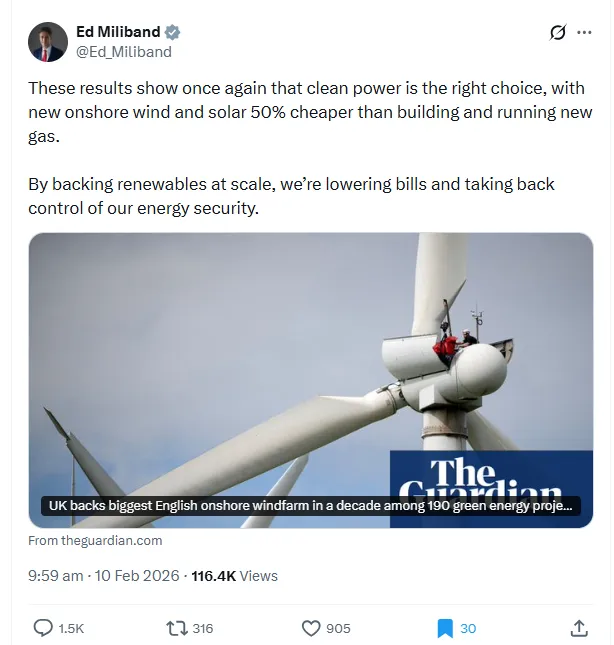
Superficially it looks cheap, leading @Ed_Miliband to claim new onshore wind & solar are 50% cheaper than gas & he is lowering bills. But his claims are based on lies (3/n)
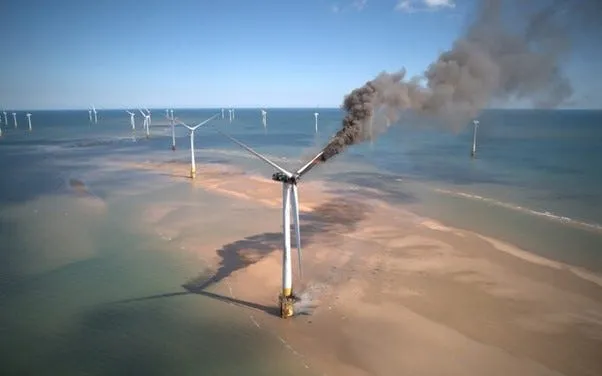
One failed turbine at Scroby Sands exposes the scale of the cost of decommissioning offshore wind farms. And there’s precious little cash being set aside to cover it. A thread (1/n)
Scroby Sands is a relatively small 60MW offshore windfarm. In 2023 one of the 30 turbines caught fire and owner RWE has decided to decommission that single turbine (2/n)
In the accounts up to end 2024, we can see the wind farm is losing money, with pre-tax losses of £4.7m, despite earning ROC subsidies worth £9.8m, or nearly 48% of revenue (3/n)