Thread on the role of Western government's in the closure of the Internet. Germany's 2017 NetzDG act, which forced large platforms to hire thousands of moderators or potentially face huge fines for hosting illegal content even outside of Germany, was the first major law. 
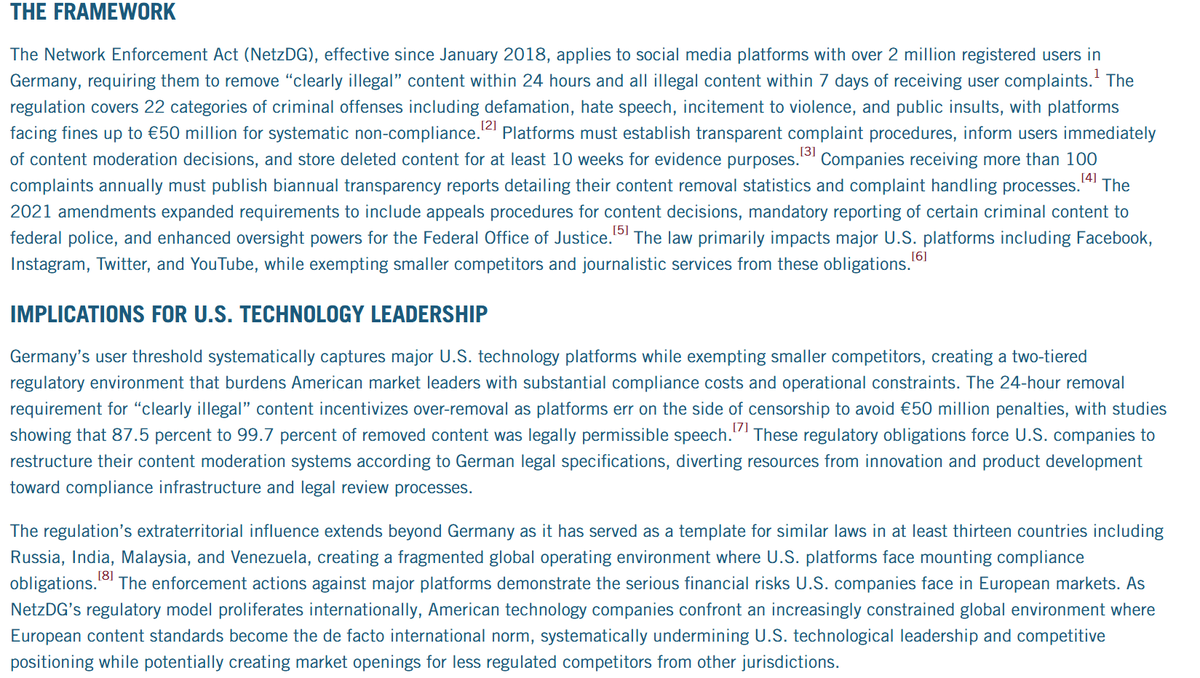
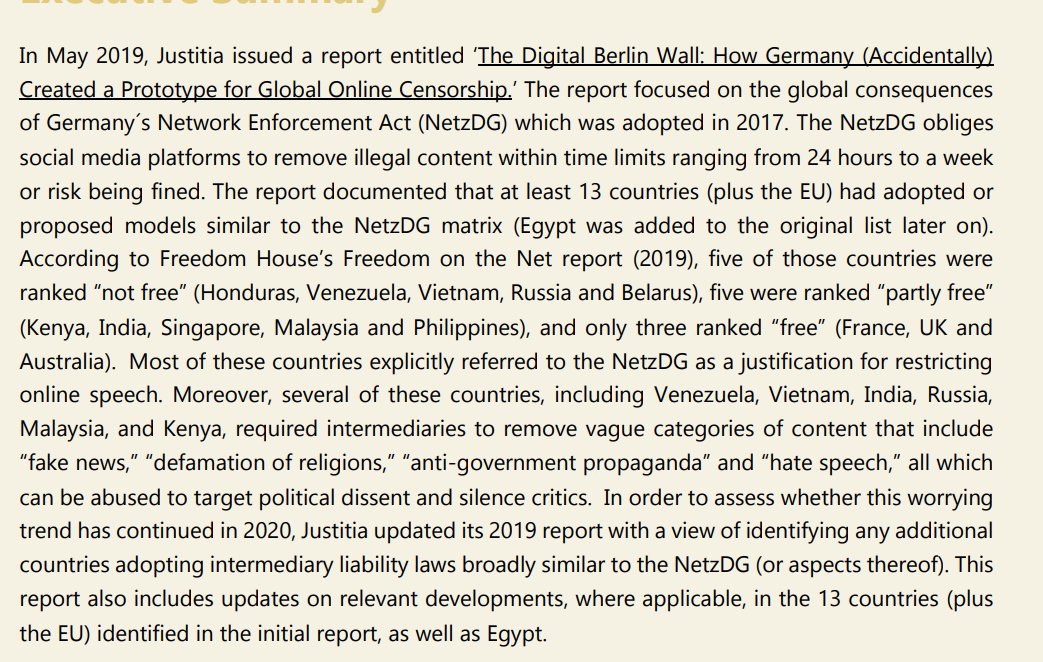
This German law served as the template for similar laws in other authoritarian despotisms, such as Russia, Belarus, Venezuela, Vietnam, the United Kingdom, and India.
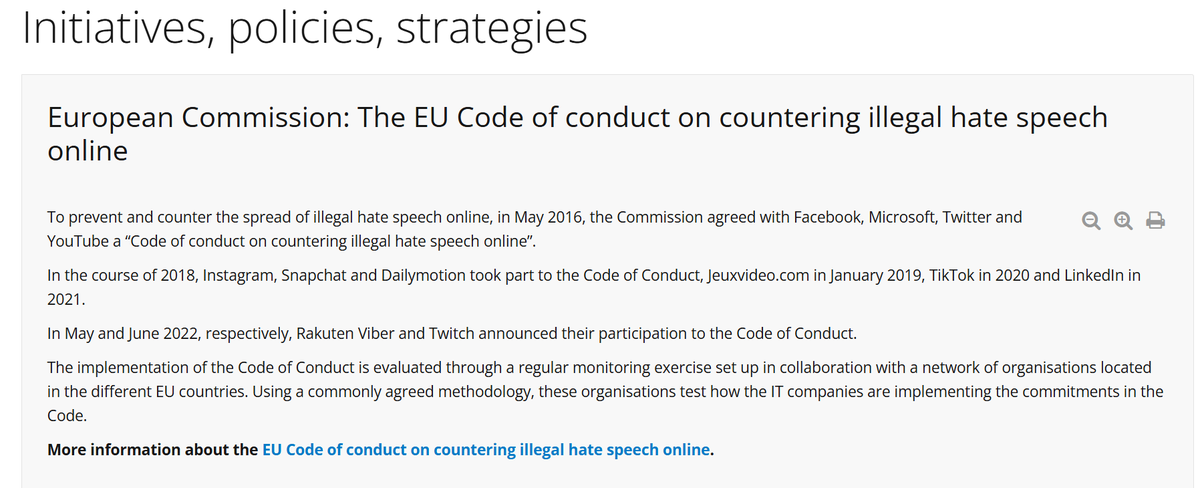
The EU has also exercised informal pressure, imposing a "Code of conduct on countering illegal hate speech online" on YouTube, Facebook, Twitter, and Microsoft in 2016.
This escalated in 2020 to law with the EU's Digital Services Act, which imposed fines of up to 6% of global revenue for illegal content and demanded certain EU-based orgs (mostly NGOs and official journalists) get "trusted flagger" status, meaning their reports are prioritized.
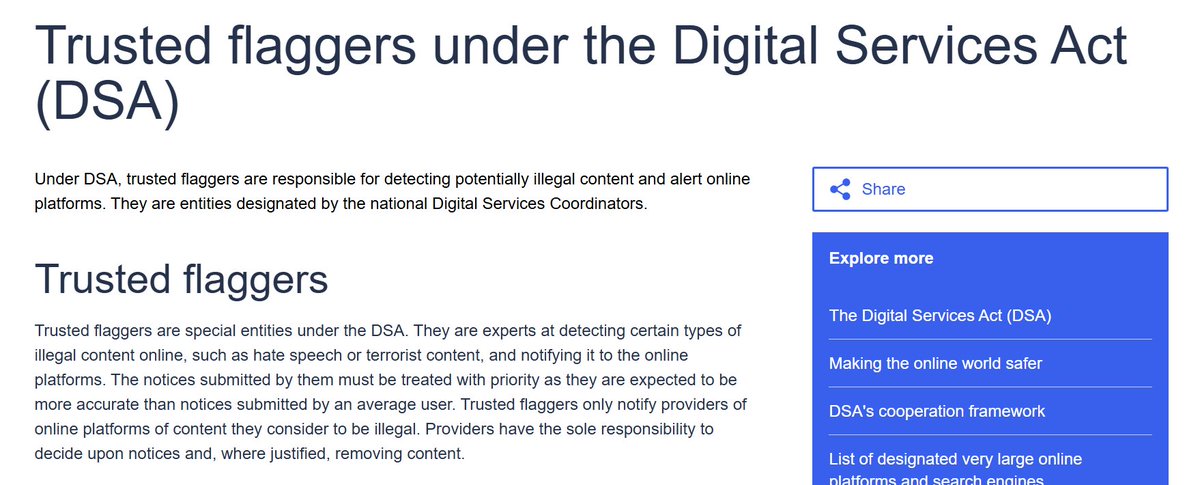
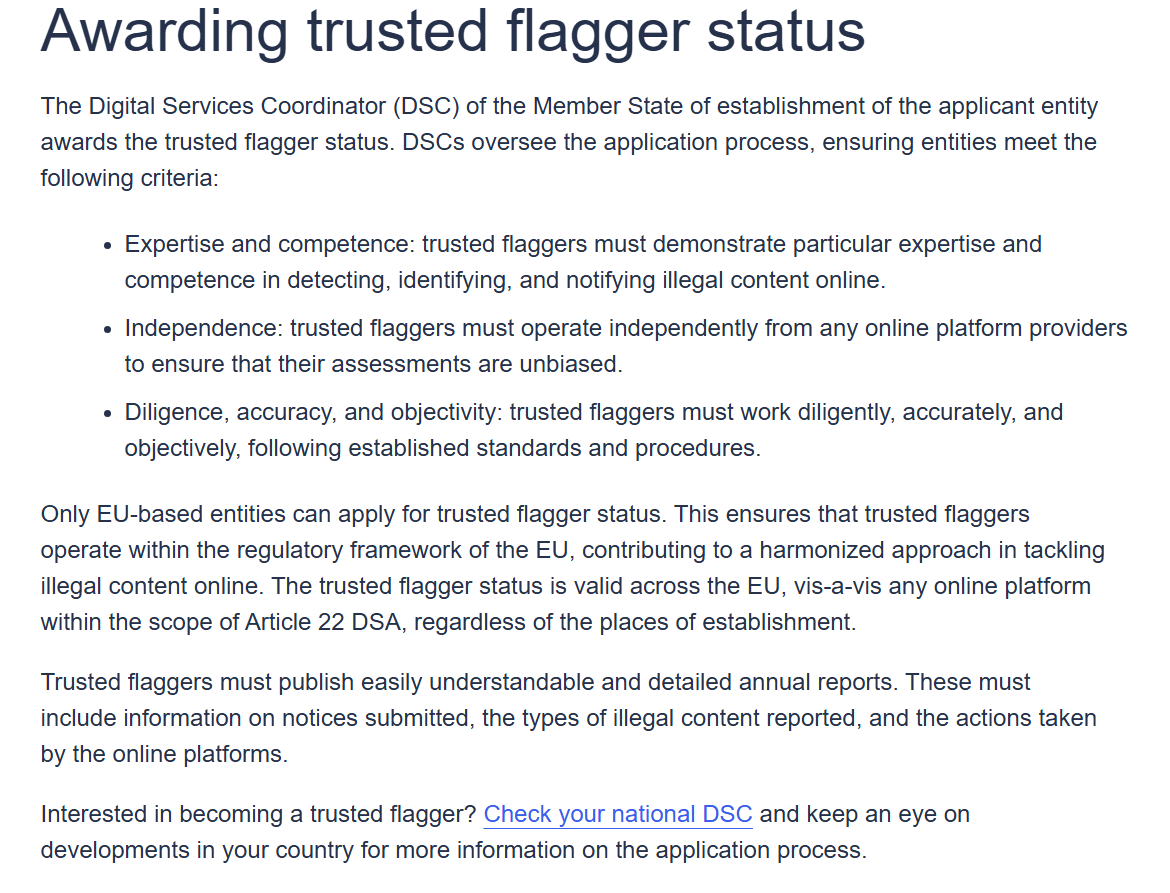
(Adhering to the 2016 (later updated in 2018) Code of Conduct on Hate Speech is evidence of compliance with the DSA, which gives platforms a strong incentive to police speech on their own rather than wait to get flagged)

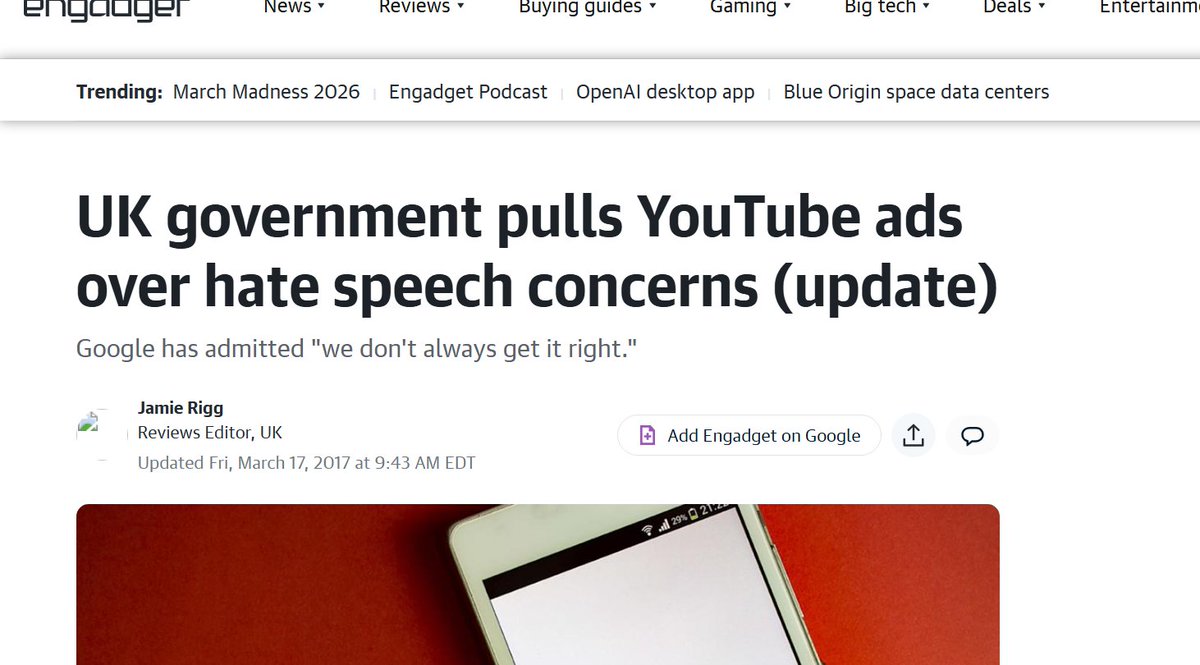
The UK was probably the most important Western government in the closure of the Internet. This began in 2017, when the UK govt pulled all YouTube ads as part of a press campaign against "hate speech" on the platform.
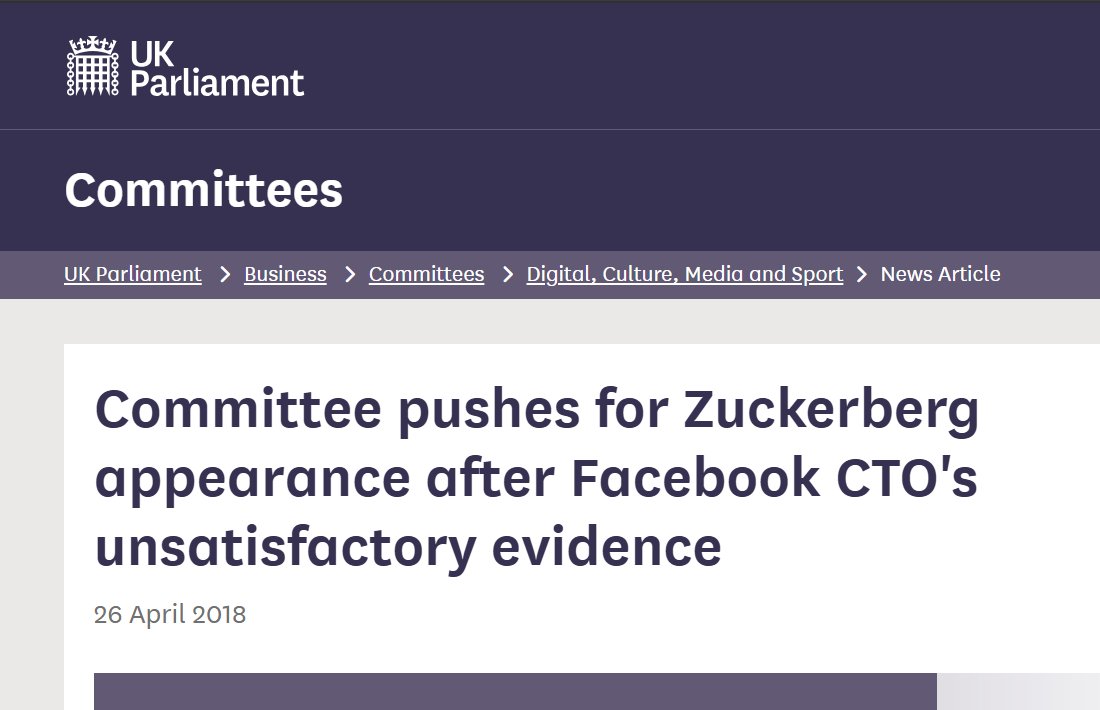
Post-Brexit, the UK govt spent years hounding several social media companies and summoning/humiliating executives, most notably Facebook, over Cambridge Analytica conspiracy theories, including personally threatening Zuckerberg.

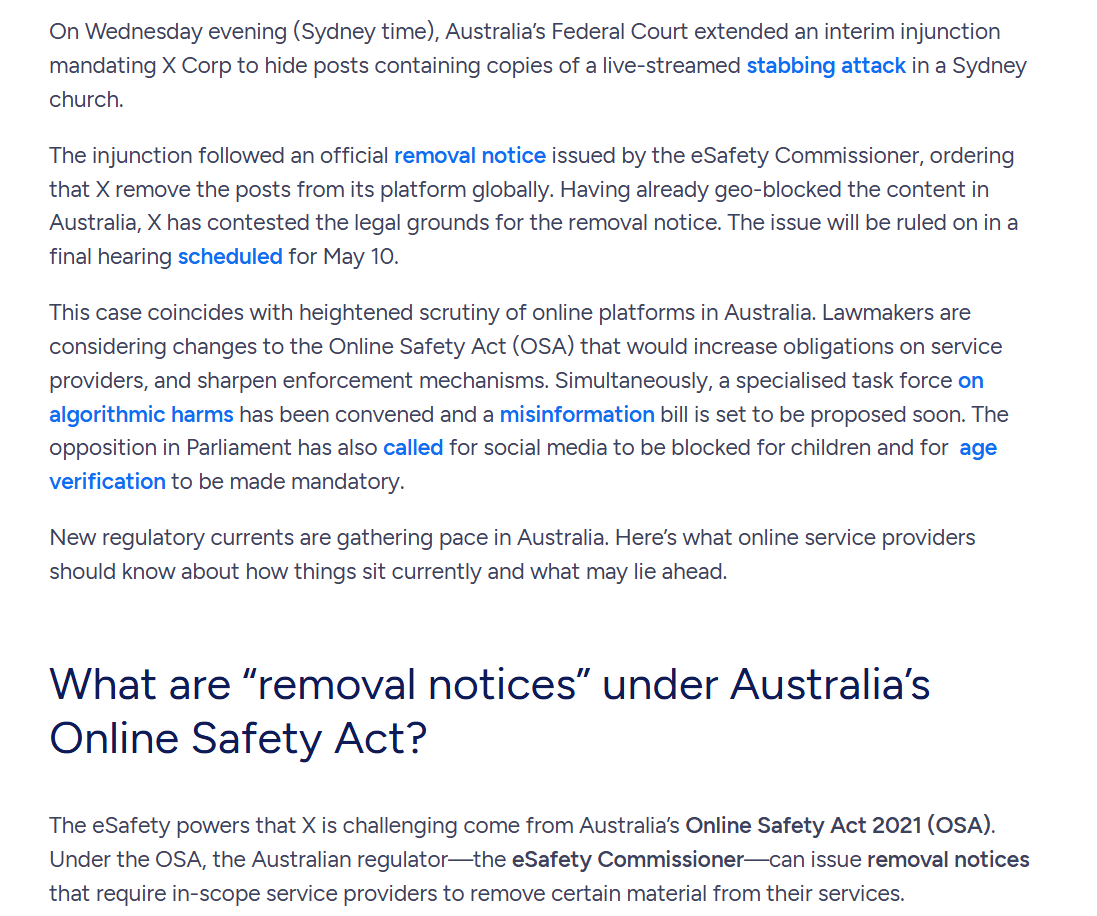
This culminated in Britain's 2023 Online Safety Act. Australia has actually gone further than Britain; its version of the OSA (2021) gave its e-safety commissioner (position created in 2015) the ability to remove content at will.

Australia was also the first country to force companies to break encryption on request, in 2018.
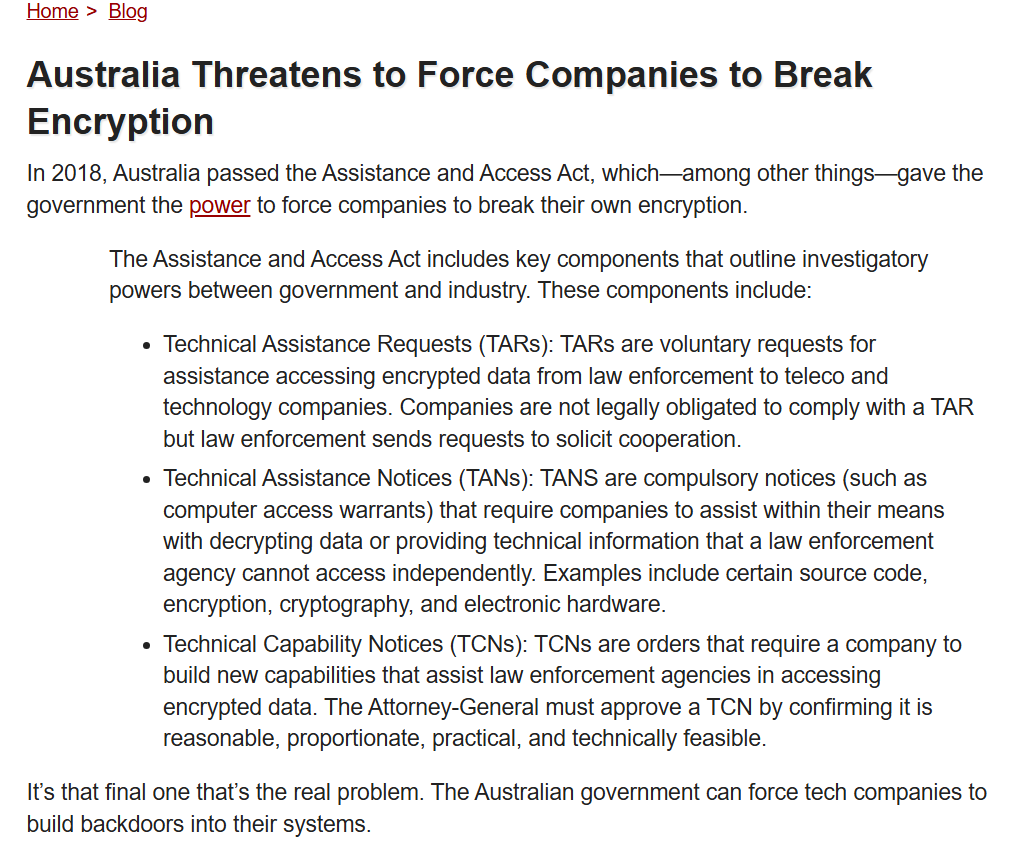
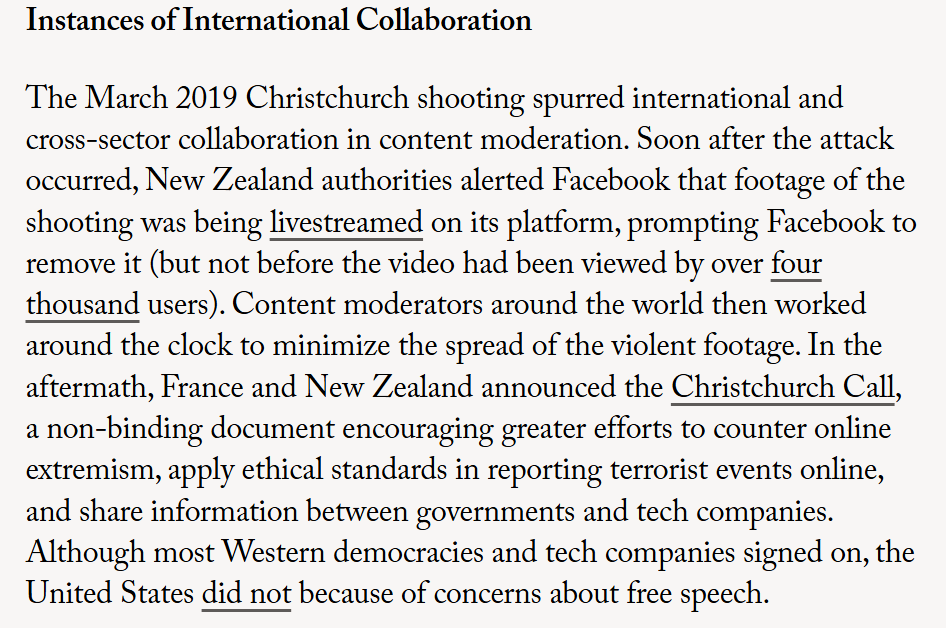
In 2019, New Zealand announced a pledge to "counter online extremism," which most tech companies and Western governments immediately signed. The US did not (citing freedom of speech) until the Biden admin took office in 2021.
US government pressure was generally informal and behind the scenes. For example, in 2021 the White House Director of Digital Strategy requested Facebook censor "borderline content," and Facebook complied.


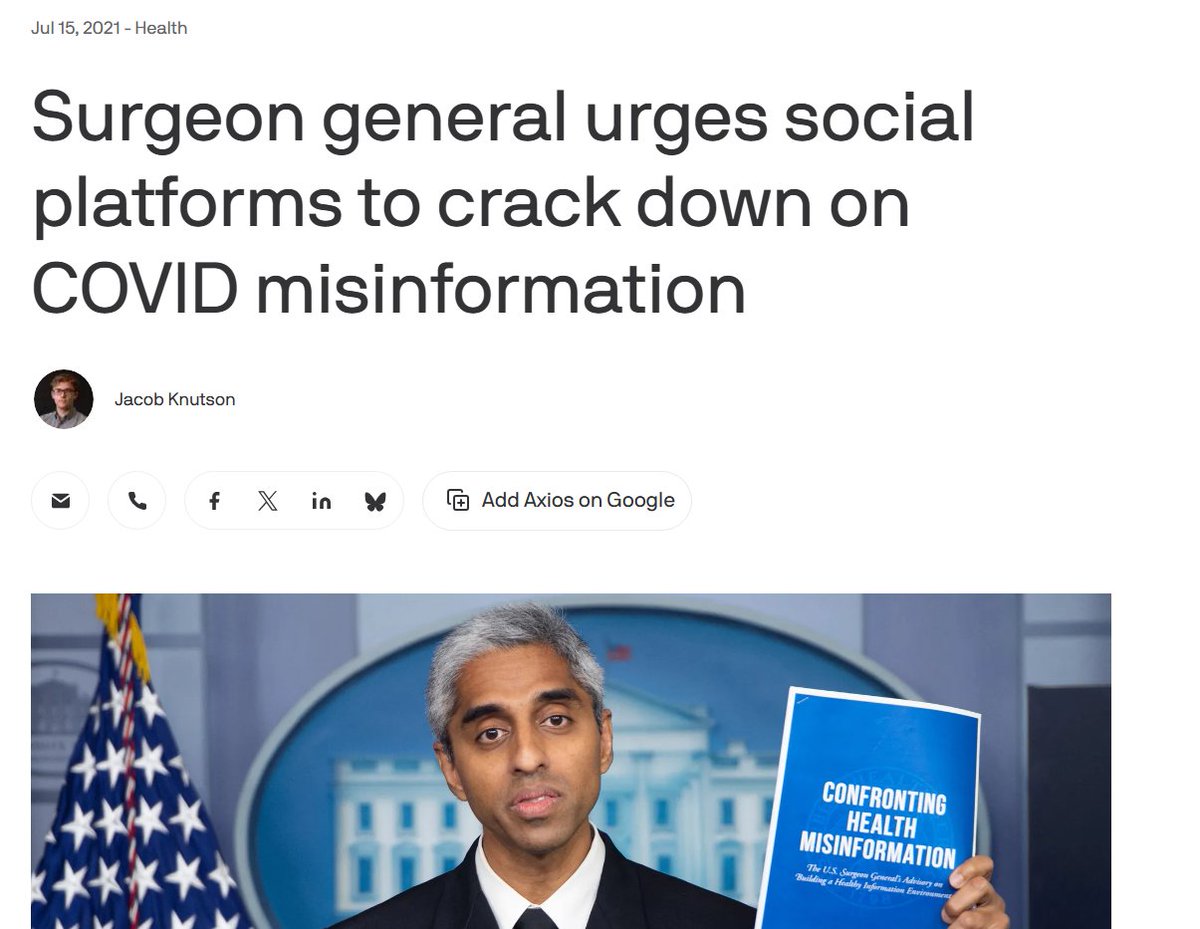
Biden's Surgeon general similarly demanded social media companies redesign algorithms and impose clear consequences on violating accounts to reduce "misinformation."
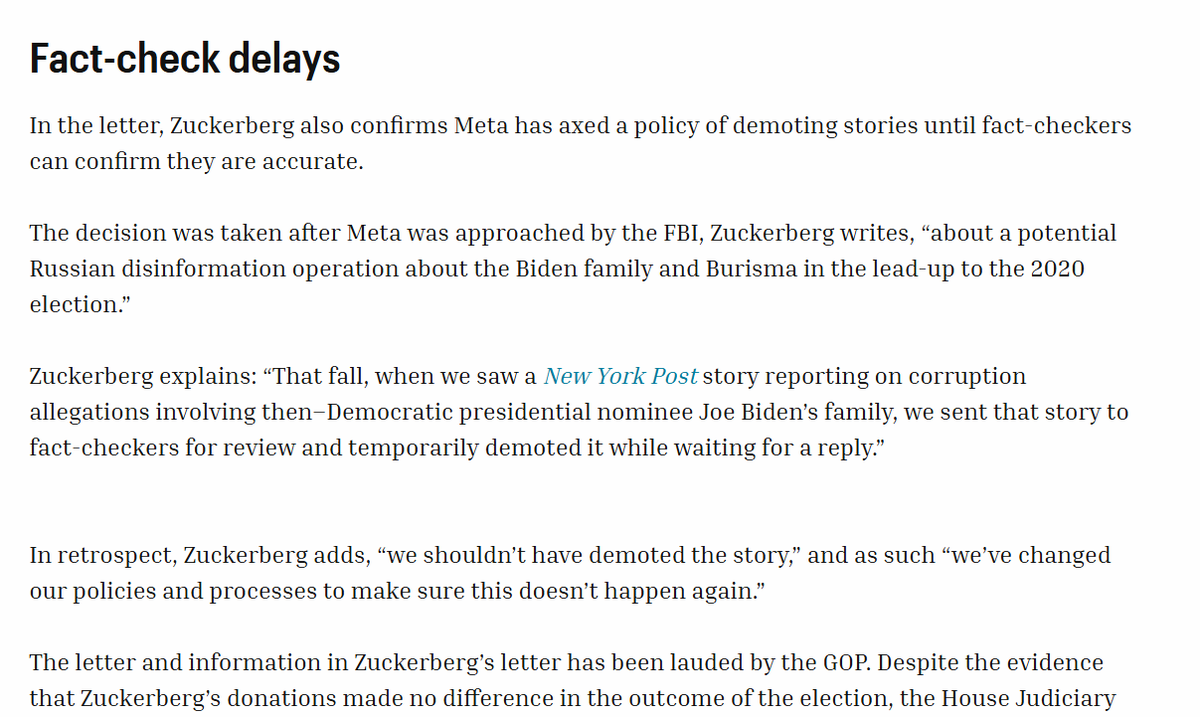
FBI pressure helped lead Facebook to censor the (true) New York Post Hunter Biden laptop story during the 2020 election.
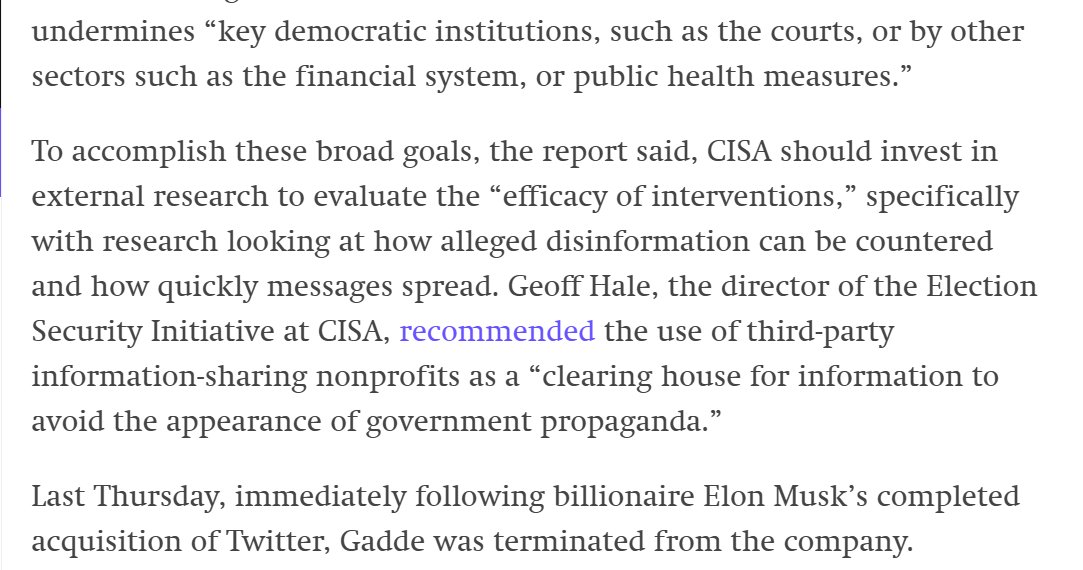
CISA (a DHS sub-agency) explicitly talked about how to invest in third-party NGOs “clearing house for information to avoid the appearance of government propaganda.”
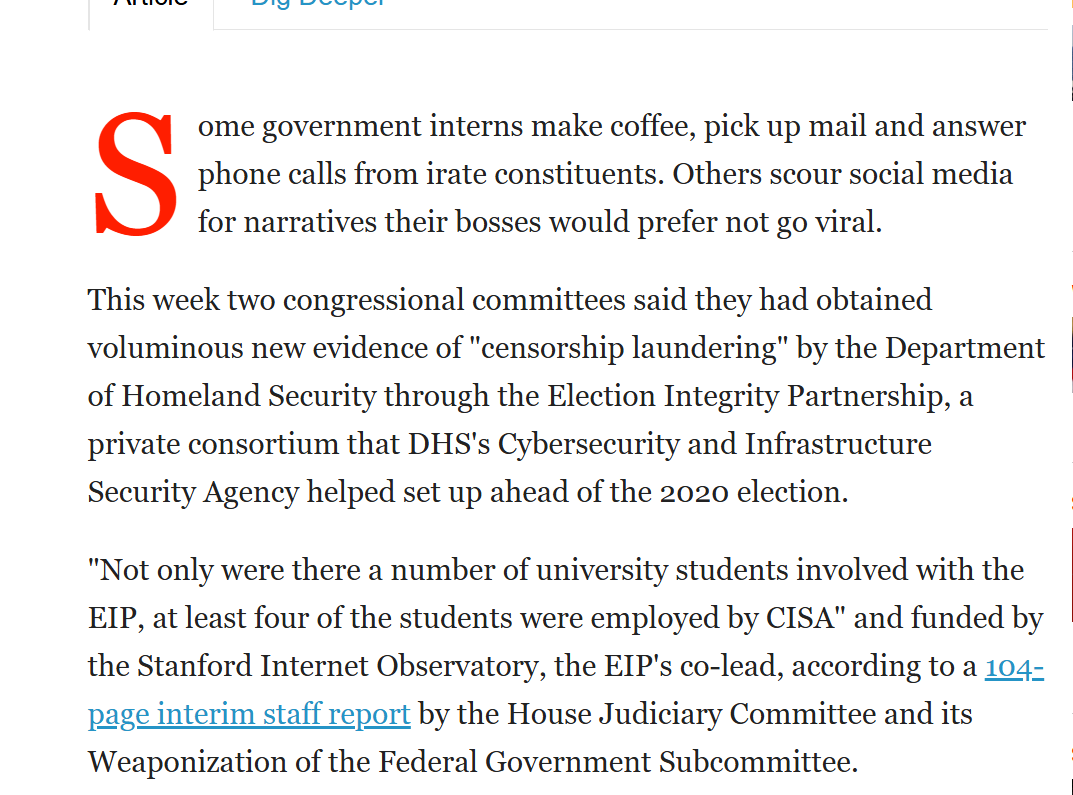
In 2020, one of the most important of these clearinghouses was Stanford's Election Integrity Partnership (EIP), which was set up behind the scenes by the CISA.
The EIP was then expanded into the Virality Project during the lockdowns, which explicitly tried to censor true stories that could fuel vaccine hesitancy, like a Cleveland Institute article on natural immunity.

I've previously covered the Twitter Files, so I'll just reiterate: extensive FBI contacts including individual account deletion requests, multiple types of blacklist/algorithmic suppression.
Sources used in this thread:
schneier.com/blog/archives/…,
esafety.gov.au/about-us/indus…,
tremau.com/resources/onli…,
committees.parliament.uk/work/6330/disi…,
committees.parliament.uk/committee/378/…,
engadget.com/2017-03-17-uk-…,
thefederalist.com/2023/05/03/law…,
justthenews.com/government/con…,
theintercept.com/2022/10/31/soc…,
schneier.com/blog/archives/…,
esafety.gov.au/about-us/indus…,
tremau.com/resources/onli…,
committees.parliament.uk/work/6330/disi…,
committees.parliament.uk/committee/378/…,
engadget.com/2017-03-17-uk-…,
thefederalist.com/2023/05/03/law…,
justthenews.com/government/con…,
theintercept.com/2022/10/31/soc…,
fortune.com/2024/08/27/mar…, axios.com/2021/07/15/cor…. reclaimthenet.org/the-white-hous…, cfr.org/articles/year-…, digital-strategy.ec.europa.eu/en/policies/ds…, coe.int/en/web/cybervi…, digital-strategy.ec.europa.eu/en/policies/tr…, justitia-int.org/wp-content/upl…, itif.org/publications/2…,
• • •
Missing some Tweet in this thread? You can try to
force a refresh