1/ Has Donald Trump accidentally recreated, in an even more severe form, the energy crisis that doomed Jimmy Carter's presidency? A comparison with the 1979 oil crisis shows worrying parallels with the current situation. ⬇️ 
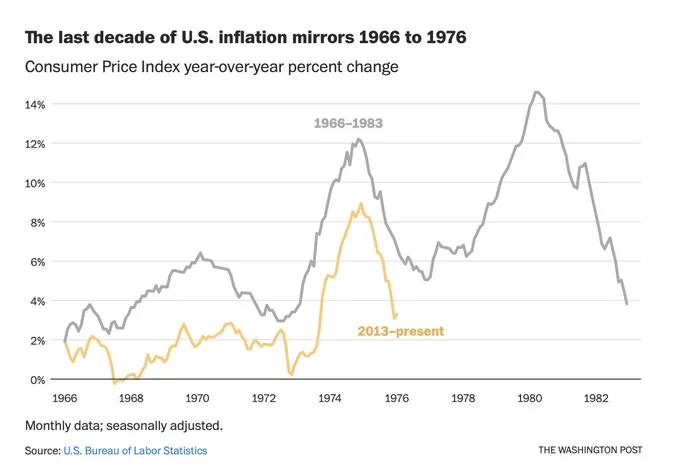
2/ In August 2023, former Fed chair Larry Summers (@LHSummers) noted this in the Washington Post: "It is sobering to recall that the shape of the past decade’s inflation curve almost perfectly shadows its path from 1966 to 1976 before it accelerated in the late 1970s."
3/ What caused that acceleration? The most immediate trigger was the Iranian Revolution in early 1979, which brought Ayatollah Khomeini to power. The turmoil caused by the revolution caused Iran's oil exports to drop from about 6 million barrels per day to only about 1.5 million.
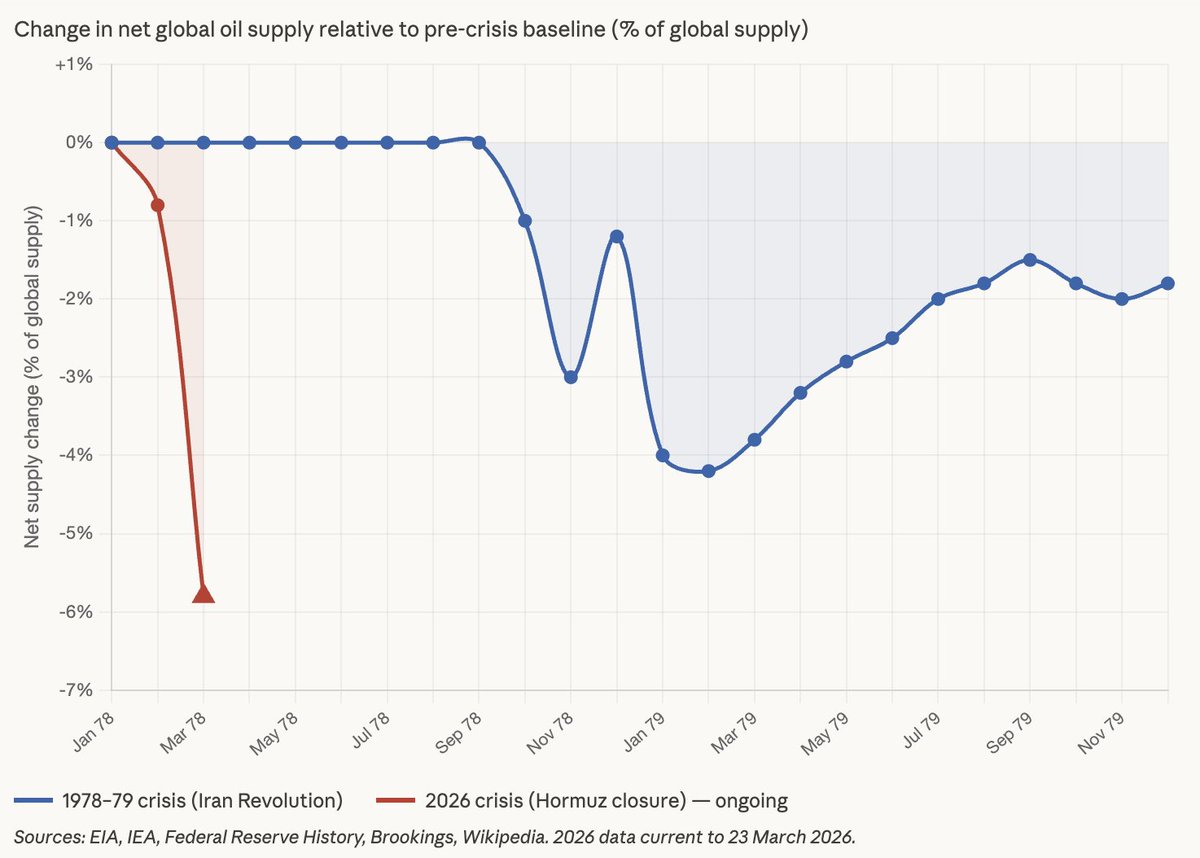
4/ The actual supply disruption was not sudden and was relatively modest in global terms, amounting to perhaps 4% of world supply, but it triggered widespread panic. Demand soared as consumers filled their tanks and companies topped up their reserves of fuel.
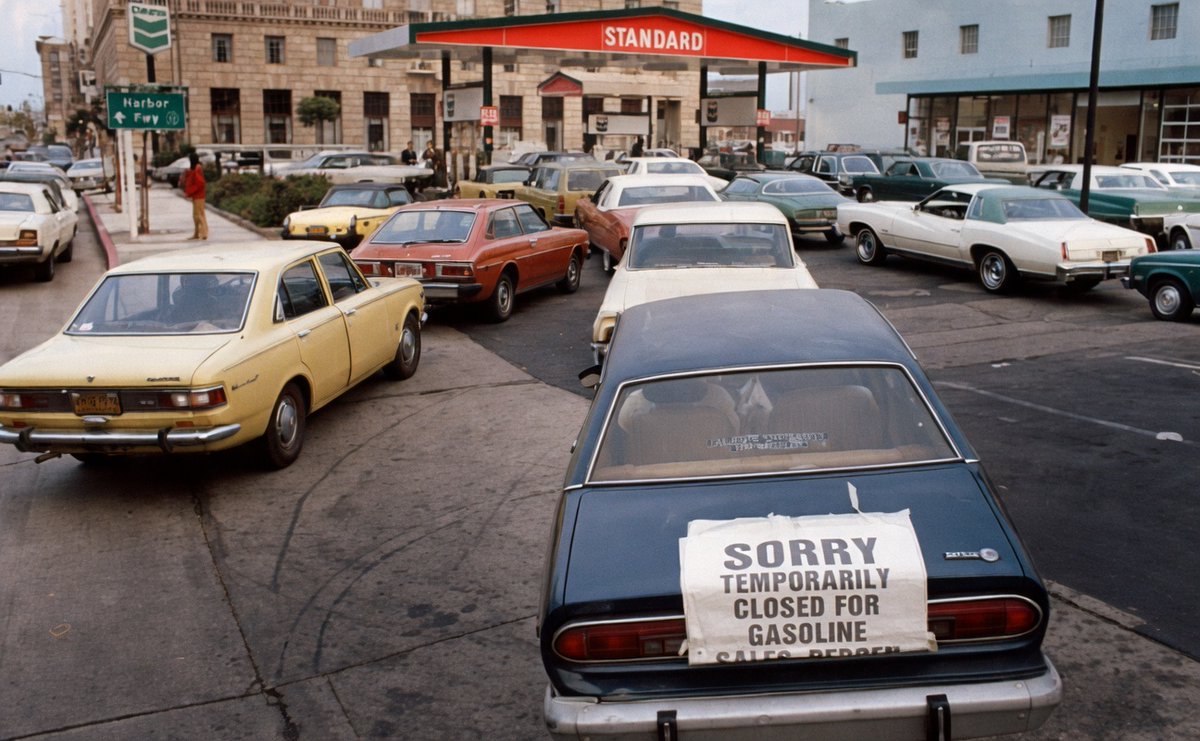
5/ This triggered shortages in many countries, with long lines forming at filling stations. They were so acute in the US that gasoline rationing was proposed, with coupons envisaged (but not implemented) and refueling limited to odd or even days in several large states.

6/ The outbreak of the Iran-Iraq War in September 1980 knocked both countries' oil exports offline simultaneously, extending and deepening the price shock. It deepened and prolonged the crisis, with lesser impacts on other Gulf oil producers.
7/ The crisis created by the oil shock was devastating for the political prospects of US President Jimmy Carter. Long gas lines, fuel shortages, and skyrocketing prices fueled a sense of national malaise, which ultimately doomed his presidency.
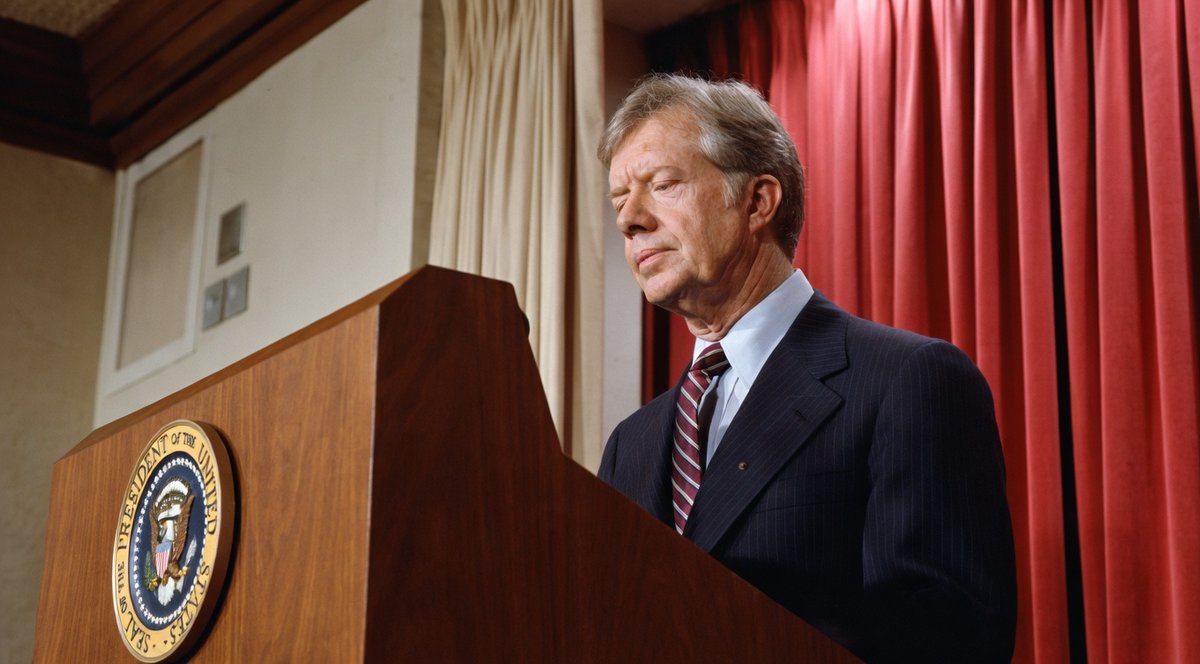
8/ The gas shortages and rationing made the government appear ineffective and unprepared. Many Americans felt that the US was losing control over its economy and global position, in what Carter later described as a national "crisis of confidence."
9/ The economic pain caused by oil prices – stagflation, recession, high interest rates – made Carter extremely vulnerable, and was key to his loss to Ronald Reagan in 1980. Reagan channeled public frustration and promised new approaches on energy provision and taxes.

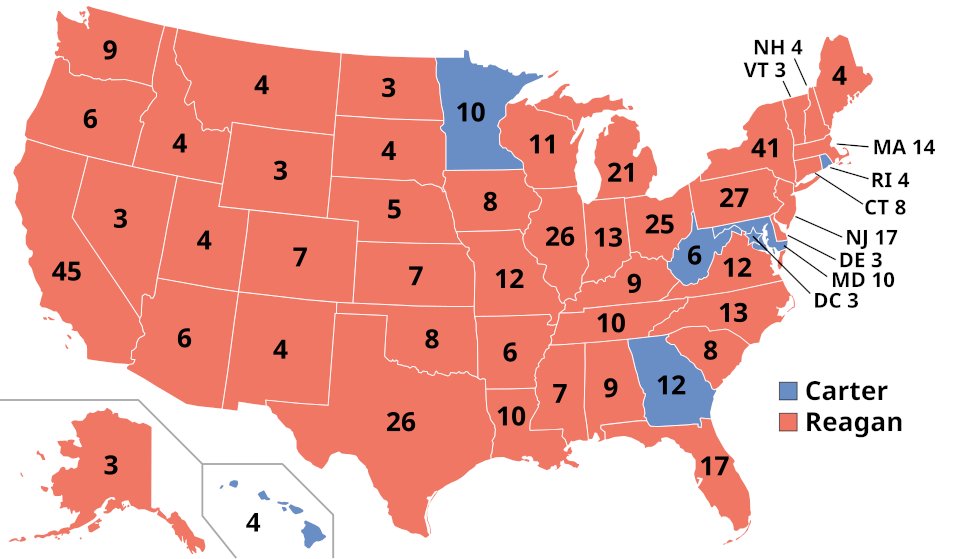
10/ Reagan's 1980 victory, which was aided by the Iranian hostage crisis, was one of the most lopsided in American history, winning 489 Electoral College votes to Carter's 49. It reshaped American politics and led to 12 years of Republican domination of the White House.
11/ As a direct result of the oil crisis, Americans became more aware of their vulnerability to disruptions of Middle Eastern oil and instability in the region. It led to support for the CAFE fuel efficiency standards and a increased interest in alternative sources of energy.
12/ The US's foreign policy approach changed significantly too, leading to the creation of the current network of US bases throughout the Middle East. Protecting Gulf oil supplies became a key strategic interest of the US.
13/ How does that crisis compare to the current one? The current level of disruption is far more severe than in 1979 – the IEA says it's "the largest supply disruption in the history of the global oil market." At least 6% of global supply has been lost, compared to 4% in 1979.
14/ The 1979 disruption was actually fairly quickly resolved, as it was caused by Iranian oil workers going on strike, and foreign specialists fleeing the revolution. The Iranian government brought in naval personnel to replace the workers and soon restored production.
15/ Unlike in 1979, where there was no major damage to oil and gas infrastructure on both sides of the Gulf, Gulf states say that Iranian-caused damage to their infrastructure could take years to repair. Iran's crucial Kharg Island terminal potentially faces complete destruction.
16/ The current crisis affects far more oil producers than in 1979: Kuwait, Iraq, Qatar, Saudi Arabia and the UAE in addition to Iran. Oil output is down far more: 10 to 15 million barrels per day compared to 4 million in 1979. Bringing this back on stream will not be quick.
17/ The causes of the blockage are also far harder to resolve. The Strait of Hormuz has never been blocked before, and the political and military circumstances are pointing towards a stalemate in which the Iranian regime remains in power and is able to restrict Strait traffic.
18/ A number of economic consequences are already clear to see. Fuel prices will rise further and stay high for a long time. Inflation will rise due to high energy prices. Large consumers of energy, like AI companies, will suffer badly. Physical damage will take years to repair.
19/ The US is less exposed to fuel shortages than in 1979 as it's a bigger oil producer now, but it won't be any less exposed to the second-order effects of shortages elsewhere – particularly those in Asia, which is now massively dependent on Gulf oil and gas supplies.
20/ The effects on the rest of the world will be far bigger than in 1979, due to India and China having become far larger consumers of energy in the meantime. Higher production prices in the 'workshops of the world' will be felt everywhere.
21/ US politics are far more polarised now than in 1979, but this is the kind of event that – then as now – is likely to cut through political divisions. Perhaps all the more so given that Trump has directly precipitated this situation and will be unable to escape blame for it.
22/ Carter, it may be noted, was blamed for his perceived failure to deal effectively with the oil crisis. Trump will be blamed not only for how he deals with it (and his past record with crises is not great), but for actually causing the crisis by launching the war.
23/ The timing – with midterm elections coming up in November 2026 – could not be worse. Historically, energy price spikes punish the party in power at the ballot box. The Democrats were already favoured to win a significant House majority; a Senate majority may now be possible.
24/ Goldman Sachs suggested last Friday that high oil prices could last through 2027, which would mean the economic pain extends well beyond the midterms and potentially into the next presidential cycle. It's highly likely that an inflationary surge would last even longer.
25/ The 1979 oil shock prompted inflation in the US to increase from an already high 9% in January 1979 to a peak of nearly 15% by March 1980. Interest rates soared to over 17% in the same timeframe.
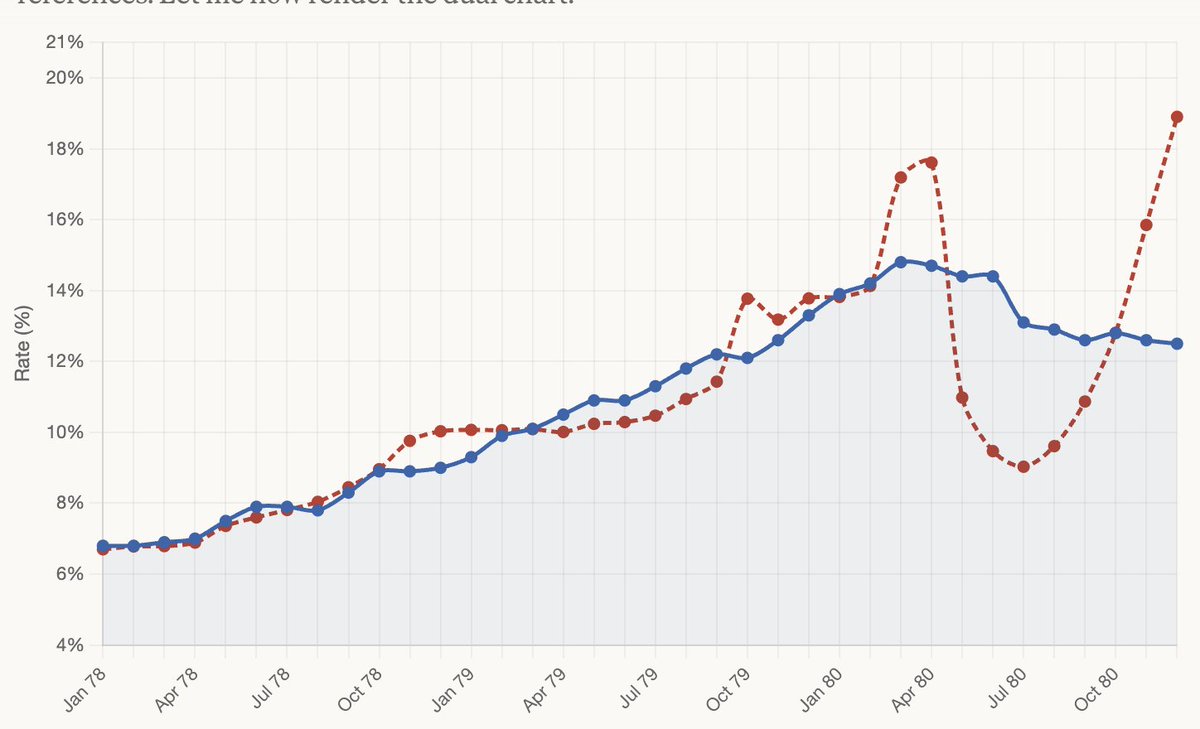
26/ These effects were long-lasting; inflation was still at 12.5% and interest rates at a crippling 18.9% by the time of the November 1980 presidential election. They did not return to their pre-crisis levels until 1982.
27/ Let's compare this to what happened between January 2020 and December 2023 during and after the COVID crisis. The 2021 inflation surge (red solid) was actually steeper in relative terms. Starting from near 2.5%, it climbed over 4.5 pp by December 2021.
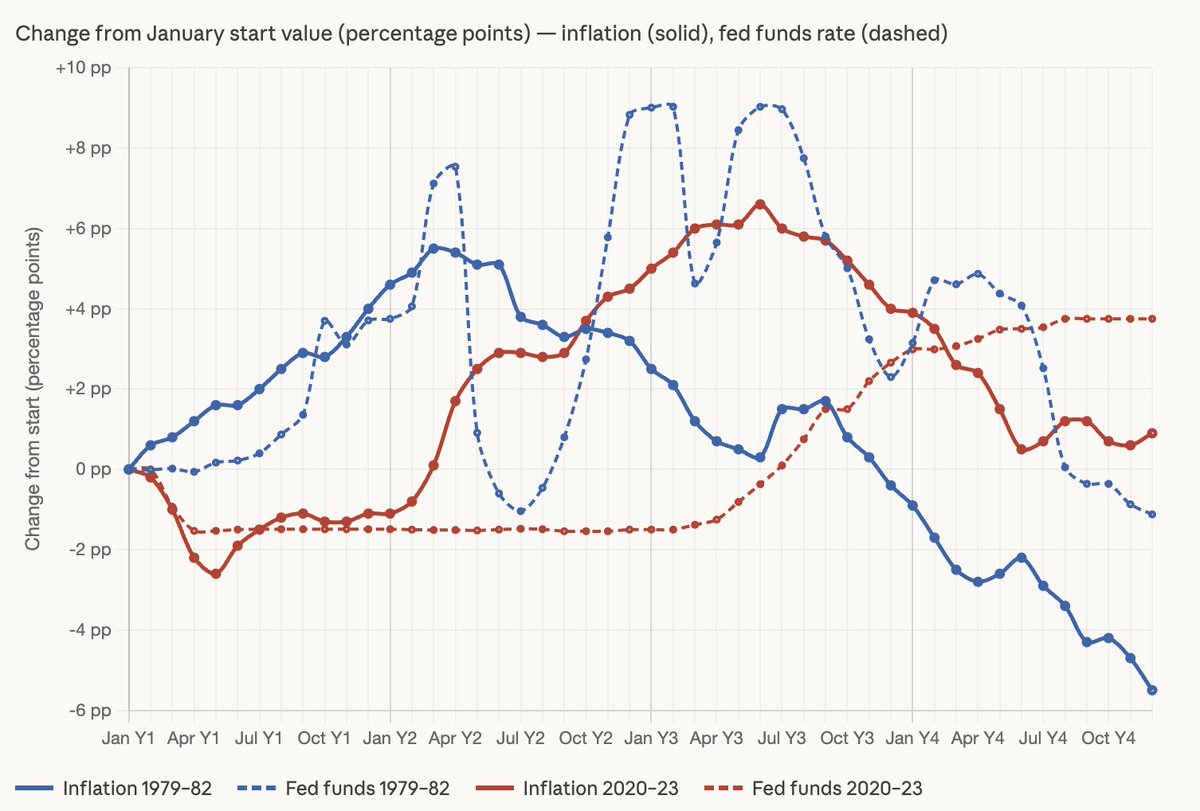
28/ The 1979–80 inflation (blue solid) rose around 3.2 pp over the same window before beginning to ease. In contrast, whereas interest rates rose sharply to combat inflation during the 1979 crisis, they remained at near zero during the COVID crisis, which fueled later inflation.
29/ The greater disruption from the current events in the Gulf suggest an even worse inflation and interest rate crisis, lasting for at least two years (likely longer given the greater severity of the oil crisis), with huge political consequences for parties in power. /end
• • •
Missing some Tweet in this thread? You can try to
force a refresh