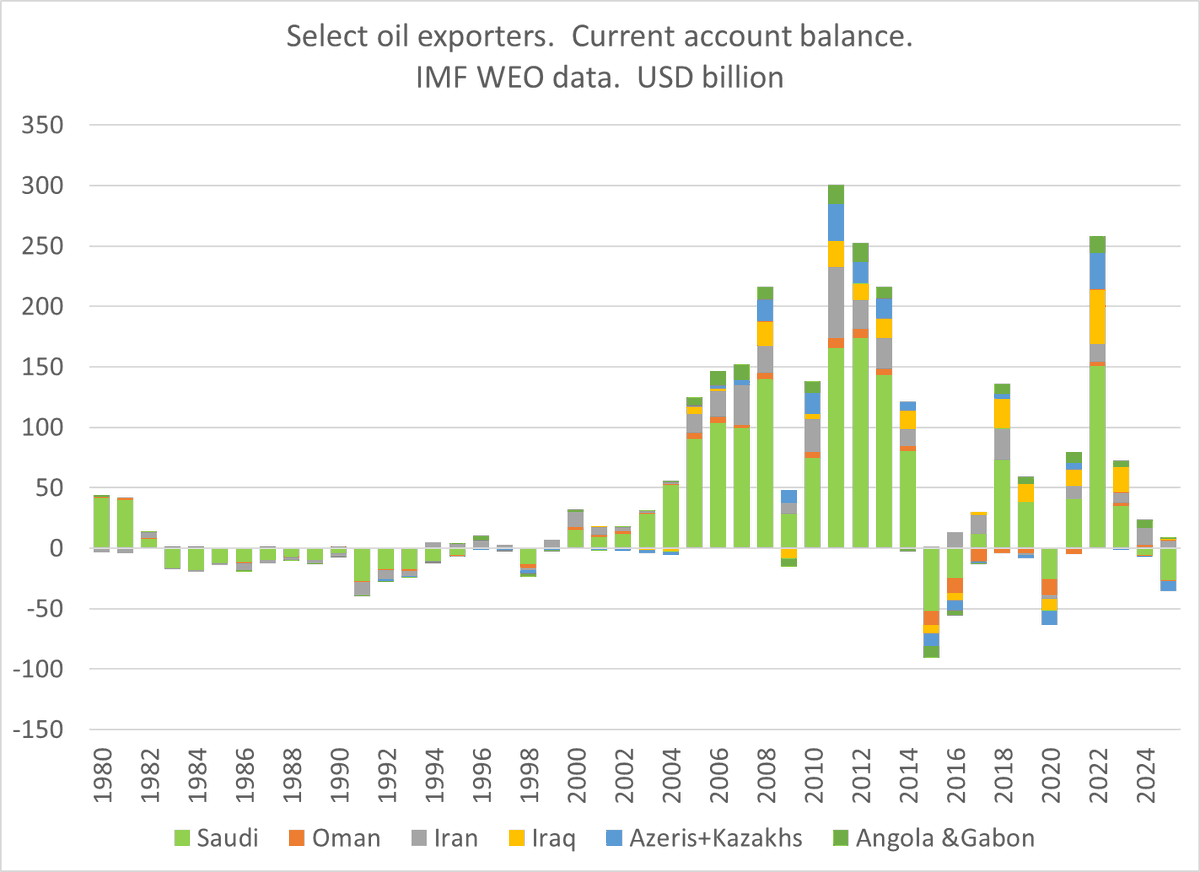
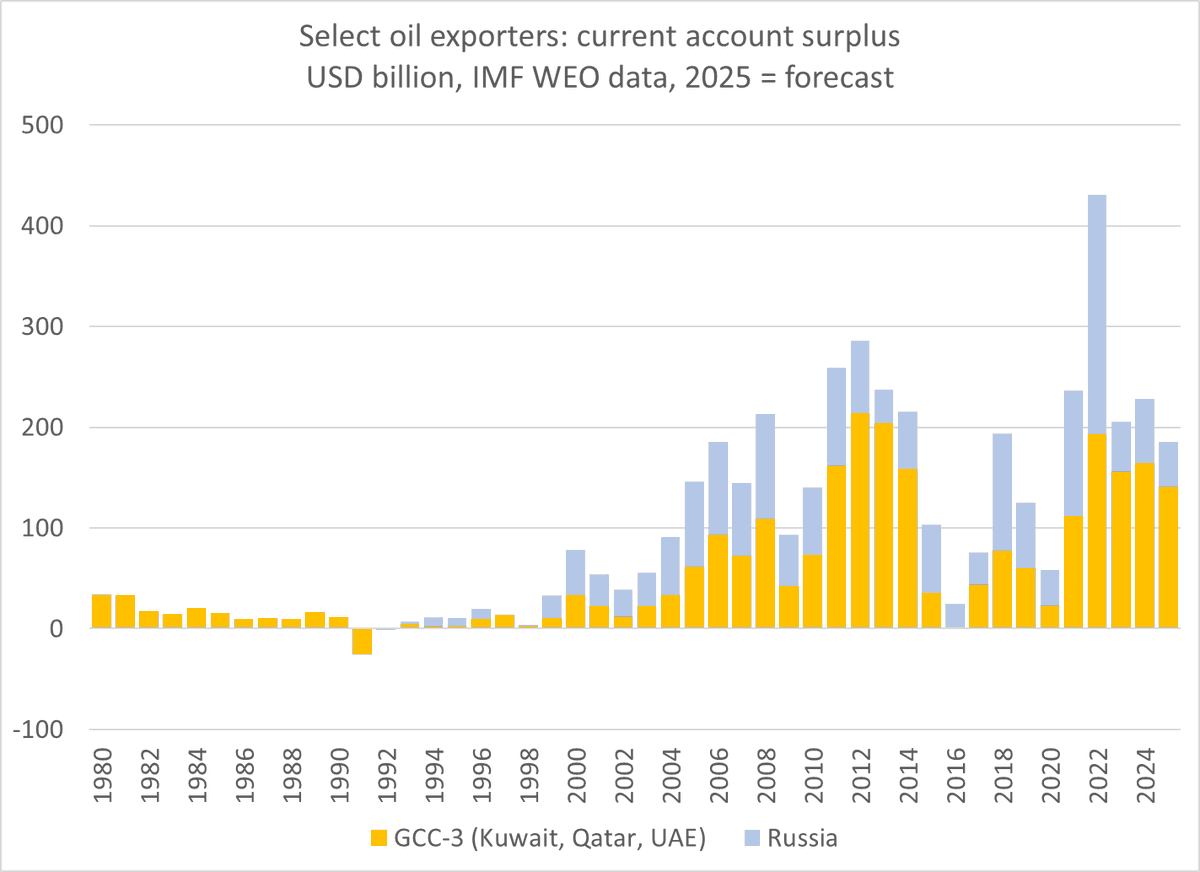
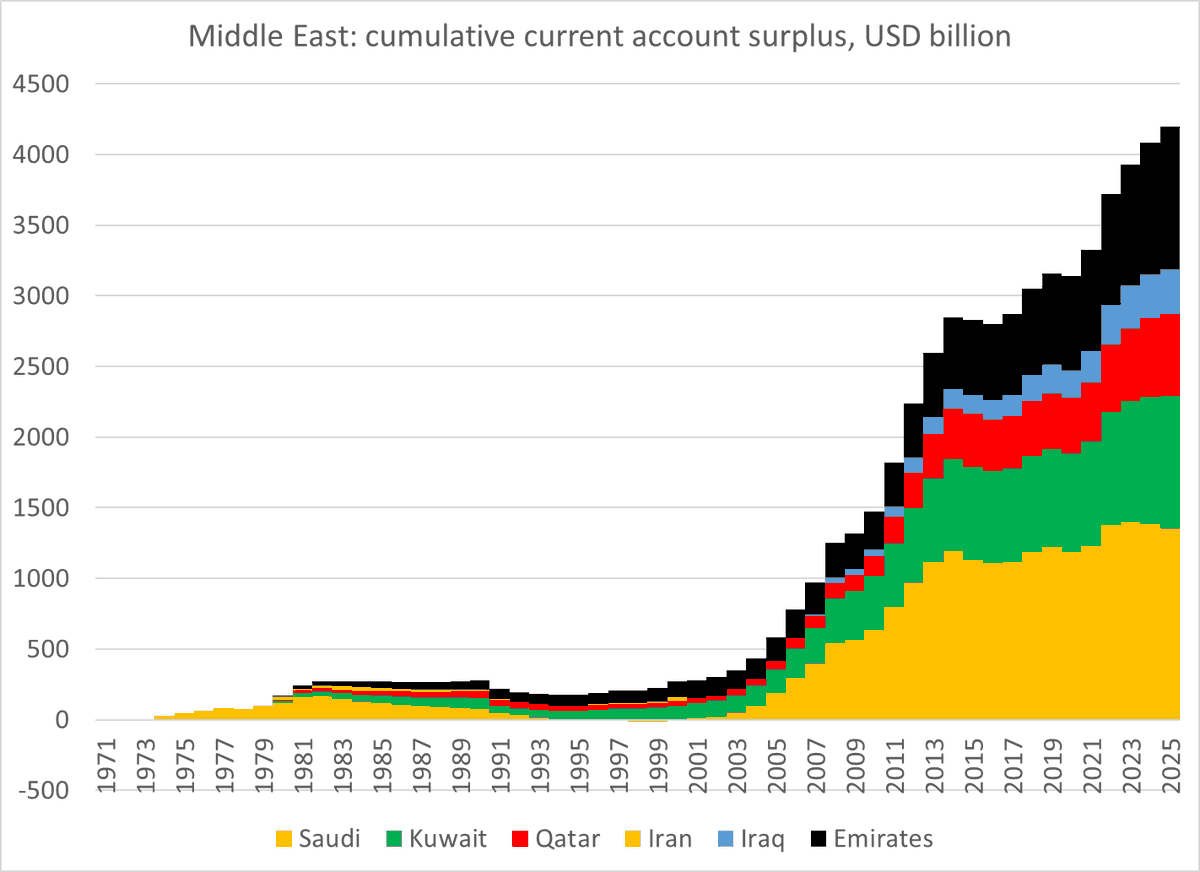
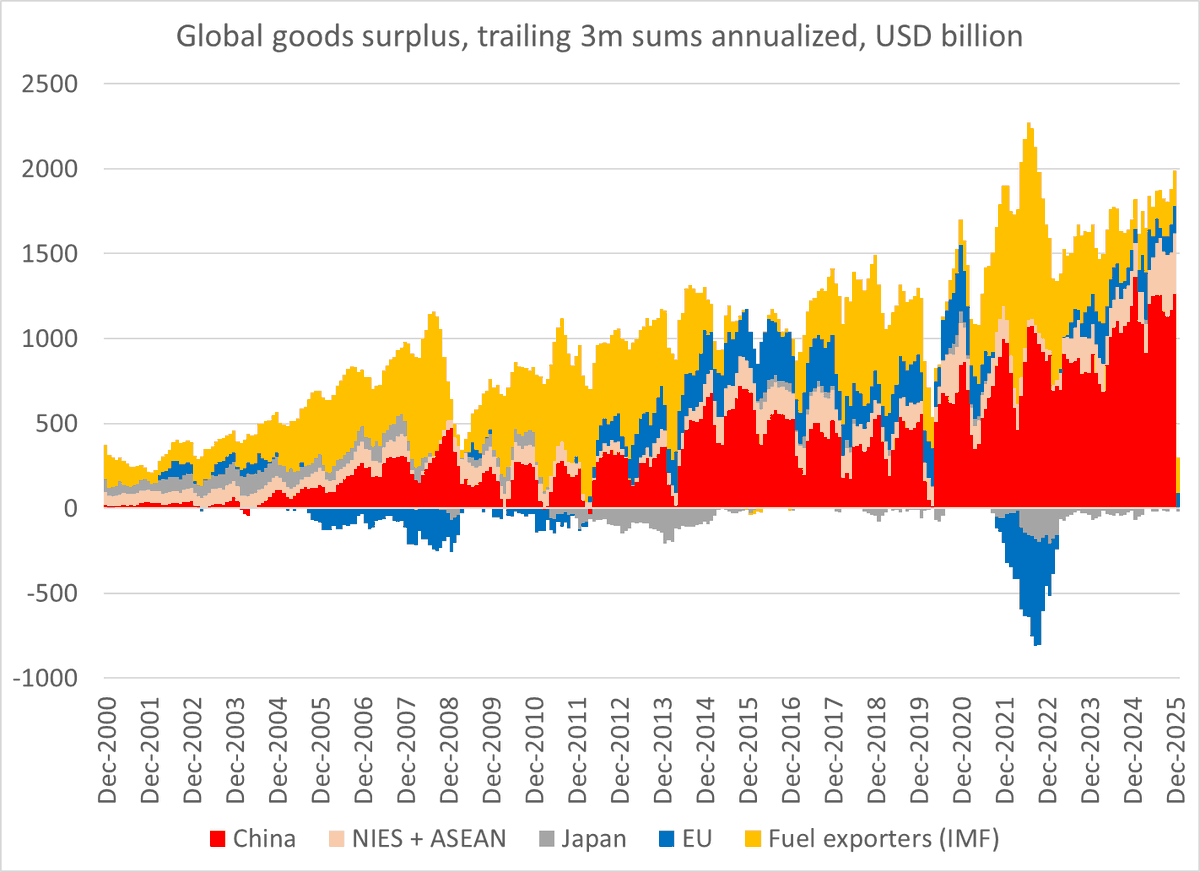
Three big picture observations about the oil surplus (petrodollars/ petroeuros/ petroequities are all downstream of this) pre Hormuz
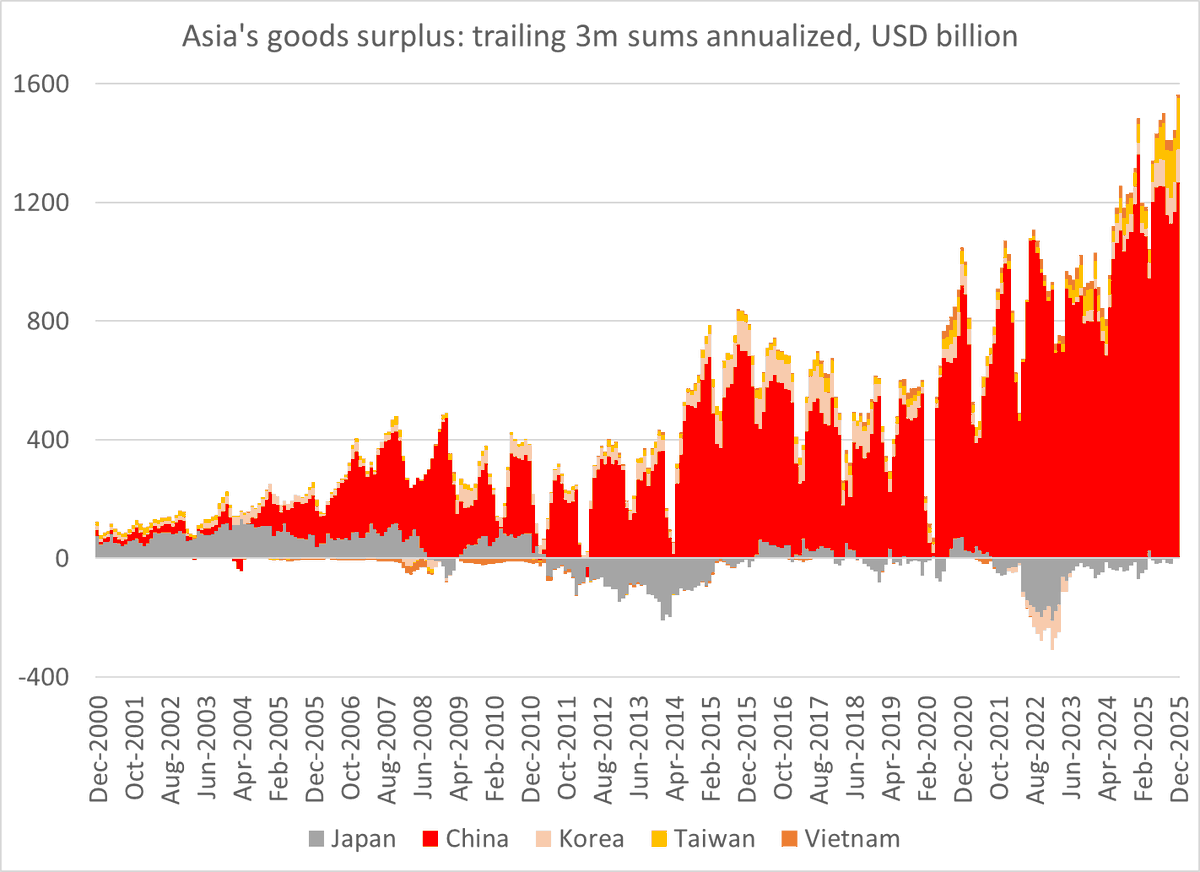
A) The oil surplus is modest relative to the surplus in Asia. Chinese state banks and offshore deposits of Chinese exporters are way bigger
1/
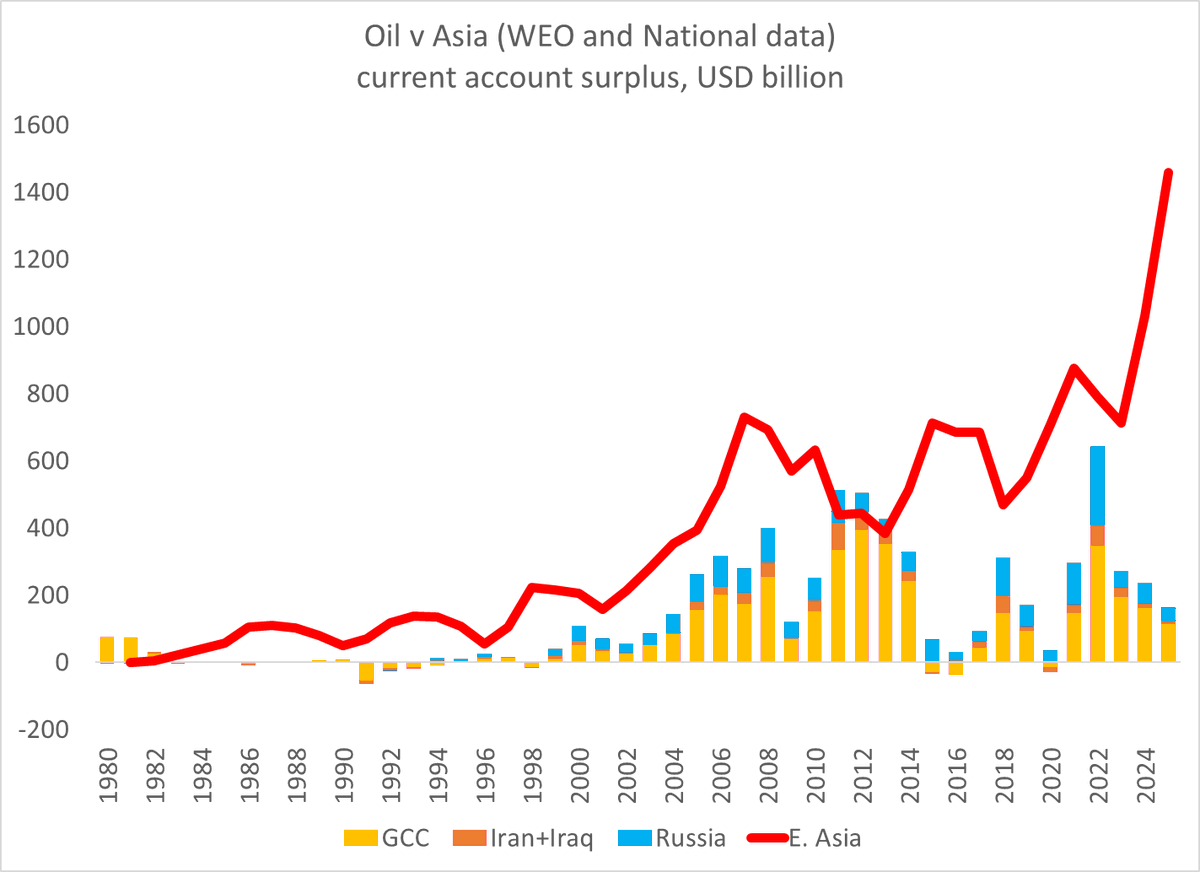
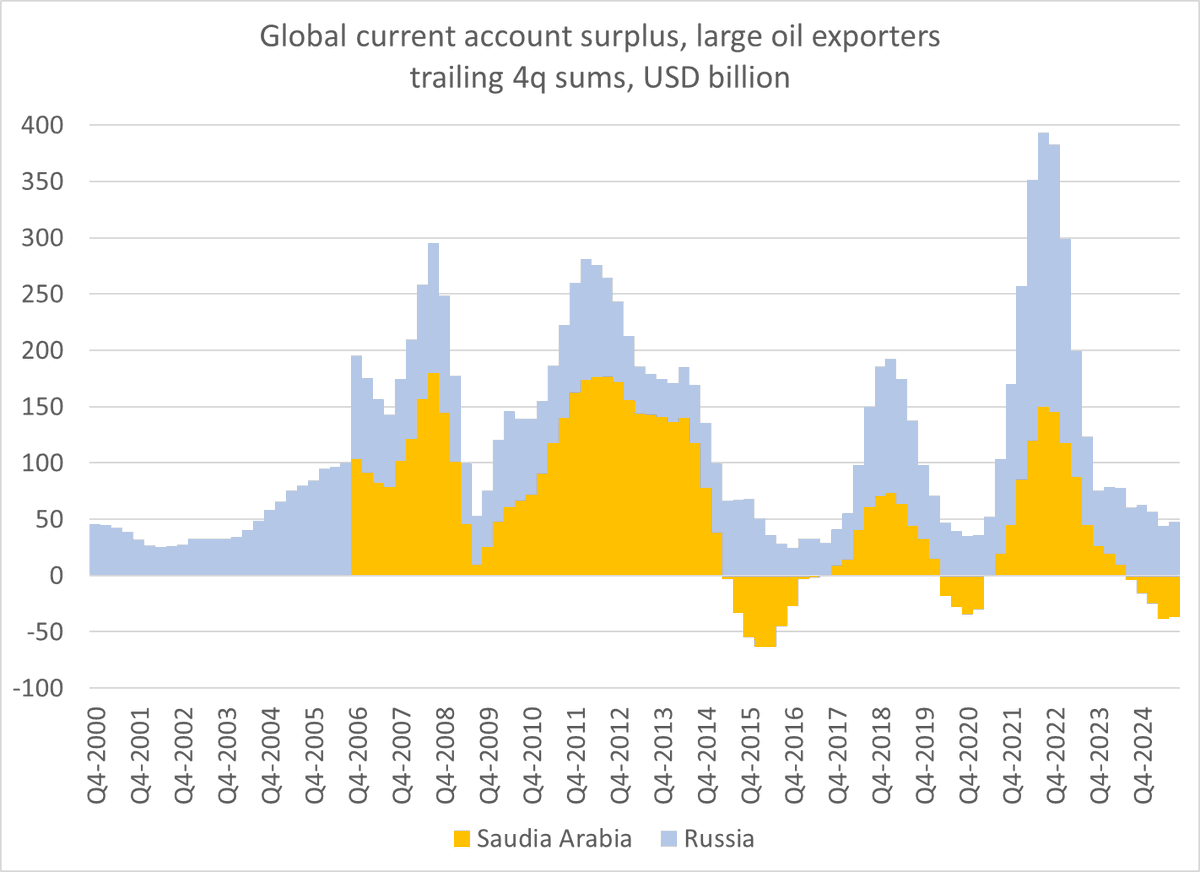
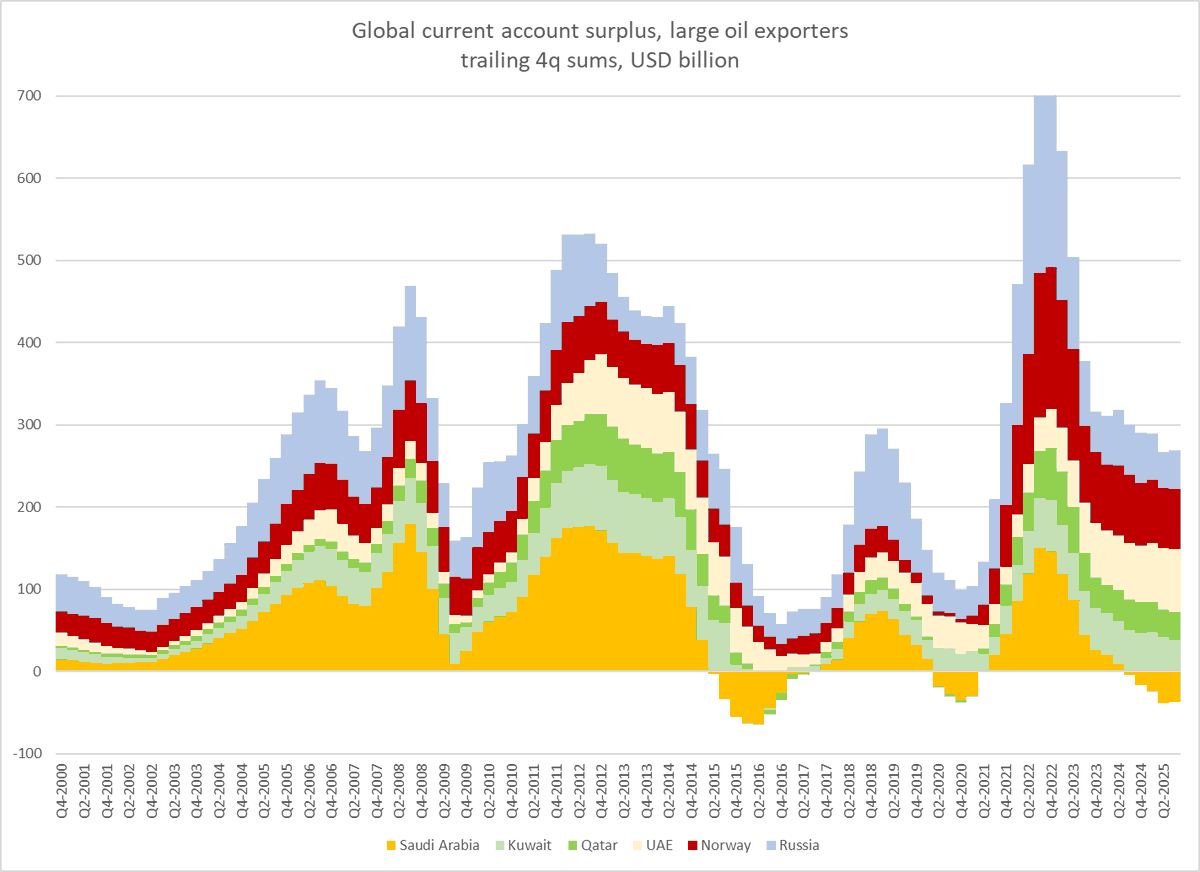
B) Most oil exporters are in deficit or run only modest surpluses with oil in the 60s or 70s. That importantly includes Saudi Arabia, which now has a BoP break even in the 90s
2/
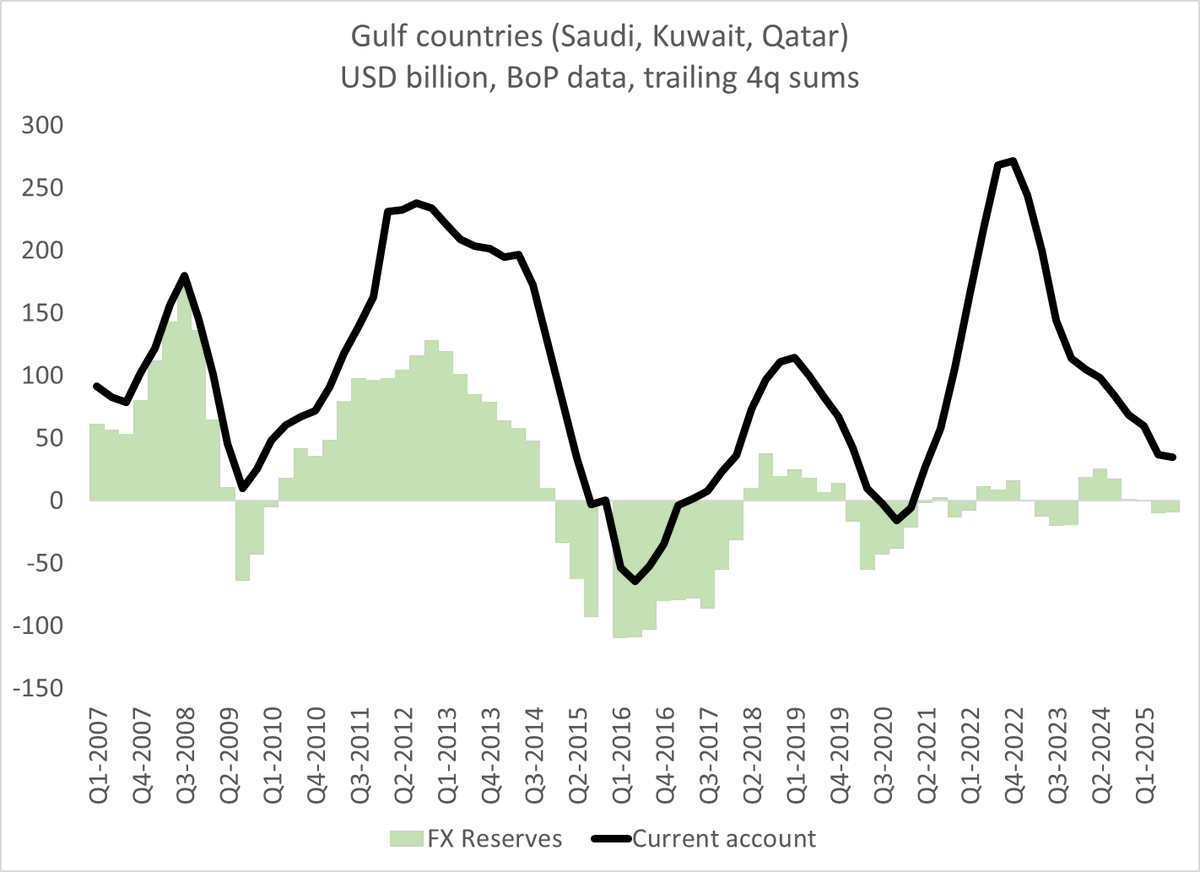
C) The remaining surpluses are concentrated in Russia (tho its surplus has fallen), frugal Norway and the GCC countries with large SWFs -- who tend to invest most of their surplus in equities (Kuwait is a bit of an exception, recent bond inflows
3/
Obviously, the Gulf countries with large SWFs are among the countries most impacted by the de facto closing of the strait -- the winners from the current oil shock will be the oil exporting countries outside the GCC
4/
And the biggest data gap comes from the UAE.
The IMF WEO data implies it has among the biggest remaining surpluses, but the UAE's BoP data is thin and out of date, so the IMF forecast could be off. And I would bet the bulk of its surplus now is investment income
5/5
• • •
Missing some Tweet in this thread? You can try to
force a refresh

The risk of an escalation in the Gulf seem reduced for at least a few days. So maybe there will be a bit of interest in my (somewhat novel) reevaluation of the relative contribution of Europe and China to global imbalances
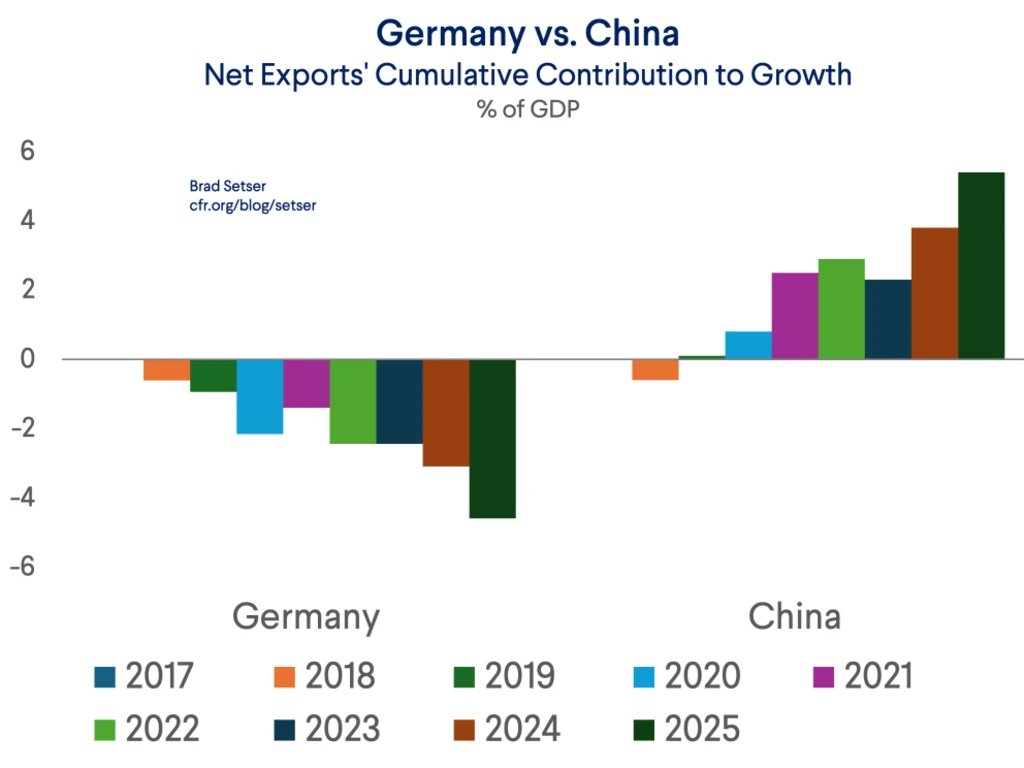
Bottom line: The second China shock has eliminated Europe's imbalance -- it all migrated to the east.
Consider the contribution of net exports to Chinese growth and to German growth over the last few years ...
2/
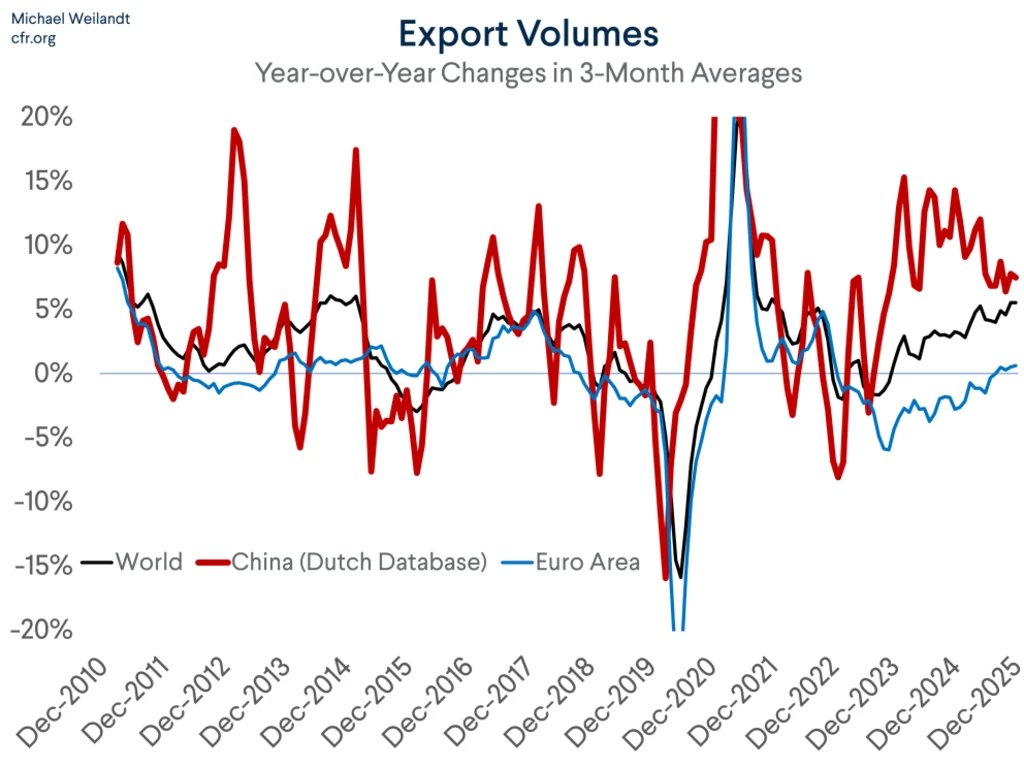
Chinese exports have outperformed global trade. That can only happen if someone else's exports under-perform. & the big underperformance has come from Europe
Petrodollars! Nothing produces more heated discussion and, in my experience, less insight. Myths trump facts, because the actual data is a bit obscure --
But here is the most important thing to know. Before the Hormuz crisis, the flow of petrodollars had more or less dried up
1/many
At $60-70 a barrel, the oil exporters just weren't generating large surpluses --
Saudi Arabia's external deficit offset Russia's surplus, so the two biggest oil exporters (~ 15mbd of exports together) were not generating petrodollars, petroeuros or petroyuan
2/
And the GCC countries (no quarterly data for the Emirates, but its surplus is roughly the size of Qatar and Kuwait combined) no longer really stash away their oil surplus in liquid dollar reserves --
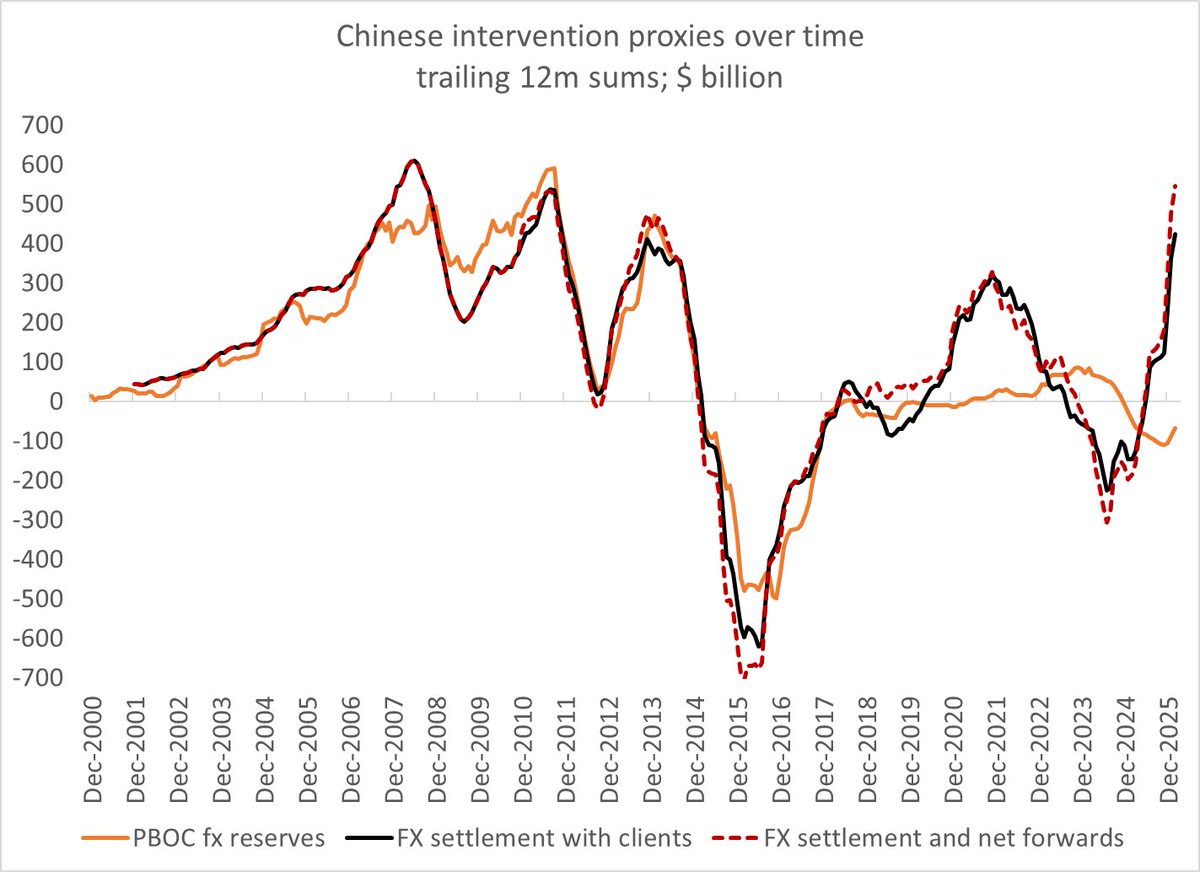
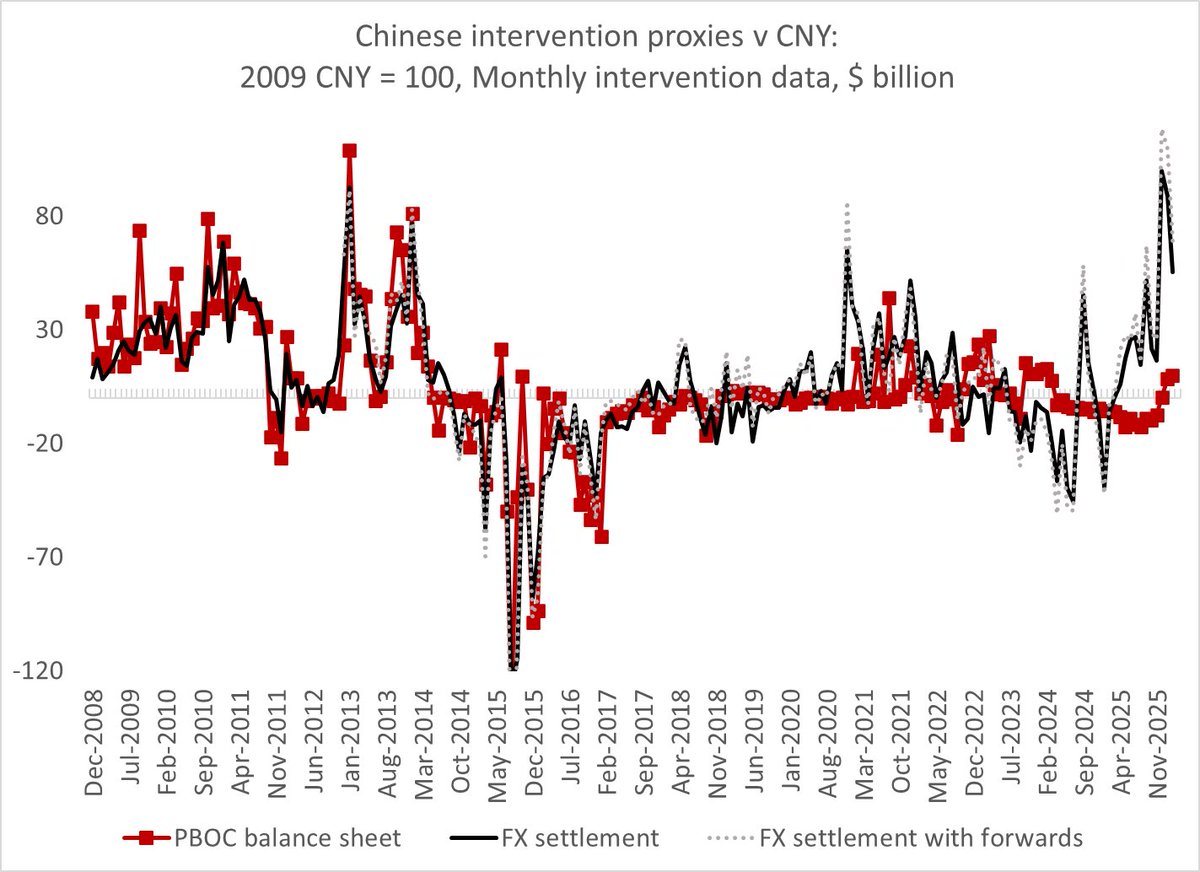
Back before the bombardment of Iran, China's currency was under considerable appreciation pressure -- the settlement data showed $70b in fx purchases by the PBOC/ SCBs ($840b annualized). A huge sum for a holiday month ...
1/
Over the last 12ms of data, settlement (my preferred intervention measure) shows purchases of $500-600b ... or more than enough to trigger the Treasury "manipulation" thresholds
2/
And for whatever reason, in both January and February a small fraction of that total (~$10b) did show up on the balance sheet of the PBOC -- so it isn't all flowing through the state banks right now (tho most of the flow is still via the state banks)
Some basic oil shock math, focusing on the impact on global trade ...
Remember that we are starting from an unusually low surplus in the fuel exporting economies ...
1/
And also an unusually large surplus in East Asia.
Core east Asia looks to (per the old BP data) import ~ 20 mbd on net, so each $10b/ barrel change in the oil price reduces East Asia goods surplus by ~ $75b
2/
a $20 a barrel shock knocks $150b off their surplus -- a manageable sum for a region that has a $1.5 trillion surplus (and rising fast on AI chip demand). 60% of that is China, and China can definitely manage ...
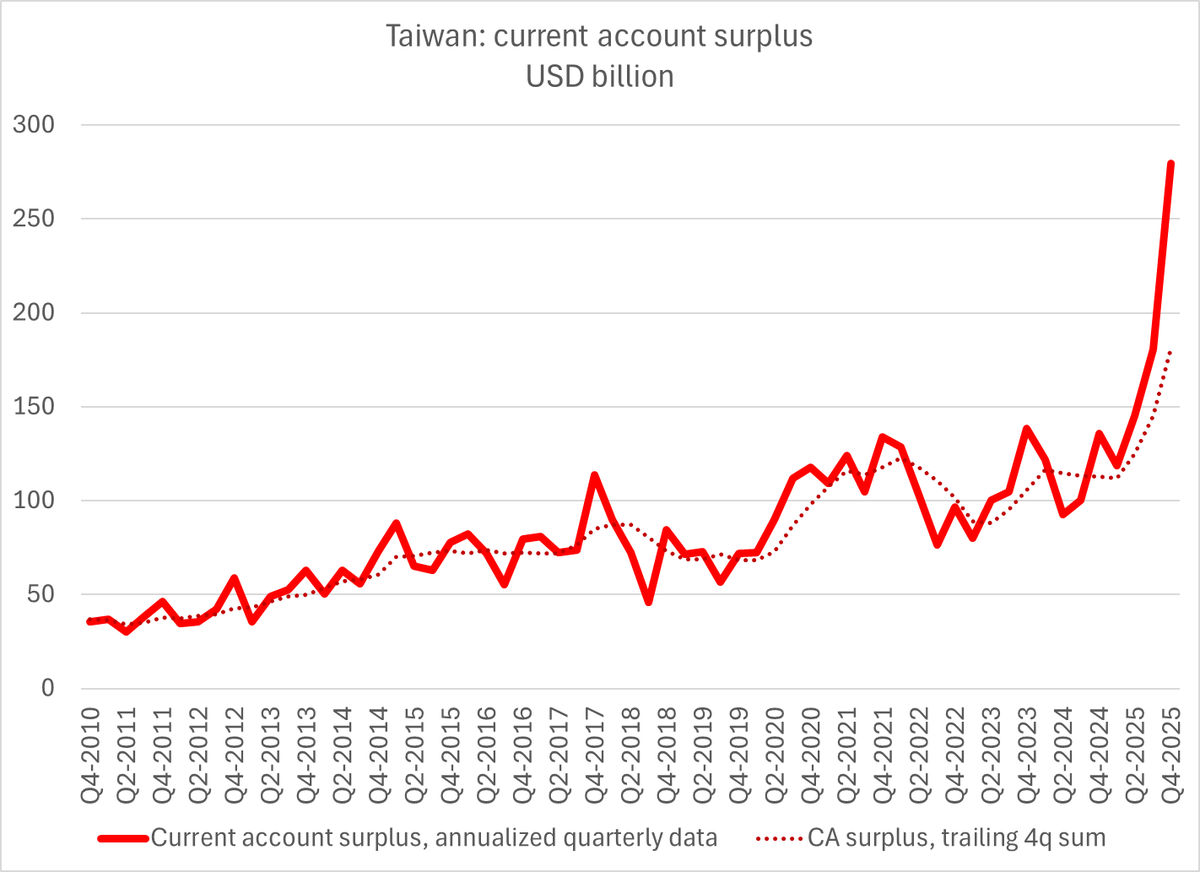
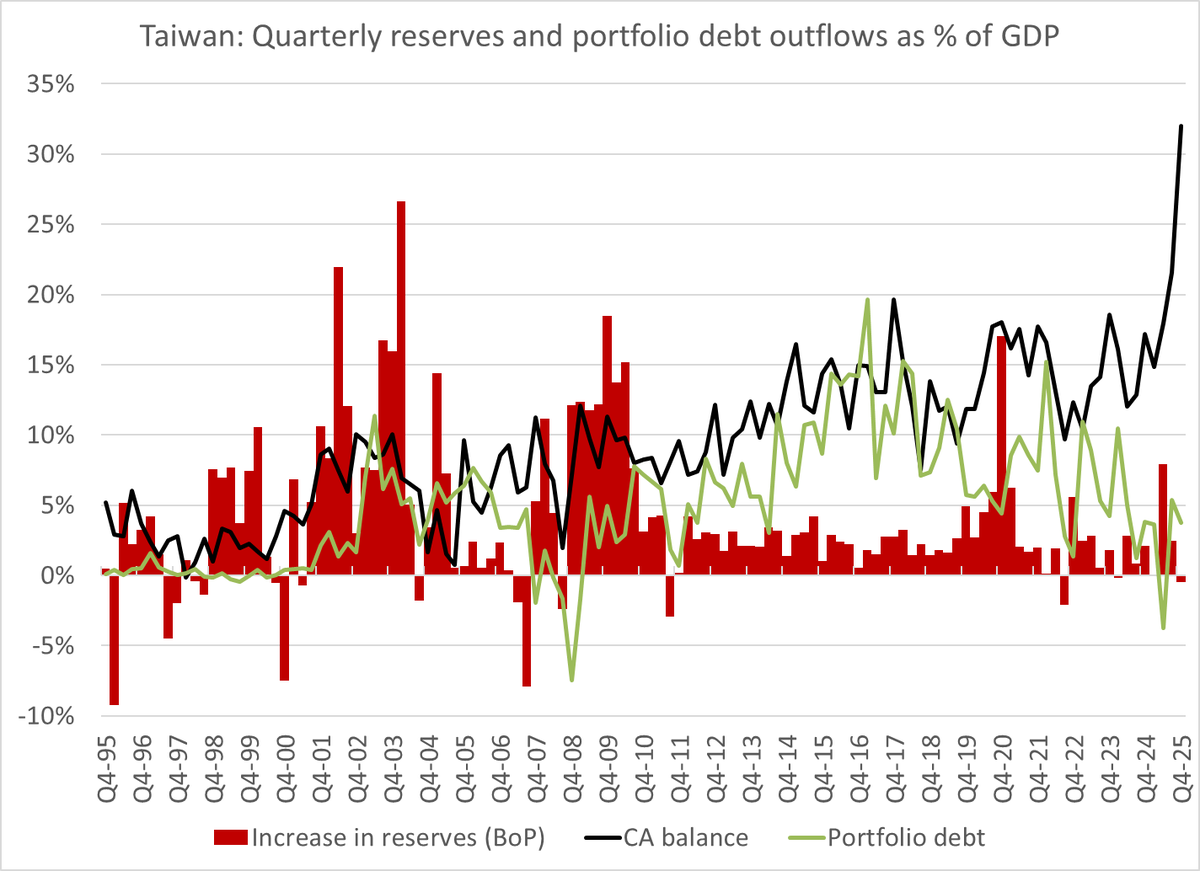
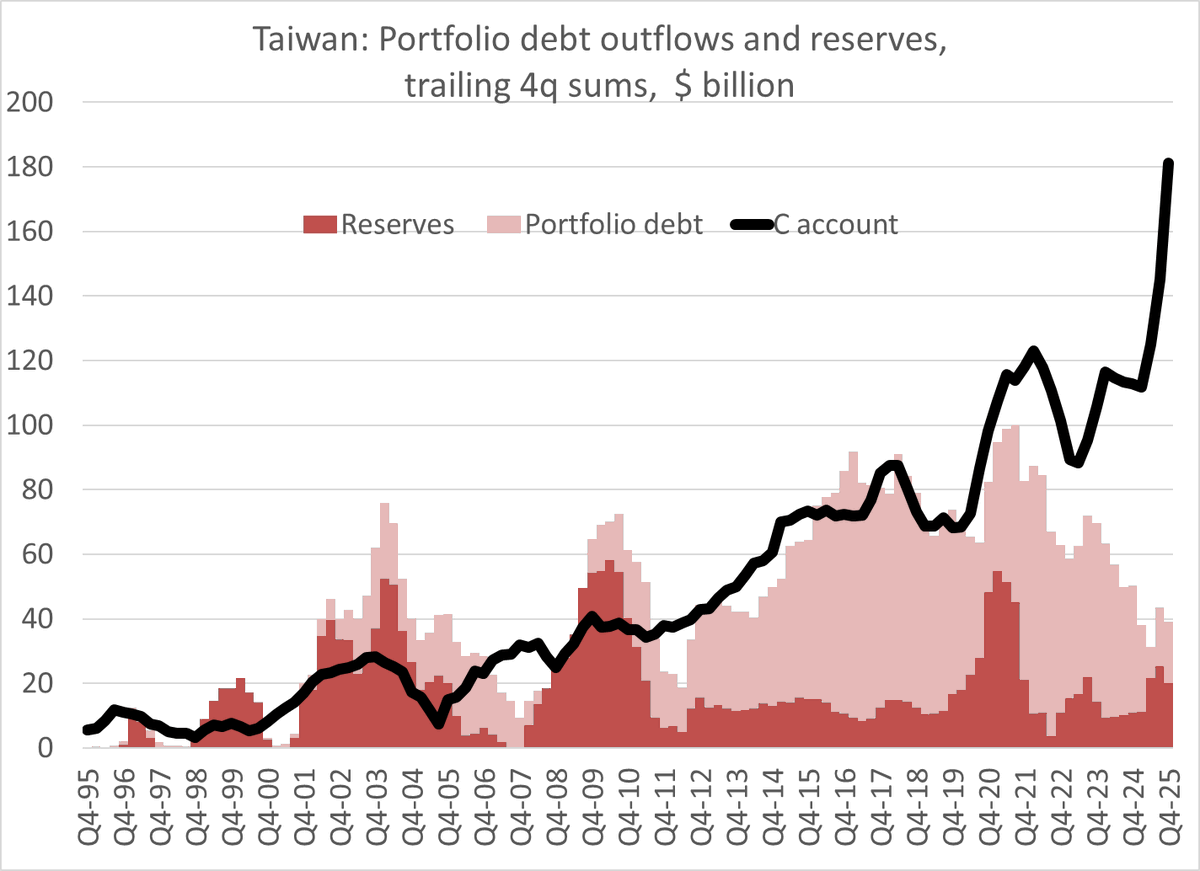
A day that was a long time coming -- TSMC's dominance of chip manufacturing led Taiwan to post a $70b quarterly current account surplus in q4. That is $280b annualized, or a surplus of ~ 33% of GDP
Never though that would be possible for a non-tax haven without oil
1/
And there is of course a capital flows story -- as the TWD depreciated in q4 in the face of this massive surplus (2x its level in 24), and Taiwan technically sold reserves too!
2/
For the year as a whole Taiwan's surplus was $180b (gulp, a sum not much smaller that the, artificially low to be sure, surplus that China was reporting mid 2024)! Reserve outflows and foreign bond purchases were only $20b each, leaving $140b to flow out in other ways
I actually don't think Mark and I are that far apart
(tho I wouldn't start by arguing that a BoP deficit is meaningless, as I certainly find value in some cuts of the balance of payments + get annoyed when the IMF ignores the components of the BoP)
The most policy relevant question is whether the courts will strike down the 122 balance of payments tariffs & I think the answer to that is likely to be no, for the reasons that Peter Harrell (an actual lawyer) laid out today
The court of international trade more or less invited a case in its initial IEEPA ruling (rejecting the notion that there no BoP deficits/ surpluses b/c everything ultimately balances) & it seems likely the courts will defer to the administration on what constitutes an international payments problem
3/