New research article at @tochnyi:
Blinding the Bear and Pulling Its Fangs: Ukraine's Long-Range Campaign Against the Russian Air Defence
1. Since summer 2025, Ukraine has been running one of the most consequential long-range strike campaigns of the modern era.
Blinding the Bear and Pulling Its Fangs: Ukraine's Long-Range Campaign Against the Russian Air Defence
1. Since summer 2025, Ukraine has been running one of the most consequential long-range strike campaigns of the modern era.
2. The full article is available on our @tochnyi website, with several more pieces of information and interactive infographics.
Full article: tochnyi.info/2026/03/blindi…
Full article: tochnyi.info/2026/03/blindi…
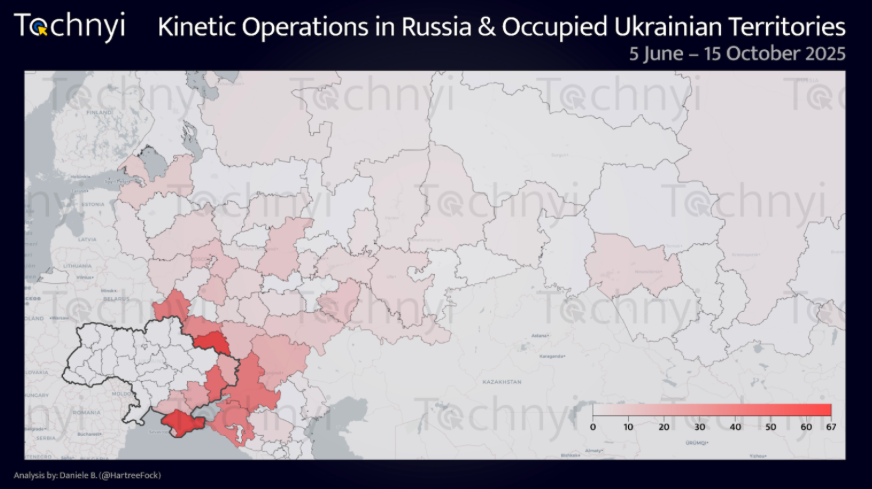
@tochnyi 3. Our verified dataset records 1,530+ kinetic actions in Russia and occupied Ukraine. More than 54% are against air defence.
The entire layered system has been hit. 433 strikes confirmed and with 37.4% on Radars, 26.9% against medium range AD and 15.9% against long range AD.
The entire layered system has been hit. 433 strikes confirmed and with 37.4% on Radars, 26.9% against medium range AD and 15.9% against long range AD.
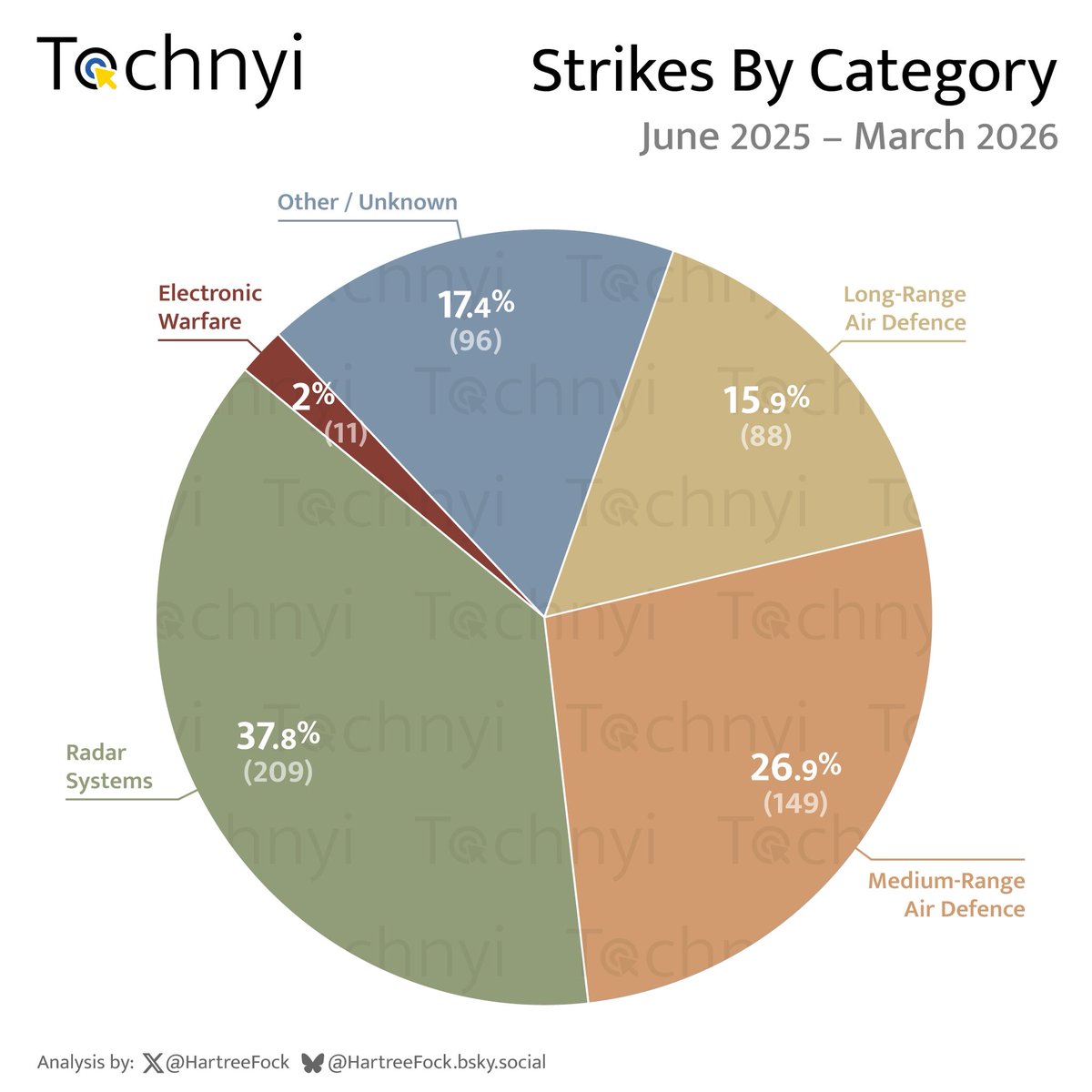
@tochnyi 4. Ukraine has been targeting not only several types of radar including very critical assets such as the Nebo type with 58 confirmed strikes and 29 against Kasta. This is critical to understand the severity of the challenge Russia is now facing in securing the entire front.

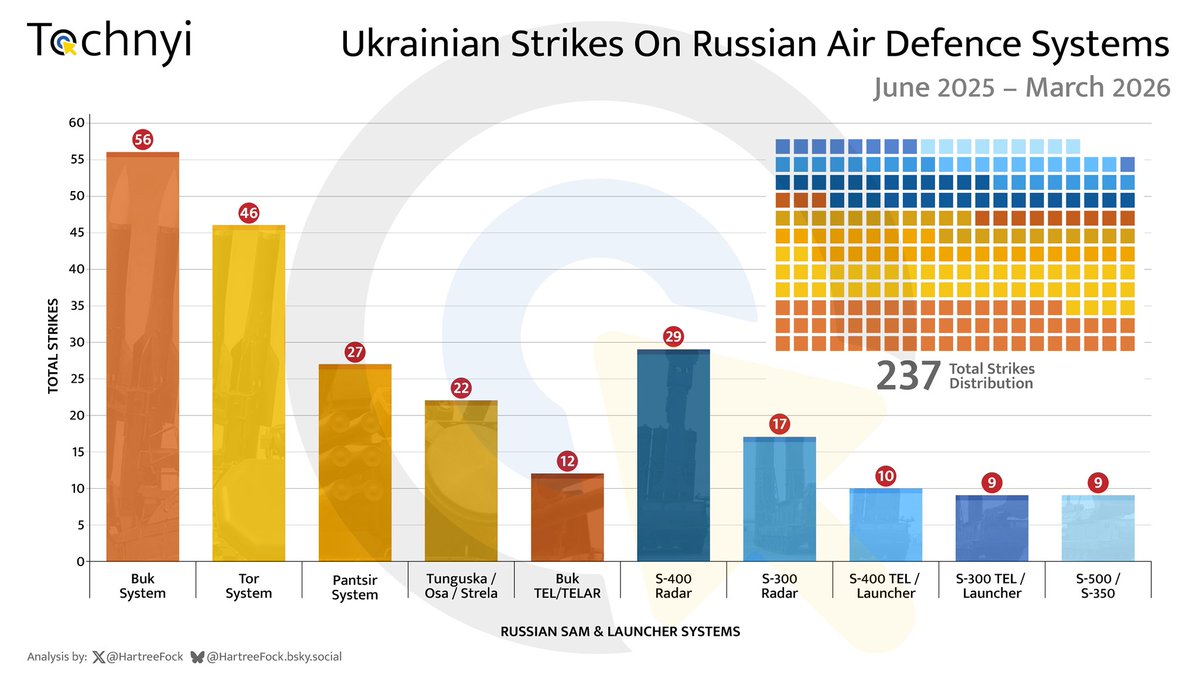
@tochnyi 5. The attrition of launchers has been as well dramatic, because affected all the layers of Russian AD, in particular BUL and TOR systems have seen great pressure over the last few months.
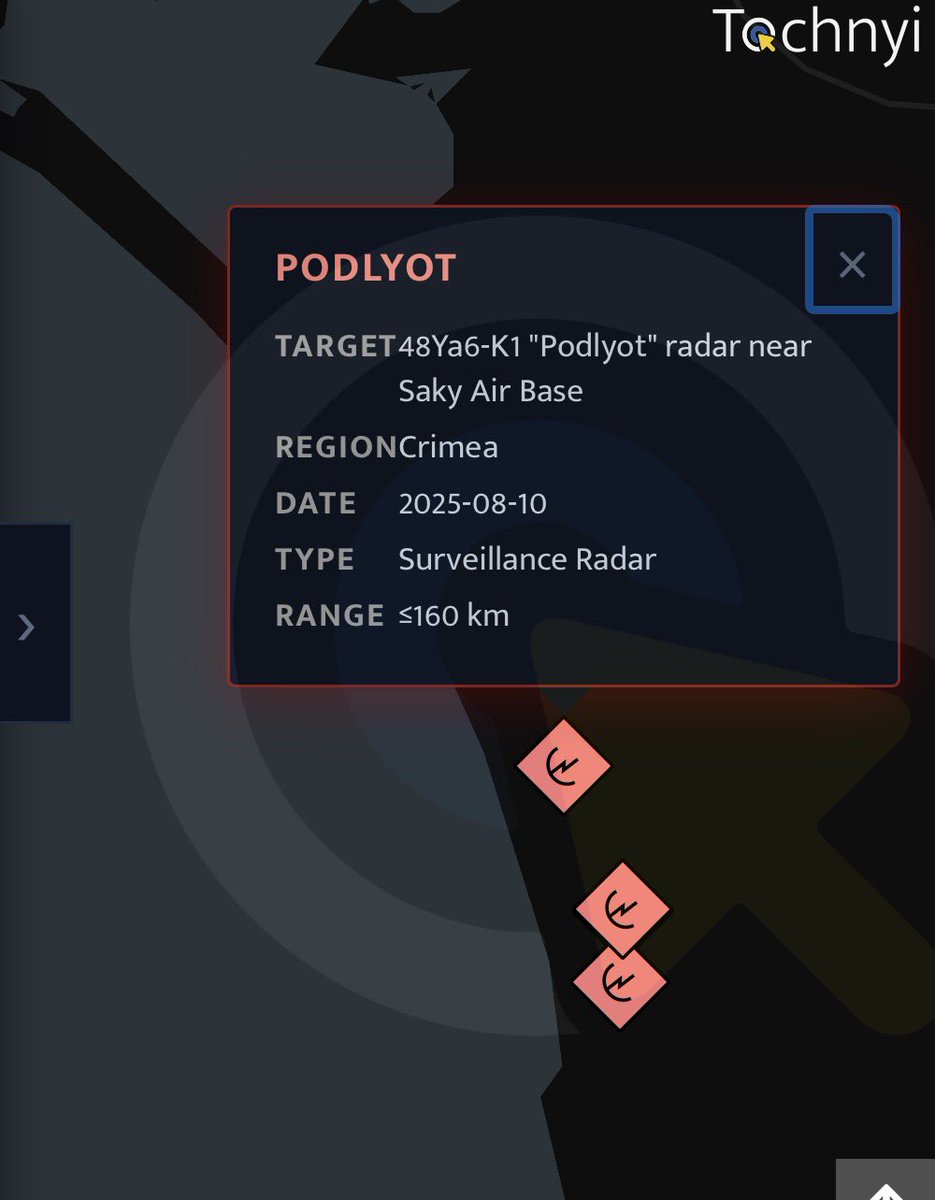
@tochnyi 6. This pressure has been particularly high in Crimea where we identified 100 strikes over the 173 we geolocated and confirmed. This shows a specific intention to apply pressure on the Peninsula and further strengthen the control of the sea and air space.


@tochnyi 7. The most important trend is cumulative loss. The more radars and SAMs Russia loses, the easier the next strike becomes.
The progressive hollowing-out of Russia’s defensive architecture. That is how strikes like Storm Shadow on Kremny El in Bryansk become possible.
The progressive hollowing-out of Russia’s defensive architecture. That is how strikes like Storm Shadow on Kremny El in Bryansk become possible.

End. The lesson for Europe is stark:
Modern air defence can be systematically eroded by a persistent, lower-cost long-range strike campaign. If you only build shields and not swords, you risk losing both.
In modern war, destroying the archer is often cheaper than intercepting the arrows.
Modern air defence can be systematically eroded by a persistent, lower-cost long-range strike campaign. If you only build shields and not swords, you risk losing both.
In modern war, destroying the archer is often cheaper than intercepting the arrows.
I would like to thank all the team at @tochnyi for the support and help and I would like to thanks @Ath3neN0ctu4 for his contribution as well in this article.
I think this work can be of interest for @RUSI_org @cepa @TheStudyofWar @FRS_org @gregbagwell @airpowerassn @WarInstitute @TheGoodISIS @CSIS
I think this work can be of interest for @RUSI_org @cepa @TheStudyofWar @FRS_org @gregbagwell @airpowerassn @WarInstitute @TheGoodISIS @CSIS
@tochnyi @Ath3neN0ctu4 @RUSI_org @cepa @TheStudyofWar @FRS_org @gregbagwell @airpowerassn And to keep yourself updated on our research follow @tochnyi
Thank you for your time.
Thank you for your time.
https://twitter.com/tochnyi/status/2037105188020851121
• • •
Missing some Tweet in this thread? You can try to
force a refresh