Excerpt thread🧵 of Parsi's (2007) "Treacherous Alliance: Secret Dealings of Israel, Iran & the US". Book dismantles many pernicious myths, like that the Shah was ever an Israeli ally, or that the Islamic Republic is blindly driven by ideology, rather than national self-interest. 

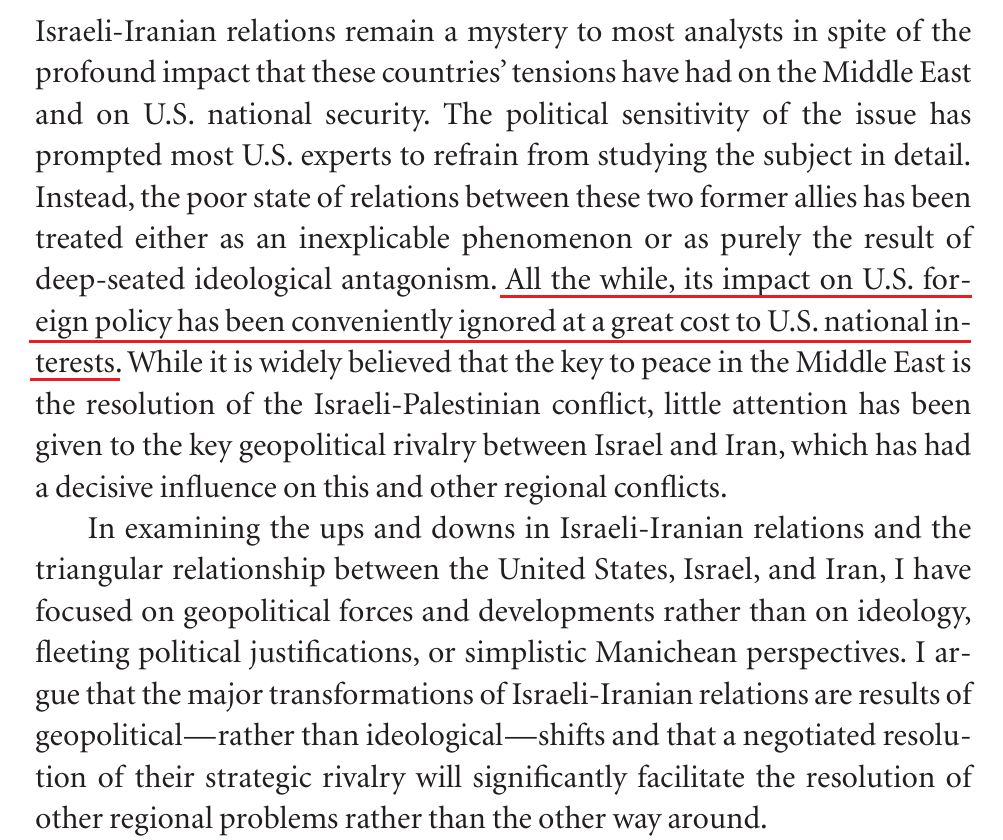
Poor US understanding of past and present Iran-Israel relations, reasons for conflict is "conveniently ignored at great cost to US national interests". You don't say!
In the 80s, Israel lobbied the US *not* to take Iranian rhetoric at its word (it was then selling Iran weapons).
In the 80s, Israel lobbied the US *not* to take Iranian rhetoric at its word (it was then selling Iran weapons).
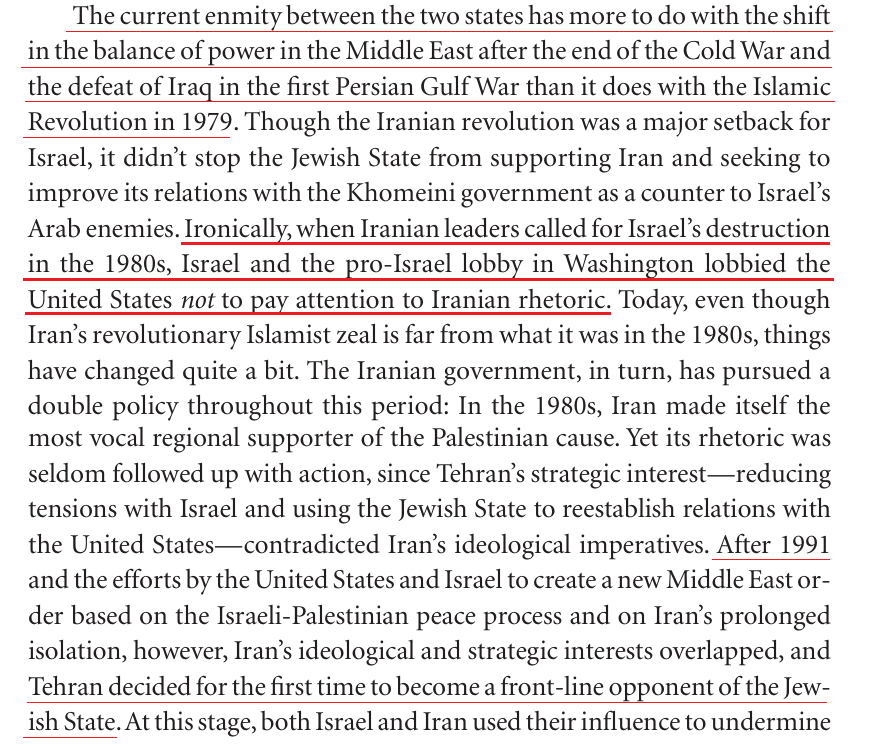
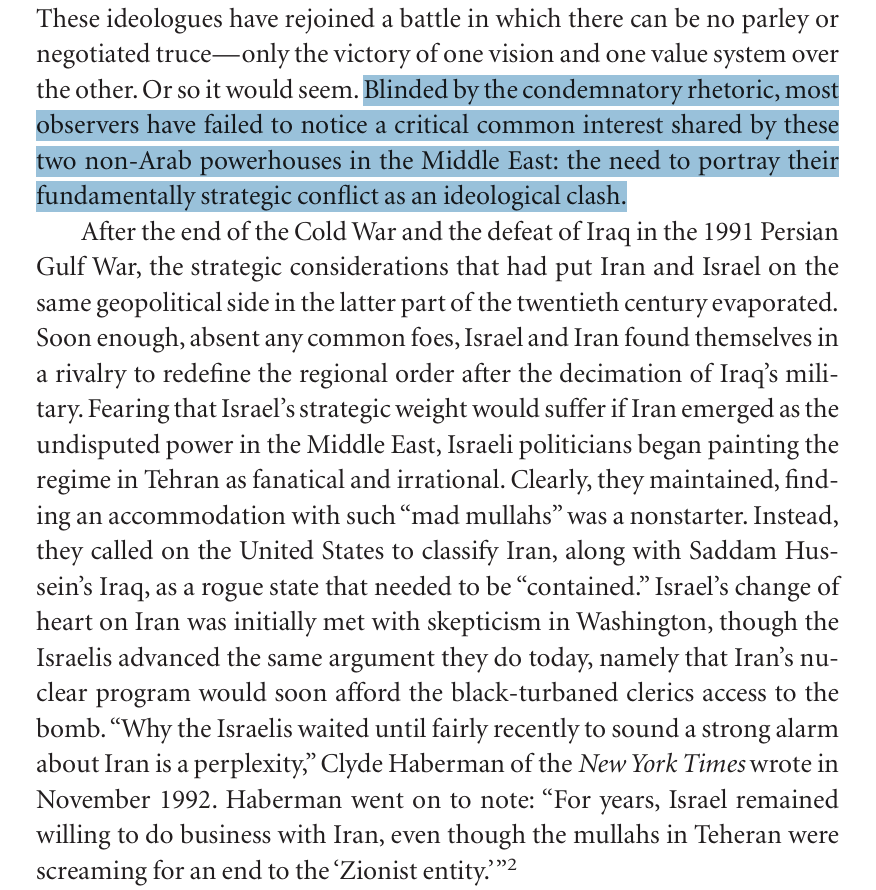
Both Iran & Israel have strong PR reasons to pretend their conflict is ideological (to appeal to wider Western or Islamic worlds), but real rivalry goes much deeper. Even if the Iran had a different government, little reason to believe those underlying causes would change.
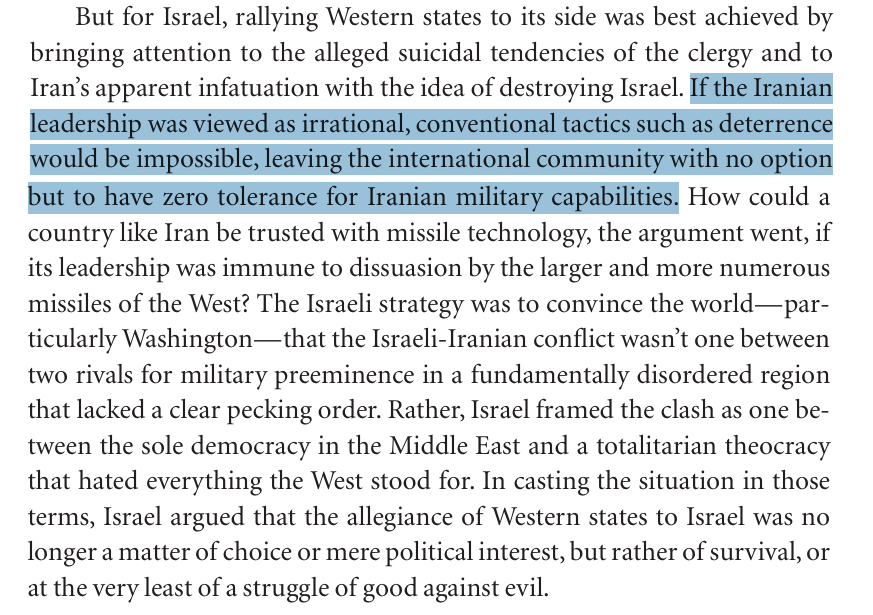
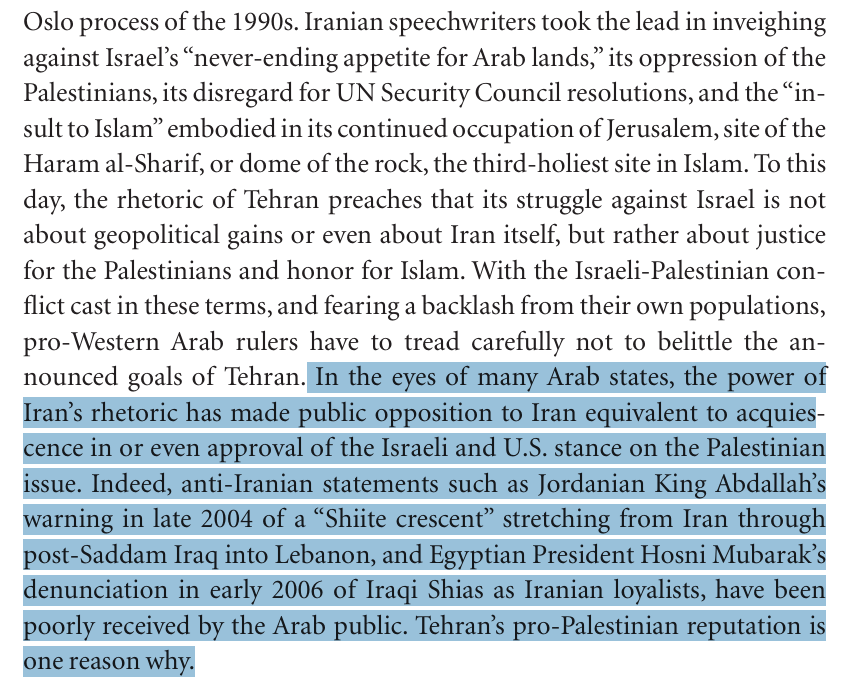
Important for Israel to insist on the fundamental "irrationality" of Iranian leaders, in effort to encourage zero international tolerance of Iranian military capability. Iran's support of the Palestinians had paid PR dividends with the Arab public, if not most Arab leaders.
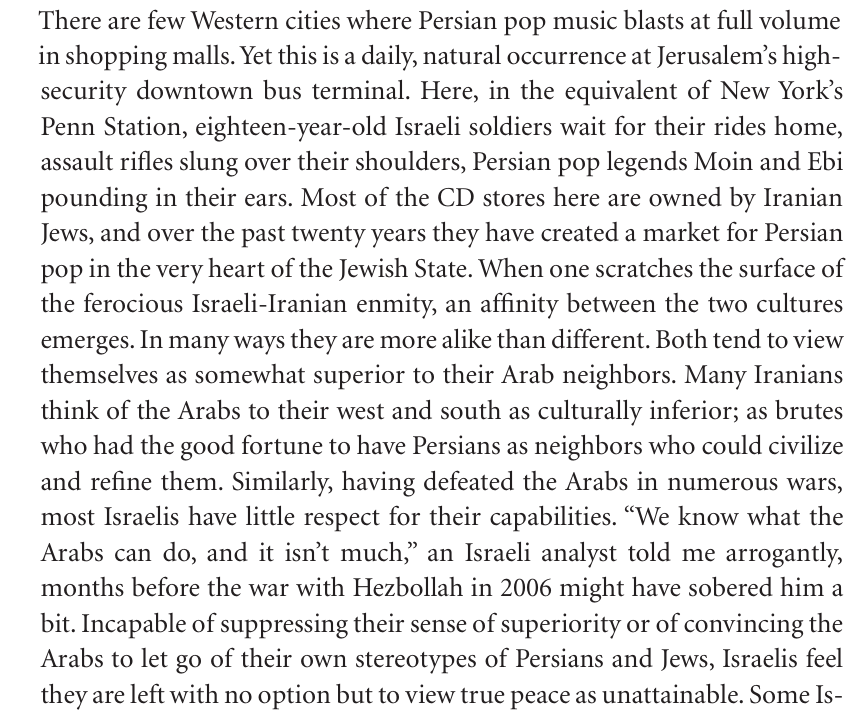
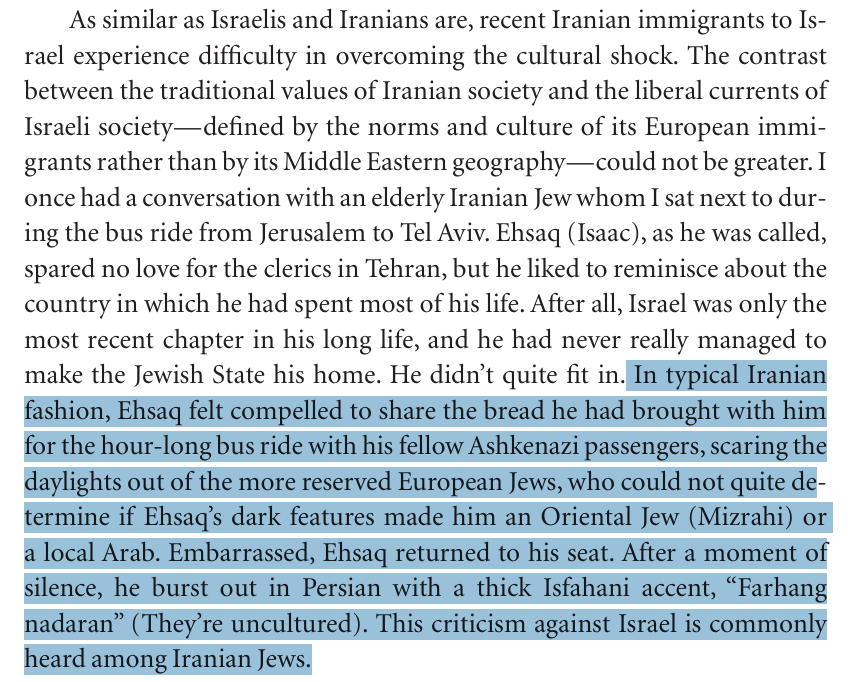
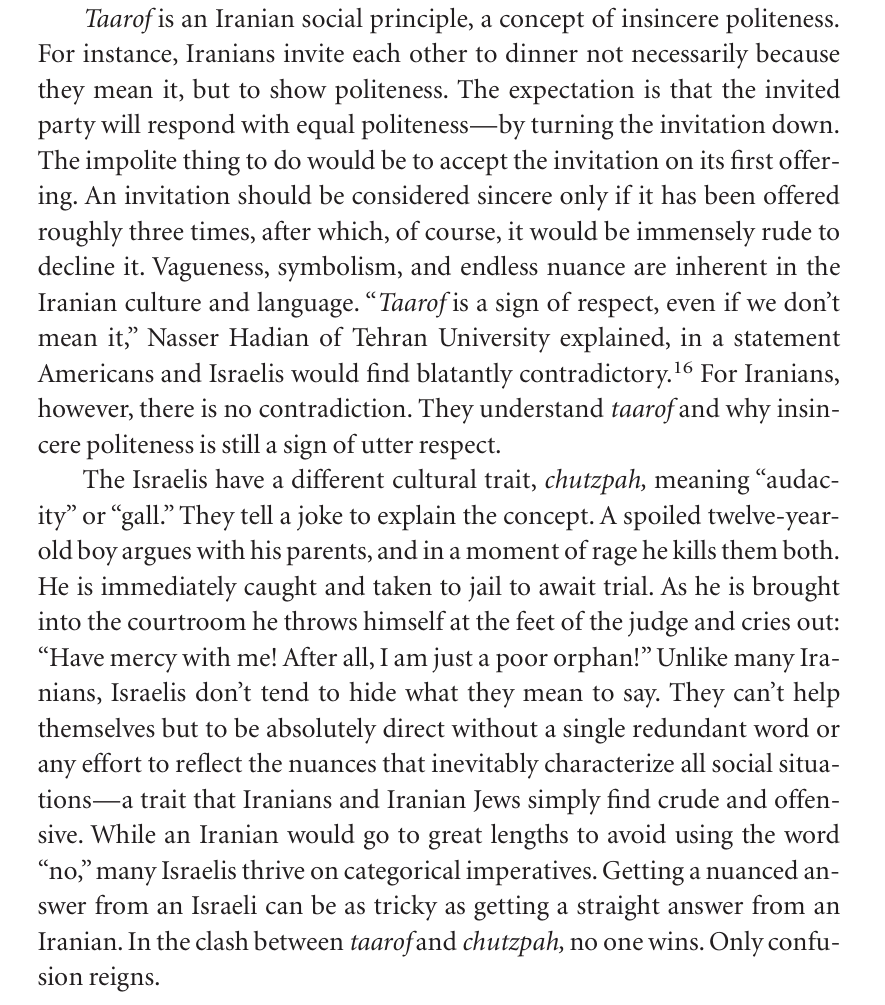
Israeli-Iranian cultural commonalities & differences, shared sense of superiority to Arabs, overlapping diasporas. Complaint of Iranian Jews faced with Israeli boorishness: "they're uncultured". Clash between Persian high-politeness "taroof" vs go-getting insolence of "chutzpah".

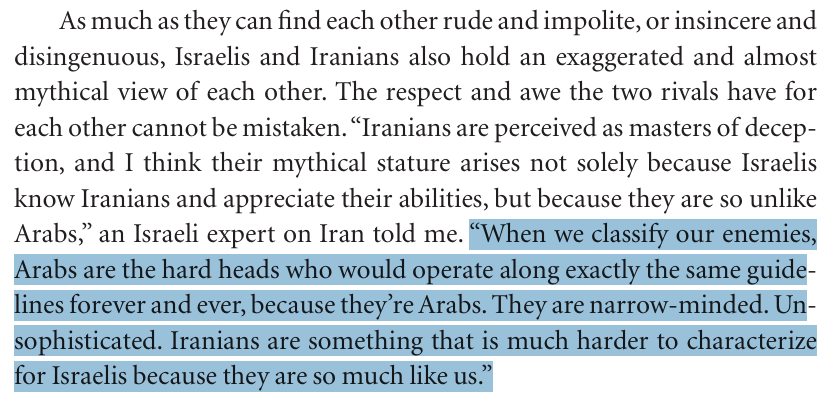
The Israeli military establishment holds much far respect for the Iranians as competent and imaginative strategic planners than the Arabs.
The warmest period of Iranian relations with Israel was in the first decade or so after Israel was founded. Iran viewed Nasser & pan-Arab nationalism (due to seeing it as a Soviet project) as a major threat, and even financed a major oil-pipeline in Israel, to bypass Suez.


As Israel grew in power & expanded its territory, Iran's Shah cautiously backed Palestinian aspirations, despite being well aware that Marxist🇵🇸orgs even trained Iranian leftist terrorists.
Iran never recognised Israel de jure. Turkey was and still is used a travel loophole.
Iran never recognised Israel de jure. Turkey was and still is used a travel loophole.


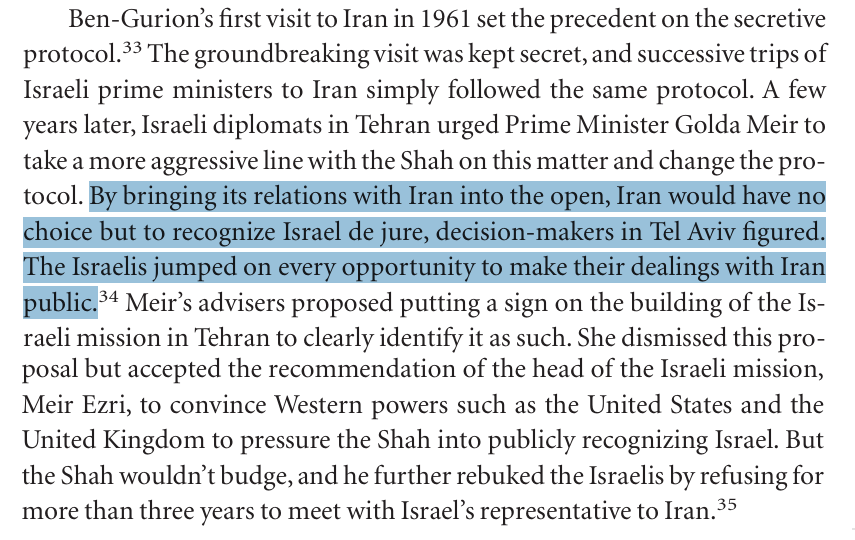
Israel repeatedly attempted to force Iranian public acknowledgement of their extensive private dealings, much to the Shah's annoyance. Royal Iran, with hegemonic ambitions, in particular wanted to keep an image of fair impartiality in Arab-Israeli affairs.
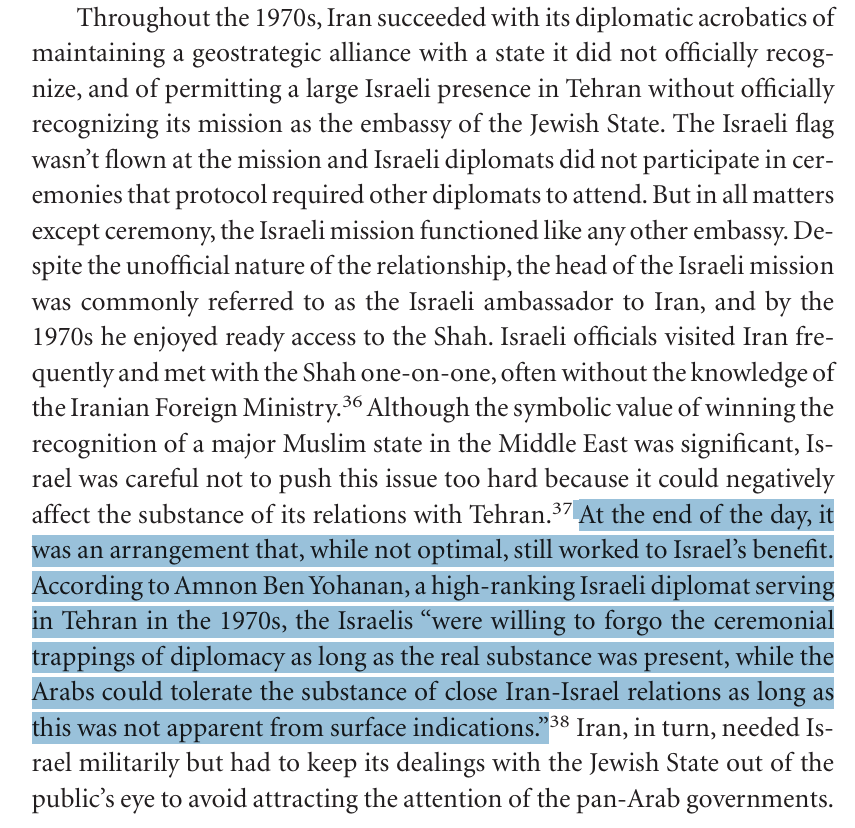
Israel expected its big victories in the Six Day War to wow or intimidate Iran into official recognition of the Jewish state. Instead, the opposite happened. The Shah became increasingly cold, and was openly critical of Israeli occupation of the Golan & Palestinian Territories.


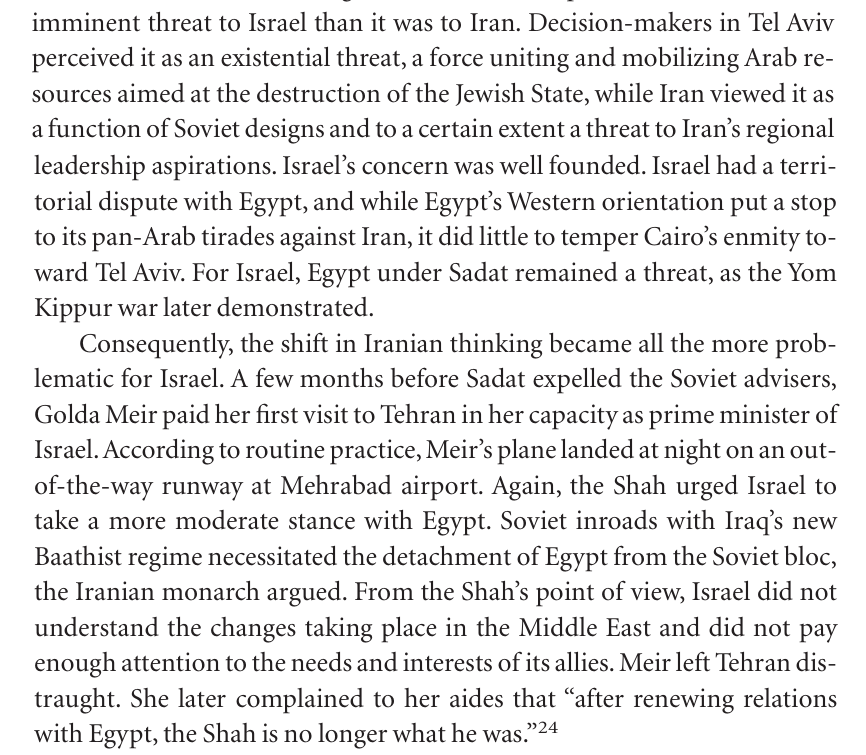
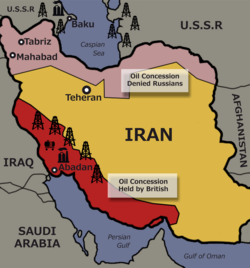
Iran-Israel relations thawed somewhat over recognition of Iraq as a growing mutual threat. However Iranian Iraq concerns were again more over fears it would become a centre of Soviet influence -Iran had been occupied by the Russians in both WW1 & WW2., sharing a long border.

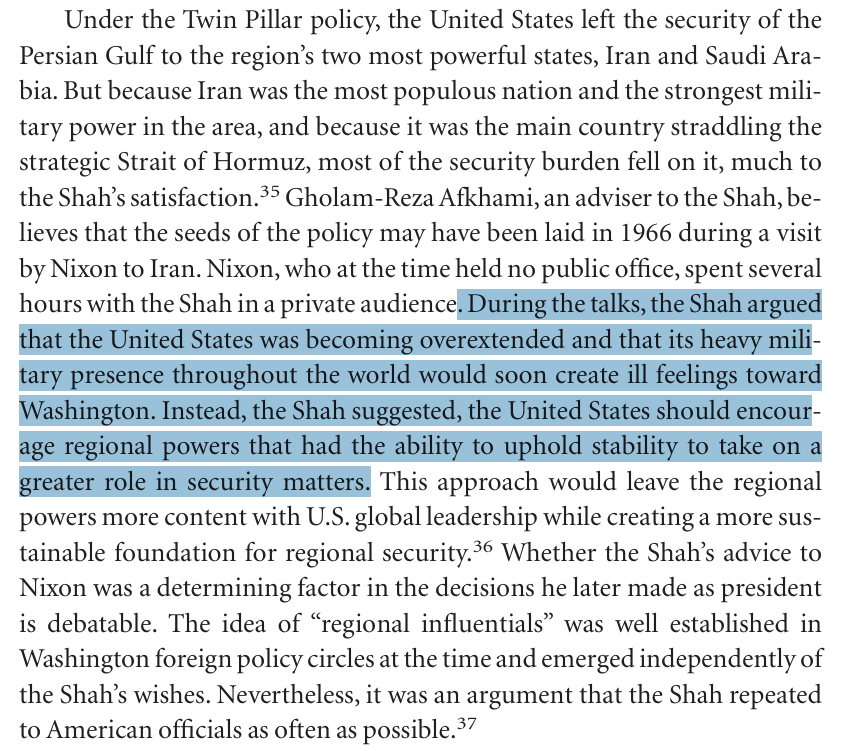
Richard Nixon, insofar as he ever had friends, saw the Shah as one, and talked with him before & after he held presidential office. In their shared paranoia, humourlessness & geopolitical obsessions, they had much in common. Unlike his son today, the Shah was a serious person.

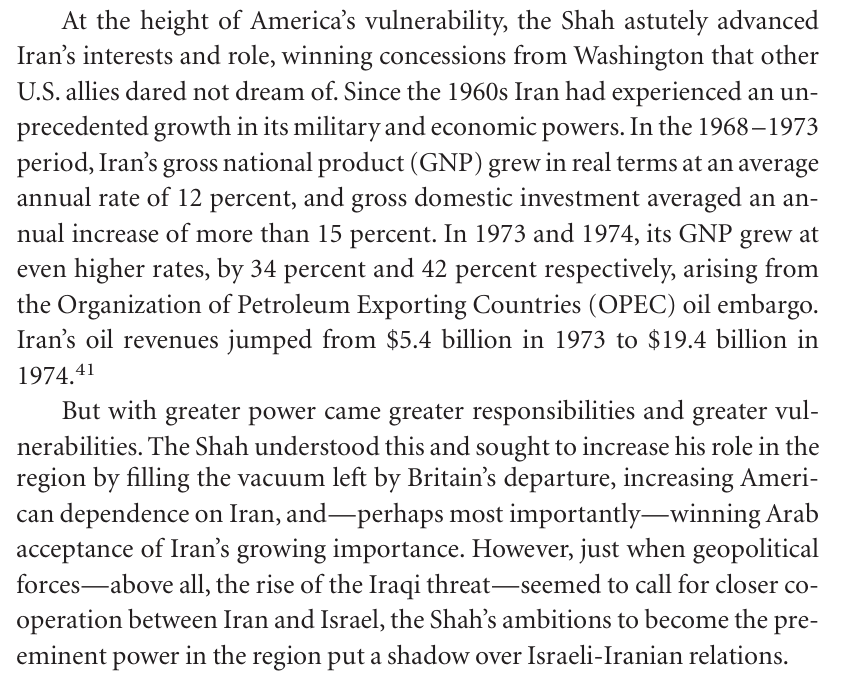

As outlined above, Iran developed hegemonic regional ambitions by the mid 70s. In pursuit of this being accepted, Iran catered more to Arab wishes. A natural power like Iran can afford magnanimity, tiny Israel in pursuit of same dominance has needs to blow everything up (Lavon).

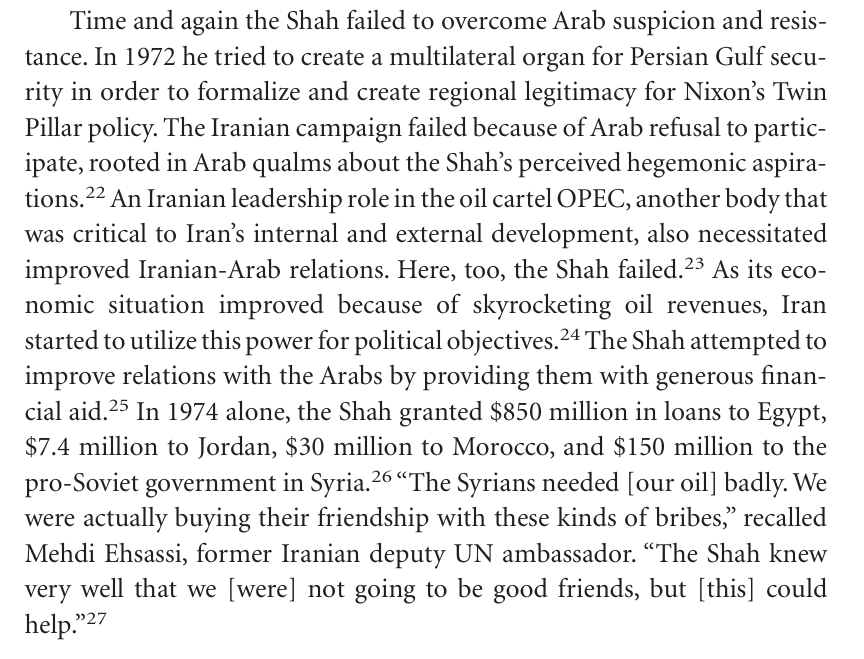
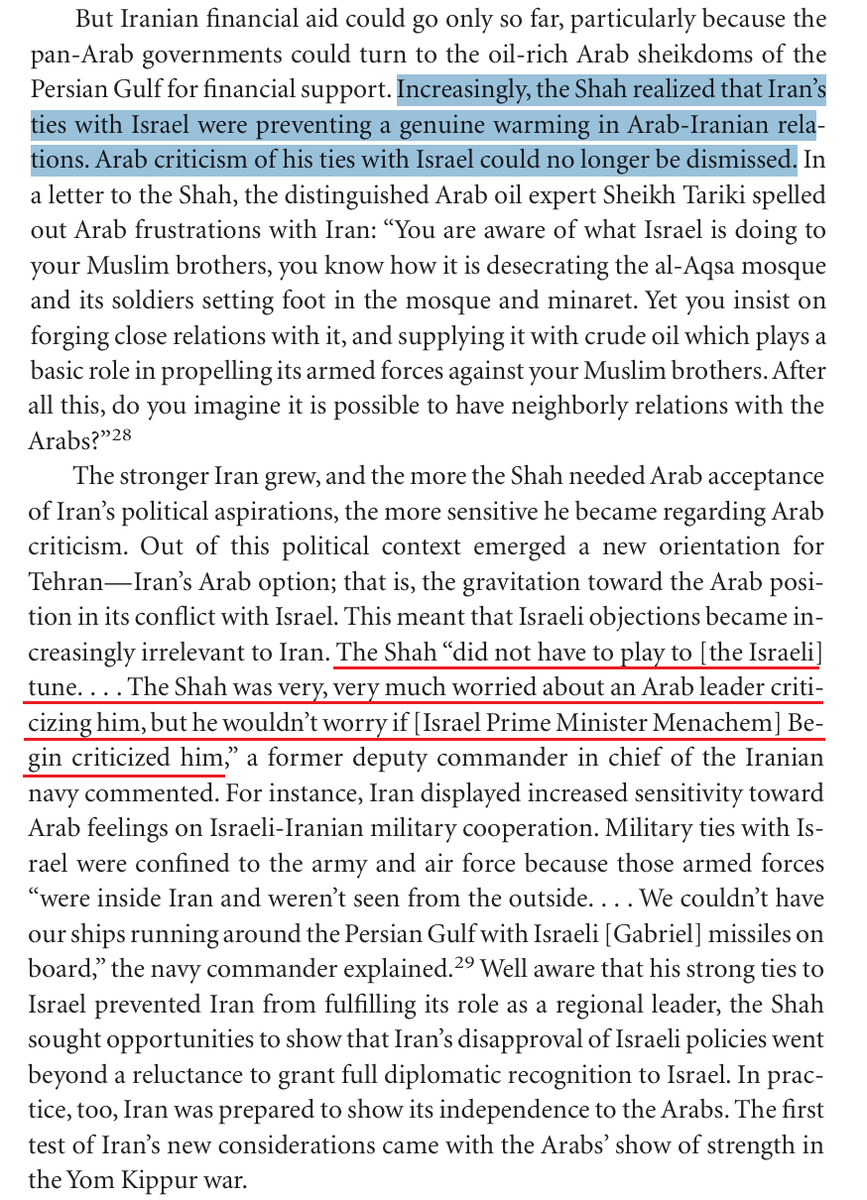
As Shah realised the degree to which Iran's close ties with Israel impeded Arabs ever accepting Iran as the region's policeman, he cooled them. With Begin elected PM (then widely reviled as an ex-terrorist in the US and even in Israel), the Shah felt he could safely ignore him.

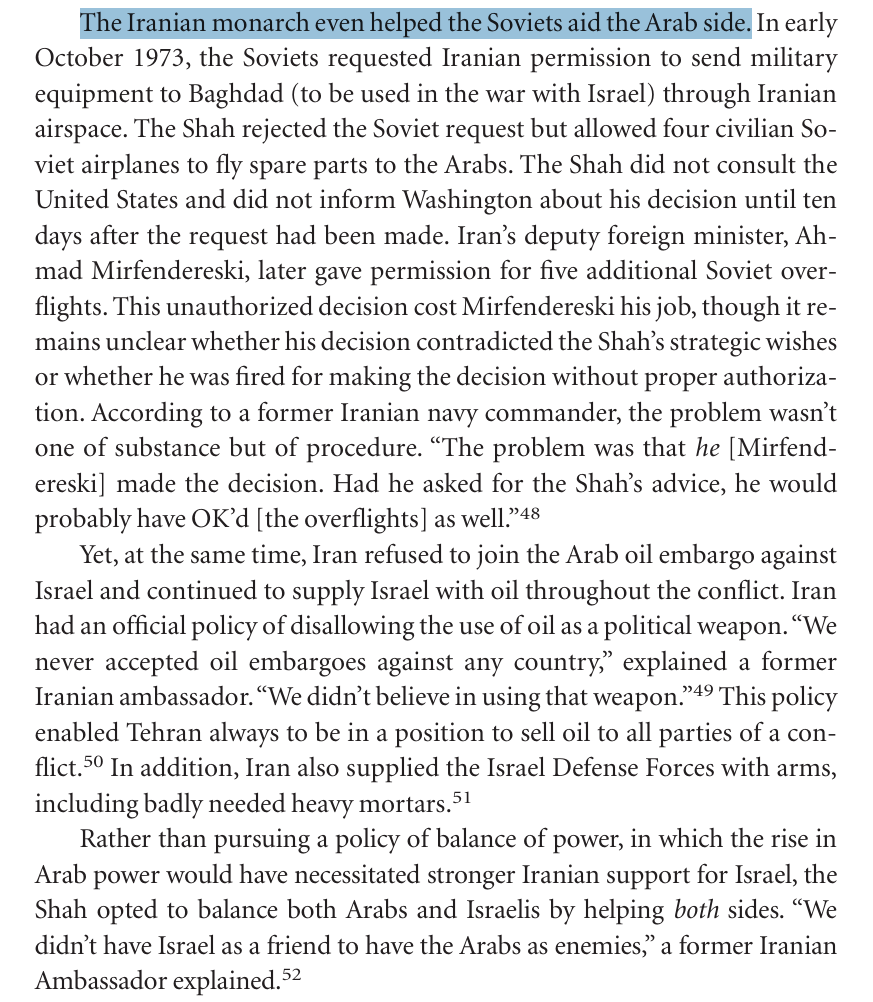
Iran's Shah aided *both* Arab and Israeli sides in the 1973 Yom Kippur War.
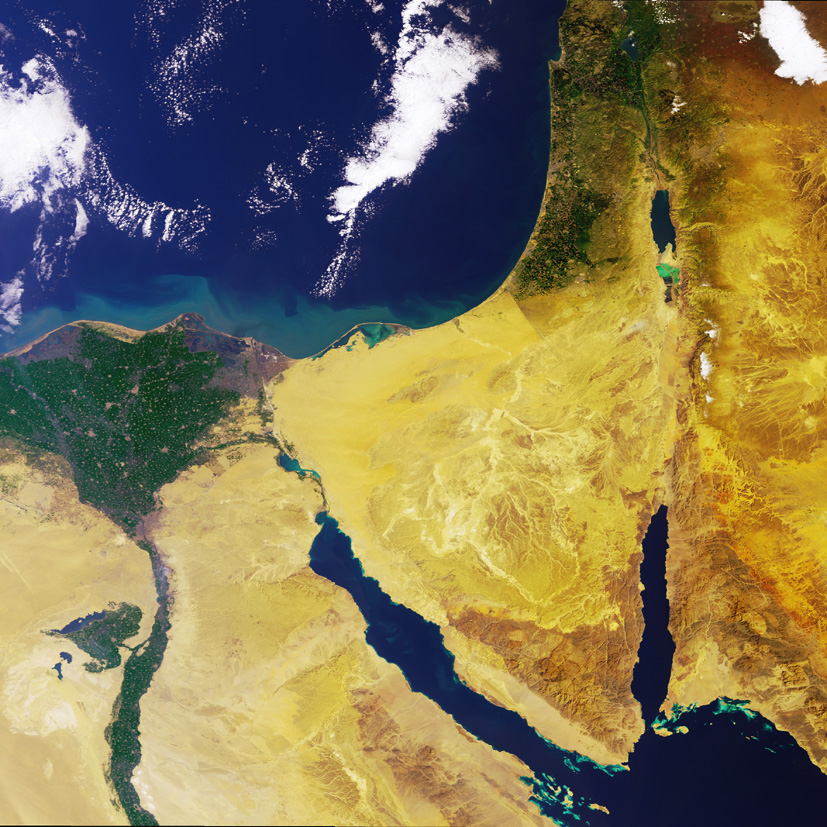
A little known fact in the aftermath, Iranian pressure for the rest of the 70s on Israel to return the Sinai to Egypt seems to have been a major factor in the eventual Israeli-Egyptian peace deal.
A little known fact in the aftermath, Iranian pressure for the rest of the 70s on Israel to return the Sinai to Egypt seems to have been a major factor in the eventual Israeli-Egyptian peace deal.

• • •
Missing some Tweet in this thread? You can try to
force a refresh