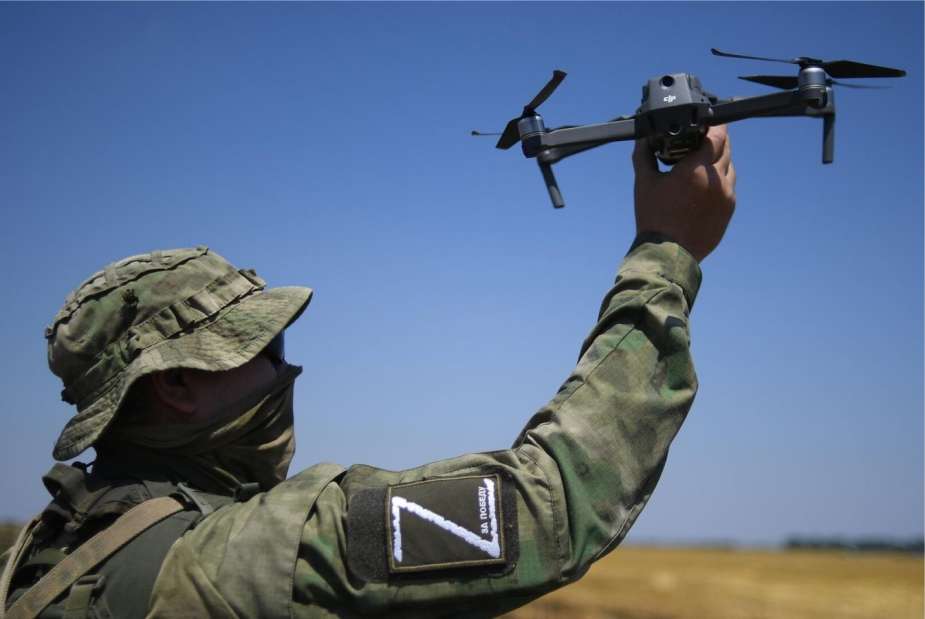
1/ Recruitment for Russia's drone forces has slumped, despite an intensive recruitment campaign, because potential volunteers fear being forced to become stormtroopers. The situation is so severe that a Russian general has suggested moving drone forces out of the Russian army. ⬇️ 
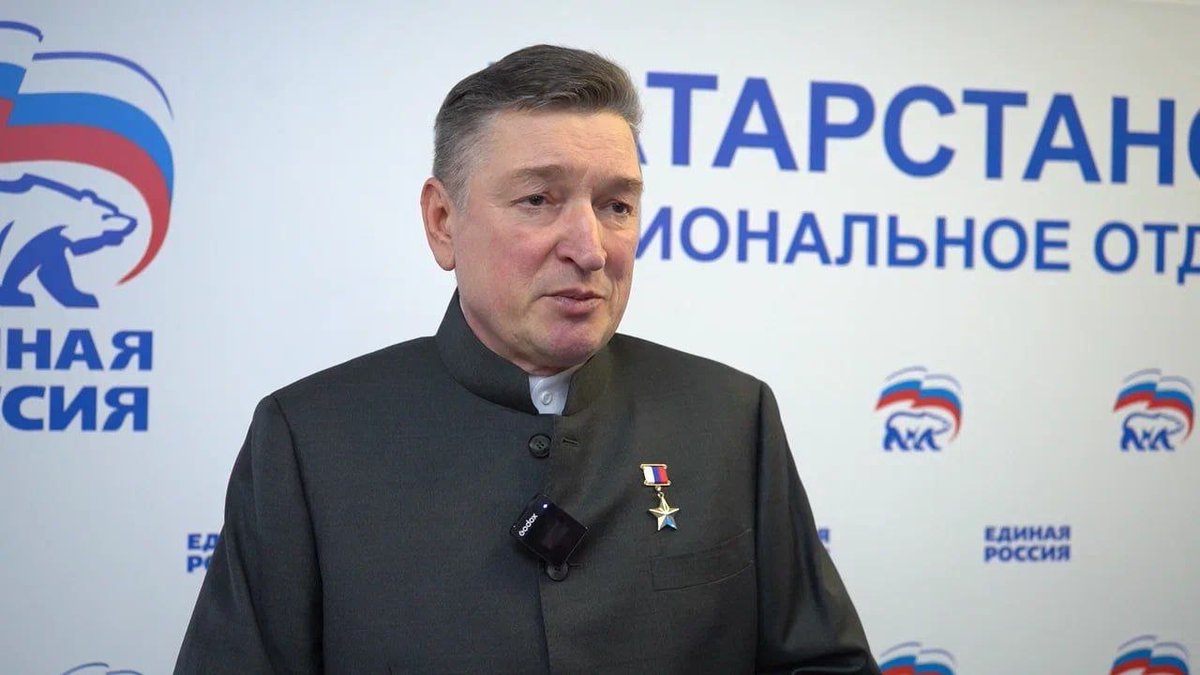
2/ Alexey Chadayev, the head of the Ushkuynik Research and Production Centre – a leading Russian drone development organisation – recounts a conversation that he had recently with a Russian lieutenant general about the army's failing UAV pilot recruitment programme:
3/ "Today I had a conversation with a lieutenant general, a longtime acquaintance of mine and, without exaggeration, a senior comrade and mentor. He gave me an idea I'd like to share with the channel.
4/ "It's no secret that recruitment for the newly created unmanned systems forces (promoting posters for them now adorn every town and village) is proceeding at, to put it mildly, a rather lacklustre pace.
5/ "This recruitment drive itself is the result of the creators of this new branch of the military being told that the idea of poaching the best operators from the “old” combat branches—again, to put it mildly—isn’t the brightest, and that it would be better…
6/ …to build their own ranks than to hunt for others’. But as for how and from whom to “build their own”—they still don’t know, and haven’t come up with anything better than turning to the domestic political establishment for help. Through the higher-ups, of course.
7/ "And they, understandably, tried to use all their standard tools to solve this problem, which is why governors, their deputies for domestic policy, the ruling party,…
8/ …regional administrative centres, even political consulting teams close to the government, and, of course, educational institutions are now involved.
9/ However, the results are not encouraging: the regions have already been “drained dry” by recruitment for contracts in the Special Military Operations zone, and today a rather specific contingent is heading there (again, to put it as delicately as possible), which,…
10/ …given its other characteristics, is the least suited to becoming the backbone of a new high-tech branch of the armed forces."
[Chadayev is likely to be referring to convicts and other 'social undesirables', like alcoholics, who are being rounded up and sent to Ukraine.]
[Chadayev is likely to be referring to convicts and other 'social undesirables', like alcoholics, who are being rounded up and sent to Ukraine.]
11/ "So there you have it. This is the last idea I expected to hear from a man who has dedicated his entire life to service in the Armed Forces. And yet.
12/ "[The general said:] And who, exactly, said it was right to follow the same path taken a little earlier by our dear, unbrotherly Ukrainians? Does this imply that unmanned forces absolutely had to be established within the Ministry of Defence?
13/ "After all, the Ministry of Emergency Situations and the Russian Guard were once created from scratch; the Ministry of Internal Affairs has always existed; there is the Border Guard Service within the structure of the FSB; there is the Federal Penitentiary Service,…
14/ …and so on; all of these are separate security services with their own distinct tasks. They are not part of the Ministry of Defence, but they are part of what is called the "military organization of the state."
15/ "It is quite possible, he says, that in the case of unmanned systems, it would be more appropriate for us not to create a new branch of the armed forces within the Ministry of Defence, but a new organisation which, whilst being established as a security agency,…
16/ …could at the same time perform purely civilian tasks for the country – monitoring, logistics, communications, and so on.
17/ "And yet it would not be burdened by the vast array of procedural constraints that have weighed upon the Armed Forces since Soviet times – from the State Defence Order system to, at the very least, the State Armament Programme.
18/ "For which legislation could be drafted from scratch, in line with the demands of the times – for example, regarding the speed of developing and adopting new types of equipment and organisational forms for its use.
19/ "And he finished me off with this phrase: "Look at the IRGC, how they fight. But Iran has an army, it's still there."
20/ Chadayev asks why people don't want to sign up to join the unmanned systems forces, and concludes that it's because "the system is offering a standard military contract."
21/ "This leads people to the logical conclusion that no one who agrees will be immune from the so-called "transfer to the assault force," from essentially indefinite service (until the end of the war), or from other interesting aspects of service in the Russian Armed Forces.
22/ "And a completely different contingent is needed in large numbers for an unmanned army—commonly IT specialists, gamers, engineers, technicians, and "people with a soldering iron" in the broadest sense.
23/ "Essentially, we need to create not a "branch of the armed forces" in the traditional sense, but a militarized technology company dedicated to the development of advanced systems and their operational testing (including combat, of course).
24/ "Whose leadership speaks the same language with headquarters (where the generals are), and with manufacturers (where the managers are), and with developers (where the engineers are), and with civilian operators (where the logisticians are also engineers, but infrastructural…
25/ …ones). And such a structure, in addition to military tasks, could theoretically have tasks such as: protecting a critical facility (see Ust-Luga or the Crimean Bridge), quickly deploying supplies to an emergency zone (delivery of cargo by drones to hard-to-reach areas),…
26/ …ensuring communication via airborne repeaters in the required area (the same unmanned airships and balloons, for example, on the Northern Sea Route), blocking the channel of unmanned smuggling across the state border, organizing regular aerial monitoring of…
27/ …an extended facility (gas pipeline, railway line, power transmission line), ensuring the protection of the tanker or bulk carrier fleet with the help of unmanned aerial vehicles, sweeping the fairway (or, conversely, mining it),…
28/ … quickly creating an alternative logistics route with the help of ground drones (including engineering ones) in the event of a failure of the main highway, etc.
29/ "And finally, the most crucial task: "clearing the skies in a potential offensive zone"—SIGINT, EW, interceptors, lasers, MOGs, "middle strike" at launch points deep in the operational depths, etc., all within a single complex under a single command.
30/ "And then there's the logistics of this very offensive, right down to the most challenging last mile.
31/ "Clearly, such a structure could well include specialised units directly linked to major developers, effectively representing their "combatant" branches, which could provide the most qualified and timely feedback on the refinement and improvement of products, solutions,…
32/ …and the integration of technologies. Compared to today's implementation cycle, time savings could reach tens of percent, up to 80-90%." /end
Sources:
t.me/chadayevru/4634
t.me/chadayevru/4635
Sources:
t.me/chadayevru/4634
t.me/chadayevru/4635
• • •
Missing some Tweet in this thread? You can try to
force a refresh