1/ The US attempted to send several Iran-bound bombers to an Italian air base without prior authorisation and was refused permission by the Italian government while the aircraft were in flight. The news comes a day after Spain disclosed it was refusing US military overflights. ⬇️ 

2/ Corriere della Sella and La Republicca report that on Fridary 27 March, the Italian Chief of the Defence Staff, General Luciano Portolano, was informed that several US bombers were inbound to the Naval Air Station Sigonella in Sicily, controlled by the Italian Air Force.

3/ However, nobody on the US side had requested authorisation or consulted the Italian military leadership. The plan was only communicated to the Italians while the planes were already in flight.
4/ Portolano informed Defence Minister Guido Crosetto of the incident. Both agreed to refuse the US aircraft permission to land at Sigonella, citing the lack of authorisation or prior consultation.
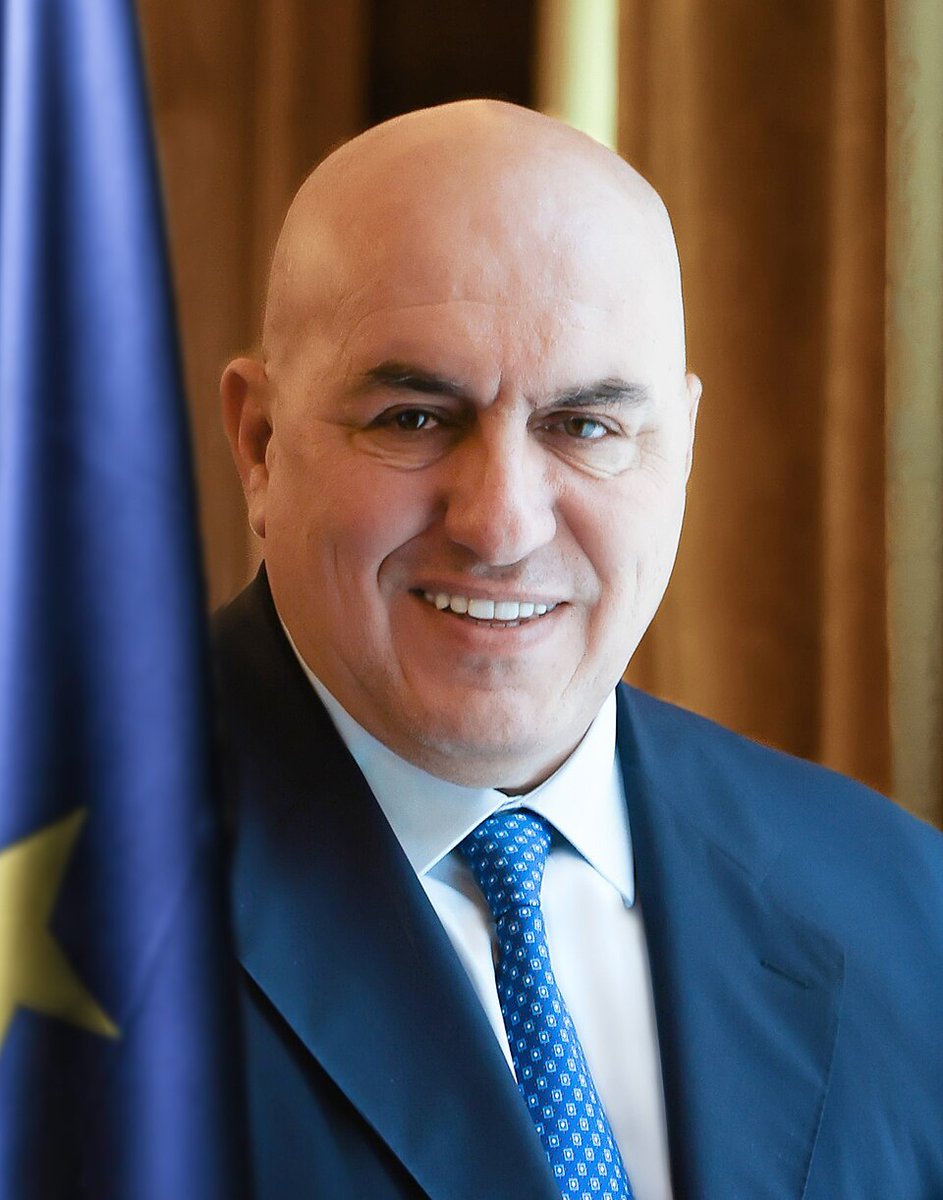
5/ The flights were not covered under existing defence treaties with Italy as they were not normal or logistical flights. Crosetto has previously declared that the government will seek prior authorisation from the Italian parliament for any non-treaty operations.
6/ Sigonella is historically an Intelligence, Surveillance, and Reconnaissance (ISR) platform, from which US Navy P-8A Poseidons , MQ-4C Triton drones, and NATO RQ-4D Phoenix aircraft operate as part of the Alliance Ground Surveillance programme. It is a US naval aviation hub.

7/ Its use is governed by a number of defence agreements with the US, ranging from from the 1951 NATO Status of Forces Agreement, to the 1995 Italy-US Memorandum of Understanding. They draw a clear distinction between logistical or intelligence and offensive operations.
8/ Direct participation in offensive actions requires very different procedures, political responsibilities, and obligations of democratic transparency, such as prior parliamentary authorisation.
9/ As the Corriere notes, Italy has previously had a very painful experience with the US carrying out unauthorised operations on its bases, as happened in 1985 when Italy was under the Craxi government and the US President was Ronald Reagan.
10/ This related to the hijacking of the Achille Lauro cruise ship in October 1985. The PLO terrorists who carried out the hijacking were given safe passage aboard an Egypt Air plane from Cairo bound for Tunis, where the PLO was headquartered at the time.

11/ However, the US decided to force the aircraft down and land it at Sigonella under the guise of a 'fuel emergency'. Italian President Bettino Craxi was only notified at the last minute, with the operation already underway.
12/ The result was a farcical two-day stand-off, with a ring of 50 Italian policemen and soldiers surrounding the plane, and the Italians themselves being surrounded by a ring of US Delta Force operatives.

13/ In the end, the US backed down, with President Reagan ordering the US forces to withdraw. The hijackers were tried in Italy for the murder of Jewish-American hostage Leon Klinghoffer, with four of them subsequently being convicted.
14/ The incident left lasting scars. It badly damaged US-Italian relations at a politically tense time, and it caused a serious government and constitutional crisis in Italy that nearly caused the breakdown of the government and led to a change in the Italian constitution.
15/ Given that history, Corriere notes, the decision to refuse a US landing was made "taking into account the risk of a diplomatic crisis" of the kind seen in 1985. No public reaction from the US government has been reported.
16/ Italian politicians have welcomed the decision. Angelo Bonelli of the left-wing AVS says: "I believe the Sigonella decision was necessary."
17/ "The government has always maintained that treaties must be respected, and in this case, a decision was made consistent with this principle."
Carlo Calenda, leader of the liberal Azione party, comments: "Crosetto did the right thing."
Carlo Calenda, leader of the liberal Azione party, comments: "Crosetto did the right thing."
18/ "He couldn't have done otherwise, because he would have had to come to Parliament to ask for authorisation to use the bases. I hope the decision will be respected. We already defended national honour at Sigonella once, I hope we can do the same [again]."
19/ Giuseppe Conte, the leader of the populist Five Star Movement, says that "It is our duty to deny American bombers the use of our bases. This is a necessary act, imposed by our Constitution."
20/ "Now the government must take a further step, which is also necessary: it must also deny the logistical support offered by our bases, considering that those American and Israeli attacks were carried out in clear violation of international law."
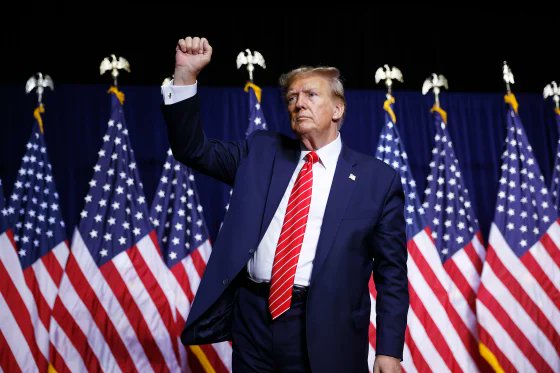
21/ It's also worth noting that as elsewhere in Europe, the Iran war is very unpopular; a YouTrend poll conducted for Sky TG24 found that 56% of Italians oppose the US and Israeli military intervention against Iran.
22/ Prime Minister Giorgia Meloni – a right-wing leader who is typically allied with President Donald Trump – has criticised the war as "outside the scope of international law" and insisted that Italy is not involved in the conflict. /end
Sources:
🔹 roma.corriere.it/notizie/politi…
🔹 corriere.it/politica/26_ma…
🔹 repubblica.it/politica/2026/…
🔹 tg24.sky.it/mondo/2026/03/…
🔹 lasicilia.it/news/cronaca/3…
🔹 roma.corriere.it/notizie/politi…
🔹 corriere.it/politica/26_ma…
🔹 repubblica.it/politica/2026/…
🔹 tg24.sky.it/mondo/2026/03/…
🔹 lasicilia.it/news/cronaca/3…
• • •
Missing some Tweet in this thread? You can try to
force a refresh