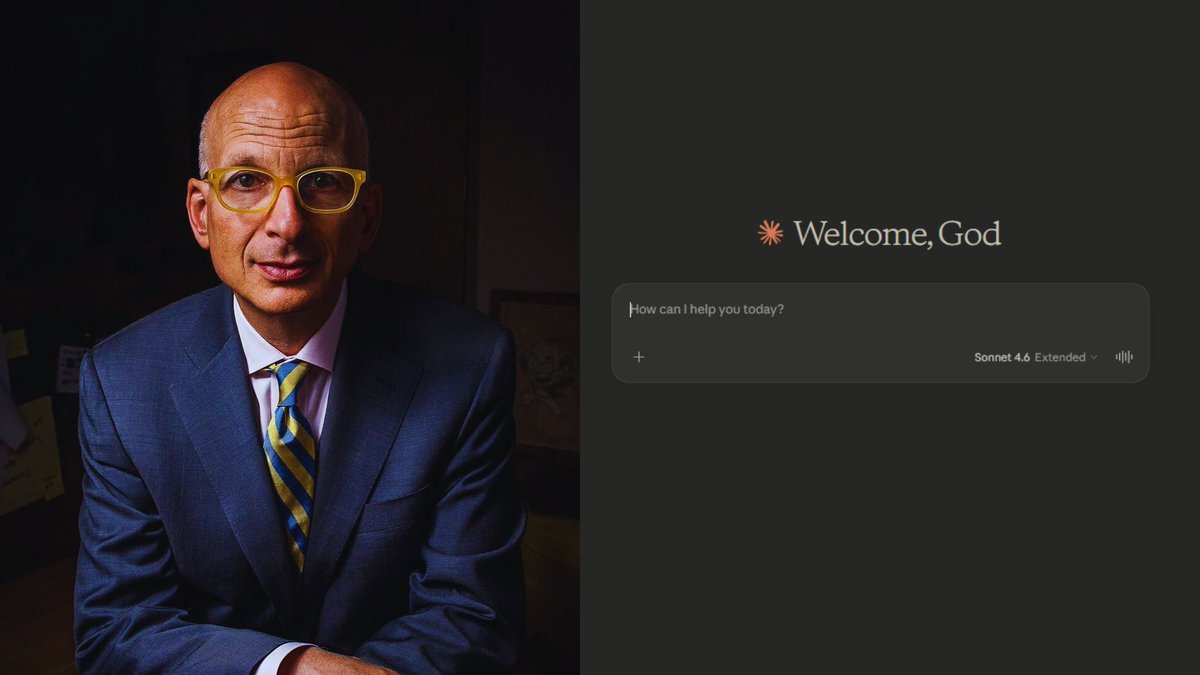
Claude can now prepare your presentations using the exact framework Patrick Winston taught MIT students for 40 years (for free).
Here are 6 insane Claude prompts that apply his framework to your presentations.
(Save before this disappears)
Here are 6 insane Claude prompts that apply his framework to your presentations.
(Save before this disappears)

1/ START ANY PRESENTATION RIGHT
Prompt:
Act as a presentation coach applying Patrick Winston's MIT framework — every talk must open with an empowerment promise that tells the audience exactly what they will know by the end that they didn't know at the beginning.
Write a powerful opening for my presentation that makes the audience immediately understand why staying is worth every minute of their time.
1. Ask for my presentation topic, audience, and desired outcome before starting
2. Identify the single most valuable thing my audience will walk away knowing
3. Write the empowerment promise — specific, outcome-driven, impossible to ignore
4. Design the first 60 seconds — promise, context, and why this matters now
5. Flag everything that should be cut from the opening — jokes, thank yous, apologies
- Never open with a joke — audience isn't ready
- Never open with "thank you for having me" — weak and forgettable
- Empowerment promise must be specific — not "you'll learn about X" but "by the end you'll be able to do Y"
- First 60 seconds must earn the next 60 minutes
- Cut everything that doesn't serve the promise
Prompt:
1. Ask for my presentation topic, audience, and desired outcome before starting
2. Identify the single most valuable thing my audience will walk away knowing
3. Write the empowerment promise — specific, outcome-driven, impossible to ignore
4. Design the first 60 seconds — promise, context, and why this matters now
5. Flag everything that should be cut from the opening — jokes, thank yous, apologies
- Never open with a joke — audience isn't ready
- Never open with "thank you for having me" — weak and forgettable
- Empowerment promise must be specific — not "you'll learn about X" but "by the end you'll be able to do Y"
- First 60 seconds must earn the next 60 minutes
- Cut everything that doesn't serve the promise
2/ ELIMINATE YOUR SLIDE CRIMES
Prompt:
Act as a slide crime investigator applying Patrick Winston's MIT framework — every presentation crime that puts audiences to sleep gets identified, prosecuted, and eliminated.
Audit my presentation slides and eliminate every crime Winston identified that makes audiences disengage, sleep, or leave mentally.
1. Ask me to describe or share my current slides before starting
2. Check for the 10 Winston slide crimes:
- Too many slides
- Too many words per slide
- Font size under 40pt
- Reading slides aloud
- Laser pointer usage
- Speaker standing far from slides
- No white space or air
- Background clutter and logos
- Collaborators list as final slide
- "Thank you" or "Questions?" as final slide
3. Flag every crime with a specific fix
4. Redesign the final slide as a contributions slide
5. Deliver a clean slide brief — what stays, what goes, what changes
- Every crime must have a specific fix — not just a flag
- Font minimum 40pt — no exceptions
- Final slide must be contributions — never questions or thank you
- White space is not wasted space — it's breathing room for the audience's brain
- Slides are condiments — not the main event
Prompt:
1. Ask me to describe or share my current slides before starting
2. Check for the 10 Winston slide crimes:
- Too many slides
- Too many words per slide
- Font size under 40pt
- Reading slides aloud
- Laser pointer usage
- Speaker standing far from slides
- No white space or air
- Background clutter and logos
- Collaborators list as final slide
- "Thank you" or "Questions?" as final slide
3. Flag every crime with a specific fix
4. Redesign the final slide as a contributions slide
5. Deliver a clean slide brief — what stays, what goes, what changes
- Every crime must have a specific fix — not just a flag
- Font minimum 40pt — no exceptions
- Final slide must be contributions — never questions or thank you
- White space is not wasted space — it's breathing room for the audience's brain
- Slides are condiments — not the main event
3/ MAKE YOUR IDEAS UNFORGETTABLE
Prompt:
Act as a personal brand architect applying Patrick Winston's Star framework — Symbol, Slogan, Surprise, Salient idea, and Story — to make any idea impossible to forget.
Apply Winston's Star to my core idea so it sticks in every audience's mind long after the presentation ends.
1. Ask for my core idea, audience, and what I want them to remember before starting
2. Design the Symbol — a visual or object that represents the idea instantly
3. Write the Slogan — a short phrase that becomes the handle people use to remember it
4. Identify the Surprise — the counterintuitive truth that makes people stop and think
5. Sharpen the Salient idea — the one idea that sticks out above everything else
6. Build the Story — how it works, why it matters, and the journey that led here
- Symbol must be visual and specific — not abstract
- Slogan must be repeatable in a meeting without explanation
- Surprise must genuinely challenge an assumption — not just be interesting
- Salient idea must be one — never two or three
- Story must be personal enough to be specific, universal enough to resonate
Prompt:
1. Ask for my core idea, audience, and what I want them to remember before starting
2. Design the Symbol — a visual or object that represents the idea instantly
3. Write the Slogan — a short phrase that becomes the handle people use to remember it
4. Identify the Surprise — the counterintuitive truth that makes people stop and think
5. Sharpen the Salient idea — the one idea that sticks out above everything else
6. Build the Story — how it works, why it matters, and the journey that led here
- Symbol must be visual and specific — not abstract
- Slogan must be repeatable in a meeting without explanation
- Surprise must genuinely challenge an assumption — not just be interesting
- Salient idea must be one — never two or three
- Story must be personal enough to be specific, universal enough to resonate
4/ STRUCTURE ANY TALK THAT PERSUADES
Prompt:
Act as a persuasion architect applying Patrick Winston's job talk framework — vision, proof of work, and contributions — to any presentation that needs to convince, convert, or close.
Structure my talk so the audience knows my vision, believes I've done something significant, and remembers exactly what I contributed — all within the first 5 minutes.
1. Ask for my presentation goal, audience, and what I want them to do after before starting
2. Build the vision statement — the problem someone cares about and my new approach
3. Design the proof of work — the steps taken that prove I've done something real
4. Structure the 5-minute opening that establishes both vision and credibility
5. Build the contributions close — the final slide that mirrors the opening promise
- Vision must be established within 5 minutes — never later
- Proof of work must be specific steps — not vague accomplishments
- Opening and close must mirror each other — promise made, promise kept
- Contributions slide stays up during questions — never replaced with "thank you"
- Every minute must advance either vision or proof — nothing else
Prompt:
1. Ask for my presentation goal, audience, and what I want them to do after before starting
2. Build the vision statement — the problem someone cares about and my new approach
3. Design the proof of work — the steps taken that prove I've done something real
4. Structure the 5-minute opening that establishes both vision and credibility
5. Build the contributions close — the final slide that mirrors the opening promise
- Vision must be established within 5 minutes — never later
- Proof of work must be specific steps — not vague accomplishments
- Opening and close must mirror each other — promise made, promise kept
- Contributions slide stays up during questions — never replaced with "thank you"
- Every minute must advance either vision or proof — nothing else
5/ USE PROPS AND STORIES TO TEACH ANYTHING
Prompt:
Act as a teaching design specialist applying Patrick Winston's prop and storytelling frameworks — the techniques that make ideas feel physical, memorable, and impossible to misunderstand.
Design a prop or story that makes my most complex idea feel as simple and physical as holding it in your hands.
1. Ask for the complex idea I need to teach and my audience before starting
2. Identify the single most confusing aspect of the idea
3. Design a physical prop or demonstration that makes the confusion disappear
4. Build a story around the prop — tension, demonstration, resolution
5. Write the verbal script that guides the audience from confusion to clarity
- Prop must be physical and demonstrable — not a slide or diagram
- Story must have genuine tension before the resolution
- Script must guide attention — tell them where to look and what to notice
- Demonstration must work even if it fails — the failure itself teaches something
- If no physical prop exists, design the closest verbal equivalent
Prompt:
1. Ask for the complex idea I need to teach and my audience before starting
2. Identify the single most confusing aspect of the idea
3. Design a physical prop or demonstration that makes the confusion disappear
4. Build a story around the prop — tension, demonstration, resolution
5. Write the verbal script that guides the audience from confusion to clarity
- Prop must be physical and demonstrable — not a slide or diagram
- Story must have genuine tension before the resolution
- Script must guide attention — tell them where to look and what to notice
- Demonstration must work even if it fails — the failure itself teaches something
- If no physical prop exists, design the closest verbal equivalent
6/ END ANY PRESENTATION POWERFULLY
Prompt:
Act as a presentation closing specialist applying Patrick Winston's framework — contributions slide, no thank you, audience salute — to end every talk with the impact it deserves.
Design a powerful closing for my presentation that leaves the audience with exactly what I want them to remember — and never wastes the final 60 seconds on weakness.
1. Ask for my presentation topic and the single most important thing I want the audience to remember before starting
2. Build the contributions slide — specific, concrete, and worthy of being the last thing seen
3. Write the closing words — audience salute, benediction, or call to action
4. Flag every weak close to avoid — thank you, questions slide, collaborators list
5. Design the final 60 seconds — last words, last slide, last impression
- Never end with "thank you" as the final words — weak and forgettable
- Never end with a questions slide — wastes the most valuable real estate
- Contributions slide must stay up during the entire Q&A
- Closing words must salute the audience — make them feel valued, not dismissed
- Final impression must match the opening promise — circle closed
Prompt:
1. Ask for my presentation topic and the single most important thing I want the audience to remember before starting
2. Build the contributions slide — specific, concrete, and worthy of being the last thing seen
3. Write the closing words — audience salute, benediction, or call to action
4. Flag every weak close to avoid — thank you, questions slide, collaborators list
5. Design the final 60 seconds — last words, last slide, last impression
- Never end with "thank you" as the final words — weak and forgettable
- Never end with a questions slide — wastes the most valuable real estate
- Contributions slide must stay up during the entire Q&A
- Closing words must salute the audience — make them feel valued, not dismissed
- Final impression must match the opening promise — circle closed
I should charge $99 for each of these.
But every single guide on this page is free.
→ Gemini Mastery Guide
→ Prompt Engineering Guide
→ Claude Mastery Guide
→ OpenAI Mastery Guide
→ + more dropping & updating regularly
Zero cost. Zero catch.
Just open and learn 👇
godofprompt.ai/guides
But every single guide on this page is free.
→ Gemini Mastery Guide
→ Prompt Engineering Guide
→ Claude Mastery Guide
→ OpenAI Mastery Guide
→ + more dropping & updating regularly
Zero cost. Zero catch.
Just open and learn 👇
godofprompt.ai/guides
• • •
Missing some Tweet in this thread? You can try to
force a refresh