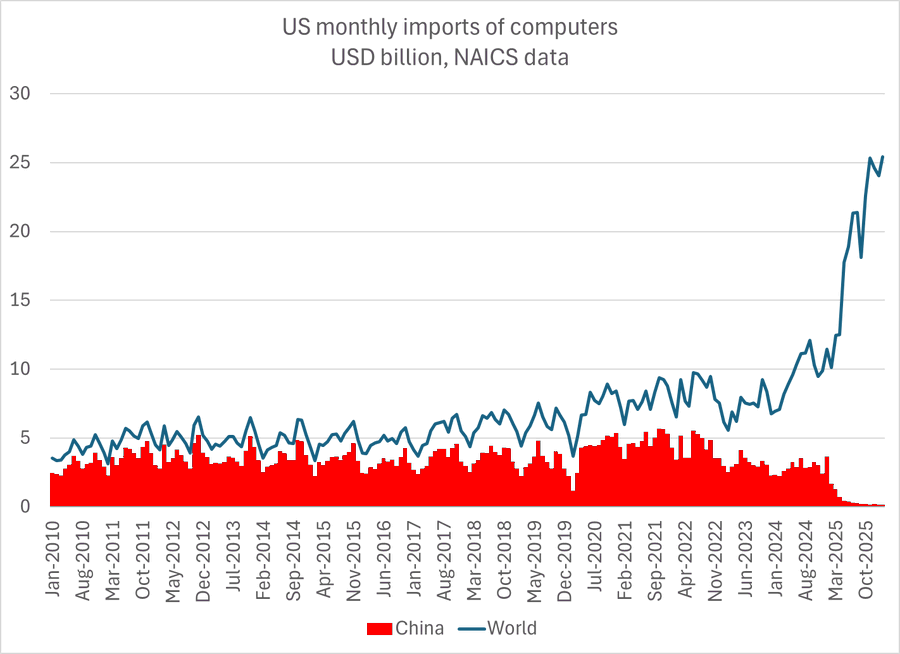
Imports of computers are up massively (tho not from China) and show no sign of slowing down -- that will mechanically pull the true trade deficit (setting gold flows aside) w/o a big sustained fall in other imports
Pharma/ Irish imports have been weak for a few months now -- probably unwinding front running but I also wonder if the tariff threat led some companies to "unbundle" pricing at the border, & lower their declared import price while charging more for the IP separately
this was under consideration before the Trump team started doing the Trump Rx deals -- it would preserve "Irish" tax structures but lower Irish goods exports/ US customs imports and raise Irish service exports/ US services imports ... too soon to tell if it is happening
• • •
Missing some Tweet in this thread? You can try to
force a refresh

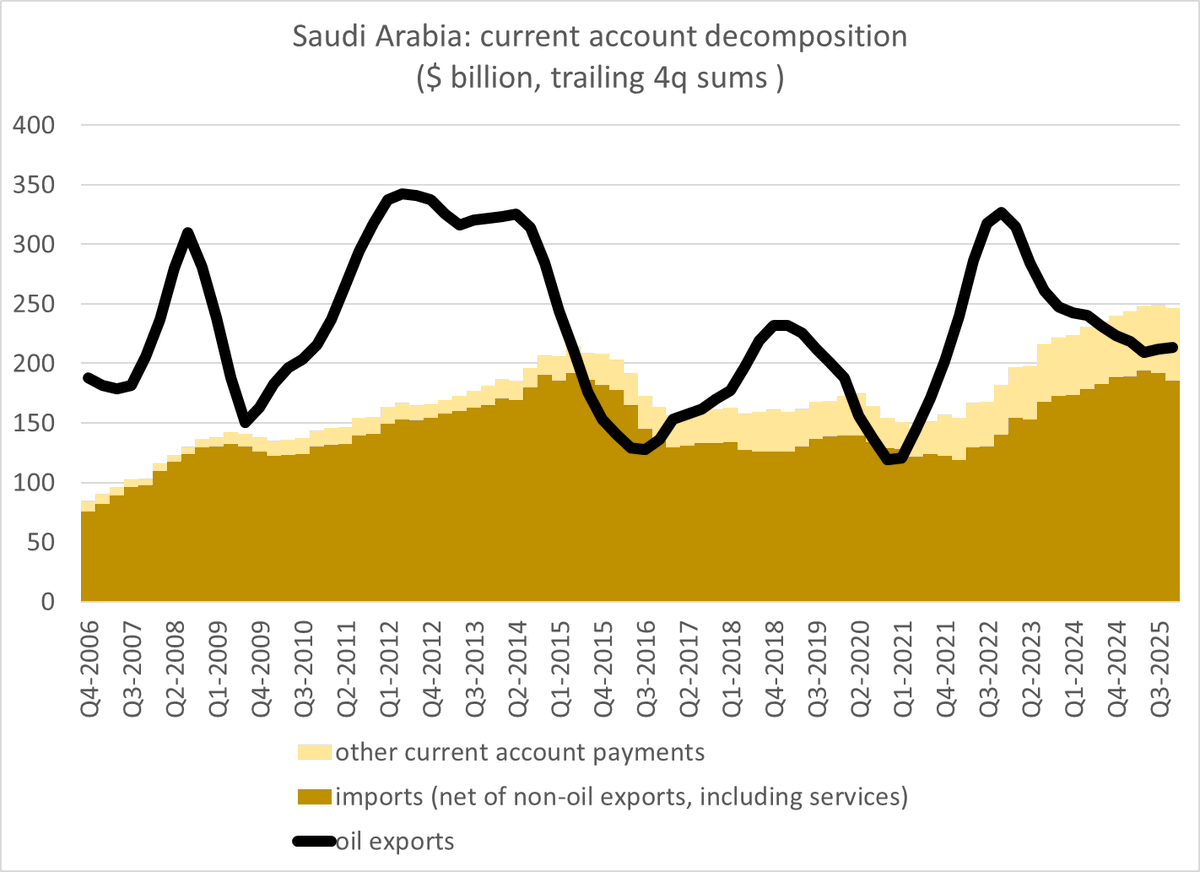
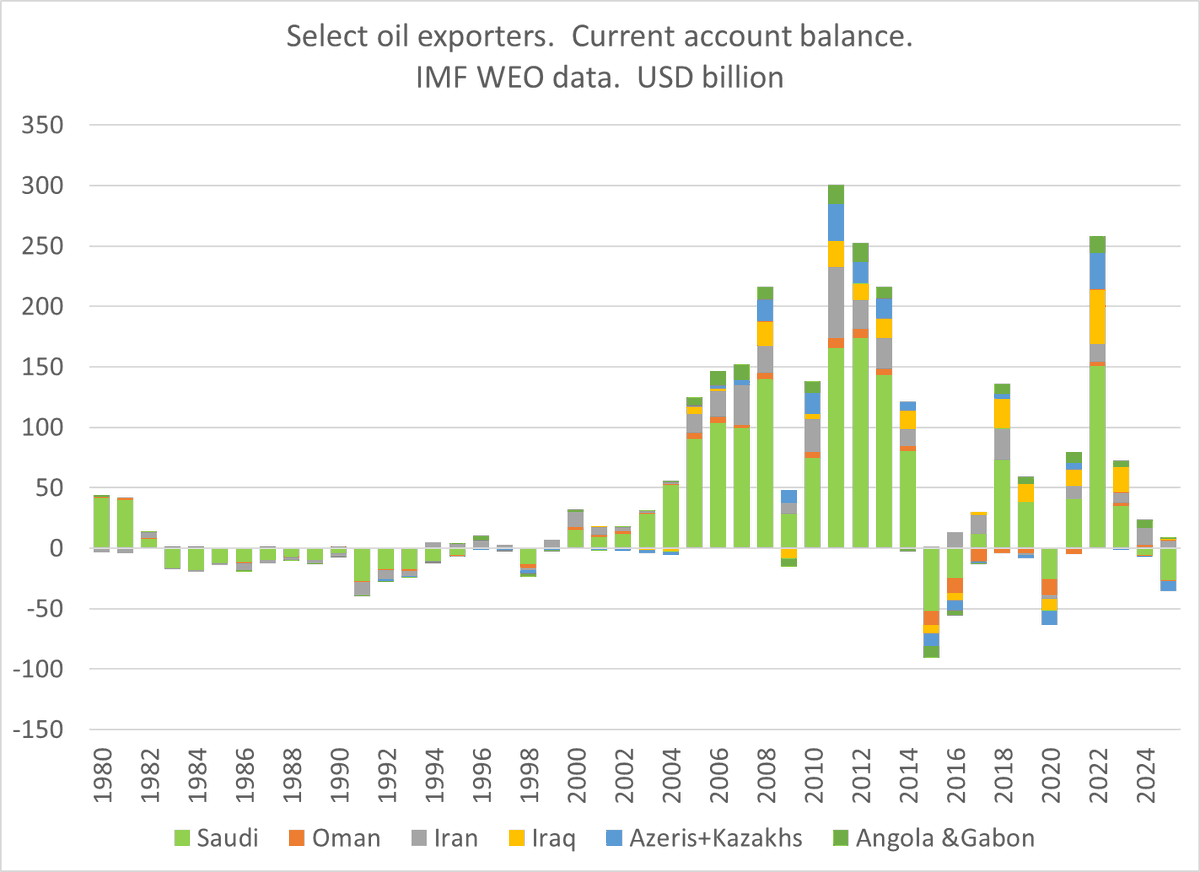
Saudi 2025 balance of payments data is out, and the Saudi "current account" break even oil price (based on ~ 7 mbd in exports of crude/ product) is still right around $100 a barrel
1/
the current account break even is the oil price where oil exports cover the rest of the current account -- so there is no deficit in the current account
2/
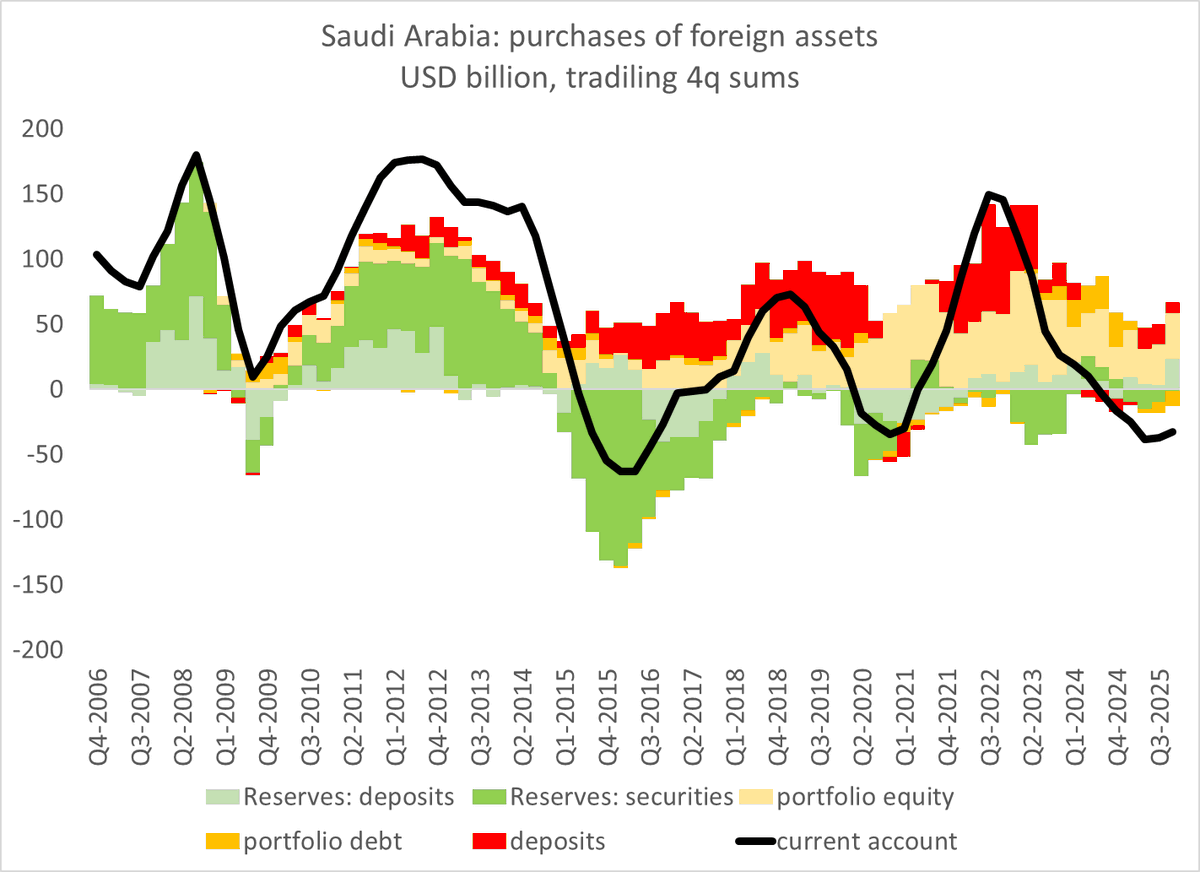
Now the Saudis are still buying foreign equities (MBS has scaled back but not entirely) even with a current account deficit ...
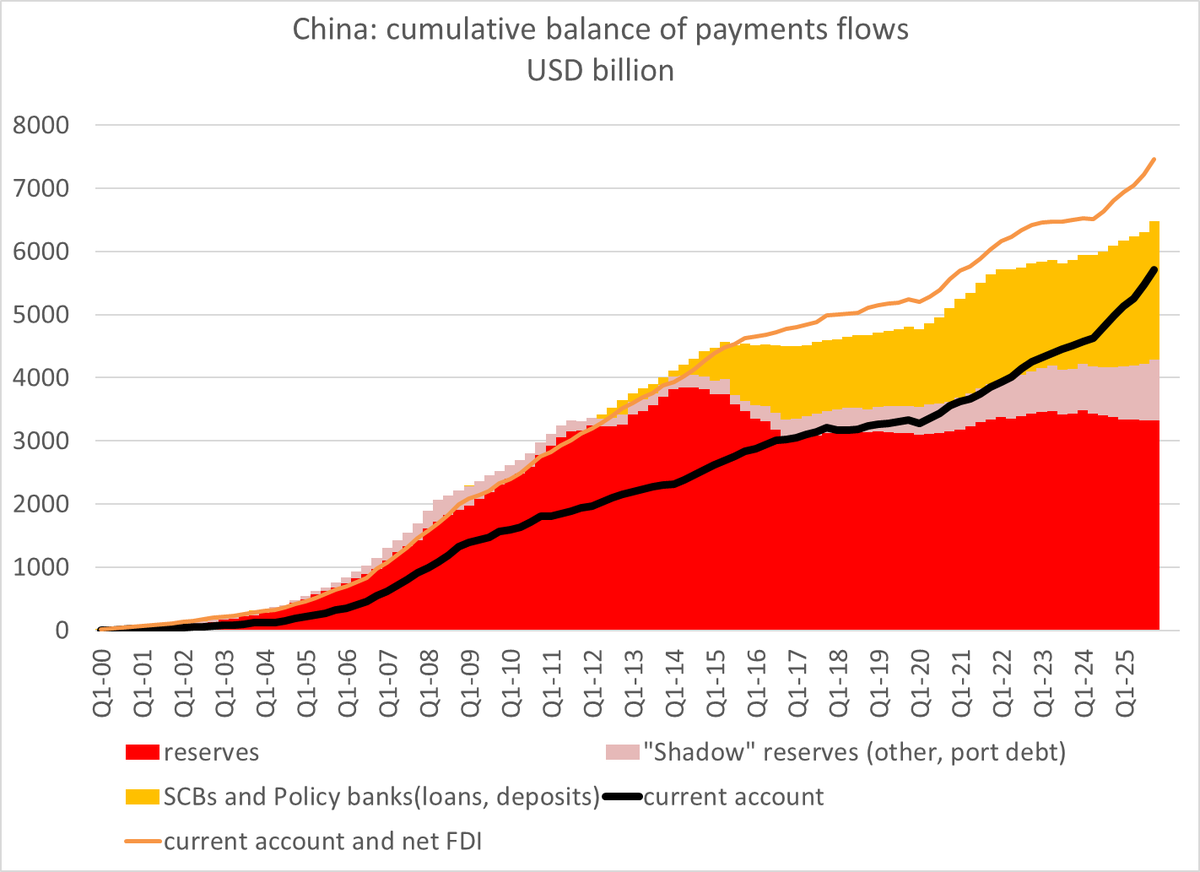
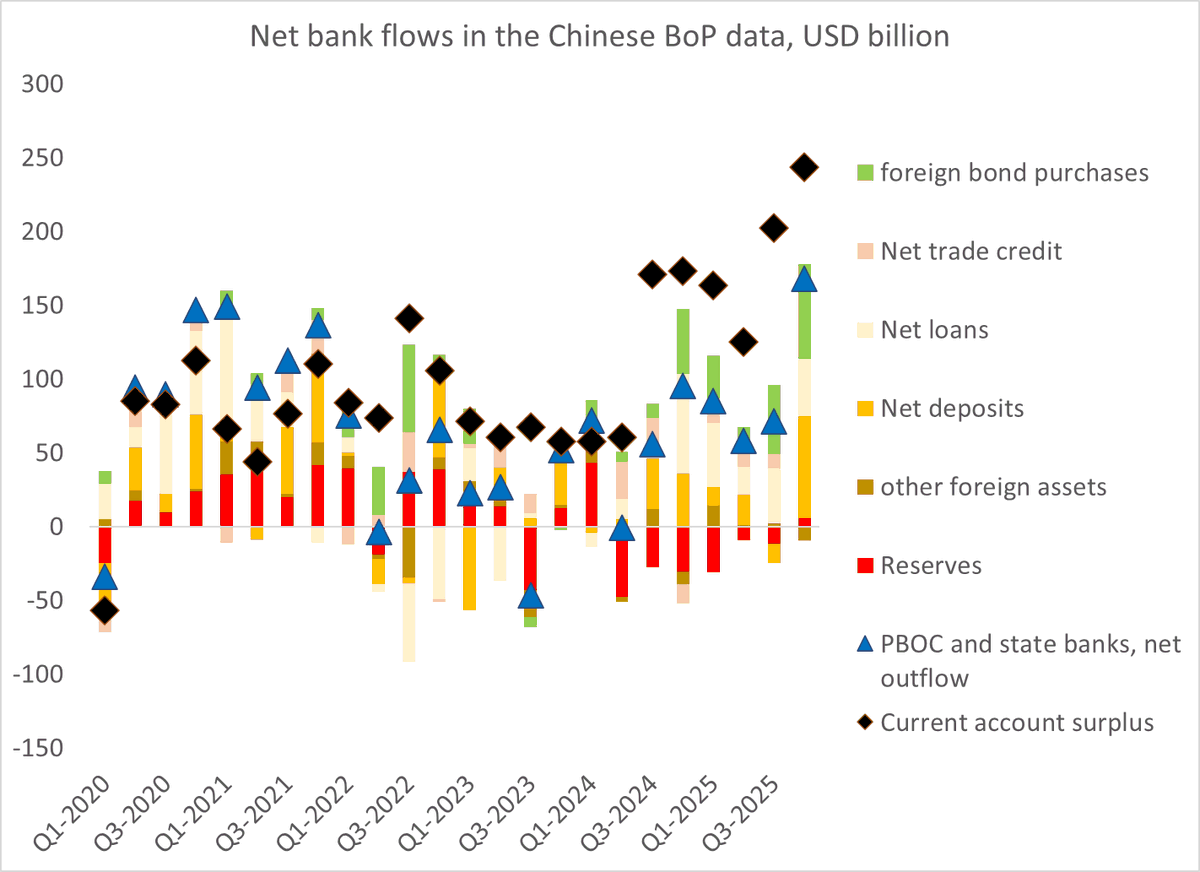
As I mentioned on Wednesday, there is a $3 trillion gap between China's accumulated current account surplus since the pandemic and China's unchanged reserves (and a corresponding gap in visible flows into the US)
Bank flows make up most of the difference
1/
That was true in q4 -- most of China's foreign bond purchases are done by the banks, so there was $170b or so outflow via the banks in q4 alone. That is about 2/3rds of China's reported q4 current account surplus
2/
The biggest components of that flow were outward deposits (likely funding for the global banks in dollars given the banking data) and purchases of foreign securities
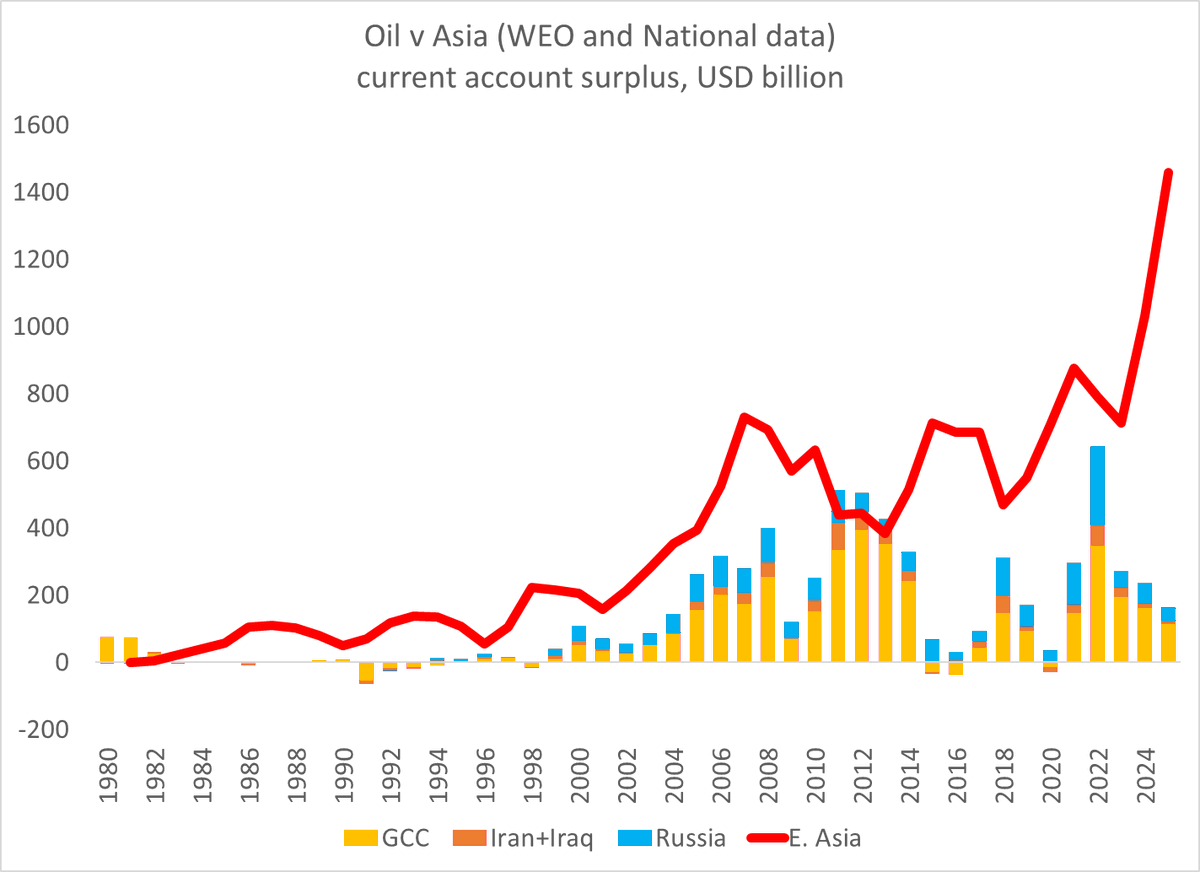
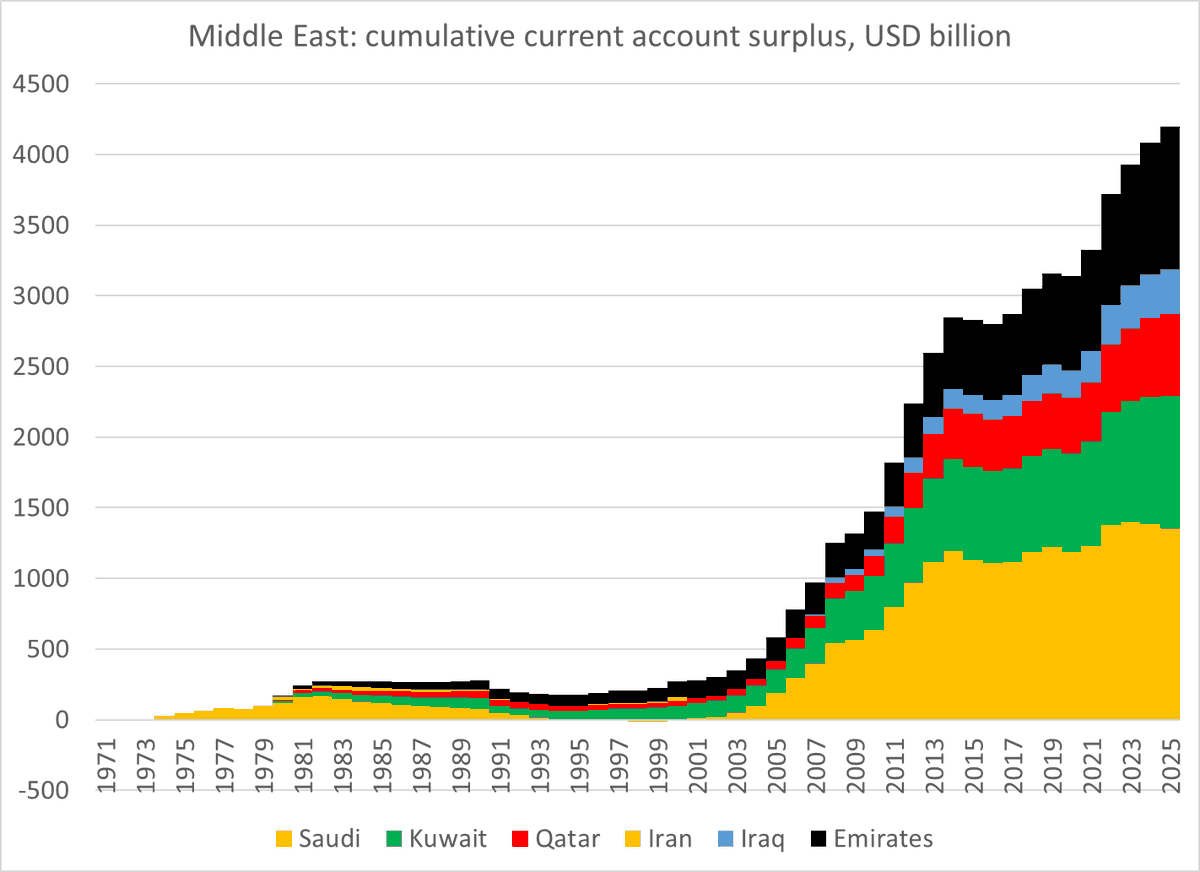
Three big picture observations about the oil surplus (petrodollars/ petroeuros/ petroequities are all downstream of this) pre Hormuz
A) The oil surplus is modest relative to the surplus in Asia. Chinese state banks and offshore deposits of Chinese exporters are way bigger
1/
B) Most oil exporters are in deficit or run only modest surpluses with oil in the 60s or 70s. That importantly includes Saudi Arabia, which now has a BoP break even in the 90s
2/
C) The remaining surpluses are concentrated in Russia (tho its surplus has fallen), frugal Norway and the GCC countries with large SWFs -- who tend to invest most of their surplus in equities (Kuwait is a bit of an exception, recent bond inflows
The risk of an escalation in the Gulf seem reduced for at least a few days. So maybe there will be a bit of interest in my (somewhat novel) reevaluation of the relative contribution of Europe and China to global imbalances
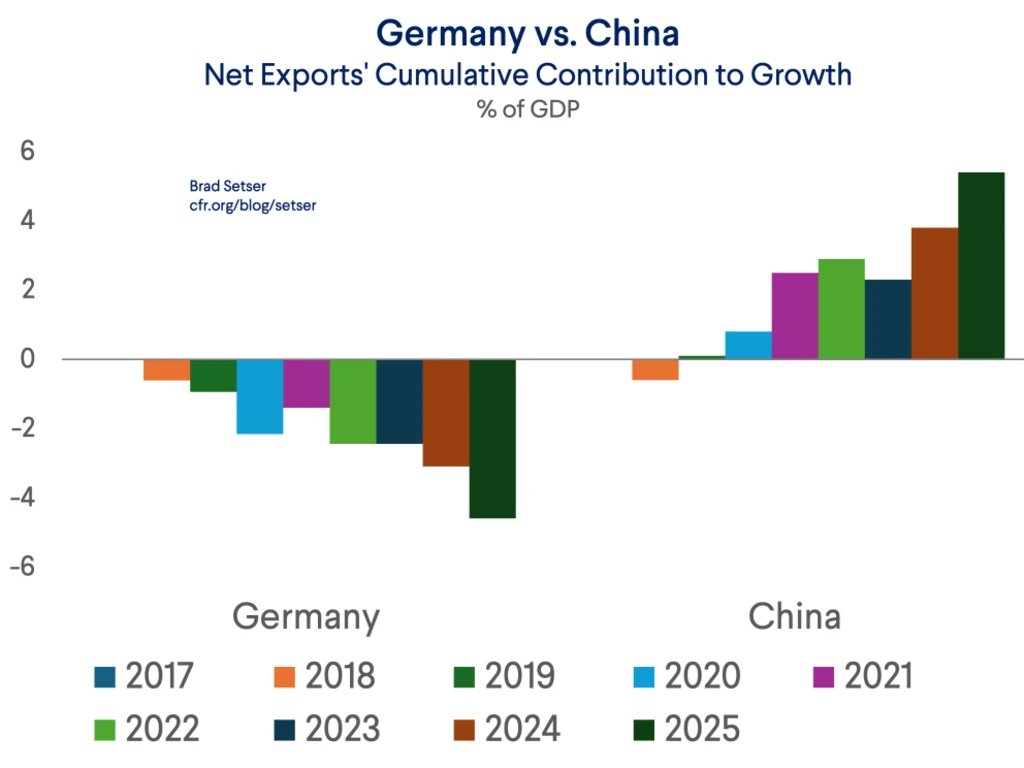
Bottom line: The second China shock has eliminated Europe's imbalance -- it all migrated to the east.
Consider the contribution of net exports to Chinese growth and to German growth over the last few years ...
2/
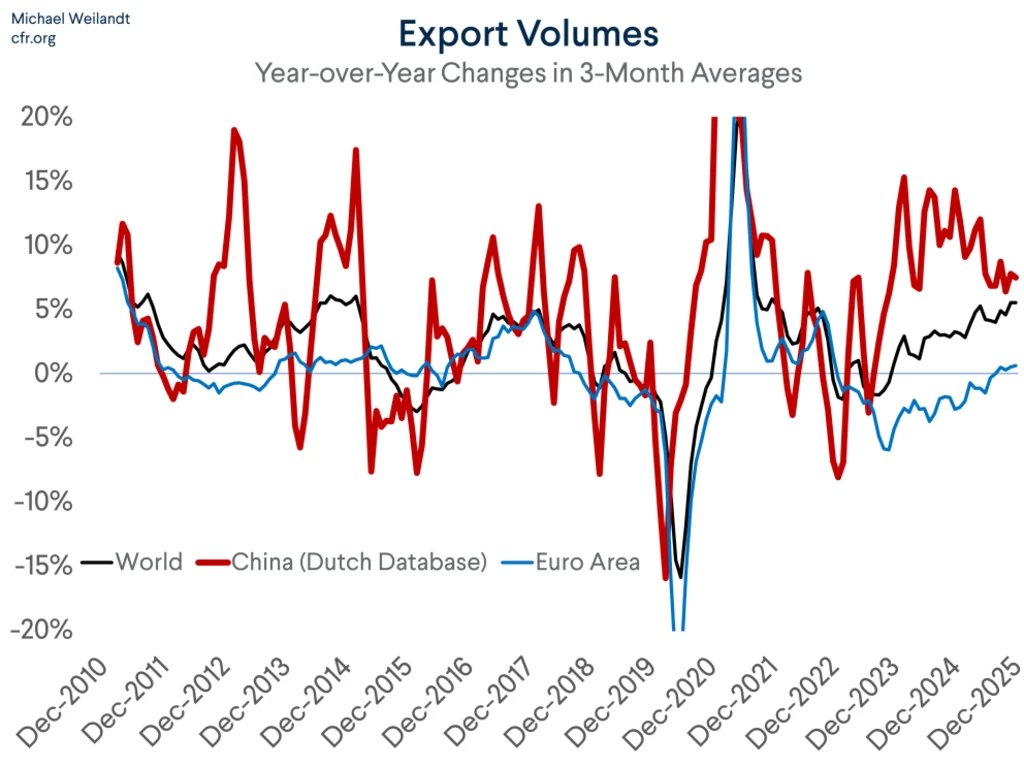
Chinese exports have outperformed global trade. That can only happen if someone else's exports under-perform. & the big underperformance has come from Europe
Petrodollars! Nothing produces more heated discussion and, in my experience, less insight. Myths trump facts, because the actual data is a bit obscure --
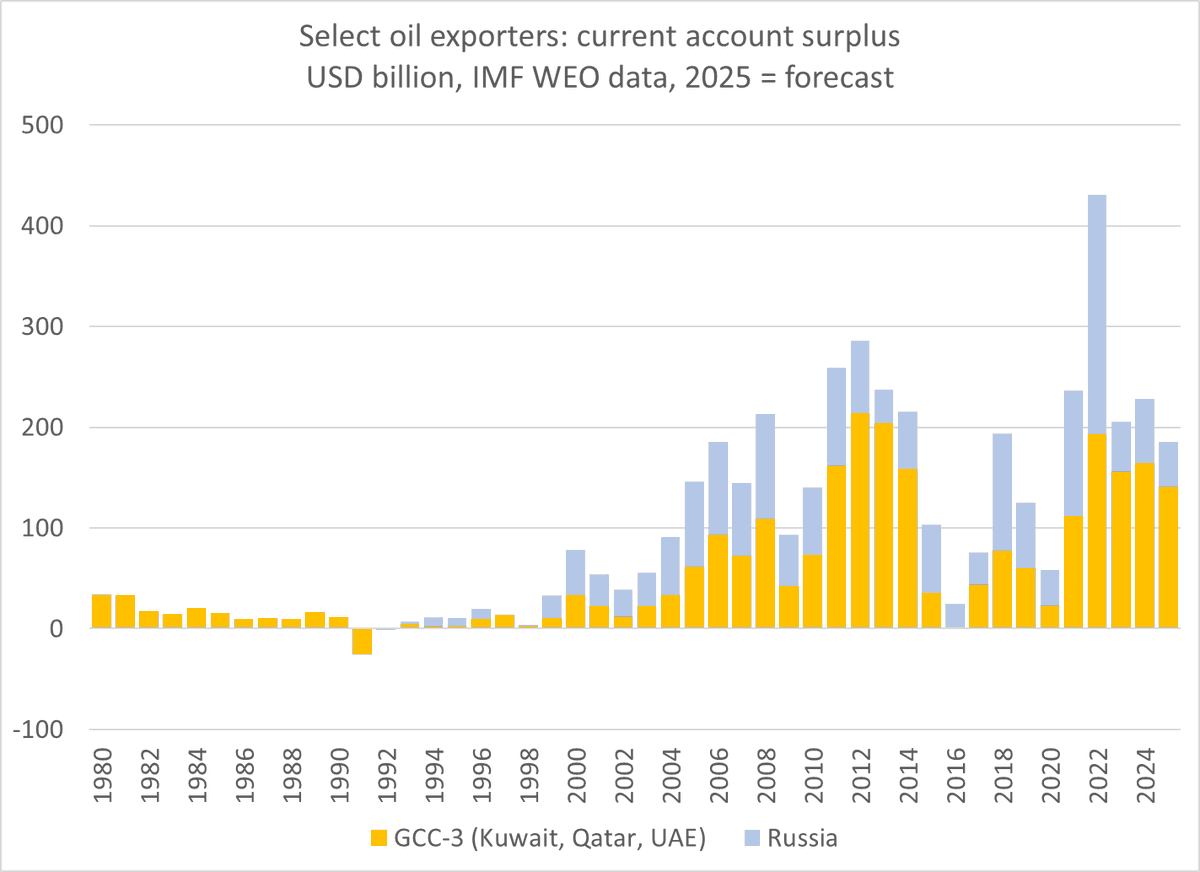
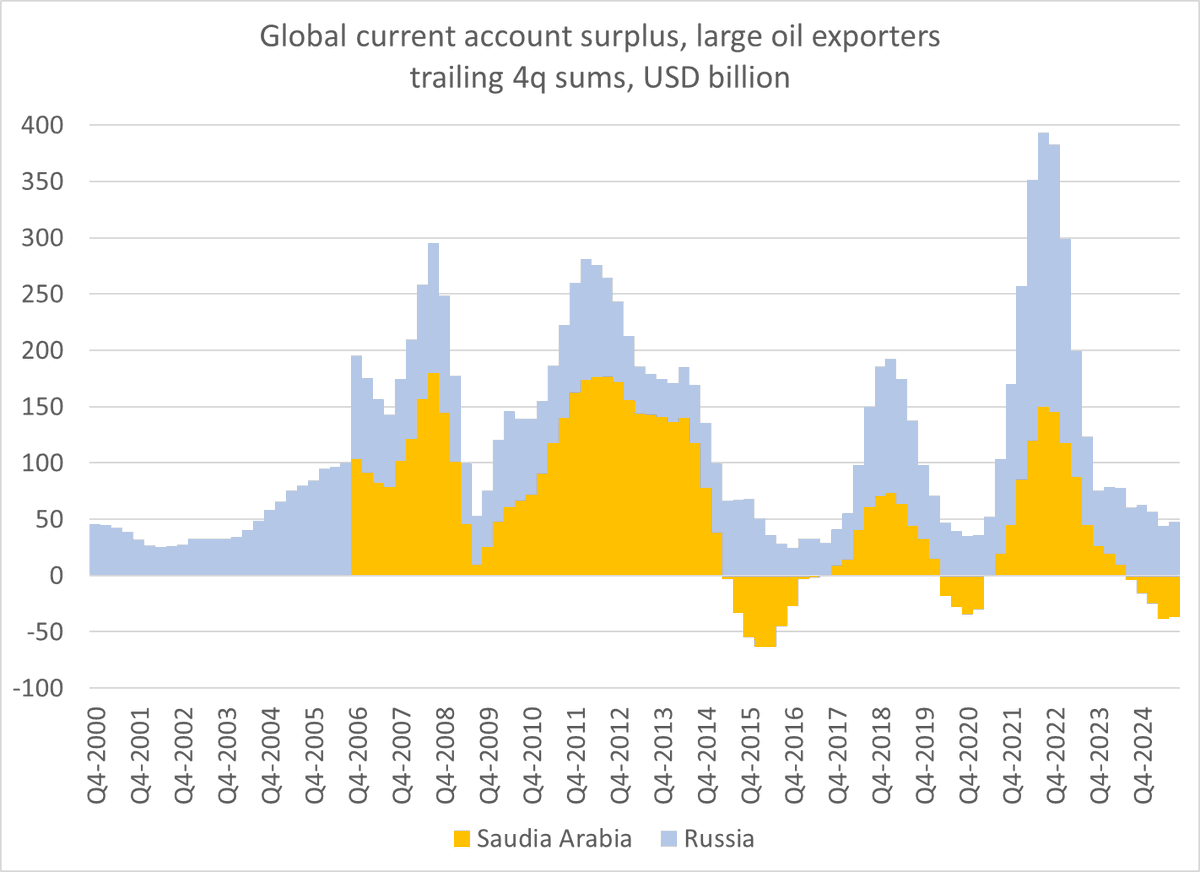
But here is the most important thing to know. Before the Hormuz crisis, the flow of petrodollars had more or less dried up
1/many
At $60-70 a barrel, the oil exporters just weren't generating large surpluses --
Saudi Arabia's external deficit offset Russia's surplus, so the two biggest oil exporters (~ 15mbd of exports together) were not generating petrodollars, petroeuros or petroyuan
2/
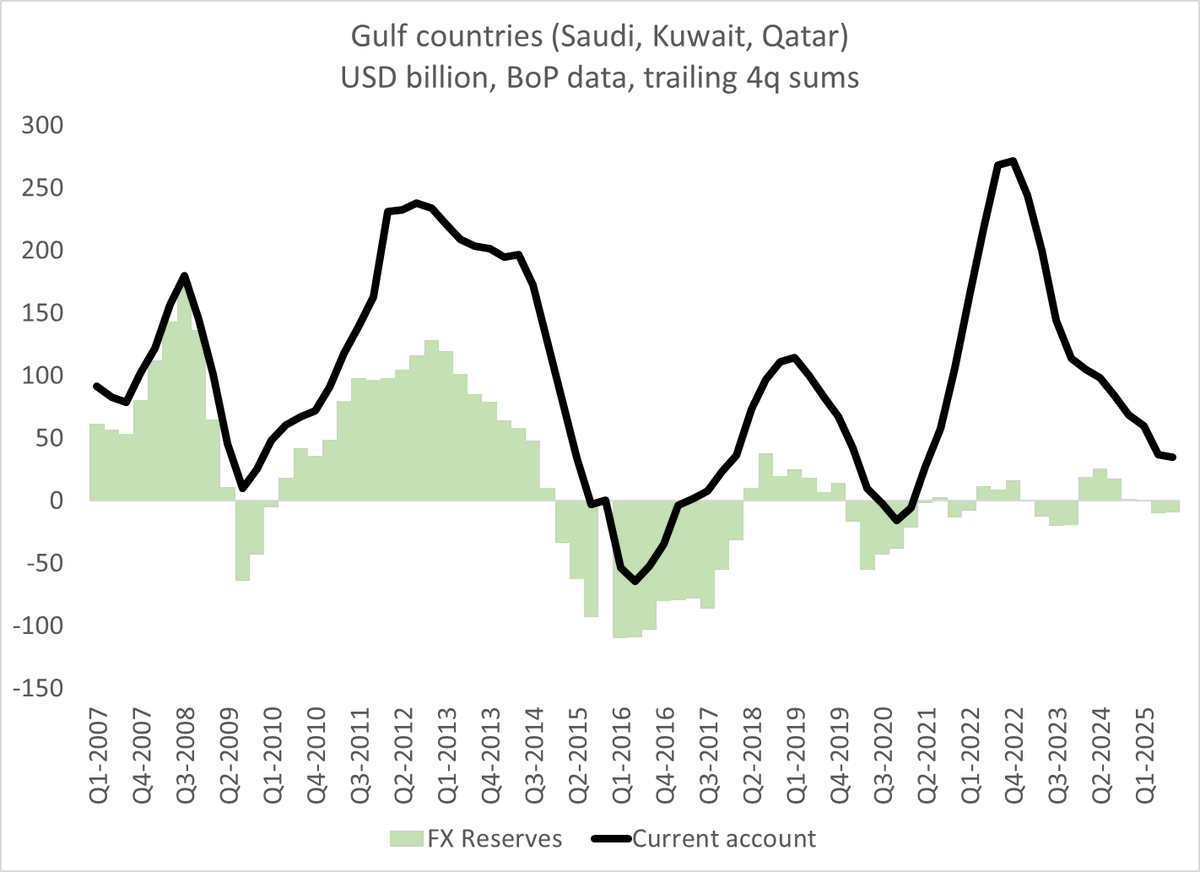
And the GCC countries (no quarterly data for the Emirates, but its surplus is roughly the size of Qatar and Kuwait combined) no longer really stash away their oil surplus in liquid dollar reserves --
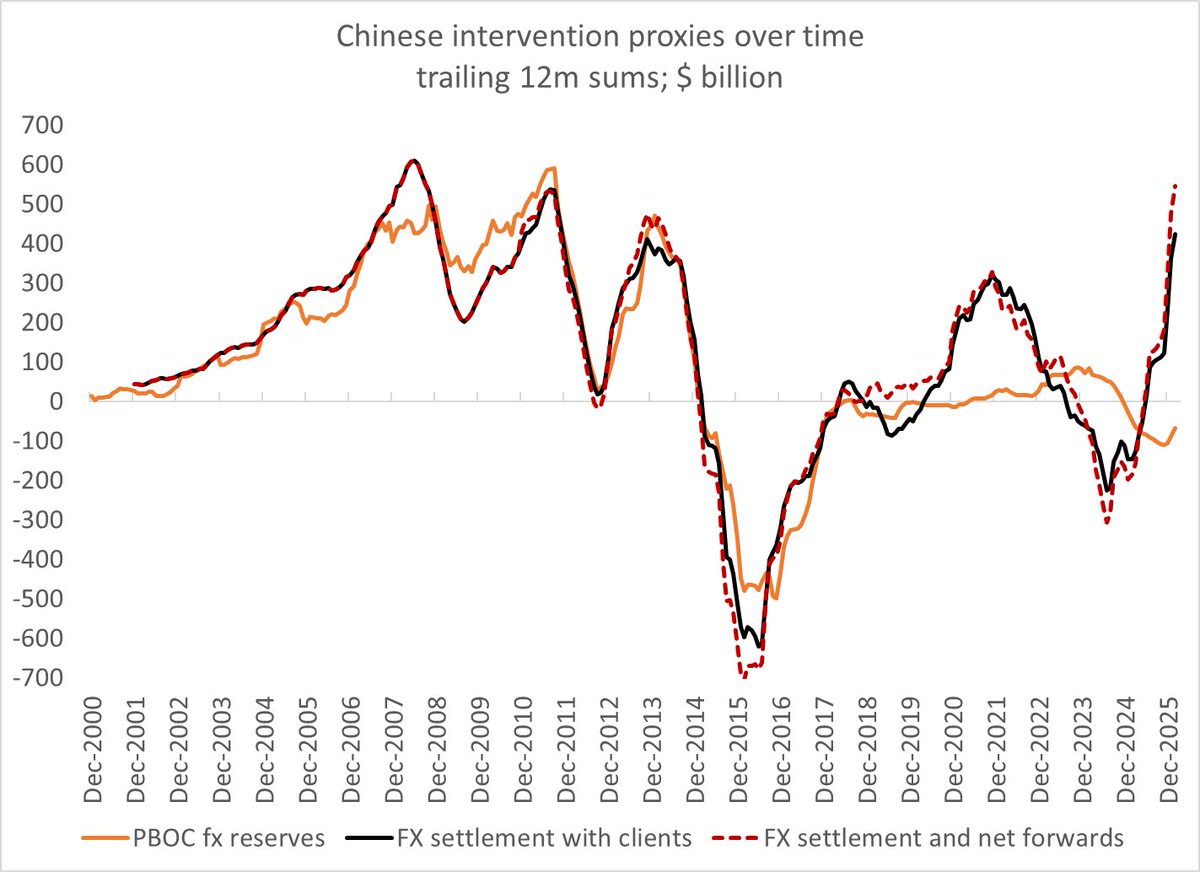
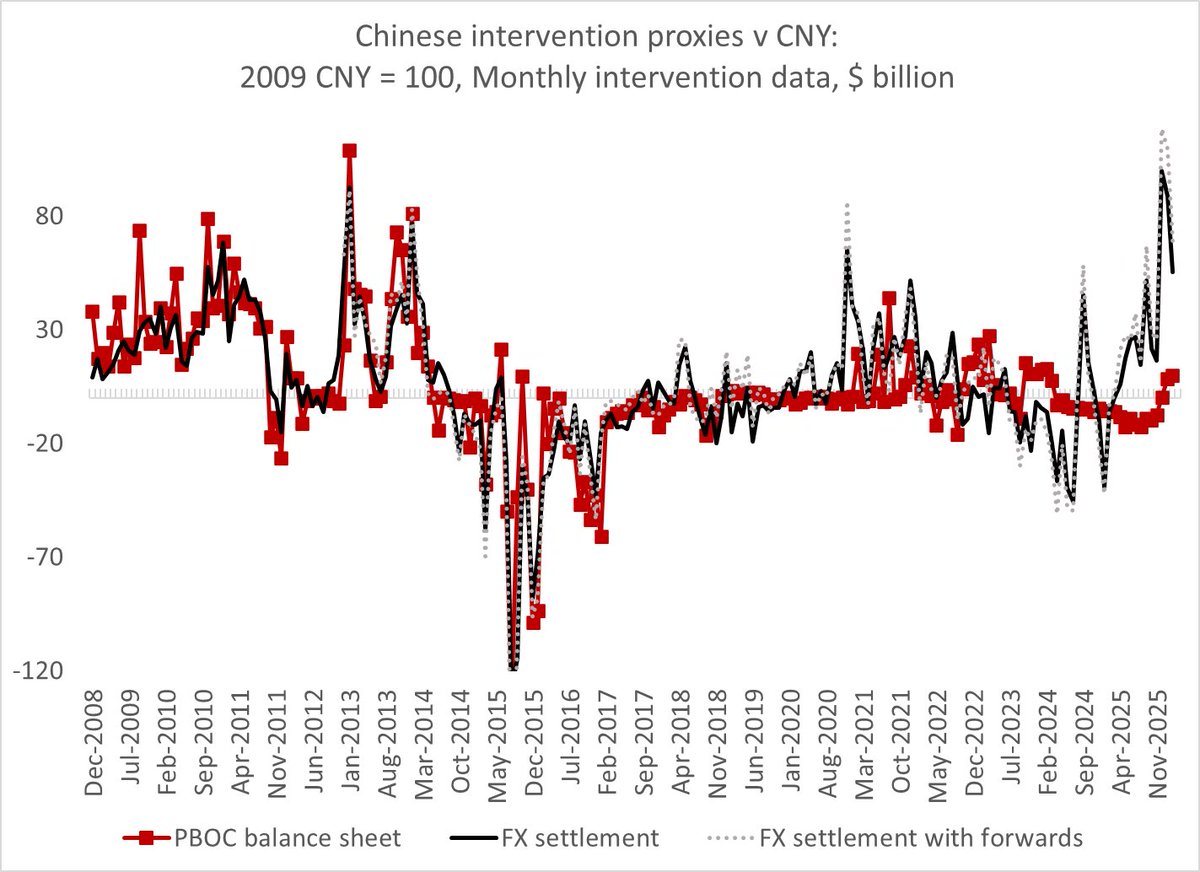
Back before the bombardment of Iran, China's currency was under considerable appreciation pressure -- the settlement data showed $70b in fx purchases by the PBOC/ SCBs ($840b annualized). A huge sum for a holiday month ...
1/
Over the last 12ms of data, settlement (my preferred intervention measure) shows purchases of $500-600b ... or more than enough to trigger the Treasury "manipulation" thresholds
2/
And for whatever reason, in both January and February a small fraction of that total (~$10b) did show up on the balance sheet of the PBOC -- so it isn't all flowing through the state banks right now (tho most of the flow is still via the state banks)