In my new piece in The New York Times today, I argue the Iran war has reached a point Washington still refuses to say out loud:
either the U.S. escalates to a ground war—or Iran emerges as a new center of global power.
Think about—what stops this future?
nytimes.com/2026/04/06/opi…
either the U.S. escalates to a ground war—or Iran emerges as a new center of global power.
Think about—what stops this future?
nytimes.com/2026/04/06/opi…
This is not about personalities
It’s a structural problem building since 2002, when Iran’s nuclear program shifted the conflict from political to military
Once large-scale strikes begin, escalation follows a logic of its own
It’s a structural problem building since 2002, when Iran’s nuclear program shifted the conflict from political to military
Once large-scale strikes begin, escalation follows a logic of its own
The administration’s strategy is not irrational:
--limited force
--signal resolve
--avoid ground war
--create leverage
The problem is the assumption underneath it:
that escalation can be controlled
History says otherwise
--limited force
--signal resolve
--avoid ground war
--create leverage
The problem is the assumption underneath it:
that escalation can be controlled
History says otherwise
Iran’s power isn’t changing because of new capability
It’s changing because of geography and opportunity
The U.S. struck first on Feb 28
Now Iran’s moves are seen globally as response—not aggression.
That reshapes world reaction to Iran's growing power
It’s changing because of geography and opportunity
The U.S. struck first on Feb 28
Now Iran’s moves are seen globally as response—not aggression.
That reshapes world reaction to Iran's growing power
That’s why Hormuz matters
Iran doesn’t need to close it
It needs to make it unpredictable
~20% of global oil flows through that chokepoint.
If risk rises, everything changes—prices, insurance, state behavior -- many bandwagoning, not balancing
Iran doesn’t need to close it
It needs to make it unpredictable
~20% of global oil flows through that chokepoint.
If risk rises, everything changes—prices, insurance, state behavior -- many bandwagoning, not balancing
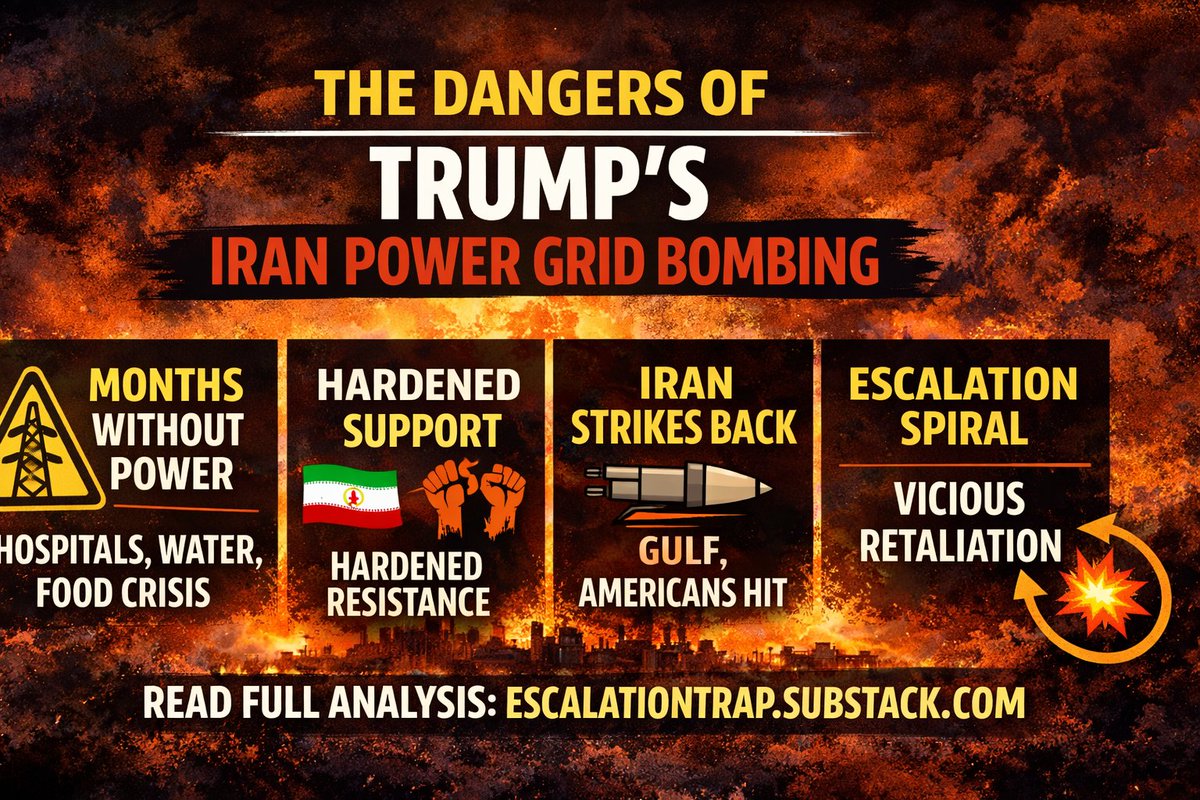
Even proposals now being discussed—like massive strikes on Iran’s infrastructure—don’t solve this
They impose major harm on civilians
expand retaliation across the Gulf
and deepen global blame on Washington
That strengthens Iran’s position—not weakens it
They impose major harm on civilians
expand retaliation across the Gulf
and deepen global blame on Washington
That strengthens Iran’s position—not weakens it
This is the Escalation Trap
Initial strikes don’t resolve the conflict—they expand it
The U.S. now faces a narrowing choice:
--escalate to restore control
or accept a new balance of power
The answer may determine whether the world economy goes over a cliff
Initial strikes don’t resolve the conflict—they expand it
The U.S. now faces a narrowing choice:
--escalate to restore control
or accept a new balance of power
The answer may determine whether the world economy goes over a cliff
• • •
Missing some Tweet in this thread? You can try to
force a refresh