1/ Many scenarios for the end of the Iran war suggest that Tehran will gain permanent control of the Strait of Hormuz. An analysis by JP Morgan suggests that Tehran could raise up to $90 billion a year this way, instantly making Iran one of the wealthiest Gulf economies. ⬇️
2/ Iran’s parliamentary National Security and Foreign Policy Committee recently approved an eight-point "Strait of Hormuz Management Plan" that codifies the so-called 'Tehran Tollbooth' into Iranian law.
3/ Michael Cembalest of JP Morgan writes in a new briefing paper for subscribers that under this new plan, "Iran proposes to charge 100 – 130 vessels per day $2 mm each, which would amount to $70 – $90 bn per year in revenues (!!)"
4/ He notes that even if it was only a one-off charge of $2 million each to let the 2,000 to 3,000 commercial vessels currently stranded in the Gulf depart, Iran would still raise $4- $6 billion.
5/ Even this lower tier would equal or exceed the annual revenues of all other major canals and waterways around the world. If the full toll plan went into effect it would exceed their combined revenues seven to nine times over.
6/ Given the scale of the war damage and the need for money to rebuild, it's hard to see Iran resisting this temptation. Bloomberg's Middle East Economist Dina Esfandiary says that "Iran probably did not expect its Hormuz strategy to be this successful…
7/ …the lesson Iran has learned from this war is that holding the global economy hostage is cheaper and easier than anticipated."
8/ It's virtually certain that Iran would spend much of its newfound income on rearming itself to deter future attacks. The war could ultimately result – if it is not repeated – in Iran becoming one of the richest and most powerful countries in the region. /end
Source:
"Eye on the Market". JP Morgan, April 6, 2026
• • •
Missing some Tweet in this thread? You can try to
force a refresh

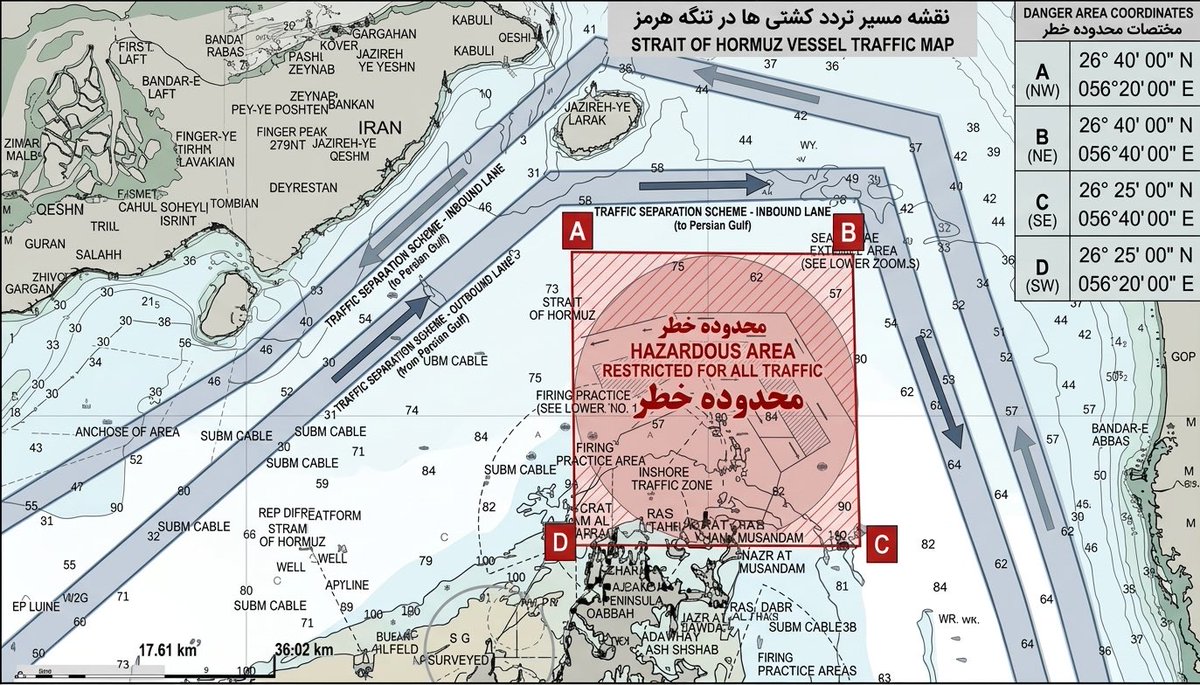
1/ The Iranian Republican Guard Corps (IRGC) Navy has published a map showing the 'new' shipping lanes for vessels passing through the Strait of Hormuz. However, what it shows greatly increases the risk of future shipping disasters in the Persian Gulf. ⬇️
2/ The Strait of Hormuz is only 33–39 km (20-24 mi) wide at its narrowest point, but its usable width is far narrower. The shipping lanes in the middle of the Strait pass through a 9 km-wide (5 mi) stretch of the deepest water, comprising two 3 km wide lanes with a 3 km gap.
3/ Iran is currently diverting ships around Larak island to the north of the existing shipping lanes, through the so-called 'Tehran Tollbooth'. However, this has a major problem: the water between Larak and Qeshm is only 20 m deep, far too shallow for fully loaded oil tankers.
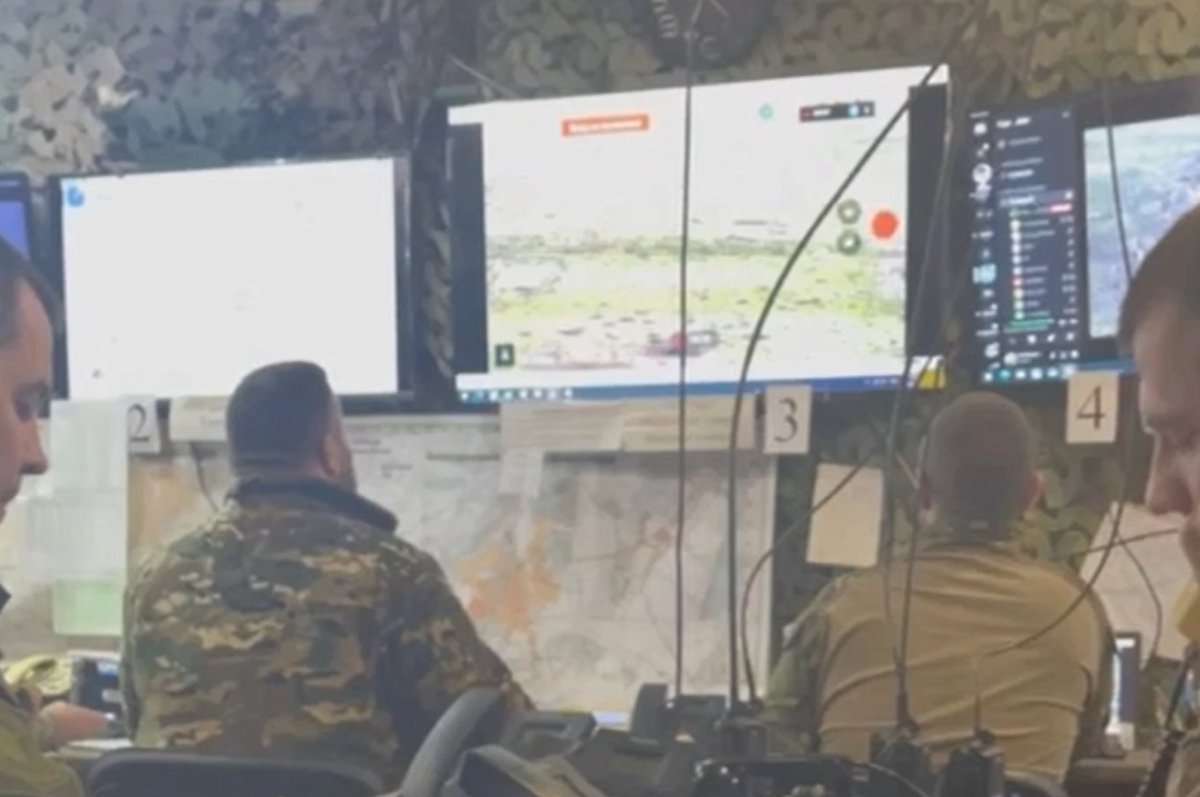
1/ This continues Russian drone developer Alexey Chadayev's analysis of the state of Russia's drone warfare; see the links below for parts 1 and 2. In this part, he assesses the crucial role of communications systems in drone control. ⬇️
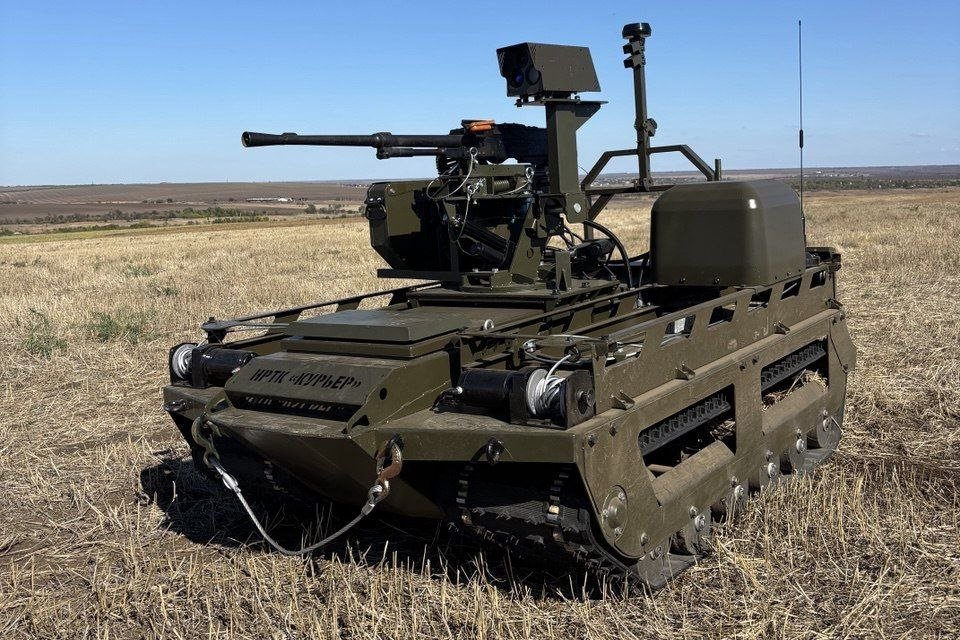
1/ This continues Russian drone developer Alexey Chadayev's analysis of the state of Russia's drone warfare; see the link below for part 1. In this part, he assesses problems with unmanned ground vehicles (UGVs) which have become acute since Russia lost access to Starlink. ⬇️
There's an interesting picture here: the enemy is increasing their use, while we're decreasing it. And it's not because we're physically short of them—they're sitting in warehouses by the thousands.
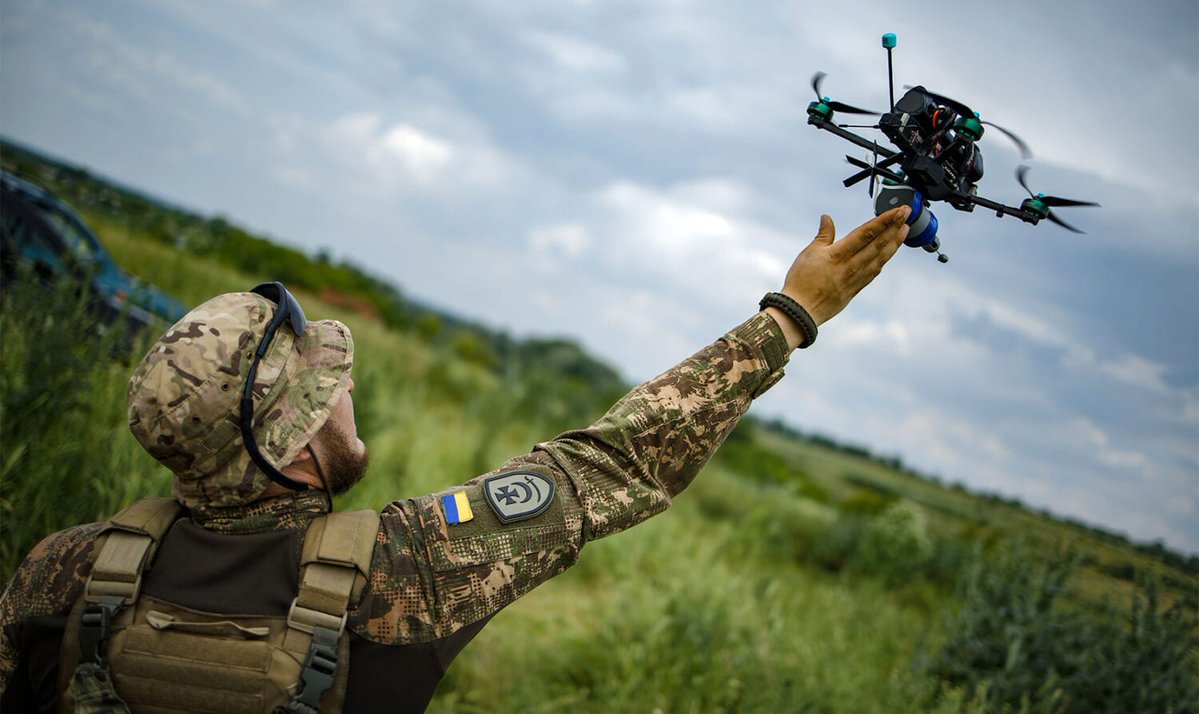
1/ Russian drone developer Alexey Chadayev has posted a lengthy and detailed description of what is going wrong for Russia in the drone warfare arms race, where he admits that it has fallen badly behind Ukraine, with lethal consequences for the Russian army. ⬇️
2/ Chadayev is the head of the Ushkuynik Research and Production Centre, a leading Russian drone development organisation. He is a key organiser in the 'People's Military-Industrial Complex', a loose coalition of voluntary groups which provides the army with equipment.
3/ He asks:
"1. How exactly has Ukraine regained its lost leadership in the "small sky" over the past six months?
1/ Igor 'Strelkov' Girkin reflects the views of many Russian commentators today in declaring Donald Trump's apparent climbdown over Iran to be a huge fiasco. He argues that "US authority will now be greatly undermined, and Trump's authority even more so." ⬇️
2/ News of the ceasefire in the Gulf has made its way very quickly to the special prison for jailed former security officials where Girkin has been held since January 2024. He also hasn't wasted any time in responding on his Telegram channel:
3/ "To say I'm shocked to the core—no, I'm not. In fact, deep down, I suspected the possibility of such a U-turn. The shouting and threats leading up to the behind-the-scenes agreement were too theatrical.
1/ Russia's current efforts to advance are getting nowhere due to endless swarms of Ukrainian drones, says the head of the Novorossiya Aid Coordination Centre. He suggest that instead, Russia should 'temporarily' bank its gains and go on the defensive. ⬇️
"Now it's important to take a very realistic assessment of the situation as of April 2026 and determine what we need to do in the near future to achieve Victory.
The most important factors in this situation are:"
3/ "▪️The fatigue of our troops, due to the lack of long-term rotations and many other reasons, is becoming a critical factor of strategic significance!!!
▪️The enemy achieved considerable success in destroying our air defences in February and March.