1/ Russian drone developer Alexey Chadayev has posted a lengthy and detailed description of what is going wrong for Russia in the drone warfare arms race, where he admits that it has fallen badly behind Ukraine, with lethal consequences for the Russian army. ⬇️ 
2/ Chadayev is the head of the Ushkuynik Research and Production Centre, a leading Russian drone development organisation. He is a key organiser in the 'People's Military-Industrial Complex', a loose coalition of voluntary groups which provides the army with equipment.
3/ He asks:
"1. How exactly has Ukraine regained its lost leadership in the "small sky" over the past six months?
"1. How exactly has Ukraine regained its lost leadership in the "small sky" over the past six months?
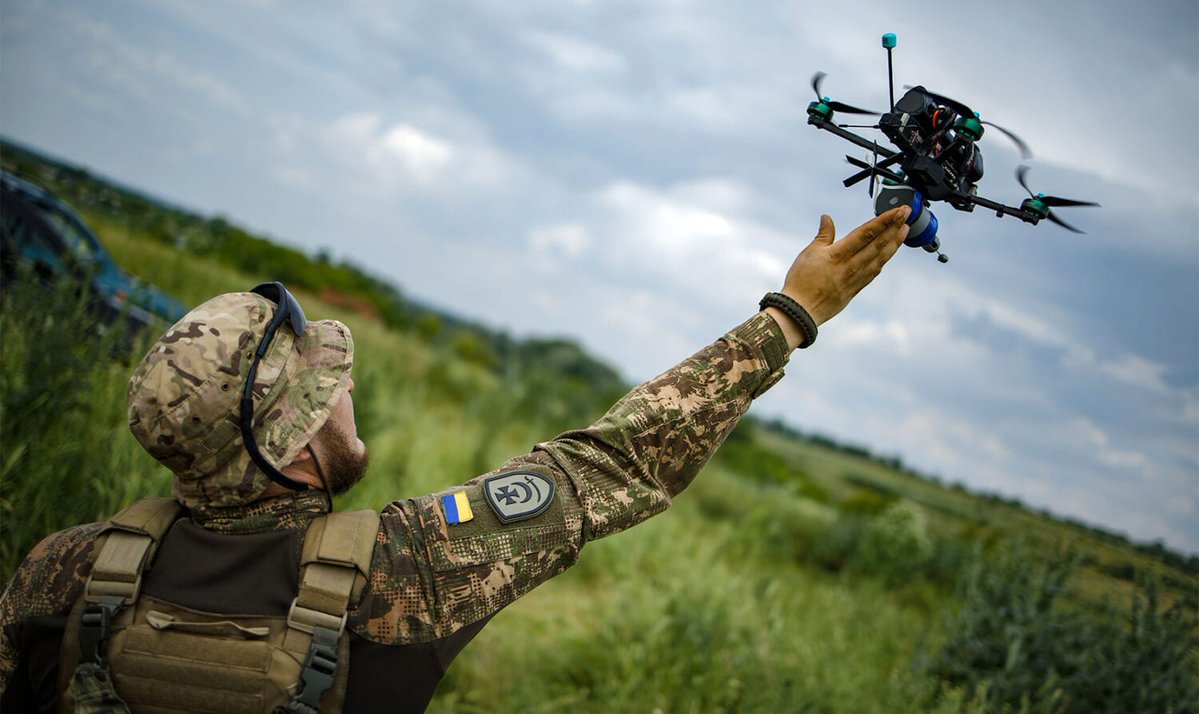
4/ "...Firstly, there has been another exponential increase (2.5 times compared to the beginning of winter) in the number of tactical attack drones used; secondly, a sharp increase in their effective range…
5/ …(2.5-3 times further than the maximum range of our mass-produced fibre-optic drones); and thirdly, the widespread use of drones with auto-guidance (operating without communication with an operator).
6/ "What's happening in our country? We've also increased production, but not as much. However, the effectiveness of their use is declining—one in 7-8 targets reach their targets with optical guidance, and one in 50 with radio guidance. The reasons are:
7/ "Firstly, there are simply no significant targets left within the effective range of both. It's a lunar landscape. Enemy formations begin beyond 20 km, and their vehicles barely even reach the front line, remaining deep within.
8/ "The remaining poor souls are sitting in the forward strongpoints, awaiting their destruction, but for each such unfortunate, we pay the price by exposing our positions and returning fire at the launch sites, operators and communications.
9/ "Secondly, our aerial reconnaissance capabilities have fallen far behind those of our strike aircraft. We have few wings, and they are shot down en masse by FPV air defenses, while Mavics simply don't reach their target (their limit is 10 km).
10/ "Therefore, operating under surveillance has become almost impossible.The only remaining tactic is ambush tactics, in which drone losses are three times higher and growing, as the enemy has implemented a number of effective countermeasures against "waiting drones"…
11/ …(most of them are detected and destroyed by FPV drones on the ground).
Thirdly, we have enormous problems with last-mile logistics. Up to 90% of our losses are currently concentrated there.
Thirdly, we have enormous problems with last-mile logistics. Up to 90% of our losses are currently concentrated there.
https://x.com/GrandpaRoy2/status/1926731536465805404
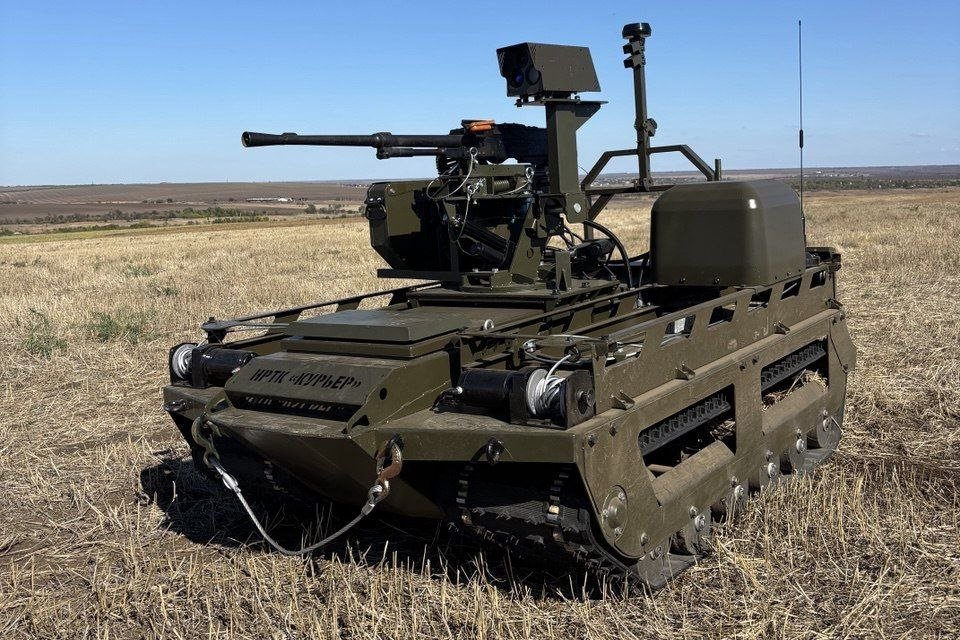
12/ "This means that even delivering our drones to the launch point is a gamble, no matter how: by ground robots (20% of all deliveries), on foot (40%), by motorcycles or quadcopters (another 30%), or by cargo drones (10%).
13/ "All methods are vulnerable, and in each scenario we suffer losses.
Why did this happen?
Why did this happen?
14/ "The fundamental reason is that our leaders, at the end of last year, practically believed victory was imminent, believing they'd found a "superiority factor" and investing in it at a stage when it was already becoming technologically obsolete ("last season's fads").
15/ "The predictive function of what and how the enemy would do tomorrow failed (the main underlying reason is a preference for proven solutions over experimental ones in procurement policy, due to fear of liability).
16/ "As a result, we'll have to play catch-up again. Is this even possible? Yes. But first, we need to recognize the problem, and this is once again becoming difficult due to the falsification of reports to the top.
17/ "In this sense, I think we need to start with the practical implementation of the proposition "it's okay to make mistakes, but it's not okay to lie," which has been proclaimed but not implemented."
[To be continued in part 2]
[To be continued in part 2]
• • •
Missing some Tweet in this thread? You can try to
force a refresh