1/ Russia is proclaiming success in its ongoing recruitment drive, but this is being achieved by scraping the bottom of the barrel. A newly-published video shows the abysmal quality of the current recruits: old, disabled, and homeless men, with only two fingers between them. ⬇️
2/ The video shows three newly recruited men in Omsk. Despite having severe physical disabilities, all three are recognised as medically fit for military service at a selection point called Sirius. They have signed a contract and will be sent to Ukraine.
3/ It was filmed at an office of the 1442nd Motorized Rifle Regiment (military unit 95383) of the 6th Motorized Rifle Division (military unit 77860) of the 3rd Army Corps (military unit 41794).
4/ The men include 58-year-old Maxim Petrovich Beregovoy and 49-year-old Anvar Atabaevich Khasanov, who have only two fingers between them. Beregovoy, who is homeless, has none, and Khasanov has lost eight. It's not clear how they are expected to be able to use weapons or tools.
5/ The third newly arrived soldier, Alexander Vladimirovich, has a pronounced speech impediment. This is a typical symptom of a serious neurological condition – from his appearance, most likely caused by chronic alcoholism.
6/ Alexander Romanov comments sarcastically:
"Russian Defence Minister Belousov, who allowed himself to be mistaken, said:
'The recruitment of contract servicemen for the Russian Armed Forces is ahead of schedule.'"
7/ "The footage shows the reason for this 'advancement.'
And the author observes this 'quality' of recruitment systematically."
8/ The video illustrates the widespread phenomenon of grossly unfit men being accepted for service in the Russian army. This is a long-standing issue that Russian warbloggers have often complained about, as they have little or no military utility.
9/ Their acceptance is the result of a series of scams which end up costing the state a lot of money. Corrupt police officers often pick up and 'sell' socially marginalised individuals to army recruitment offices, gaining a cash bonus from doing so.
10/ The office staff sign up anyone they can to meet quotas, whether or not they are fit to serve. It also gives them the opportunity to steal the recruit's enlistment bonus and salary.
11/ The Ministry of Defence is happy to accept them, because it means it can report to Putin that it has met its recruitment targets.
12/ The people it doesn't work for are frontline commanders, who are saddled with recruits who are useless – and the recruits themselves, whom the commanders often send to their deaths in order to get rid of them. /end
1/ Simply using a 💩 emoji on the state-mandated Russian messenger app MAX is enough to result in a user being convicted and fined, or potentially even imprisoned. A recent court case highlights how the app is blatantly being used as an instrument of repression. ⬇️
2/ The District Court of Rostov-on-Don has imposed a fine of 30,000 rubles ($387) on a man named Sergey Nikolaevich Korovayny. As the court's decision states:
3/ "On DD. MM. YYYY, S. N. Korovayny, registered and residing at: <address> -on- FULL NAME2 , <address> , a member of the common chat of the above-mentioned apartment building,…
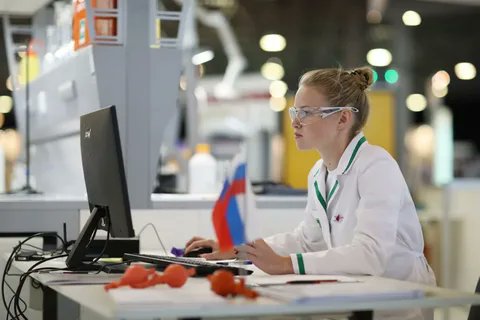
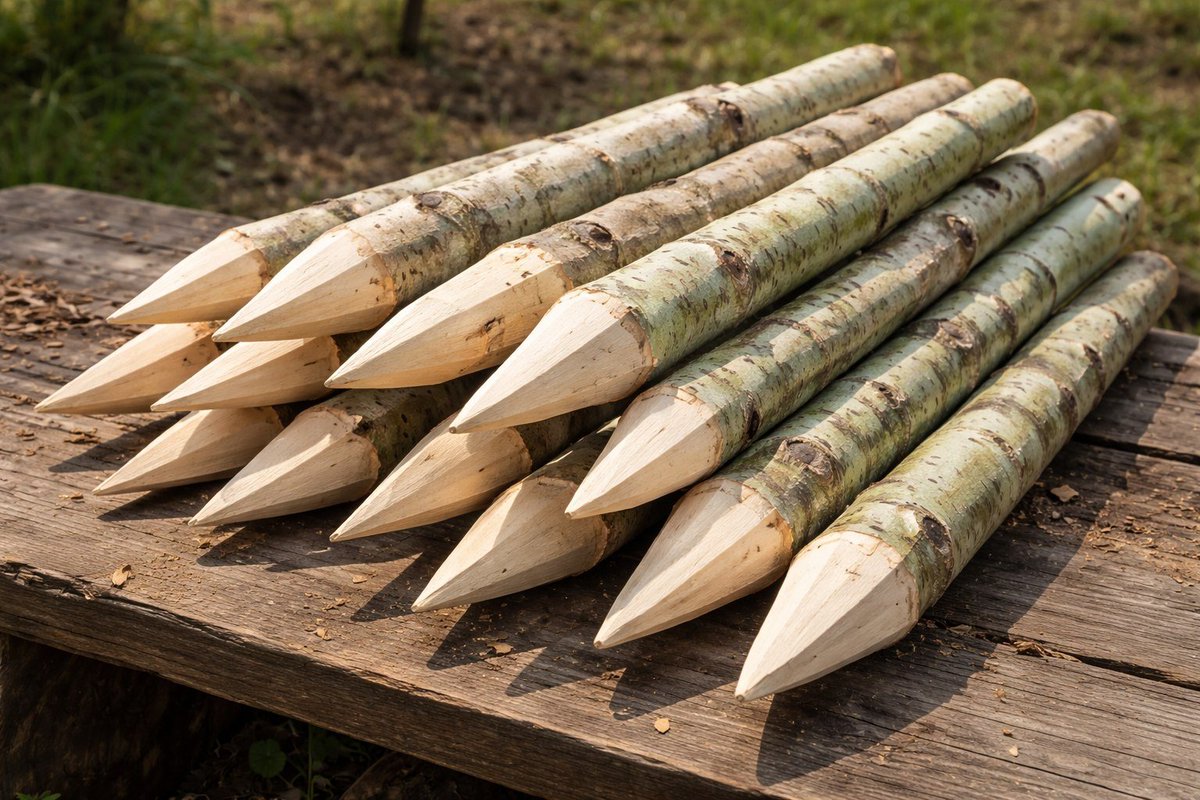
1/ Russia's ongoing budget crisis, caused by the war in Ukraine, has caused government funding of science to fall to its lowest level since the chaotic mid-1990s. Meanwhile, ordinary Russians are increasingly investing in magic amulets and aspen stakes to drive away vampires. ⬇️
2/ The National Research University's Higher School of Economics (HSE) has published its annual 'Science Indicators' yearbook. It shows that domestic expenditure on research and development in Russia has fallen to 0.97% of GDP, its lowest level since 1996.
3/ This is lower than the R&D funding levels of Malaysia (1.01% of GDP), Egypt (1.03%), and Lithuania (1.05%). It is also far lower than the levels of Israel, which ranks first in the world in terms of R&D funding (6.35% of GDP), South Korea (4.96%), and Taiwan (3.97%).
1/ A very interesting interview with Donbas separatist Pavel Gubarev is being interpreted by Russian warbloggers as a move by 'angry patriots' to lay the ground for a coup in Russia. They see a potential replay of the 1918 overthrow of Tsar Nicholas II. ⬇️
2/ The interview is notable not only for its revealing admissions about Russia's seizure of the Donbas in 2014, which Russian nationalists refer to as 'the Russian Spring', but for its choice of venue.
3/ Yuri Dud, to whom Gubarev spoke, is a German-born Russian journalist and YouTuber who now lives in exile. He has been labelled a 'foreign agent' by the Russian government and was sentenced in absentia to 23 months' imprisonment in November 2025.
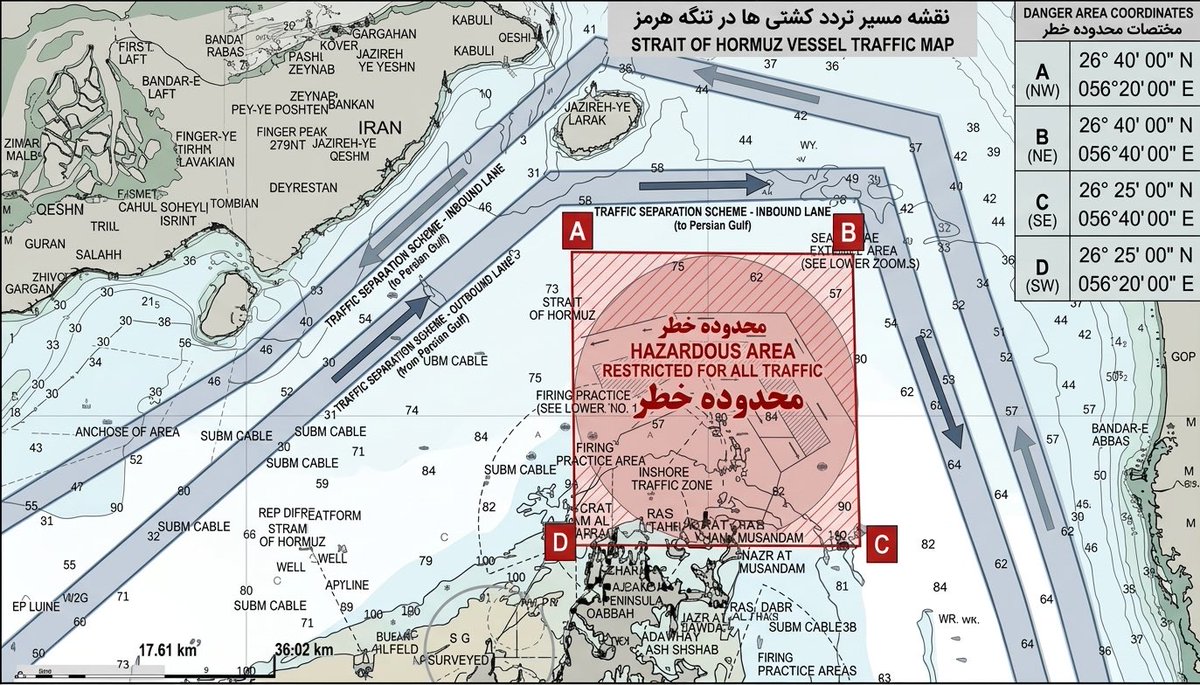
1/ The Iranian Republican Guard Corps (IRGC) Navy has published a map showing the 'new' shipping lanes for vessels passing through the Strait of Hormuz. However, what it shows greatly increases the risk of future shipping disasters in the Persian Gulf. ⬇️
2/ The Strait of Hormuz is only 33–39 km (20-24 mi) wide at its narrowest point, but its usable width is far narrower. The shipping lanes in the middle of the Strait pass through a 9 km-wide (5 mi) stretch of the deepest water, comprising two 3 km wide lanes with a 3 km gap.
3/ Iran is currently diverting ships around Larak island to the north of the existing shipping lanes, through the so-called 'Tehran Tollbooth'. However, this has a major problem: the water between Larak and Qeshm is only 20 m deep, far too shallow for fully loaded oil tankers.
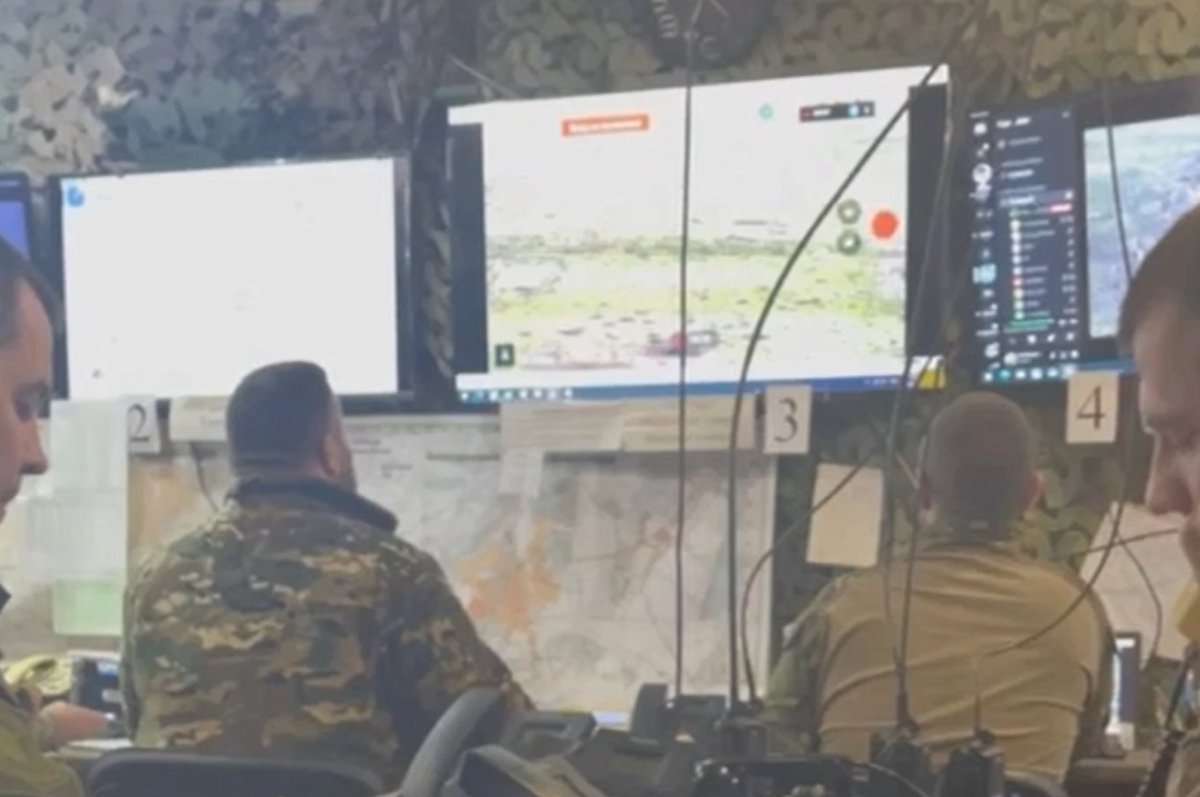
1/ This continues Russian drone developer Alexey Chadayev's analysis of the state of Russia's drone warfare; see the links below for parts 1 and 2. In this part, he assesses the crucial role of communications systems in drone control. ⬇️
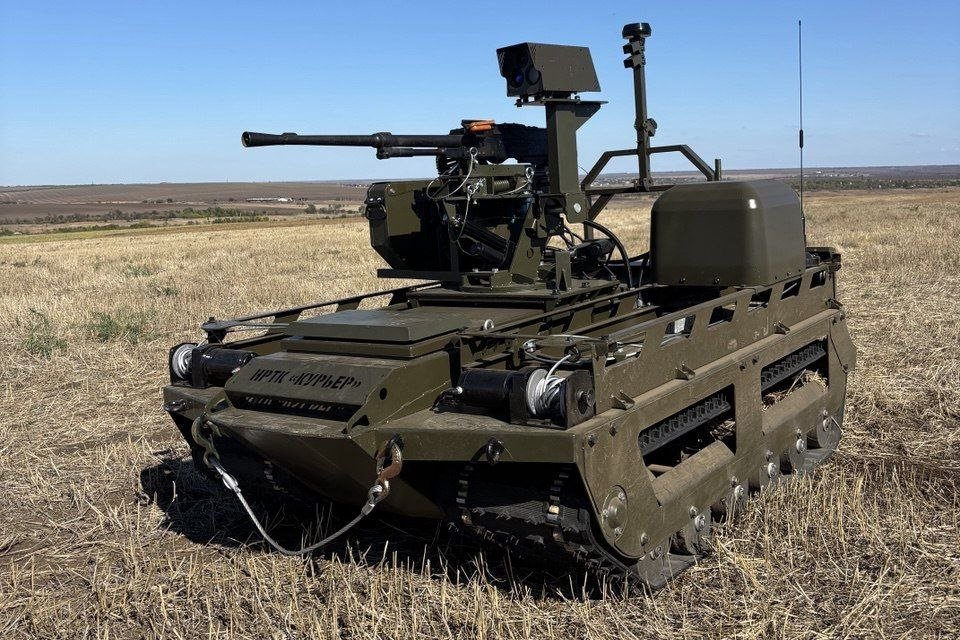
1/ This continues Russian drone developer Alexey Chadayev's analysis of the state of Russia's drone warfare; see the link below for part 1. In this part, he assesses problems with unmanned ground vehicles (UGVs) which have become acute since Russia lost access to Starlink. ⬇️
There's an interesting picture here: the enemy is increasing their use, while we're decreasing it. And it's not because we're physically short of them—they're sitting in warehouses by the thousands.