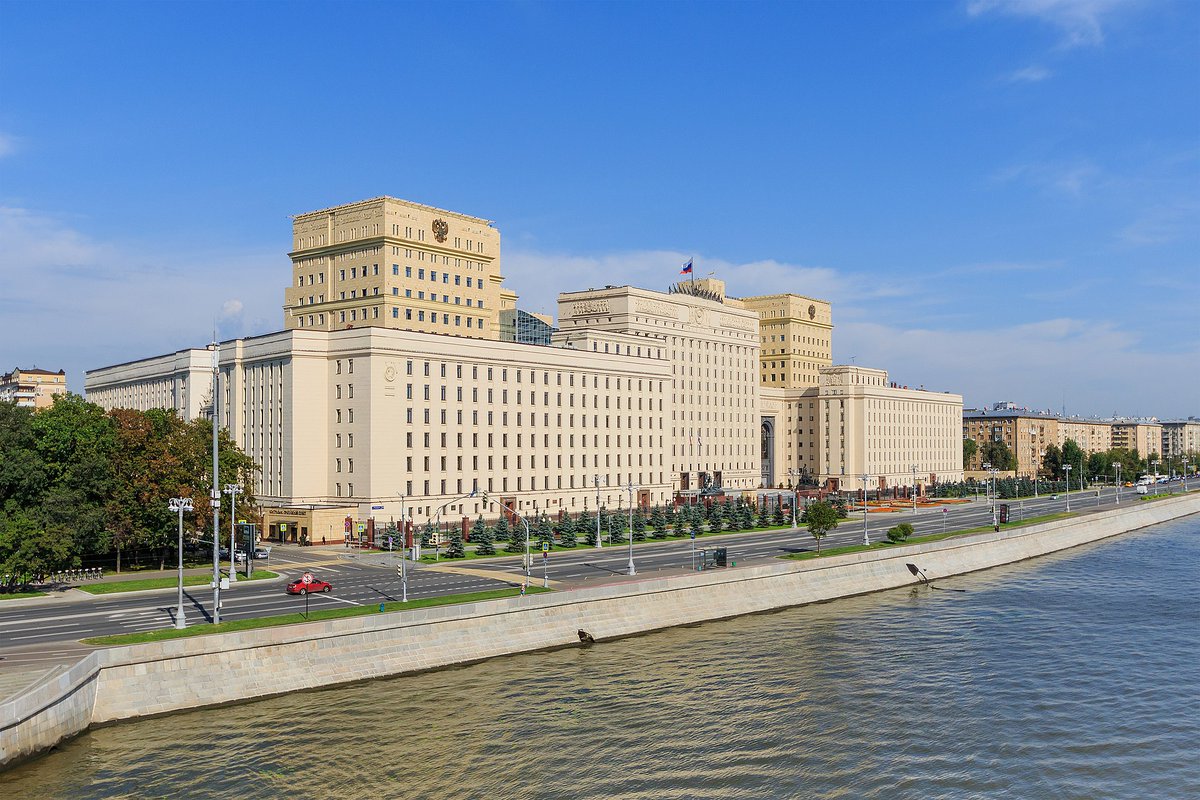
1/ Russia's ongoing budget crisis, caused by the war in Ukraine, has caused government funding of science to fall to its lowest level since the chaotic mid-1990s. Meanwhile, ordinary Russians are increasingly investing in magic amulets and aspen stakes to drive away vampires. ⬇️ 

2/ The National Research University's Higher School of Economics (HSE) has published its annual 'Science Indicators' yearbook. It shows that domestic expenditure on research and development in Russia has fallen to 0.97% of GDP, its lowest level since 1996.
3/ This is lower than the R&D funding levels of Malaysia (1.01% of GDP), Egypt (1.03%), and Lithuania (1.05%). It is also far lower than the levels of Israel, which ranks first in the world in terms of R&D funding (6.35% of GDP), South Korea (4.96%), and Taiwan (3.97%).
4/ Russia is also well behind Sweden, the United States, Japan, Belgium, Austria, Switzerland, Germany, Finland, Denmark, and the United Kingdom, all of which provide a level of government R&D funding ranging from 2.6% to 3.5% of GDP.
5/ As of 2024, the HSE reports, Russia's research expenditure amounts to 1.944 trillion rubles ($25.2 billion), of which approximately 36% – 716 billion rubles ($9.2 billion) – is contributed by the federal budget.
6/ Government spending on civilian science has fallen to 0.36% of GDP, the lowest level in at least the last 15 years. It stood at 0.47% of GDP in the year before the full-scale invasion of Ukraine, but has plummeted since.
7/ This has taken a heavy toll on Russian universities and scientists, many of whom have fled abroad to escape political repression and declining funding levels. According to Leiden University, no Russian university is now in the global top 100 for reseach output.
8/ Lomonosov Moscow State University is the highest-ranking Russian university by this measure, but is still only in 227th place. It has fallen 29 places down the rankings compared to 2021.
9/ The total number of publications by Russian scientists in Scopus-indexed journals has fallen to its lowest level since 2017. In 2024, they submitted 100,900 articles, reviews, and reports—9,000 (8%) fewer than the previous year and 31,000 (24%) fewer than in 2021.
10/ Similarly, the HSE reports that Russia's share of global scientific publications has nearly halved since the start of the full-scale invasion. Losses have been notably severe in fields where Russia has traditionally been among the leaders.
11/ The shares across key fields have fallen from 7.81% to 4.01% in the physical sciences, from 4.86% to 2.01% in mathematics, from 4% to 2.9%, and from 3.42% to 1.49% in electronics, electronic engineering, and IT.
12/ The number of inventions created in Russia since the start of the full-scale war has also fallen by 25%, falling to its lowest levels since the 2000s.
In 2024, 21,608 patents were issued in Russia – 1,800 fewer than the previous year and 7,100 fewer than in 2020.
In 2024, 21,608 patents were issued in Russia – 1,800 fewer than the previous year and 7,100 fewer than in 2020.
13/ Russian scientists have traditionally ranked as leaders in terms of mathematics and physics publications, but here too there has been a sharp fall. In terms of publications in mathematics and physics, Russia has fallen to 7th and 8th places globally.
14/ Even as science has declined, anti-science and superstition have flourished in wartime Russia.
The HSE reports that an increasing percentage of Russian citizens – currently standing at 10% – believes that the Sun revolves around the Earth, not vice versa.
The HSE reports that an increasing percentage of Russian citizens – currently standing at 10% – believes that the Sun revolves around the Earth, not vice versa.
15/ 18% of respondents don't know about the movement of continents, and about 30% don't understand the ratio of the sizes of an electron and an atom. Another 43% believe that radiation is artificial and "created as a result of human activity."
16/ The number of people who believe that antibiotics only work against viruses has almost doubled to nearly 50% between 2011 and 2024, while 40% believe that only genetically modified vegetables contain genes.
17/ The public perception of science has fallen significantly, with the number of those who consider scientific knowledge "necessary" in everyday life falling from 43% in 2014 to 35% in 2023–2024.
18/ A survey by the Russian pollster VTsIOM has found a rapidly increasing level of belief in the supernatural. This has frequently been exploited by charlatans and scammers seeking to exploit the desperation of the relatives of missing soldiers.
19/ About two-thirds of Russians accept the existence of higher powers and saints. More than half believe in spirits and patron deities, and one in two believes in domovoi (house spirits) and clairvoyants.
20/ One in three Russians believes in wood spirits, and one in five in mermaids. More than a third have resorted to fortune telling, one in four uses amulets and charms, and one in seven has consulted healers or priests.
21/ Esoteric goods are becoming increasingly popular, with demand for them increasing by 50% year-on-year in 2025. Amulets were the most popular, with demand for them increasing by 120% in 2025, along with crystal balls, voodoo dolls, and runes (up an average 54%).
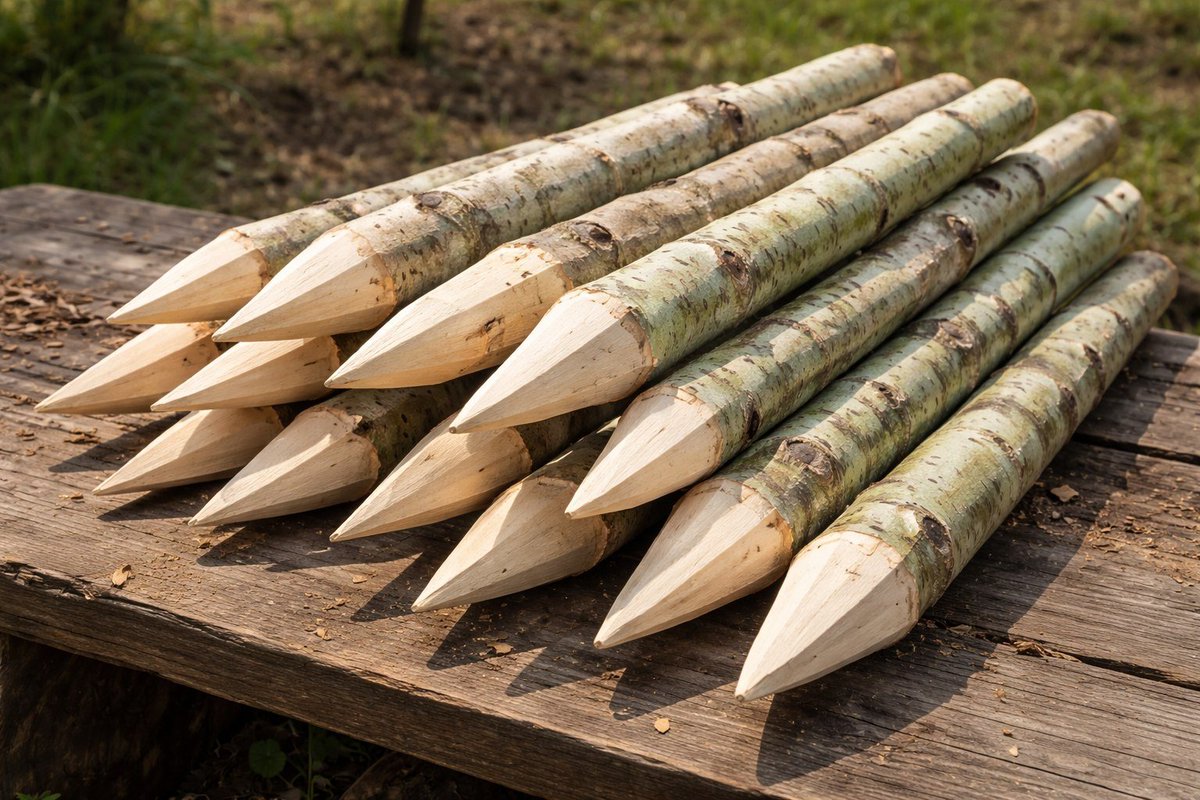
22/ Interest in aspen stakes has increased even more, seeing a 300% jump. These are traditionally used as a protective tool against evil forces, particularly vampires, sorcerers, witches, and other "unclean" or restless dead. They sell for an average 333 rubles ($4.32) each. /end
Sources:
🔹 ru.themoscowtimes.com/2026/04/09/ros…
🔹 ru.themoscowtimes.com/2026/04/09/kaz…
🔹 t.me/moscowtimes_ru…
🔹 ru.themoscowtimes.com/2026/04/09/ros…
🔹 ru.themoscowtimes.com/2026/04/09/kaz…
🔹 t.me/moscowtimes_ru…
• • •
Missing some Tweet in this thread? You can try to
force a refresh