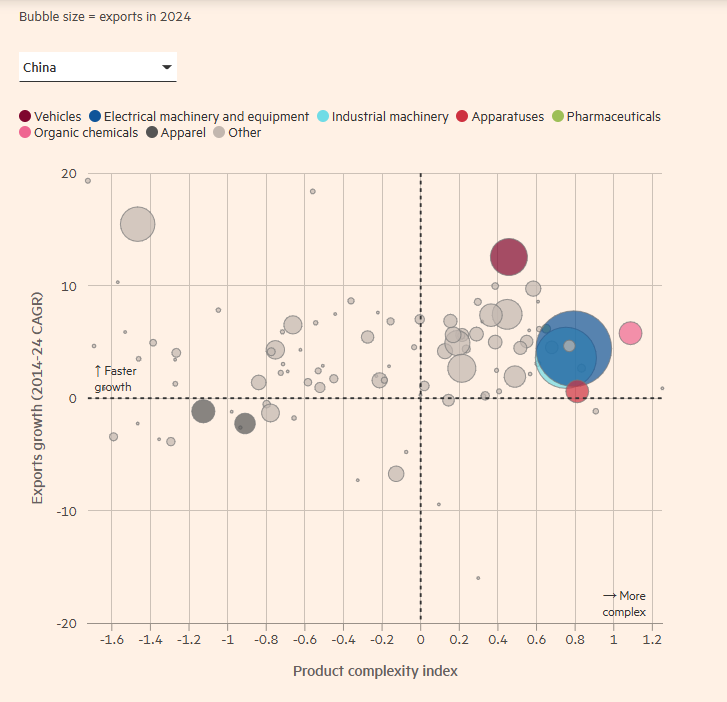
"The country’s protracted property slump and weak social safety net have curbed consumer spending, resulting in zero inflation last year and an increasing reliance on external demand to prop up growth."
yep
3/
Well said
4/
Great detail
"In just one example, China’s Jaecoo 7 SUV, with a starting price of £29,000, became the UK’s best-selling car in March"
5/
Great policy maker quotes
6/
Grest former policy maker quotes
7/
Great use of data -- backed by ple ty of supporting anecdotes
8/
One of the best Big Reads of all time --
The thing to read to understand why the undeclared war with Iran cannot take the second China shock out of the newspapers/ why imbalances are back of the G7 agenda
Joe Gagnon (@GagnonMacro) should take a victory lap; the IMF has conceded intervention does have a real impact --
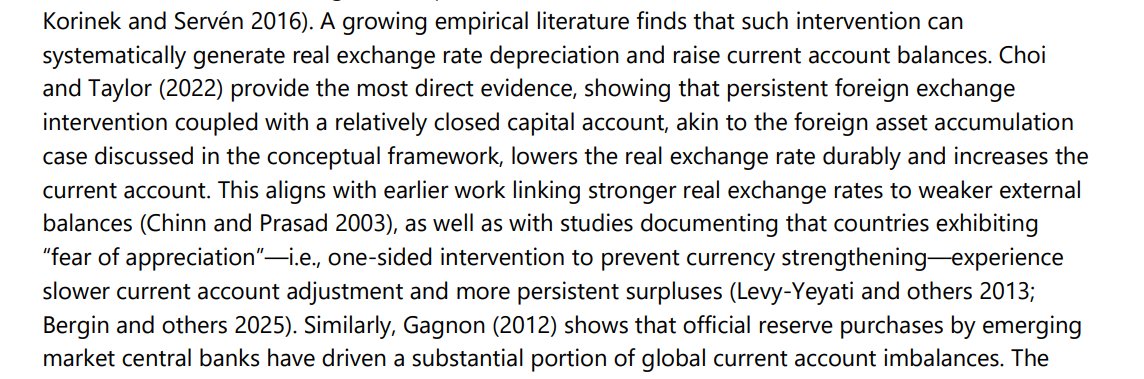
"A growing empirical literature finds that such intervention can systematically generate real exchange rate depreciation and raise current account balances"
1/
I also take a bit of satisfaction in this conclusion; it explains why I have been systematically tracking official asset accumulation for close to 20 years!
2/
The next step is for the IMF to rethink how intervention & official asset accumulation enters into its current account model. The current variable only uses formal central bank intervention & interacts it "optimal" v realized capital controls. So it has no practical impact
3/
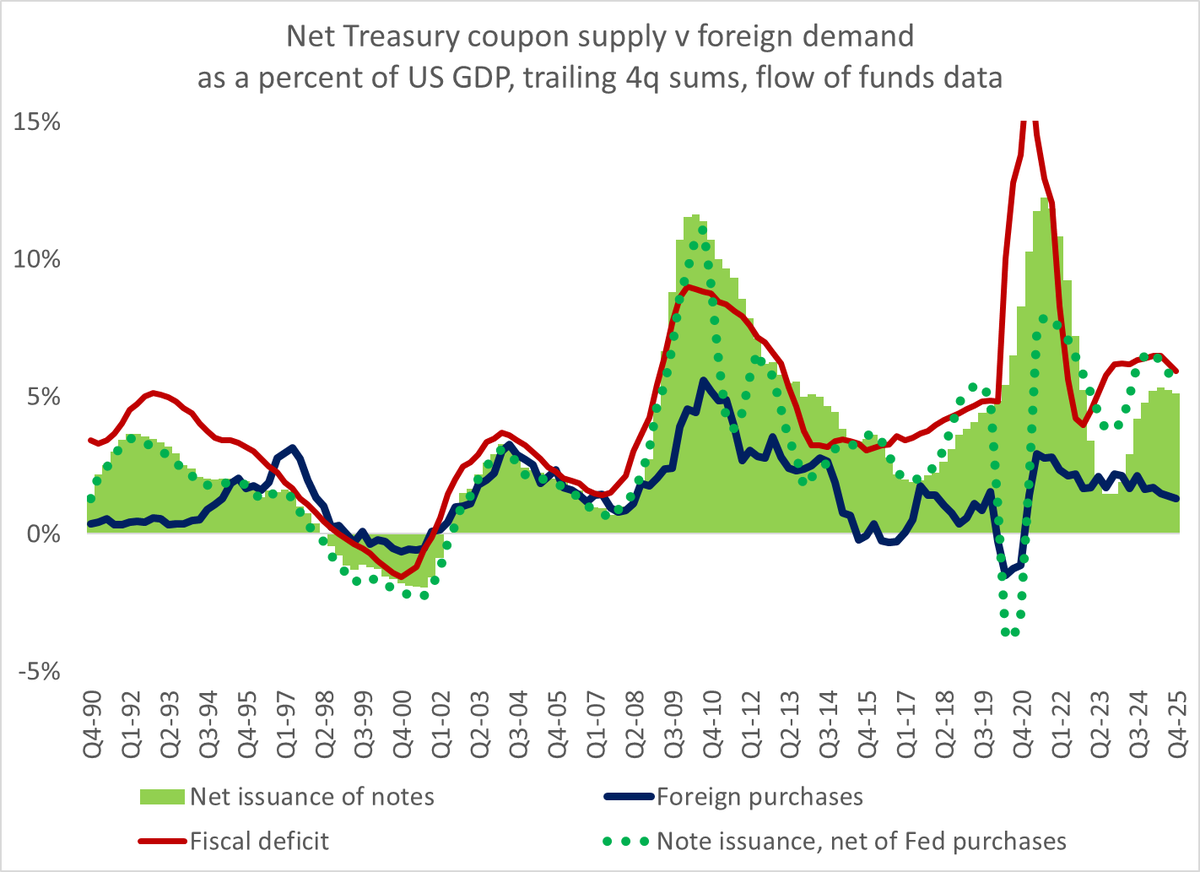
Before the global financial crisis, in 06 and 07, the US fiscal deficit was under 2 percent of GDP and note issuance was under 1 pp of GDP in 07. That was also the time of peak reserve accumulation
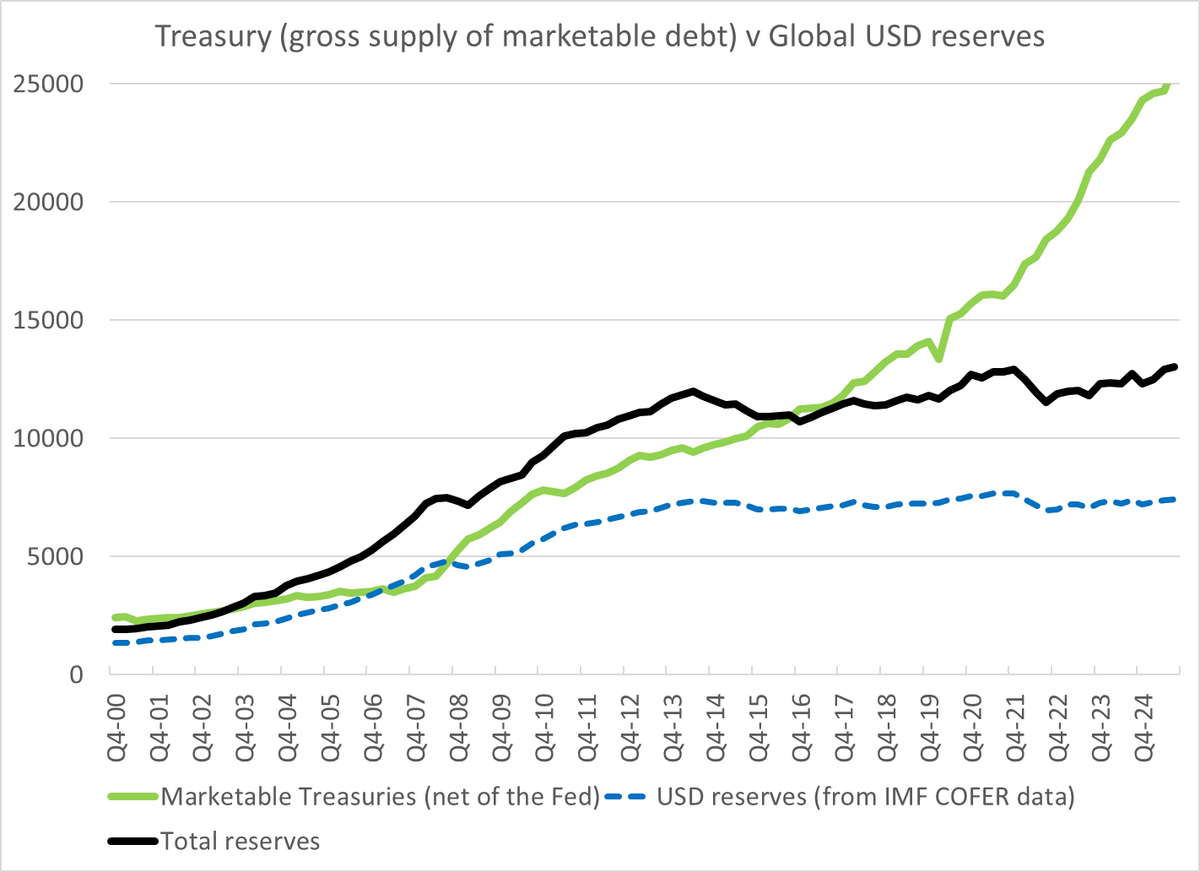
The low level of US fiscal deficit prior to the global crisis + the small stock of Treasury debt prior to the crisis, especially relative to reserves, are 2 things that many have forgotten; constantly surprised by folks who think US fiscal was an pre crisis issue
2/
So I would posit two things --
a) US real rates would be substantially lower with the current "glut" of Asian manufacturing dollars if the US fiscal deficit was 1-2% of GDP v 5-6% of GDP; the swing in the fiscal deficit/ stock of Treasuries are important omitted variables 3/
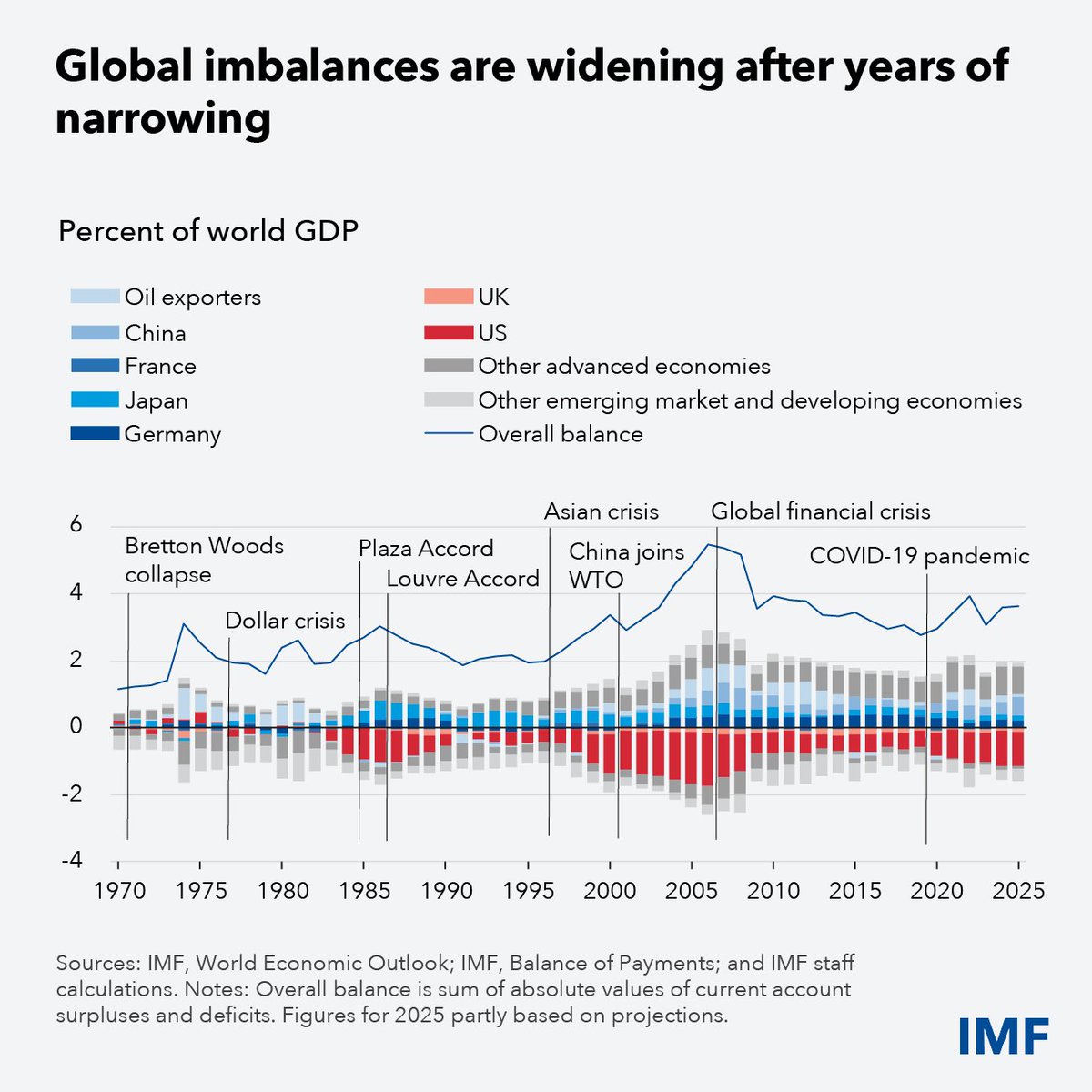
Happy to see the IMF has noticed the expansion of global current account imbalances --
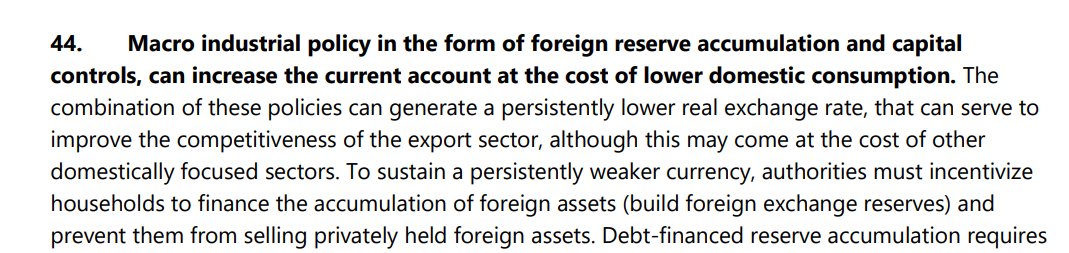
And guess what, the IMF seems to have rediscovered the idea that currency manipulation can drive imbalances (though manipulation has been renamed "macro-industrial policy" ... )
1/ many
The IMF doesn't find that "micro" industrial policy has a big impact on global imbalances, only economy wide "macro-industrial policies"
2/
"An example of such a policy is an export-led growth strategy operationalized through a combination of real exchange rate depreciation and enforced low domestic demand" --
that sounds a lot like foreign exchange rate intervention to me (Welcome to the club, @pogourinchas)
"The problem is there was never enough cash to fund all his [Crown Prince MBS] ambitious initiatives."
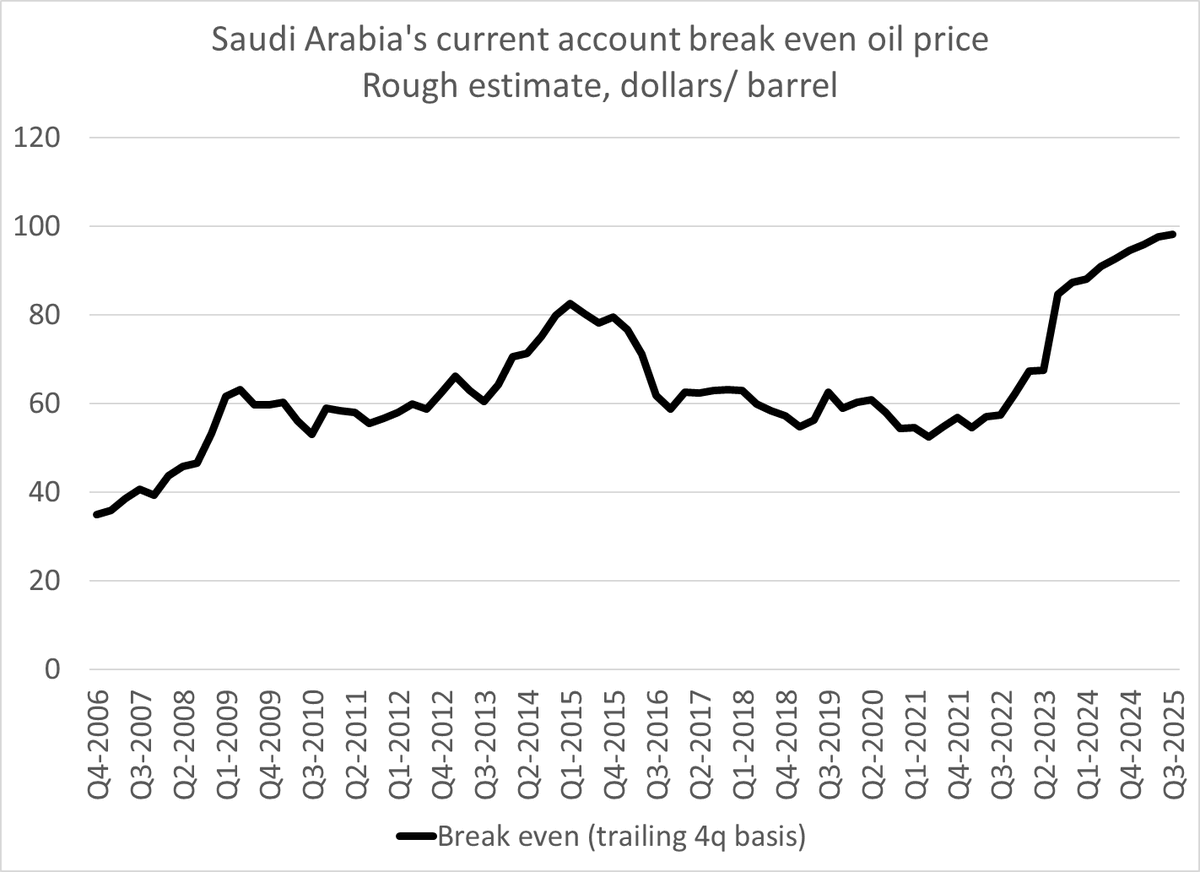
Indeed. That's why measures lie the balance of payments breakeven are useful. The Saudis needed $90 plus oil -- or near unlimited access to debt financing
1/
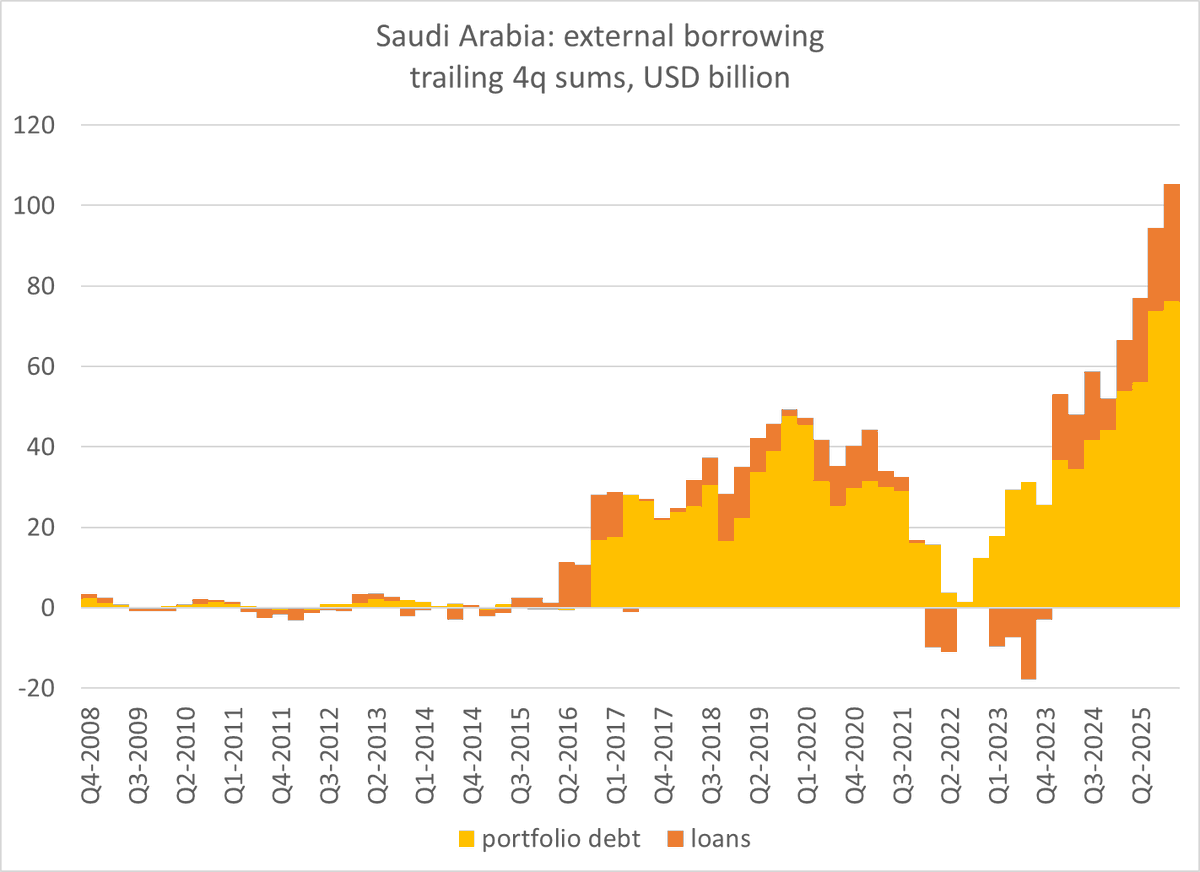
Going into the current conflict, the Saudis were borrowing $100b a year from the rest of the world (that's a form of reverse petrodollars so to speak)
2/
"The country’s projects ran into the trillions of dollars—far more than a government with a $300 billion annual budget could afford."
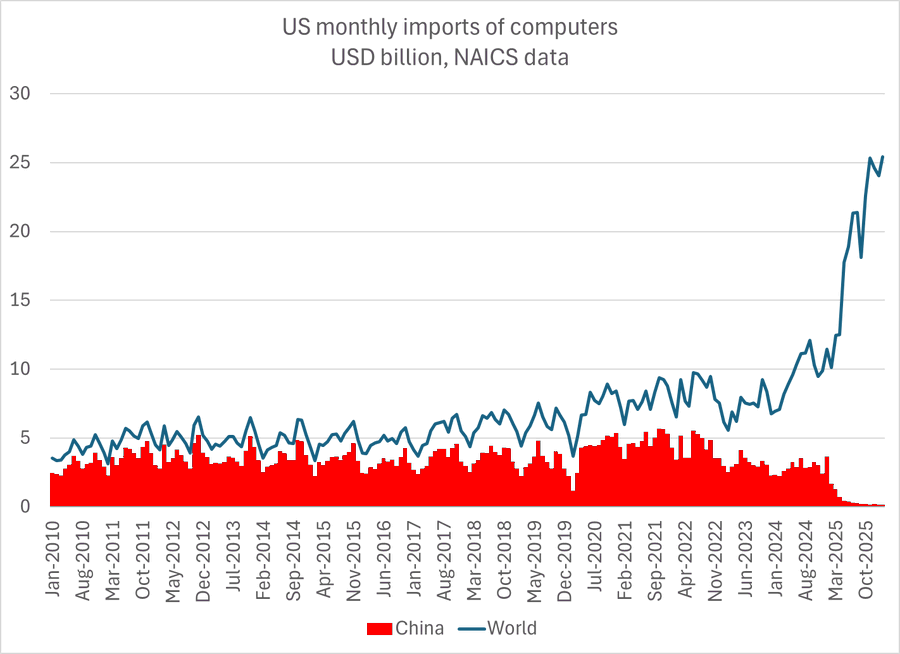
Imports of computers are up massively (tho not from China) and show no sign of slowing down -- that will mechanically pull the true trade deficit (setting gold flows aside) w/o a big sustained fall in other imports
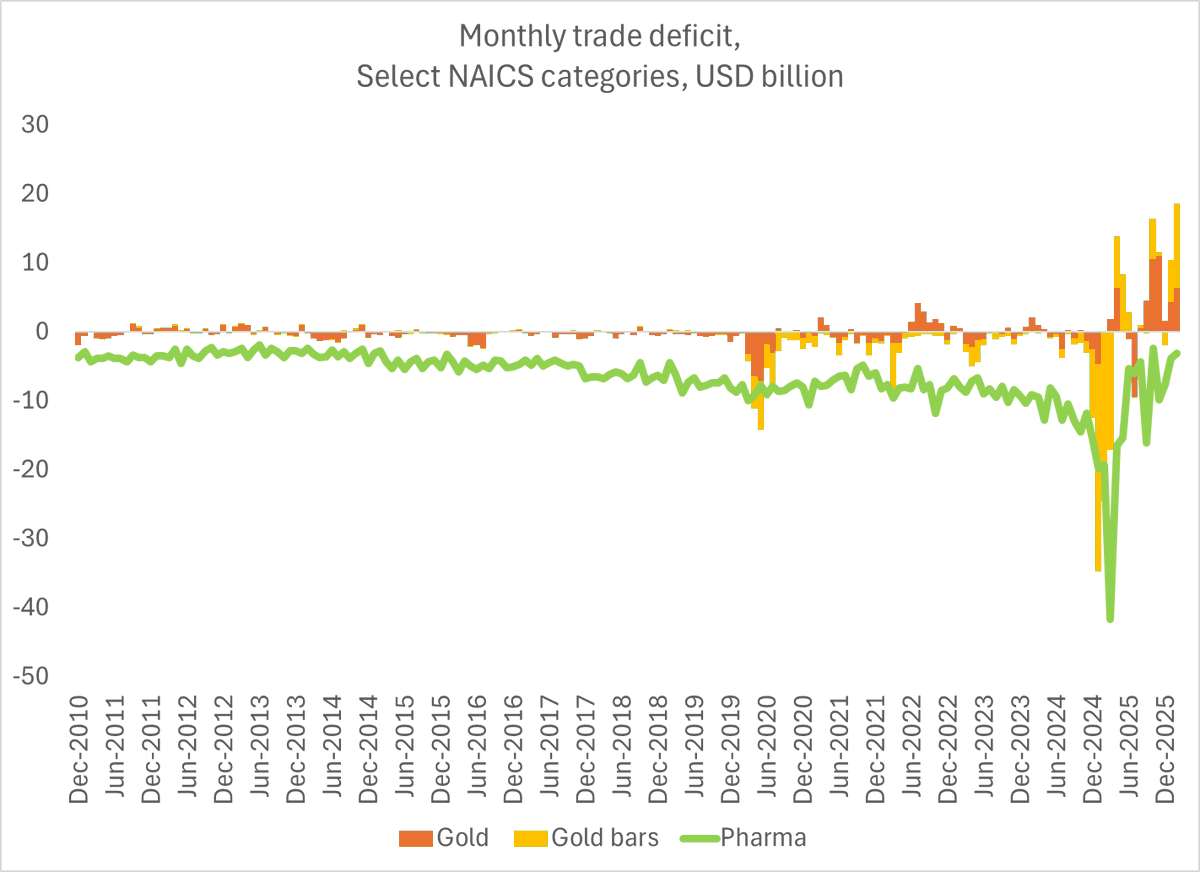
Pharma/ Irish imports have been weak for a few months now -- probably unwinding front running but I also wonder if the tariff threat led some companies to "unbundle" pricing at the border, & lower their declared import price while charging more for the IP separately
A thread on the February 2026 trade data, with some answers and some questions --
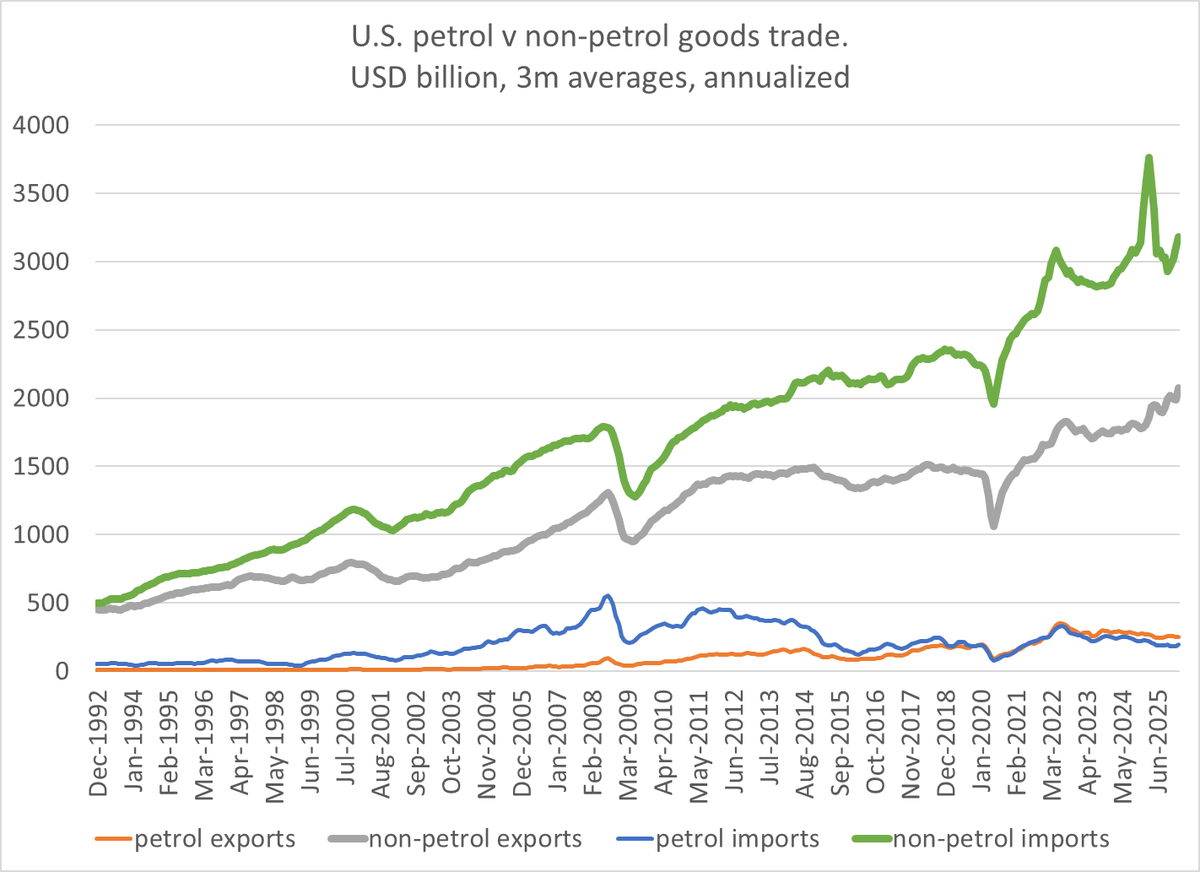
Both nominal imports and nominal exports (ex petrol) are growing again -- with surprising strength in nominal exports and nominal imports back at their end Biden administration levels
1/
I think I know why nominal exports look so strong --
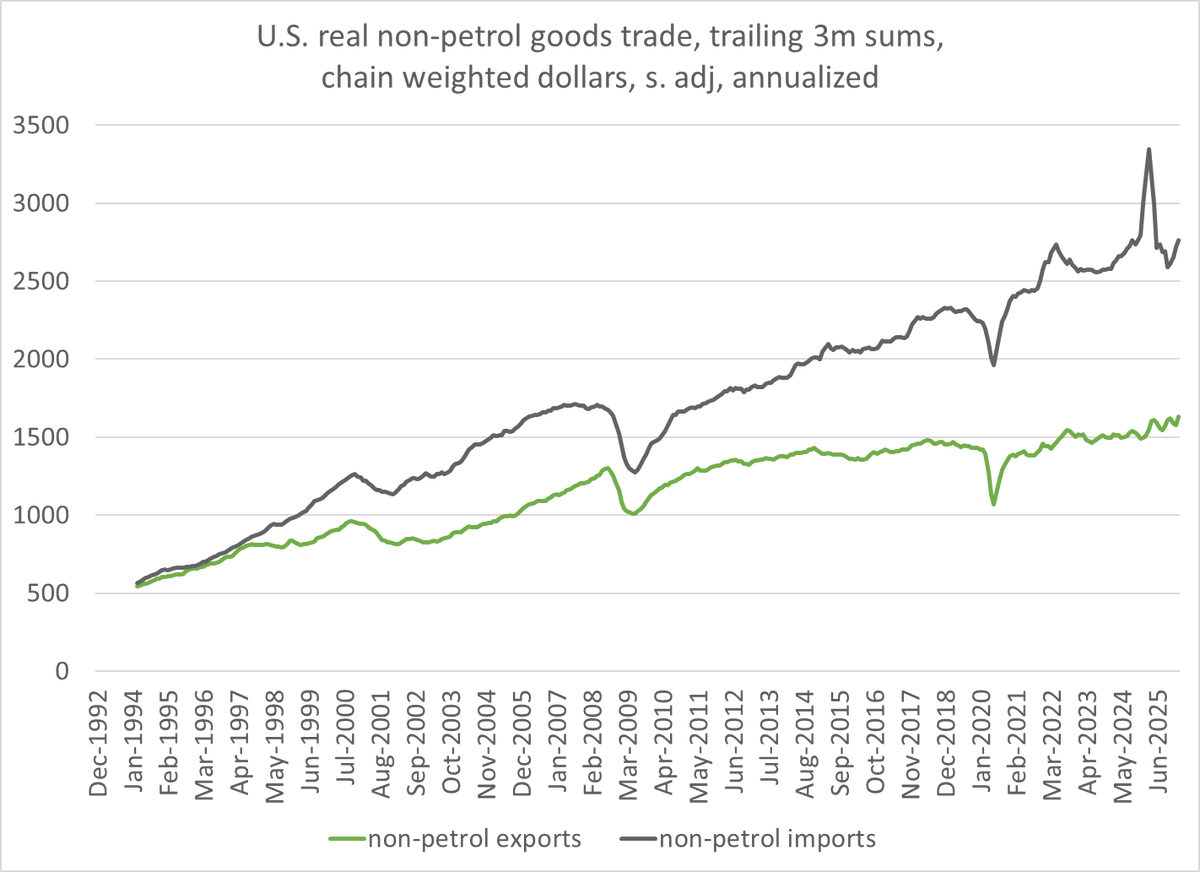
One clue is that "real" exports are much weaker (but to be clear still up; the Trump 2 trade war did not lead to retaliation and lower exports)
2/
And the obvious tell is that exports of gold (counting gold bars, which are hard to find in the raw data) were way up in January and February -- that isn't "real"