Carlos Góes Profile picture
Apr 14 10 tweets 4 min read Read on X
Dear #econtwitter, a few words on my new @nberpubs Working Paper, w/ Junyuan Chen, Marc Muendler, and Fabian Trottner.

Motivation: trade flows and global supply chains adjust slowly. That matters for how we measure the impact of shocks on economic welfare.
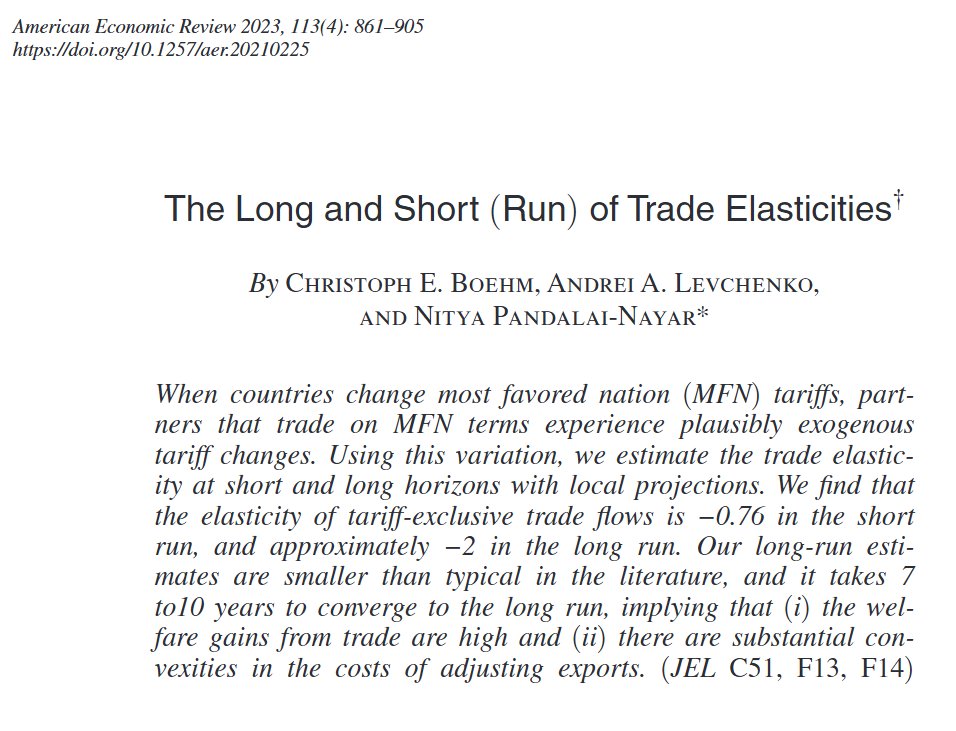
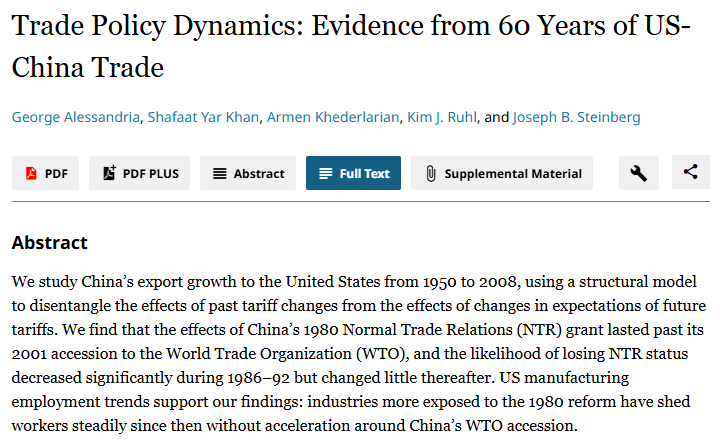
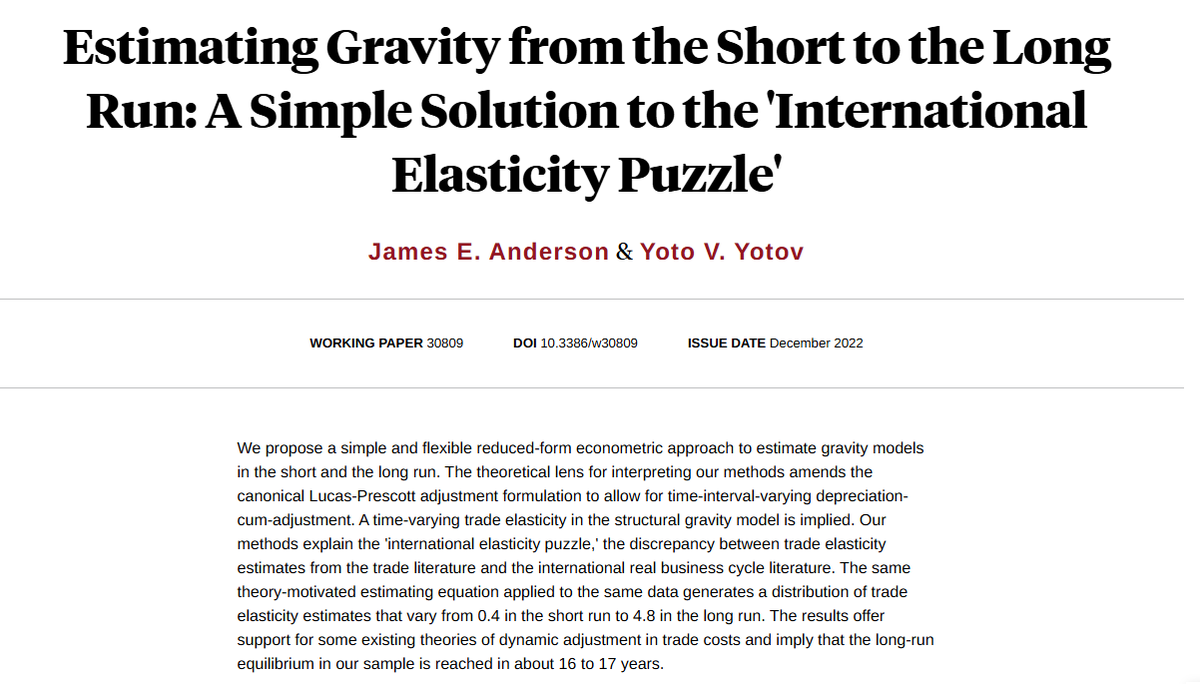
Canonical trade models are static. We compare LR steady states. But supply chains are sticky. Contracts, relationships, search, logistics, and sunk costs all slow down adjustment. Empirically, trade elasticities are small in the short run and much larger in the long run. Image
Image
Image
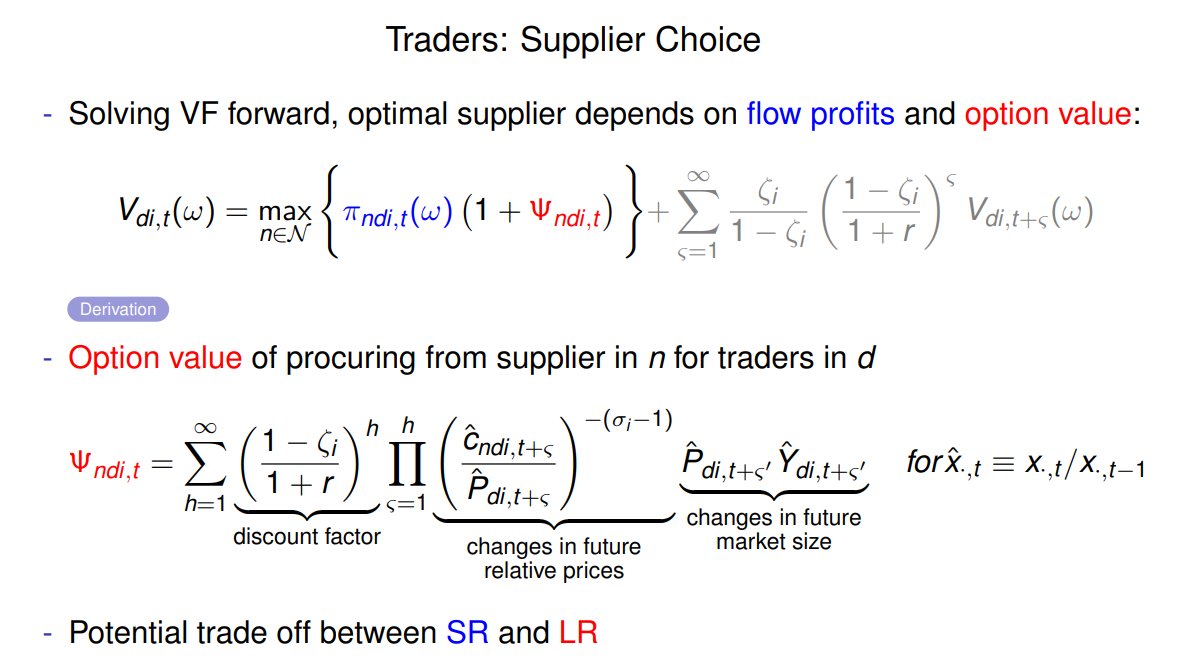
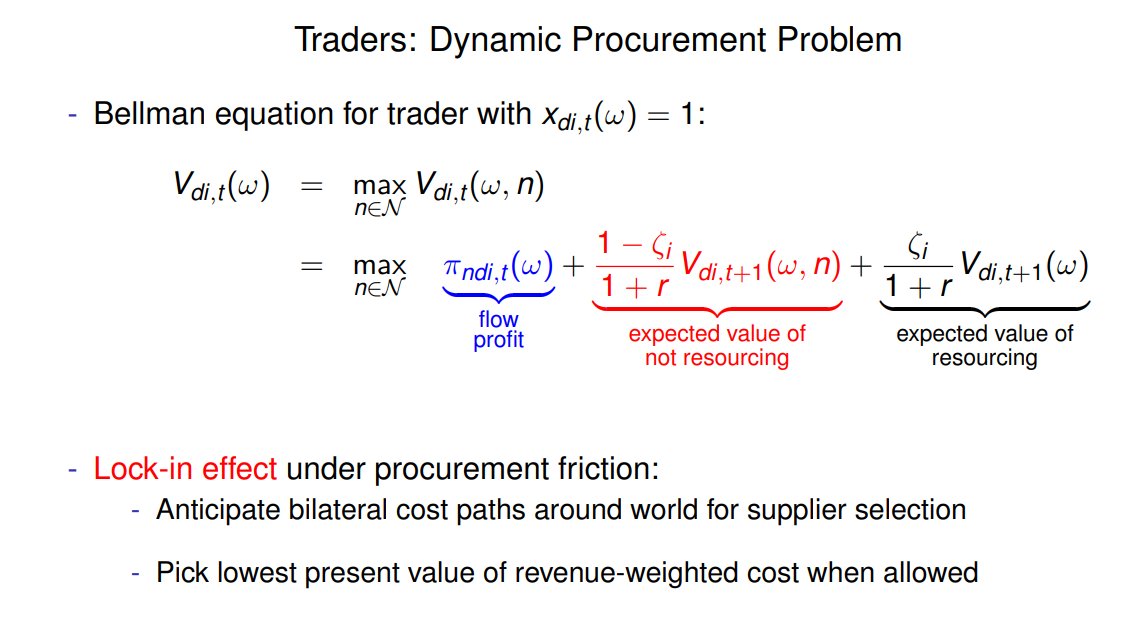
To rationalize this fact, we build a dynamic Ricardian trade model where firms are forward-looking but can switch suppliers only occasionally.

When they can switch, they think about today’s costs and future costs.

That creates gradual adjustment and anticipation. Image
The model nests Eaton-Kortum (EK) in the long run.

But along the transition path, trade flows reflect a mix of:

- old supplier relationships
- new sourcing decisions
- expected future trade costs

So one static elasticity is not enough. Image
Image
The result, which a commenter called "beautiful" in a conference 🫡, is a horizon-specific trade elasticity that is the weighted average of two canonical elasticities: the SR Armington elasticity (σ-1) on the intensive margin & the LR EK elasticity (θ) on the extensive margin. Image

We estimate these horizon-specific elasticities. Agriculture, food, and textiles adjust faster. Metals, machinery, and transport equipment more slowly

Supplier relationships are highly persistent. About 93% of procurement relationships carry over from one year to the next. Image
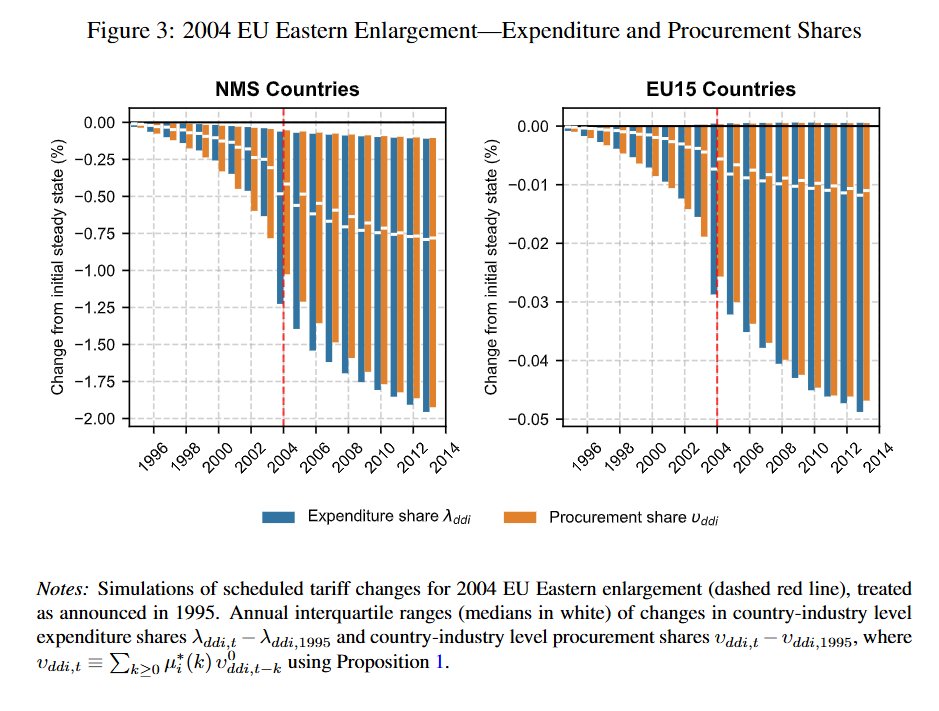
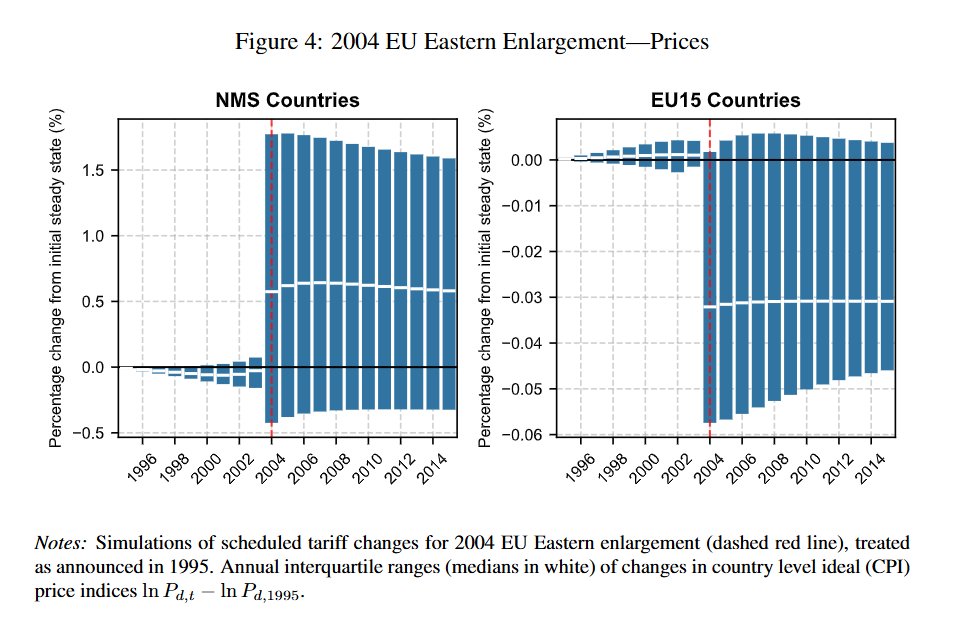
We then quantify the model. First application: the 2004 EU Eastern enlargement. This was announced years in advance, so firms had time to adjust before tariffs actually changed. Before tariffs fall, some firms switch early to suppliers that are not yet cheap. Trade flows and welfare can decouple during the transition.Image
Image
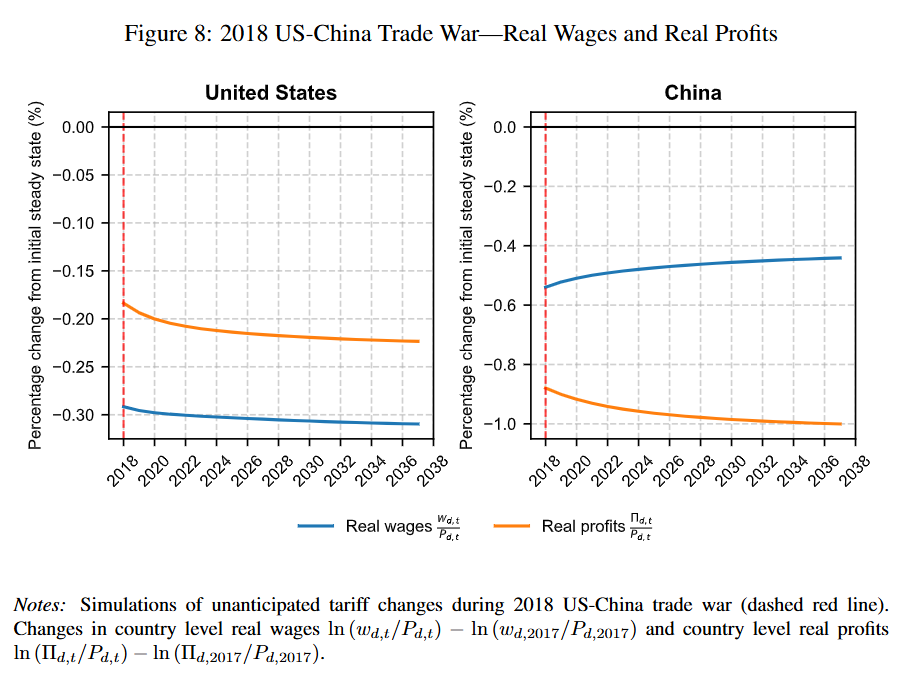
Second application: the 2018 US-China trade war. Unlike EU enlargement, this shock was largely unanticipated. So there is no pre-adjustment. But the transition path takes quite a while. Legacy supply chains erode gradually after tariffs rise. Image
Image
This is mostly an (applied) theoretical contribution but it has quite important policy-implications as these models are widely used. For policy-relevant horizons, supply-chain frictions and expectations matter. We hope the trade community enjoys and takes advantage if the paper.
@threadreaderapp unroll

• • •

Missing some Tweet in this thread? You can try to force a refresh

 

Keep Current with Carlos Góes

Carlos Góes Profile picture

Stay in touch and get notified when new unrolls are available from this author!

Read all threads

This Thread may be Removed Anytime!

PDF

Twitter may remove this content at anytime! Save it as PDF for later use!

Try unrolling a thread yourself!

how to unroll video
  1. Follow @ThreadReaderApp to mention us!

  2. From a Twitter thread mention us with a keyword "unroll"
@threadreaderapp unroll

Practice here first or read more on our help page!

More from @goescarlos

Feb 10
Isso aqui é a forma incorreta de ver a coisa. O mundo era muito mais pobre naquela época do que era hoje. Alguns historiadores econômicos reconstruíram o impacto da extração metálica sobre a riqueza disponível na península ibérica. Image
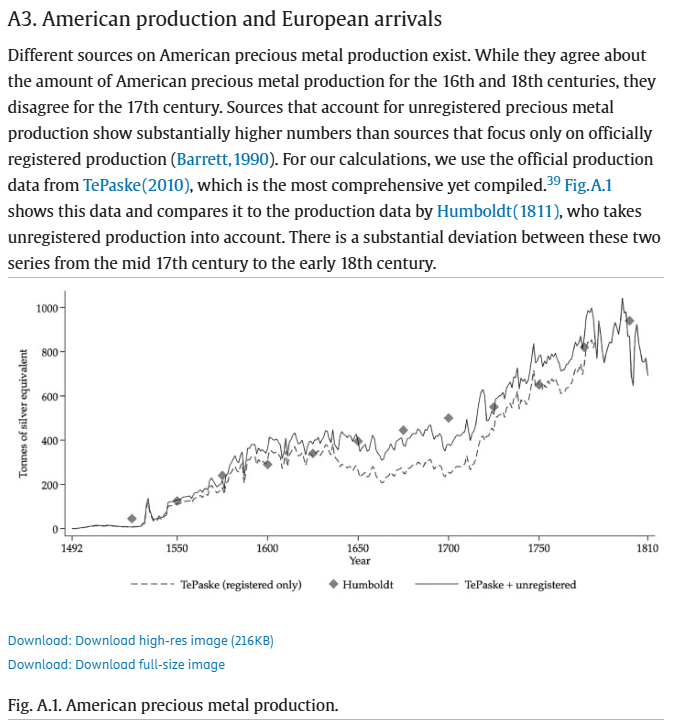
O primeiro esforço deles foi juntar a produção de metais preciosos (ouro + prata) na América espanhola. Chegam numa métrica de "equivalentes em prata" da produção anual. Ela cresce ao longo dos séculos. Image
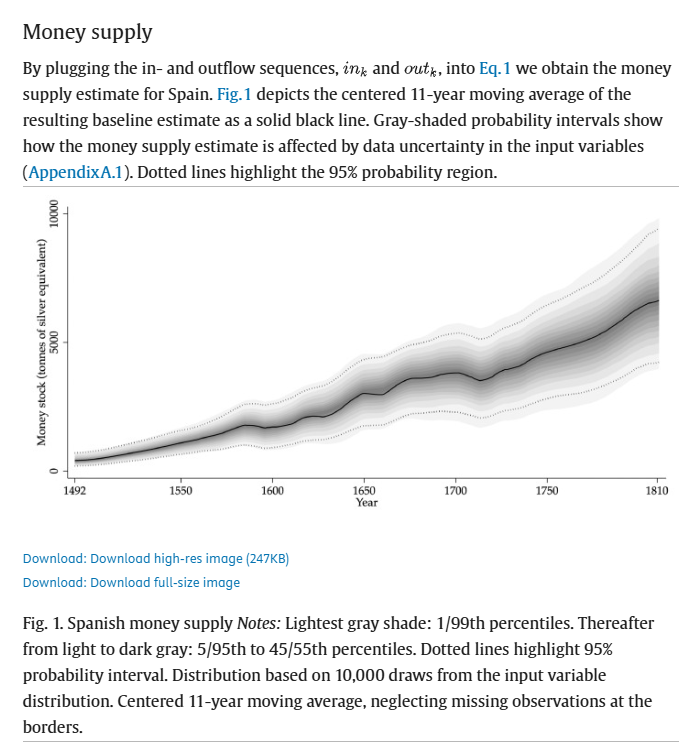
Depois eles calculam o impacto disso sobre a oferta monetária (quantidade de dinheiro disponível) na Espanha. Ela cresceu 15x durante o período! Note como as estimativas crescem monotonicamente em paralelo à extração metálica na América. Image
Read 9 tweets
Oct 31, 2025
O que Abel Ferreira pode ensinar sobre Comércio Internacional? Está confuso?? Segue o fio. 🧶Image
Se você gosta e assiste futebol, deve ter percebido que há uma “invasão” de técnicos estrangeiros no Brasil. Entre 2003 e 2017, apenas 12 técnicos estrangeiros dirigiram times da elite do futebol brasileiro, de acordo com dados organizados pelo jornalista
@rodolfo1975.
Neste ano 9 times do Brasileirão começaram o certame com um comandante de outra nacionalidade. otempo.com.br/sports/brasile…
Read 20 tweets
Oct 20, 2025
O Brasil é uma das economias mais fechadas do mundo, mesmo considerando o tamanho da sua economia ou população. Pelos dados do Banco Mundial, somos a segunda economia mais fechada do mundo - atrás do Sudão do Sul.Image
Qual é o efeito da integração comercial? O primeiro é e aumentar salários reais. Quando você tem acesso a bens mais baratos, de maior qualidade ou em maior variedade, você consegue comprar mais com cada real. Isso aumenta os "termos de troca" do país e faz com que as pessoas possam consumir mais.Image
Mas há muita evidência empírica demonstrando que maior abertura econômica está associada a taxas maiores de crescimento e bem estar. Como? Acesso a melhores tecnologias, difusão de novas práticas, tamanho do mercado, competição. Tudo isso incentiva inovação e crescimento.Image
Read 14 tweets
Jul 26, 2025
Esse meme de que a “agricultura familiar produz 70% dos alimentos do país” não tem nenhum resguardo nos dados. Entre 65 alimentos, ela produz em média 5,7%. Image
Pra quem não sabe que o número de 70% é meme, já foi até confesso.
Read 4 tweets
Jun 12, 2025
A paper I finished in the beginning of my PhD is out on @_PublicChoice. The paper is simple: it tests Piketty's hypothesis of r-g => inequality for a set of developed countries (that have better data). I find no empirical support for Piketty’s predictions. Image
The paper start by deriving Piketty's "second fundamental law of capitalism" from a standard neoclassical model. Capital share increases in rents and savings; decreases in growth in depreciation. If s is constant, r-g "drives" \alpha. Image
I pool together data on real bond yields net of taxes and show that it substantially correlates with the returns on wealth of the top 1%. Contemporaneously, there is little correlation b/w capital shares and (r-g).Image
Image
Read 11 tweets
Mar 25, 2025
Finalmente consegui processar os dados do Sinesp (MJ) sobre os registros nacionais de crimes. Não são só homicídios que estão em queda!

- Homicídio doloso (-36% desde 2017)
- Latrocínio (-60%)
- Tentativa de homicídio (-15%)
- Furto de veículos (-19%) Image
Também caíram:

- Roubo de veículos (-55% desde 2017)
- Roubos a bancos (-90%)
- Roubo de carga (-60%)

Mantendo-se estável as ocorrências por arma de fogo apreendida: (-7% desde 2017) Image
Também se manteve mais ou menos estável:

- Estupro: (+7% desde 2017)
- Tráfico de drogas (+4%)

As ocorrências com crescimento expressivo provavelmente tem mais a ver com maior atenção/denúncia e mudança de classificação:

- Estupro de vulnerável: (+107% desde 2017)
- Feminicídio (+48%)Image
Read 7 tweets

Did Thread Reader help you today?

Support us! We are indie developers!


This site is made by just two indie developers on a laptop doing marketing, support and development! Read more about the story.

Become a Premium Member ($3/month or $30/year) and get exclusive features!

Become Premium

Don't want to be a Premium member but still want to support us?

Make a small donation by buying us coffee ($5) or help with server cost ($10)

Donate via Paypal

Or Donate anonymously using crypto!

Ethereum

0xfe58350B80634f60Fa6Dc149a72b4DFbc17D341E copy

Bitcoin

3ATGMxNzCUFzxpMCHL5sWSt4DVtS8UqXpi copy

Thank you for your support!

Follow Us!

:(