The Reich Lab article on genetic selection in Europe over the last 10,000 years is finally online, and it includes such interesting results as:
- Intelligence has increased
- People got lighter
- Mental disorders became less common
And more!
They've added some interesting simulation results that show that these changes are unlikely to have happened without directional selection, under a variety of different model assumptions.
They also showed that, despite pigmentation being oligogenic, selection on it was polygenic.
"[S]election for pigmentation had an equal impact on all variants in proportion to effect size."
As an indication this result isn't due to recent population structure, the results also held up using effect sizes from East Asia!
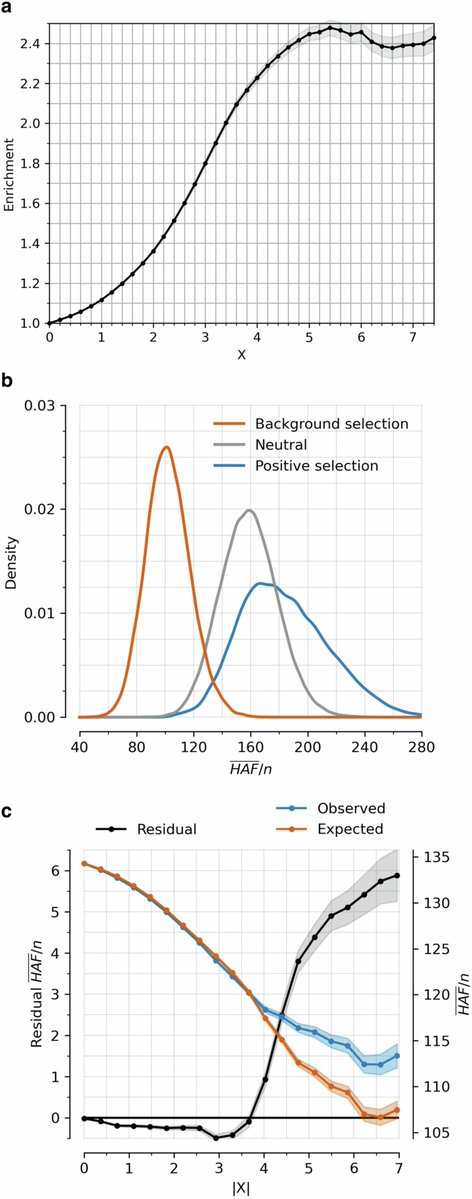
The greatest positive effect across both was directional selection for years of education—a mishmash of cognitive ability and noncognitive skill:
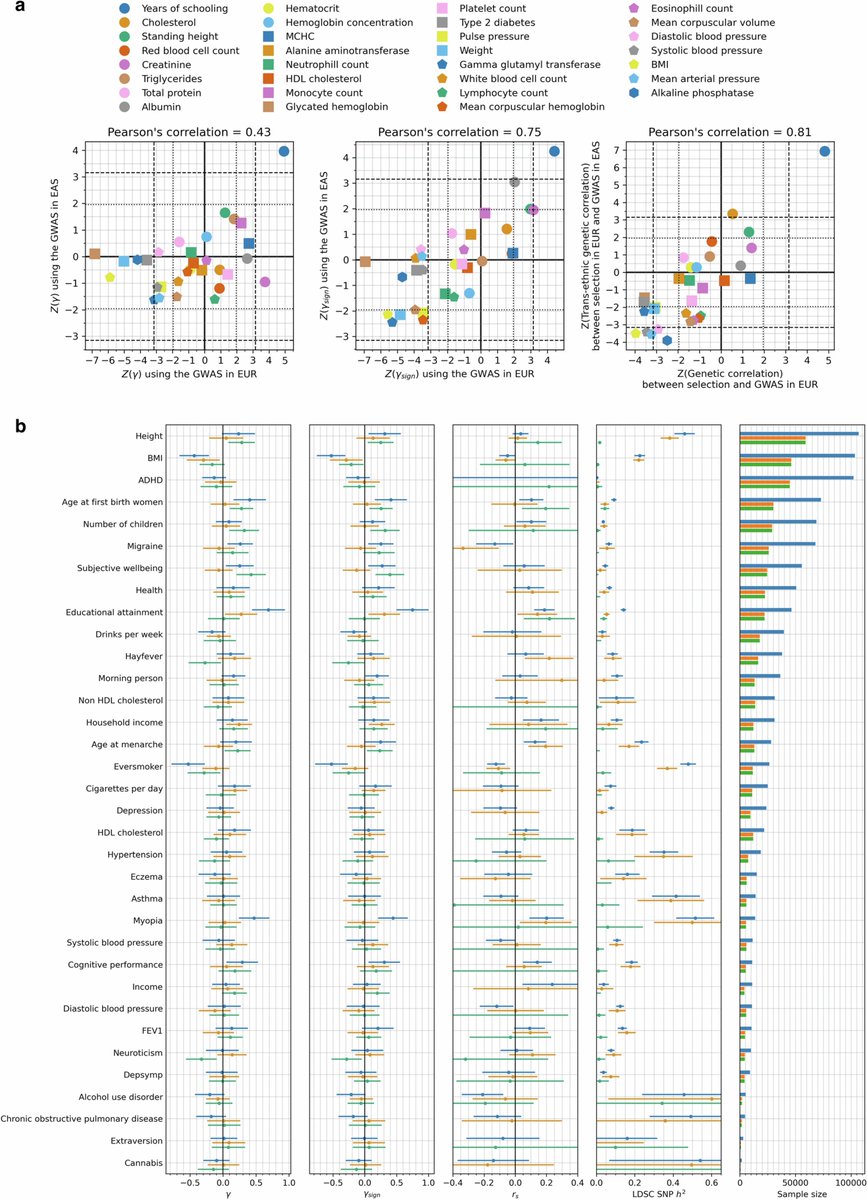
Moreover, three alternative selection tests all agreed on what happened here:
In a sort-of confirmation of the Cochran-Harpending thesis, they also found that, for several traits, the intensity of selection appears higher more recently in time.
Specifically, selection intensity increased in the Bronze Age compared to the Neolithic, then it stabilized!
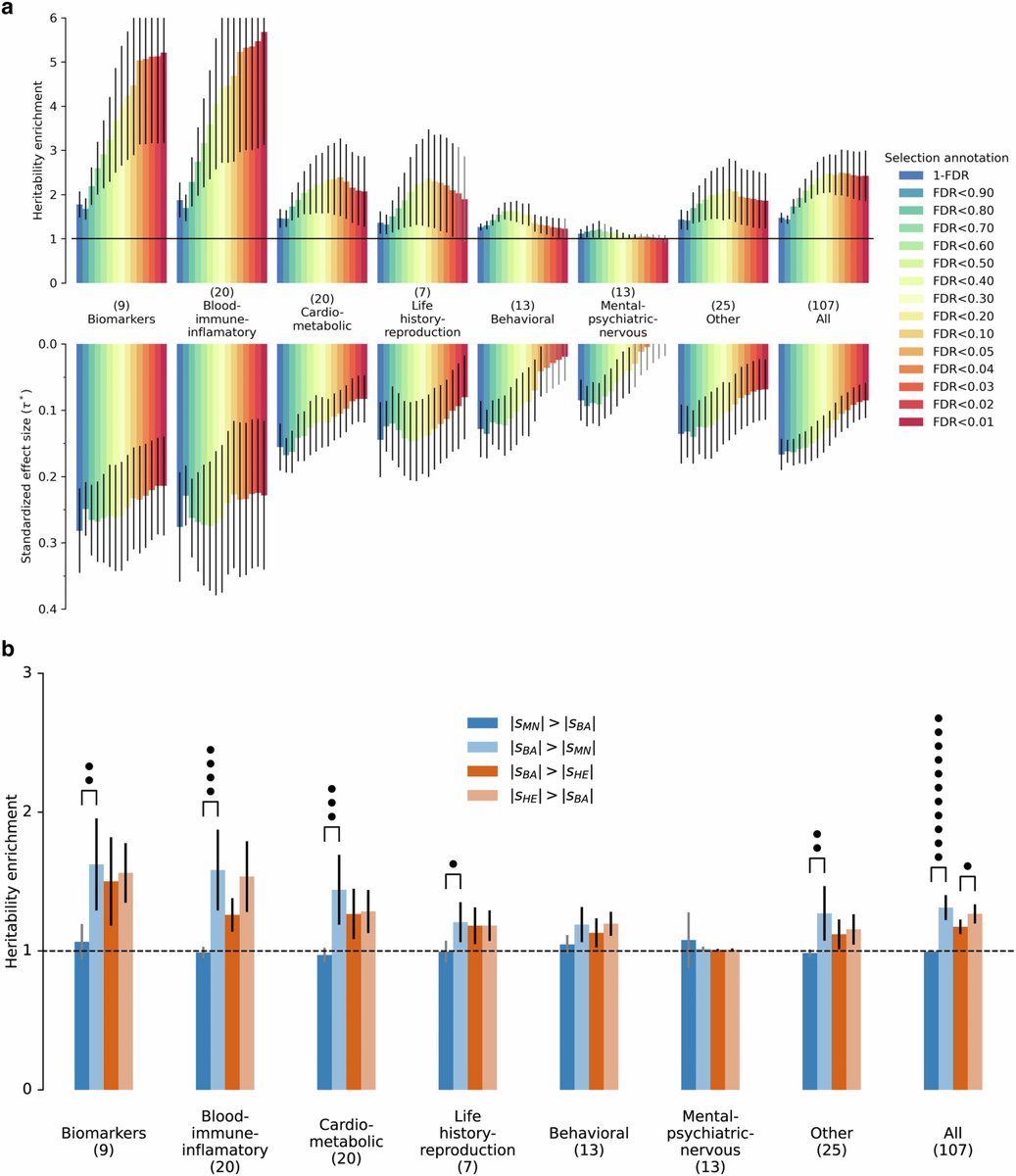
The paper also shows us several nonlinear changes in selection for particular SNPs over time.
For example, rheumatoid arthritis was once selected against, but in more recent millennia has been making a comeback:
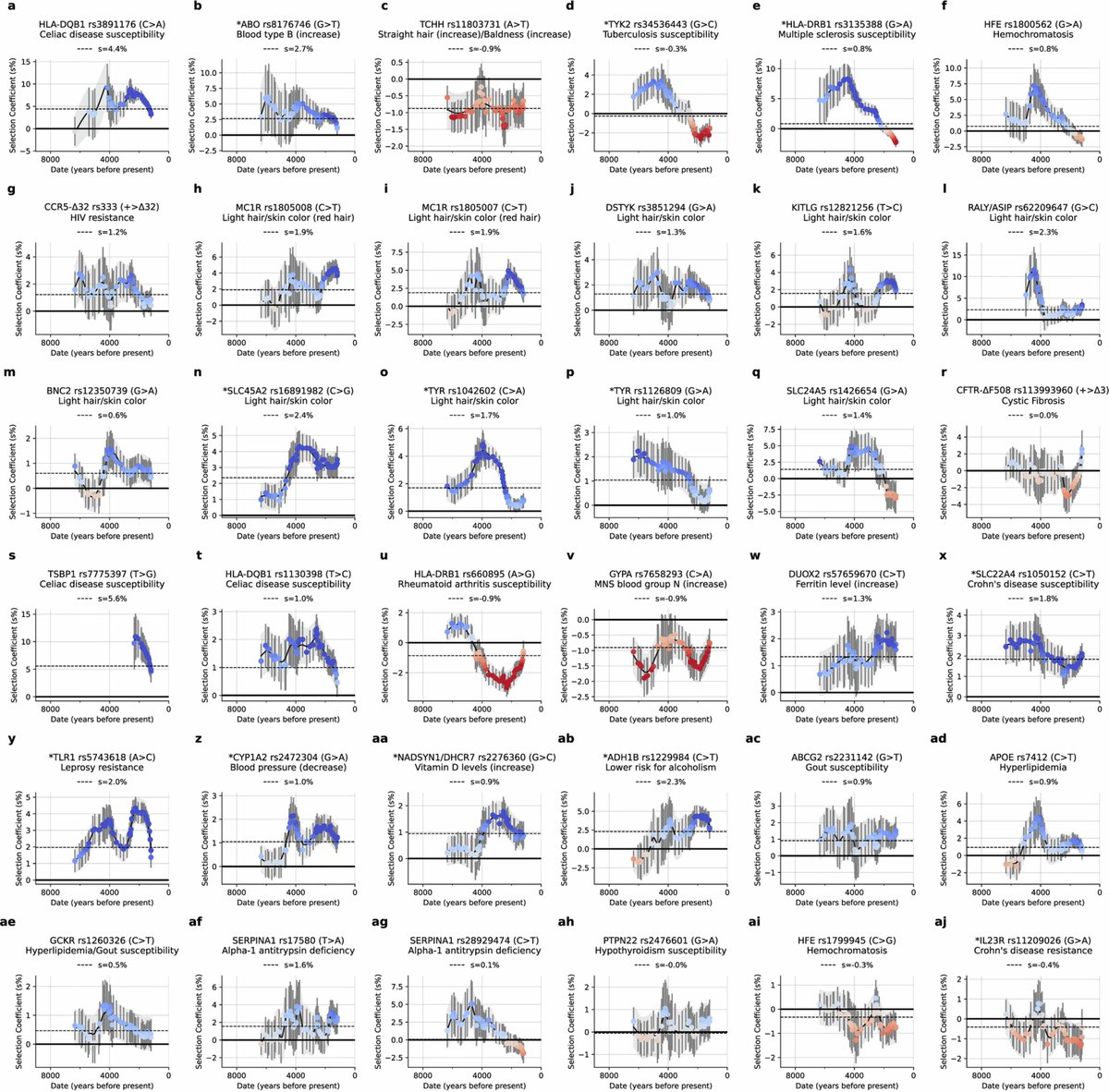
But ultimately, what really sticks is that there's strong evidence we have evolved in a way that's selective, that we've preferred certain traits and that the way we are does not just reflect background or neutral selection.
You know how most books on Amazon are AI slop now? If you didn't, look at the publication numbers.
Compare those to the proportion Pangram flags as AI-generated. It's fully aligned with the implied numbers based on the rise over 2022 publication levels!
Similarly, the rise of pro se litigants has come with a rise in case filings detected as being AI-generated, and with virtually zero false-positives before AI was around.
Pierre Guillaume Frédéric le Play argued that France's early fertility decline was driven by its inheritance reforms, where estates had to be split up equally to all of the kids, including the girls.
There's likely something to this!🧵
For reference, the French Revolution ushered in a number of egalitarian laws.
A major example of these had to do with inheritance, and in particular with partibility.
In some areas of France, there was partible inheritance, and in others, it was impartible.
Partible inheritance refers to inheritance spread among all of a person's heirs, sometimes including girls, sometimes not.
Impartible inheritance on the other hands refers to the situation where the head of an estate can nominate a particular heir to get all or a select portion.
In terms of their employment, religion, and sex, people who joined the Nazi party started off incredibly distinct from the people in their communities.
It's only near the end of WWII when they started resembling everyday Germans.
Early on, a lot of this dissimilarity is due to hysteresis.
Even as the party was growing, people were selectively recruited because they were often recruited by their out-of-place friends, and they were themselves out-of-place.
It took huge growth to break that.
And you can see the decline of fervor based on the decline of Nazi imagery in people's portraits.
And while this is observed by-and-large, it's not observed among the SS, who had a consistently higher rate of symbolic fanaticism.
I simulated 100,000 people to show how often people are "thrice-exceptional": Smart, stable, and exceptionally hard-working.
I've highlighted these people in red in this chart:
If you reorient the chart to a bird's eye view, it looks like this:
In short, there are not many people who are thrice-exceptional, in the sense of being at least +2 standard deviations in conscientiousness, emotional stability (i.e., inverse neuroticism), and intelligence.
To replicate this, use 42 as the seed and assume linearity and normality
The decline of trust is something worth caring about, and reversing it is something worth doing.
We should not have to live constantly wondering if we're being lied to or scammed. Trust should be possible again.
I don't know how we go about regaining trust and promoting trustworthiness in society.
It feels like there's an immense level of toleration of untrustworthy behavior from everyone: scams are openly funded; academics congratulate their fraudster peers; all content is now slop.
What China's doing—corruption crackdowns and arresting fraudsters—seems laudable, and I think the U.S. and other Western nations should follow suit.
Fraud leads to so many lives being lost and so much progress being halted or delayed.
British fertility abruptly fell after one important court case: the Bradlaugh-Besant trial🧵
You can see its impact very visibly on this chart:
The trial involved Annie Besant (left) and Charles Bradlaugh (right).
These two were atheists—a scandalous position at the time!—and they wanted to promote free-thinking about practically everything that upset the puritanical society of their time.
They were on trial because they tried to sell a book entitled Fruits of Philosophy.
This was an American guide to tons of different aspects of family planning, and included birth control methods, some of which worked, others which did not.