
1/ Russian warbloggers are baffled and aghast at reports that the Russian Ministry of Defence will ban the issue of drones to combat units, and will keep them for its new Unmanned Systems Forces instead. If carried out, the consequences are likely to be drastic. ⬇️ 

2/ The Russian MOD established its Unmanned Systems Forces (BPS) in November 2025. To the concern of many commentators, it appointed Lieutenant Colonel Yuri Vaganov to command the new force, despite his lack of formal military education or prior service experience.
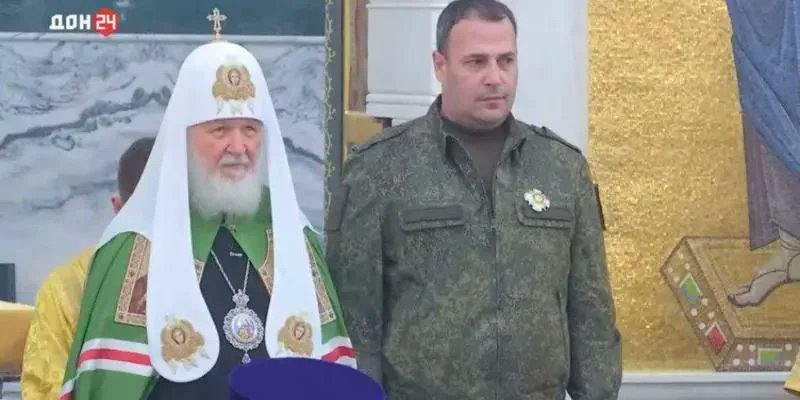
3/ Vaganov has earned the unofficial callsign 'Toilet' for his previous career as a seller of plumbing fixtures. He became a monopoly supplier of FPV drones to the army after the start of the full-scale invasion of Ukraine.
4/ Although he is in principle the equivalent of Ukraine's formidable unmanned systems forces commander Robert 'Madyar' Brovdi, even Russian commentators acknowledge that Vaganov is a poor comparison.
5/ Warblogger Svyatoslav Golikov commented at the time of Vaganov's appointment that his partnership with his apparent patron, Deputy Minister of Defence Alexey Krivoruchko, "is truly about commerce. Not about refining the concept of using unmanned systems in modern warfare."
6/ "Not about developing unmanned systems as a cross-cutting technology at the combined arms level. Not about improving combat effectiveness and reducing our casualty rate. It's just about commerce. Trivial and banal. An alternative, excellent analogue response to Madyar."
7/ Vaganov's drones, such as the widely distributed VT-40, are strongly disliked in the Russian army, as warblogger Vladimir Romanov notes:

8/ "During the period of deliveries of the VT-40 FPV and the Groza electronic warfare system to the Front through Krivoruchko, [Vaganov] was churning out utterly substandard products , which resulted in the deaths of our operators, including members of the special forces."
9/ Since his appointment, Romanov says, "instead of building their own forces from scratch (using modern frontline experience), the BPS are trying to poach the best operators and technicians from other units, thereby leaving many critical areas understaffed.
10/ "And yes, the competent authorities are also well aware of the “showpiece” training centres, whose doors open only during inspections, even though funding from the Ministry of Defence has been flowing in steadily."
11/ Romanov says that the Russian MOD's advanced systems directorate, the Department of Advanced Interspecific Research and Special Projects, "will not issue drones to just any unit on the Front."
12/ "Drones will be issued only to BPS troops.
Vaganov now personally and exclusively oversees the distribution of drones.
/before the start of the artificially created “drone shortage” in regular units - 3.. 2..."
Vaganov now personally and exclusively oversees the distribution of drones.
/before the start of the artificially created “drone shortage” in regular units - 3.. 2..."
13/ Nikita Tretyakov spells out what this means for the army:
"Imagine there are specialised communications units, and then there's infantry, artillery, armoured vehicles, reconnaissance, and they all need communications."
"Imagine there are specialised communications units, and then there's infantry, artillery, armoured vehicles, reconnaissance, and they all need communications."
14/ "And then someone smart decides that only professional communications specialists need communications in the army, and everyone else can get by without them, since that's not their specialty...
Got it? Great. Same thing here, only with drones."
Got it? Great. Same thing here, only with drones."
15/ This move appears to be singularly badly timed. Russian soldiers have been complaining for a long time about a shortage of drones provided by the state, and have had to rely on commercially available drones which volunteers have imported from China.
https://x.com/ChrisO_wiki/status/1904252556529770977
16/ This has had direct military impacts, with the Russians saying they don't have enough drones to carry out follow-up strikes to destroy disabled Ukrainian vehicles. As a result, many are recovered and repaired by the Ukrainians.
https://x.com/ChrisO_wiki/status/2040368999163101197
17/ However, volunteer efforts to provide drones to the army have had severe setbacks in the last few months. The Russian Federal Customs Service has been blocking drone and component imports from China.
https://x.com/ChrisO_wiki/status/2021943020158087452
18/ To make matters even worse, the now near-total block on Telegram has had a catastrophic impact on volunteer fundraising and purchases of equipment, further reducing the supply of drones.
https://x.com/ChrisO_wiki/status/2030212691957088303
19/ Planned forthcoming curbs on VPNs and cryptocurrency are also likely to impact drone procurement within the army, as many soldiers spend their own salaries on purchasing drones from Chinese suppliers.
20/ Drones are an essential tool for frontline soldiers on both sides – not just to attack the enemy, but for tasks such as reconnaissance missions and dropping supplies to isolated positions. A further shortage of drones will severely impact such use cases. /end
Sources:
🔹 t.me/romanov_92/521…
🔹 t.me/romanov_92/522…
🔹 bbc.com/russian/articl…
🔹 t.me/tretyakov_n/19…
🔹 t.me/romanov_92/521…
🔹 t.me/romanov_92/522…
🔹 bbc.com/russian/articl…
🔹 t.me/tretyakov_n/19…
• • •
Missing some Tweet in this thread? You can try to
force a refresh






