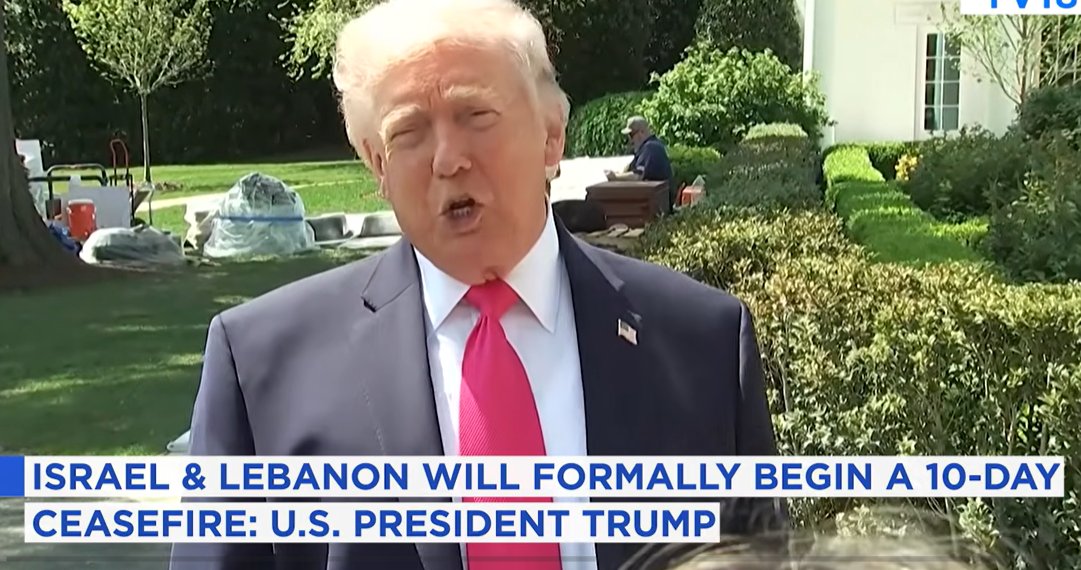
The Israel–Lebanon truce isn’t just a ceasefire.
It’s a signal for the future
For the first time in decades, the United States is actively constraining Israel militarily in the middle of a war
That doesn’t happen without a major shift in power
It’s a signal for the future
For the first time in decades, the United States is actively constraining Israel militarily in the middle of a war
That doesn’t happen without a major shift in power
What changed?
The Iran war
And specifically: control over the Strait of Hormuz
That gave Iran something new—
systemic leverage over the global economy
The Iran war
And specifically: control over the Strait of Hormuz
That gave Iran something new—
systemic leverage over the global economy
Now the key fact:
Iran explicitly demanded an end to Israel’s attacks in Lebanon as a condition for talks
That wasn’t rhetoric - It was a bargaining position
Iran explicitly demanded an end to Israel’s attacks in Lebanon as a condition for talks
That wasn’t rhetoric - It was a bargaining position
And what just happened?
A U.S.-backed truce that halts Israeli offensive operations in Lebanon
The demand → the outcome
That’s not coincidence -- That’s leverage
A U.S.-backed truce that halts Israeli offensive operations in Lebanon
The demand → the outcome
That’s not coincidence -- That’s leverage
This is the real shift
Power isn’t just coercing your enemy
It’s forcing your adversary to restrain its own allies
Iran is now doing exactly that
Power isn’t just coercing your enemy
It’s forcing your adversary to restrain its own allies
Iran is now doing exactly that
This is what I argued in my recent NYT op-ed:
Iran is emerging as a 4th center of world power—alongside the U.S., China, and Russia
Not because it’s stronger militarily
But because it can shape decisions at the top of the system
Iran is emerging as a 4th center of world power—alongside the U.S., China, and Russia
Not because it’s stronger militarily
But because it can shape decisions at the top of the system
Before this war, this would have been unthinkable
Now it’s happening in real time
Rarely does a strategic thesis get tested—and validated—this quickly
To see where Iran's leverage gets used next go to my substack the Escalation Trap
My NYT piece explains the broader framework
Now it’s happening in real time
Rarely does a strategic thesis get tested—and validated—this quickly
To see where Iran's leverage gets used next go to my substack the Escalation Trap
My NYT piece explains the broader framework
• • •
Missing some Tweet in this thread? You can try to
force a refresh