One of the really interesting studies on the psychiatric effects of maltreatment is Danese and Widom's from Nat. Hum. Behavior a few years ago.
They found that only subjective (S), rather than objective (O) maltreatment predicted actually having a mental disorder.
They found that only subjective (S), rather than objective (O) maltreatment predicted actually having a mental disorder.

Phrased differently, if people subjectively believed they were abused, that predicted poor mental health, but objectively recorded maltreatment only predicted it if there was also a subjective report.
Some people might 'simply' be more resilient than others.
Some people might 'simply' be more resilient than others.
I think this finding makes sense.
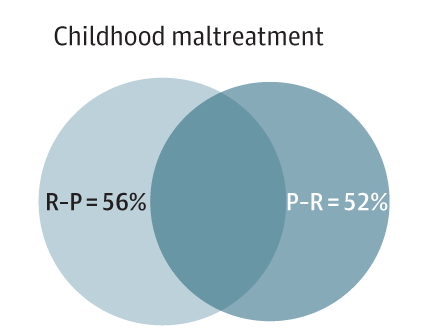
Consider the level of agreement between prospective (P-R) and retrospective (R-P) reports of childhood maltreatment.
A slim majority of people recorded being mistreated later report that they were mistreated when asked to recall.
Consider the level of agreement between prospective (P-R) and retrospective (R-P) reports of childhood maltreatment.
A slim majority of people recorded being mistreated later report that they were mistreated when asked to recall.
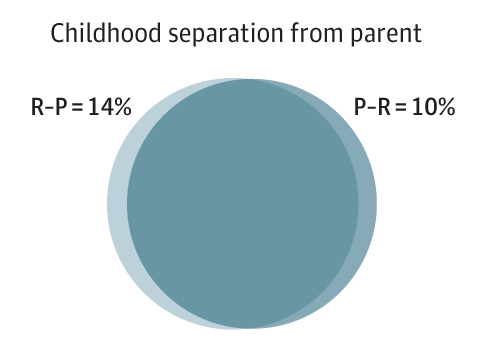
But, contrarily, reports on parents separating, divorcing, dying, or being removed from the home DID agree.
Which again, makes sense: it's an objective thing that either occurred or didn't.
Whereas abuse has a huge subjective element.
Which again, makes sense: it's an objective thing that either occurred or didn't.
Whereas abuse has a huge subjective element.
Even siblings substantially disagree about whether one or the other sibling was subjected to abuse, and they *should* be the ones to know it!
Agreement on abuse when at least one sibling reported it was poor.
Agreement on abuse when at least one sibling reported it was poor.
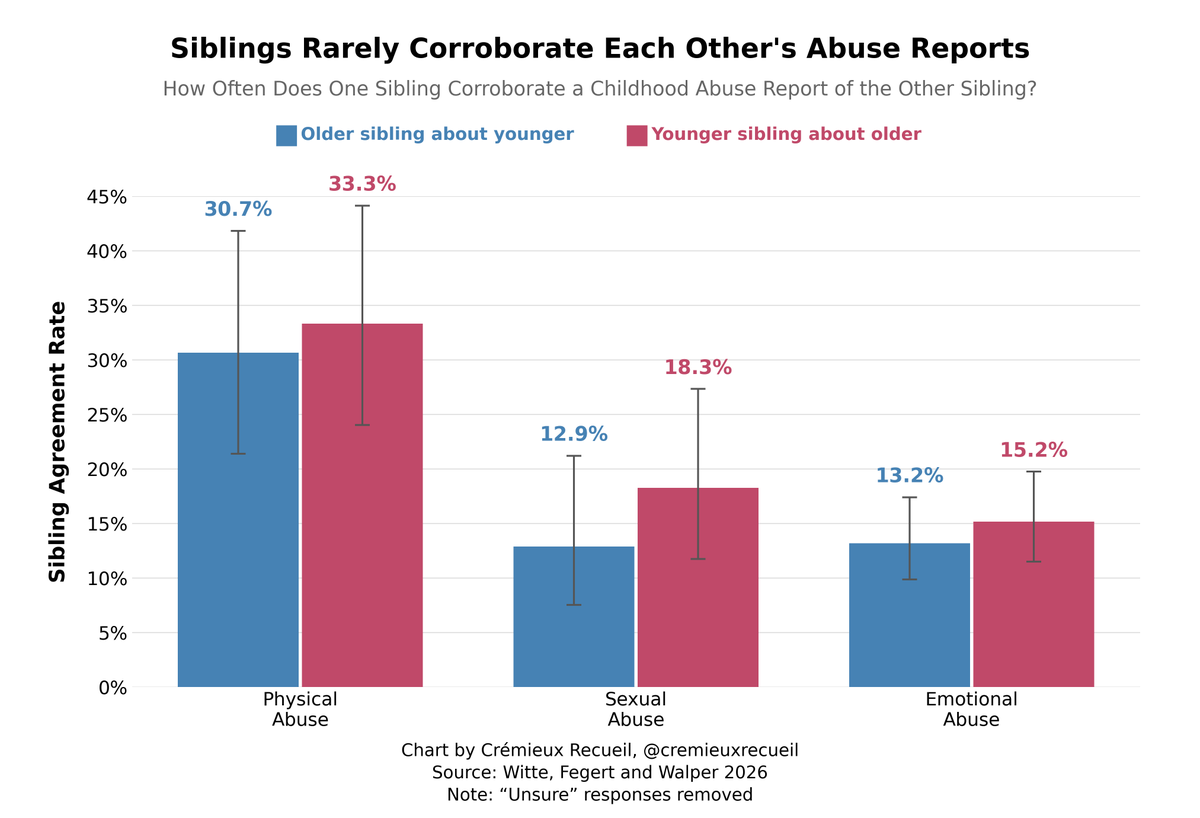
Siblings only strongly agreed overall because most simply reported that there was no abuse present.
The staggering scale of subjectivity in these measures makes research so much harder.
Sources:
nature.com/articles/s4156…
jamanetwork.com/journals/jamap…
sciencedirect.com/science/articl…
The staggering scale of subjectivity in these measures makes research so much harder.
Sources:
nature.com/articles/s4156…
jamanetwork.com/journals/jamap…
sciencedirect.com/science/articl…
• • •
Missing some Tweet in this thread? You can try to
force a refresh