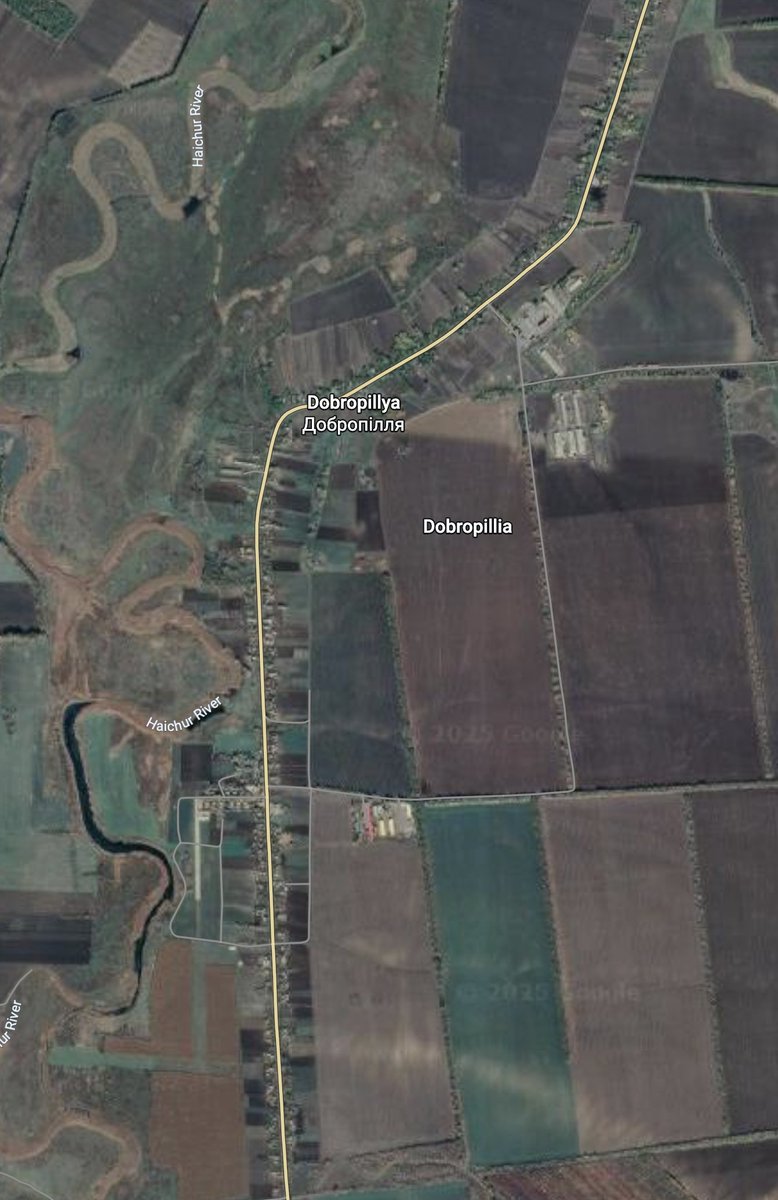
Mashovets Kostiantynivka review
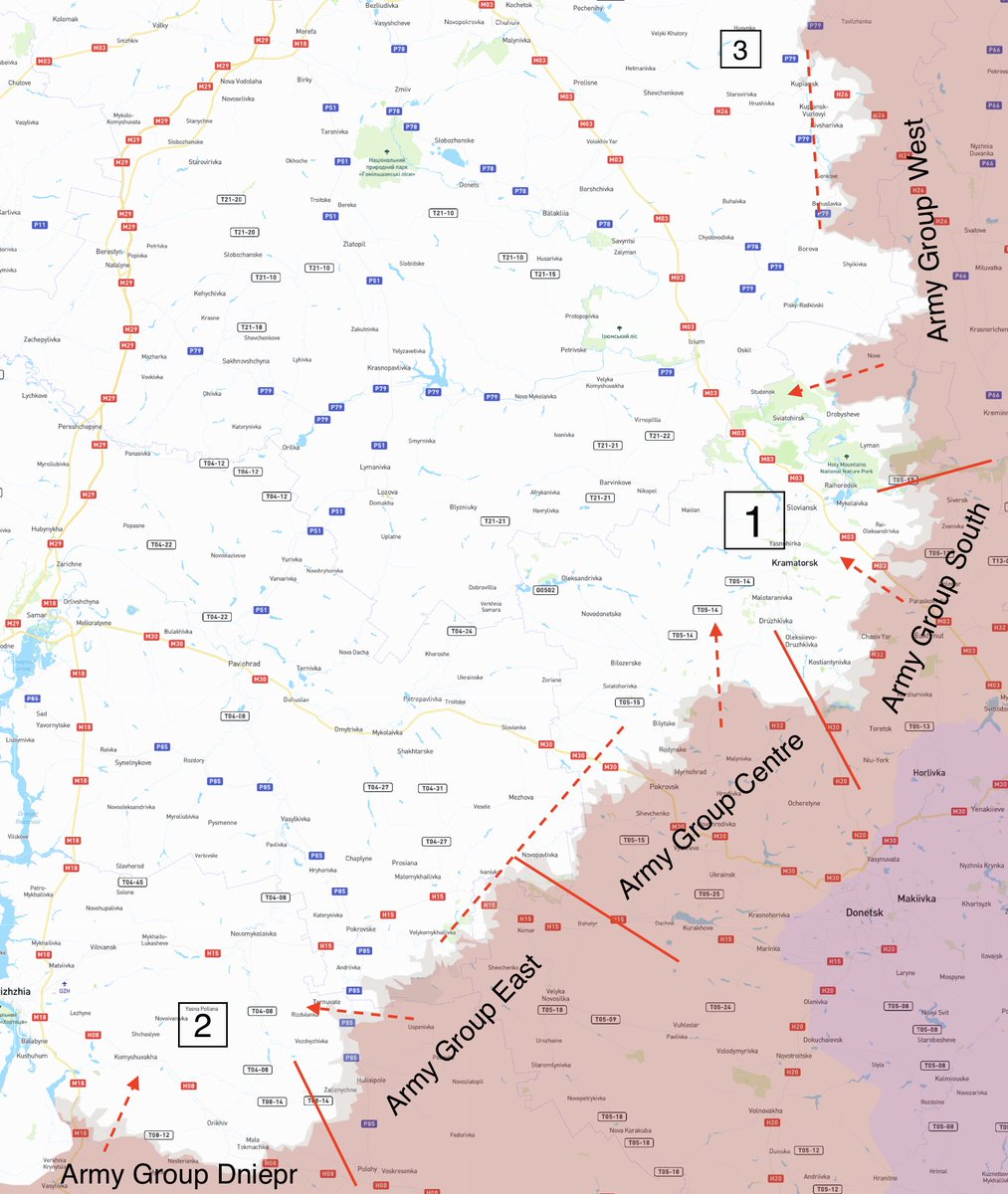
Russia has entered a critical stage of the Kostiantynivka campaign, concentrating forces from several army groupings in what appears to be one of its priority operational sectors. The immediate objective is to seize Kostiantynivka and Druzhkivka, which would open the southern and southeastern approaches to the larger Sloviansk-Kramatorsk defensive agglomeration. To support this effort, Russian command has reinforced the sector with units from multiple formations — including elements drawn from AG Centre and AG Dniepr to supplement AG South own 8th Army and 3rd AC — indicating both the importance of the objective and the difficulty of achieving it with local forces alone.
Russia has entered a critical stage of the Kostiantynivka campaign, concentrating forces from several army groupings in what appears to be one of its priority operational sectors. The immediate objective is to seize Kostiantynivka and Druzhkivka, which would open the southern and southeastern approaches to the larger Sloviansk-Kramatorsk defensive agglomeration. To support this effort, Russian command has reinforced the sector with units from multiple formations — including elements drawn from AG Centre and AG Dniepr to supplement AG South own 8th Army and 3rd AC — indicating both the importance of the objective and the difficulty of achieving it with local forces alone.

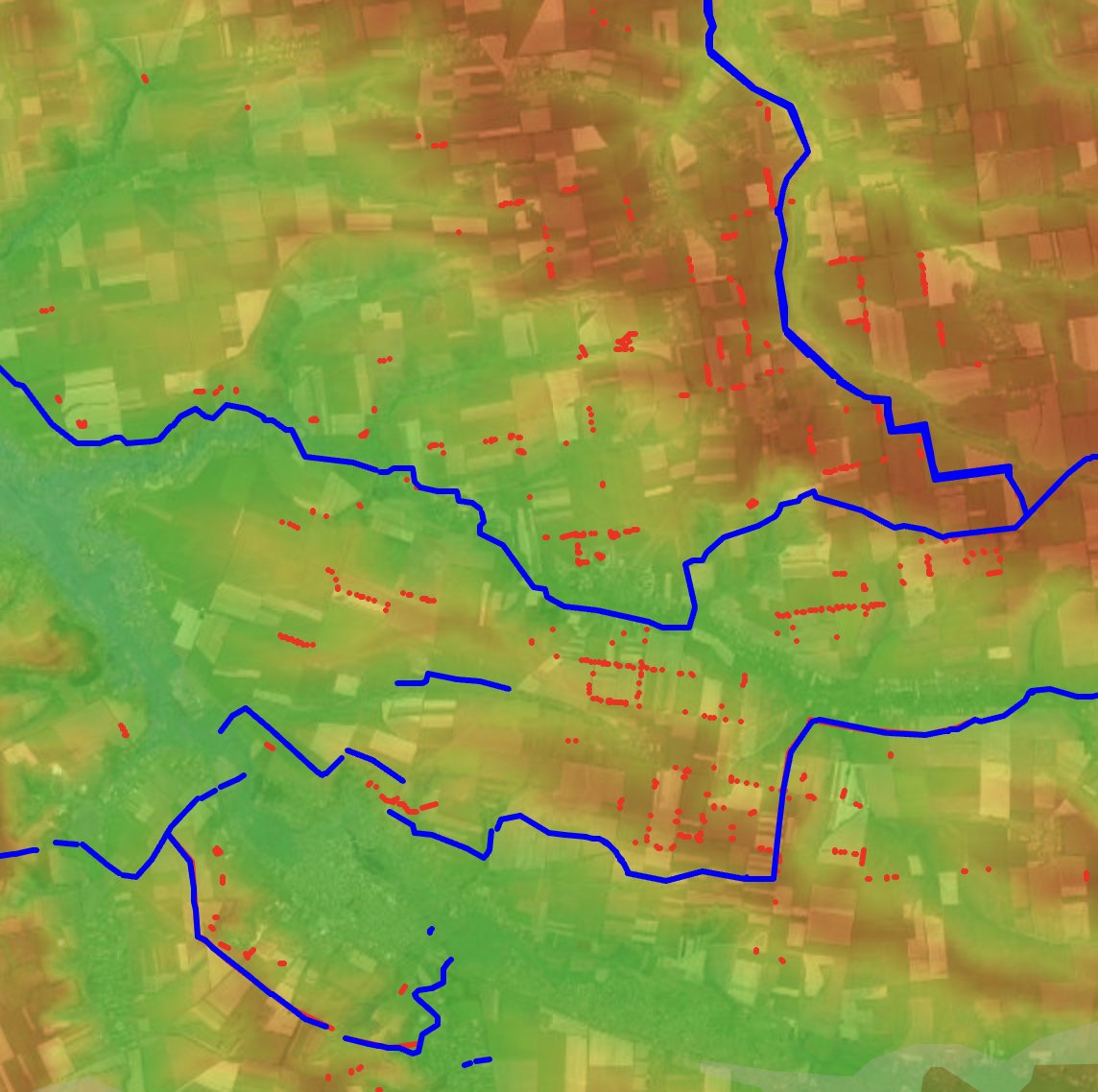
The current offensive is developing along several converging axes. From the south, Russian troops advancing from Berestok pushed through an overgrown ravine to reach the southwestern outskirts of Ivanivka, while simultaneously massing infantry in Berestok itself in preparation for a larger infiltration into western Kostiantynivka via the T-0504 road corridor.
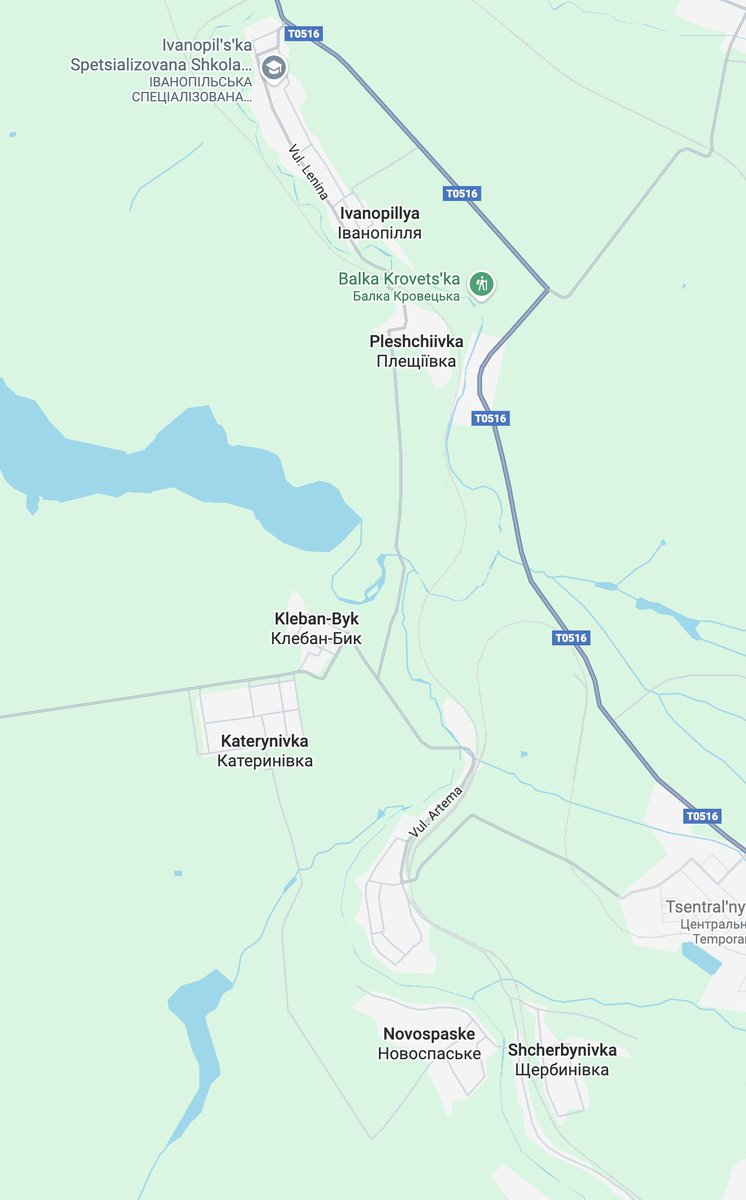
On the southwestern axis, Russian assault groups have been fighting for over two weeks along the Yablonivka–Stepanivka line, attempting to push through toward Dovha Balka, though so far only a tenuous foothold in the southern part of Stepanivka has been established. Further south, assaults continue near Pleshchiivka and Ivanopillia, likely intended to push Ukrainian defenders northward and secure the flanks of the main attack.
On the southwestern axis, Russian assault groups have been fighting for over two weeks along the Yablonivka–Stepanivka line, attempting to push through toward Dovha Balka, though so far only a tenuous foothold in the southern part of Stepanivka has been established. Further south, assaults continue near Pleshchiivka and Ivanopillia, likely intended to push Ukrainian defenders northward and secure the flanks of the main attack.
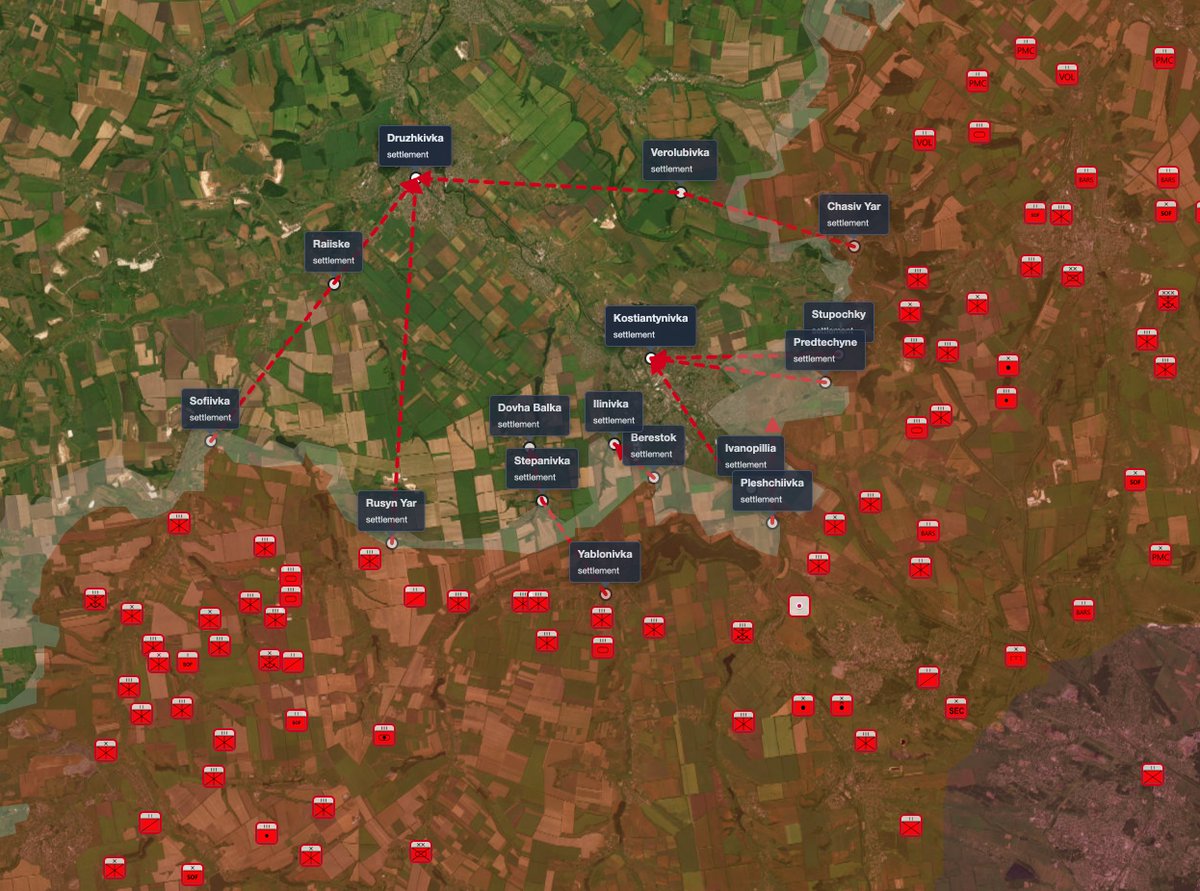
From the southeast and east, forces advancing from Stupochky, Predtechyne, and the Dacha area have achieved limited penetration into the outskirts of the city, where heavy fighting is reported near the railway station and residential streets including Kyivska and Odeska.
Separately, elements of the 150th and 20th MRDivs are pressing toward Druzhkivka directly along the Sofiivka–Raiiske and Rusyn Yar axes on the western flank. These movements suggest an attempt to compress Ukrainian defenses from multiple directions rather than rely on a single frontal breakthrough.
Separately, elements of the 150th and 20th MRDivs are pressing toward Druzhkivka directly along the Sofiivka–Raiiske and Rusyn Yar axes on the western flank. These movements suggest an attempt to compress Ukrainian defenses from multiple directions rather than rely on a single frontal breakthrough.
Despite these efforts, Russian progress remains tactical rather than operational. They have gained footholds on the outskirts and in contested gray zones, but there is still no confirmed breakthrough into the central urban area. Ukrainian defenders continue to hold important blocking positions south and east of the city, while maintaining a broader defensive line that prevents rapid encirclement. The Russian advance appears slow, methodical, and costly, relying on repeated infantry assaults supported by artillery and localized armored thrusts.
A major factor shaping the battle is the continued Ukrainian presence around Chasiv Yar. Russian 70th MRDiv attempts to break out along the railway toward Verolubivka and the Stinka–Nikolaivka–Krasne–Podolske line have so far failed, leaving the Ukrainian pocket intact. As long as Ukrainian forces retain positions there, Russian units of the 3rd AC pushing toward Kostiantynivka from the southeast remain exposed to possible flank counterattacks. This forces Russian command to divert part of its forces northward from Stupochky to secure its own lines instead of committing everything directly against Kostiantynivka. In effect, fighting around Chasiv Yar continues to influence the Kostiantynivka battle even without a dramatic frontline shift.
Operationally, time is becoming an important variable. Russia likely intended faster progress during the winter-spring period in preparation for a broader 2026 summer campaign toward Sloviansk and Kramatorsk. The slower-than-expected pace means every additional week spent storming Kostiantynivka reduces the chances of transitioning quickly into a larger offensive. Attrition of assault infantry, armored vehicles, artillery ammunition, and experienced junior leadership could become more damaging than the limited territorial gains justify.
Looking forward, several scenarios are possible. If Ukraine sustains its current defense, Russia may become locked in a prolonged urban battle that drains combat power and delays wider operations. If Russia captures Kostiantynivka, Druzhkivka would come under immediate pressure and southern routes toward Kramatorsk would become more vulnerable. However, even a Russian victory in the city would not automatically create a breakthrough, as further advances would require fresh reserves, logistical support, and the ability to overcome successive Ukrainian defensive belts.
Overall, the battle for Kostiantynivka is becoming more than a local engagement. It is increasingly a test of whether Russia can convert massed assaults and numerical pressure into meaningful operational momentum, or whether Ukrainian resistance can force another costly culmination before the next planned phase of the war.
• • •
Missing some Tweet in this thread? You can try to
force a refresh