Interesting WSJ story about the Emirates request for a swap line --
the UAE hasn't reported its end March reserves but it went into the conflict with tons of reserves and no shortage of liquid bills in US custodians
1/
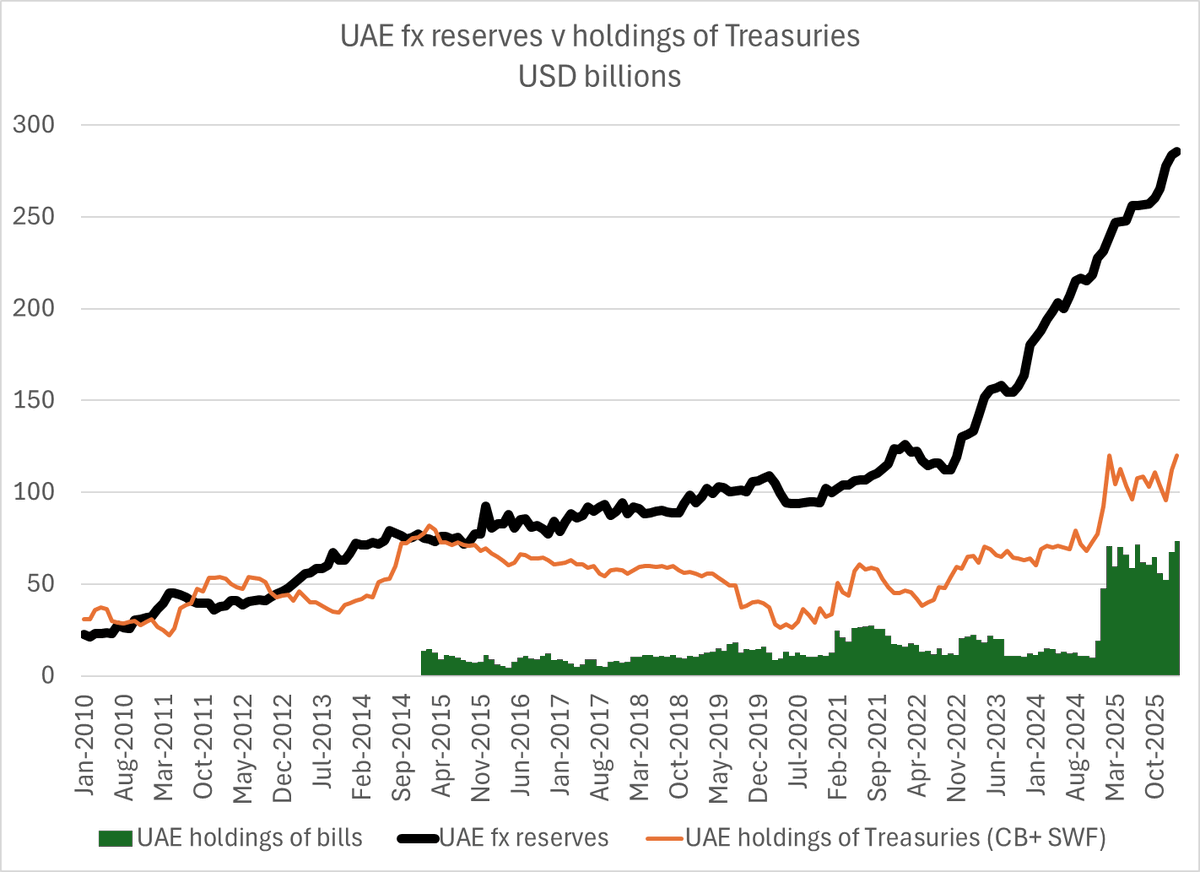
Given the central bank's ample apparent liquidity, the immense assets of Abu Dhabi's sovereign funds and the UAE/ Abu Dhabi's clear ability to borrow dollars, I am not sure there is a realistic prospect that the UAE will ever run short of dollars
2/
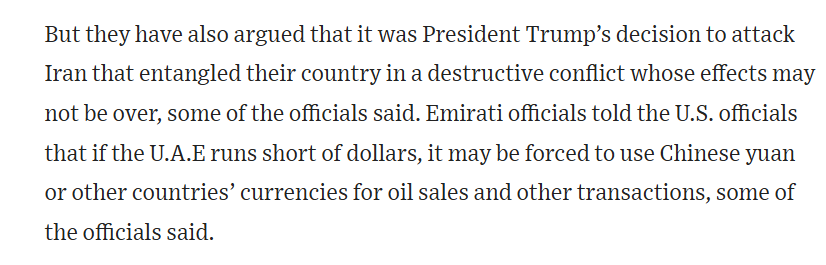
But the fact that they have asked is interesting -- and they clearly think the threat of using yuan is a way to get the attention of the United States (my sense is that the Trump Administration is a bit too concerned about this ... )
I rather doubt that the Fed would give the Emirates a swap line -- they are keen to limit the use of Fed swaps to G-10 countries with long-standing ties to the Fed ... and clearly don't want to fund geopolitical risks or a shortfall in oil revenues
4/
And the Treasury's exchange stabilization fund has fewer resources than the UAE's central bank (at the end of February) and certainly fewer resources than the central bank, ADIA and the other sovereign funds ...
But the UAE might still want the symbolic vote of confidence
5/
to my mind though there is a significant substantive issue with any swap line with the UAE -- namely the UAE's horrible balance of payments data and long history of limited transparency about its finances/ the size of its sovereign funds ...
6/
And there isn't anything obviously "America first" about a financial lifeline to one of the richest oil sheikdoms (if not the richest) just so it doesn't have to borrow in the market/ sell assets ...
7/
But very interesting that this request was both made and that it made its way into the WSJ ...
Clear that parts of the UAE aren't happy about being asked to absorb the full financial costs of Trump's bombing campaign
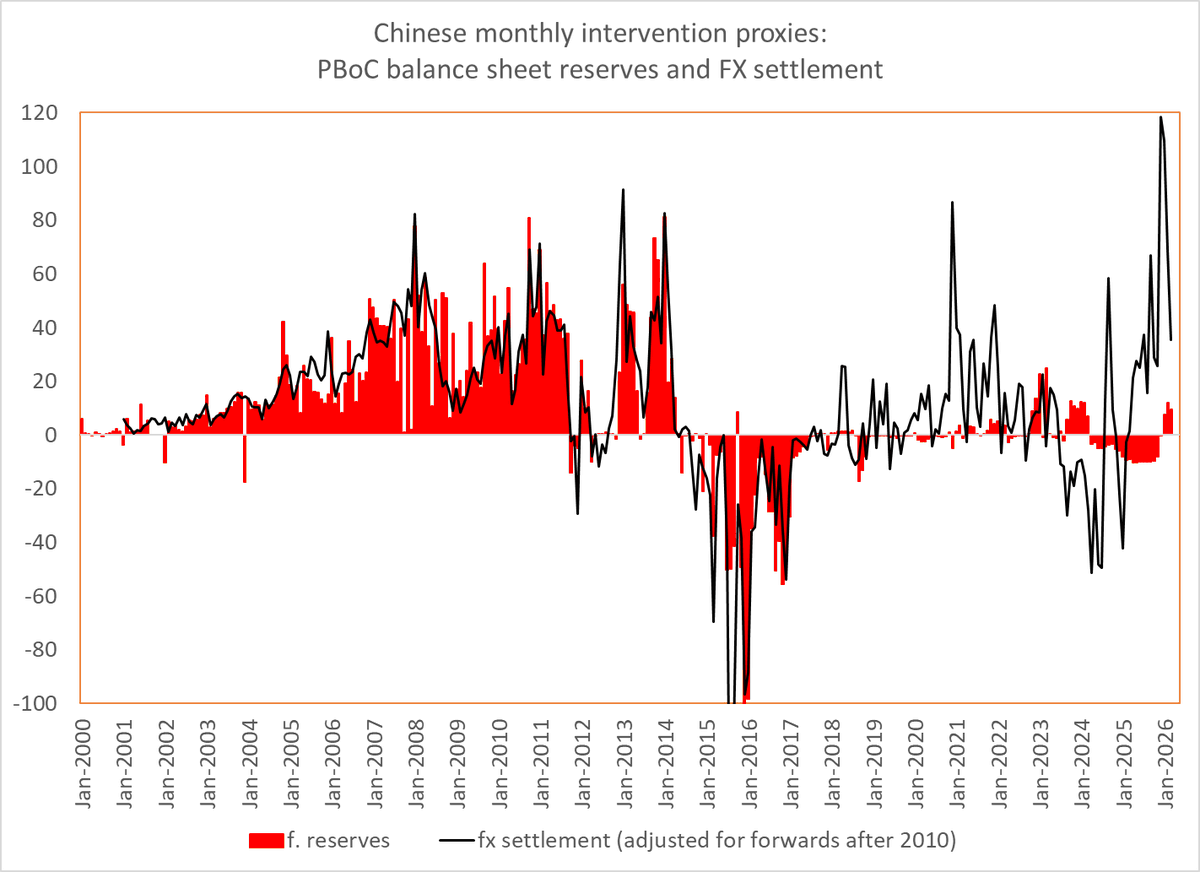
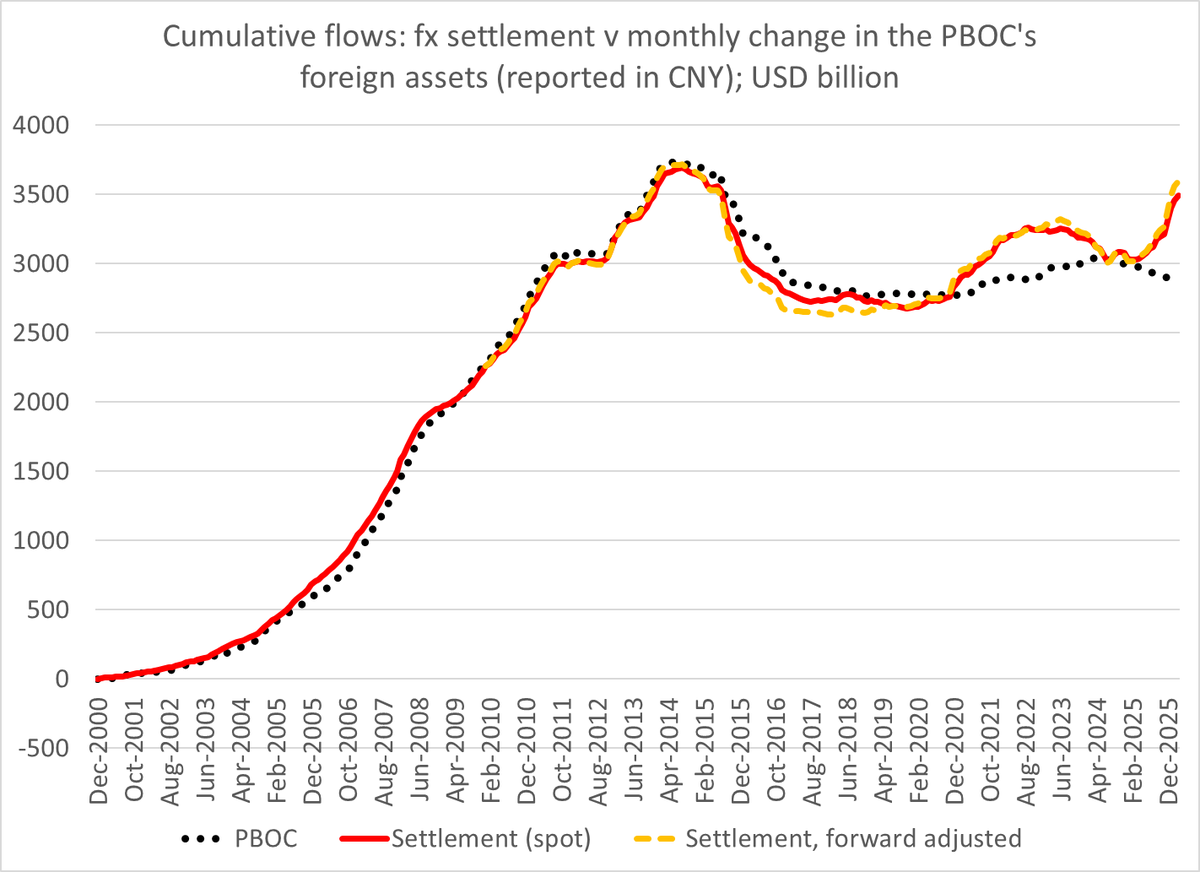
Fx settlement is in my view the single best proxy for China's true intervention. It looks like China, Inc bought about $35b in fx in March even with all the turmoil in the oil market. That's down from the (crazy) $100b in purchases in Dec/ Jan but still big
1/
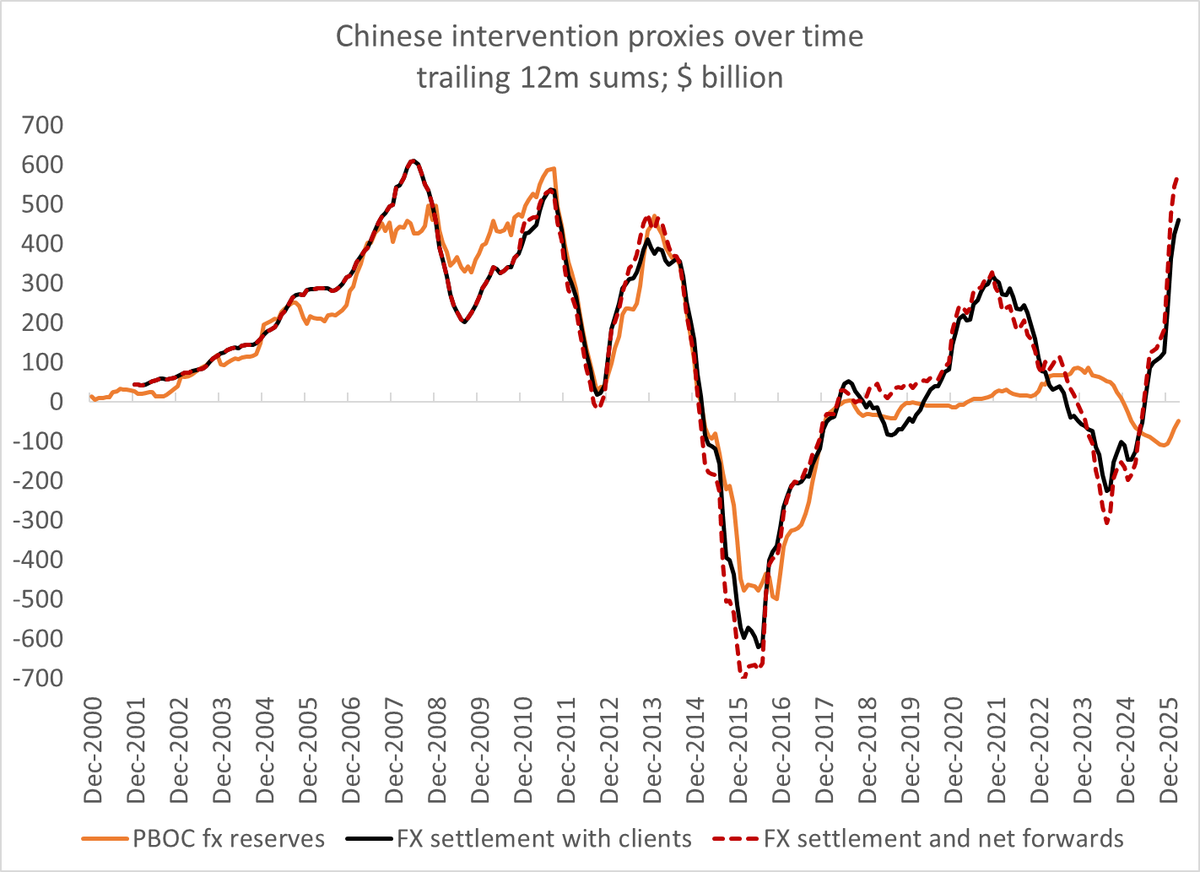
The magnitude of the purchases over the last 12ms of data $460b spot, $580b including forwards creates the basis for a Treasury finding of manipulation if it so desired --
2/
The Treasury would have to look to a period other the calendar 2025 in the April report -- but if it decided to base its determination of activity in h2 2025 (and q1 2026) the scale of intervention (measured by fx settlement) clears the existing threshholds
"The country’s protracted property slump and weak social safety net have curbed consumer spending, resulting in zero inflation last year and an increasing reliance on external demand to prop up growth."
Joe Gagnon (@GagnonMacro) should take a victory lap; the IMF has conceded intervention does have a real impact --
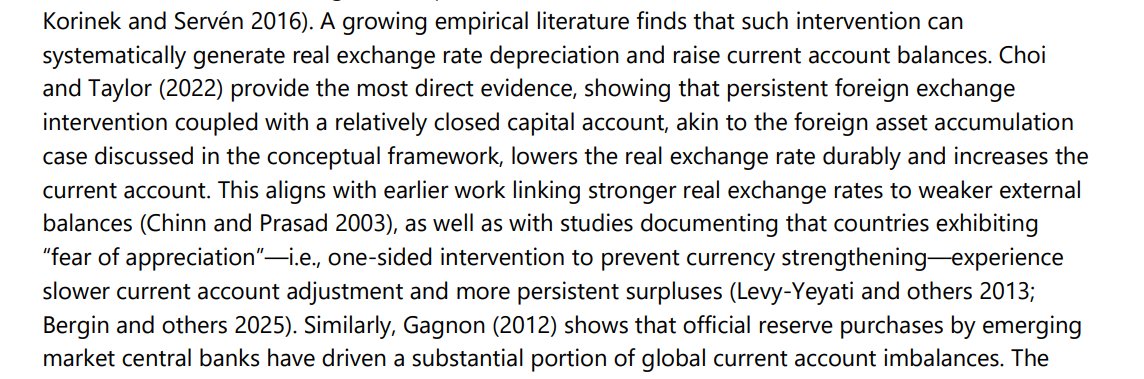
"A growing empirical literature finds that such intervention can systematically generate real exchange rate depreciation and raise current account balances"
1/
I also take a bit of satisfaction in this conclusion; it explains why I have been systematically tracking official asset accumulation for close to 20 years!
2/
The next step is for the IMF to rethink how intervention & official asset accumulation enters into its current account model. The current variable only uses formal central bank intervention & interacts it "optimal" v realized capital controls. So it has no practical impact
3/
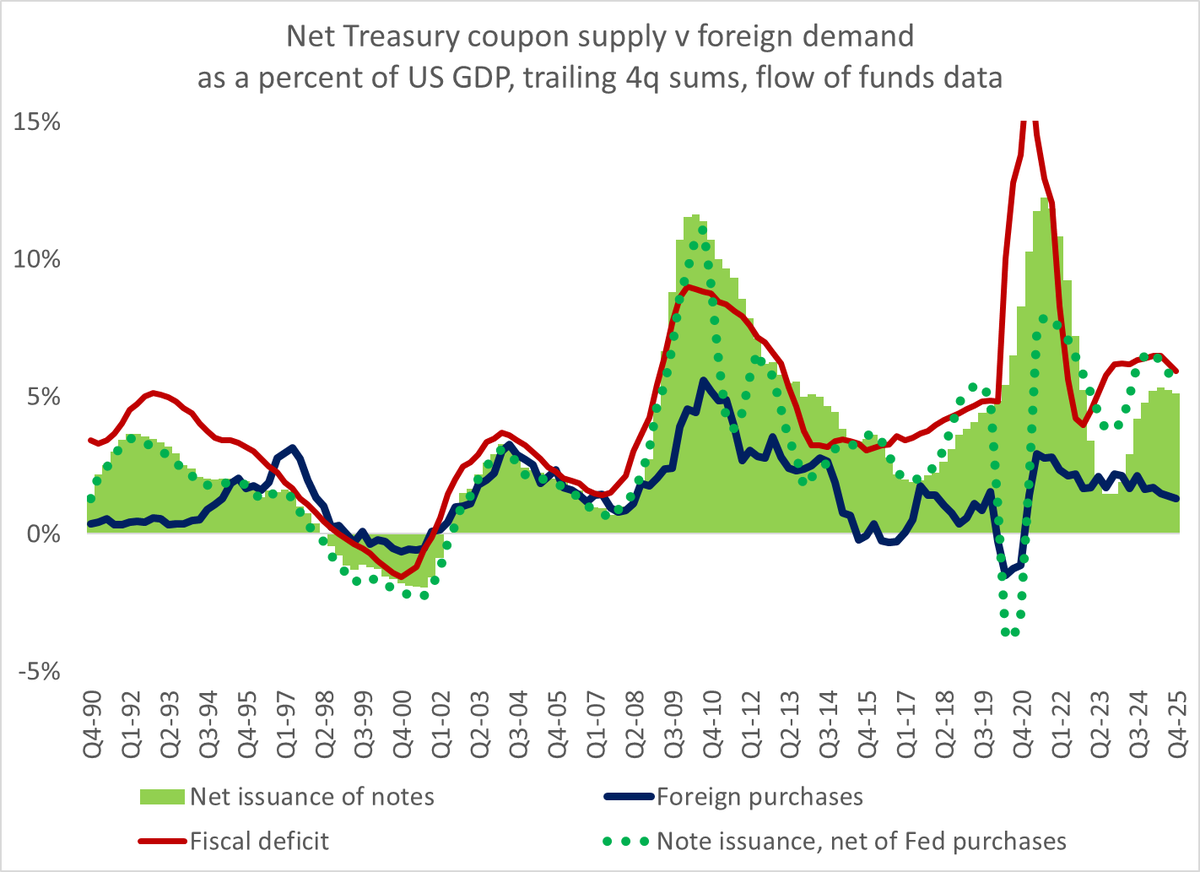
Before the global financial crisis, in 06 and 07, the US fiscal deficit was under 2 percent of GDP and note issuance was under 1 pp of GDP in 07. That was also the time of peak reserve accumulation
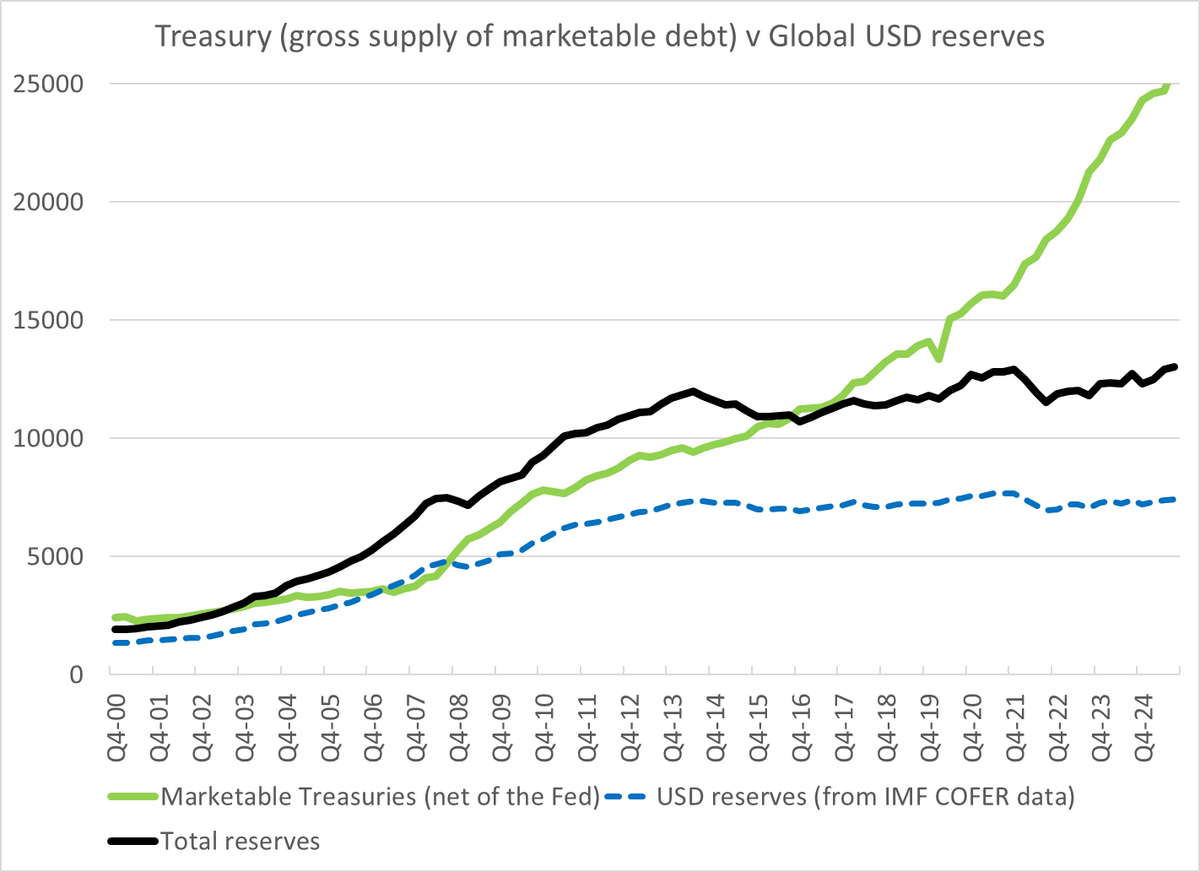
The low level of US fiscal deficit prior to the global crisis + the small stock of Treasury debt prior to the crisis, especially relative to reserves, are 2 things that many have forgotten; constantly surprised by folks who think US fiscal was an pre crisis issue
2/
So I would posit two things --
a) US real rates would be substantially lower with the current "glut" of Asian manufacturing dollars if the US fiscal deficit was 1-2% of GDP v 5-6% of GDP; the swing in the fiscal deficit/ stock of Treasuries are important omitted variables 3/
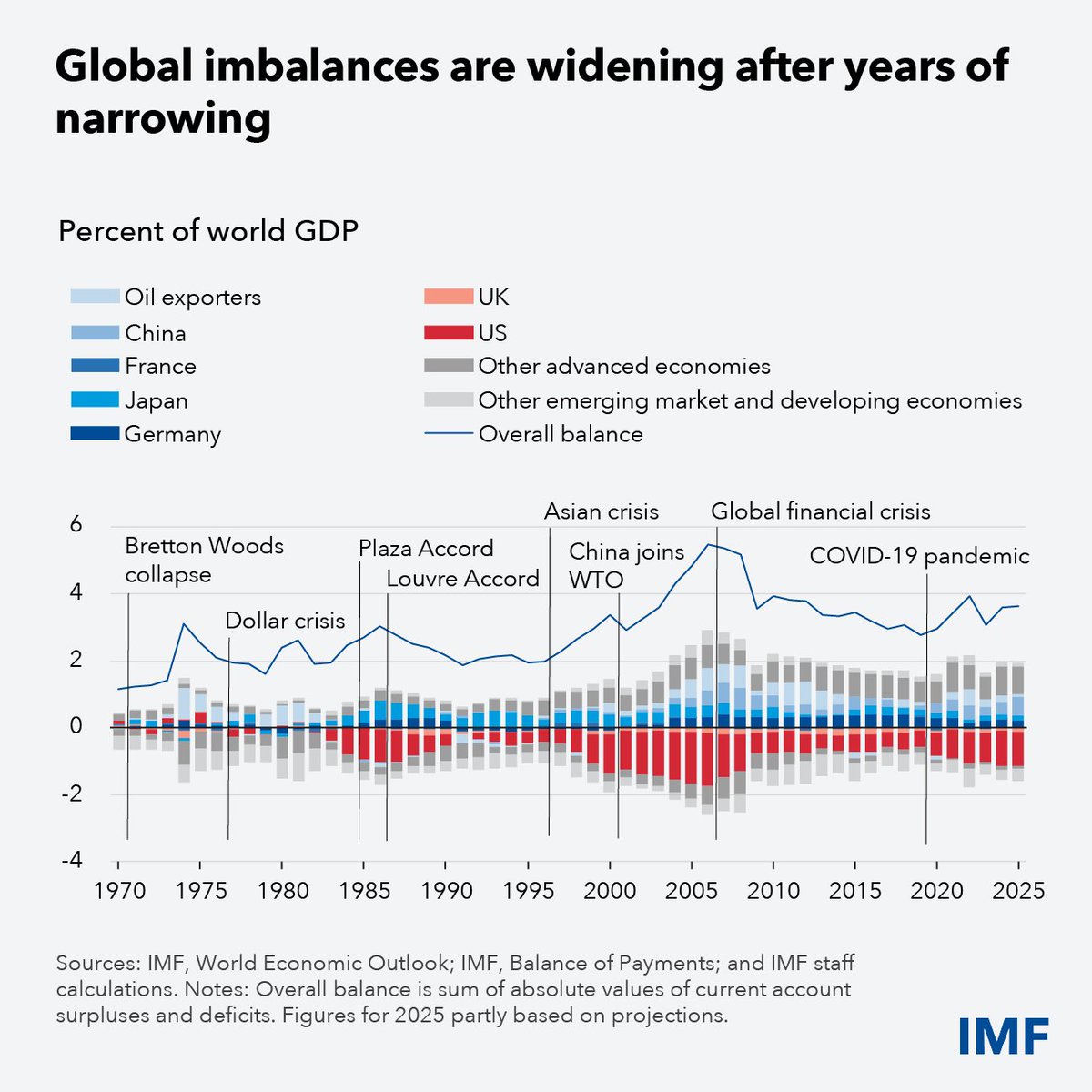
Happy to see the IMF has noticed the expansion of global current account imbalances --
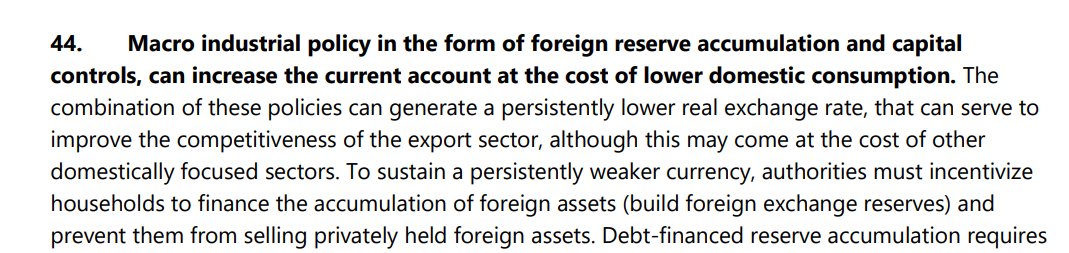
And guess what, the IMF seems to have rediscovered the idea that currency manipulation can drive imbalances (though manipulation has been renamed "macro-industrial policy" ... )
1/ many
The IMF doesn't find that "micro" industrial policy has a big impact on global imbalances, only economy wide "macro-industrial policies"
2/
"An example of such a policy is an export-led growth strategy operationalized through a combination of real exchange rate depreciation and enforced low domestic demand" --
that sounds a lot like foreign exchange rate intervention to me (Welcome to the club, @pogourinchas)
"The problem is there was never enough cash to fund all his [Crown Prince MBS] ambitious initiatives."
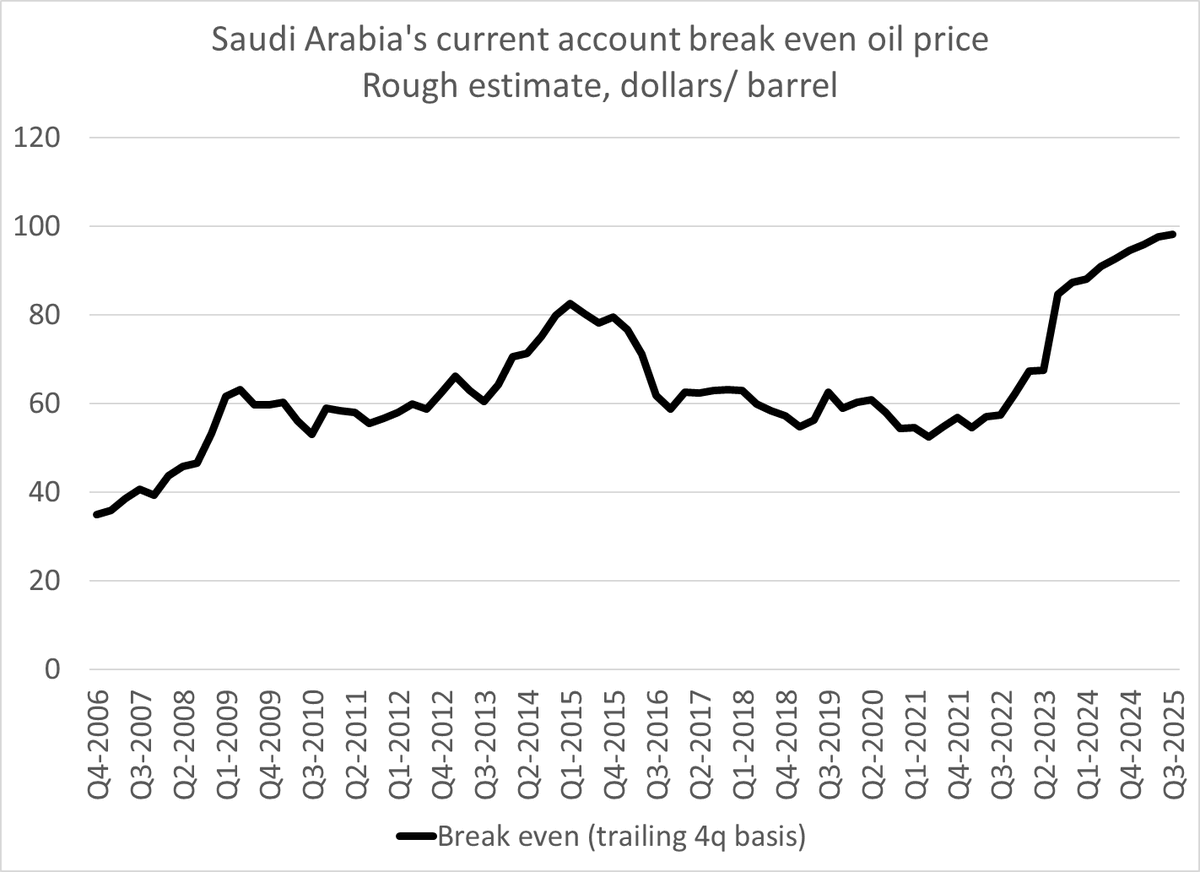
Indeed. That's why measures lie the balance of payments breakeven are useful. The Saudis needed $90 plus oil -- or near unlimited access to debt financing
1/
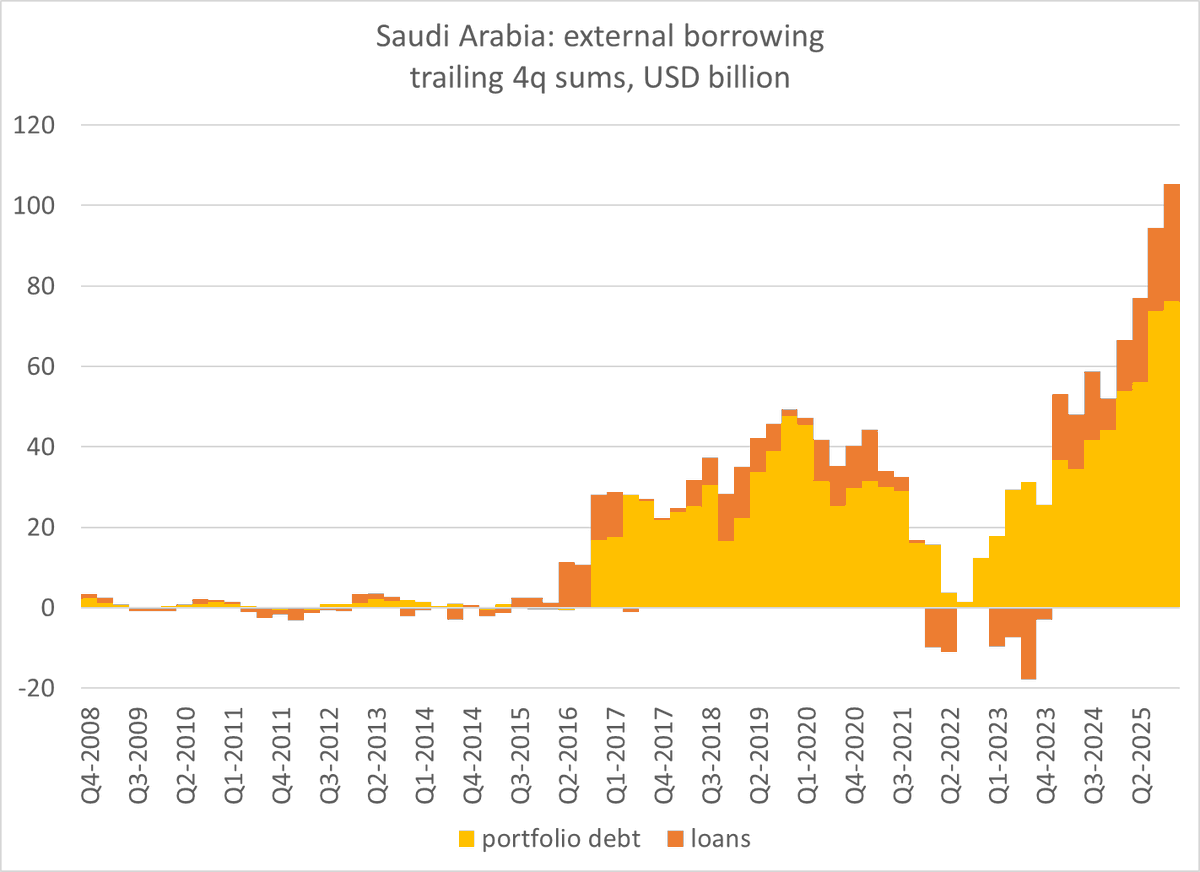
Going into the current conflict, the Saudis were borrowing $100b a year from the rest of the world (that's a form of reverse petrodollars so to speak)
2/
"The country’s projects ran into the trillions of dollars—far more than a government with a $300 billion annual budget could afford."