1/ Russian companies are blocking foreign IP addresses in a bid to block VPNs, stranding thousands of Russians abroad without access to money, flight details, or taxes. Major Russian apps are also being repurposed to scan users' phones for VPNs and secretly obtain user data. ⬇️
2/ While apps such as Telegram, Instagram, and WhatsApp have been blocked in Russia, millions of Russians still access them daily using VPNs. However, the Russian government is working hard to choke off this access by deterring VPN use (while not yet banning them).
3/ Russian online service providers have been ordered by the government to block access from VPN IP addresses. They are taking a very crude approach of blocking all foreign IP addresses, causing great inconvenience to travellers, as Russian blogger 'Abu' complains:
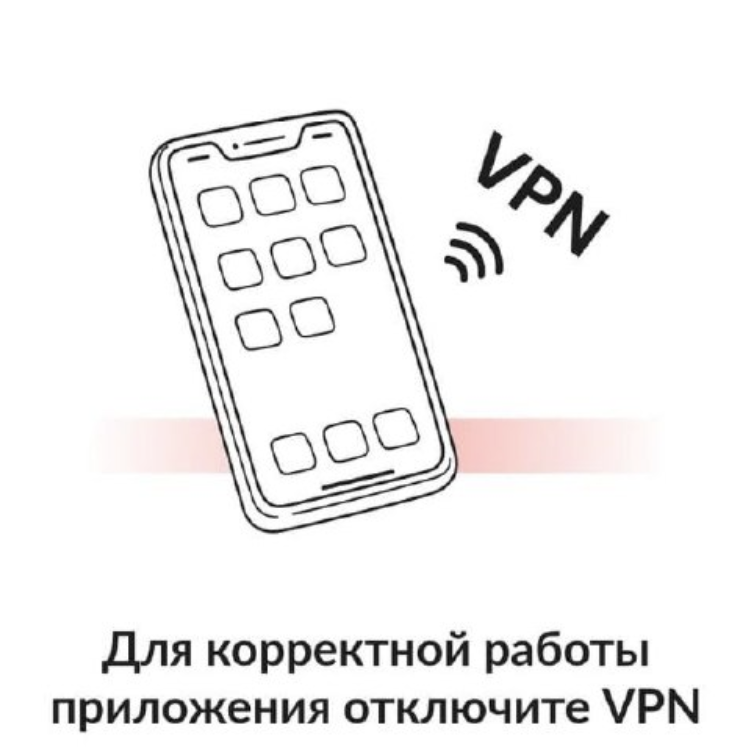
4/ "Russian tourists are left without critical services like government services and banks.
Similar problems are occurring when paying for reservations on some airline websites.
5/ "This is all because Russian apps have started disconnecting VPN users. Apparently, the developers have taken a radical approach to the issue and simply banned all foreign IP addresses.
6/ "Now, ordinary Russians who flew to Turkey, Egypt, Vietnam, and other countries to sunbathe can't buy tickets home, pay taxes, or transfer money.
Sunbathe at home."
7/ To add to Russians' misery, the Internet freedom group RKS global has found that major Russian apps appear to have been repurposed to scan users' phones for VPNs and identify anyone who has one installed.
8/ According to a newly published report by RKS global, out of 30 popular Russian apps, including ones from T-Bank, Sberbank, Yandex, and VKontakte, 22 actively detected VPN use or whether a user had one installed on their phone, and saved that data on their servers.
9/ RKS global says that "the level of intrusion into the device can be very high. Any Android app released by Russian companies for the Russian market may now be spying." The apps ignore permission prompts to run constantly from the moment of installation.
10/ All 30 apps capture the user's exact GPS location. 28 of the 30 access the camera and microphone, and grab the user's contact list. 27 silently scan the phone to identify all the other installed apps. 24 record audio.
11/ 15 grant themselves permission, without user involvement, to install additional executables, while 12 prevent themselves from being put to sleep by the system. 6 use the microphone in the background without a visible app, and 5 read all SMS messages.
12/ Many Russians have resisted installing the Russian government's preferred messenger app, MAX, because they (almost certainly rightly) believe it spies on them. However, they are likely not aware that all of their other popular apps are now doing the same thing.
13/ The data recorded by the apps is stored on the developers' servers, which are accessible by the FSB and Russian law enforcement. Not coincidentally, Russia's prosecutor general says he now wants warrantless access to phone data. /end
1/ The developers of the Russian heavy bomber drone 'Kukushka' have been sent to their deaths en masse, according to the father of one of the men. He says they were deliberately killed as they were regarded as 'inconveniences' by their commanders. ⬇️
2/ Alexander Igorevich Anorin has recorded a video accusing commanders in the 102nd Motorised Rifle Regiment (military unit 91706) of sending a group of UAV developers to their deaths in assaults against Ukrainian positions.
3/ He says the commander of the regiment's 2nd Batallion, Boris Borisovich Kravchenko, call sign "Azak," and the regiment's deputy political officer, Samvel Karapetyan, sent the drone developers to die in an assault near Poltavka in the Zaporizhzhia region in July 2025.
1/ Recent satellite images showing dozens of Iranian fast boats in formation in the Strait of Hormuz illustrate Iran's ability to lay naval mines in the strait. An Iranian export catalogue highlights its many indigenously produced mine types. ⬇️
2/ Iran is said to possess a huge stockpile of naval mines, potentially as many as 5,000-6,000. It has systematically made preparations over decades to mine the Strait of Hormuz, which it can do using small boats, aircraft, or even rockets.
3/ Iran has hundreds of small-displacement combat boats, many of which can be used for anti-shipping attacks and mine-laying, some at very high speeds. For example, the recently developed Haidar 110 can reach speeds of up to 110 knots (126 mph / 203 km/h).
1/ Russia's growing economic and social problems, exacerbated by the government's own policies, are causing even loyal pro-Putin commentators to warn of a looming crisis. Yuri Baranchik warns that people are increasingly blaming the government for making their lives worse. ⬇️
2/ Baranchik comments in an analysis on his Telegram channel that "the system is increasingly struggling to cope with its own weight", and says that Russians are increasingly unhappy that growing state repression is now affecting them personally.
3/ "Since there is no shortage of analysis of the symptoms of the processes unfolding within the system ... I will attempt to describe the basis of this phenomenon.
1/ Complaints about Internet blocks from Russian Instagram celebrities are obscuring a host of other problems, many caused by the Ukraine war, argues journalist Anastasia Kashevarova. Her long list highlights the increasingly severe difficulties faced by Russia's population. ⬇️
2/ Kashevarova writes:
"About the women's rebellion. I am against gender rebellions and any others, since they are destructive and distract from solving real problems towards confrontation between the sexes, redistribution of spheres of influence, struggle of individuals."
3/ "Here there is no longer any smell of protection of human rights, there is a draining of the painful things and presenting the people's pain in the light of some kind of stupidity and foolishness.
1/ Russia's economic crisis is deepening, with mass layoffs at public sector organisations and heavily indebted state corporations. It's a further sign of the severe strain on the Russian government's finances caused by the Ukraine war, and is a major political risk for Putin. ⬇️
2/ The 'Political Report' Telegram channel highlights the growing scale of the crisis in Russia's state-run bodies. It also notes the political risks that this is creating for the Russian government, which faces growing public hostility towards its policies:
3/ "Russia is plunging into a massive wave of layoffs and reductions, which is hitting public sector employees and state corporations particularly hard.
1/ Average gasoline prices in the US could rise to an all-time record of $5.50, and much higher in some states, if the Strait of Hormuz does not reopen by the end of June. Citigroup warns that the world's oil inventories risk falling to record low levels. ⬇️
2/ A new report published by Citi sets out scenarios for the current impasse in the Strait of Hormuz, while other analysts say it could take nine months for things to return to normal even if a peace agreement is signed. Citi's analysts predict three possible outcomes:
3/ 1️⃣ A ceasefire extension is signed this week, oil tanker traffic resumes, flows recover through May, and pre-war levels resume by the end of June. A total of 900 million barrels of oil production is lost since the start of the Iran war.