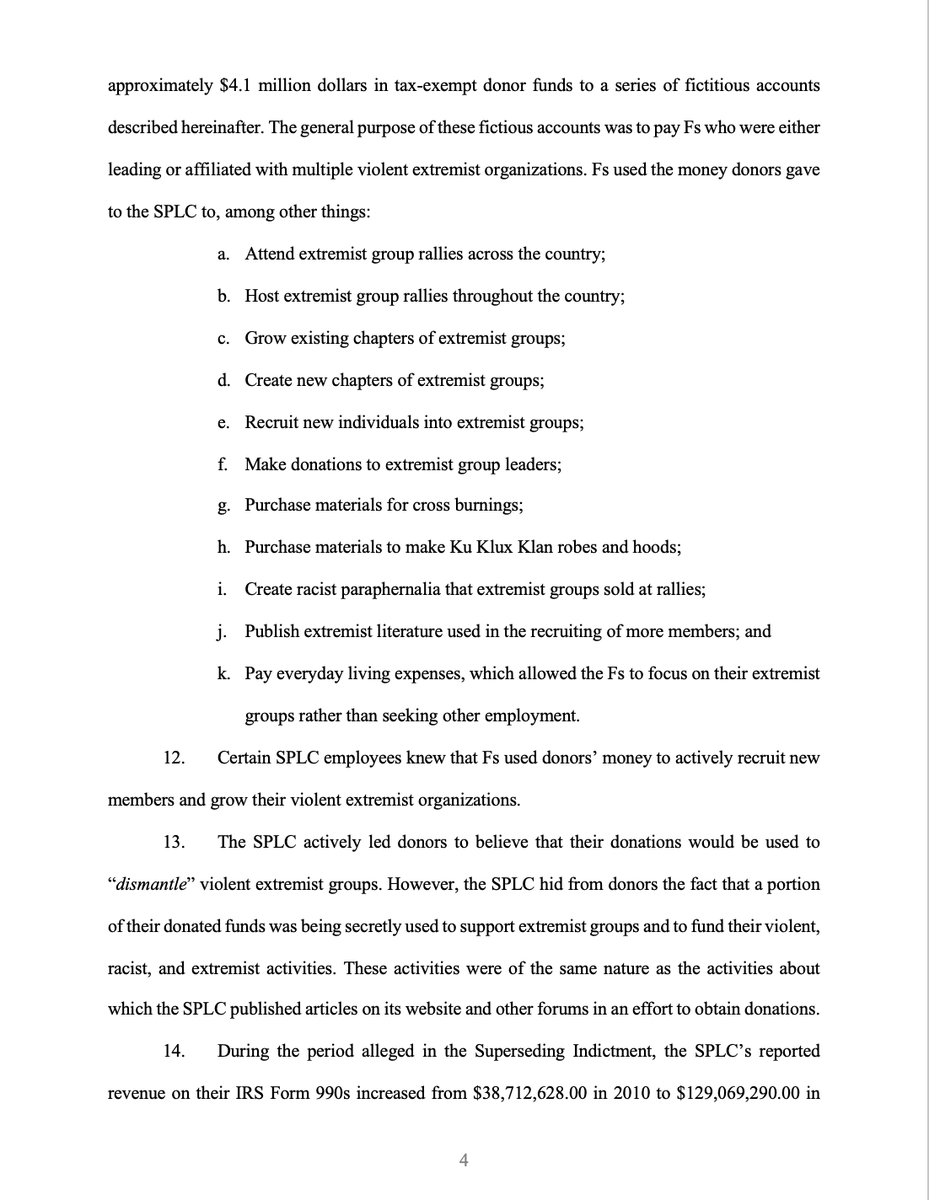
🚨READ IT
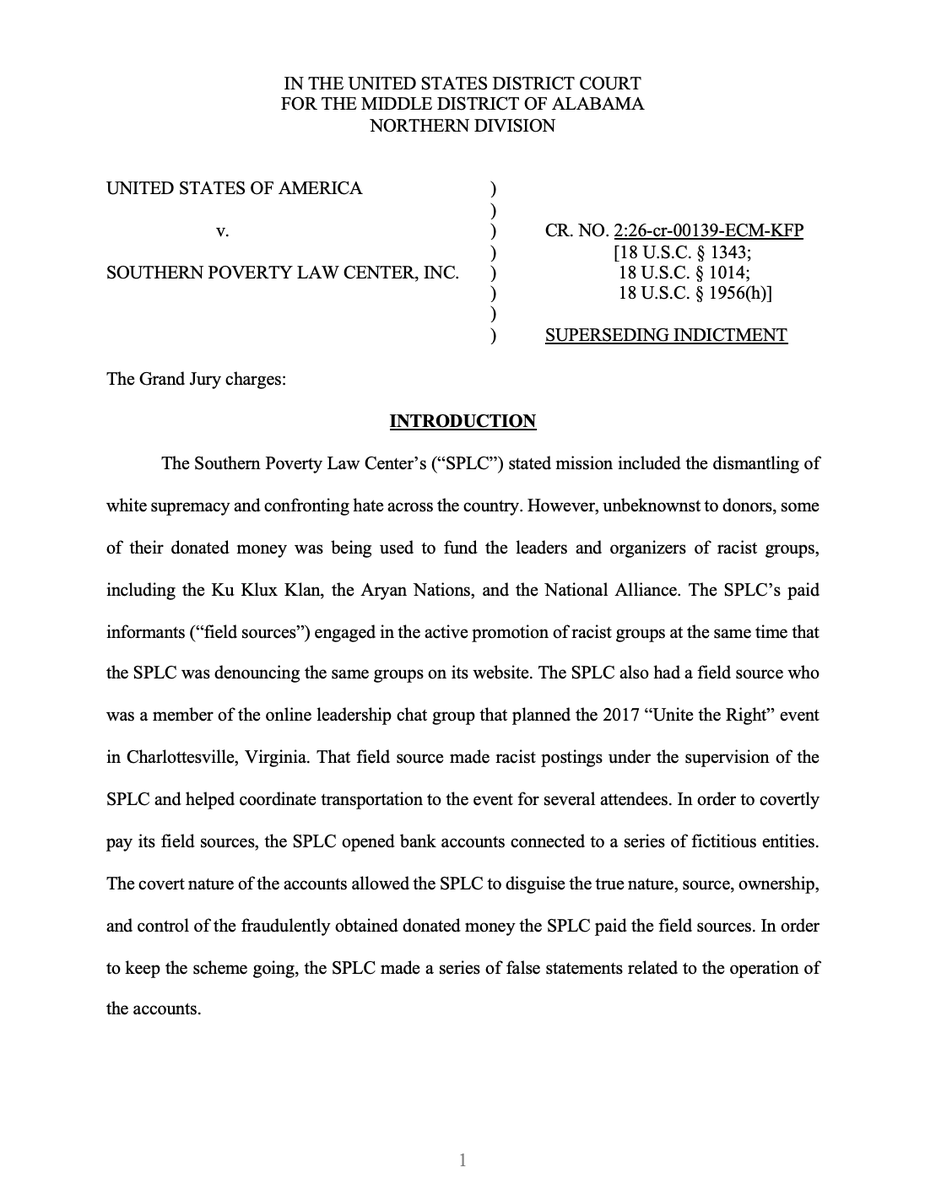
Today, @DAGToddBlanche & @FBIDirectorKash announced an 11-count indictment against the SPLC.
While SPLC raises money by claiming to oppose white supremacy, the indictment accuses the SPLC of paying the Ku Klux Klan😲
🧵1/12dailysignal.com/2026/04/21/spl…
Today, @DAGToddBlanche & @FBIDirectorKash announced an 11-count indictment against the SPLC.
While SPLC raises money by claiming to oppose white supremacy, the indictment accuses the SPLC of paying the Ku Klux Klan😲
🧵1/12dailysignal.com/2026/04/21/spl…

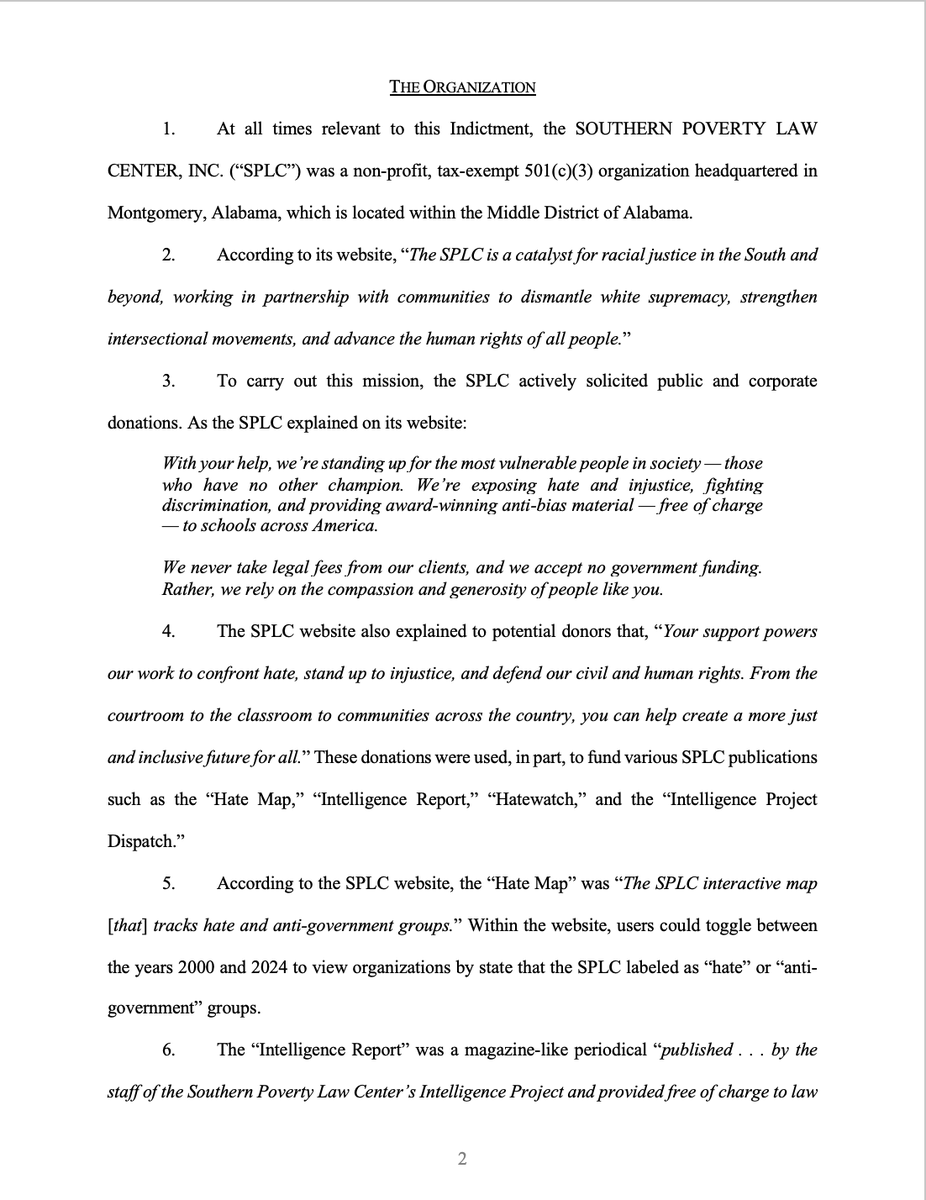
The indictment includes six counts of wire fraud, because the SPLC claimed that it aims to "dismantle white supremacy" but it actually funded a broad swath of white nationalist groups.
🧵2/12
🧵2/12
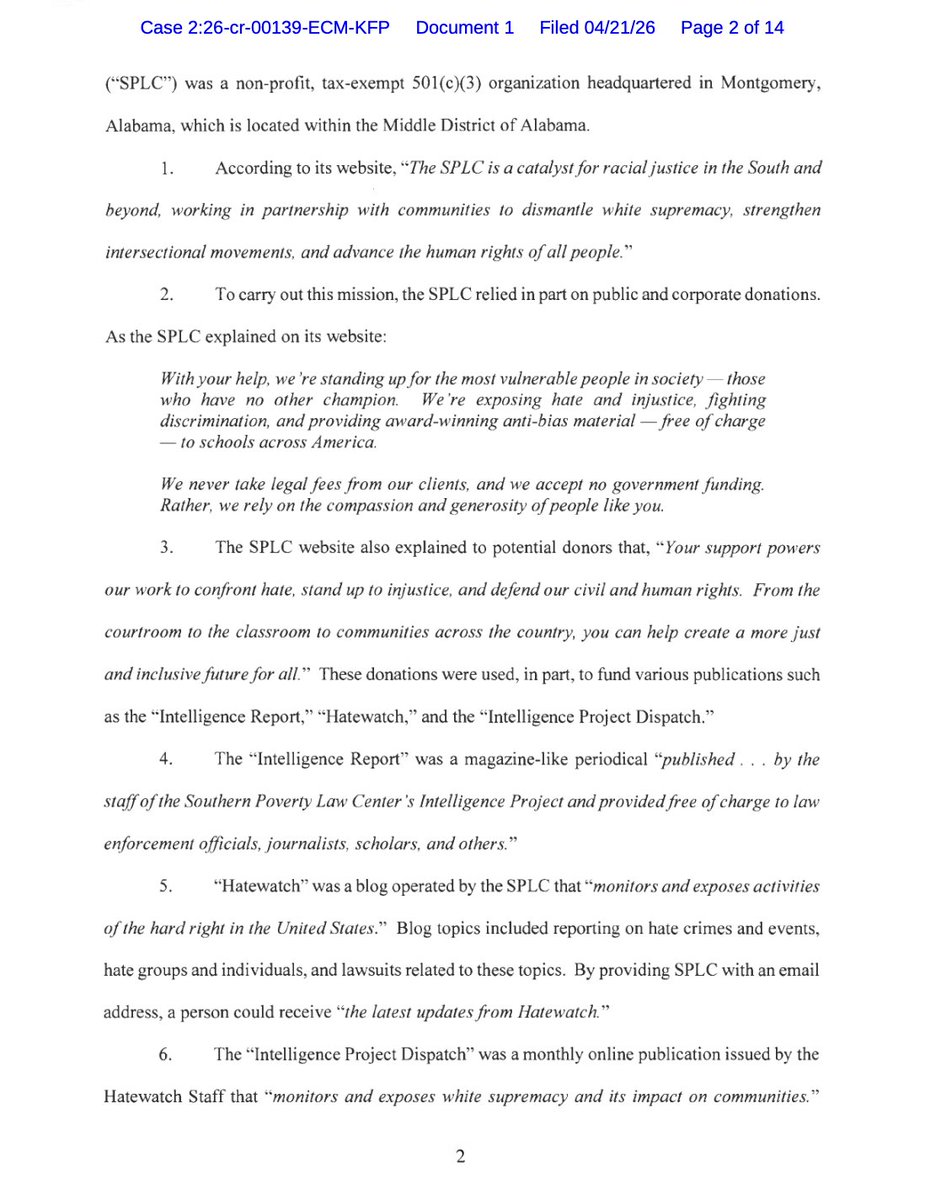
Beginning in the 1980s—the decade when SPLC's offices got firebombed—the SPLC cultivated a network of informants with violent extremist groups. It maintained those informants as recently as 2023, according to the indictment. SPLC funneled more than $3 million to them.
🧵3/12
🧵3/12
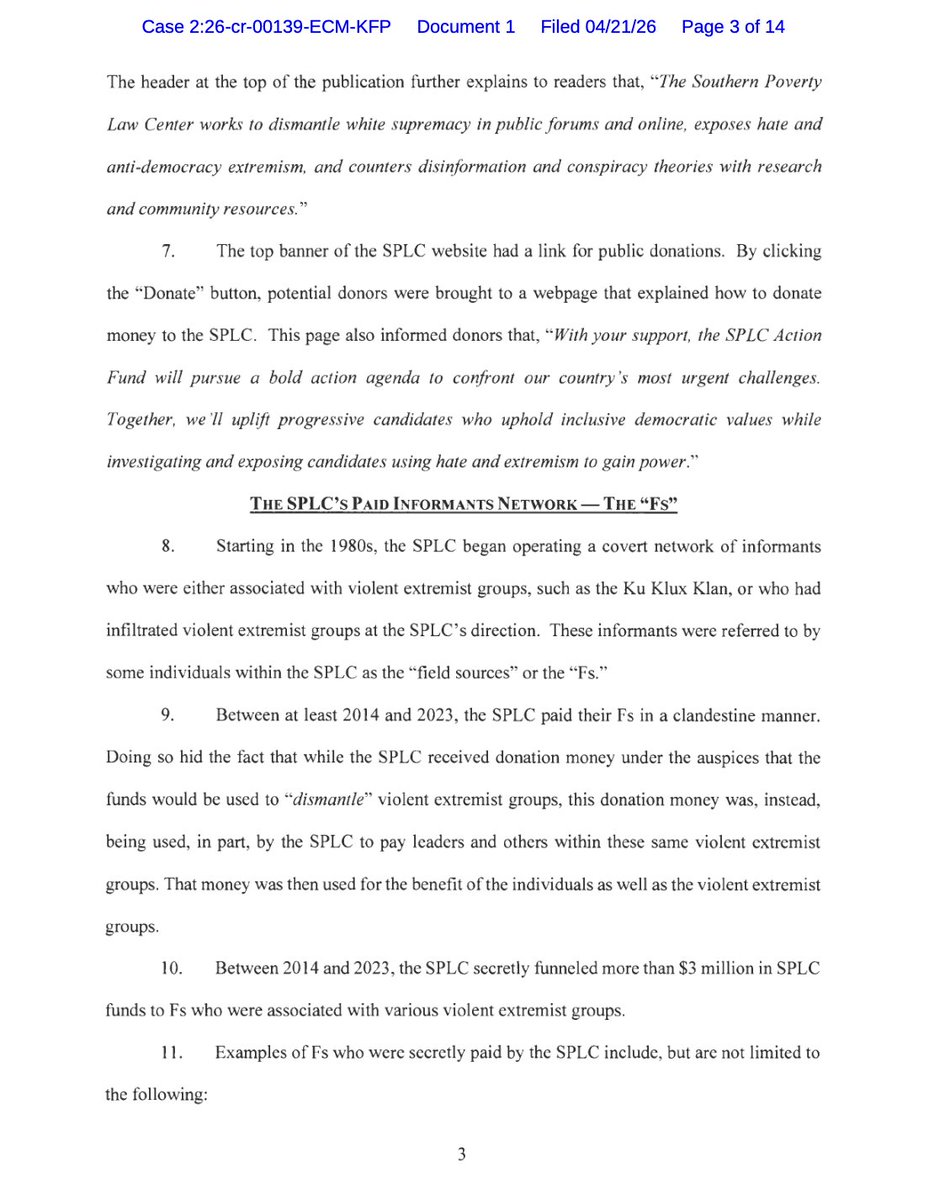
Here's a list of informants. They include a person who was married to an "Exalted Cyclops of the Ku Klux Klan." Another one helped plan the "Unite the Right" rally in Charlottesville in 2017.
🧵4/12
🧵4/12


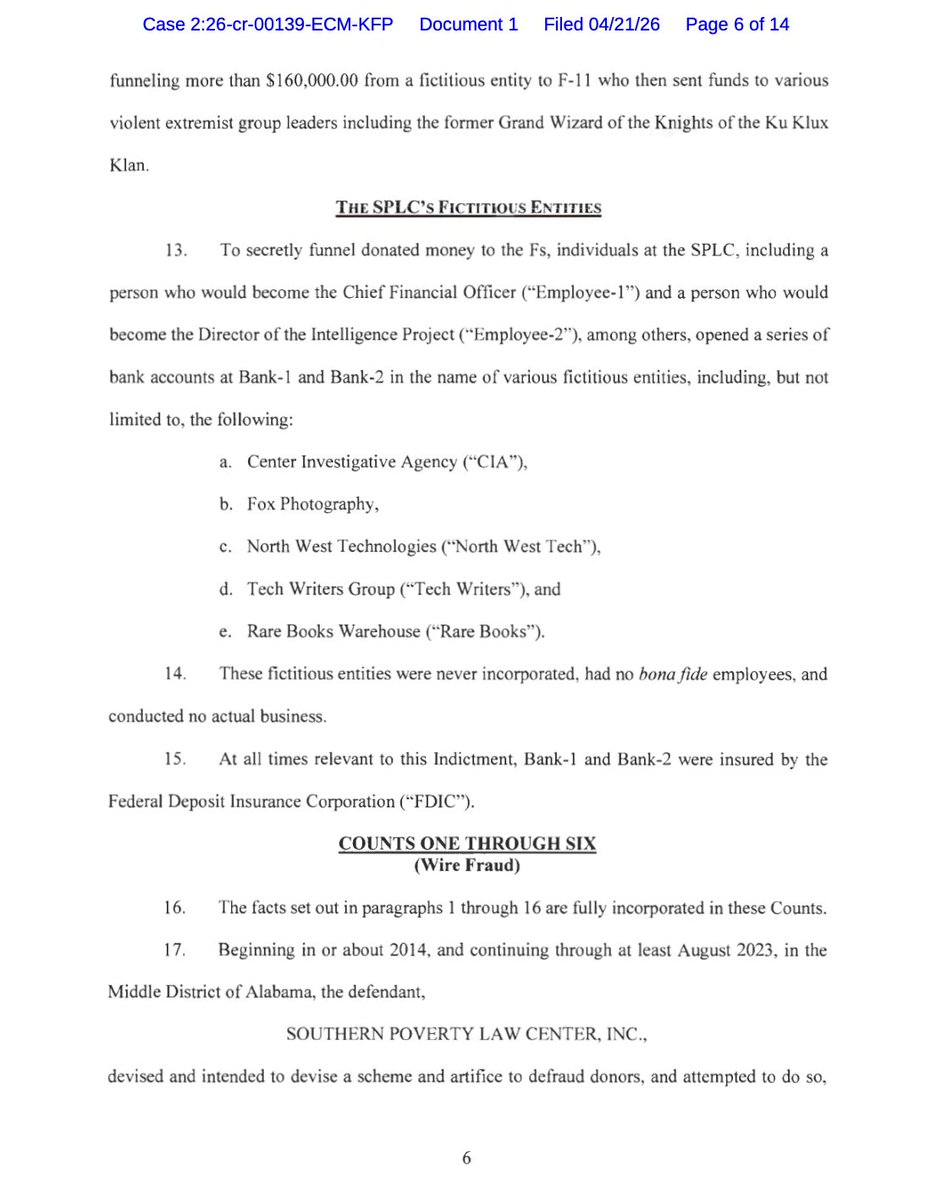
COUNTS 1-6: Wire Fraud
SPLC set up five "fictitious entities" to funnel cash to its informants.
🧵5/12
SPLC set up five "fictitious entities" to funnel cash to its informants.
🧵5/12


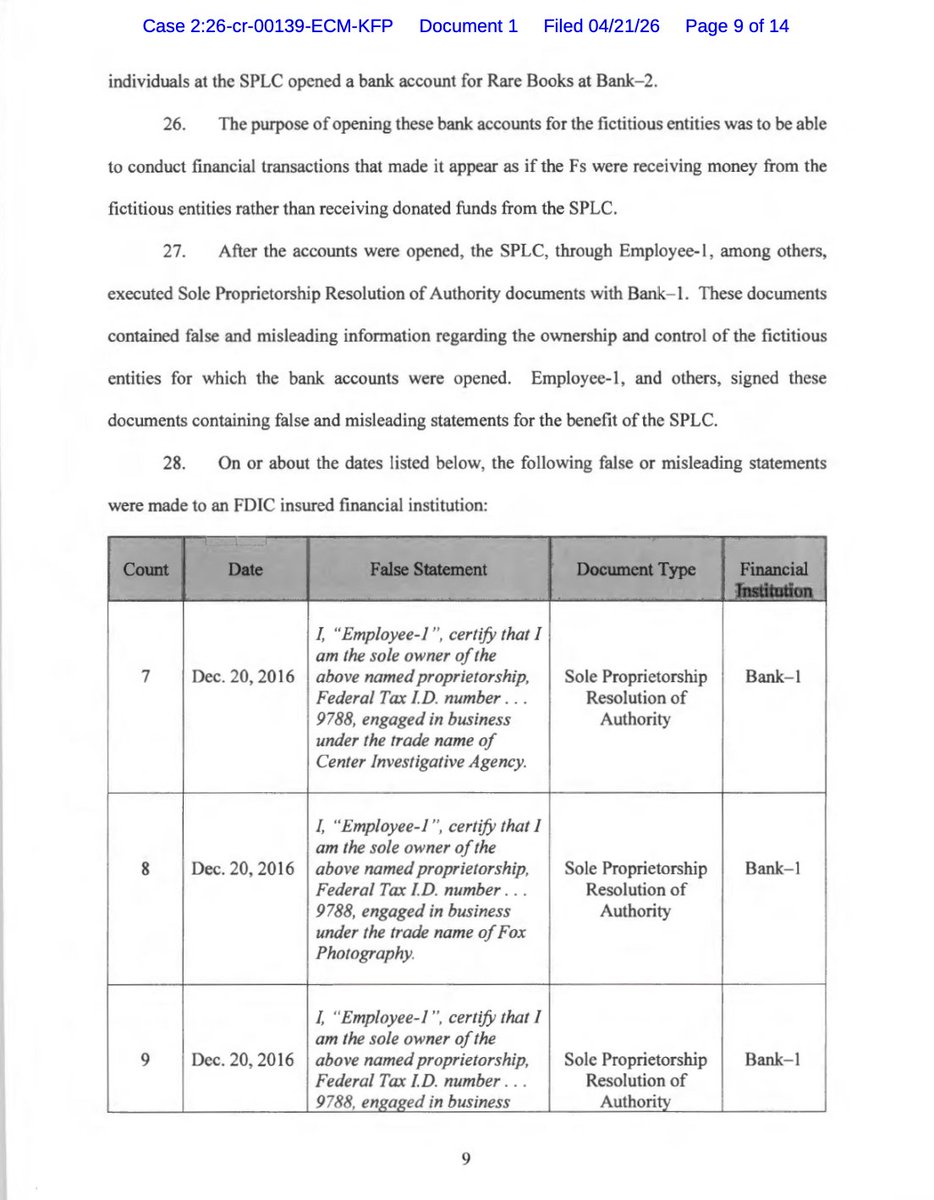
COUNTS 7-10: False Statements to Bank
In support of this scheme, SPLC employees made false statements to federally ensured banks.
🧵6/12
In support of this scheme, SPLC employees made false statements to federally ensured banks.
🧵6/12

COUNT ELEVEN: Conspiracy to Conceal Money Laundering
The SPLC conspired to conceal its alleged money laundering.
🧵7/12
The SPLC conspired to conceal its alleged money laundering.
🧵7/12


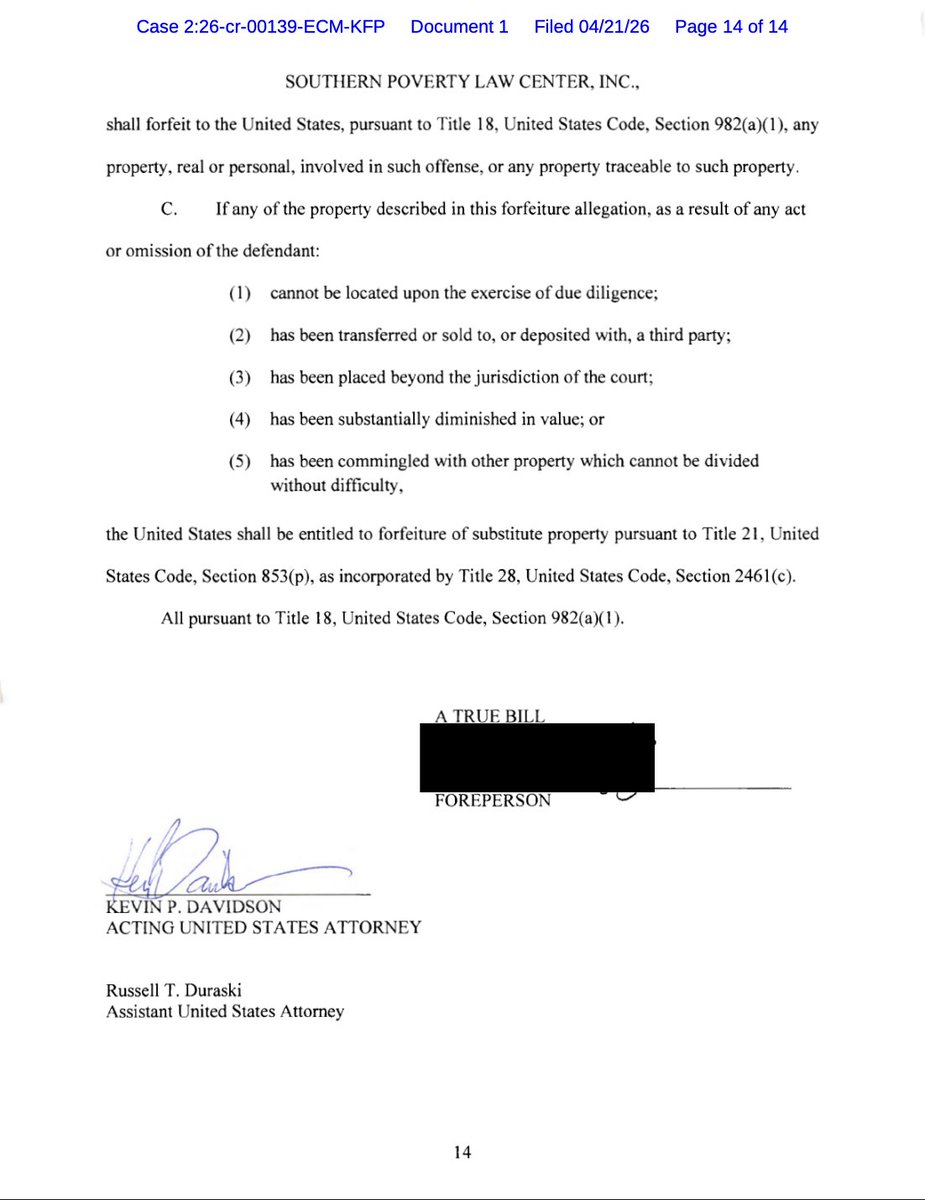
The indictment says the SPLC will forfeit any property coming from this allegedly illegal activity.
🧵8/12
🧵8/12

Here's the SPLC's side of the story: SPLC notes that white supremacists attacked its offices in the past and claims that it funded informants in order to protect itself and others. But why maintain the program into the 2010s and 2020s?
🧵9/12
🧵9/12
By the way, SPLC interim president Bryan Fair was kind enough to mention my congressional testimony on the SPLC and my exclusive reporting that Kash Patel had distanced the FBI from the SPLC.
🧵10/12
🧵10/12
https://x.com/Tyler2ONeil/status/1974102479261593699
The SPLC will have every opportunity to defend itself in court, but these charges are particularly damning. The SPLC claims it was only funding informants, not white nationalist groups, but DOJ makes a good case the SPLC was propping up the "hate" it claims to fight.
🧵11/12
🧵11/12
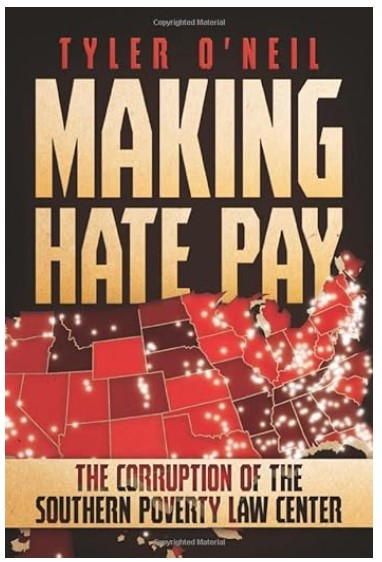
As I noted in my book, Making Hate Pay, it always seemed suspicious that SPLC effectively promoted the Unite the Right rally, and then received millions after it happened.
The SPLC sure makes "hate" pay...
🧵12/12
dailysignal.com/2026/04/21/spl…
The SPLC sure makes "hate" pay...
🧵12/12
dailysignal.com/2026/04/21/spl…
• • •
Missing some Tweet in this thread? You can try to
force a refresh